COGNITIVE DOMAIN
Objective:
In 30 minutes of discussion, the
learners will be able to illustrate
the union and intersection of sets
and the difference of two sets.
Example
 Intersection of Sets
The intersection of sets A
and B, written as A ∩ B, is
a set of the elements that
are members of both A
and B.
Given:
 A= {1,2,3,4,5,6,},
 B= {2,4,6}
 C= {1,3,5,…}
Find:
a. A ∩ B
b. A ∩ C
c. B ∩ C
AFFECTIVE DOMAIN
Objective:
In 30 minutes of discussion, the
learners will be able to value in
real life situations the well-
defined sets, subsets, universal
sets, null sets and cardinality of
sets.
Example
 State whether each of
the following sets is well
defined or not. Explain.
 1. The set of nice people.
 2. The set of good
teachers.
 3. The set of multiples of
PSYCHOMOTOR DOMAIN
Objective:
 In the 30 minute discussion the
learners will be able to create Venn
diagram to represent sets, subsets
and set operations
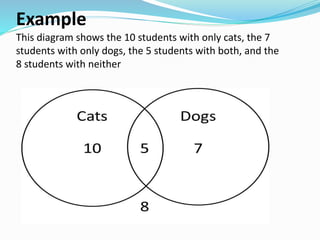
Example
This diagram shows the 10 students with only cats, the 7
students with only dogs, the 5 students with both, and the
8 students with neither

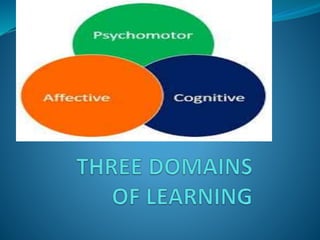
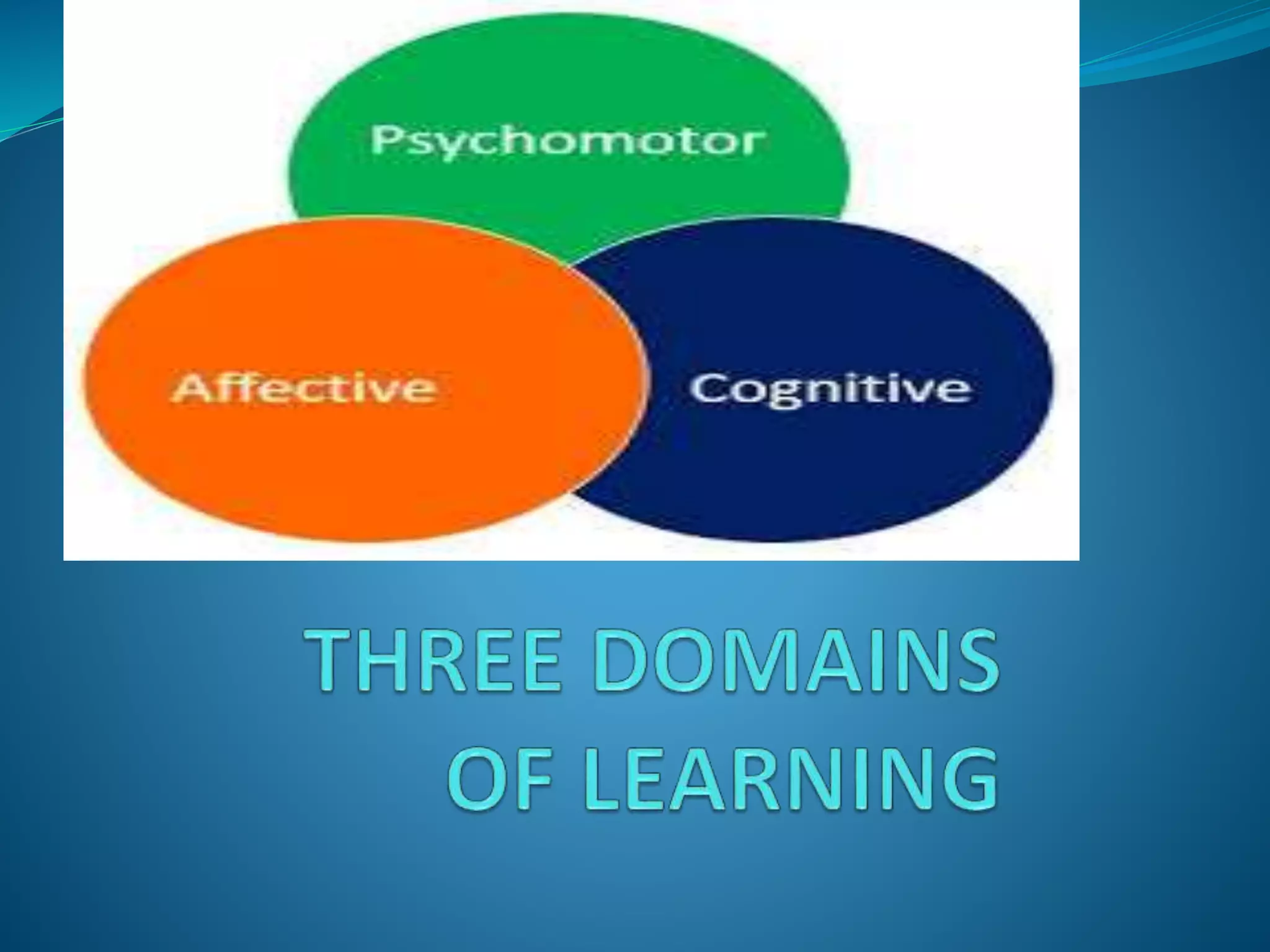
Three domains of Learning

  • 2.
    COGNITIVE DOMAIN Objective: In 30minutes of discussion, the learners will be able to illustrate the union and intersection of sets and the difference of two sets.
  • 3.
    Example  Intersection ofSets The intersection of sets A and B, written as A ∩ B, is a set of the elements that are members of both A and B. Given:  A= {1,2,3,4,5,6,},  B= {2,4,6}  C= {1,3,5,…} Find: a. A ∩ B b. A ∩ C c. B ∩ C
  • 4.
    AFFECTIVE DOMAIN Objective: In 30minutes of discussion, the learners will be able to value in real life situations the well- defined sets, subsets, universal sets, null sets and cardinality of sets.
  • 5.
    Example  State whethereach of the following sets is well defined or not. Explain.  1. The set of nice people.  2. The set of good teachers.  3. The set of multiples of
  • 6.
    PSYCHOMOTOR DOMAIN Objective:  Inthe 30 minute discussion the learners will be able to create Venn diagram to represent sets, subsets and set operations
  • 7.
    Example This diagram showsthe 10 students with only cats, the 7 students with only dogs, the 5 students with both, and the 8 students with neither