Paying Attention to the Etiology of ADHDChristina Thompson
Affects 3% to 7% of the school-age population, with more occurrence in boys (Centers for Disease Control & Protection, 2009)ADHD has a genetic predisposition and can further be activated by environmental factors, improper prenatal care and nutrition.ADHD
DOPAMINE RECEPTOR GENESDRD1 – DRD5, especially DRD4DNA sequences have a negative influence on proteins of dopamine neurons, leading to dysfunctions of the brain(Schmidt & Petermann, 2009)Genetics
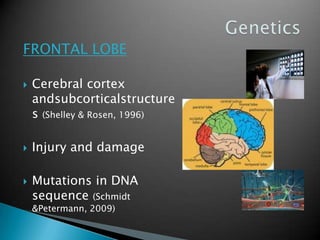
FRONTAL LOBECerebral cortex andsubcorticalstructures (Shelley & Rosen, 1996)Injury and damageMutations in DNA sequence (Schmidt & Petermann, 2009)Genetics
GeneticsTHE “EDISON” GENE THEORYThe Edison Gene: ADHD and the gift of the 			hunter child by Thomas HartmannHunting and gathering ancestorsA positive outlookFocus on our children growing into happy healthy adultsGet rid of labels!
GeneticsOPPOSING ARGUMENTSHartmann’s views are taken lightlyGenetic findings are not robust (Barr et al., 2001)ADHD is a complex disorder
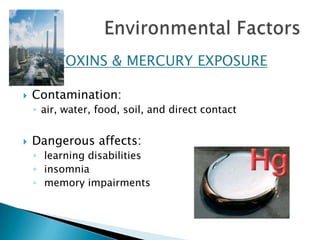
TOXINS & MERCURY EXPOSUREContamination:air, water, food, soil, and direct contactDangerous affects: learning disabilities insomnia memory impairmentsEnvironmental Factors
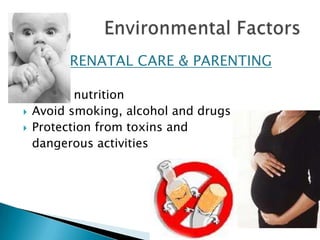
PRENATAL CARE & PARENTINGProper nutritionAvoid smoking, alcohol and drugsProtection from toxins and 	dangerous activitiesEnvironmental Factors
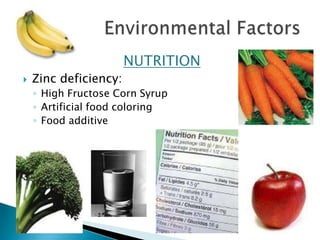
NUTRITIONZinc deficiency:High Fructose Corn SyrupArtificial food coloringFood additiveEnvironmental Factors
NUTRITIONMaintenance of normal neuronal plasticity:Essential nutrientsTrace mineralsAmino acidsFatty acidsEnvironmental Factors
What is in store for the future of ADHD?
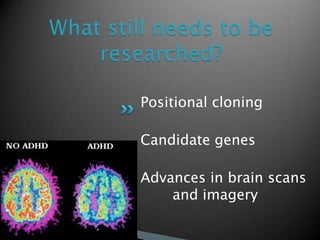
What still needs to be researched?Positional cloningCandidate genesAdvances in brain scans 	and imagery

Thompson C Presentation

  • 1.
    Paying Attention tothe Etiology of ADHDChristina Thompson
  • 2.
    Affects 3% to7% of the school-age population, with more occurrence in boys (Centers for Disease Control & Protection, 2009)ADHD has a genetic predisposition and can further be activated by environmental factors, improper prenatal care and nutrition.ADHD
  • 3.
    DOPAMINE RECEPTOR GENESDRD1– DRD5, especially DRD4DNA sequences have a negative influence on proteins of dopamine neurons, leading to dysfunctions of the brain(Schmidt & Petermann, 2009)Genetics
  • 4.
    FRONTAL LOBECerebral cortexandsubcorticalstructures (Shelley & Rosen, 1996)Injury and damageMutations in DNA sequence (Schmidt & Petermann, 2009)Genetics
  • 5.
    GeneticsTHE “EDISON” GENETHEORYThe Edison Gene: ADHD and the gift of the hunter child by Thomas HartmannHunting and gathering ancestorsA positive outlookFocus on our children growing into happy healthy adultsGet rid of labels!
  • 6.
    GeneticsOPPOSING ARGUMENTSHartmann’s viewsare taken lightlyGenetic findings are not robust (Barr et al., 2001)ADHD is a complex disorder
  • 7.
    TOXINS & MERCURYEXPOSUREContamination:air, water, food, soil, and direct contactDangerous affects: learning disabilities insomnia memory impairmentsEnvironmental Factors
  • 8.
    PRENATAL CARE &PARENTINGProper nutritionAvoid smoking, alcohol and drugsProtection from toxins and dangerous activitiesEnvironmental Factors
  • 9.
    NUTRITIONZinc deficiency:High FructoseCorn SyrupArtificial food coloringFood additiveEnvironmental Factors
  • 10.
    NUTRITIONMaintenance of normalneuronal plasticity:Essential nutrientsTrace mineralsAmino acidsFatty acidsEnvironmental Factors
  • 11.
    What is instore for the future of ADHD?
  • 12.
    What still needsto be researched?Positional cloningCandidate genesAdvances in brain scans and imagery

Editor's Notes

  • #3 Discuss theories of causation: genetics, parenting, nutrition, environmental factors, brain injuries, prenatal care, and sugar intake
  • #4 Dopamine levels contribute to novelty seeking behavior, similar to behaviors of ADHD – this is why researchers are interested in these genes for a cause for ADHD
  • #5 ADHD is rooted in the processes of this area of the brainMutations have a negative influence on proteins of dopamine neurons, leading to brain dysfunctionsPeople with damage to the frontal lobe have the same symptoms as people with ADHD (Schmidt & Petermann study)
  • #6 Hartmann thinks that characteristics of ADHD should not be labeled as a disorder, rather looked at as the highly adaptive and useful skill that our hunter-gathers needed to survive.DRD4 dominant gene used for the success of our hunter ancestors – beneficial in scanning environment (today = distraction)/ making snap decisions in high-stimulating environment (today=impulsive & hyperactive)Symptoms should be used to cultivate creativity and self-confidence, we need to reframe and not label
  • #7 Even though studies have found much support for the cause of ADHD being genetics, the findings aren’t robust, according to the Barr et al. studySince ADHD is so complex, much more research is needed – we will examine this in the later slides
  • #8 Mercury is a highly toxic chemical that is known to cause harm to our health if exposed or ingested (even at low levels)It is absorbed from the lungs into the bloodstream, severely affecting the central nervous system, especially in the first few years of a developing child
  • #9 -According to the Agency for Toxic Substances and Disease Registry – pregnant women and their fetuses are especially vulnerable to the toxic effects of mercury because it readily passes from the placenta to the fetus-Inadequate parenting is only a small factor in ADHD – parenting to protect child from brain damage, malnutrition, food additives and allergies
  • #10 Zinc is essential for metabolic processes of the elimination of mercury in our bodies, helping decrease the risk for ADHDAlso it is important to avoid overconsumption of processed foods for a healthy brain as well as a healthy body
  • #11 According to the study by Durston et al. in 2009, essential nutrients are necessary for proper functioning of the central nervous system and play a role in the maintenance of normal neuronal plasticity (the ability for neurons to rebuild)
  • #13 Positional cloning is finding the position of susceptibility genes based on sharing of chromosomal regions in people with ADHD (Barr et al., 2009)Other genes that could contribute to ADHD