THINK IN ENGLISH!
Language & Communication
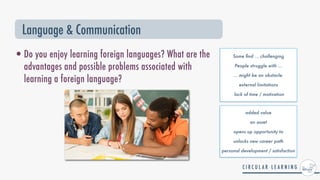
•Do you enjoy learning foreign languages? What are the
advantages and possible problems associated with
learning a foreign language?
Some
fi
nd ... challenging


People struggle with ...


... might be an obstacle.


external limitations


lack of time / motivation
added value


an asset


opens up opportunity to


unlocks new career path


personal development / satisfaction
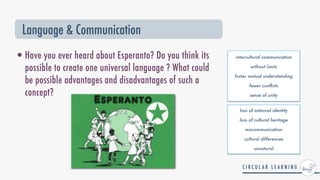
•Have you ever heard about Esperanto? Do you think its
possible to create one universal language ? What could
be possible advantages and disadvantages of such a
concept?
loss of national identity


loss of cultural heritage


miscommunication


cultural differences


unnatural


Language & Communication
intercultural communication


without limits


foster mutual understanding


fewer con
fl
icts


sense of unity
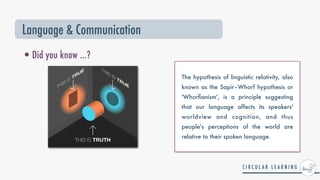
The hypothesis of linguistic relativity, also
known as the Sapir–Whorf hypothesis or
'Whor
fi
anism', is a principle suggesting
that our language affects its speakers'
worldview and cognition, and thus
people's perceptions of the world are
relative to their spoken language.
•Did you know ...?
Language & Communication
Watch the video:
•Do we think differently in different languages?


•Apart from communication, what other important
function does language perform? ('1:15 - 1.30)


•What are the examples of linguistic relativity given by
the speakers ('1:30 - 1: 55)


•What does the speaker say about perceiving colours by
different ethnic groups? ('2:25 - '3:00)
https://www.youtube.com/watch?v=XINQvKbqzq0
Language & Communication
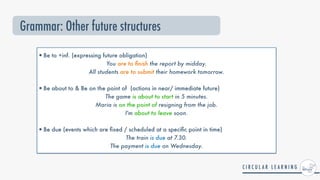
•Be to +inf. (expressing future obligation)


You are to
fi
nish the report by midday.


All students are to submit their homework tomorrow.


•Be about to & Be on the point of (actions in near/ immediate future)


The game is about to start in 5 minutes.


Maria is on the point of resigning from the job.


I'm about to leave soon.


•Be due (events which are
fi
xed / scheduled at a speci
fi
c point in time)


The train is due at 7.30.


The payment is due on Wednesday.


Grammar: Other future structures
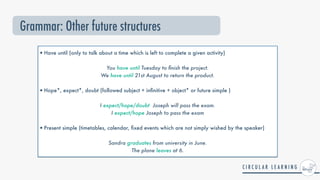
•Have until (only to talk about a time which is left to complete a given activity)


You have until Tuesday to
fi
nish the project.


We have until 21st August to return the product.


•Hope*, expect*, doubt (followed subject + in
fi
nitive + object* or future simple )


I expect/hope/doubt Joseph will pass the exam.


I expect/hope Joseph to pass the exam


•Present simple (timetables, calendar,
fi
xed events which are not simply wished by the speaker)


Sandra graduates from university in June.


The plane leaves at 6.
Grammar: Other future structures
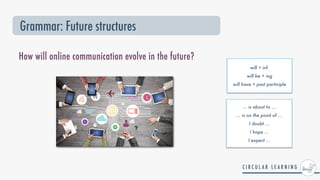
Grammar: Future structures
How will online communication evolve in the future?
... is about to ...


... is on the point of ...


I doubt ...


I hope ...


I expect ...
will + inf.


will be + ing


will have + past participle
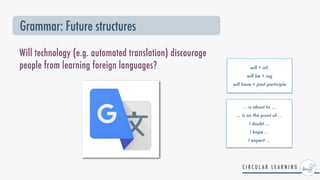
Grammar: Future structures
Will technology (e.g. automated translation) discourage
people from learning foreign languages?
... is about to ...


... is on the point of ...


I doubt ...


I hope ...


I expect ...
will + inf.


will be + ing


will have + past participle
Grammar: Future structures
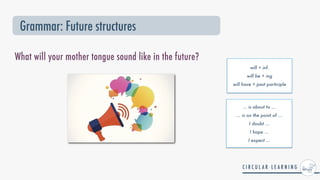
What will your mother tongue sound like in the future?
... is about to ...


... is on the point of ...


I doubt ...


I hope ...


I expect ...
will + inf.


will be + ing


will have + past participle
Grammar: Future structures
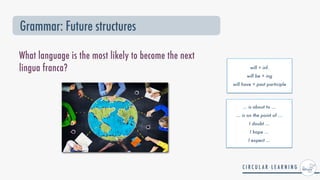
What language is the most likely to become the next
lingua franca?
... is about to ...


... is on the point of ...


I doubt ...


I hope ...


I expect ...
will + inf.


will be + ing


will have + past participle
Grammar: Future structures
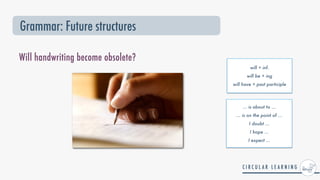
Will handwriting become obsolete?
... is about to ...


... is on the point of ...


I doubt ...


I hope ...


I expect ...
will + inf.


will be + ing


will have + past participle

Think in English.pdf

  • 1.
  • 2.
    Language & Communication •Doyou enjoy learning foreign languages? What are the advantages and possible problems associated with learning a foreign language? Some fi nd ... challenging People struggle with ... ... might be an obstacle. external limitations lack of time / motivation added value an asset opens up opportunity to unlocks new career path personal development / satisfaction
  • 3.
    •Have you everheard about Esperanto? Do you think its possible to create one universal language ? What could be possible advantages and disadvantages of such a concept? loss of national identity loss of cultural heritage miscommunication cultural differences unnatural Language & Communication intercultural communication without limits foster mutual understanding fewer con fl icts sense of unity
  • 4.
    The hypothesis oflinguistic relativity, also known as the Sapir–Whorf hypothesis or 'Whor fi anism', is a principle suggesting that our language affects its speakers' worldview and cognition, and thus people's perceptions of the world are relative to their spoken language. •Did you know ...? Language & Communication
  • 5.
    Watch the video: •Dowe think differently in different languages? 
 •Apart from communication, what other important function does language perform? ('1:15 - 1.30) 
 •What are the examples of linguistic relativity given by the speakers ('1:30 - 1: 55) 
 •What does the speaker say about perceiving colours by different ethnic groups? ('2:25 - '3:00) https://www.youtube.com/watch?v=XINQvKbqzq0 Language & Communication
  • 6.
    •Be to +inf.(expressing future obligation) You are to fi nish the report by midday. 
 All students are to submit their homework tomorrow. 
 •Be about to & Be on the point of (actions in near/ immediate future) The game is about to start in 5 minutes. 
 Maria is on the point of resigning from the job. 
 I'm about to leave soon. 
 •Be due (events which are fi xed / scheduled at a speci fi c point in time) The train is due at 7.30. 
 The payment is due on Wednesday. Grammar: Other future structures
  • 7.
    •Have until (onlyto talk about a time which is left to complete a given activity) 
 You have until Tuesday to fi nish the project. 
 We have until 21st August to return the product. 
 •Hope*, expect*, doubt (followed subject + in fi nitive + object* or future simple ) 
 I expect/hope/doubt Joseph will pass the exam. 
 I expect/hope Joseph to pass the exam 
 •Present simple (timetables, calendar, fi xed events which are not simply wished by the speaker) 
 Sandra graduates from university in June. 
 The plane leaves at 6. Grammar: Other future structures
  • 8.
    Grammar: Future structures Howwill online communication evolve in the future? ... is about to ... ... is on the point of ... I doubt ... I hope ... I expect ... will + inf. will be + ing will have + past participle
  • 9.
    Grammar: Future structures Willtechnology (e.g. automated translation) discourage people from learning foreign languages? ... is about to ... ... is on the point of ... I doubt ... I hope ... I expect ... will + inf. will be + ing will have + past participle
  • 10.
    Grammar: Future structures Whatwill your mother tongue sound like in the future? ... is about to ... ... is on the point of ... I doubt ... I hope ... I expect ... will + inf. will be + ing will have + past participle
  • 11.
    Grammar: Future structures Whatlanguage is the most likely to become the next lingua franca? ... is about to ... ... is on the point of ... I doubt ... I hope ... I expect ... will + inf. will be + ing will have + past participle
  • 12.
    Grammar: Future structures Willhandwriting become obsolete? ... is about to ... ... is on the point of ... I doubt ... I hope ... I expect ... will + inf. will be + ing will have + past participle