Thermodynamics can be defined as the science of
energy.
Thermodynamics = Therme + Dynamis
(Heat) (Power)
Thermodynamics
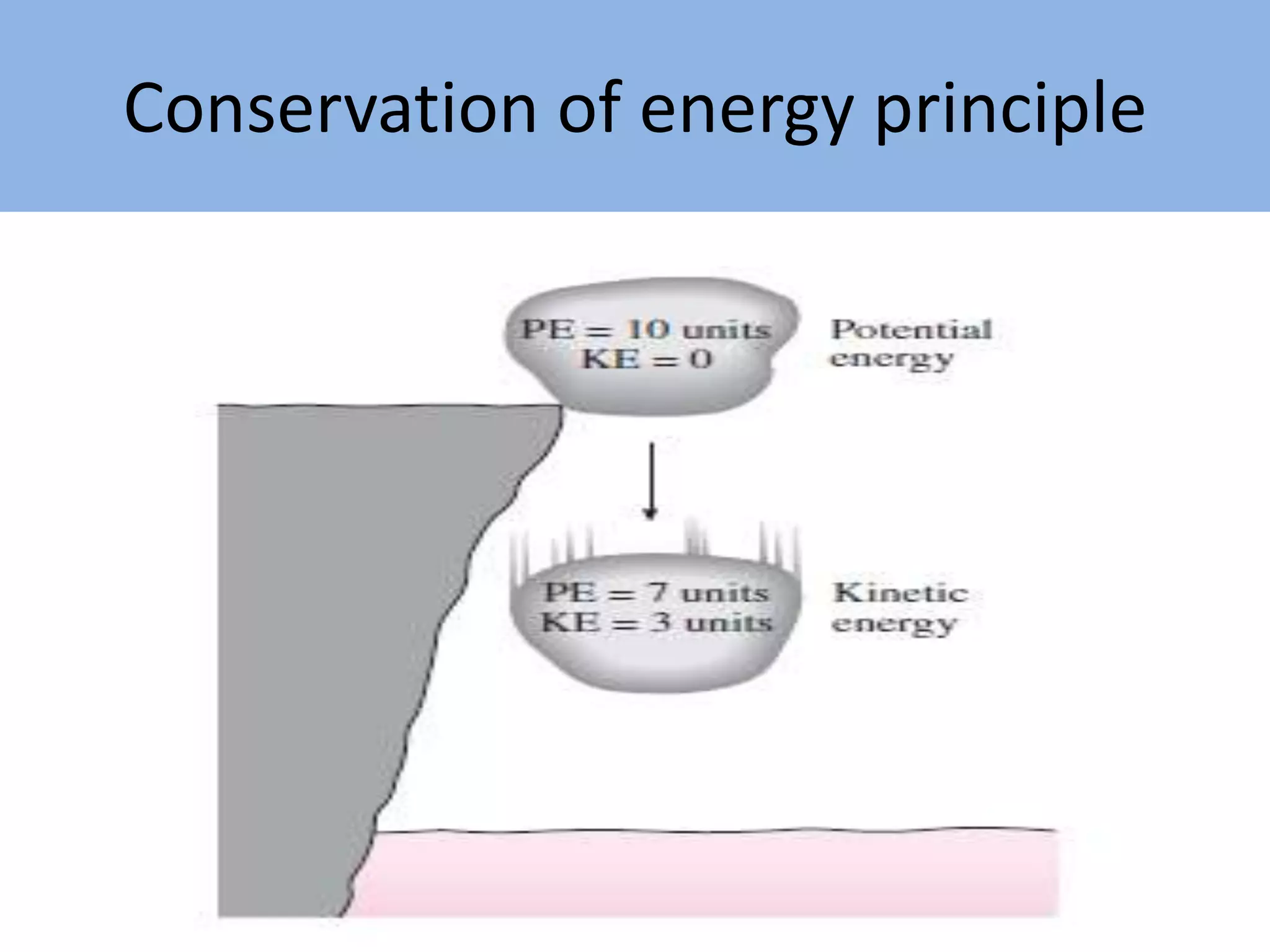
Conservation of energy principle
Application of thermodynamics
Human Body
Refrigeration and Air conditioners
IC Engines
Gas Turbines
Water Heater
Solar Collectors
Pressure cooker ….
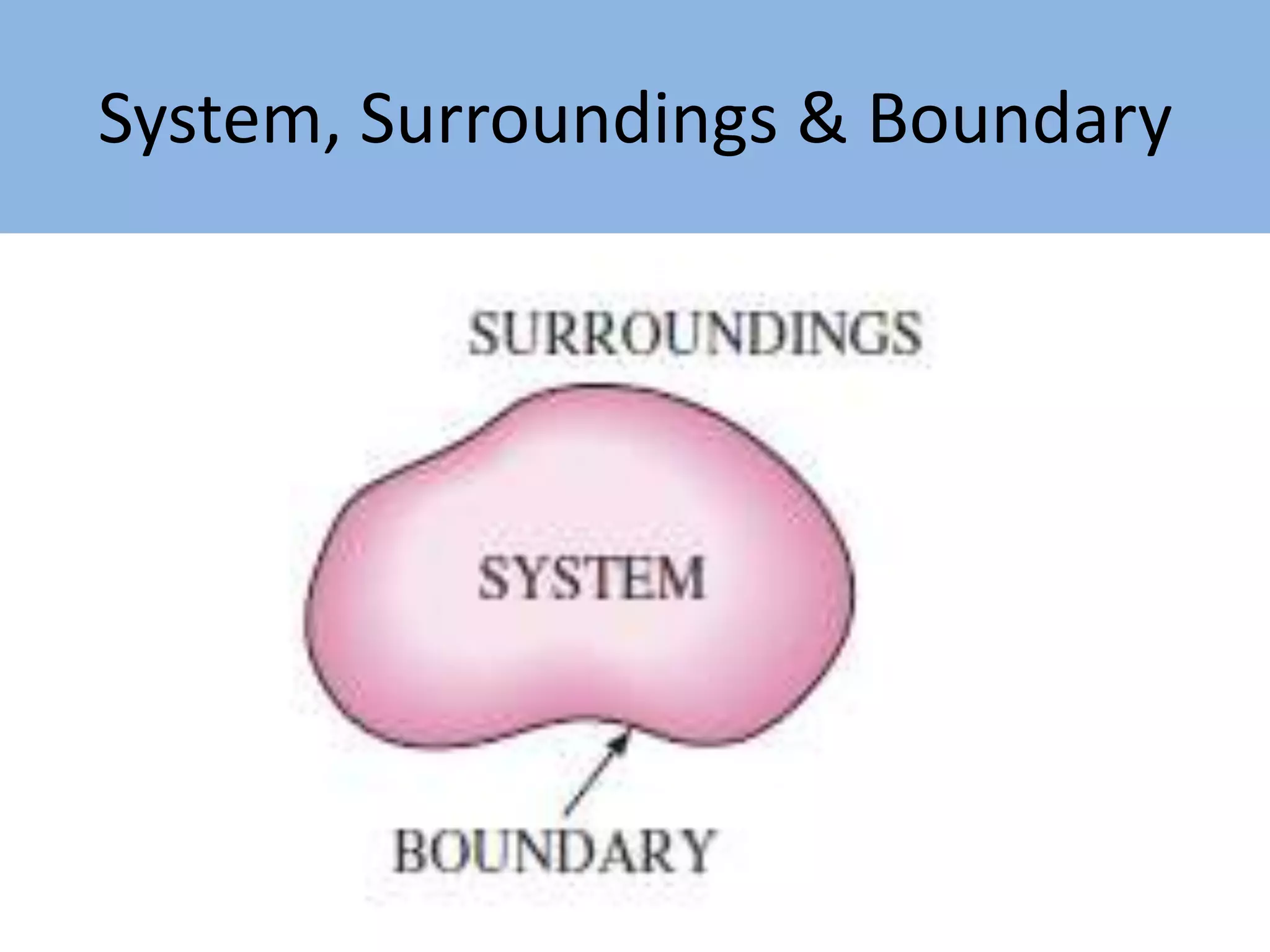
System, Surroundings & Boundary
 System
 A system is defined as a quantity of matter or a region in space chosen for study.
 Surroundings
 The mass or region outside the system is called the surroundings.
 Boundary
 The real or imaginary surface that separates the system from its surroundings is
called the boundary.
System, Surroundings & Boundary
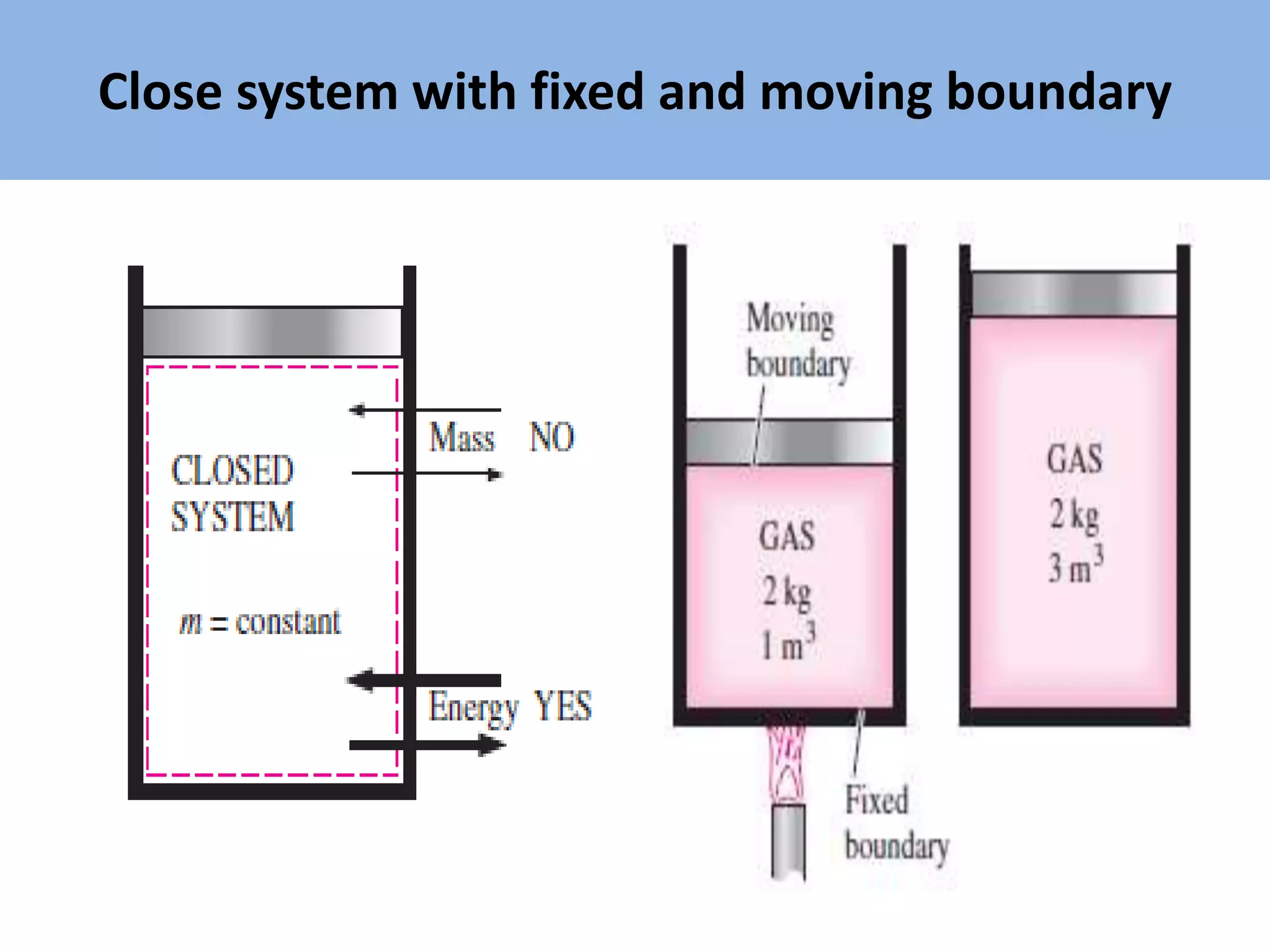
Closed System/Control Mass
 A closed system consists of a fixed amount of mass, and no
mass can cross its boundary. No mass can enter or leave a
closed system. But energy, in the form of heat or work, can
cross the boundary and the volume of a closed system does
not have to be fixed.
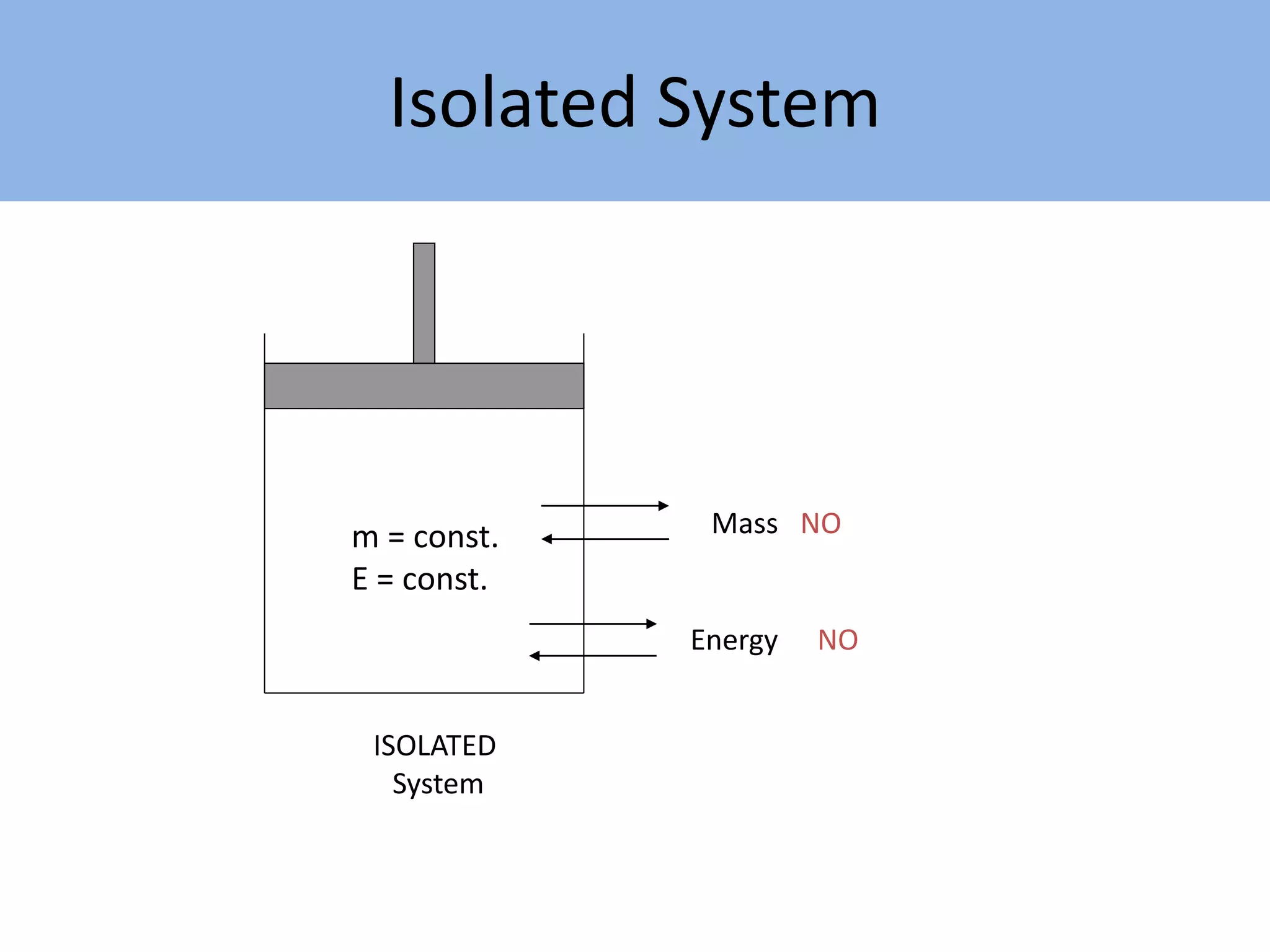
 In some special case, even energy is not allowed to cross
the boundary, that system is called an isolated system.
Close system with fixed and moving boundary
Isolated System
ISOLATED
System
m = const.
E = const.
Mass NO
Energy NO
Open System/Control Volume
 An open system, or a control volume is a properly selected region in space. It
usually encloses a device that involves mass flow such as a compressor, turbine, or
nozzle.
 Any arbitrary region in space can be selected as a control volume.
 The boundaries of a control volume are called a control surface, and they can be
real or imaginary.
 A control volume can be fixed in size and shape, or it may involve a moving
boundary, most control volumes, however, have fixed boundaries and thus do not
involve any moving boundaries.
 e.g. Water Heater, Car Radiator, Turbine, Compressor
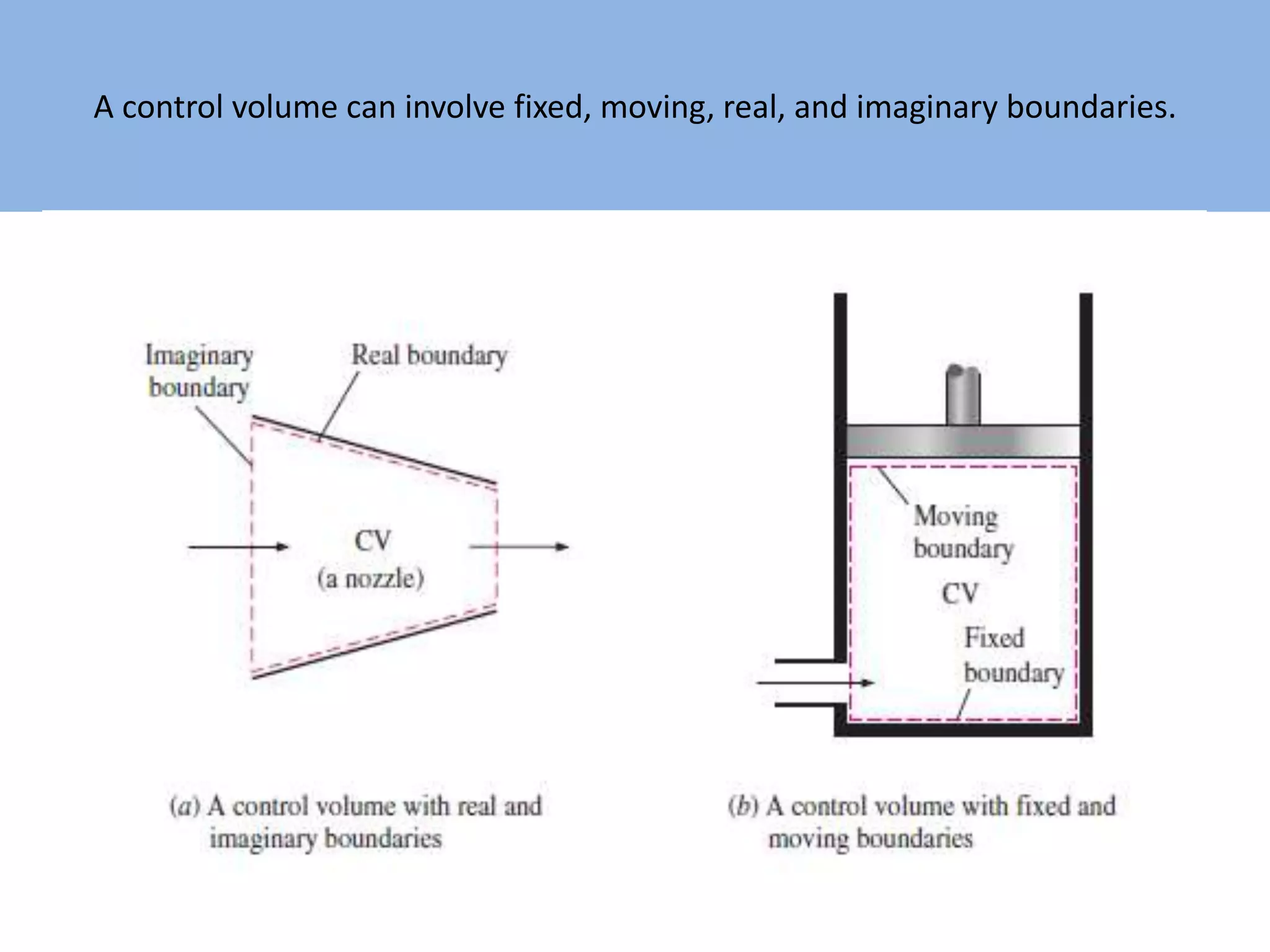
A control volume can involve fixed, moving, real, and imaginary boundaries.
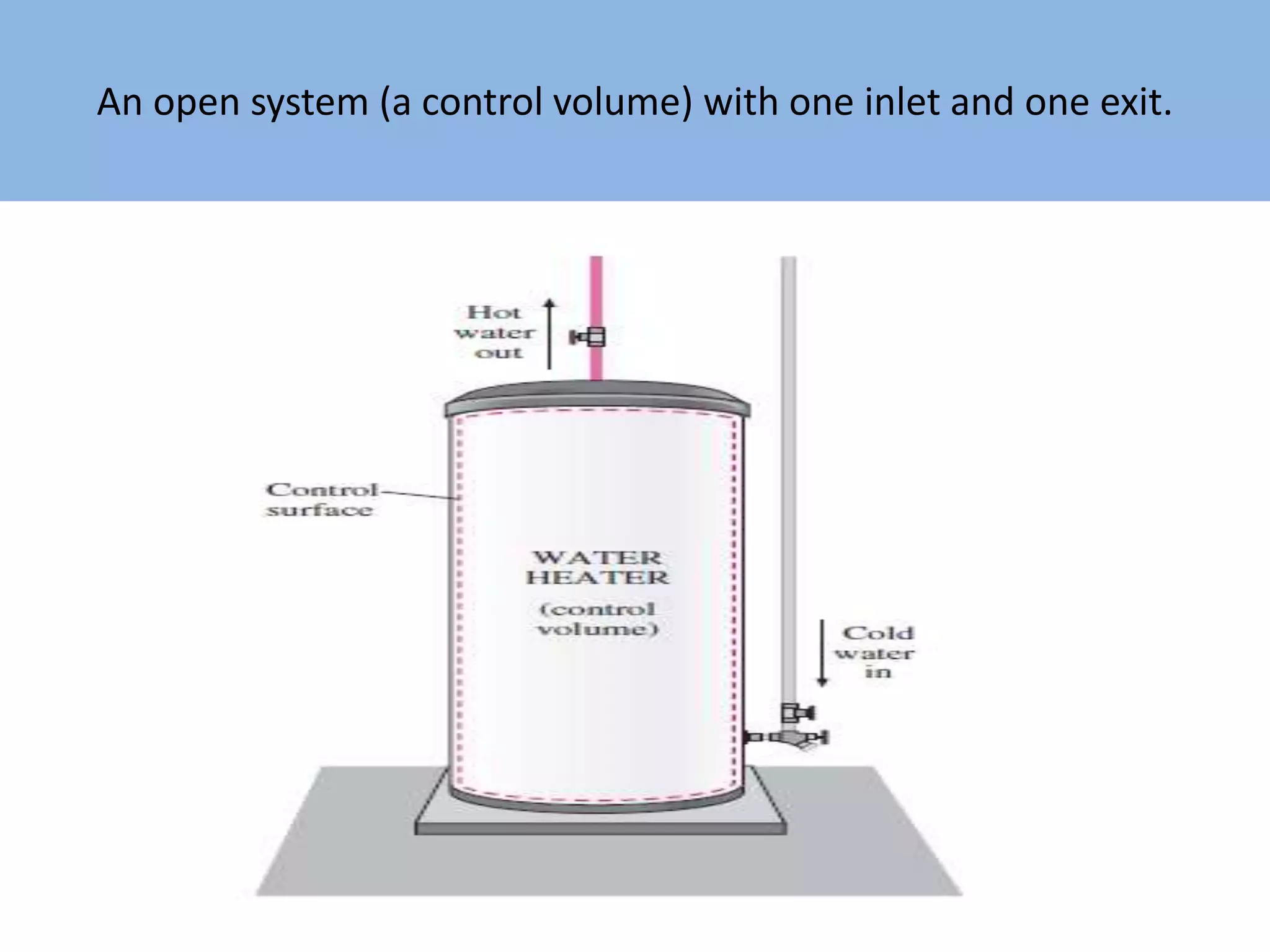
An open system (a control volume) with one inlet and one exit.
Properties of a system
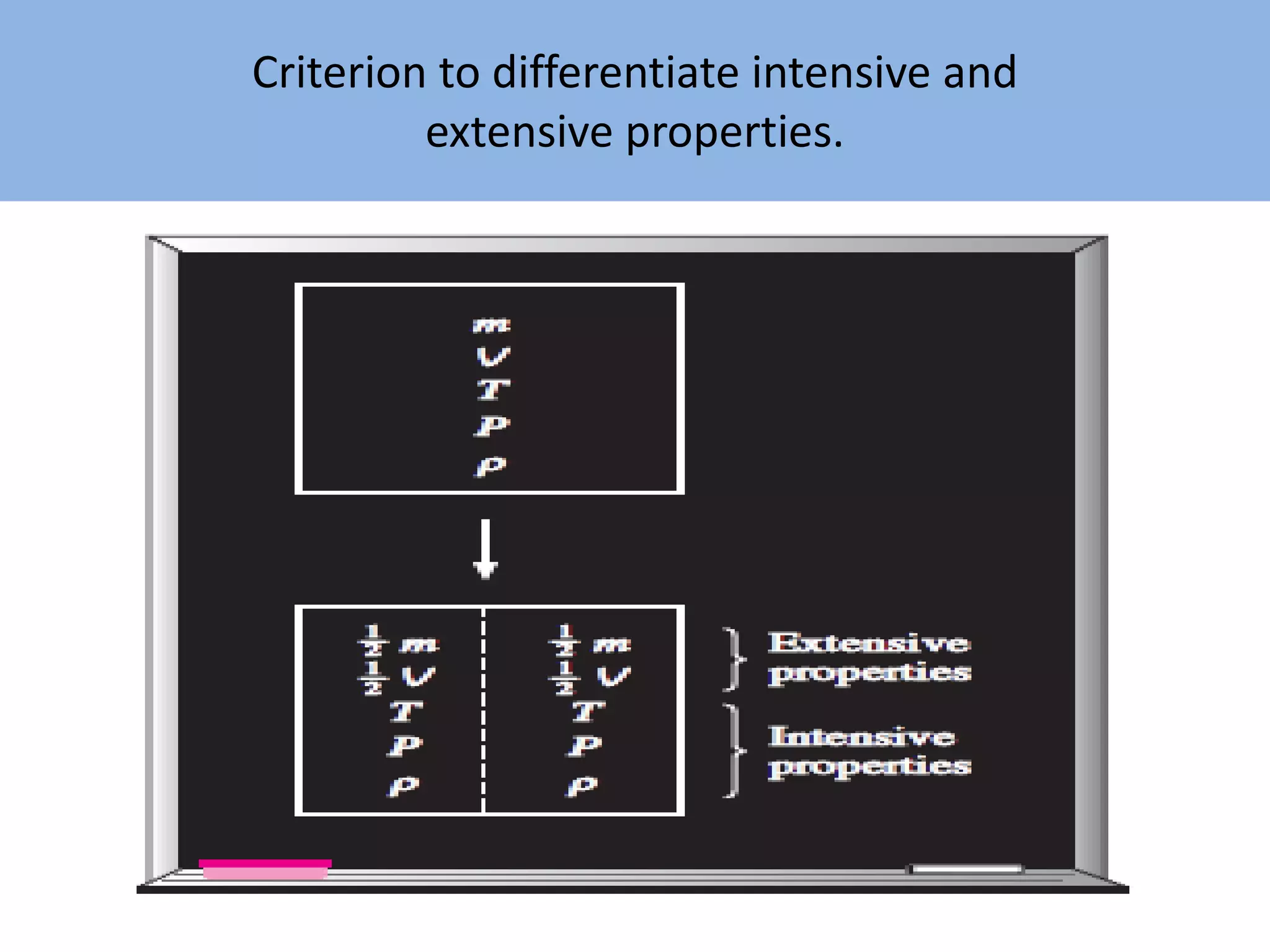
 Intensive Properties
• Intensive properties are those that are independent of the mass of a system, such
as temperature, pressure, and density.
 Extensive Properties
• Extensive properties are those whose values depend on the size or extent of the
system. Total mass, total volume, and total momentum are some examples of
extensive properties
 Specific Properties
• Extensive properties per unit mass are called specific properties. Some examples of
specific properties are specific volume (v =V/m) and specific total energy (e =E/m).
Criterion to differentiate intensive and
extensive properties.
Density & Specific Gravity
 Density is defined as mass per unit volume.
 The reciprocal of density is the specific volume v, which is
defined as volume per unit mass.
 The ratio of the density of a substance to the density of
some standard substance at a specified temperature .
State & Equilibrium
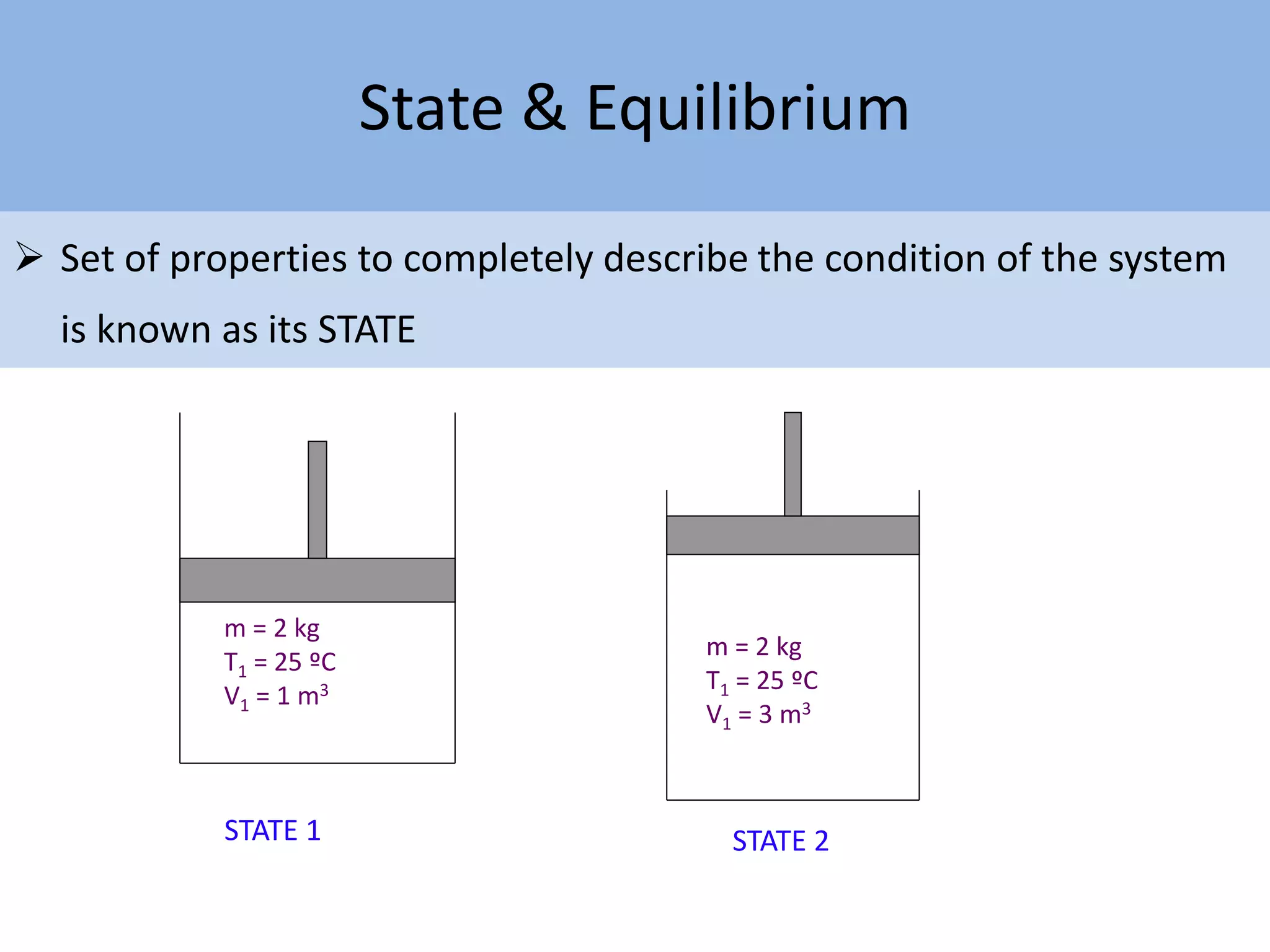
 Set of properties to completely describe the condition of the system
is known as its STATE
m = 2 kg
T1 = 25 ºC
V1 = 1 m3
STATE 1
m = 2 kg
T1 = 25 ºC
V1 = 3 m3
STATE 2
State & Equilibrium
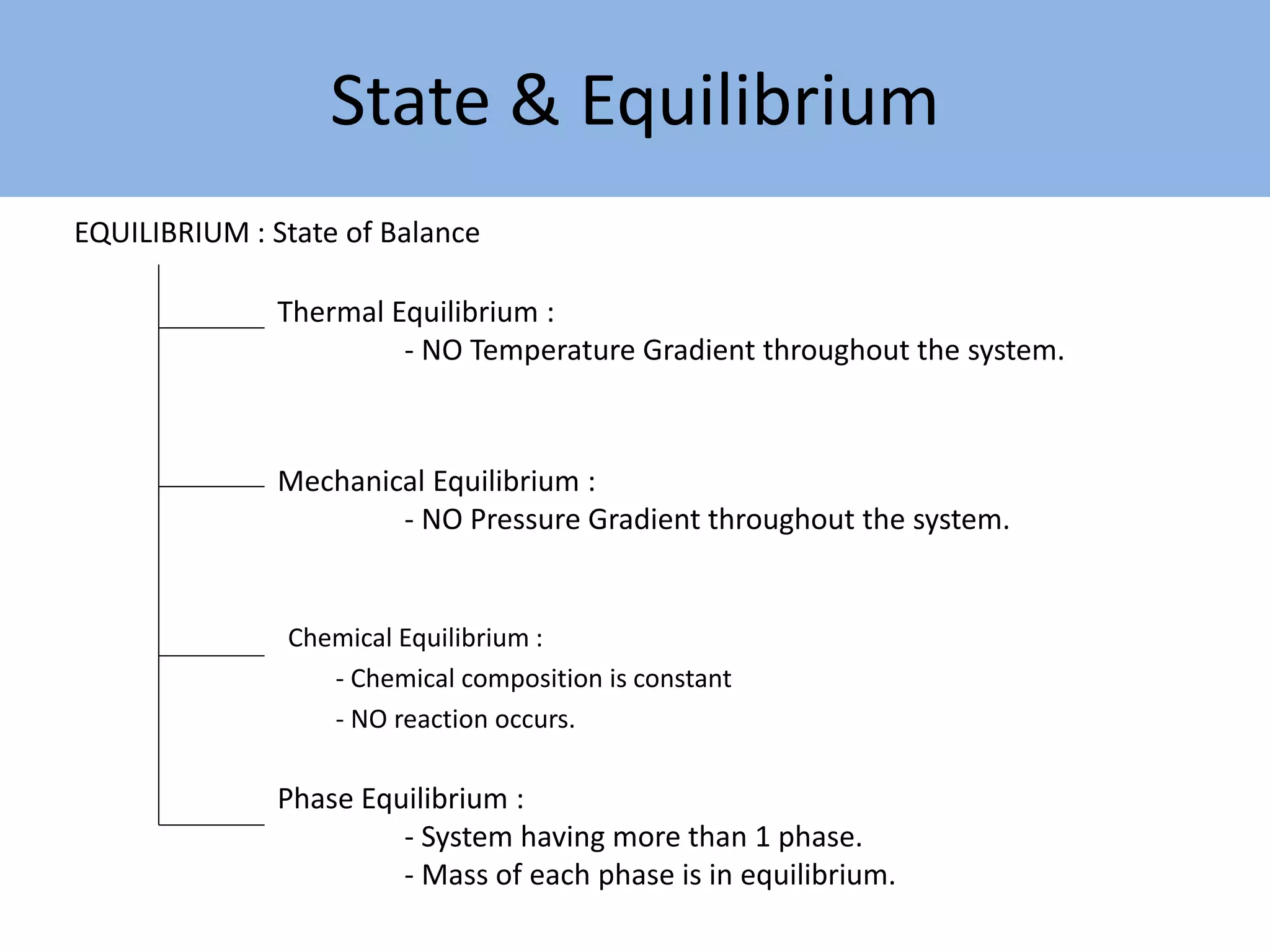
Thermal Equilibrium :
- NO Temperature Gradient throughout the system.
Mechanical Equilibrium :
- NO Pressure Gradient throughout the system.
Phase Equilibrium :
- System having more than 1 phase.
- Mass of each phase is in equilibrium.
Chemical Equilibrium :
- Chemical composition is constant
- NO reaction occurs.
EQUILIBRIUM : State of Balance
Path & Process
t=0t=t1
t=0t=t2t
t2 < t1
Quasi-Static
Non-Quasi-Static
Process proceeds in such a manner that
system remains infinitesimally close to
equilibrium conditions at all times. It is
known as QUASI-STATIC or QUASI-
EQUILIBRIUM Process.
Path & Process
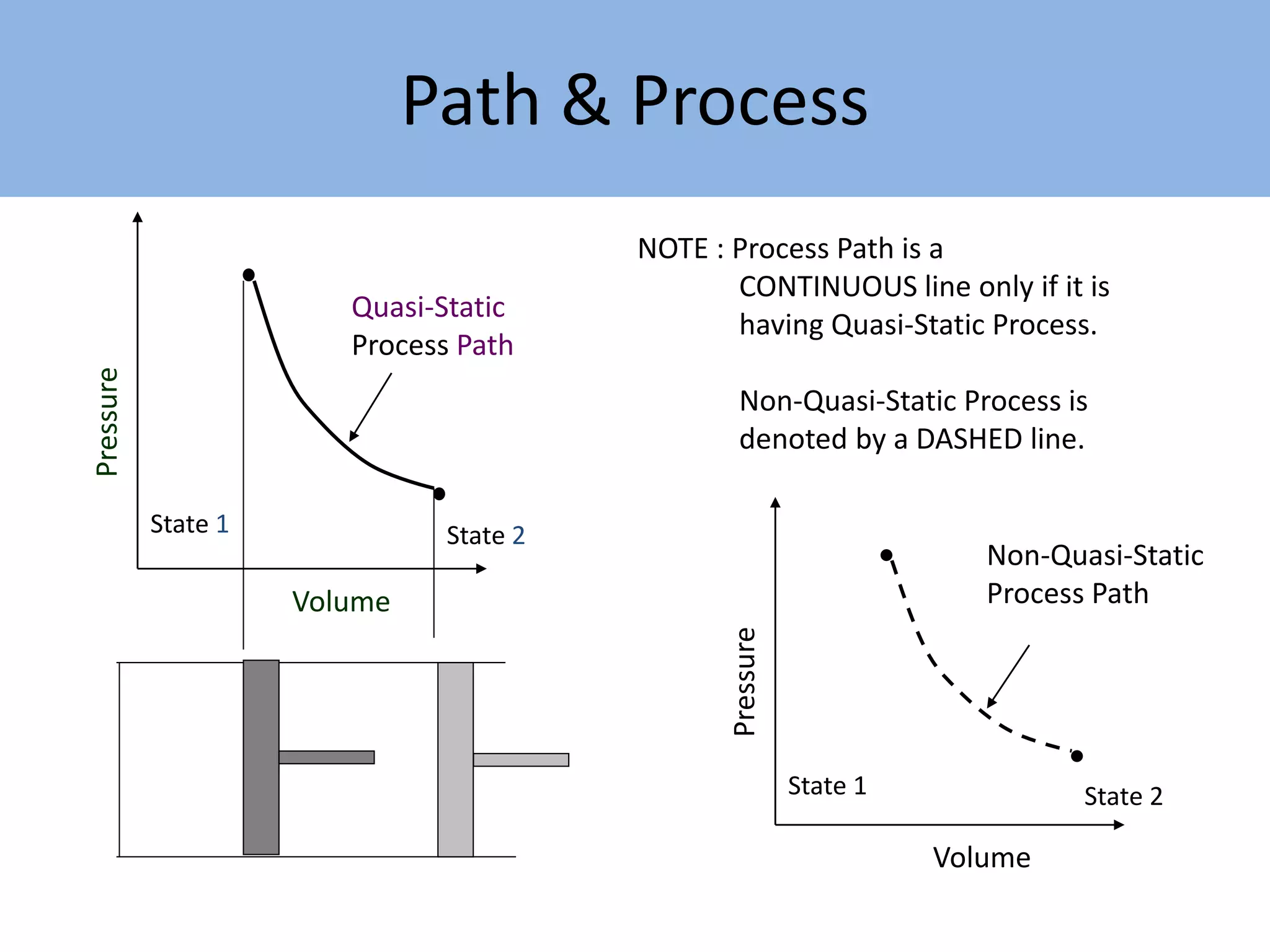
State 1 State 2
Pressure
Quasi-Static
Process Path
Volume
NOTE : Process Path is a
CONTINUOUS line only if it is
having Quasi-Static Process.
Non-Quasi-Static Process is
denoted by a DASHED line.
State 1 State 2
Pressure
Volume
Non-Quasi-Static
Process Path
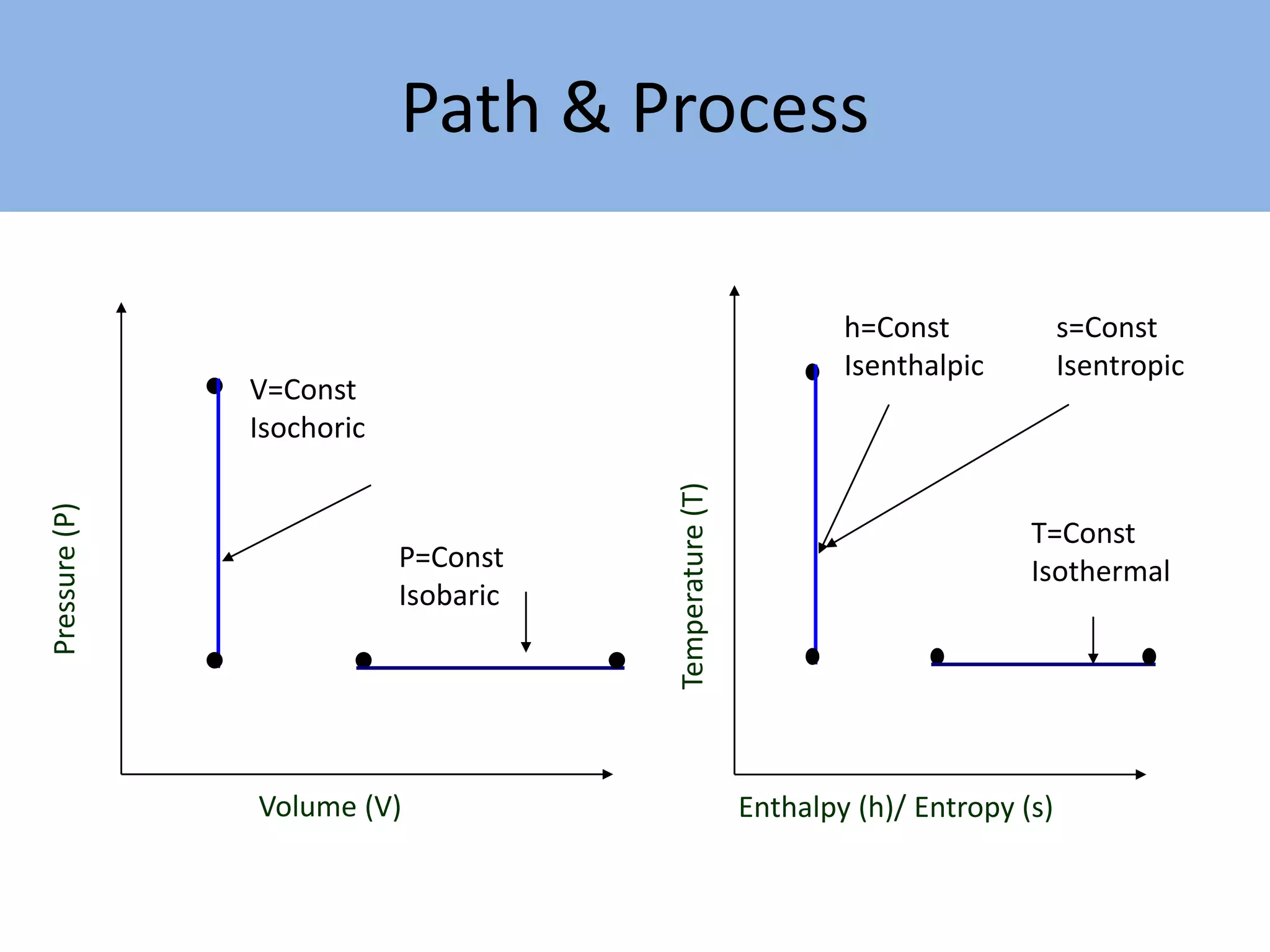
Path & Process
Pressure(P)
Volume (V)
V=Const
Isochoric
P=Const
Isobaric
Temperature(T)
Enthalpy (h)/ Entropy (s)
T=Const
Isothermal
h=Const
Isenthalpic
s=Const
Isentropic
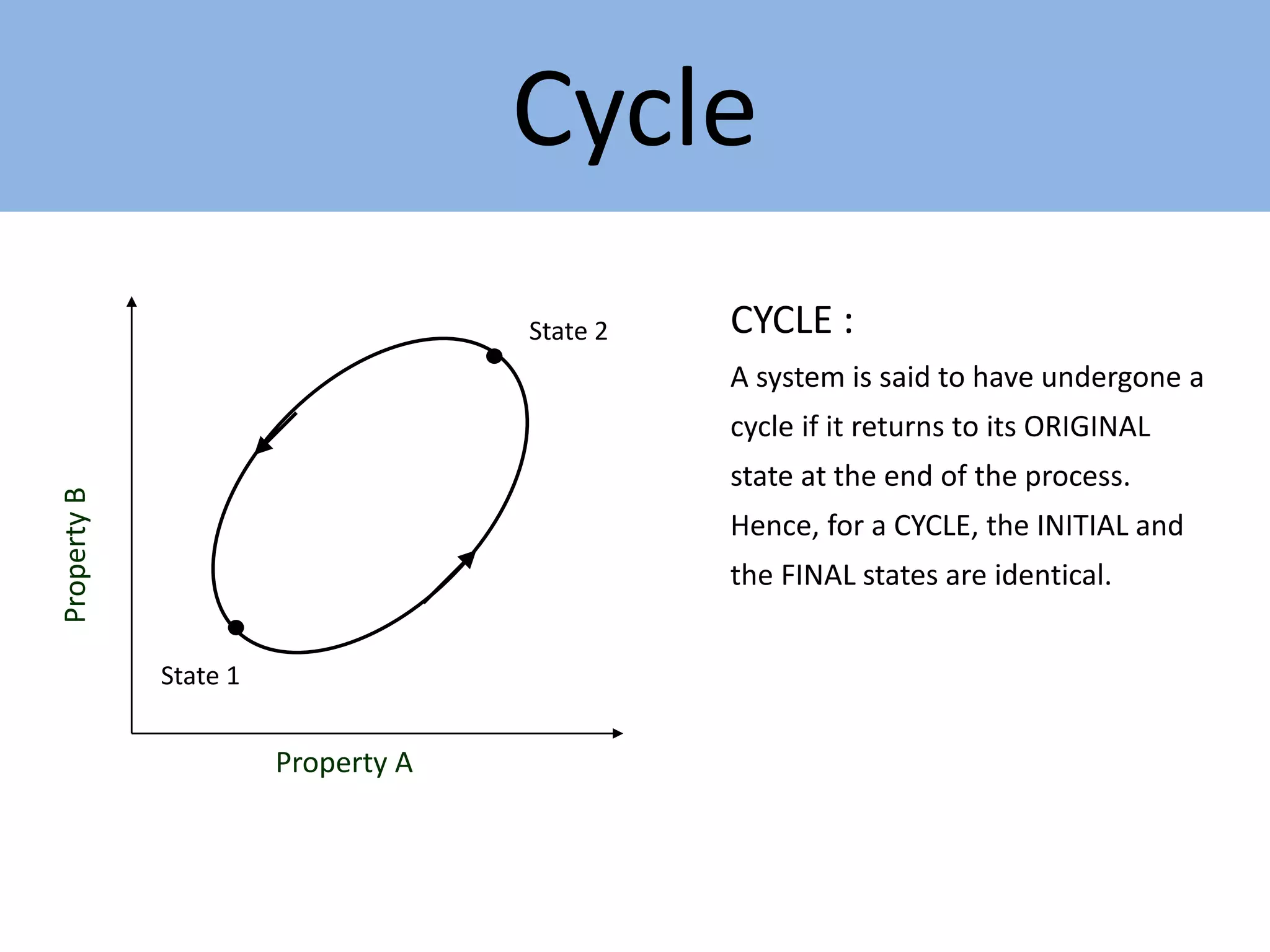
Cycle
CYCLE :
A system is said to have undergone a
cycle if it returns to its ORIGINAL
state at the end of the process.
Hence, for a CYCLE, the INITIAL and
the FINAL states are identical.
Property A
State 1
State 2
PropertyB
The End

Thermo lecture no.2

  • 2.
    Thermodynamics can bedefined as the science of energy. Thermodynamics = Therme + Dynamis (Heat) (Power) Thermodynamics
  • 3.
  • 4.
    Application of thermodynamics HumanBody Refrigeration and Air conditioners IC Engines Gas Turbines Water Heater Solar Collectors Pressure cooker ….
  • 5.
    System, Surroundings &Boundary  System  A system is defined as a quantity of matter or a region in space chosen for study.  Surroundings  The mass or region outside the system is called the surroundings.  Boundary  The real or imaginary surface that separates the system from its surroundings is called the boundary.
  • 6.
  • 7.
    Closed System/Control Mass A closed system consists of a fixed amount of mass, and no mass can cross its boundary. No mass can enter or leave a closed system. But energy, in the form of heat or work, can cross the boundary and the volume of a closed system does not have to be fixed.  In some special case, even energy is not allowed to cross the boundary, that system is called an isolated system.
  • 8.
    Close system withfixed and moving boundary
  • 9.
    Isolated System ISOLATED System m =const. E = const. Mass NO Energy NO
  • 10.
    Open System/Control Volume An open system, or a control volume is a properly selected region in space. It usually encloses a device that involves mass flow such as a compressor, turbine, or nozzle.  Any arbitrary region in space can be selected as a control volume.  The boundaries of a control volume are called a control surface, and they can be real or imaginary.  A control volume can be fixed in size and shape, or it may involve a moving boundary, most control volumes, however, have fixed boundaries and thus do not involve any moving boundaries.  e.g. Water Heater, Car Radiator, Turbine, Compressor
  • 11.
    A control volumecan involve fixed, moving, real, and imaginary boundaries.
  • 12.
    An open system(a control volume) with one inlet and one exit.
  • 13.
    Properties of asystem  Intensive Properties • Intensive properties are those that are independent of the mass of a system, such as temperature, pressure, and density.  Extensive Properties • Extensive properties are those whose values depend on the size or extent of the system. Total mass, total volume, and total momentum are some examples of extensive properties  Specific Properties • Extensive properties per unit mass are called specific properties. Some examples of specific properties are specific volume (v =V/m) and specific total energy (e =E/m).
  • 14.
    Criterion to differentiateintensive and extensive properties.
  • 15.
    Density & SpecificGravity  Density is defined as mass per unit volume.  The reciprocal of density is the specific volume v, which is defined as volume per unit mass.  The ratio of the density of a substance to the density of some standard substance at a specified temperature .
  • 16.
    State & Equilibrium Set of properties to completely describe the condition of the system is known as its STATE m = 2 kg T1 = 25 ºC V1 = 1 m3 STATE 1 m = 2 kg T1 = 25 ºC V1 = 3 m3 STATE 2
  • 17.
    State & Equilibrium ThermalEquilibrium : - NO Temperature Gradient throughout the system. Mechanical Equilibrium : - NO Pressure Gradient throughout the system. Phase Equilibrium : - System having more than 1 phase. - Mass of each phase is in equilibrium. Chemical Equilibrium : - Chemical composition is constant - NO reaction occurs. EQUILIBRIUM : State of Balance
  • 18.
    Path & Process t=0t=t1 t=0t=t2t t2< t1 Quasi-Static Non-Quasi-Static Process proceeds in such a manner that system remains infinitesimally close to equilibrium conditions at all times. It is known as QUASI-STATIC or QUASI- EQUILIBRIUM Process.
  • 19.
    Path & Process State1 State 2 Pressure Quasi-Static Process Path Volume NOTE : Process Path is a CONTINUOUS line only if it is having Quasi-Static Process. Non-Quasi-Static Process is denoted by a DASHED line. State 1 State 2 Pressure Volume Non-Quasi-Static Process Path
  • 20.
    Path & Process Pressure(P) Volume(V) V=Const Isochoric P=Const Isobaric Temperature(T) Enthalpy (h)/ Entropy (s) T=Const Isothermal h=Const Isenthalpic s=Const Isentropic
  • 21.
    Cycle CYCLE : A systemis said to have undergone a cycle if it returns to its ORIGINAL state at the end of the process. Hence, for a CYCLE, the INITIAL and the FINAL states are identical. Property A State 1 State 2 PropertyB
  • 22.