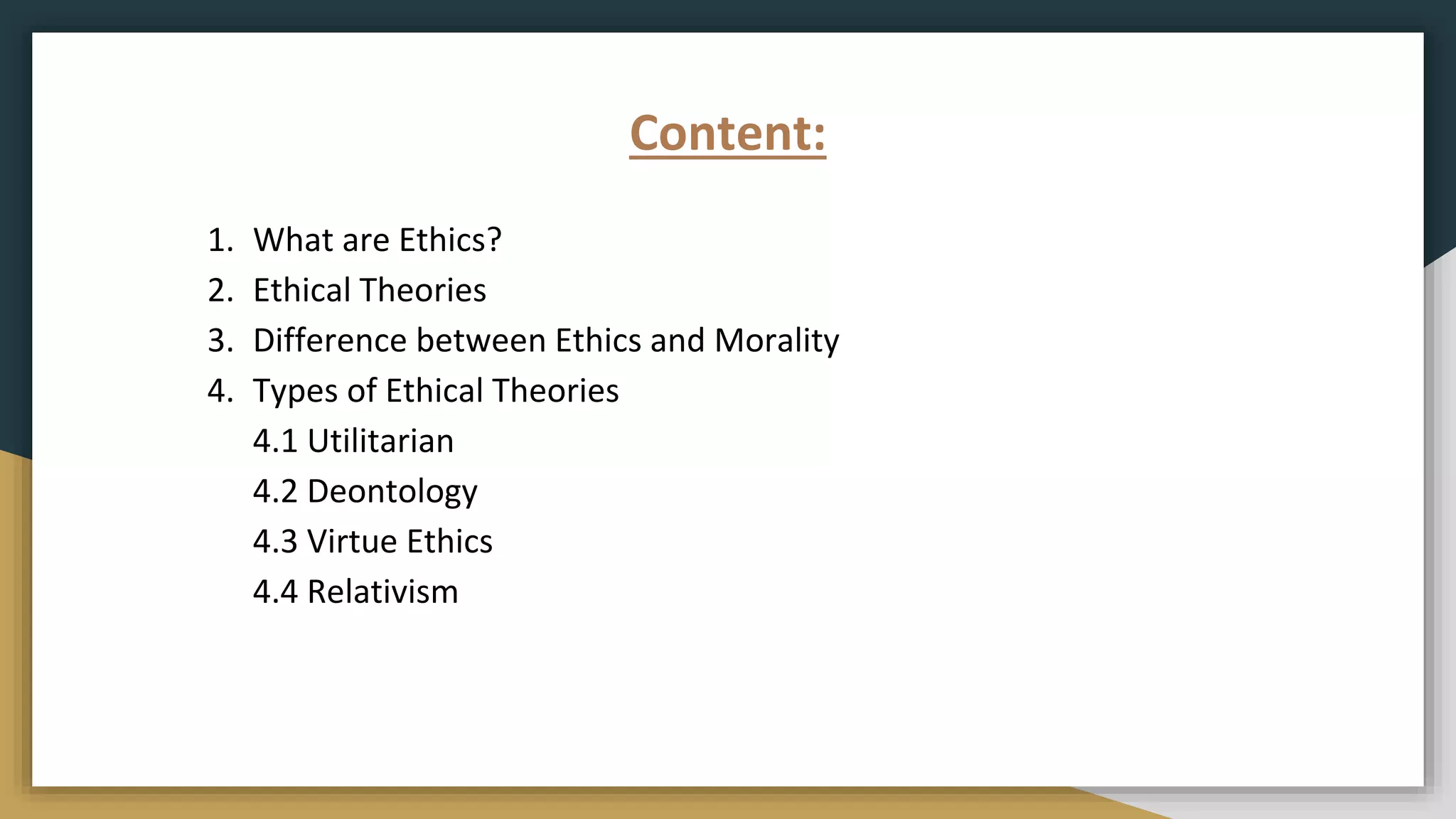
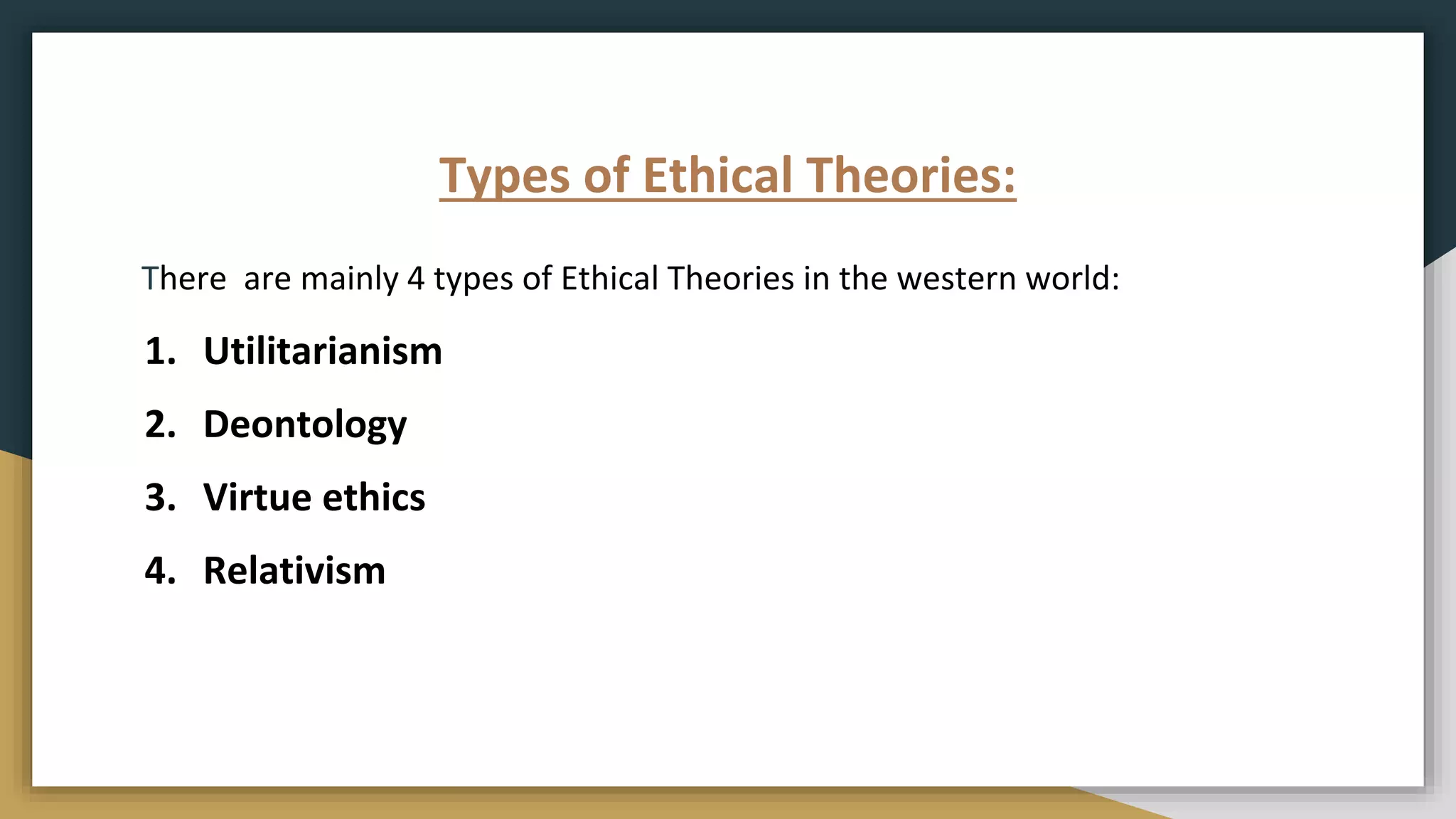
This document provides an overview of different ethical theories:
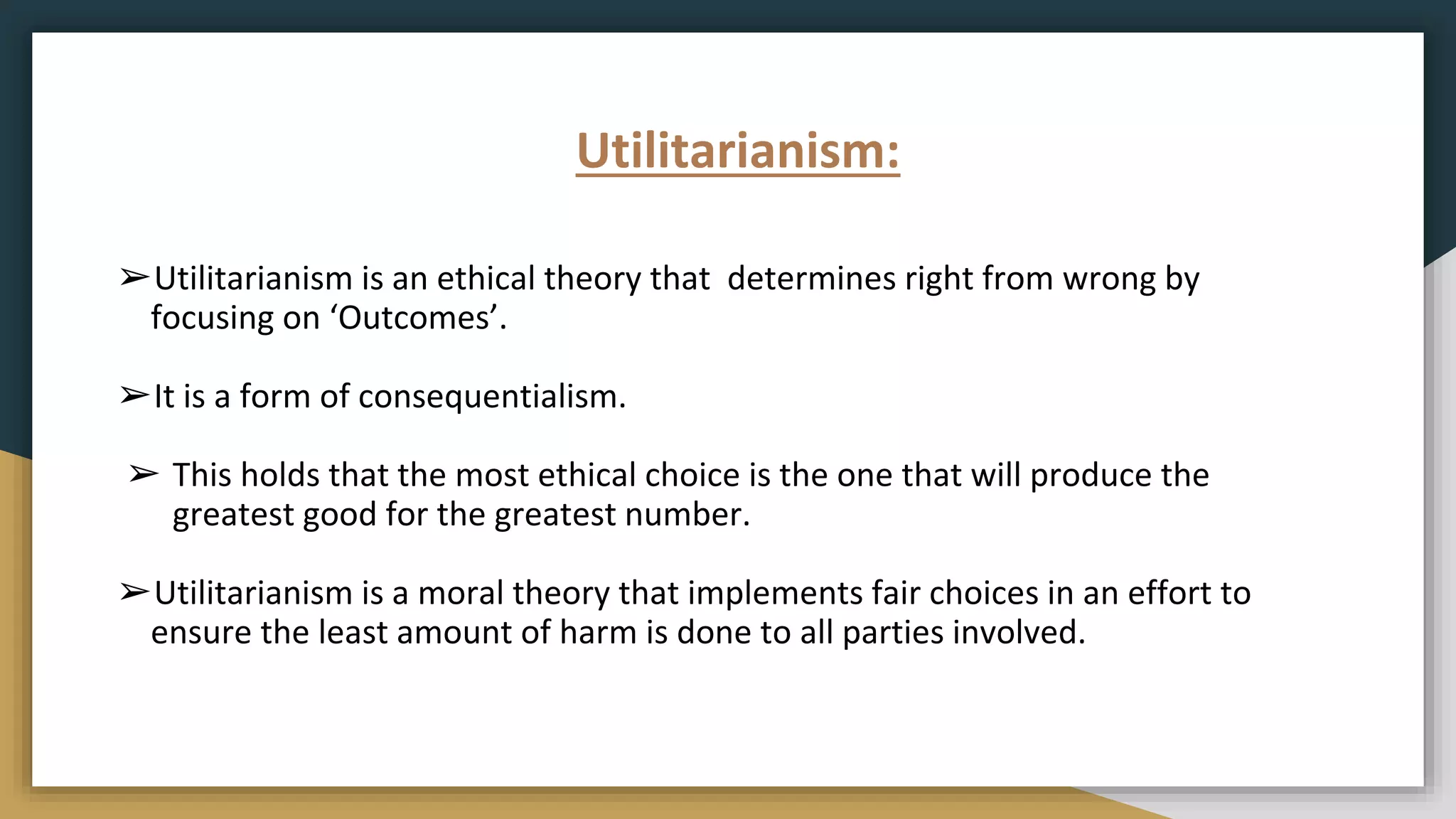
1. Utilitarianism determines right and wrong based on outcomes and producing the greatest good for the greatest number. However, it can be difficult to predict consequences and harming minorities is problematic.
2. Deontology uses rules to determine right and wrong, such as not lying or stealing. Actions are defined by intentions rather than consequences. However, rigidly following rules can produce unacceptable results.
3. Virtue ethics examines character rather than actions. It considers traits like temperance and intelligence when evaluating unethical behavior. Advantages include a broader conception of ethics focused on relationships.
4. Relativism deems moral obligations and beliefs










![Ethical theories[1]](https://cdn.slidesharecdn.com/ss_thumbnails/ethicaltheories1-150205060146-conversion-gate01-thumbnail.jpg?width=640&height=640&fit=bounds)


