L I F E S K I L L S
S 4 E E E , E C , C I V I L
K T U
M O D U L E - 4
R I Z A E T A B D U L R A H I M
A S S T. P R O F E S S O R ( M B A D E P T )
S R E E N A R AYA N A I N S T I T U T E O F
T E C H N O LO G Y, A D O O R
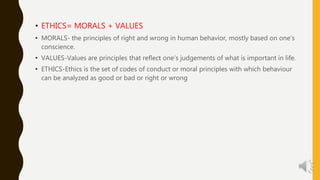
• ETHICS= MORALS + VALUES
• MORALS- the principles of right and wrong in human behavior, mostly based on one’s
conscience.
• VALUES-Values are principles that reflect one’s judgements of what is important in life.
• ETHICS-Ethics is the set of codes of conduct or moral principles with which behaviour
can be analyzed as good or bad or right or wrong
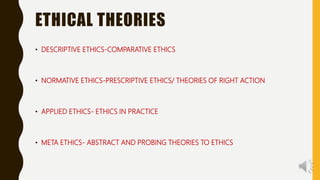
ETHICAL THEORIES
• DESCRIPTIVE ETHICS-COMPARATIVE ETHICS
• NORMATIVE ETHICS-PRESCRIPTIVE ETHICS/ THEORIES OF RIGHT ACTION
• APPLIED ETHICS- ETHICS IN PRACTICE
• META ETHICS- ABSTRACT AND PROBING THEORIES TO ETHICS
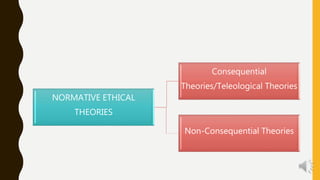
NORMATIVE ETHICAL
THEORIES
Consequential
Theories/Teleological Theories
Non-Consequential Theories
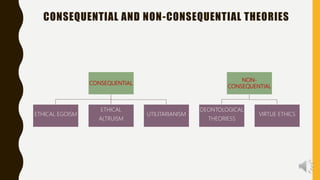
CONSEQUENTIAL AND NON-CONSEQUENTIAL THEORIES
CONSEQUENTIAL
ETHICAL EGOISM
ETHICAL
ALTRUISM
UTILITARIANISM
NON-
CONSEQUENTIAL
DEONTOLOGICAL
THEORIESS
VIRTUE ETHICS
Consequentialist Theories
• Consequentialism is the view that morality of an action is solely a
function of the goodness or badness of its outcomes. Consequentialist
theories are otherwise called teleological theories, origin of the term
from a Greek word “telos” which means end, since the end result is
considered the only criterion for moral judgement.
These theories are about good intentions than following any rigid rule
there are dilemmas like “being good to whom?” and “best consequences
to whom?”. Various categories of consequentialist theories are given
below.
1. Ethical Egoism This theory takes the view that an action is morally right if its
consequence is good for the agent performing the action. In other words, it is always
moral to do something if it promotes one’s own good or self interest regardless of its
impacts on others.
2. Ethical Altruism This takes the view that an action is morally right if its
consequence is good for individuals other than the agent who performs the action. It is
something like self sacrifice. Here the moral value of an action solely depends on the
impact on others regardless of its effect on oneself.
3. Utilitarianism It holds the view that right actions are those that maximize total
utility, that is, the greatest good for greatest number. Instead of self promotion or self
sacrifice, this approach makes a cost benefit analysis of consequences affected by all
parties concerned and choosing an action that results in maximum happiness of all.
Non Consequentialist Theories
Virtue Theory/Virtue Ethics
Virtue theory/Virtue ethics recognizes the virtue of mind and character as the most
important elements of ethics and moral philosophy. Individual’s virtues are emphasized
rather than doing one’s duty or acting to bring about good consequences.
Duty or Deontological Theories
Deontological (duty based theories) are of the view that morality of an action is solely
dependent on the quality of the action.
• ANY DOUBTS……PLEASE CONTACT……

Ethical theories

  • 1.
    L I FE S K I L L S S 4 E E E , E C , C I V I L K T U M O D U L E - 4 R I Z A E T A B D U L R A H I M A S S T. P R O F E S S O R ( M B A D E P T ) S R E E N A R AYA N A I N S T I T U T E O F T E C H N O LO G Y, A D O O R
  • 2.
    • ETHICS= MORALS+ VALUES • MORALS- the principles of right and wrong in human behavior, mostly based on one’s conscience. • VALUES-Values are principles that reflect one’s judgements of what is important in life. • ETHICS-Ethics is the set of codes of conduct or moral principles with which behaviour can be analyzed as good or bad or right or wrong
  • 3.
    ETHICAL THEORIES • DESCRIPTIVEETHICS-COMPARATIVE ETHICS • NORMATIVE ETHICS-PRESCRIPTIVE ETHICS/ THEORIES OF RIGHT ACTION • APPLIED ETHICS- ETHICS IN PRACTICE • META ETHICS- ABSTRACT AND PROBING THEORIES TO ETHICS
  • 4.
  • 5.
    CONSEQUENTIAL AND NON-CONSEQUENTIALTHEORIES CONSEQUENTIAL ETHICAL EGOISM ETHICAL ALTRUISM UTILITARIANISM NON- CONSEQUENTIAL DEONTOLOGICAL THEORIESS VIRTUE ETHICS
  • 6.
    Consequentialist Theories • Consequentialismis the view that morality of an action is solely a function of the goodness or badness of its outcomes. Consequentialist theories are otherwise called teleological theories, origin of the term from a Greek word “telos” which means end, since the end result is considered the only criterion for moral judgement. These theories are about good intentions than following any rigid rule there are dilemmas like “being good to whom?” and “best consequences to whom?”. Various categories of consequentialist theories are given below.
  • 7.
    1. Ethical EgoismThis theory takes the view that an action is morally right if its consequence is good for the agent performing the action. In other words, it is always moral to do something if it promotes one’s own good or self interest regardless of its impacts on others. 2. Ethical Altruism This takes the view that an action is morally right if its consequence is good for individuals other than the agent who performs the action. It is something like self sacrifice. Here the moral value of an action solely depends on the impact on others regardless of its effect on oneself. 3. Utilitarianism It holds the view that right actions are those that maximize total utility, that is, the greatest good for greatest number. Instead of self promotion or self sacrifice, this approach makes a cost benefit analysis of consequences affected by all parties concerned and choosing an action that results in maximum happiness of all.
  • 8.
    Non Consequentialist Theories VirtueTheory/Virtue Ethics Virtue theory/Virtue ethics recognizes the virtue of mind and character as the most important elements of ethics and moral philosophy. Individual’s virtues are emphasized rather than doing one’s duty or acting to bring about good consequences. Duty or Deontological Theories Deontological (duty based theories) are of the view that morality of an action is solely dependent on the quality of the action.
  • 9.