Nonnursing
theories
2


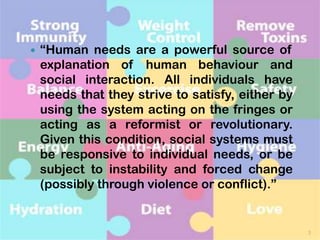
“Human needs are a powerful source of
explanation of human behaviour and
social interaction. All individuals have
needs that they strive to satisfy, either by
using the system acting on the fringes or
acting as a reformist or revolutionary.
Given this condition, social systems must
be responsive to individual needs, or be
subject to instability and forced change
(possibly through violence or conflict).”

3
Maslow

Burton

Rosenberg

Max Neef

Food, water, shelter
(1)

Distributive justice

Physical
Nurturance

Subsistence

Safety and security
(2)

Safety, Security

Interdependence

Protection

Belonging or love
(3)

Belongingness

Love Integrity

Affection

Self-esteem (4)

Self-esteem

Autonomy

Understanding

Personal fulfilment
(5)

Personal fulfilment

Play

Creation

Identity

Celebration and
mourning

Identity

Cultural security

Spiritual
Communion

Leisure, Idleness

Freedom
Participation

Freedom
Participation
4






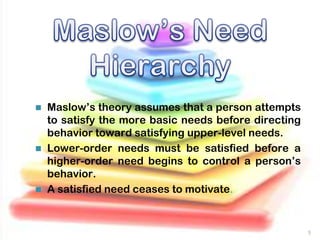
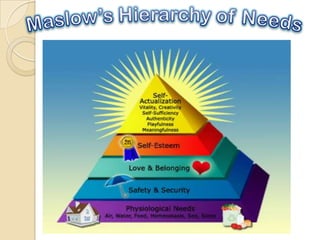
Maslow’s theory assumes that a person attempts
to satisfy the more basic needs before directing
behavior toward satisfying upper-level needs.
Lower-order needs must be satisfied before a
higher-order need begins to control a person’s
behavior.
A satisfied need ceases to motivate.

5
CHANGE THEORY
This theory depends on the presence

of driving and resistant forces. The driving
forces are the change agents who push
employees in the direction of change. The
resistant forces are employees or nurses
who do not want the proposed change. For
this theory to be successful, the driving
force must dominate the resistant force.
 Driving

Forces are forces that

push in a direction that causes
change to occur.
 They

cause a shift in the

equilibrium towards change.
 Restraining

forces are forces that
counter driving forces. They oppose
change.
 Restraining forces cause a shift in
the equilibrium which opposes
change
 Equilibrium

is a state of being where
driving forces equal restraining forces
and no change occurs
 Equilibrium can be raised or lowered
by changes that occur between the
driving and restraining forces
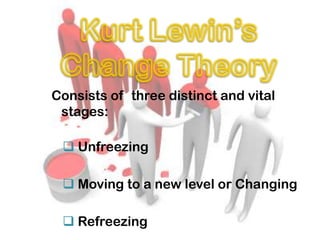
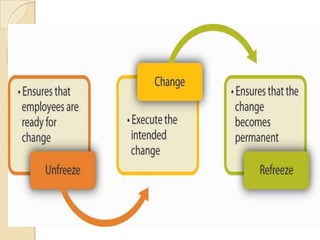
Consists of three distinct and vital
stages:
 Unfreezing
 Moving to a new level or Changing
 Refreezing
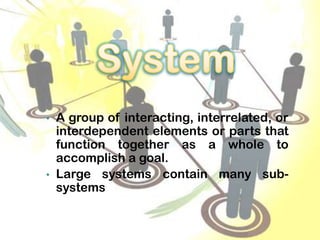
A group of interacting, interrelated, or
interdependent elements or parts that
function together as a whole to
accomplish a goal.
• Large systems contain many subsystems
•
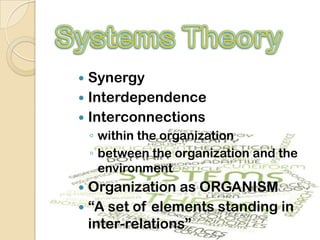
Synergy
 Interdependence
 Interconnections


◦ within the organization
◦ between the organization and the
environment

Organization as ORGANISM
 “A set of elements standing in
inter-relations”

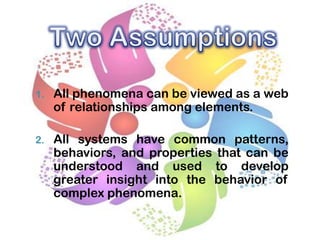
1.

All phenomena can be viewed as a web
of relationships among elements.

2.

All systems have common patterns,
behaviors, and properties that can be
understood and used to develop
greater insight into the behavior of
complex phenomena.
non-nursing theories

non-nursing theories

  • 1.
  • 2.
  • 3.
     “Human needs area powerful source of explanation of human behaviour and social interaction. All individuals have needs that they strive to satisfy, either by using the system acting on the fringes or acting as a reformist or revolutionary. Given this condition, social systems must be responsive to individual needs, or be subject to instability and forced change (possibly through violence or conflict).” 3
  • 4.
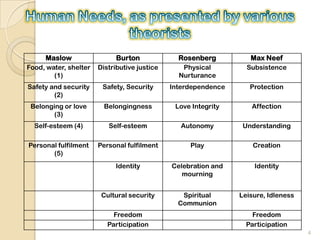
    Maslow Burton Rosenberg Max Neef Food, water,shelter (1) Distributive justice Physical Nurturance Subsistence Safety and security (2) Safety, Security Interdependence Protection Belonging or love (3) Belongingness Love Integrity Affection Self-esteem (4) Self-esteem Autonomy Understanding Personal fulfilment (5) Personal fulfilment Play Creation Identity Celebration and mourning Identity Cultural security Spiritual Communion Leisure, Idleness Freedom Participation Freedom Participation 4
  • 5.
       Maslow’s theory assumesthat a person attempts to satisfy the more basic needs before directing behavior toward satisfying upper-level needs. Lower-order needs must be satisfied before a higher-order need begins to control a person’s behavior. A satisfied need ceases to motivate. 5
  • 7.
    CHANGE THEORY This theorydepends on the presence of driving and resistant forces. The driving forces are the change agents who push employees in the direction of change. The resistant forces are employees or nurses who do not want the proposed change. For this theory to be successful, the driving force must dominate the resistant force.
  • 8.
     Driving Forces areforces that push in a direction that causes change to occur.  They cause a shift in the equilibrium towards change.
  • 9.
     Restraining forces areforces that counter driving forces. They oppose change.  Restraining forces cause a shift in the equilibrium which opposes change
  • 10.
     Equilibrium is astate of being where driving forces equal restraining forces and no change occurs  Equilibrium can be raised or lowered by changes that occur between the driving and restraining forces
  • 12.
    Consists of threedistinct and vital stages:  Unfreezing  Moving to a new level or Changing  Refreezing
  • 15.
    A group ofinteracting, interrelated, or interdependent elements or parts that function together as a whole to accomplish a goal. • Large systems contain many subsystems •
  • 16.
    Synergy  Interdependence  Interconnections  ◦within the organization ◦ between the organization and the environment Organization as ORGANISM  “A set of elements standing in inter-relations” 
  • 17.
    1. All phenomena canbe viewed as a web of relationships among elements. 2. All systems have common patterns, behaviors, and properties that can be understood and used to develop greater insight into the behavior of complex phenomena.