Theme 5 Part 2:
Seven Myths of the Spanish
        Conquest
        Kendra Lacasella
 History of the Americas Online
      November 27th, 2011
Acknowledgements and Introduction
• The number 7 has a         • The seven myths of the
  significant meaning in       Conquest are all found in
  American History.            the Cortes legend.
• From the 16th century         – The term myth is also used
  Spanish ecclesiastics to        in the sense “not meaning
                                  the truth”
  those of professional
  historians today, the
  fundamental
  characteristics of that
  vision survived.
   – There is a better
     understanding of the
     Spanish Conquest.
Seven Myths of the Spanish Conquest
 Chapter 1: “A Handful of Adventures”
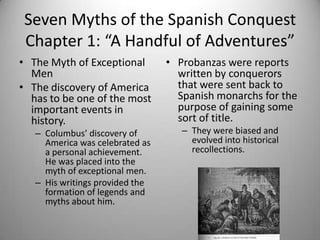
• The Myth of Exceptional        • Probanzas were reports
  Men                              written by conquerors
• The discovery of America         that were sent back to
  has to be one of the most        Spanish monarchs for the
  important events in              purpose of gaining some
  history.                         sort of title.
   – Columbus’ discovery of         – They were biased and
     America was celebrated as        evolved into historical
     a personal achievement.          recollections.
     He was placed into the
     myth of exceptional men.
   – His writings provided the
     formation of legends and
     myths about him.
Seven Myths of the Spanish Conquest
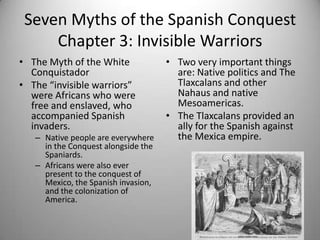
     Chapter 3: Invisible Warriors
• The Myth of the White              • Two very important things
  Conquistador                         are: Native politics and The
• The “invisible warriors”             Tlaxcalans and other
  were Africans who were               Nahaus and native
  free and enslaved, who               Mesoamericas.
  accompanied Spanish                • The Tlaxcalans provided an
  invaders.                            ally for the Spanish against
   – Native people are everywhere      the Mexica empire.
     in the Conquest alongside the
     Spaniards.
   – Africans were also ever
     present to the conquest of
     Mexico, the Spanish invasion,
     and the colonization of
     America.
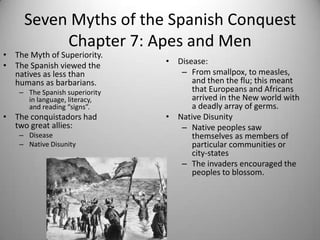
Seven Myths of the Spanish Conquest
          Chapter 7: Apes and Men
• The Myth of Superiority.
• The Spanish viewed the        • Disease:
  natives as less than             – From smallpox, to measles,
  humans as barbarians.               and then the flu; this meant
    – The Spanish superiority         that Europeans and Africans
      in language, literacy,          arrived in the New world with
      and reading “signs”.            a deadly array of germs.
• The conquistadors had         • Native Disunity
  two great allies:                – Native peoples saw
    – Disease                         themselves as members of
    – Native Disunity                 particular communities or
                                      city-states
                                   – The invaders encouraged the
                                      peoples to blossom.
Seven Myths of the Spanish Conquest
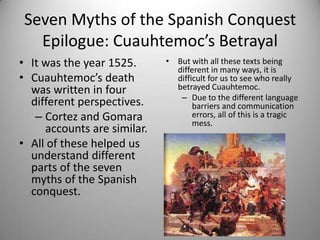
   Epilogue: Cuauhtemoc’s Betrayal
• It was the year 1525.      • But with all these texts being
                               different in many ways, it is
• Cuauhtemoc’s death           difficult for us to see who really
  was written in four          betrayed Cuauhtemoc.
                                – Due to the different language
  different perspectives.           barriers and communication
   – Cortez and Gomara              errors, all of this is a tragic
                                    mess.
     accounts are similar.
• All of these helped us
  understand different
  parts of the seven
  myths of the Spanish
  conquest.

Theme5 part2

  • 1.
    Theme 5 Part2: Seven Myths of the Spanish Conquest Kendra Lacasella History of the Americas Online November 27th, 2011
  • 2.
    Acknowledgements and Introduction •The number 7 has a • The seven myths of the significant meaning in Conquest are all found in American History. the Cortes legend. • From the 16th century – The term myth is also used Spanish ecclesiastics to in the sense “not meaning the truth” those of professional historians today, the fundamental characteristics of that vision survived. – There is a better understanding of the Spanish Conquest.
  • 3.
    Seven Myths ofthe Spanish Conquest Chapter 1: “A Handful of Adventures” • The Myth of Exceptional • Probanzas were reports Men written by conquerors • The discovery of America that were sent back to has to be one of the most Spanish monarchs for the important events in purpose of gaining some history. sort of title. – Columbus’ discovery of – They were biased and America was celebrated as evolved into historical a personal achievement. recollections. He was placed into the myth of exceptional men. – His writings provided the formation of legends and myths about him.
  • 4.
    Seven Myths ofthe Spanish Conquest Chapter 3: Invisible Warriors • The Myth of the White • Two very important things Conquistador are: Native politics and The • The “invisible warriors” Tlaxcalans and other were Africans who were Nahaus and native free and enslaved, who Mesoamericas. accompanied Spanish • The Tlaxcalans provided an invaders. ally for the Spanish against – Native people are everywhere the Mexica empire. in the Conquest alongside the Spaniards. – Africans were also ever present to the conquest of Mexico, the Spanish invasion, and the colonization of America.
  • 5.
    Seven Myths ofthe Spanish Conquest Chapter 7: Apes and Men • The Myth of Superiority. • The Spanish viewed the • Disease: natives as less than – From smallpox, to measles, humans as barbarians. and then the flu; this meant – The Spanish superiority that Europeans and Africans in language, literacy, arrived in the New world with and reading “signs”. a deadly array of germs. • The conquistadors had • Native Disunity two great allies: – Native peoples saw – Disease themselves as members of – Native Disunity particular communities or city-states – The invaders encouraged the peoples to blossom.
  • 6.
    Seven Myths ofthe Spanish Conquest Epilogue: Cuauhtemoc’s Betrayal • It was the year 1525. • But with all these texts being different in many ways, it is • Cuauhtemoc’s death difficult for us to see who really was written in four betrayed Cuauhtemoc. – Due to the different language different perspectives. barriers and communication – Cortez and Gomara errors, all of this is a tragic mess. accounts are similar. • All of these helped us understand different parts of the seven myths of the Spanish conquest.