The Water Cycle- Science Class- The Significance and Properties
1.
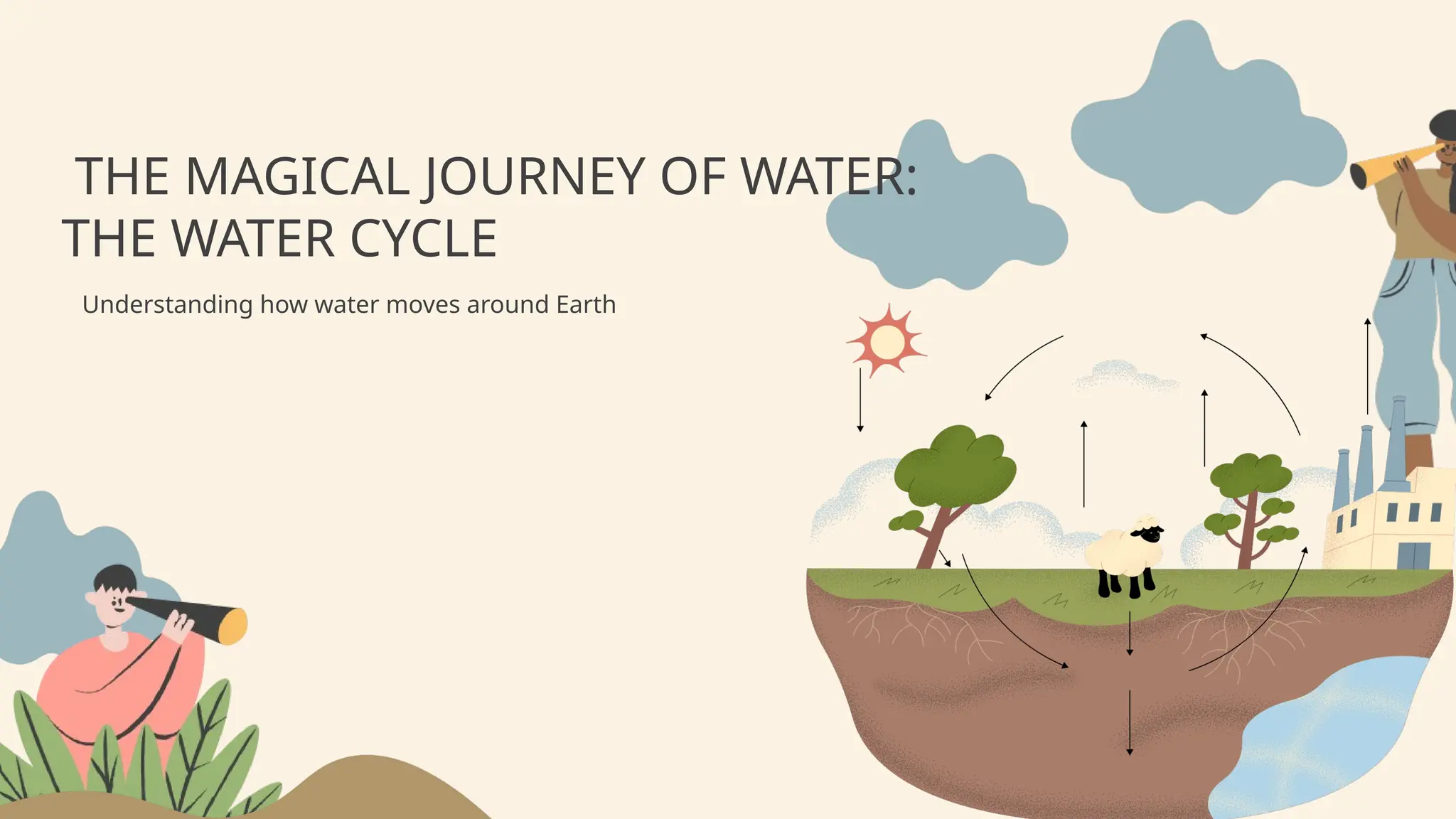
THE MAGICAL JOURNEYOF WATER:
THE WATER CYCLE
Understanding how water moves around Earth
2.
WHAT IS THEWATER CYCLE?
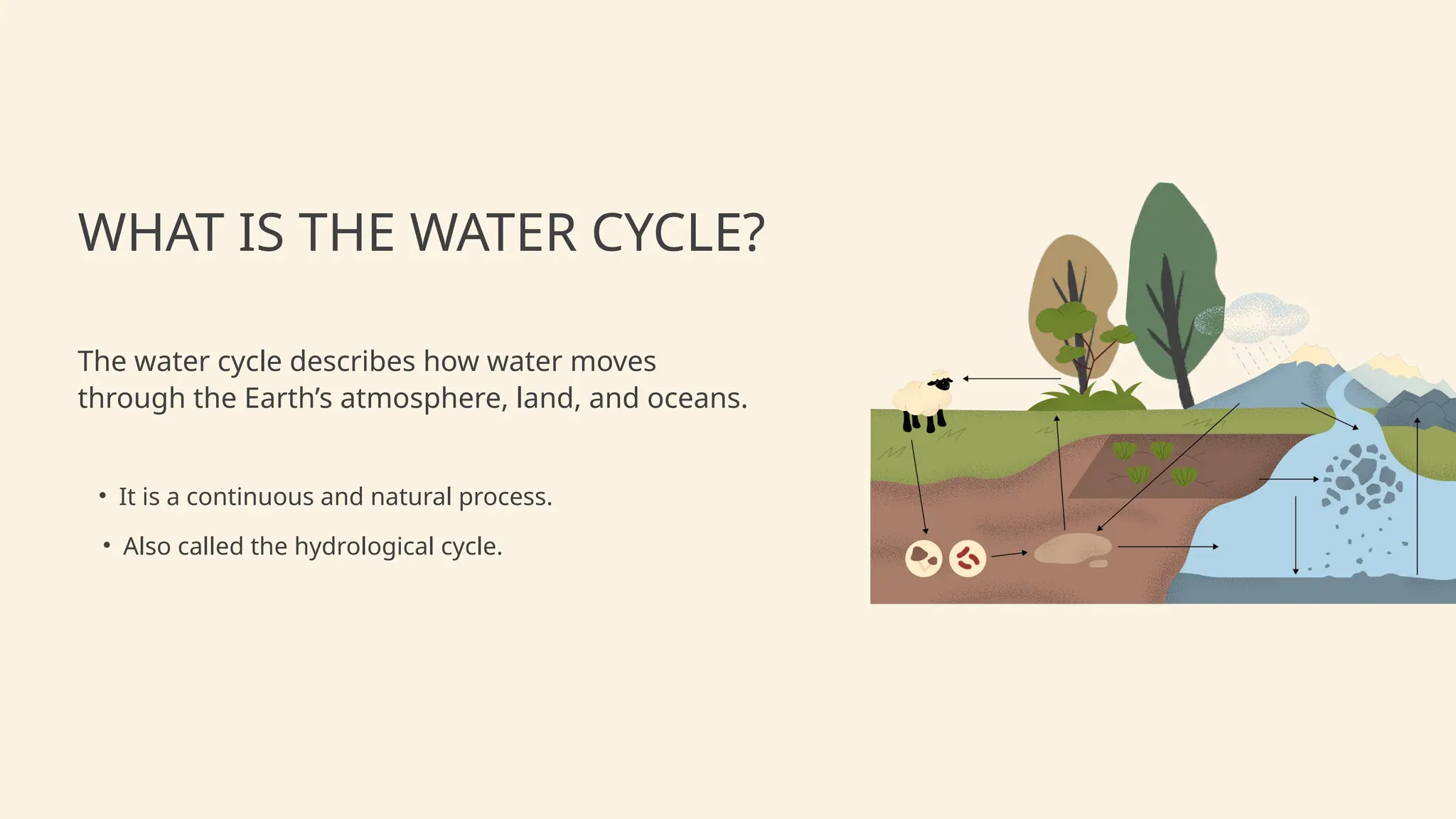
The water cycle describes how water moves
through the Earth’s atmosphere, land, and oceans.
• It is a continuous and natural process.
• Also called the hydrological cycle.
3.
MAIN STAGES OFTHE
WATER CYCLE
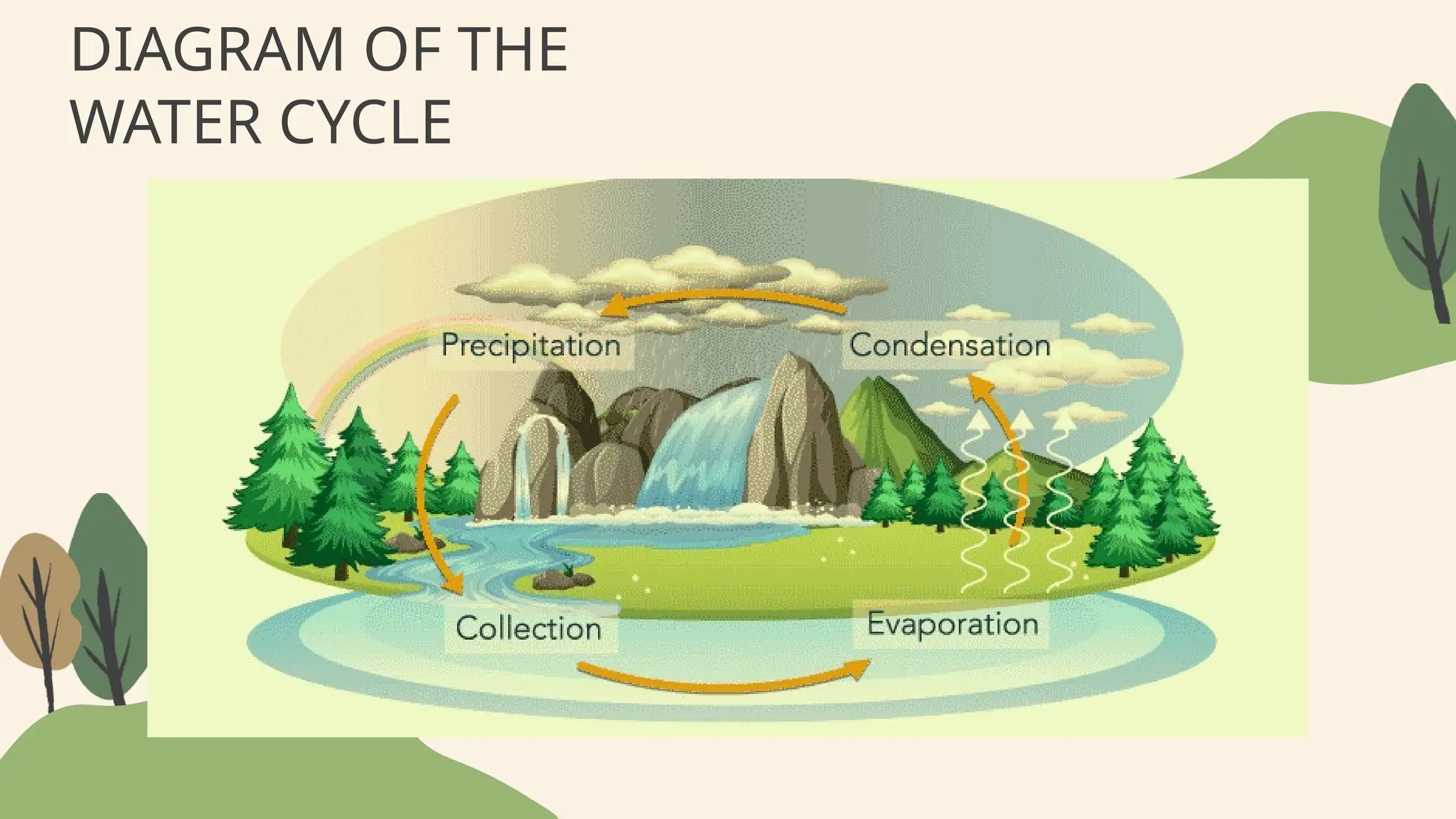
The 4 Key Stages
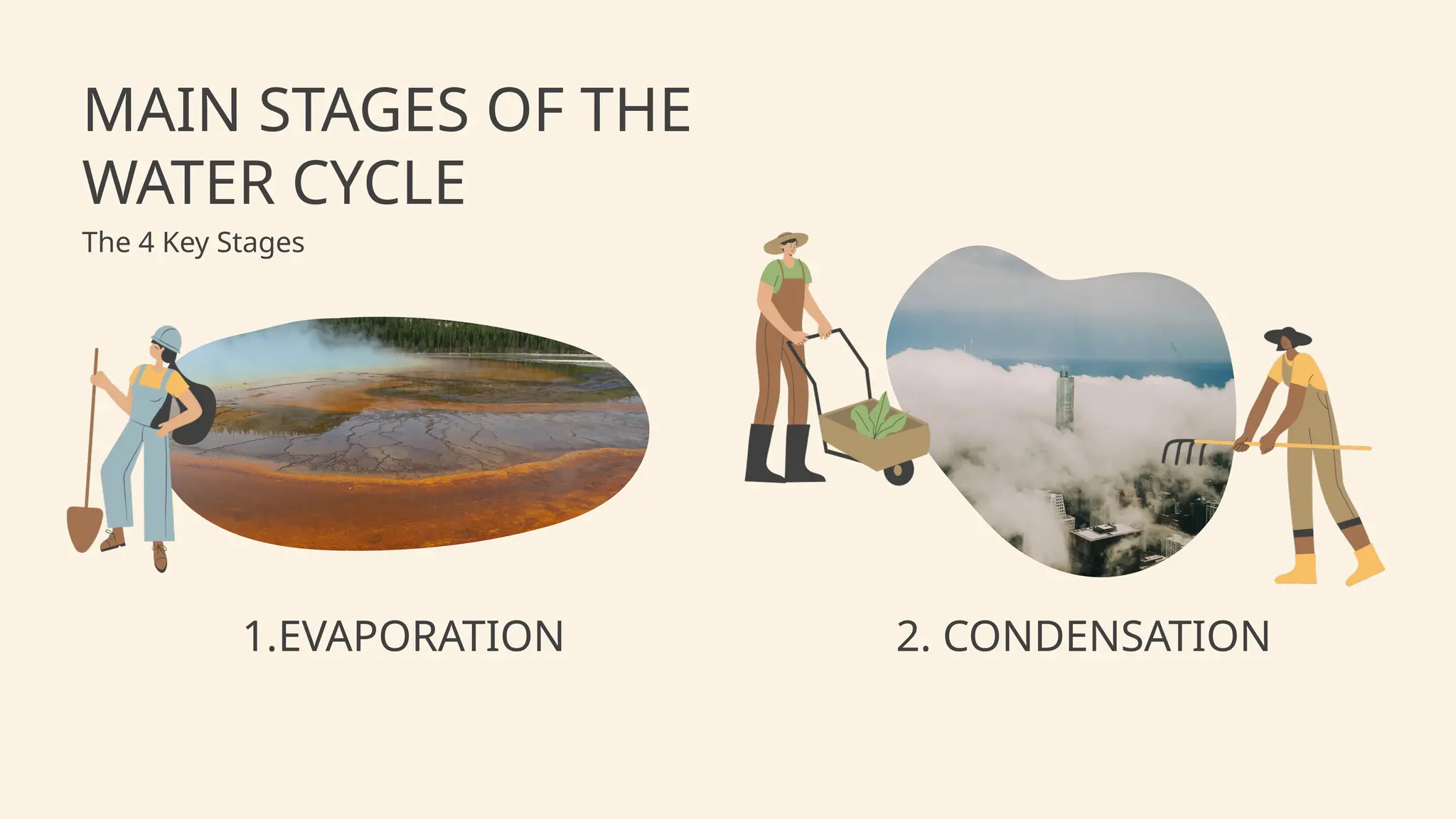
1.EVAPORATION 2. CONDENSATION
🌍 Occurs allaround us — oceans, rivers, lakes, and clouds!
6.
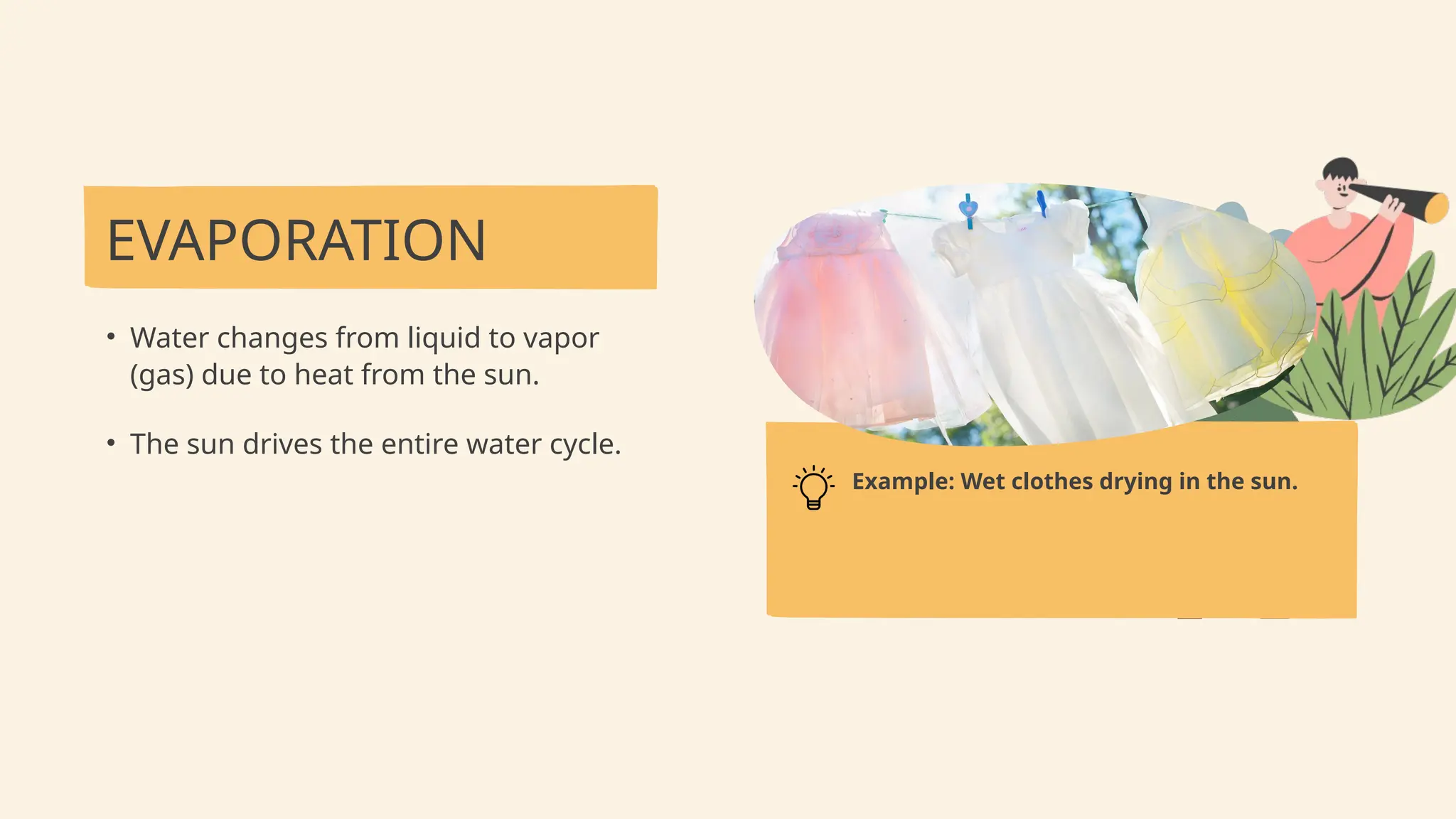
EVAPORATION
• Water changesfrom liquid to vapor
(gas) due to heat from the sun.
• The sun drives the entire water cycle.
Example: Wet clothes drying in the sun.
7.
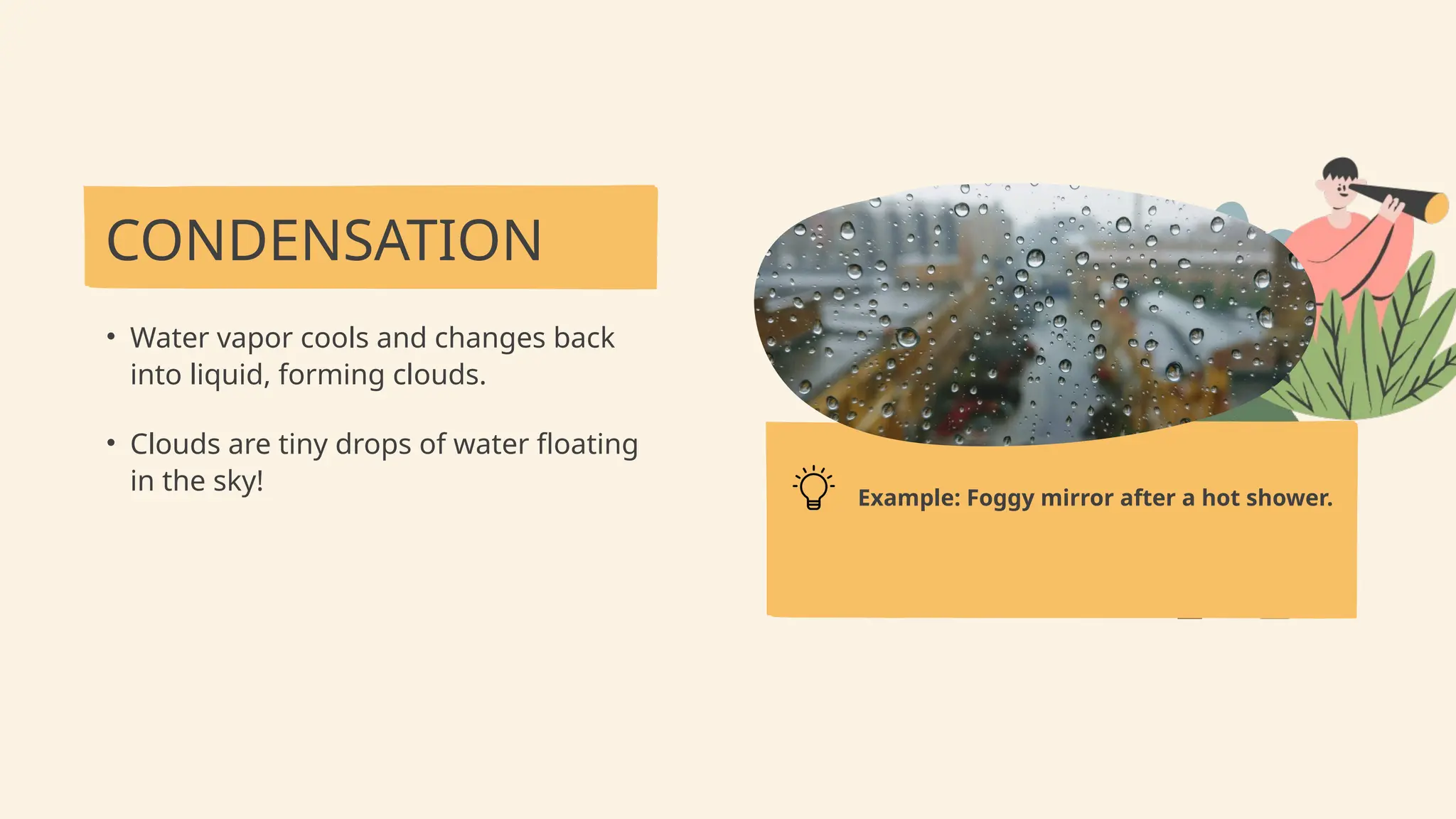
CONDENSATION
• Water vaporcools and changes back
into liquid, forming clouds.
• Clouds are tiny drops of water floating
in the sky!
Example: Foggy mirror after a hot shower.
8.
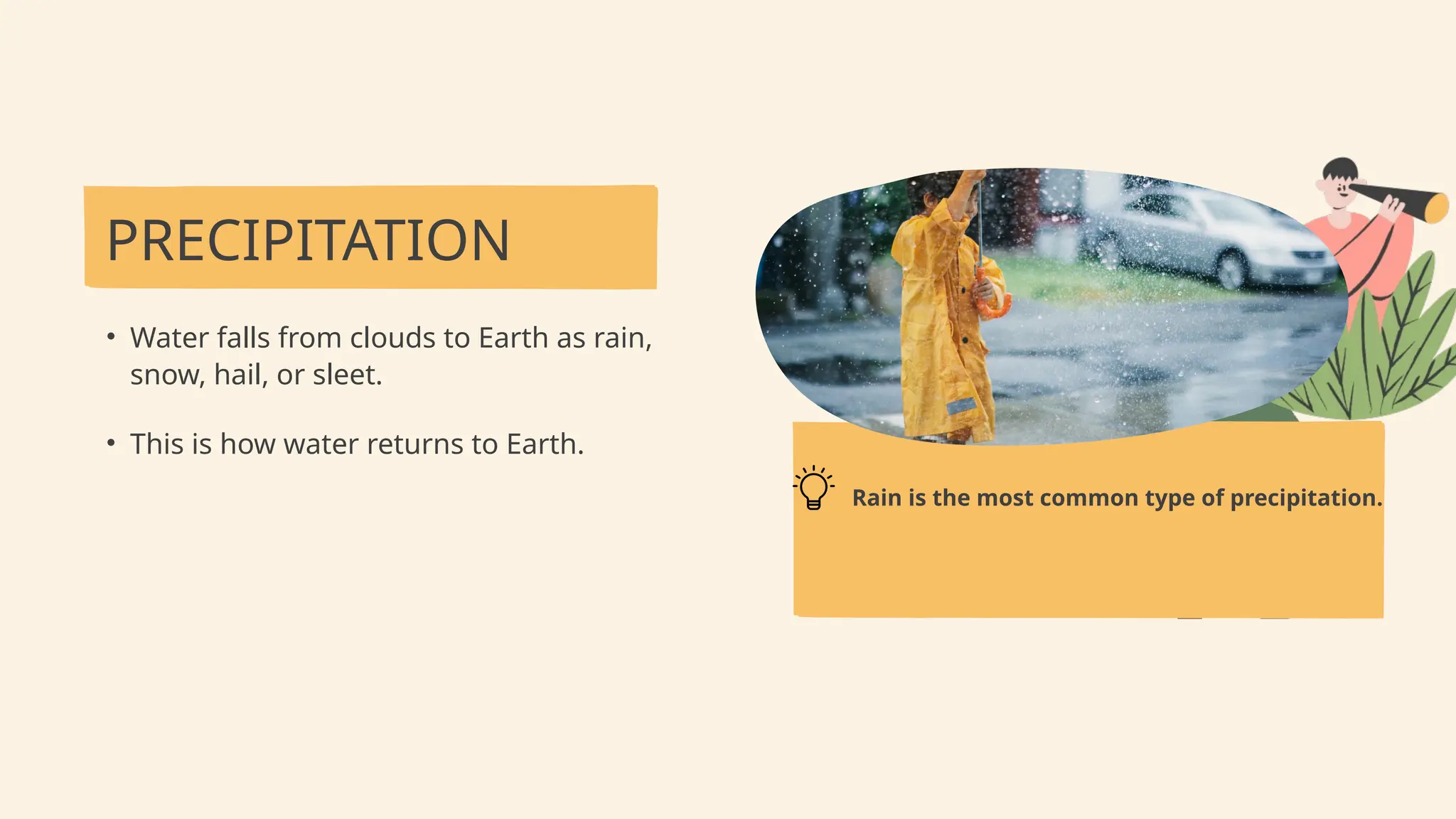
PRECIPITATION
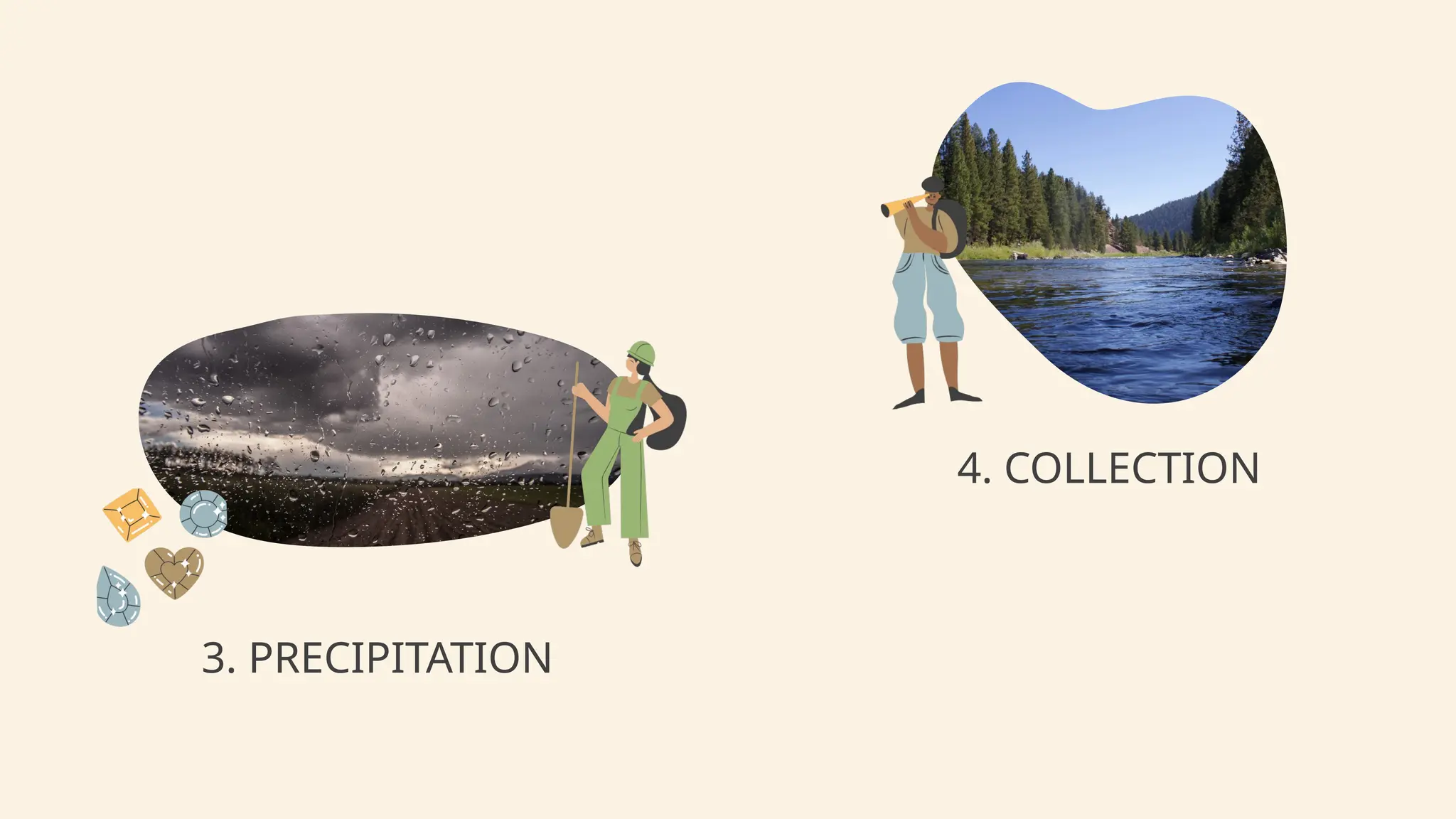
• Water fallsfrom clouds to Earth as rain,
snow, hail, or sleet.
• This is how water returns to Earth.
Rain is the most common type of precipitation.
9.
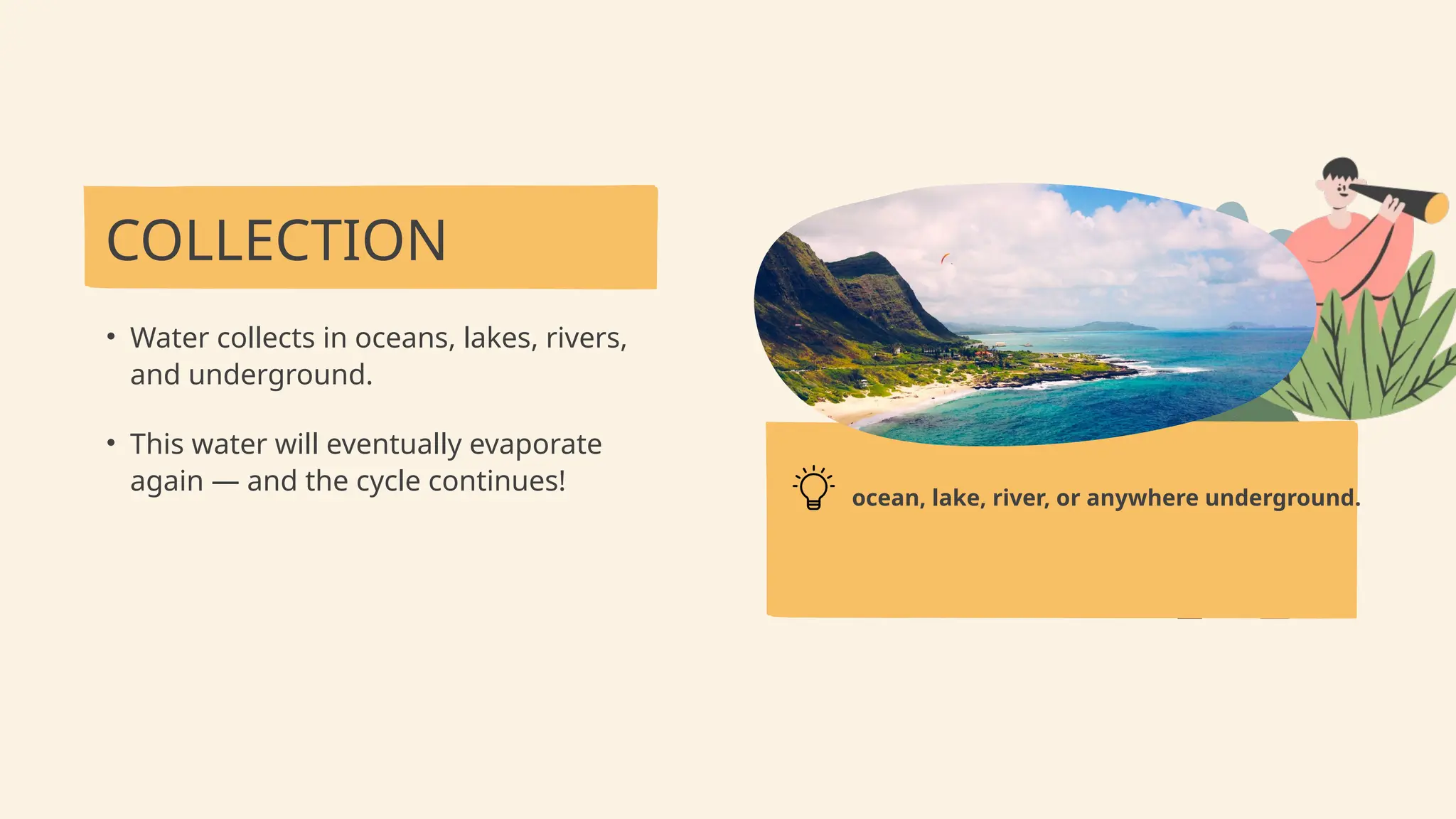
COLLECTION
• Water collectsin oceans, lakes, rivers,
and underground.
• This water will eventually evaporate
again — and the cycle continues!
ocean, lake, river, or anywhere underground.
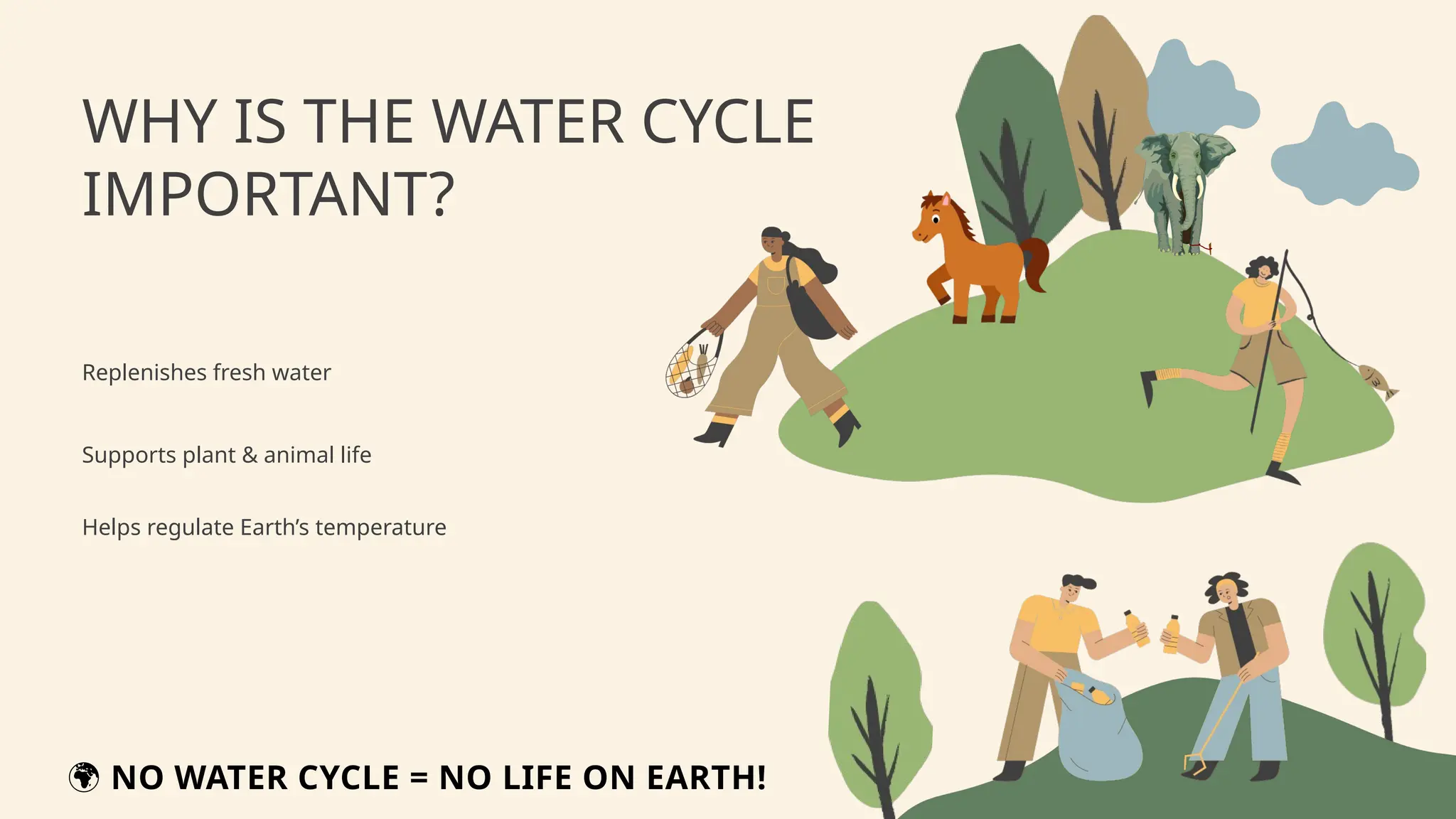
WHY IS THEWATER CYCLE
IMPORTANT?
Helps regulate Earth’s temperature
Replenishes fresh water
Supports plant & animal life
🌍 NO WATER CYCLE = NO LIFE ON EARTH!
12.
YOUR TURN
Quick Recap+ Quiz
• What causes evaporation?
• What forms clouds?
✏️Answer in your notebook
• What is precipitation?