THEVALUE
PROPOSITION
CANVAS
VALUEPROPOSITIONCANVAS
THE VALUE PROPOSITION CANVAS IS A FRAMEWORK WHICH CAN HELP
ENSURE THAT A PRODUCT OR SERVICE IS POSITIONED AROUND WHAT
THE CUSTOMER VALUES AND NEEDS. THE VALUE PROPOSITION CANVAS
WAS INITIALLY DEVELOPED BY DR ALEXANDER OSTERWALDER AS A
FRAMEWORK TO ENSURE THAT THERE IS A FIT BETWEEN THE PRODUCT
AND MARKET.
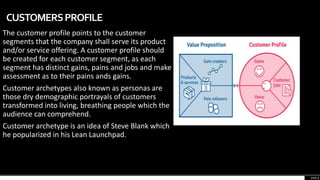
The customer profile points to the customer
segments that the company shall serve its product
and/or service offering. A customer profile should
be created for each customer segment, as each
segment has distinct gains, pains and jobs and make
assessment as to their pains ands gains.
Customer archetypes also known as personas are
those dry demographic portrayals of customers
transformed into living, breathing people which the
audience can comprehend.
Customer archetype is an idea of Steve Blank which
he popularized in his Lean Launchpad.
CUSTOMERSPROFILE
page 3
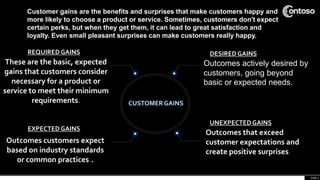
These are the basic, expected
gains that customers consider
necessary for a product or
service to meet their minimum
requirements.
REQUIREDGAINS
Outcomes customers expect
based on industry standards
or common practices..
EXPECTED GAINS
DESIREDGAINS
Outcomes that exceed
customer expectations and
create positive surprises.
UNEXPECTEDGAINS
page 4
Outcomes actively desired by
customers, going beyond
basic or expected needs.
Customer gains are the benefits and surprises that make customers happy and
more likely to choose a product or service. Sometimes, customers don't expect
certain perks, but when they get them, it can lead to great satisfaction and
loyalty. Even small pleasant surprises can make customers really happy.
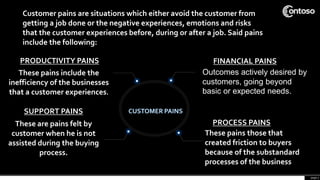
These pains include the
inefficiency of the businesses
that a customer experiences.
PRODUCTIVITY PAINS
These are pains felt by
customer when he is not
assisted during the buying
process.
SUPPORT PAINS
FINANCIAL PAINS
These pains those that
created friction to buyers
because of the substandard
processes of the business
PROCESS PAINS
page 5
Outcomes actively desired by
customers, going beyond
basic or expected needs.
Customer pains are situations which either avoid the customer from
getting a job done or the negative experiences, emotions and risks
that the customer experiences before, during or after a job. Said pains
include the following:
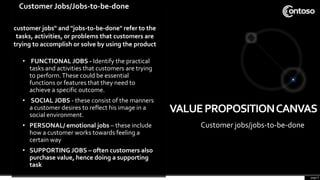
VALUEPROPOSITIONCANVAS
Customer jobs/jobs-to-be-done
• FUNCTIONAL JOBS - Identify the practical
tasks and activities that customers are trying
to perform.These could be essential
functions or features that they need to
achieve a specific outcome.
• SOCIAL JOBS - these consist of the manners
a customer desires to reflect his image in a
social environment.
• PERSONAL/ emotional jobs – these include
how a customer works towards feeling a
certain way
• SUPPORTING JOBS – often customers also
purchase value, hence doing a supporting
task
page 6
Customer Jobs/Jobs-to-be-done
customer jobs" and "jobs-to-be-done" refer to the
tasks, activities, or problems that customers are
trying to accomplish or solve by using the product
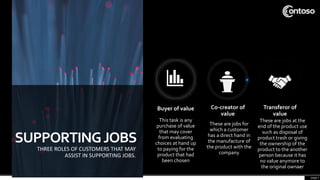
SUPPORTINGJOBS
THREE ROLES OF CUSTOMERS THAT MAY
ASSIST IN SUPPORTING JOBS.
Buyer of value
This task is any
purchase of value
that may cover
from evaluating
choices at hand up
to paying for the
product that had
been chosen
Co-creator of
value
These are jobs for
which a customer
has a direct hand in
the manufacture of
the product with the
company
Transferor of
value
These are jobs at the
end of the product use
such as disposal of
product trash or giving
the ownership of the
product to the another
person because it has
no value anymore to
the original ownaer
page 7
ValueProposition
after really understand the customers, including their gains,
pains and jobs then it is time to reflect on the gain creators,
pain relievers and the products and/or services to offer them.
Gain Creator
Explicitly outline how the products and services may create
customer gains and offer customer added value.
page 8
.
.
.
Pain Relievers
Explicitly outline how the products and/or services lighten,
avoid or solve the particular customer pains.
.
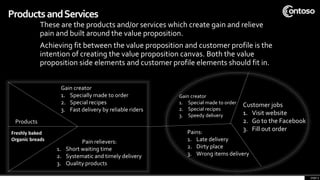
ProductsandServices
These are the products and/or services which create gain and relieve
pain and built around the value proposition.
Achieving fit between the value proposition and customer profile is the
intention of creating the value proposition canvas. Both the value
proposition side elements and customer profile elements should fit in.
page 9
.
.
.
Products
Freshly baked
Organic breads
Gain creator
1. Special made to order
2. Special recipes
3. Speedy delivery
Customer jobs
1. Visit website
2. Go to the Facebook
3. Fill out order
Pains:
1. Late delivery
2. Dirty place
3. Wrong items delivery
Gain creator
1. Specially made to order
2. Special recipes
3. Fast delivery by reliable riders
Pain relievers:
1. Short waiting time
2. Systematic and timely delivery
3. Quality products
TheLeanCanvas:ABusinessAlternative
page 10
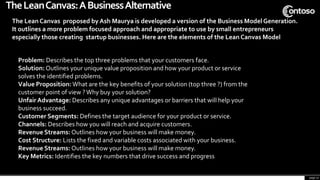
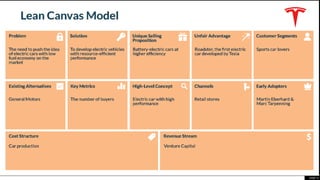
The Lean Canvas proposed by Ash Maurya is developed a version of the Business Model Generation.
It outlines a more problem focused approach and appropriate to use by small entrepreneurs
especially those creating startup businesses. Here are the elements of the Lean Canvas Model
Problem: Describes the top three problems that your customers face.
Solution: Outlines your unique value proposition and how your product or service
solves the identified problems.
Value Proposition: What are the key benefits of your solution (top three ?) from the
customer point of view ?Why buy your solution?
Unfair Advantage: Describes any unique advantages or barriers that will help your
business succeed.
Customer Segments: Defines the target audience for your product or service.
Channels: Describes how you will reach and acquire customers.
Revenue Streams: Outlines how your business will make money.
Cost Structure: Lists the fixed and variable costs associated with your business.
Revenue Streams: Outlines how your business will make money.
Key Metrics: Identifies the key numbers that drive success and progress
page 11
THANK
YOU
Johnrey A. Jurane
09300936086
juraneraj@gmail.com
www.contoso.com

The Value Preposition Canva Report Powerpoint Presentation

  • 1.
  • 2.
    VALUEPROPOSITIONCANVAS THE VALUE PROPOSITIONCANVAS IS A FRAMEWORK WHICH CAN HELP ENSURE THAT A PRODUCT OR SERVICE IS POSITIONED AROUND WHAT THE CUSTOMER VALUES AND NEEDS. THE VALUE PROPOSITION CANVAS WAS INITIALLY DEVELOPED BY DR ALEXANDER OSTERWALDER AS A FRAMEWORK TO ENSURE THAT THERE IS A FIT BETWEEN THE PRODUCT AND MARKET.
  • 3.
    The customer profilepoints to the customer segments that the company shall serve its product and/or service offering. A customer profile should be created for each customer segment, as each segment has distinct gains, pains and jobs and make assessment as to their pains ands gains. Customer archetypes also known as personas are those dry demographic portrayals of customers transformed into living, breathing people which the audience can comprehend. Customer archetype is an idea of Steve Blank which he popularized in his Lean Launchpad. CUSTOMERSPROFILE page 3
  • 4.
    These are thebasic, expected gains that customers consider necessary for a product or service to meet their minimum requirements. REQUIREDGAINS Outcomes customers expect based on industry standards or common practices.. EXPECTED GAINS DESIREDGAINS Outcomes that exceed customer expectations and create positive surprises. UNEXPECTEDGAINS page 4 Outcomes actively desired by customers, going beyond basic or expected needs. Customer gains are the benefits and surprises that make customers happy and more likely to choose a product or service. Sometimes, customers don't expect certain perks, but when they get them, it can lead to great satisfaction and loyalty. Even small pleasant surprises can make customers really happy.
  • 5.
    These pains includethe inefficiency of the businesses that a customer experiences. PRODUCTIVITY PAINS These are pains felt by customer when he is not assisted during the buying process. SUPPORT PAINS FINANCIAL PAINS These pains those that created friction to buyers because of the substandard processes of the business PROCESS PAINS page 5 Outcomes actively desired by customers, going beyond basic or expected needs. Customer pains are situations which either avoid the customer from getting a job done or the negative experiences, emotions and risks that the customer experiences before, during or after a job. Said pains include the following:
  • 6.
    VALUEPROPOSITIONCANVAS Customer jobs/jobs-to-be-done • FUNCTIONALJOBS - Identify the practical tasks and activities that customers are trying to perform.These could be essential functions or features that they need to achieve a specific outcome. • SOCIAL JOBS - these consist of the manners a customer desires to reflect his image in a social environment. • PERSONAL/ emotional jobs – these include how a customer works towards feeling a certain way • SUPPORTING JOBS – often customers also purchase value, hence doing a supporting task page 6 Customer Jobs/Jobs-to-be-done customer jobs" and "jobs-to-be-done" refer to the tasks, activities, or problems that customers are trying to accomplish or solve by using the product
  • 7.
    SUPPORTINGJOBS THREE ROLES OFCUSTOMERS THAT MAY ASSIST IN SUPPORTING JOBS. Buyer of value This task is any purchase of value that may cover from evaluating choices at hand up to paying for the product that had been chosen Co-creator of value These are jobs for which a customer has a direct hand in the manufacture of the product with the company Transferor of value These are jobs at the end of the product use such as disposal of product trash or giving the ownership of the product to the another person because it has no value anymore to the original ownaer page 7
  • 8.
    ValueProposition after really understandthe customers, including their gains, pains and jobs then it is time to reflect on the gain creators, pain relievers and the products and/or services to offer them. Gain Creator Explicitly outline how the products and services may create customer gains and offer customer added value. page 8 . . . Pain Relievers Explicitly outline how the products and/or services lighten, avoid or solve the particular customer pains. .
  • 9.
    ProductsandServices These are theproducts and/or services which create gain and relieve pain and built around the value proposition. Achieving fit between the value proposition and customer profile is the intention of creating the value proposition canvas. Both the value proposition side elements and customer profile elements should fit in. page 9 . . . Products Freshly baked Organic breads Gain creator 1. Special made to order 2. Special recipes 3. Speedy delivery Customer jobs 1. Visit website 2. Go to the Facebook 3. Fill out order Pains: 1. Late delivery 2. Dirty place 3. Wrong items delivery Gain creator 1. Specially made to order 2. Special recipes 3. Fast delivery by reliable riders Pain relievers: 1. Short waiting time 2. Systematic and timely delivery 3. Quality products
  • 10.
    TheLeanCanvas:ABusinessAlternative page 10 The LeanCanvas proposed by Ash Maurya is developed a version of the Business Model Generation. It outlines a more problem focused approach and appropriate to use by small entrepreneurs especially those creating startup businesses. Here are the elements of the Lean Canvas Model Problem: Describes the top three problems that your customers face. Solution: Outlines your unique value proposition and how your product or service solves the identified problems. Value Proposition: What are the key benefits of your solution (top three ?) from the customer point of view ?Why buy your solution? Unfair Advantage: Describes any unique advantages or barriers that will help your business succeed. Customer Segments: Defines the target audience for your product or service. Channels: Describes how you will reach and acquire customers. Revenue Streams: Outlines how your business will make money. Cost Structure: Lists the fixed and variable costs associated with your business. Revenue Streams: Outlines how your business will make money. Key Metrics: Identifies the key numbers that drive success and progress
  • 11.
  • 12.