THE TWEED CATCHMENTNicola BissettCatchment Management Planning Officer
WEATHER
DEMOGRAPHYDispersed populationMain urban centres around central Tweed
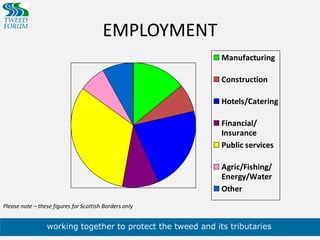
EMPLOYMENTPlease note – these figures for Scottish Borders only
COURTESY OF SEPA (2009)
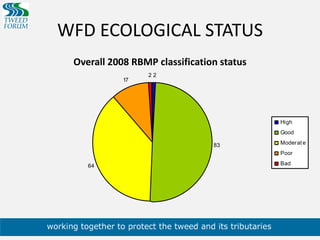
WFD ECOLOGICAL STATUSOverall 2008 RBMP classification status
RBMP PRESSURESMain pressures causing failures are Morphological alterations due to public water interests and rural land uses (around 50 water bodies affected)Diffuse pollution from rural sources (around 50 water bodies affected)Abstraction and flow regulation (around 40 water bodies affected; both public water interests and rural land uses)Point source pollution (14 water bodies on Scottish side)Alien species (2 water bodies in Scottish side)
TWEED FORUM	“to promote the wise and sustainable use of the whole Tweed catchment through holistic and integrated management and planning”
WATER QUALITYPressuresDiffuse pollution	Point pollutionRegulation by SEPA and EABUT stillCross border issues“diffuse” nature of diffuse pollution
WATER RESOURCESSeveral reservoirs in catchmentPressuresabstractionAgriculturePublic water supplyReservoir release regimesnow regulated by SEPA and EABUT still crossborder issues
HABITATS AND SPECIESConservation designationsSACSSSIOther local designationsWetlandsSPARAMSARGenerally “favourable condition”
HABITATS AND SPECIESPressuresInvasive speciesLoss of key habitatswetlands, blanket bog, raised bogs, wet woodlands, riparian woodlands and pondsInsufficient baseline data
RIVERWORKS Bank erosion measures, gravel management, flood alleviation, bridge protection and instream habitat improvementsNow regulated by SEPA and EABUT still cross border issues educating public and practitioners
FLOOD MANAGEMENT9% of catchment at risk from floodingPressuresDevelopment on floodplainLack of catchment wide approach to FM issuesImpact of landuse changeFloods DirectiveNeed to explore Sustainable FM
TOURISM & RECREATIONsalmon fishery £18 million to local economyoutdoor pursuitscycling, mountain biking, canoeing, walking, horse riding heritage sites botanic gardens, castles and abbeysBalancing T&R with conservation needs
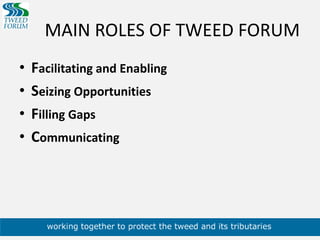
MAIN ROLES OF TWEED FORUMFacilitating and EnablingSeizing OpportunitiesFilling GapsCommunicating
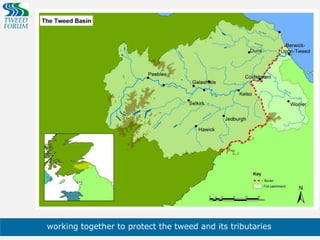
The Tweed catchment

The Tweed catchment

  • 1.
    THE TWEED CATCHMENTNicolaBissettCatchment Management Planning Officer
  • 5.
  • 6.
    DEMOGRAPHYDispersed populationMain urbancentres around central Tweed
  • 7.
    EMPLOYMENTPlease note –these figures for Scottish Borders only
  • 9.
  • 10.
    WFD ECOLOGICAL STATUSOverall2008 RBMP classification status
  • 11.
    RBMP PRESSURESMain pressurescausing failures are Morphological alterations due to public water interests and rural land uses (around 50 water bodies affected)Diffuse pollution from rural sources (around 50 water bodies affected)Abstraction and flow regulation (around 40 water bodies affected; both public water interests and rural land uses)Point source pollution (14 water bodies on Scottish side)Alien species (2 water bodies in Scottish side)
  • 12.
    TWEED FORUM “to promotethe wise and sustainable use of the whole Tweed catchment through holistic and integrated management and planning”
  • 14.
    WATER QUALITYPressuresDiffuse pollution PointpollutionRegulation by SEPA and EABUT stillCross border issues“diffuse” nature of diffuse pollution
  • 15.
    WATER RESOURCESSeveral reservoirsin catchmentPressuresabstractionAgriculturePublic water supplyReservoir release regimesnow regulated by SEPA and EABUT still crossborder issues
  • 16.
    HABITATS AND SPECIESConservationdesignationsSACSSSIOther local designationsWetlandsSPARAMSARGenerally “favourable condition”
  • 18.
    HABITATS AND SPECIESPressuresInvasivespeciesLoss of key habitatswetlands, blanket bog, raised bogs, wet woodlands, riparian woodlands and pondsInsufficient baseline data
  • 19.
    RIVERWORKS Bank erosionmeasures, gravel management, flood alleviation, bridge protection and instream habitat improvementsNow regulated by SEPA and EABUT still cross border issues educating public and practitioners
  • 20.
    FLOOD MANAGEMENT9% ofcatchment at risk from floodingPressuresDevelopment on floodplainLack of catchment wide approach to FM issuesImpact of landuse changeFloods DirectiveNeed to explore Sustainable FM
  • 21.
    TOURISM & RECREATIONsalmonfishery £18 million to local economyoutdoor pursuitscycling, mountain biking, canoeing, walking, horse riding heritage sites botanic gardens, castles and abbeysBalancing T&R with conservation needs
  • 24.
    MAIN ROLES OFTWEED FORUMFacilitating and EnablingSeizing OpportunitiesFilling GapsCommunicating