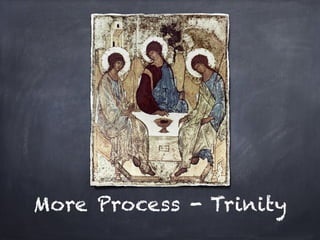
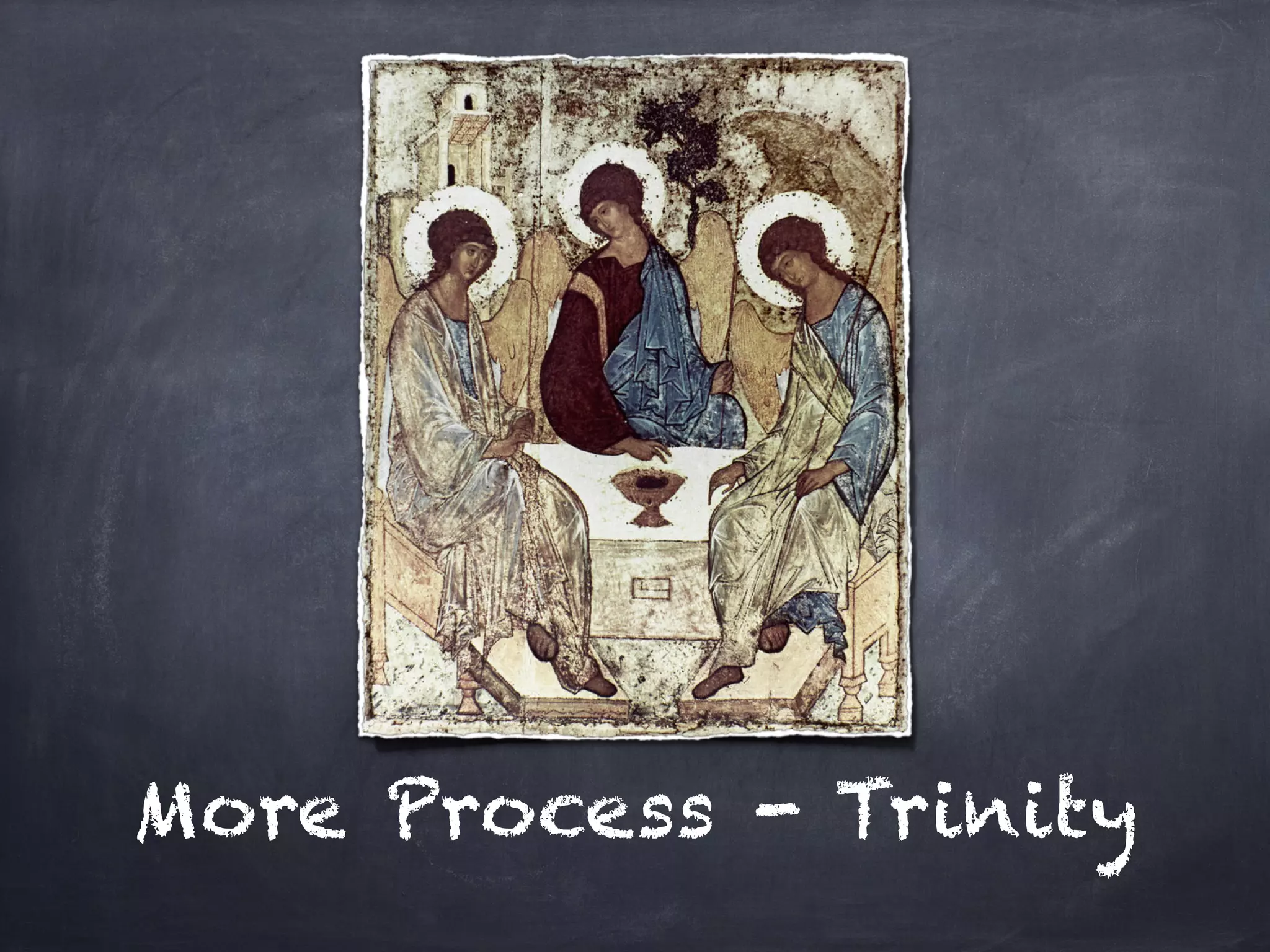
More Process - Trinity
"There has been no
historical correlation of
 the 'orthodox' doctrine
    of the Trinity and
 genuine faithfulness to
  Jesus Christ. Indeed
  willingness to affirm
   what one does not
 understand is far more
a sign of acceptance of
church authority than of
      faith in God."
    -John B. Cobb, Jr.
The Trinity
Biblical ideas

Philosophical ideas

Historical development of the doctrine

Classical trinitarianism: the pro-Nicene
consensus

Process reflections on the Trinity
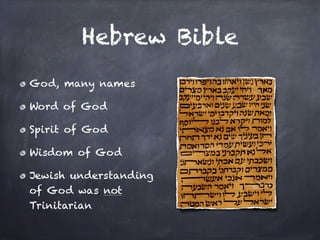
Hebrew Bible
God, many names

Word of God

Spirit of God

Wisdom of God

Jewish understanding
of God was not
Trinitarian
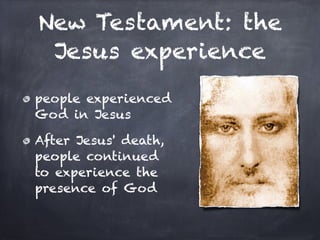
New Testament: the
 Jesus experience
people experienced
God in Jesus

After Jesus' death,
people continued
to experience the
presence of God
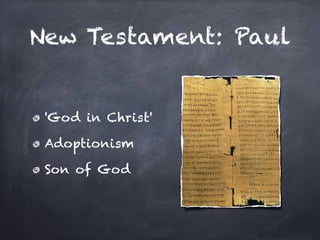
New Testament: Paul


 'God in Christ'

 Adoptionism

 Son of God
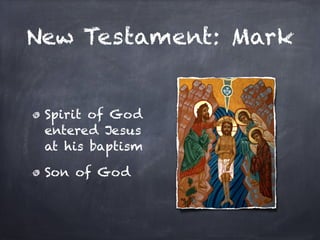
New Testament: Mark


 Spirit of God
 entered Jesus
 at his baptism

 Son of God
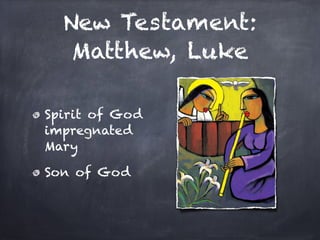
New Testament:
   Matthew, Luke

Spirit of God
impregnated
Mary

Son of God
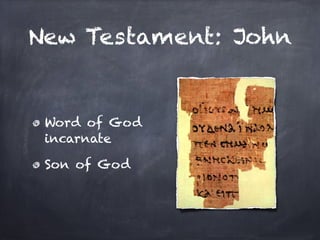
New Testament: John


 Word of God
 incarnate

 Son of God
Jesus had no thought
of turning God into a
      Triune deity.
   - John B. Cobb, Jr.
The doctrine of the
   Trinity is not a
 biblical idea. It is
     second level
  reflection on how
 people experienced
God in Jesus and in
Christian community.
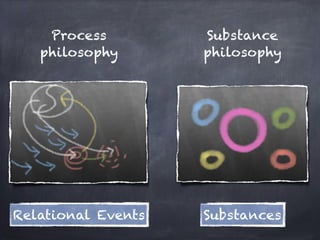
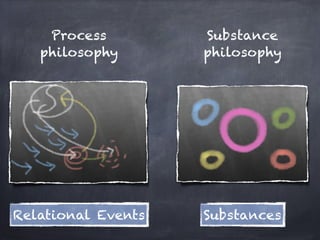
Process         Substance
   philosophy       philosophy


Relational Events   Substances
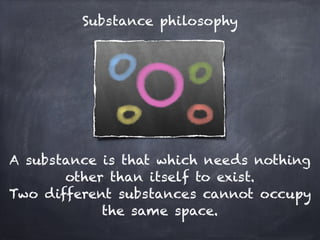
Substance philosophy


A substance is that which needs nothing
       other than itself to exist.
Two different substances cannot occupy
            the same space.
Problems and questions

How could the substance of humanity and
the substance of divinity both be in Jesus?

How is the divine in Jesus distinct from
the Father to whom he prays?

How does God interact with the world?

How could the God of the universe be
present in Jesus?

What is the relationship between Jesus and
the Spirit?
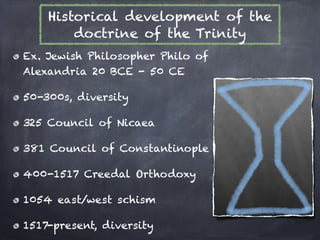
Historical development of the 
        doctrine of the Trinity
Ex. Jewish Philosopher Philo of
Alexandria 20 BCE - 50 CE

50-300s, diversity 

325 Council of Nicaea

381 Council of Constantinople

400-1517 Creedal Orthodoxy

1054 east/west schism

1517-present, diversity
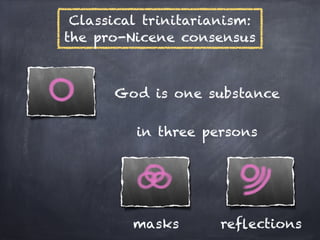
Classical trinitarianism:
the pro-Nicene consensus


      God is one substance

         in three persons


         masks       reflections
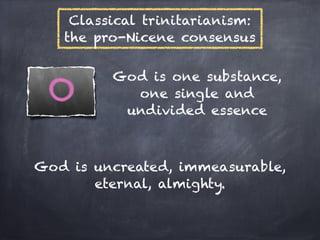
Classical trinitarianism:
   the pro-Nicene consensus

         God is one substance,
           one single and
          undivided essence


God is uncreated, immeasurable,
       eternal, almighty.
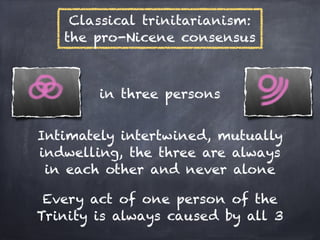
Classical trinitarianism:
   the pro-Nicene consensus


        in three persons


Intimately intertwined, mutually
indwelling, the three are always
 in each other and never alone

 Every act of one person of the
Trinity is always caused by all 3
Classical trinitarianism:
      the pro-Nicene consensus

         In Jesus, divine and
          human substances
           were not mixed
The logos/Word was incarnate in
Jesus, but all three were present and
acting in him

     The "person" of Jesus was divine,
         Jesus' fully human nature was
   impersonal, subordinate to his deity
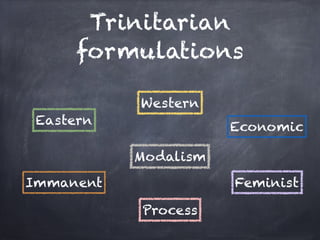
Trinitarian
      formulations

           Western
 Eastern              Economic

           Modalism
Immanent              Feminist

           Process
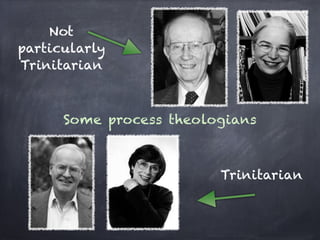
Not
particularly
Trinitarian


      Some process theologians


                         Trinitarian
Process         Substance
   philosophy       philosophy


Relational Events   Substances
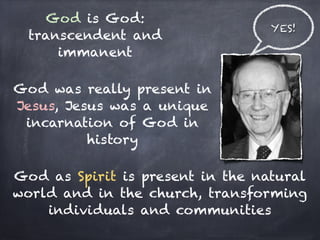
God is God:
                                  YES!
  transcendent and
      immanent

God was really present in
Jesus, Jesus was a unique
 incarnation of God in
          history

God as Spirit is present in the natural
world and in the church, transforming
    individuals and communities
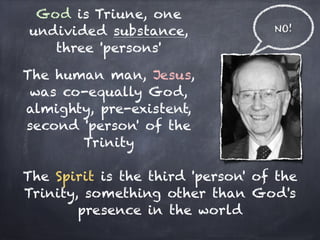
God is Triune, one
undivided substance,               NO!

   three 'persons'

The human man, Jesus,
 was co-equally God,
almighty, pre-existent,
second 'person' of the
       Trinity

The Spirit is the third 'person' of the
Trinity, something other than God's
        presence in the world
What's next?
Process theology sees the
         universe as creative,
   interrelational, dynamic, and
  open to the future. In process
    theology, God is relational,
 present in every moment of our
    lives and in all entities and
   levels of being. The world is
interconnected, in effect a giant
 ecosystem where what harms or
blesses one, harms or blesses all.

The Trinity

  • 1.
  • 2.
    "There has beenno historical correlation of the 'orthodox' doctrine of the Trinity and genuine faithfulness to Jesus Christ. Indeed willingness to affirm what one does not understand is far more a sign of acceptance of church authority than of faith in God." -John B. Cobb, Jr.
  • 3.
    The Trinity Biblical ideas Philosophicalideas Historical development of the doctrine Classical trinitarianism: the pro-Nicene consensus Process reflections on the Trinity
  • 4.
    Hebrew Bible God, manynames Word of God Spirit of God Wisdom of God Jewish understanding of God was not Trinitarian
  • 5.
    New Testament: the Jesus experience people experienced God in Jesus After Jesus' death, people continued to experience the presence of God
  • 6.
    New Testament: Paul 'God in Christ' Adoptionism Son of God
  • 7.
    New Testament: Mark Spirit of God entered Jesus at his baptism Son of God
  • 8.
    New Testament: Matthew, Luke Spirit of God impregnated Mary Son of God
  • 9.
    New Testament: John Word of God incarnate Son of God
  • 10.
    Jesus had nothought of turning God into a Triune deity. - John B. Cobb, Jr.
  • 11.
    The doctrine ofthe Trinity is not a biblical idea. It is second level reflection on how people experienced God in Jesus and in Christian community.
  • 12.
    Process Substance philosophy philosophy Relational Events Substances
  • 13.
    Substance philosophy A substanceis that which needs nothing other than itself to exist. Two different substances cannot occupy the same space.
  • 14.
    Problems and questions Howcould the substance of humanity and the substance of divinity both be in Jesus? How is the divine in Jesus distinct from the Father to whom he prays? How does God interact with the world? How could the God of the universe be present in Jesus? What is the relationship between Jesus and the Spirit?
  • 15.
    Historical development ofthe doctrine of the Trinity Ex. Jewish Philosopher Philo of Alexandria 20 BCE - 50 CE 50-300s, diversity 325 Council of Nicaea 381 Council of Constantinople 400-1517 Creedal Orthodoxy 1054 east/west schism 1517-present, diversity
  • 16.
    Classical trinitarianism: the pro-Niceneconsensus God is one substance in three persons masks reflections
  • 17.
    Classical trinitarianism: the pro-Nicene consensus God is one substance, one single and undivided essence God is uncreated, immeasurable, eternal, almighty.
  • 18.
    Classical trinitarianism: the pro-Nicene consensus in three persons Intimately intertwined, mutually indwelling, the three are always in each other and never alone Every act of one person of the Trinity is always caused by all 3
  • 19.
    Classical trinitarianism: the pro-Nicene consensus In Jesus, divine and human substances were not mixed The logos/Word was incarnate in Jesus, but all three were present and acting in him The "person" of Jesus was divine, Jesus' fully human nature was impersonal, subordinate to his deity
  • 21.
    Trinitarian formulations Western Eastern Economic Modalism Immanent Feminist Process
  • 22.
    Not particularly Trinitarian Some process theologians Trinitarian
  • 23.
    Process Substance philosophy philosophy Relational Events Substances
  • 24.
    God is God: YES! transcendent and immanent God was really present in Jesus, Jesus was a unique incarnation of God in history God as Spirit is present in the natural world and in the church, transforming individuals and communities
  • 26.
    God is Triune,one undivided substance, NO! three 'persons' The human man, Jesus, was co-equally God, almighty, pre-existent, second 'person' of the Trinity The Spirit is the third 'person' of the Trinity, something other than God's presence in the world
  • 27.
  • 28.
    Process theology seesthe universe as creative, interrelational, dynamic, and open to the future. In process theology, God is relational, present in every moment of our lives and in all entities and levels of being. The world is interconnected, in effect a giant ecosystem where what harms or blesses one, harms or blesses all.