First trimester, Second trimester,Third trismester
The Trimester Pregnancy
The First Trimester
Lasts from conception to the twelfth week of pregnancy
3 periods during the first trimester:
The Germinal Period
 Fertilized egg travels and implants in wall of uterus
 Implantation occurs 10-14 days after conception
The Period of the Embryo
 Lasts from third through eighth week of pregnancy
 Major organs and anatomical structures begin to form
The Period of the Fetus
 Lasts from ninth week of pregnancy until birth
 All major organs continue rapid growth and become interconnected
The First Trimester
The Second Trimester
Fetus assumes distinct human appearance
The nails harden and skin thickens, as well as the eye lashes,
eye brows, and scalp hair appear during fifth and sixth
months
Fetus’s visual and auditory senses are functional
The Second Trimester
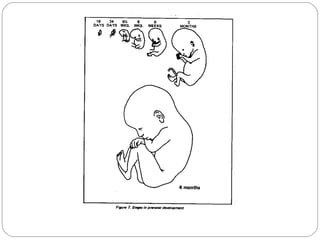
The Third Trimester
All organ systems mature rapidly
Fetus prepares for birth
Fetus reaches ‘age of viability’, the point at which the
fetus can survive outside of the uterus
Fetus shows better-organized gross motor activity, and
sleepiness/ waking activity
Towards end of ninth month, fetus is positioned head-
down with limbs curled up in ‘fetal position’
The Third Trimester
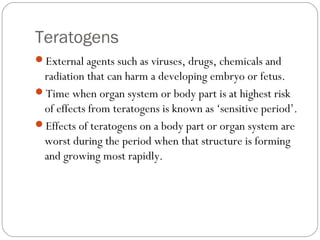
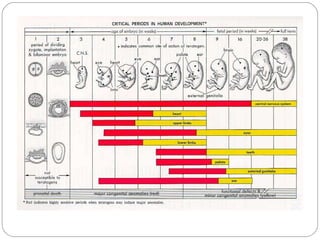
Teratogens
External agents such as viruses, drugs, chemicals and
radiation that can harm a developing embryo or fetus.
Time when organ system or body part is at highest risk
of effects from teratogens is known as ‘sensitive period’.
Effects of teratogens on a body part or organ system are
worst during the period when that structure is forming
and growing most rapidly.
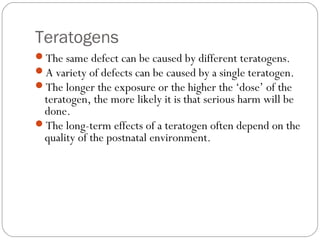
Teratogens
The same defect can be caused by different teratogens.
A variety of defects can be caused by a single teratogen.
The longer the exposure or the higher the ‘dose’ of the
teratogen, the more likely it is that serious harm will be
done.
The long-term effects of a teratogen often depend on the
quality of the postnatal environment.
Subjective Assessment
When pregnant female comes to you, the kinesiologist, you
should ask:
Name
Age
Medical history
Genetic history
Previous surgeries
Current/past medications
If they have ever or are using “street drugs” or smoking
Alcohol/caffeine use
Occupation and current working status
Marital status and children
Objective Assessment
When observing the client, evaluate:
Height
Weight
BMI
Blood Pressure
General alignment
Range painful movement
Conditions During Pregnancy
Constipation
Affects half of pregnant women
Causes:
increase in progesterone
the colon absorbing more water
worse in first 13-14 weeks
Treatment:
Drink plenty of fluids
Eat high fiber foods
Take fiber supplements – psylium husks, Metamucil, Ex-Lax
EXERCISE!
Conditions During Pregnancy
Fatigue
Almost all women report increased fatigue in the 1st trimester.
Causes:
Body is working harder
More levels of progesterone,
Treatment:
 Take naps
Drink plenty of fluids, but avoid fluids 2-3hr before bed. Lac
Exercise
Gentle stretches before bedtime can help prevent nighttime cramping
Eat foods rich in protein
Conditions During Pregnancy
 Back Ache
 Many women experience back aches during 2nd and 3rd trimesters
 Causes:
 Poor posture
 Extra weight
 Change in centre of gravity
 Hormones
 Treatment:
 Pay attention to posture
 Exercise
 Swimming
 Pillow support in bed
 Ask for assistance when lifting heavy objects
 Heat/cold
 Massage
 Support belt
 Wear supportive low heel shoes
Benefits of Exercise During Pregnancy
 Maintenance/improvement of maternal fitness
 Control of excess weight gain
 Improved posture and appearance
 Increased energy
 Improved sleep
 Decreased incidence of back pain
 Improved self-esteem
 Decreased incidence of varicose veins
 Decreased water retention
 Decreased level of tension
 Possible decrease in complications during labour
 Shortened labour
 More rapid postpartum recovery
Disadvantages of Not Exercising
Studies have shown that women who exercise do not
experience an increase in:
Premature Rupture of Membranes (PROM)
When the membranes that hold the amniotic fluid break too early.
Congenital Abnormalities
Risk Reduction
Pre-Eclampsia (Toxemia)
Occurs only during pregnancy and the postpartum period
Affects 5-8% of all pregnancies
Causes blood vessels to constrict resulting in high blood pressure and a
decrease in blood flow to organs and uterus.
Having high blood pressure before pregnancy puts you at risk, also having a
BMI of 30 or more
Characterized by high blood pressure and presence of protein in the urine
Symptoms: excess swelling of hands and feet, headaches, changes in visions,
vomiting blood, ringing in the ears
Occurs in the 2nd or 3rd trimesters
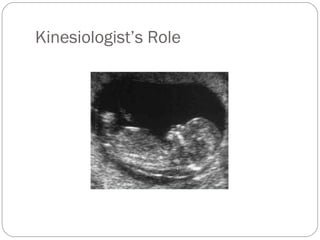
Kinesiologist’s Role
References
Pregnancy Tips: Trying to Conceive or Trying to get
Pregnant
Pregnancy Miracle
Lecture Note: Pregnancy Understanding
Wikipedia

The Trimester Pregnancy

  • 1.
    First trimester, Secondtrimester,Third trismester The Trimester Pregnancy
  • 2.
    The First Trimester Lastsfrom conception to the twelfth week of pregnancy 3 periods during the first trimester: The Germinal Period  Fertilized egg travels and implants in wall of uterus  Implantation occurs 10-14 days after conception The Period of the Embryo  Lasts from third through eighth week of pregnancy  Major organs and anatomical structures begin to form The Period of the Fetus  Lasts from ninth week of pregnancy until birth  All major organs continue rapid growth and become interconnected The First Trimester
  • 3.
    The Second Trimester Fetusassumes distinct human appearance The nails harden and skin thickens, as well as the eye lashes, eye brows, and scalp hair appear during fifth and sixth months Fetus’s visual and auditory senses are functional The Second Trimester
  • 4.
    The Third Trimester Allorgan systems mature rapidly Fetus prepares for birth Fetus reaches ‘age of viability’, the point at which the fetus can survive outside of the uterus Fetus shows better-organized gross motor activity, and sleepiness/ waking activity Towards end of ninth month, fetus is positioned head- down with limbs curled up in ‘fetal position’ The Third Trimester
  • 6.
    Teratogens External agents suchas viruses, drugs, chemicals and radiation that can harm a developing embryo or fetus. Time when organ system or body part is at highest risk of effects from teratogens is known as ‘sensitive period’. Effects of teratogens on a body part or organ system are worst during the period when that structure is forming and growing most rapidly.
  • 7.
    Teratogens The same defectcan be caused by different teratogens. A variety of defects can be caused by a single teratogen. The longer the exposure or the higher the ‘dose’ of the teratogen, the more likely it is that serious harm will be done. The long-term effects of a teratogen often depend on the quality of the postnatal environment.
  • 9.
    Subjective Assessment When pregnantfemale comes to you, the kinesiologist, you should ask: Name Age Medical history Genetic history Previous surgeries Current/past medications If they have ever or are using “street drugs” or smoking Alcohol/caffeine use Occupation and current working status Marital status and children
  • 10.
    Objective Assessment When observingthe client, evaluate: Height Weight BMI Blood Pressure General alignment Range painful movement
  • 11.
    Conditions During Pregnancy Constipation Affectshalf of pregnant women Causes: increase in progesterone the colon absorbing more water worse in first 13-14 weeks Treatment: Drink plenty of fluids Eat high fiber foods Take fiber supplements – psylium husks, Metamucil, Ex-Lax EXERCISE!
  • 12.
    Conditions During Pregnancy Fatigue Almostall women report increased fatigue in the 1st trimester. Causes: Body is working harder More levels of progesterone, Treatment:  Take naps Drink plenty of fluids, but avoid fluids 2-3hr before bed. Lac Exercise Gentle stretches before bedtime can help prevent nighttime cramping Eat foods rich in protein
  • 13.
    Conditions During Pregnancy Back Ache  Many women experience back aches during 2nd and 3rd trimesters  Causes:  Poor posture  Extra weight  Change in centre of gravity  Hormones  Treatment:  Pay attention to posture  Exercise  Swimming  Pillow support in bed  Ask for assistance when lifting heavy objects  Heat/cold  Massage  Support belt  Wear supportive low heel shoes
  • 14.
    Benefits of ExerciseDuring Pregnancy  Maintenance/improvement of maternal fitness  Control of excess weight gain  Improved posture and appearance  Increased energy  Improved sleep  Decreased incidence of back pain  Improved self-esteem  Decreased incidence of varicose veins  Decreased water retention  Decreased level of tension  Possible decrease in complications during labour  Shortened labour  More rapid postpartum recovery
  • 15.
    Disadvantages of NotExercising Studies have shown that women who exercise do not experience an increase in: Premature Rupture of Membranes (PROM) When the membranes that hold the amniotic fluid break too early. Congenital Abnormalities
  • 16.
    Risk Reduction Pre-Eclampsia (Toxemia) Occursonly during pregnancy and the postpartum period Affects 5-8% of all pregnancies Causes blood vessels to constrict resulting in high blood pressure and a decrease in blood flow to organs and uterus. Having high blood pressure before pregnancy puts you at risk, also having a BMI of 30 or more Characterized by high blood pressure and presence of protein in the urine Symptoms: excess swelling of hands and feet, headaches, changes in visions, vomiting blood, ringing in the ears Occurs in the 2nd or 3rd trimesters
  • 17.
  • 18.
    References Pregnancy Tips: Tryingto Conceive or Trying to get Pregnant Pregnancy Miracle Lecture Note: Pregnancy Understanding Wikipedia