The rsyslog v8 engine
A developer's view
Rainer Gerhards
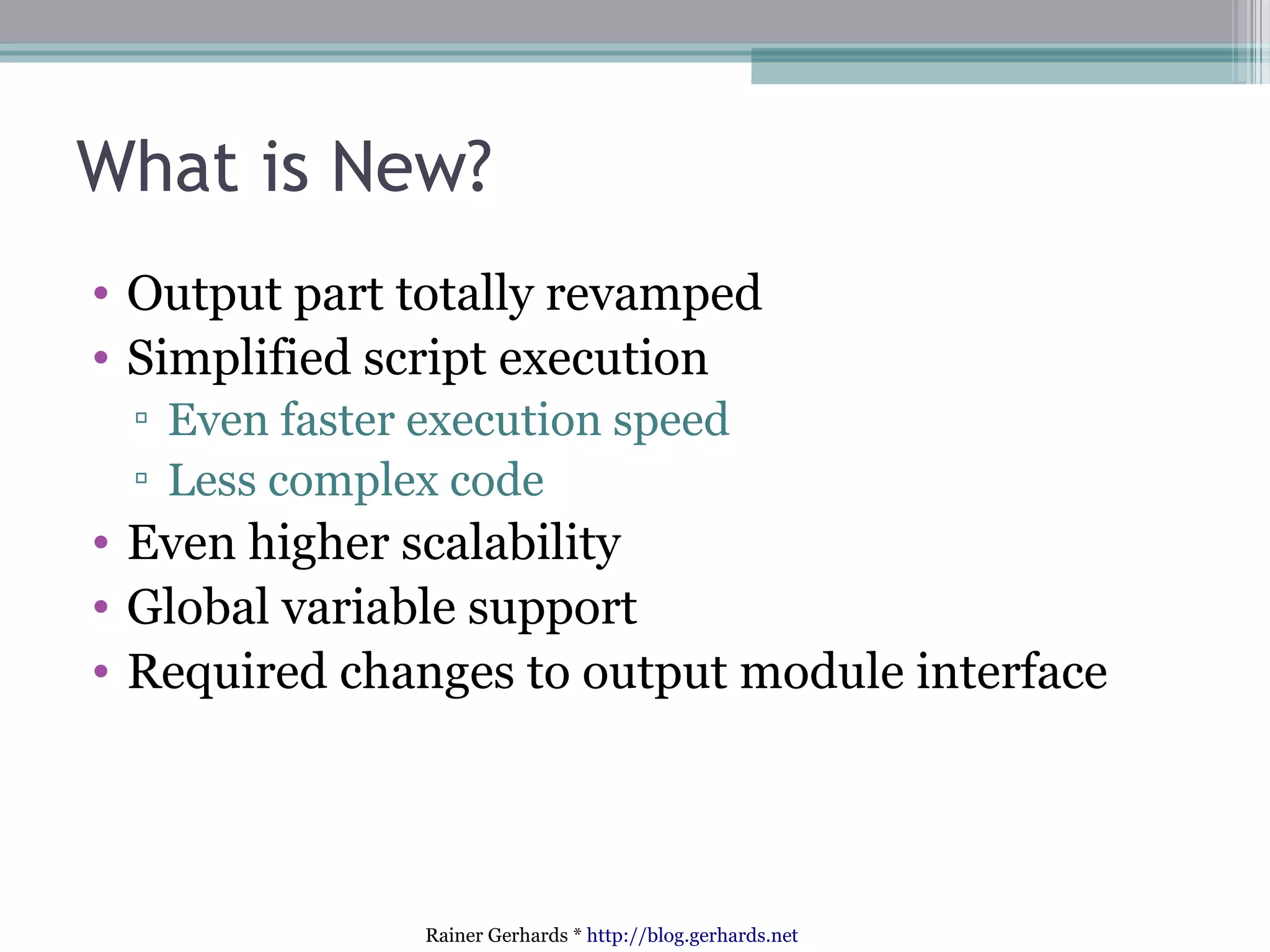
What is New?
• Output part totally revamped
• Simplified script execution
▫ Even faster execution speed
▫ Less complex code

• Even higher scalability
• Global variable support
• Required changes to output module interface

Rainer Gerhards * http://blog.gerhards.net
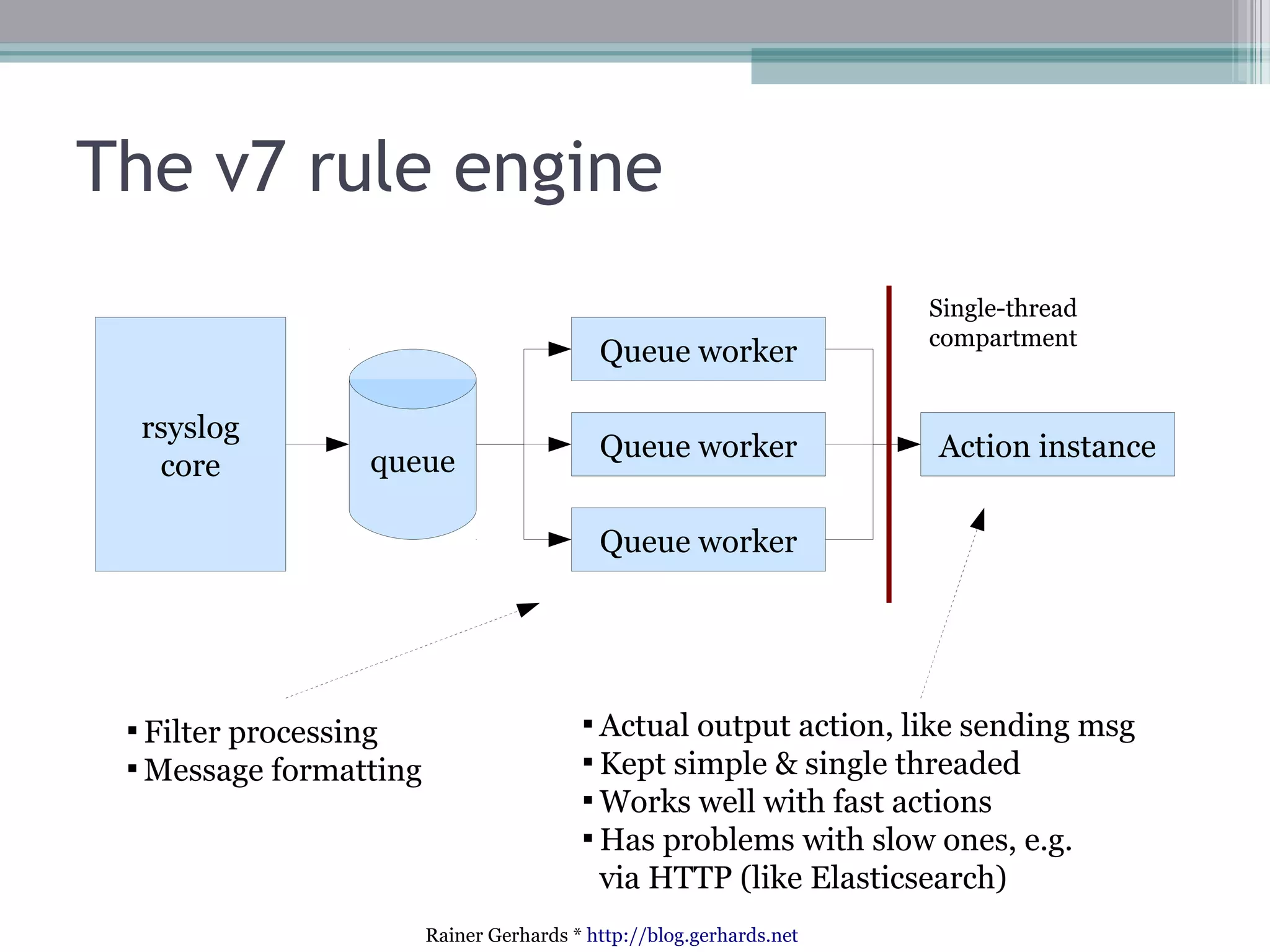
The v7 rule engine
Queue worker
rsyslog
core

Queue worker

queue

Single-thread
compartment

Action instance

Queue worker

Filter processing

Message formatting


Actual output action, like sending msg

Kept simple & single threaded

Works well with fast actions

Has problems with slow ones, e.g.
via HTTP (like Elasticsearch)


Rainer Gerhards * http://blog.gerhards.net
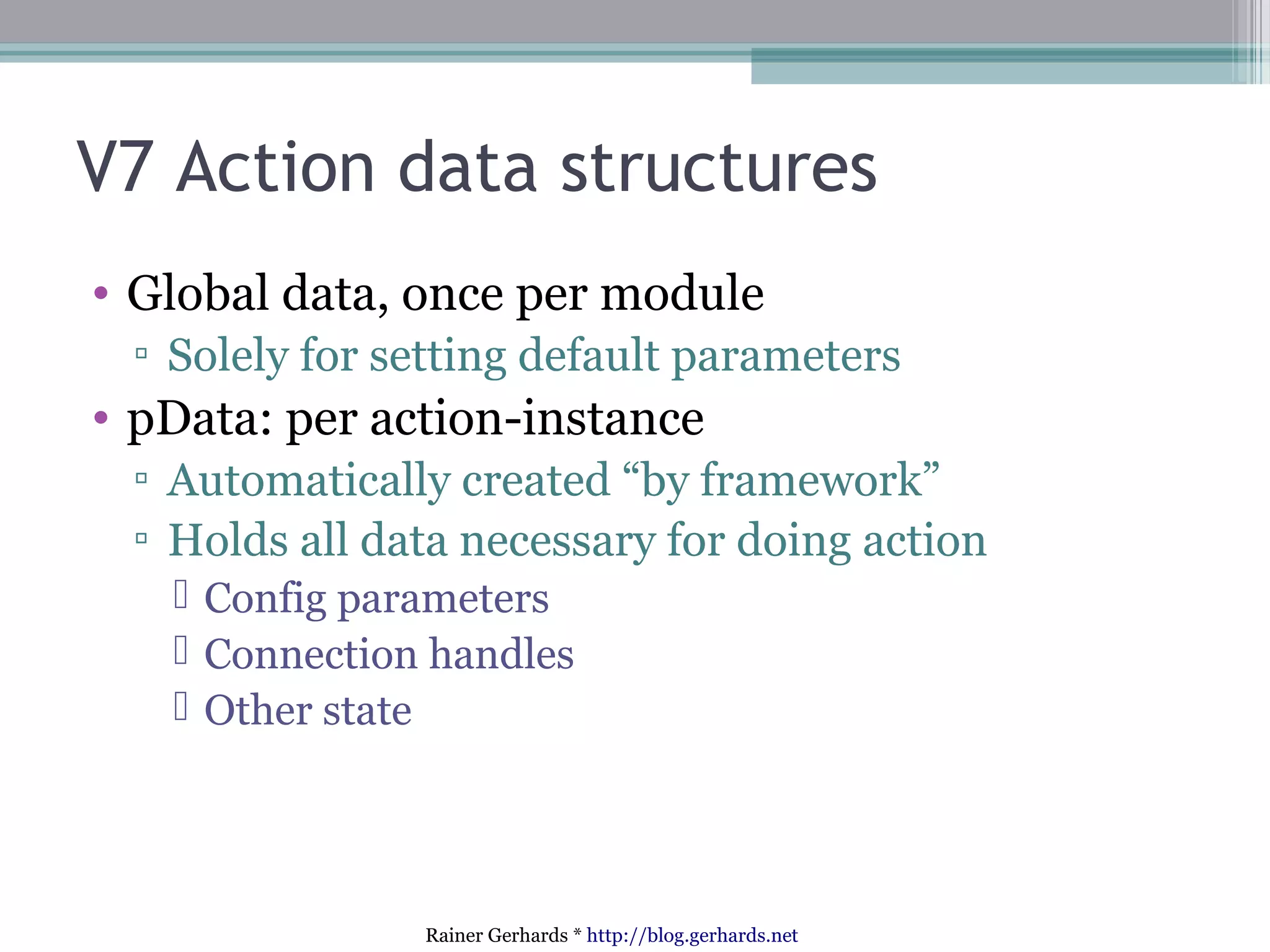
V7 Action data structures
• Global data, once per module
▫ Solely for setting default parameters

• pData: per action-instance
▫ Automatically created “by framework”
▫ Holds all data necessary for doing action
 Config parameters
 Connection handles
 Other state

Rainer Gerhards * http://blog.gerhards.net
Real-World Sample: ommysql
typedef struct _instanceData {
MYSQL *f_hmysql;
char
f_dbsrv[MAXHOSTNAMELEN+1];
unsigned int f_dbsrvPort;
char
f_dbname[_DB_MAXDBLEN+1];
char
f_dbuid[_DB_MAXUNAMELEN+1];
char
f_dbpwd[_DB_MAXPWDLEN+1];
unsigned uLastMySQLErrno;
uchar *f_configfile;
uchar *f_configsection;
uchar
*tplName;
} instanceData;

Green: per-connection parameters
Rest is config part.
Rainer Gerhards * http://blog.gerhards.net
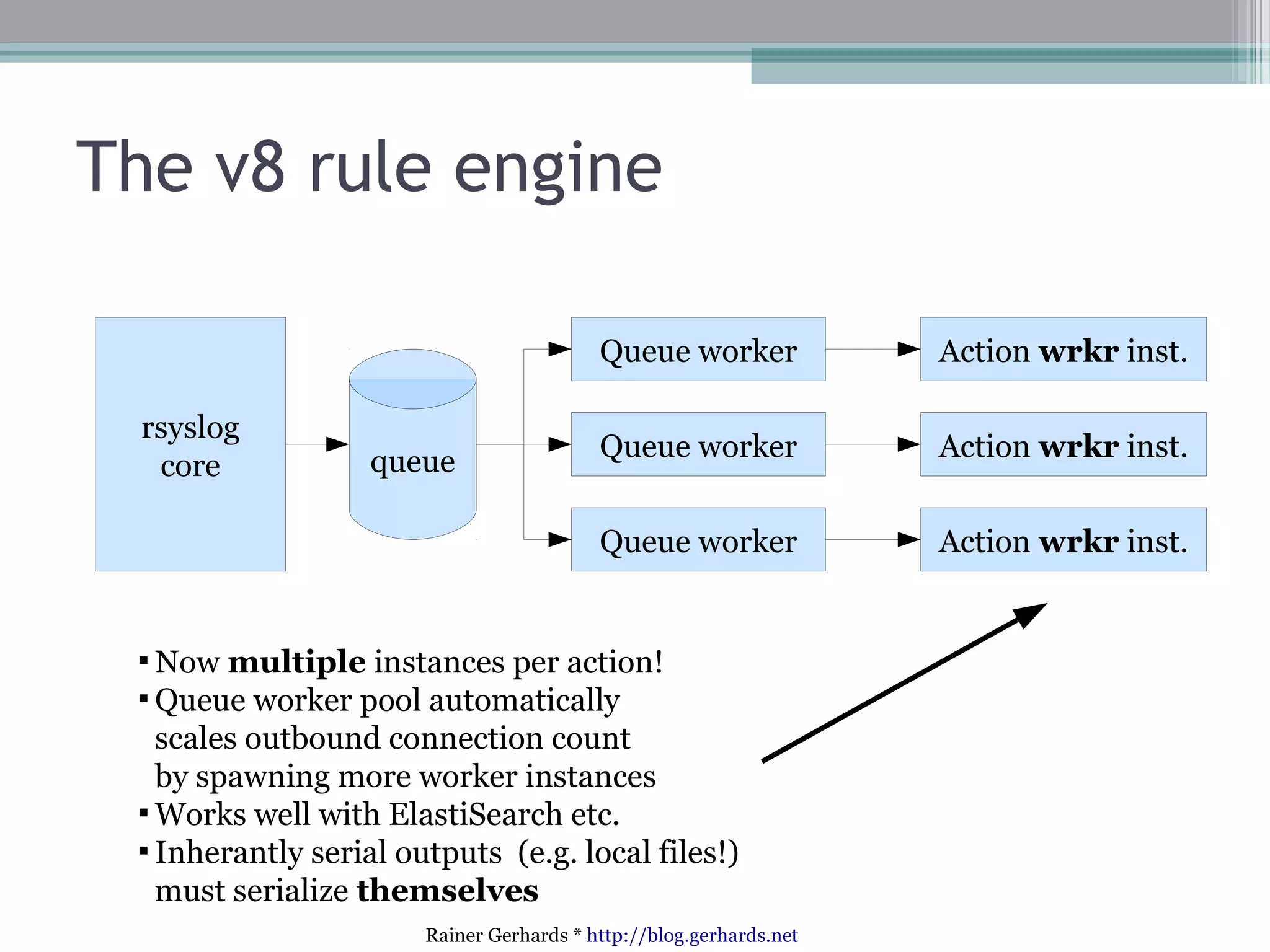
The v8 rule engine
Queue worker
queue

Queue worker

Action wrkr inst.

Queue worker

rsyslog
core

Action wrkr inst.

Action wrkr inst.

Now multiple instances per action!

Queue worker pool automatically
scales outbound connection count
by spawning more worker instances

Works well with ElastiSearch etc.

Inherantly serial outputs (e.g. local files!)
must serialize themselves


Rainer Gerhards * http://blog.gerhards.net
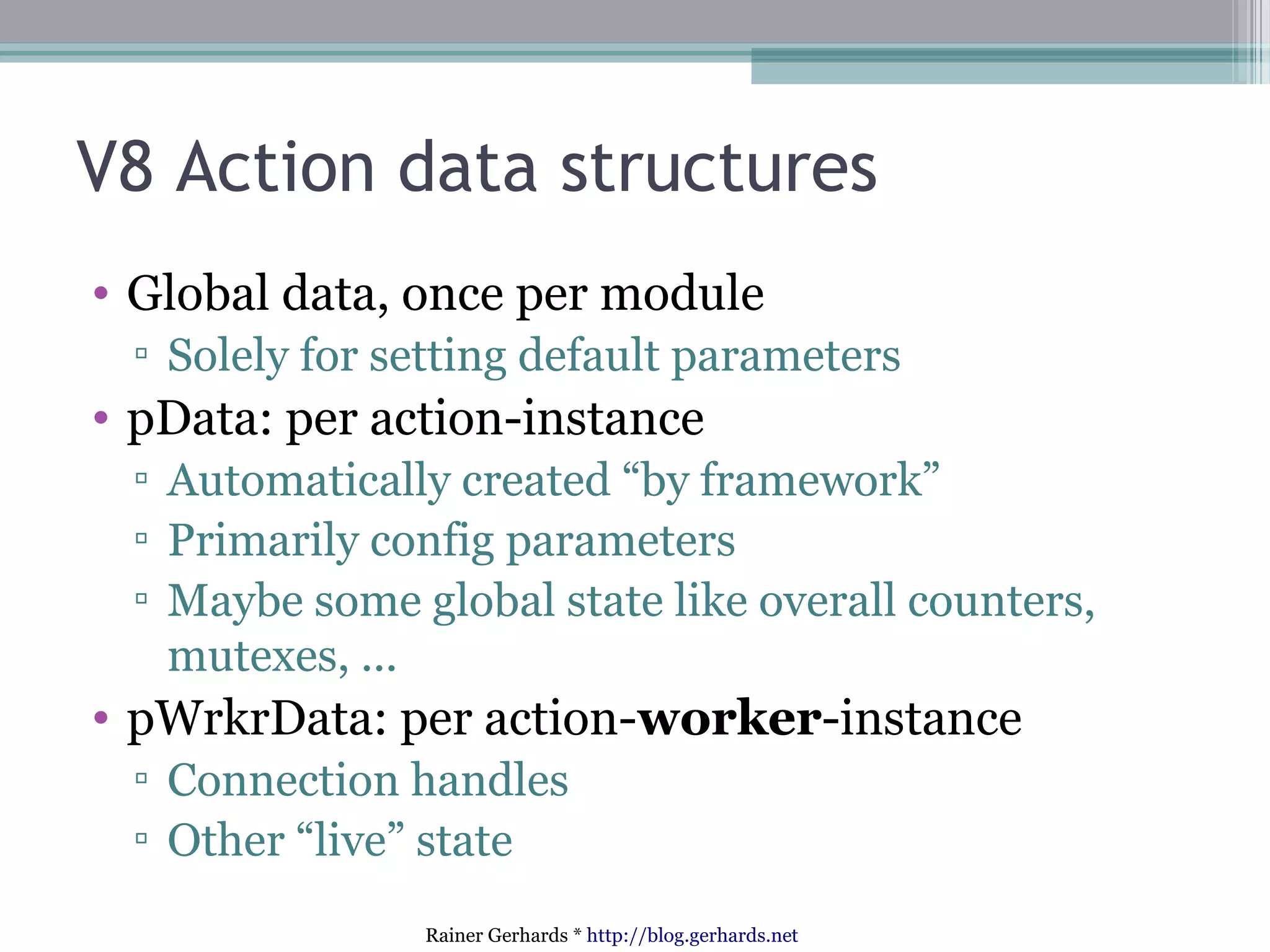
V8 Action data structures
• Global data, once per module
▫ Solely for setting default parameters

• pData: per action-instance
▫ Automatically created “by framework”
▫ Primarily config parameters
▫ Maybe some global state like overall counters,
mutexes, ...

• pWrkrData: per action-worker-instance
▫ Connection handles
▫ Other “live” state
Rainer Gerhards * http://blog.gerhards.net
Real-World Sample: ommysql
typedef struct _instanceData {
char
dbsrv[MAXHOSTNAMELEN+1];
unsigned int dbsrvPort;
char
dbname[_DB_MAXDBLEN+1];
char
dbuid[_DB_MAXUNAMELEN+1];
char
dbpwd[_DB_MAXPWDLEN+1];
uchar *configfile;
uchar *configsection;
uchar
*tplName;
} instanceData;
typedef struct wrkrInstanceData {
instanceData pData; /* points back to action instance */
MYSQL *hmysql;
unsigned uLastMySQLErrno;
} wrkrInstanceData_t;

Config and per-connection parameters now split,
multiple instances of per-connection data.
Rainer Gerhards * http://blog.gerhards.net
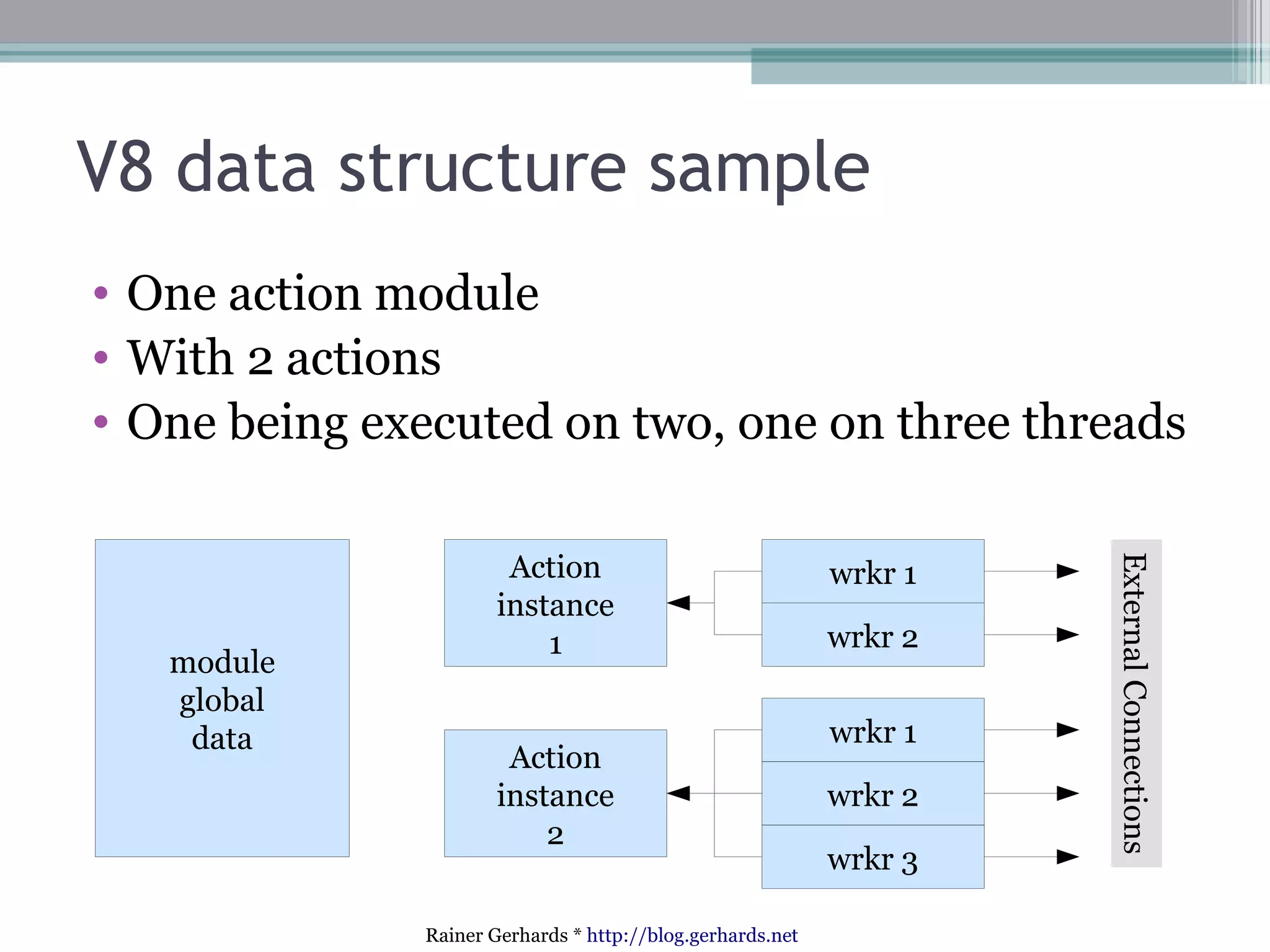
V8 data structure sample
• One action module
• With 2 actions
• One being executed on two, one on three threads

Action
instance
2
Rainer Gerhards * http://blog.gerhards.net

wrkr 1
wrkr 2
wrkr 1
wrkr 2
wrkr 3

External Connections

module
global
data

Action
instance
1
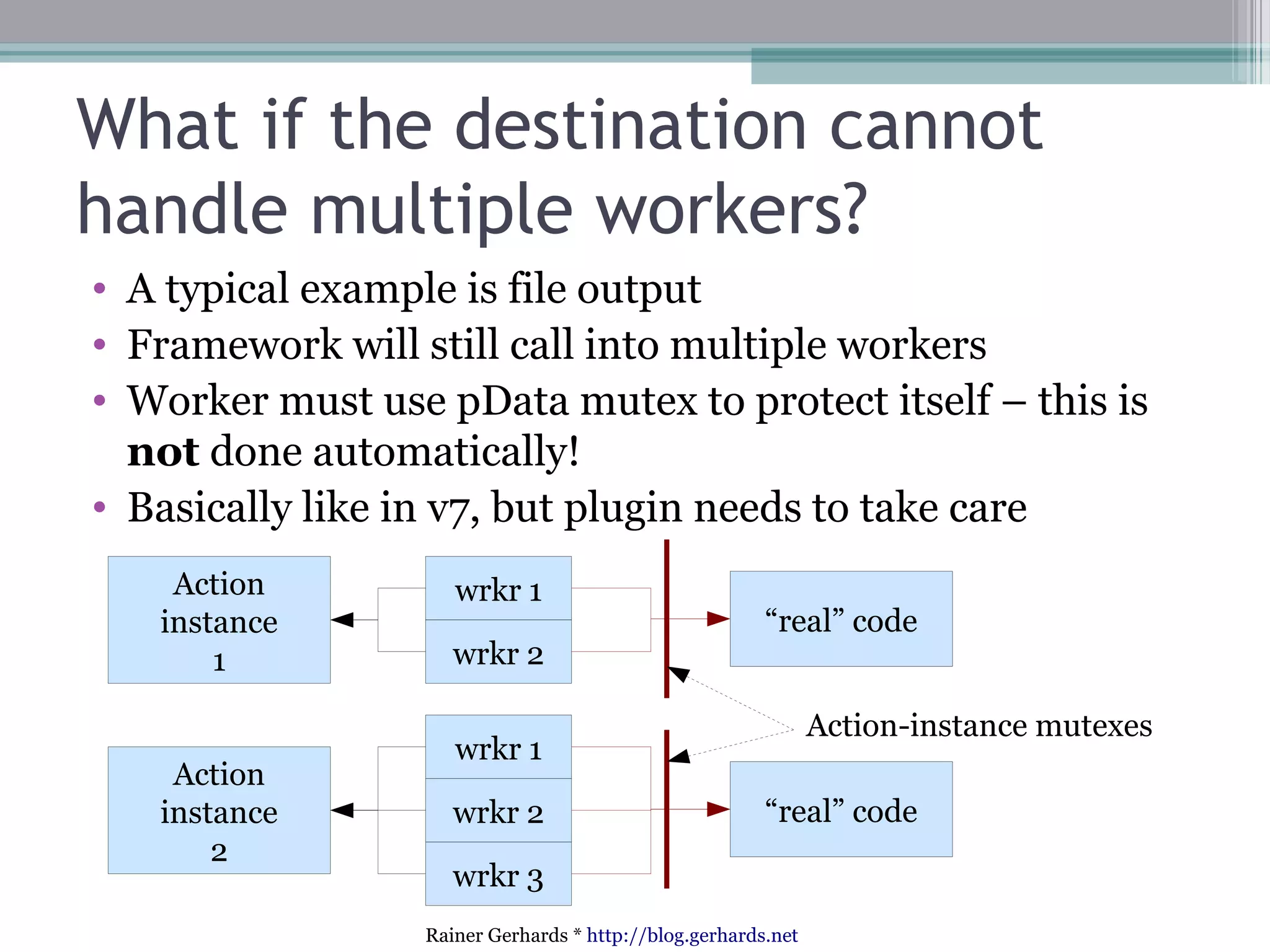
What if the destination cannot
handle multiple workers?
• A typical example is file output
• Framework will still call into multiple workers
• Worker must use pData mutex to protect itself – this is
not done automatically!
• Basically like in v7, but plugin needs to take care
Action
instance
1
Action
instance
2

wrkr 1
wrkr 2

“real” code
Action-instance mutexes

wrkr 1
wrkr 2

“real” code

wrkr 3
Rainer Gerhards * http://blog.gerhards.net
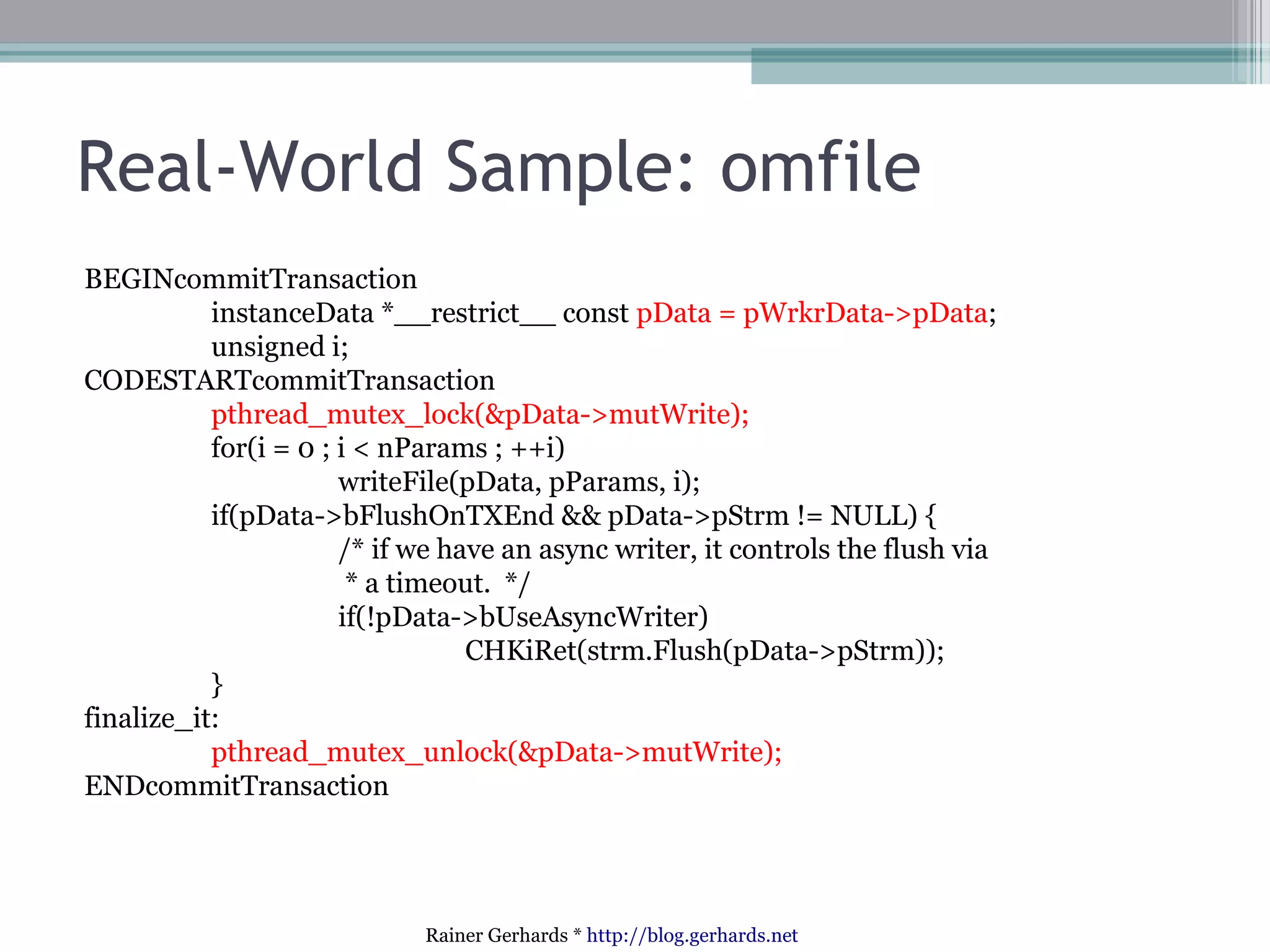
Real-World Sample: omfile
BEGINcommitTransaction
instanceData *__restrict__ const pData = pWrkrData->pData;
unsigned i;
CODESTARTcommitTransaction
pthread_mutex_lock(&pData->mutWrite);
for(i = 0 ; i < nParams ; ++i)
writeFile(pData, pParams, i);
if(pData->bFlushOnTXEnd && pData->pStrm != NULL) {
/* if we have an async writer, it controls the flush via
* a timeout. */
if(!pData->bUseAsyncWriter)
CHKiRet(strm.Flush(pData->pStrm));
}
finalize_it:
pthread_mutex_unlock(&pData->mutWrite);
ENDcommitTransaction

Rainer Gerhards * http://blog.gerhards.net
Anything else?
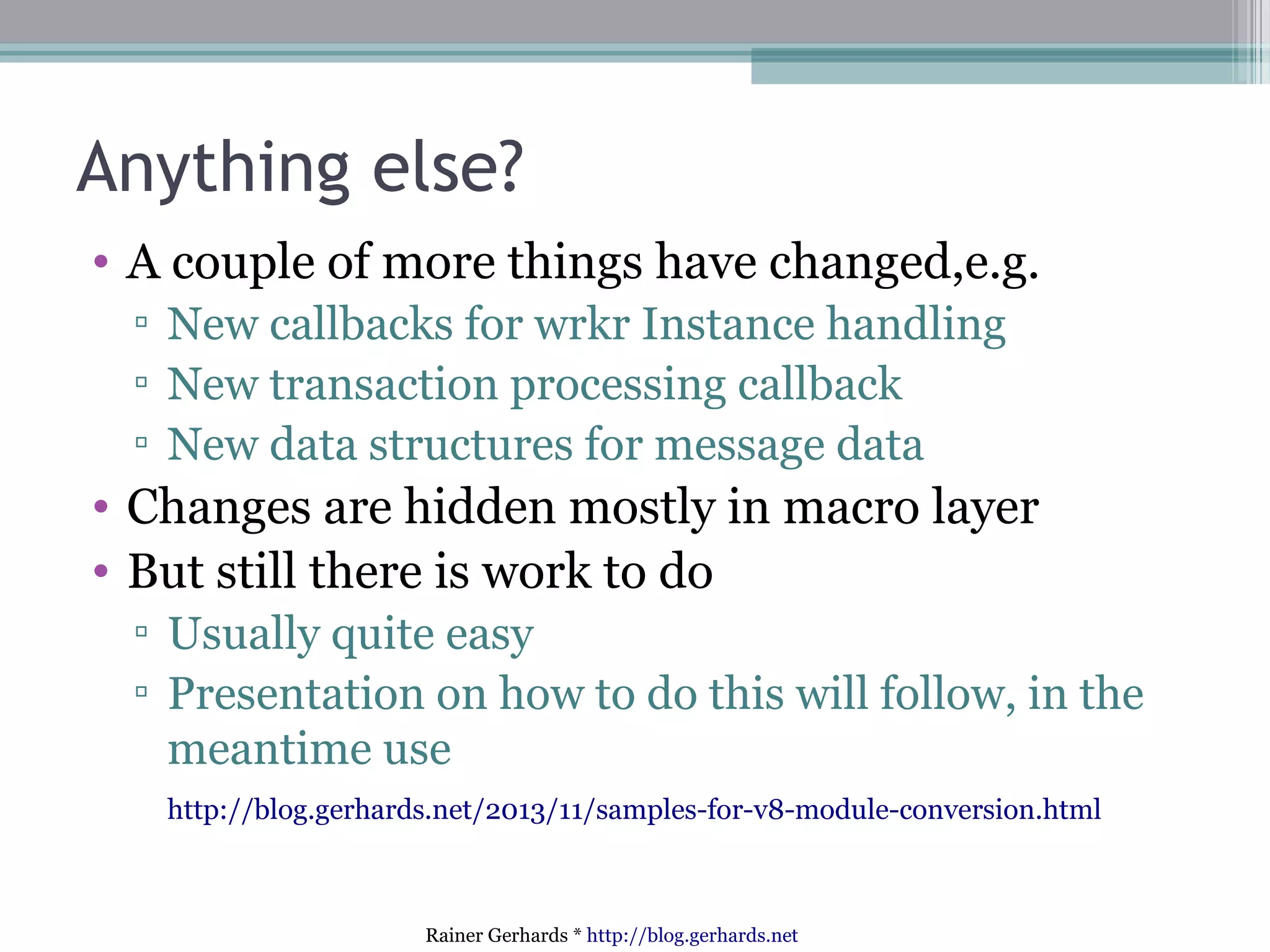
• A couple of more things have changed,e.g.
▫ New callbacks for wrkr Instance handling
▫ New transaction processing callback
▫ New data structures for message data

• Changes are hidden mostly in macro layer
• But still there is work to do
▫ Usually quite easy
▫ Presentation on how to do this will follow, in the
meantime use
http://blog.gerhards.net/2013/11/samples-for-v8-module-conversion.html

Rainer Gerhards * http://blog.gerhards.net
Even more?
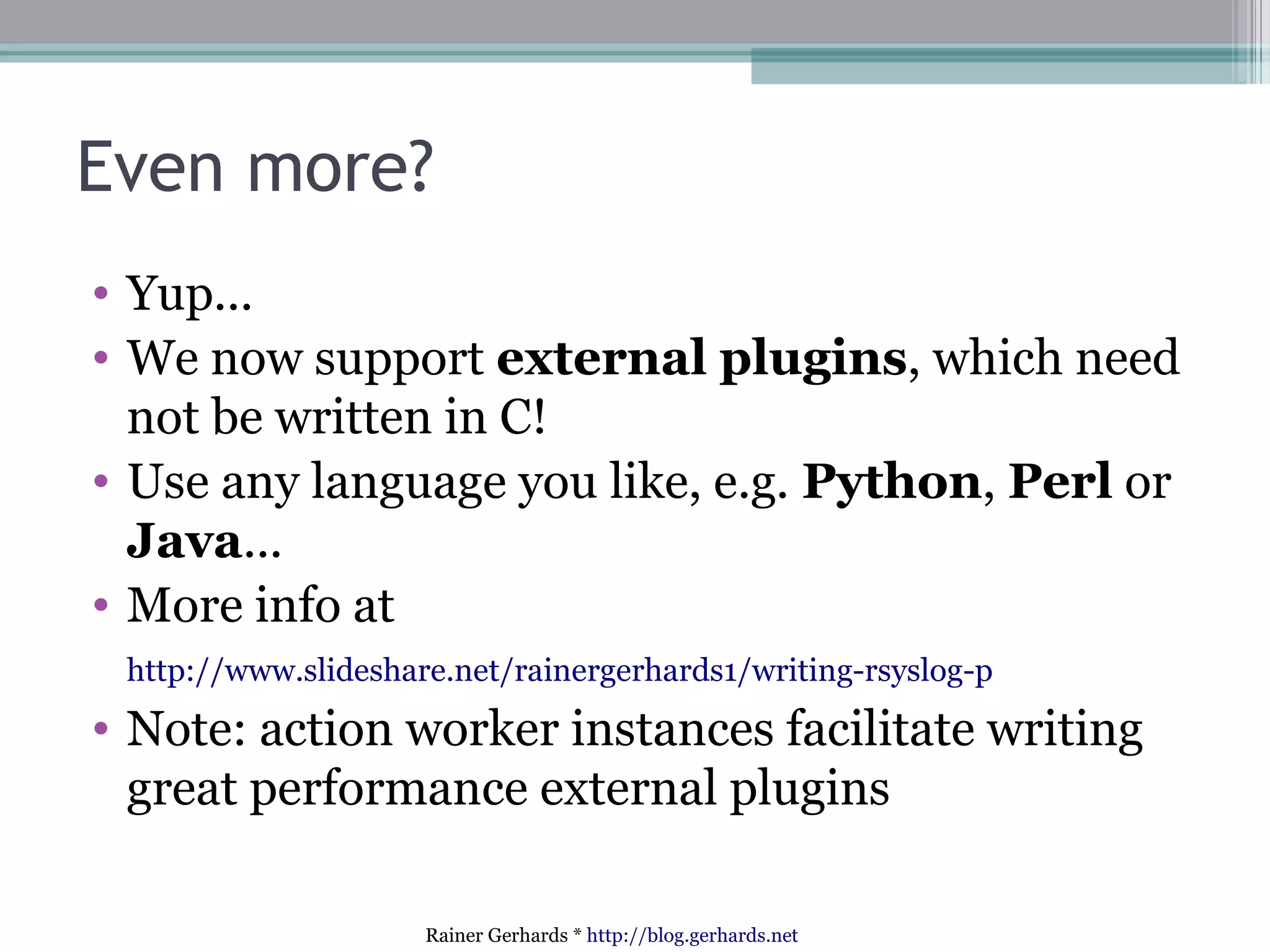
• Yup...
• We now support external plugins, which need
not be written in C!
• Use any language you like, e.g. Python, Perl or
Java...
• More info at
http://www.slideshare.net/rainergerhards1/writing-rsyslog-p

• Note: action worker instances facilitate writing
great performance external plugins
Rainer Gerhards * http://blog.gerhards.net

The rsyslog v8 engine (developer's view)

  • 1.
    The rsyslog v8engine A developer's view Rainer Gerhards
  • 2.
    What is New? •Output part totally revamped • Simplified script execution ▫ Even faster execution speed ▫ Less complex code • Even higher scalability • Global variable support • Required changes to output module interface Rainer Gerhards * http://blog.gerhards.net
  • 3.
    The v7 ruleengine Queue worker rsyslog core Queue worker queue Single-thread compartment Action instance Queue worker Filter processing  Message formatting  Actual output action, like sending msg  Kept simple & single threaded  Works well with fast actions  Has problems with slow ones, e.g. via HTTP (like Elasticsearch)  Rainer Gerhards * http://blog.gerhards.net
  • 4.
    V7 Action datastructures • Global data, once per module ▫ Solely for setting default parameters • pData: per action-instance ▫ Automatically created “by framework” ▫ Holds all data necessary for doing action  Config parameters  Connection handles  Other state Rainer Gerhards * http://blog.gerhards.net
  • 5.
    Real-World Sample: ommysql typedefstruct _instanceData { MYSQL *f_hmysql; char f_dbsrv[MAXHOSTNAMELEN+1]; unsigned int f_dbsrvPort; char f_dbname[_DB_MAXDBLEN+1]; char f_dbuid[_DB_MAXUNAMELEN+1]; char f_dbpwd[_DB_MAXPWDLEN+1]; unsigned uLastMySQLErrno; uchar *f_configfile; uchar *f_configsection; uchar *tplName; } instanceData; Green: per-connection parameters Rest is config part. Rainer Gerhards * http://blog.gerhards.net
  • 6.
    The v8 ruleengine Queue worker queue Queue worker Action wrkr inst. Queue worker rsyslog core Action wrkr inst. Action wrkr inst. Now multiple instances per action!  Queue worker pool automatically scales outbound connection count by spawning more worker instances  Works well with ElastiSearch etc.  Inherantly serial outputs (e.g. local files!) must serialize themselves  Rainer Gerhards * http://blog.gerhards.net
  • 7.
    V8 Action datastructures • Global data, once per module ▫ Solely for setting default parameters • pData: per action-instance ▫ Automatically created “by framework” ▫ Primarily config parameters ▫ Maybe some global state like overall counters, mutexes, ... • pWrkrData: per action-worker-instance ▫ Connection handles ▫ Other “live” state Rainer Gerhards * http://blog.gerhards.net
  • 8.
    Real-World Sample: ommysql typedefstruct _instanceData { char dbsrv[MAXHOSTNAMELEN+1]; unsigned int dbsrvPort; char dbname[_DB_MAXDBLEN+1]; char dbuid[_DB_MAXUNAMELEN+1]; char dbpwd[_DB_MAXPWDLEN+1]; uchar *configfile; uchar *configsection; uchar *tplName; } instanceData; typedef struct wrkrInstanceData { instanceData pData; /* points back to action instance */ MYSQL *hmysql; unsigned uLastMySQLErrno; } wrkrInstanceData_t; Config and per-connection parameters now split, multiple instances of per-connection data. Rainer Gerhards * http://blog.gerhards.net
  • 9.
    V8 data structuresample • One action module • With 2 actions • One being executed on two, one on three threads Action instance 2 Rainer Gerhards * http://blog.gerhards.net wrkr 1 wrkr 2 wrkr 1 wrkr 2 wrkr 3 External Connections module global data Action instance 1
  • 10.
    What if thedestination cannot handle multiple workers? • A typical example is file output • Framework will still call into multiple workers • Worker must use pData mutex to protect itself – this is not done automatically! • Basically like in v7, but plugin needs to take care Action instance 1 Action instance 2 wrkr 1 wrkr 2 “real” code Action-instance mutexes wrkr 1 wrkr 2 “real” code wrkr 3 Rainer Gerhards * http://blog.gerhards.net
  • 11.
    Real-World Sample: omfile BEGINcommitTransaction instanceData*__restrict__ const pData = pWrkrData->pData; unsigned i; CODESTARTcommitTransaction pthread_mutex_lock(&pData->mutWrite); for(i = 0 ; i < nParams ; ++i) writeFile(pData, pParams, i); if(pData->bFlushOnTXEnd && pData->pStrm != NULL) { /* if we have an async writer, it controls the flush via * a timeout. */ if(!pData->bUseAsyncWriter) CHKiRet(strm.Flush(pData->pStrm)); } finalize_it: pthread_mutex_unlock(&pData->mutWrite); ENDcommitTransaction Rainer Gerhards * http://blog.gerhards.net
  • 12.
    Anything else? • Acouple of more things have changed,e.g. ▫ New callbacks for wrkr Instance handling ▫ New transaction processing callback ▫ New data structures for message data • Changes are hidden mostly in macro layer • But still there is work to do ▫ Usually quite easy ▫ Presentation on how to do this will follow, in the meantime use http://blog.gerhards.net/2013/11/samples-for-v8-module-conversion.html Rainer Gerhards * http://blog.gerhards.net
  • 13.
    Even more? • Yup... •We now support external plugins, which need not be written in C! • Use any language you like, e.g. Python, Perl or Java... • More info at http://www.slideshare.net/rainergerhards1/writing-rsyslog-p • Note: action worker instances facilitate writing great performance external plugins Rainer Gerhards * http://blog.gerhards.net