THE ROMAN
CONQUEST
IN BRITAIN
ABOUT MY REPORT
Theme: The Roman conquest in Britain
Creator: Nutfulloyev G’ayrat
Group: 6-1ing-14 (101)
Teacher: Tursunov M.M.
PLAN
1. Introduction
2. The Romans’ conquest’s reason
3. About Next Steps of Caesar
4. Liberation Movement
5. Reforms and legacy
6. Conclusion
INTRODUCTION
In the beginning of the last century, about a quarter of the world’s
population was ruled by the British. ‘The sun never goes down on
our empire’, -they said. They meant that is always daytime
somewhere in the Empire. They also meant that their empire was
for ever. Of course, no empire is for ever. Britain lost its empire
after the Second World War, but before that the British Empire was
the largest in the history of the world
Nevertheless, Britain was conquered by others in
the far past.
For example → THE ROMANS
We know that the Romans built the biggest empire
in the world in their time. And they didn’t worry,
or afraid of anything else, any nation,
Just like Britain
The Normans were not the first people who invaded Britain. Two
thousand years ago the great Roman Julius Caesar brought an army across
the sea from France. For four hundred years, England was part of the
Roman Empire. When the Romans first arrived, there were many different
groups of people. Each group had its own king. They didn’t think of
themselves as ‘British’, but the Romans called the people from all these
groups ‘Britons’. The reason that The Romans’ conquest was helping the
Briton people to Gaul .
One of Caesar’s motives was to stop the Gauls from receiving British aid,
a factor which had bothered him while he was conquering Gaul.
ABOUT NEXT STEPS
Caesar landed and engaged the Britons but soon withdrew
because local opposition was strong. Hundred years Later
Emperor Claudius sent an army to Britain which conquered the
southern part of the island.
In the north and west the older social order remained much
untouched, while in the south-eastern region of England, where
the Romans built most of their towns and where the Roman
type villas were concentrated, the slave-owning system
developed. Otherwise, the old way of life of the British Celts did
not change very much.
BOUDICA
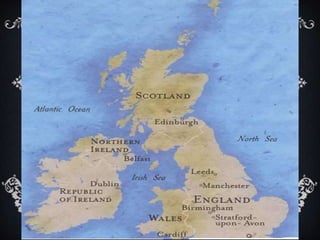
The Romans tried many times to conquer the areas of Britain that
we now call Wales and Scotland. But they never kept control there.
In the rest of Britain, the local people were much easier to control .
But Boudica was different. Her husband was a local king in the
east of England. When he died, The Romans tried to take all his
money. Roman soldiers attacked Boudica and her daughters.
Boudica was angry.
Soon she had an army of Britons behind her. They attacked
Colchester, London and Saint Albans – the three most
important cities in Britain at that time – and destroyed them
completely. But in the end, the Romans defeated her. There
is a story that her body lies under London’s most famous
railway station, ‘King’s Cross’.
It was one of the liberation movements of
The Britons
MILITARY ROADS
A further important reform of the Roman Empire was the
network of military roads, Which the Romans according to their
custom built throughout the occupied region. In some parts of
the country these roads to this day form the basis of road
communication. The routes of some of these roads, such as
Watling Street from London to Chester; Icknield Way
connecting London with Cirencester, Gloucester and Caerleon
in South Wales, are still used today
BUILDINGS
The towns were fortified. Most British towns with
names ending with 'chester' were, in Roman times,
fortified camps. Many defensive walls were built
to defend the country from the attacks of the
barbarians living in the north and the west of the
country. Most outstanding was the wall built on
the orders of Emperor Hadrian, from Solway Firth
to the Tyne river, which roughly divided England
from Scotland and was to keep out the Picts.
The largest of the towns was called Londinium. It
was on the river Thames, where London is today. It
became the capital city.
CULTURE AND RELIGION
In many places around the country you can still see the
straight roads, strong walls and fine houses that the
Romans built. In the new Roman towns, Britons started
to live like Romans. They wore Roman clothes and went
to the theatre and the baths. Most townspeople could
speak Latin. Many could read and write it too. In the later
years of Roman rule they became Christian
Roman society in Britain was highly classified. At the top were those people
associated with the legions, the provincial administration, the government of
towns and the wealthy traders and commercial classes who enjoyed legal
privileges not generally accorded to the majority of the population. Then the
Emperor Caracalla extended citizenship to all free-born inhabitants of the
empire, but social and legal distinctions remained rigidly set between the
upper rank of citizens known as honest ores and the masses, known as
humiliores. At the lowest end of the scale were the slaves, many of whom
were able to gain their freedom, and many of whom might occupy important
governmental posts. Women were also rigidly circumscribed, not being
allowed to hold any public office, and having severely limited property
rights.
CONCLUSION
We were given a task by our teacher to prepare a report
about history of ancient Britain. During doing this task
I learned much more information about The Britons,
The Romans, their conquest to the island and influence
of the capture. Britain changed a lot. Changed their
cultural points, building styles, religion, life manner and
other points. But Britain people still British, not any
other…
USED LITERATURES
Fiona Beddall – ‘History of Britain’
Baranovsky L.S. & Kozikis D.D. –
‘Panorama of Great Britain’
Peter N. Williams – ‘Narrative History of England’
Andy Hopkins & Jocelyn Potter –
‘History of Britain in new series’
Rome chronicles
THANK YOU FOR
YOUR
ATTENTION!!!

The Roman conquest in Britain

  • 1.
  • 2.
    ABOUT MY REPORT Theme:The Roman conquest in Britain Creator: Nutfulloyev G’ayrat Group: 6-1ing-14 (101) Teacher: Tursunov M.M.
  • 3.
    PLAN 1. Introduction 2. TheRomans’ conquest’s reason 3. About Next Steps of Caesar 4. Liberation Movement 5. Reforms and legacy 6. Conclusion
  • 5.
    INTRODUCTION In the beginningof the last century, about a quarter of the world’s population was ruled by the British. ‘The sun never goes down on our empire’, -they said. They meant that is always daytime somewhere in the Empire. They also meant that their empire was for ever. Of course, no empire is for ever. Britain lost its empire after the Second World War, but before that the British Empire was the largest in the history of the world
  • 6.
    Nevertheless, Britain wasconquered by others in the far past. For example → THE ROMANS We know that the Romans built the biggest empire in the world in their time. And they didn’t worry, or afraid of anything else, any nation, Just like Britain
  • 8.
    The Normans werenot the first people who invaded Britain. Two thousand years ago the great Roman Julius Caesar brought an army across the sea from France. For four hundred years, England was part of the Roman Empire. When the Romans first arrived, there were many different groups of people. Each group had its own king. They didn’t think of themselves as ‘British’, but the Romans called the people from all these groups ‘Britons’. The reason that The Romans’ conquest was helping the Briton people to Gaul . One of Caesar’s motives was to stop the Gauls from receiving British aid, a factor which had bothered him while he was conquering Gaul.
  • 10.
    ABOUT NEXT STEPS Caesarlanded and engaged the Britons but soon withdrew because local opposition was strong. Hundred years Later Emperor Claudius sent an army to Britain which conquered the southern part of the island. In the north and west the older social order remained much untouched, while in the south-eastern region of England, where the Romans built most of their towns and where the Roman type villas were concentrated, the slave-owning system developed. Otherwise, the old way of life of the British Celts did not change very much.
  • 11.
    BOUDICA The Romans triedmany times to conquer the areas of Britain that we now call Wales and Scotland. But they never kept control there. In the rest of Britain, the local people were much easier to control . But Boudica was different. Her husband was a local king in the east of England. When he died, The Romans tried to take all his money. Roman soldiers attacked Boudica and her daughters. Boudica was angry.
  • 12.
    Soon she hadan army of Britons behind her. They attacked Colchester, London and Saint Albans – the three most important cities in Britain at that time – and destroyed them completely. But in the end, the Romans defeated her. There is a story that her body lies under London’s most famous railway station, ‘King’s Cross’. It was one of the liberation movements of The Britons
  • 14.
    MILITARY ROADS A furtherimportant reform of the Roman Empire was the network of military roads, Which the Romans according to their custom built throughout the occupied region. In some parts of the country these roads to this day form the basis of road communication. The routes of some of these roads, such as Watling Street from London to Chester; Icknield Way connecting London with Cirencester, Gloucester and Caerleon in South Wales, are still used today
  • 15.
    BUILDINGS The towns werefortified. Most British towns with names ending with 'chester' were, in Roman times, fortified camps. Many defensive walls were built to defend the country from the attacks of the barbarians living in the north and the west of the country. Most outstanding was the wall built on the orders of Emperor Hadrian, from Solway Firth to the Tyne river, which roughly divided England from Scotland and was to keep out the Picts. The largest of the towns was called Londinium. It was on the river Thames, where London is today. It became the capital city.
  • 17.
    CULTURE AND RELIGION Inmany places around the country you can still see the straight roads, strong walls and fine houses that the Romans built. In the new Roman towns, Britons started to live like Romans. They wore Roman clothes and went to the theatre and the baths. Most townspeople could speak Latin. Many could read and write it too. In the later years of Roman rule they became Christian
  • 19.
    Roman society inBritain was highly classified. At the top were those people associated with the legions, the provincial administration, the government of towns and the wealthy traders and commercial classes who enjoyed legal privileges not generally accorded to the majority of the population. Then the Emperor Caracalla extended citizenship to all free-born inhabitants of the empire, but social and legal distinctions remained rigidly set between the upper rank of citizens known as honest ores and the masses, known as humiliores. At the lowest end of the scale were the slaves, many of whom were able to gain their freedom, and many of whom might occupy important governmental posts. Women were also rigidly circumscribed, not being allowed to hold any public office, and having severely limited property rights.
  • 20.
    CONCLUSION We were givena task by our teacher to prepare a report about history of ancient Britain. During doing this task I learned much more information about The Britons, The Romans, their conquest to the island and influence of the capture. Britain changed a lot. Changed their cultural points, building styles, religion, life manner and other points. But Britain people still British, not any other…
  • 22.
    USED LITERATURES Fiona Beddall– ‘History of Britain’ Baranovsky L.S. & Kozikis D.D. – ‘Panorama of Great Britain’ Peter N. Williams – ‘Narrative History of England’ Andy Hopkins & Jocelyn Potter – ‘History of Britain in new series’ Rome chronicles
  • 23.