Mark Bew MBE
UK Government – Building A New World
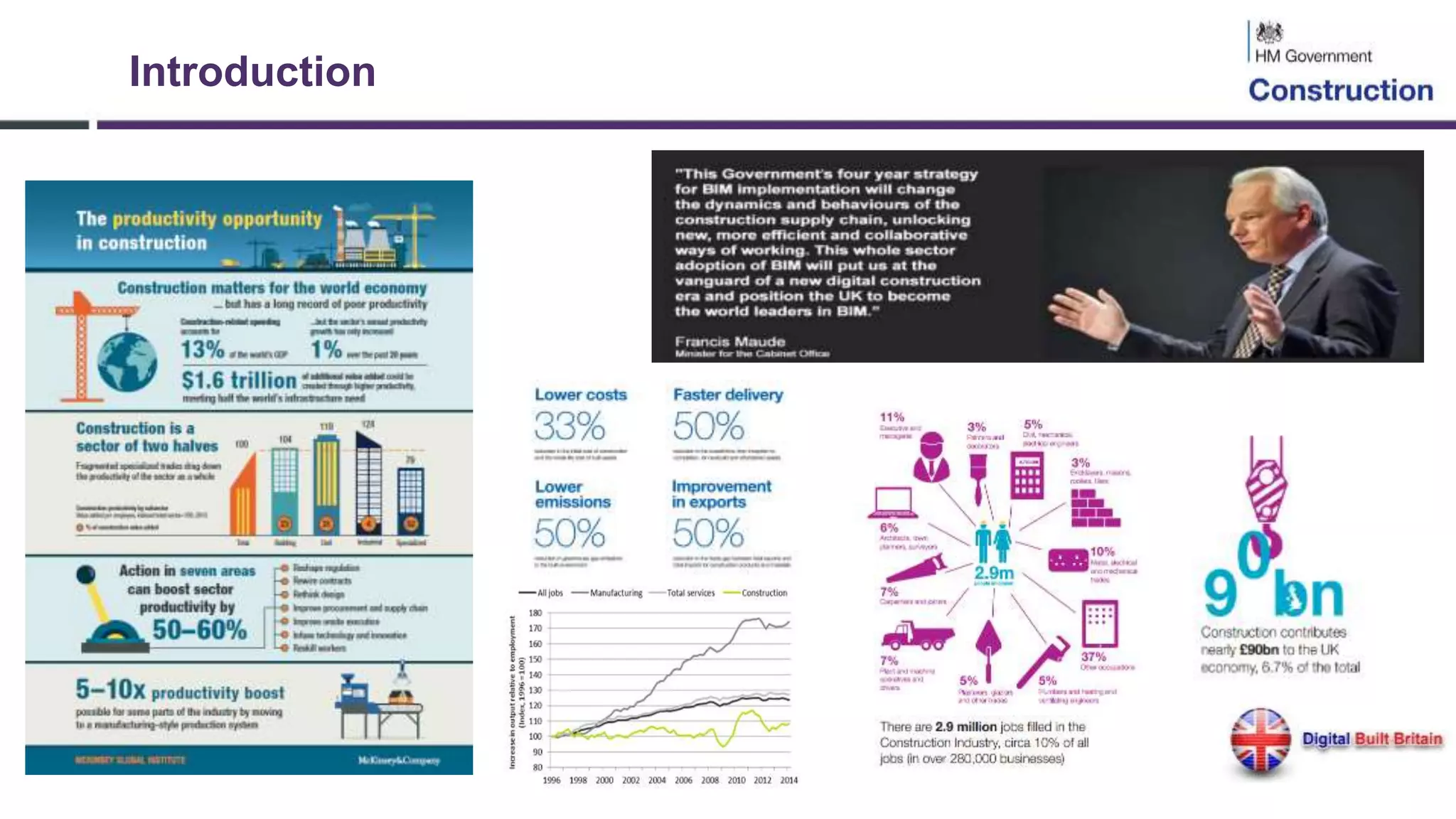
Introduction
1934 1944 1994 1998 2015
Since 1934 c70 reports have been issued on UK construction efficiency
2011
Introduction
2016
► Benchmarking
► Procurement Methods
► Government Soft Landings
► DfMA / Manufacturing
► Intelligent Client
► Fiscal Constraint
► Increasing Productivity
DBB – Work Plan
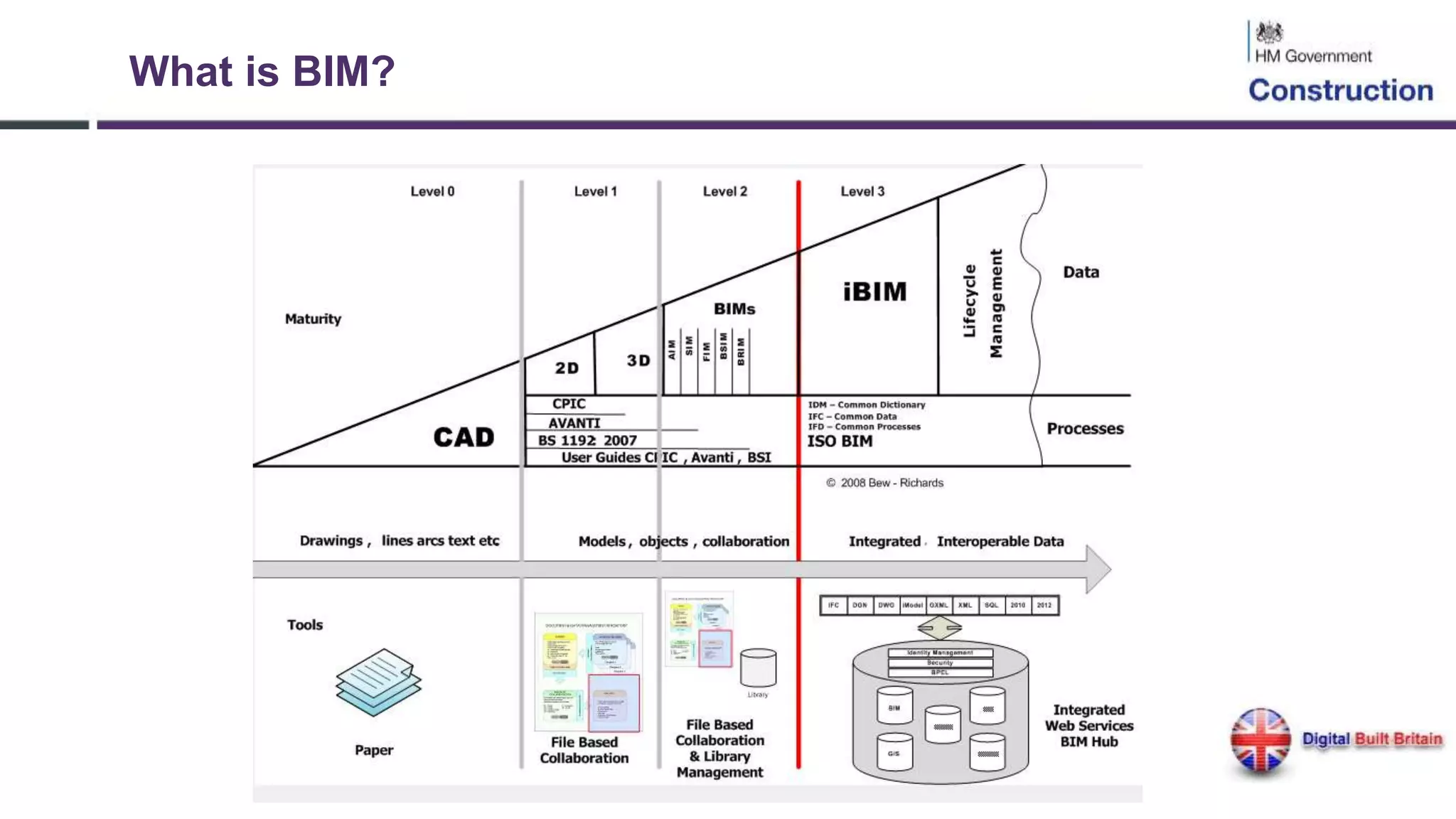
What is BIM?
What is Level 1 BIM?
• Drawings
• Schedules
• Programmes
• Bills of Quantities
• Letters
• Emails
• Social Media
• Calculations
• Video
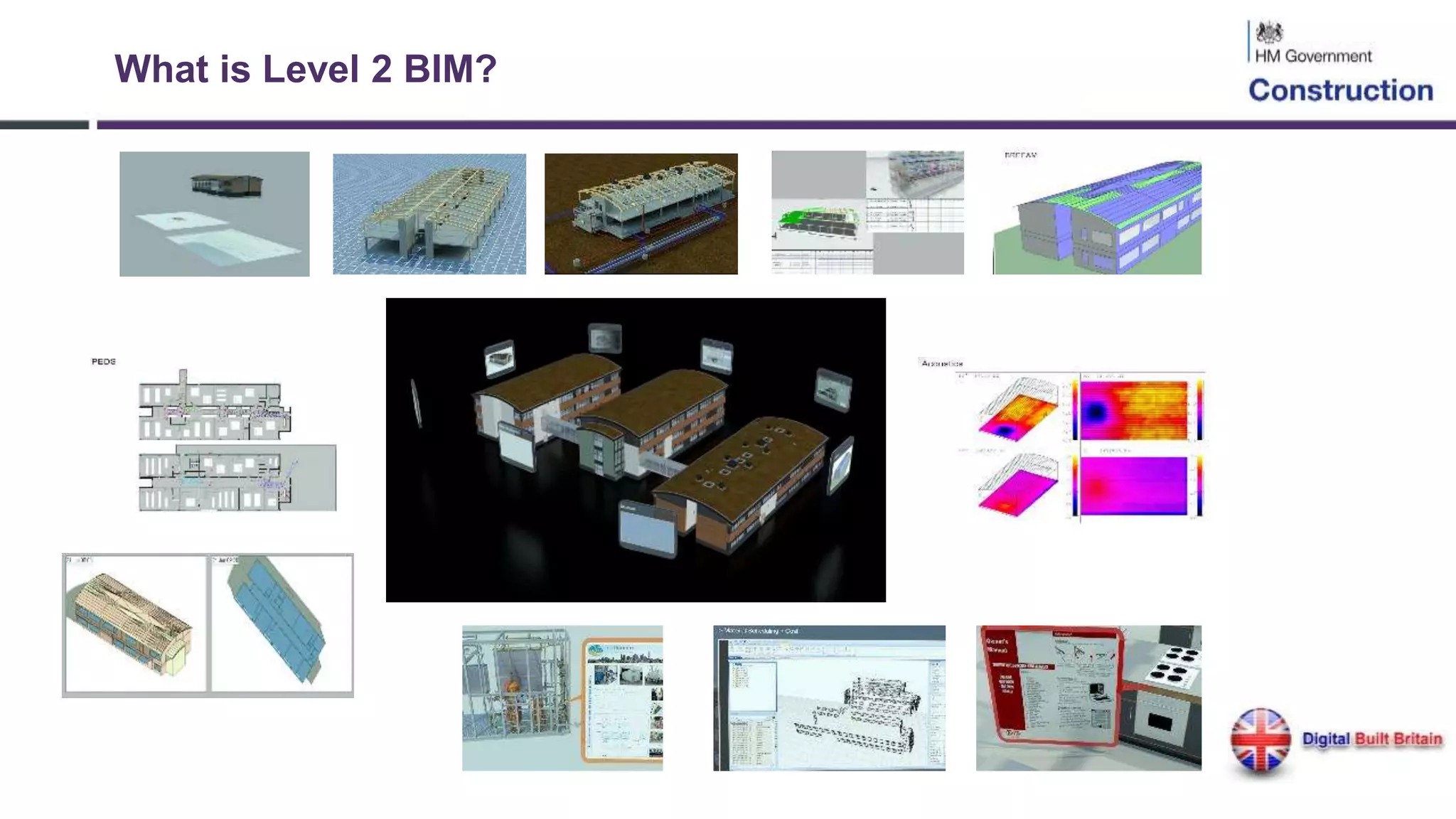
What is Level 2 BIM?
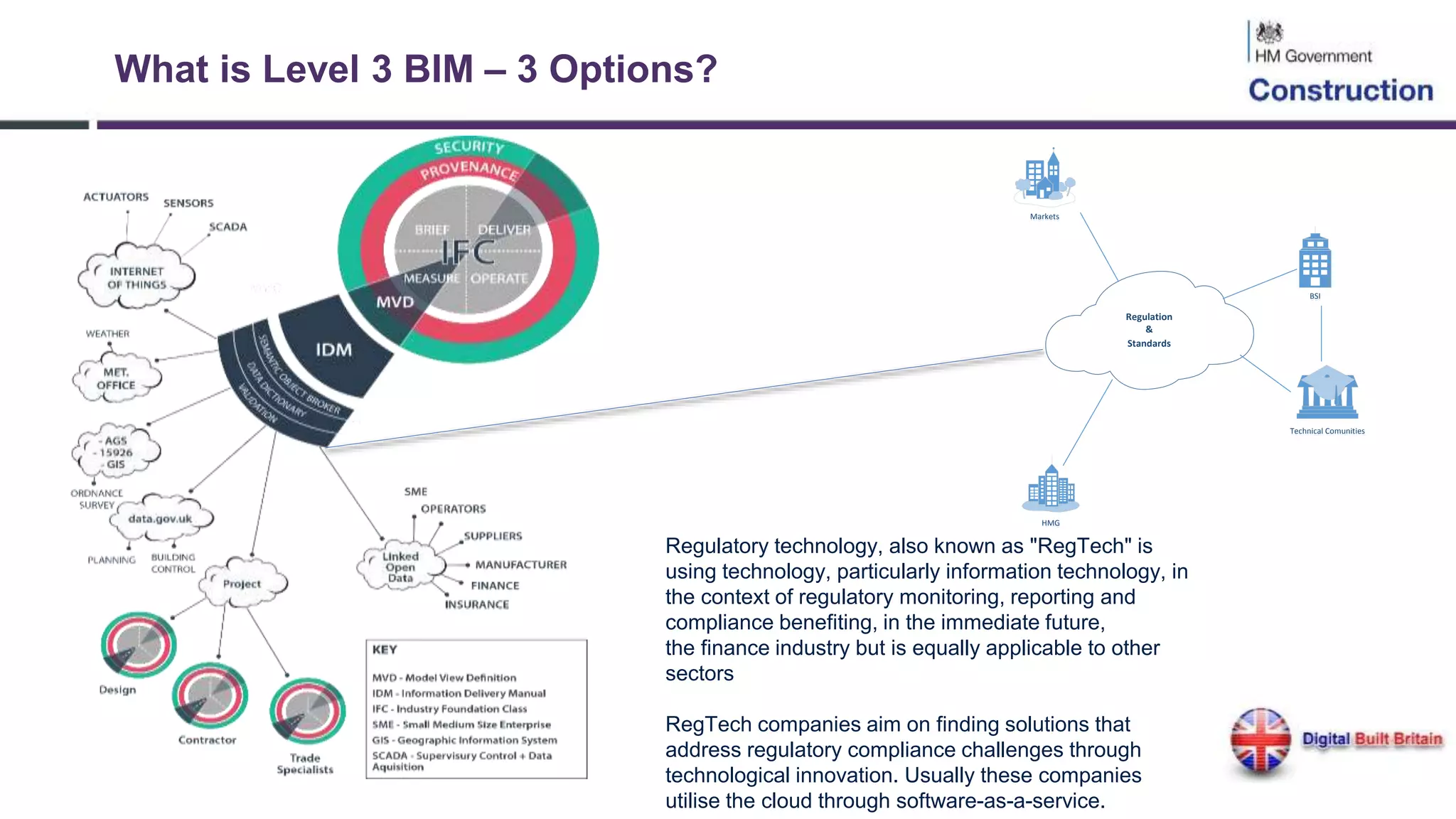
Regulation
&
Standards
BSIBSI
Technical ComunitiesTechnical Comunities
HMGHMG
MarketsMarkets
Regulatory technology, also known as "RegTech" is
using technology, particularly information technology, in
the context of regulatory monitoring, reporting and
compliance benefiting, in the immediate future,
the finance industry but is equally applicable to other
sectors
RegTech companies aim on finding solutions that
address regulatory compliance challenges through
technological innovation. Usually these companies
utilise the cloud through software-as-a-service.
What is Level 3 BIM – 3 Options?
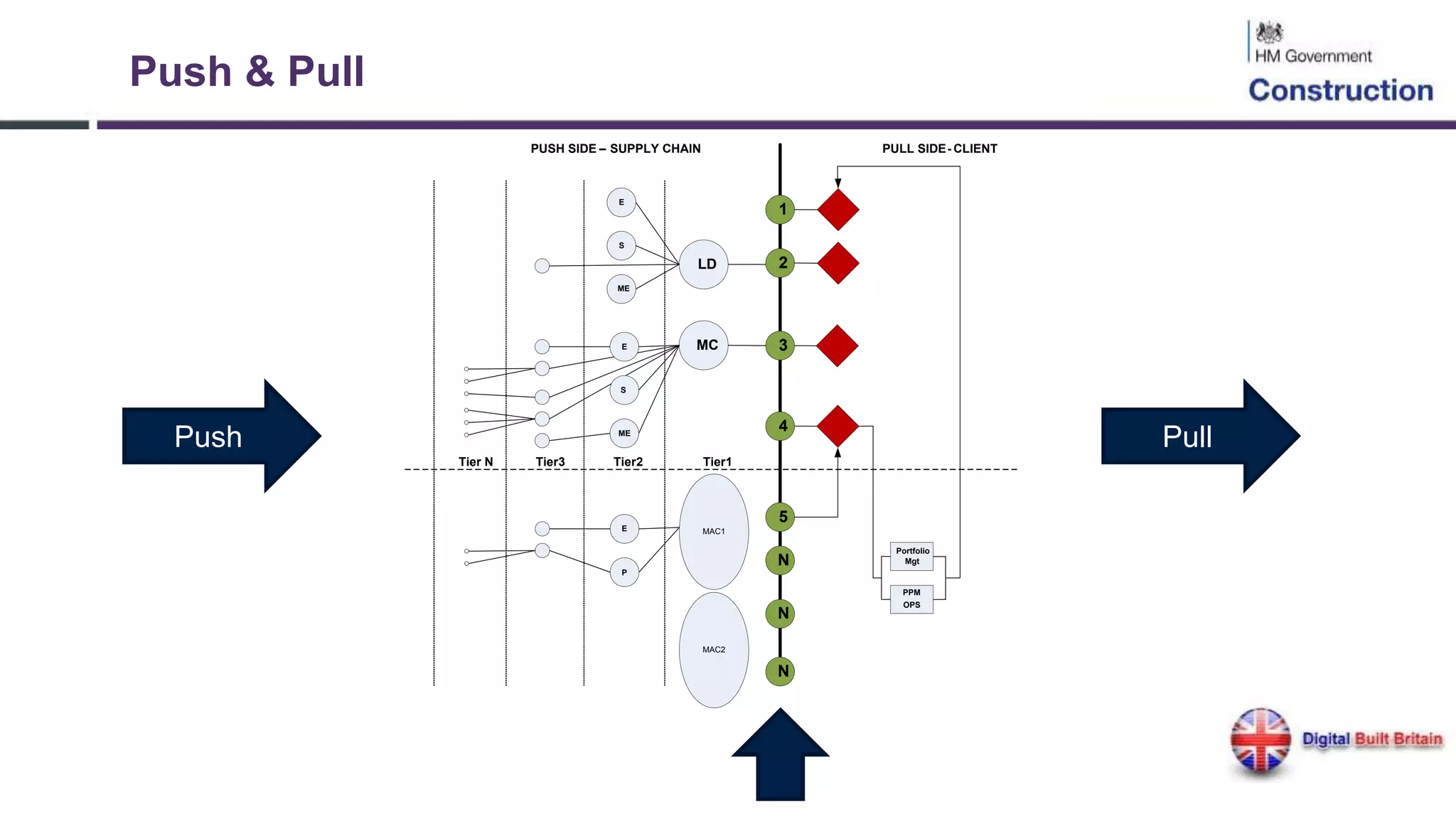
Push & Pull
1
2
3
4
5
N
N
N
MC
LD
E
S
ME
ME
Tier1Tier2Tier3Tier N
E
S
Portfolio
Mgt
PPM
PUSH SIDE – SUPPLY CHAIN PULL SIDE- CLIENT
MAC1
MAC2
E
P
OPS
Push Pull
Level 2 BIM “Package”
► PAS1192:2 Capital Delivery
► PAS1192:3 Operational Delivery
► BS1192:4 Data Structure
► Data Classification
► Digital Plan of Works (Levels of Data Detail)
► PAS1192:5 Security
► BIM Contract Protocol
► Government Soft Landings
Departmental Engagement
· Departmental Strategies
· Early Adopters
· Sustained Embedded
Change
· Implementation Plan
· EIR
· Tender Documents
· Scoring Process
· Framework Training
· Framework Support
Case Study - MoJ
Where is the value?
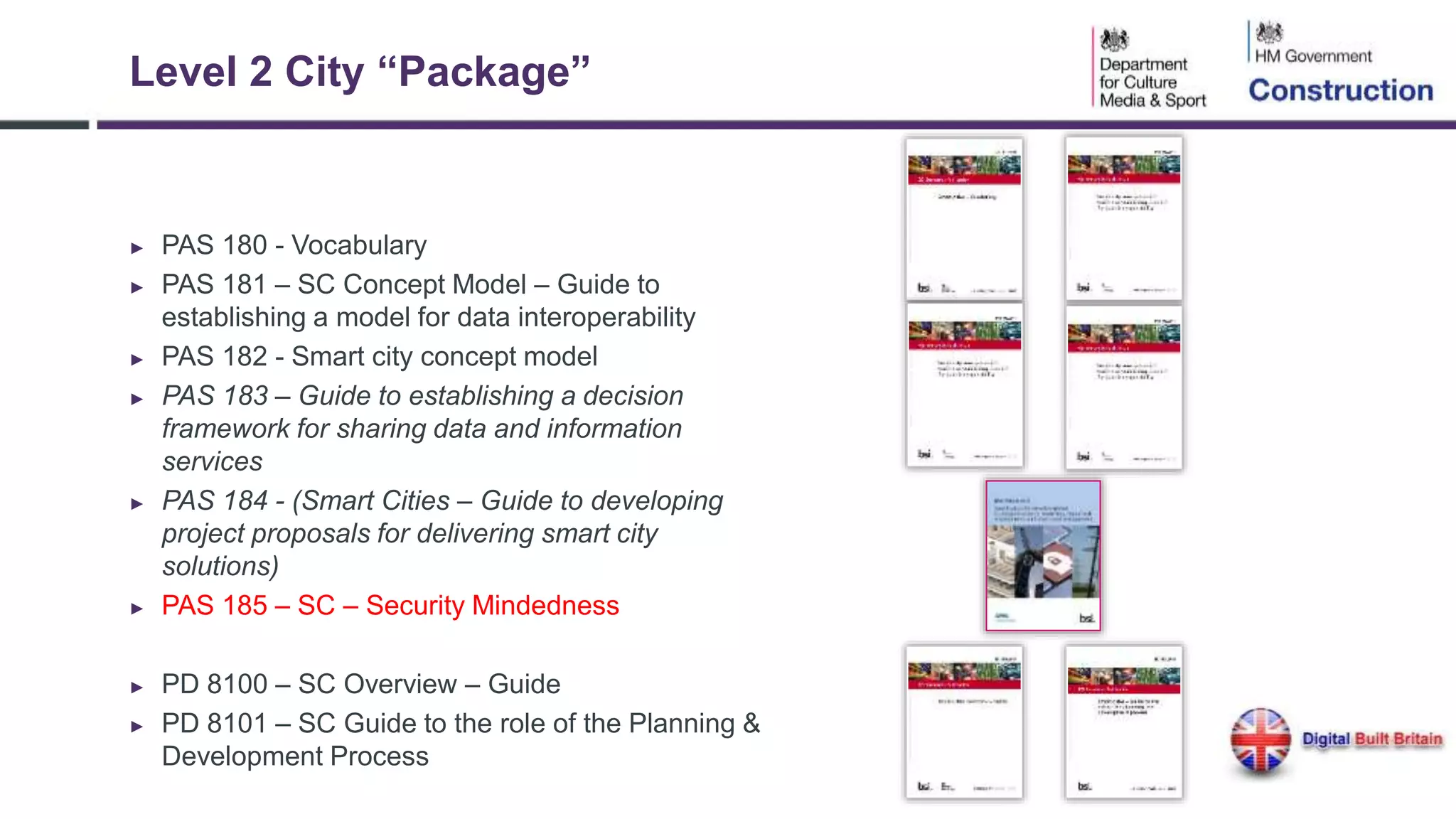
Level 2 City “Package”
► PAS 180 - Vocabulary
► PAS 181 – SC Concept Model – Guide to
establishing a model for data interoperability
► PAS 182 - Smart city concept model
► PAS 183 – Guide to establishing a decision
framework for sharing data and information
services
► PAS 184 - (Smart Cities – Guide to developing
project proposals for delivering smart city
solutions)
► PAS 185 – SC – Security Mindedness
► PD 8100 – SC Overview – Guide
► PD 8101 – SC Guide to the role of the Planning &
Development Process
BIM & (Smart) Cities
Level 2 - Manufacturing
www.bim-level2.org/en/guidancewww.constructionprducts.org.uk
Level 2 Achievements
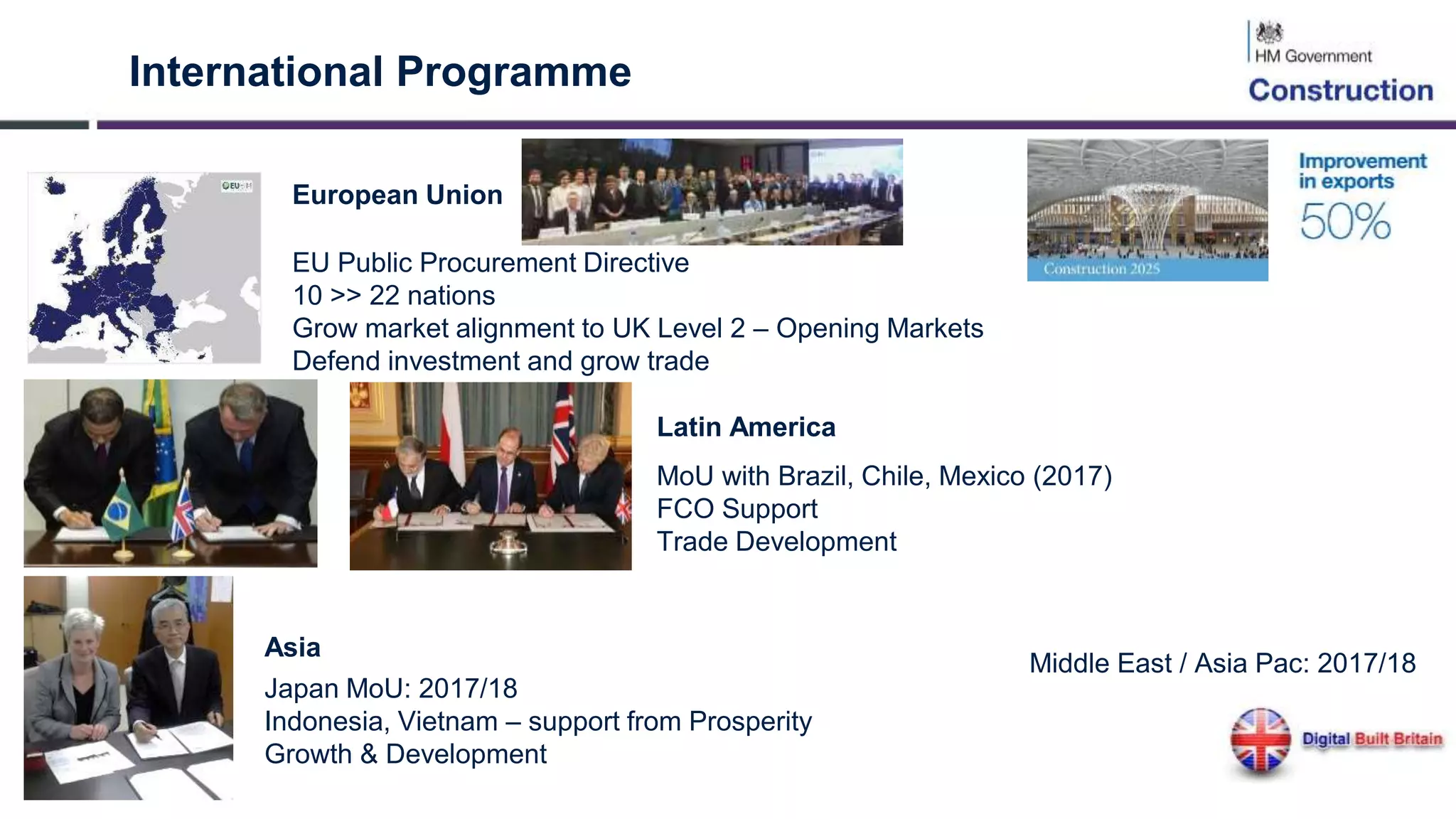
Japan MoU: 2017/18
Indonesia, Vietnam – support from Prosperity
Growth & Development
Middle East / Asia Pac: 2017/18
EU Public Procurement Directive
10 >> 22 nations
Grow market alignment to UK Level 2 – Opening Markets
Defend investment and grow trade
MoU with Brazil, Chile, Mexico (2017)
FCO Support
Trade Development
International Programme
Latin America
Asia
European Union
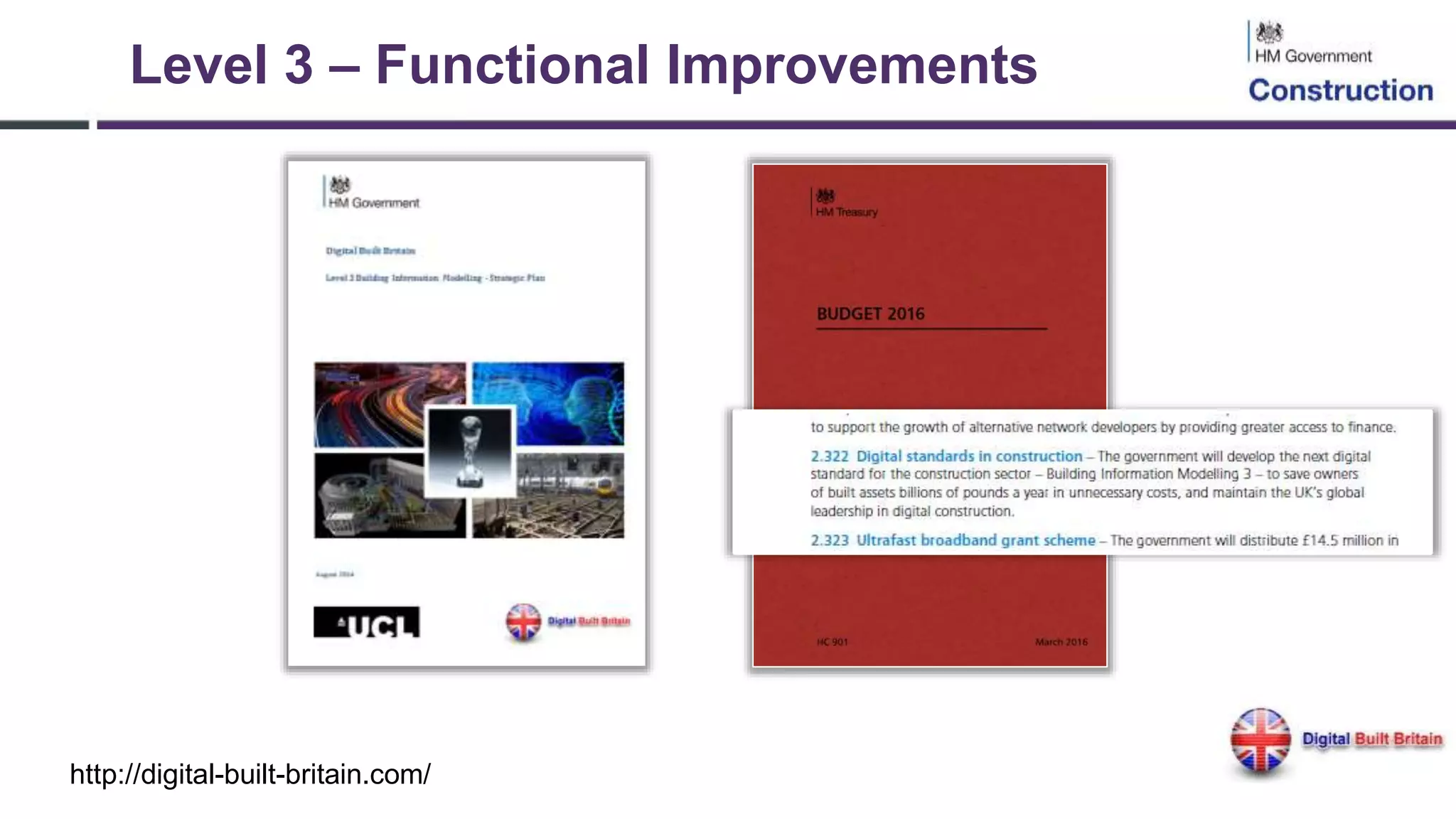
Level 3 – Functional Improvements
http://digital-built-britain.com/
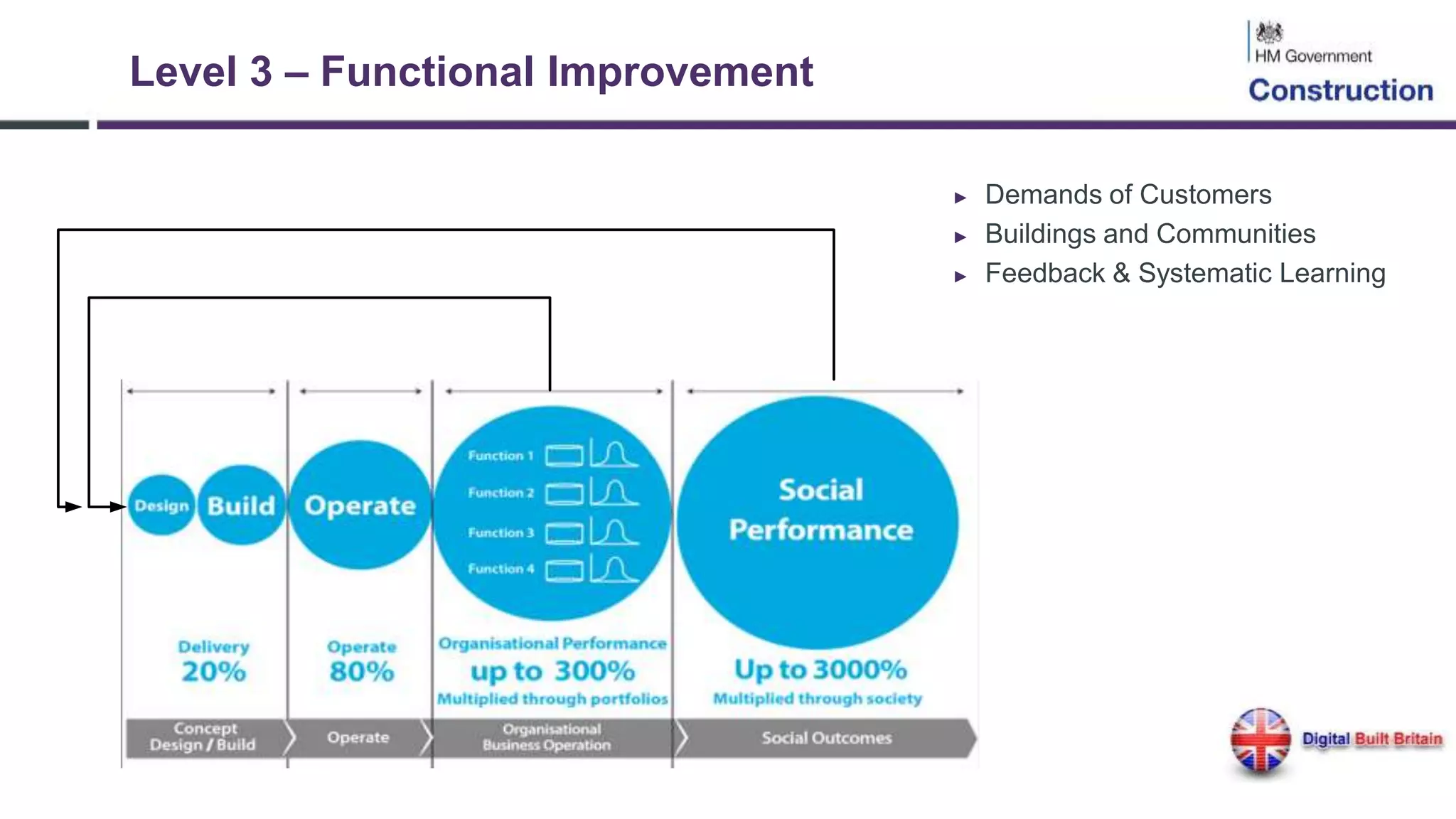
What is BIM?
Level 3 – Functional Improvement
► Demands of Customers
► Buildings and Communities
► Feedback & Systematic Learning
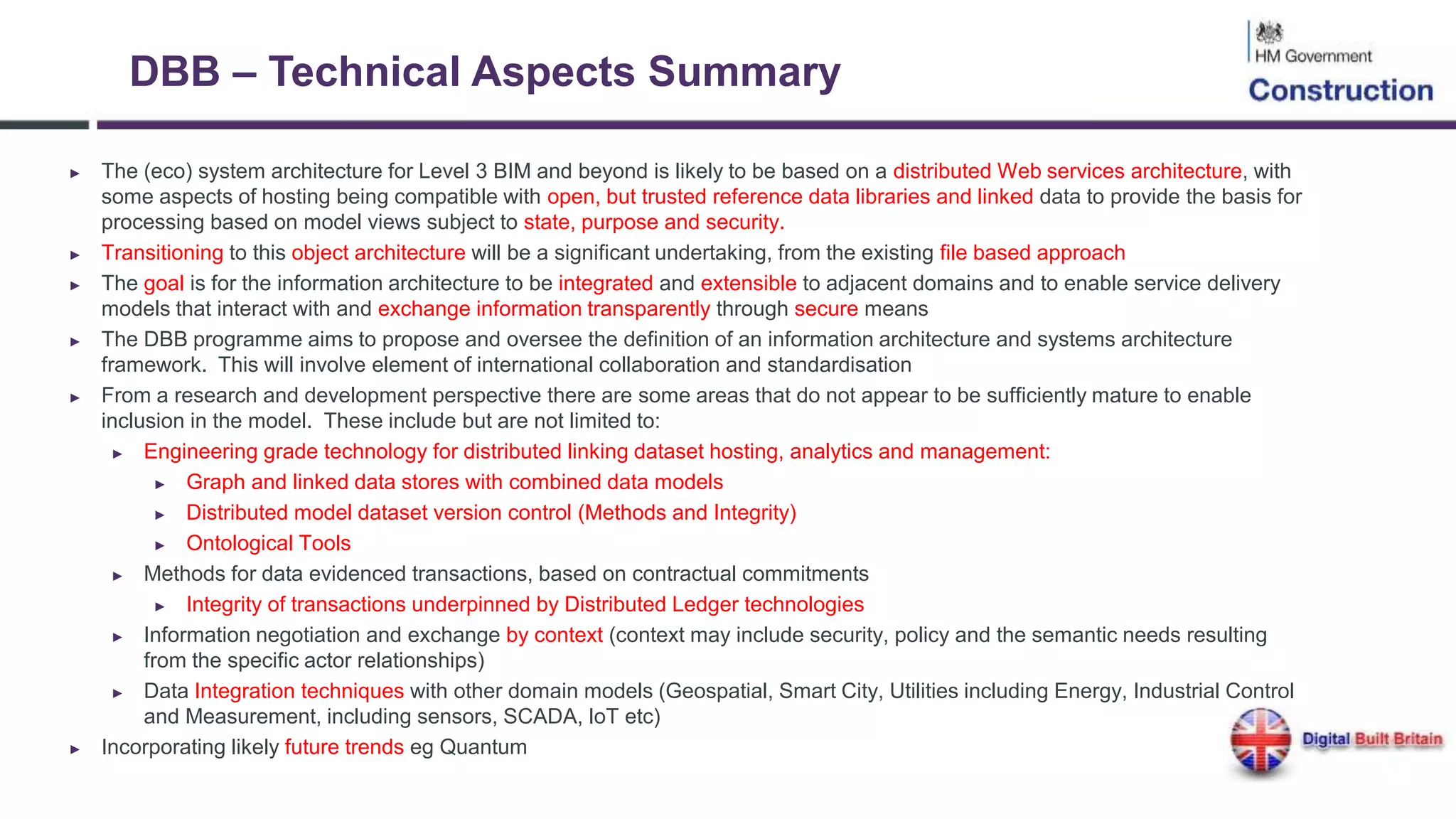
DBB – Technical Aspects Summary
► The (eco) system architecture for Level 3 BIM and beyond is likely to be based on a distributed Web services architecture, with
some aspects of hosting being compatible with open, but trusted reference data libraries and linked data to provide the basis for
processing based on model views subject to state, purpose and security.
► Transitioning to this object architecture will be a significant undertaking, from the existing file based approach
► The goal is for the information architecture to be integrated and extensible to adjacent domains and to enable service delivery
models that interact with and exchange information transparently through secure means
► The DBB programme aims to propose and oversee the definition of an information architecture and systems architecture
framework. This will involve element of international collaboration and standardisation
► From a research and development perspective there are some areas that do not appear to be sufficiently mature to enable
inclusion in the model. These include but are not limited to:
► Engineering grade technology for distributed linking dataset hosting, analytics and management:
► Graph and linked data stores with combined data models
► Distributed model dataset version control (Methods and Integrity)
► Ontological Tools
► Methods for data evidenced transactions, based on contractual commitments
► Integrity of transactions underpinned by Distributed Ledger technologies
► Information negotiation and exchange by context (context may include security, policy and the semantic needs resulting
from the specific actor relationships)
► Data Integration techniques with other domain models (Geospatial, Smart City, Utilities including Energy, Industrial Control
and Measurement, including sensors, SCADA, IoT etc)
► Incorporating likely future trends eg Quantum
Level 3 – Data Management
DBB – Transaction Technologies
CollaborativeCo-operative
Trans-active
Disruptive
Uber FM
Block Chain 2.0
BL - EPOS
Social Media
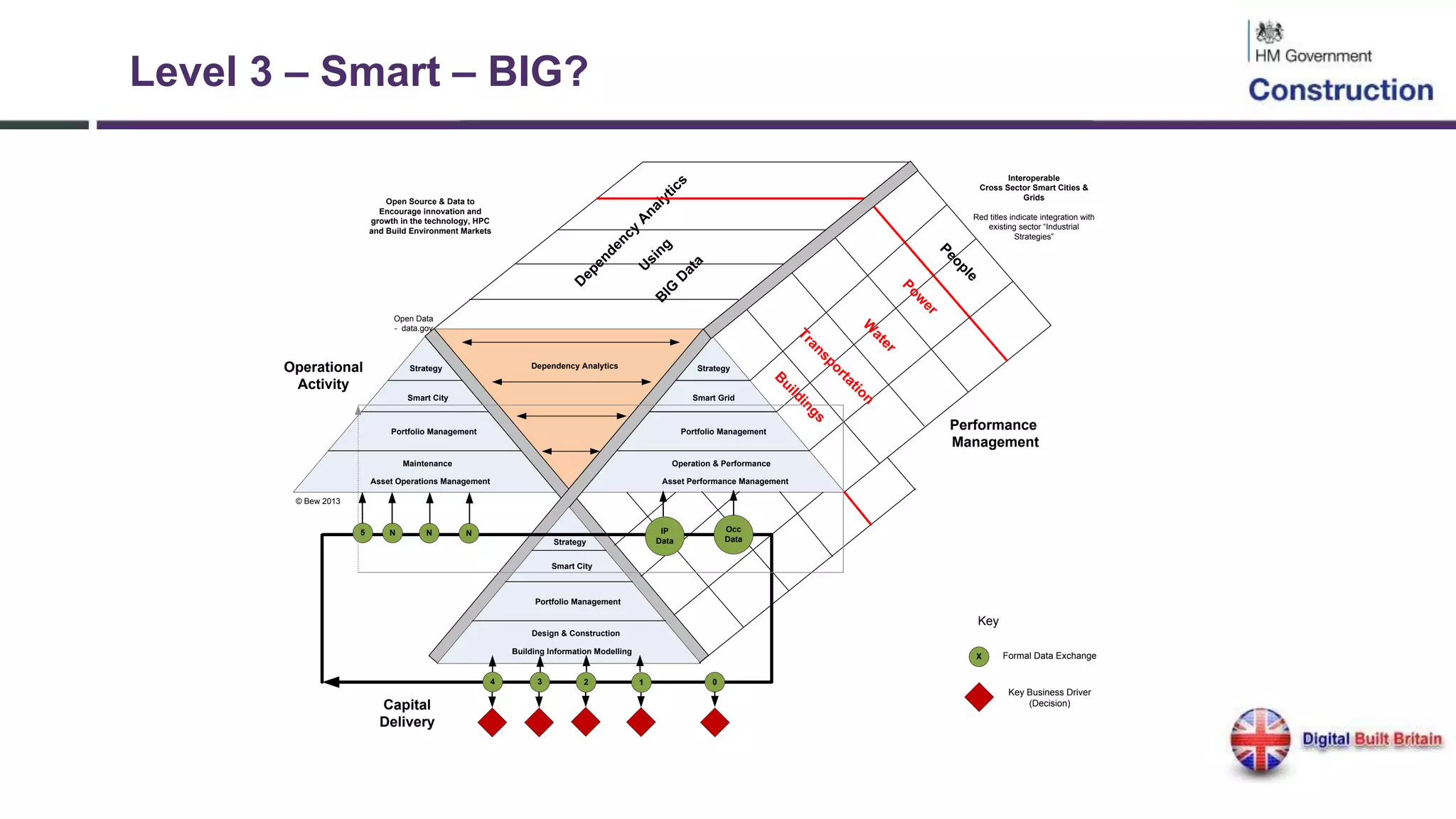
Dependency Analytics
Asset Operations Management
Open Data
- data.gov
Maintenance
Portfolio Management
Smart City
Strategy
Portfolio Management
Smart Grid
Strategy
D
ependency
A
nalytics
U
singB
IG
D
ata
W
ater
Pow
er
B
uildings
People
Interoperable
Cross Sector Smart Cities &
Grids
Red titles indicate integration with
existing sector “Industrial
Strategies”
Transportation
Open Source & Data to
Encourage innovation and
growth in the technology, HPC
and Build Environment Markets
Performance
Management
Operational
Activity
Building Information Modelling
© Bew 2013
Design & Construction
Portfolio Management
Smart City
Strategy
Capital
Delivery
5 N N N IP
Data
Occ
Data
4 3 2 1 0
Asset Performance Management
Operation & Performance
X
Key
Formal Data Exchange
Key Business Driver
(Decision)
Level 3 – Smart – BIG?
Applications
Applications
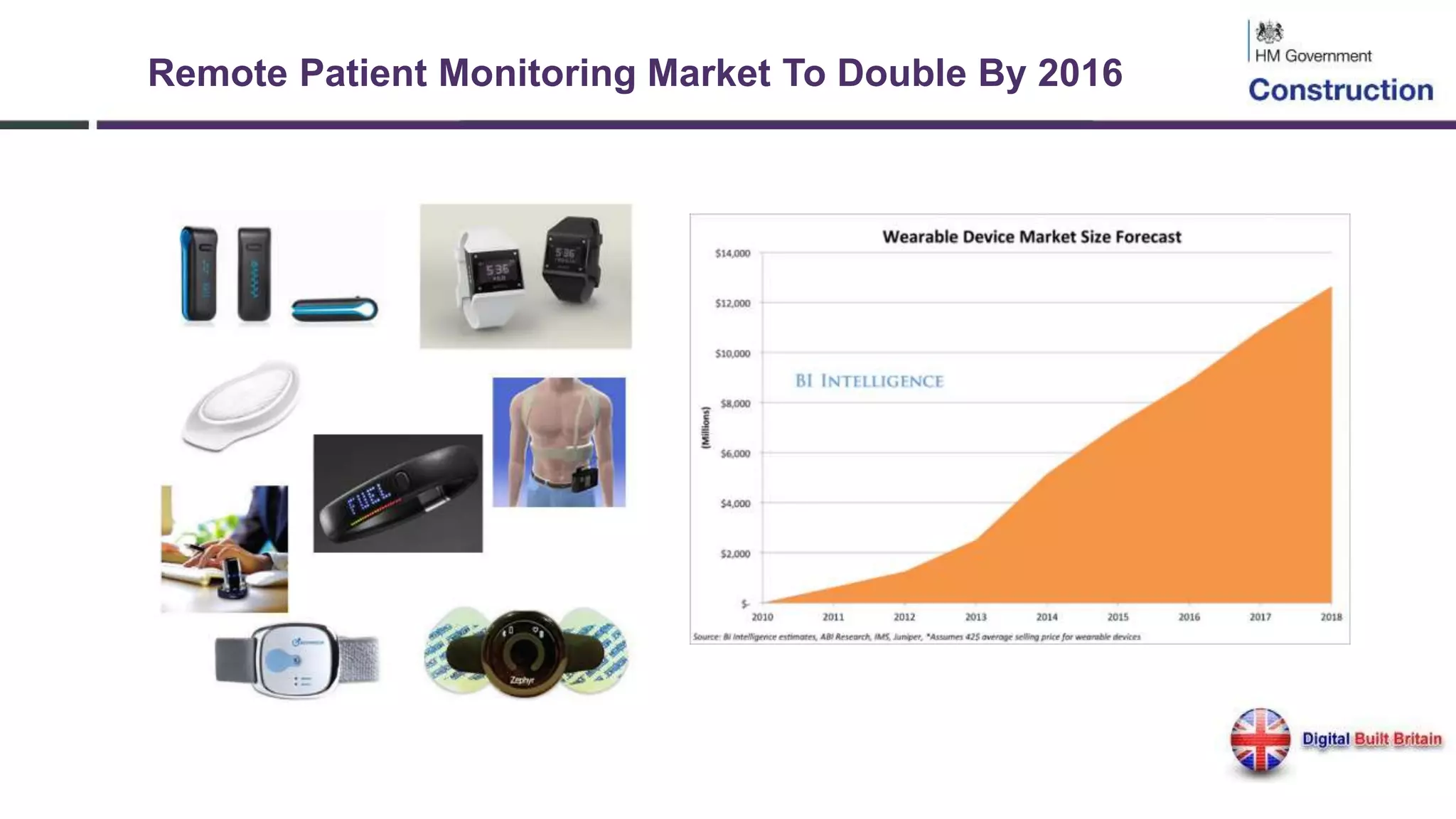
Remote Patient Monitoring Market To Double By 2016
Mark Bew MBE
UK Government – Building A New World

The Road to Level 3 #COMIT2017

  • 1.
    Mark Bew MBE UKGovernment – Building A New World
  • 2.
  • 3.
    1934 1944 19941998 2015 Since 1934 c70 reports have been issued on UK construction efficiency 2011 Introduction 2016 ► Benchmarking ► Procurement Methods ► Government Soft Landings ► DfMA / Manufacturing ► Intelligent Client ► Fiscal Constraint ► Increasing Productivity
  • 4.
  • 5.
  • 6.
    What is Level1 BIM? • Drawings • Schedules • Programmes • Bills of Quantities • Letters • Emails • Social Media • Calculations • Video
  • 7.
  • 8.
    Regulation & Standards BSIBSI Technical ComunitiesTechnical Comunities HMGHMG MarketsMarkets Regulatorytechnology, also known as "RegTech" is using technology, particularly information technology, in the context of regulatory monitoring, reporting and compliance benefiting, in the immediate future, the finance industry but is equally applicable to other sectors RegTech companies aim on finding solutions that address regulatory compliance challenges through technological innovation. Usually these companies utilise the cloud through software-as-a-service. What is Level 3 BIM – 3 Options?
  • 9.
    Push & Pull 1 2 3 4 5 N N N MC LD E S ME ME Tier1Tier2Tier3TierN E S Portfolio Mgt PPM PUSH SIDE – SUPPLY CHAIN PULL SIDE- CLIENT MAC1 MAC2 E P OPS Push Pull
  • 10.
    Level 2 BIM“Package” ► PAS1192:2 Capital Delivery ► PAS1192:3 Operational Delivery ► BS1192:4 Data Structure ► Data Classification ► Digital Plan of Works (Levels of Data Detail) ► PAS1192:5 Security ► BIM Contract Protocol ► Government Soft Landings
  • 11.
    Departmental Engagement · DepartmentalStrategies · Early Adopters · Sustained Embedded Change · Implementation Plan · EIR · Tender Documents · Scoring Process · Framework Training · Framework Support Case Study - MoJ
  • 12.
  • 13.
    Level 2 City“Package” ► PAS 180 - Vocabulary ► PAS 181 – SC Concept Model – Guide to establishing a model for data interoperability ► PAS 182 - Smart city concept model ► PAS 183 – Guide to establishing a decision framework for sharing data and information services ► PAS 184 - (Smart Cities – Guide to developing project proposals for delivering smart city solutions) ► PAS 185 – SC – Security Mindedness ► PD 8100 – SC Overview – Guide ► PD 8101 – SC Guide to the role of the Planning & Development Process
  • 14.
  • 15.
    Level 2 -Manufacturing www.bim-level2.org/en/guidancewww.constructionprducts.org.uk
  • 16.
  • 17.
  • 18.
    Japan MoU: 2017/18 Indonesia,Vietnam – support from Prosperity Growth & Development Middle East / Asia Pac: 2017/18 EU Public Procurement Directive 10 >> 22 nations Grow market alignment to UK Level 2 – Opening Markets Defend investment and grow trade MoU with Brazil, Chile, Mexico (2017) FCO Support Trade Development International Programme Latin America Asia European Union
  • 19.
    Level 3 –Functional Improvements http://digital-built-britain.com/
  • 20.
  • 27.
    Level 3 –Functional Improvement ► Demands of Customers ► Buildings and Communities ► Feedback & Systematic Learning
  • 28.
    DBB – TechnicalAspects Summary ► The (eco) system architecture for Level 3 BIM and beyond is likely to be based on a distributed Web services architecture, with some aspects of hosting being compatible with open, but trusted reference data libraries and linked data to provide the basis for processing based on model views subject to state, purpose and security. ► Transitioning to this object architecture will be a significant undertaking, from the existing file based approach ► The goal is for the information architecture to be integrated and extensible to adjacent domains and to enable service delivery models that interact with and exchange information transparently through secure means ► The DBB programme aims to propose and oversee the definition of an information architecture and systems architecture framework. This will involve element of international collaboration and standardisation ► From a research and development perspective there are some areas that do not appear to be sufficiently mature to enable inclusion in the model. These include but are not limited to: ► Engineering grade technology for distributed linking dataset hosting, analytics and management: ► Graph and linked data stores with combined data models ► Distributed model dataset version control (Methods and Integrity) ► Ontological Tools ► Methods for data evidenced transactions, based on contractual commitments ► Integrity of transactions underpinned by Distributed Ledger technologies ► Information negotiation and exchange by context (context may include security, policy and the semantic needs resulting from the specific actor relationships) ► Data Integration techniques with other domain models (Geospatial, Smart City, Utilities including Energy, Industrial Control and Measurement, including sensors, SCADA, IoT etc) ► Incorporating likely future trends eg Quantum
  • 29.
    Level 3 –Data Management
  • 30.
    DBB – TransactionTechnologies CollaborativeCo-operative Trans-active Disruptive Uber FM Block Chain 2.0 BL - EPOS Social Media
  • 31.
    Dependency Analytics Asset OperationsManagement Open Data - data.gov Maintenance Portfolio Management Smart City Strategy Portfolio Management Smart Grid Strategy D ependency A nalytics U singB IG D ata W ater Pow er B uildings People Interoperable Cross Sector Smart Cities & Grids Red titles indicate integration with existing sector “Industrial Strategies” Transportation Open Source & Data to Encourage innovation and growth in the technology, HPC and Build Environment Markets Performance Management Operational Activity Building Information Modelling © Bew 2013 Design & Construction Portfolio Management Smart City Strategy Capital Delivery 5 N N N IP Data Occ Data 4 3 2 1 0 Asset Performance Management Operation & Performance X Key Formal Data Exchange Key Business Driver (Decision) Level 3 – Smart – BIG?
  • 32.
  • 33.
  • 34.
    Remote Patient MonitoringMarket To Double By 2016
  • 37.
    Mark Bew MBE UKGovernment – Building A New World

Editor's Notes