

The power of segmentation
in marketing
March Meetup
THE VBOUT COMMUNITY
20K MEMBERS - 8 YEARS
March Meetup
General
Intro
The Power of Segmentation in Marketing
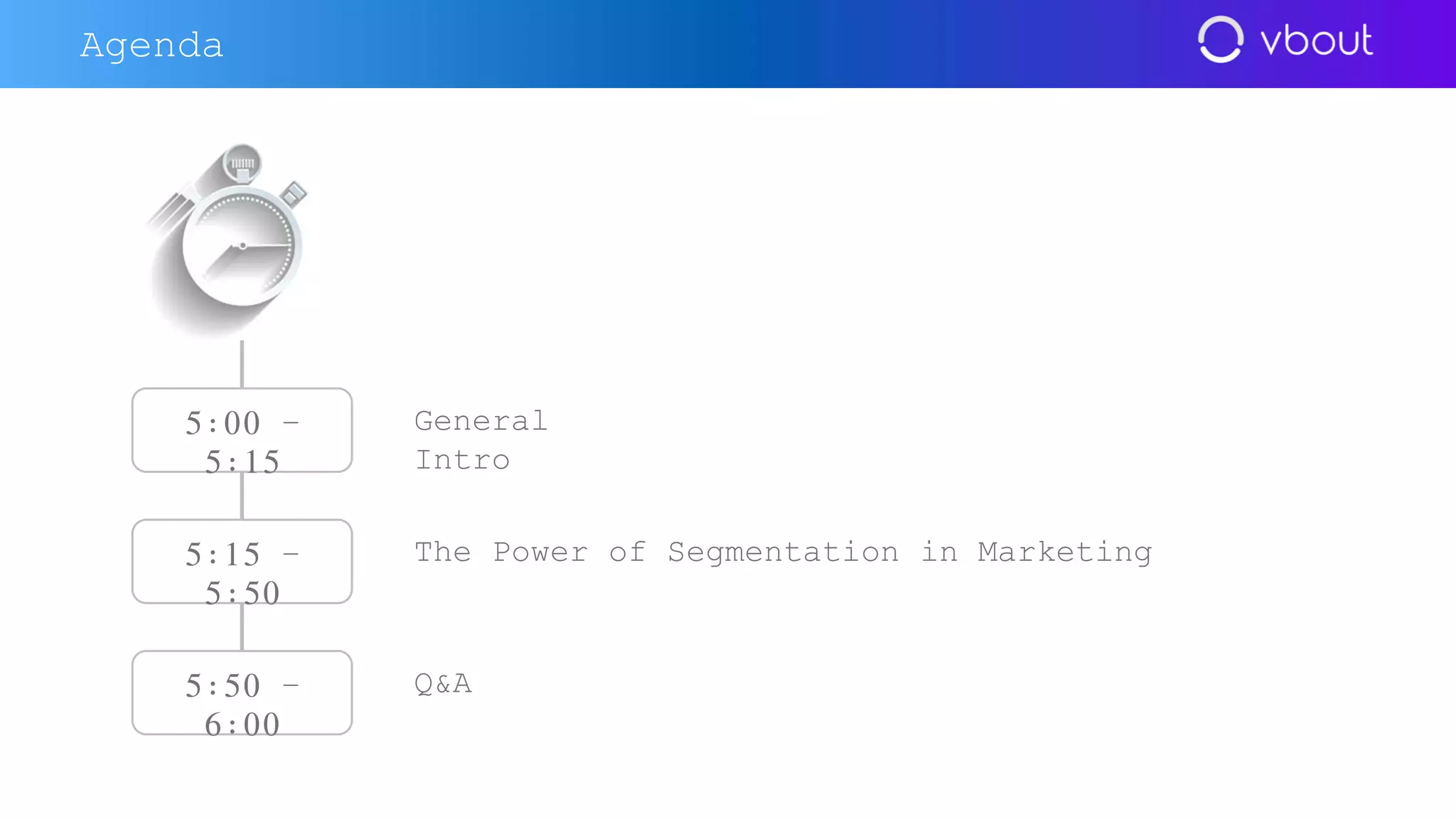
5:00 –
5:15
5:15 –
5:50
5:50 –
6:00
Q&A
Agenda
 Marketing Automation
 Stack Simple
Interface
 Great Price
 Premium Support
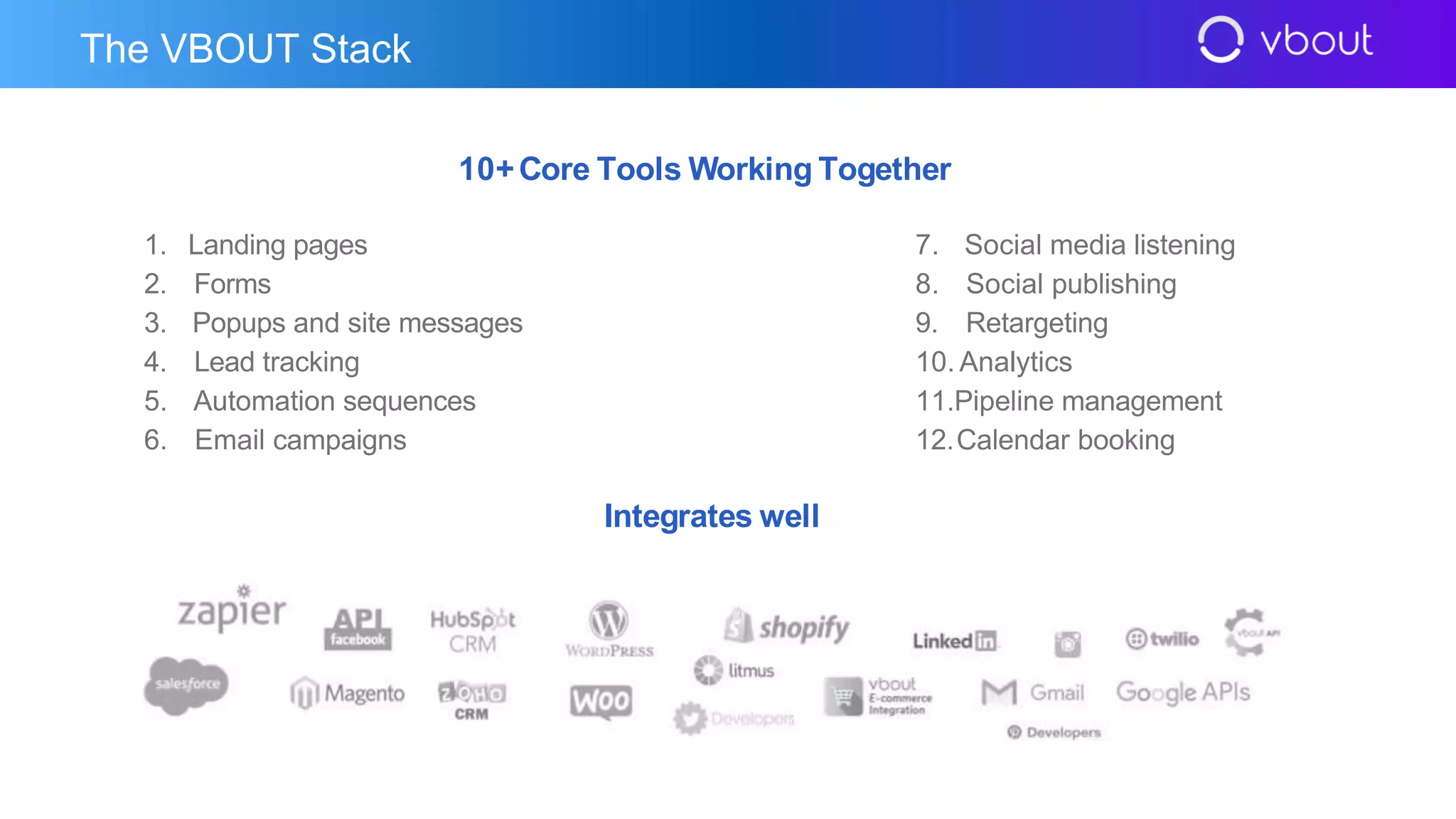
The VBOUT
Stack
10+Core Tools Working Together
Integrates well
1. Landing pages
2. Forms
3. Popups and site messages
4. Lead tracking
5. Automation sequences
6. Email campaigns
7. Social media listening
8. Social publishing
9. Retargeting
10. Analytics
11.Pipeline management
12.Calendar booking
The VBOUT Stack
Full Product Video Tour
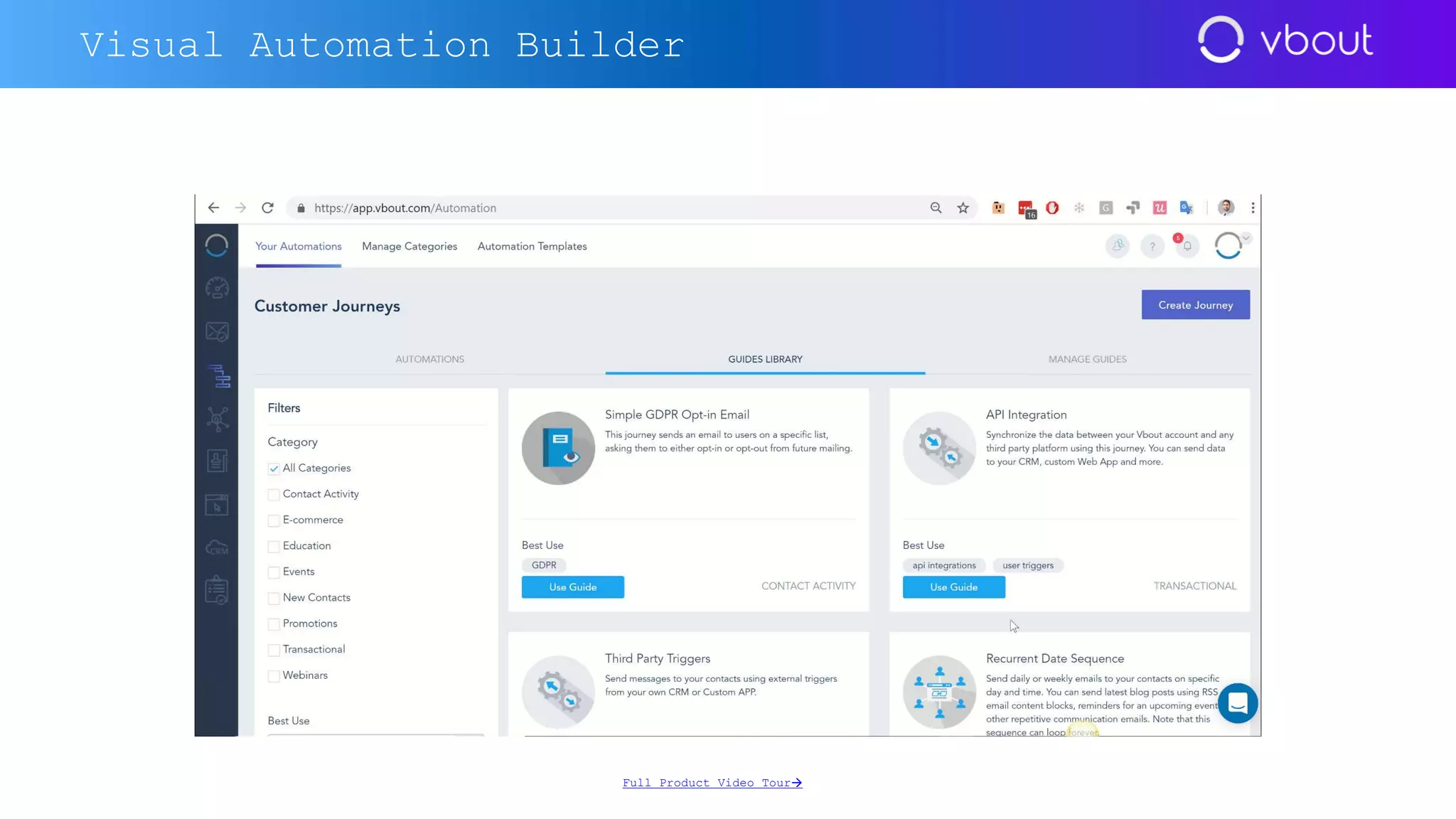
Visual Automation Builder
Full Product Video Tour
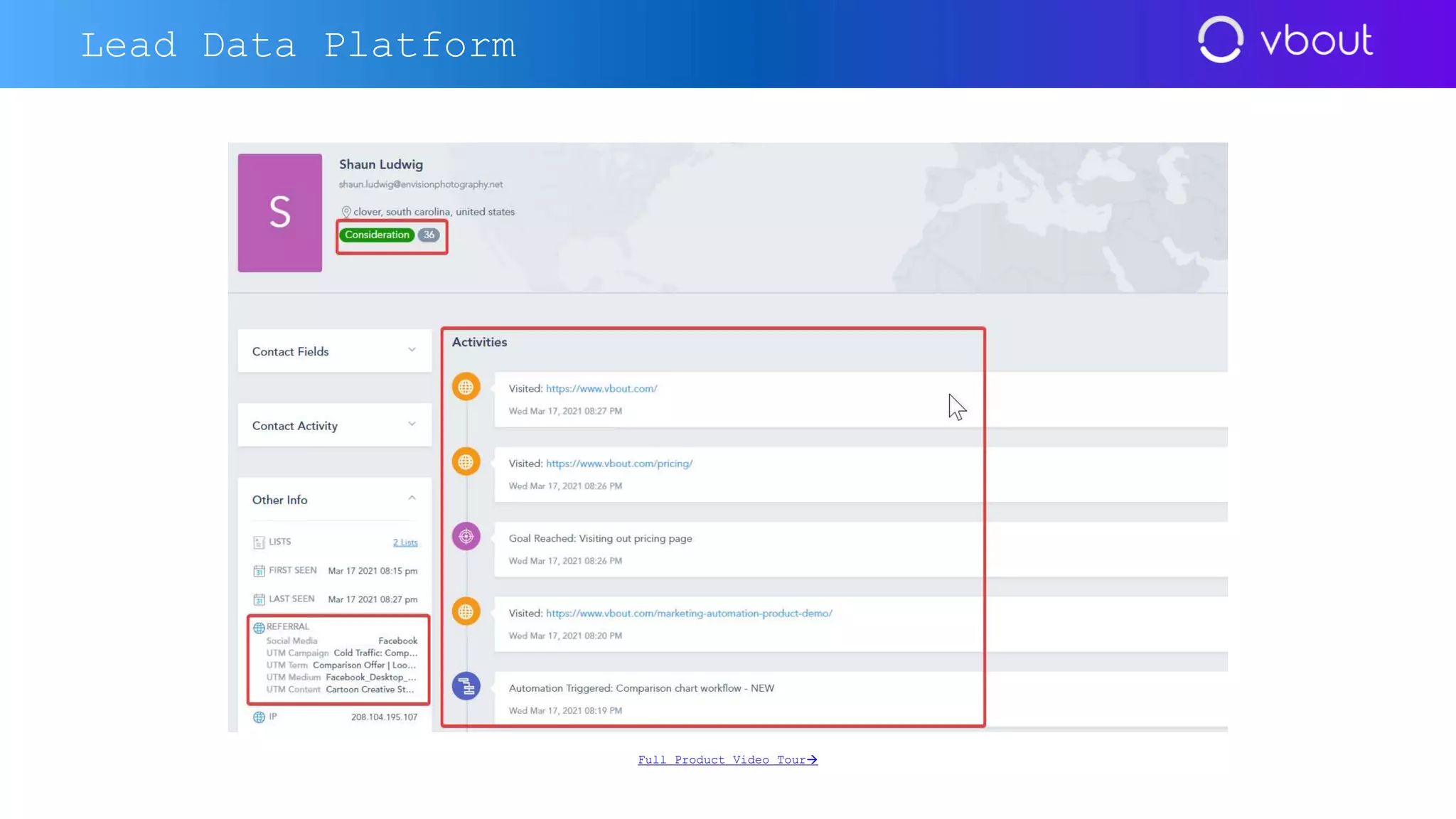
Lead Data Platform
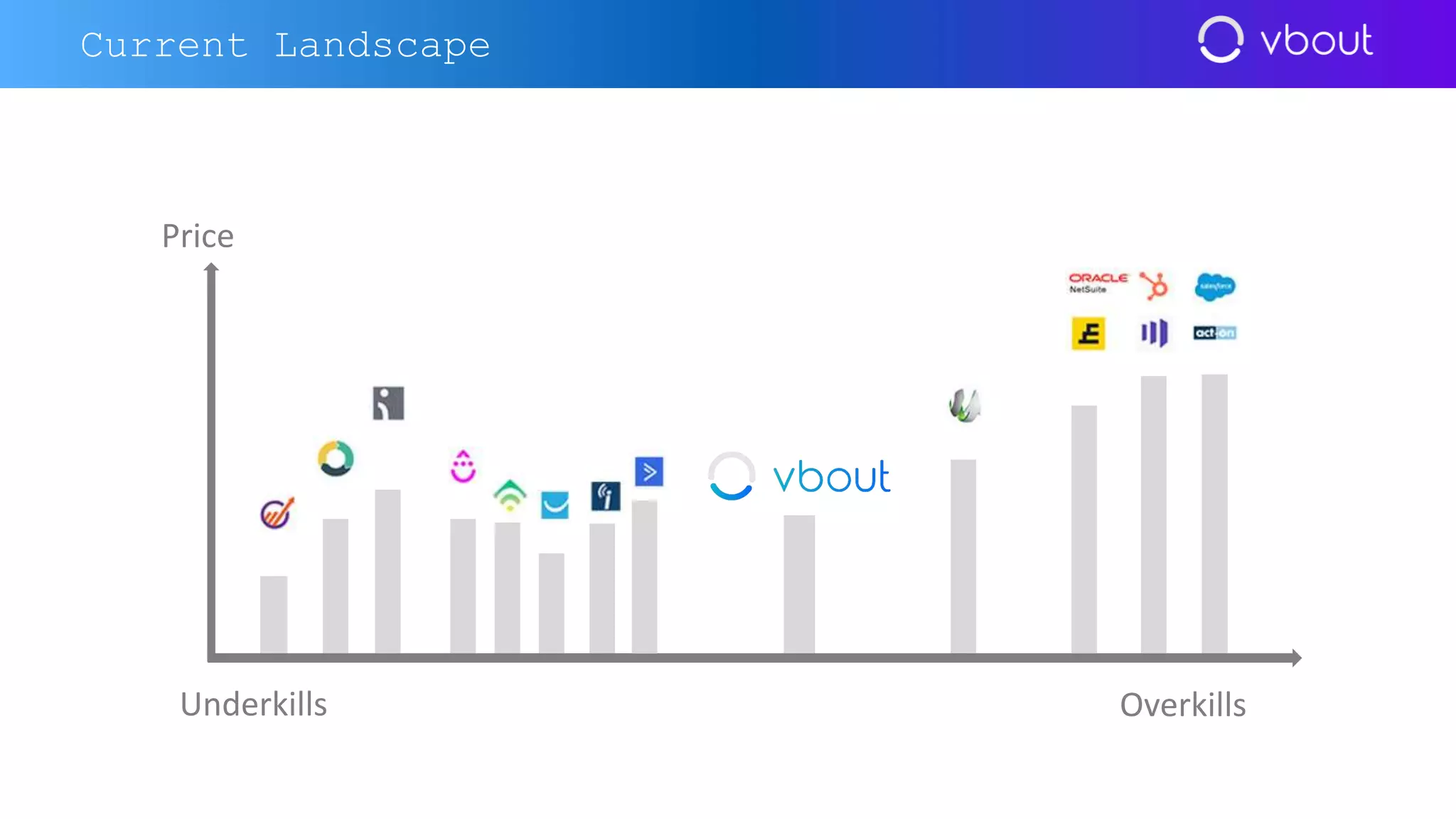
Underkills Overkills
Price
Current Landscape
www.facebook.com/groups/joinvbout
Join Our Group
1. Why segmentation is critical
2. Best practices of segmentation
3. Ways you can do segmentation with VBOUT
4. + Bonus (tools and resources that help)
Outline
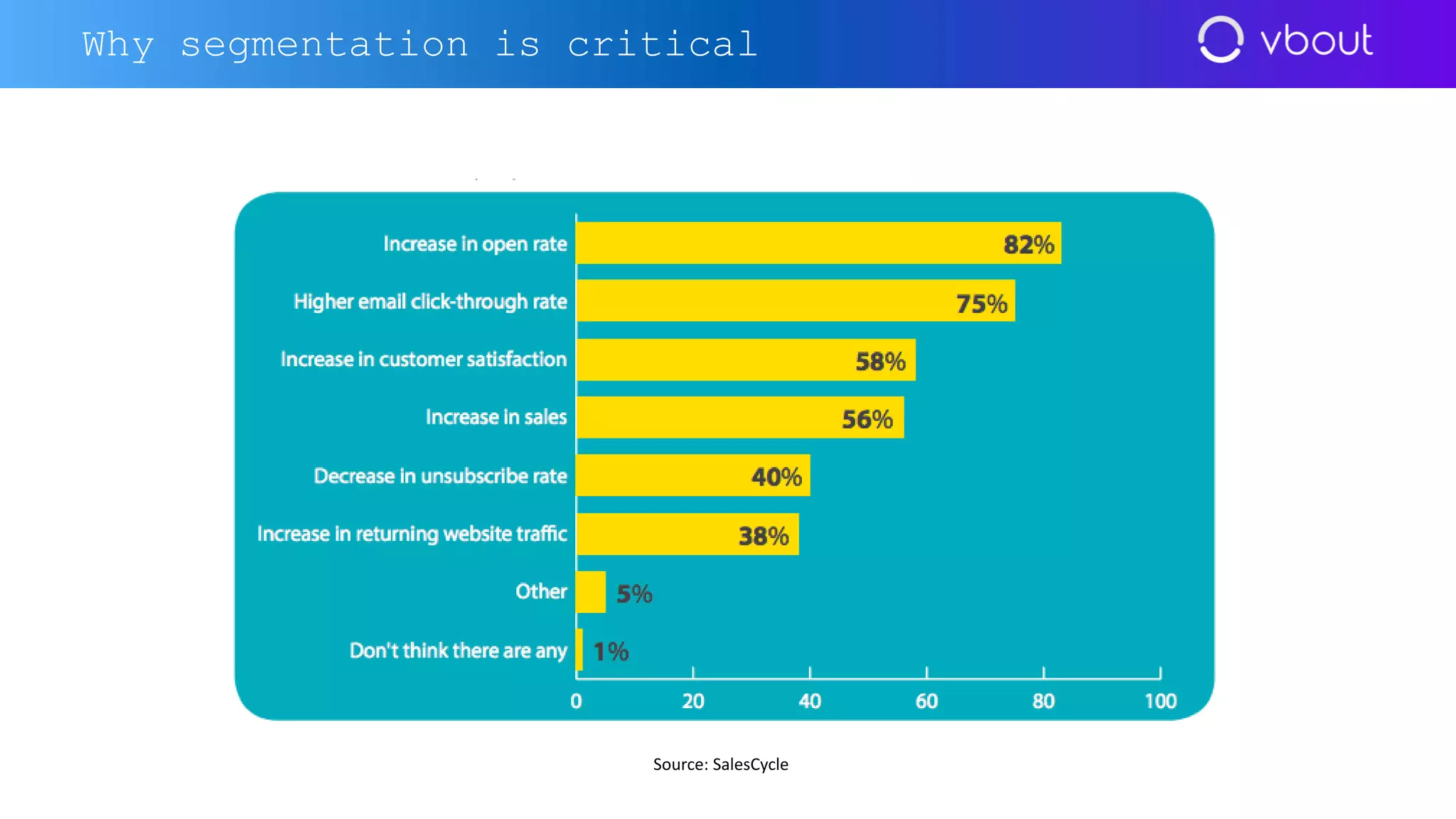
Why segmentation is
critical
March Meetup
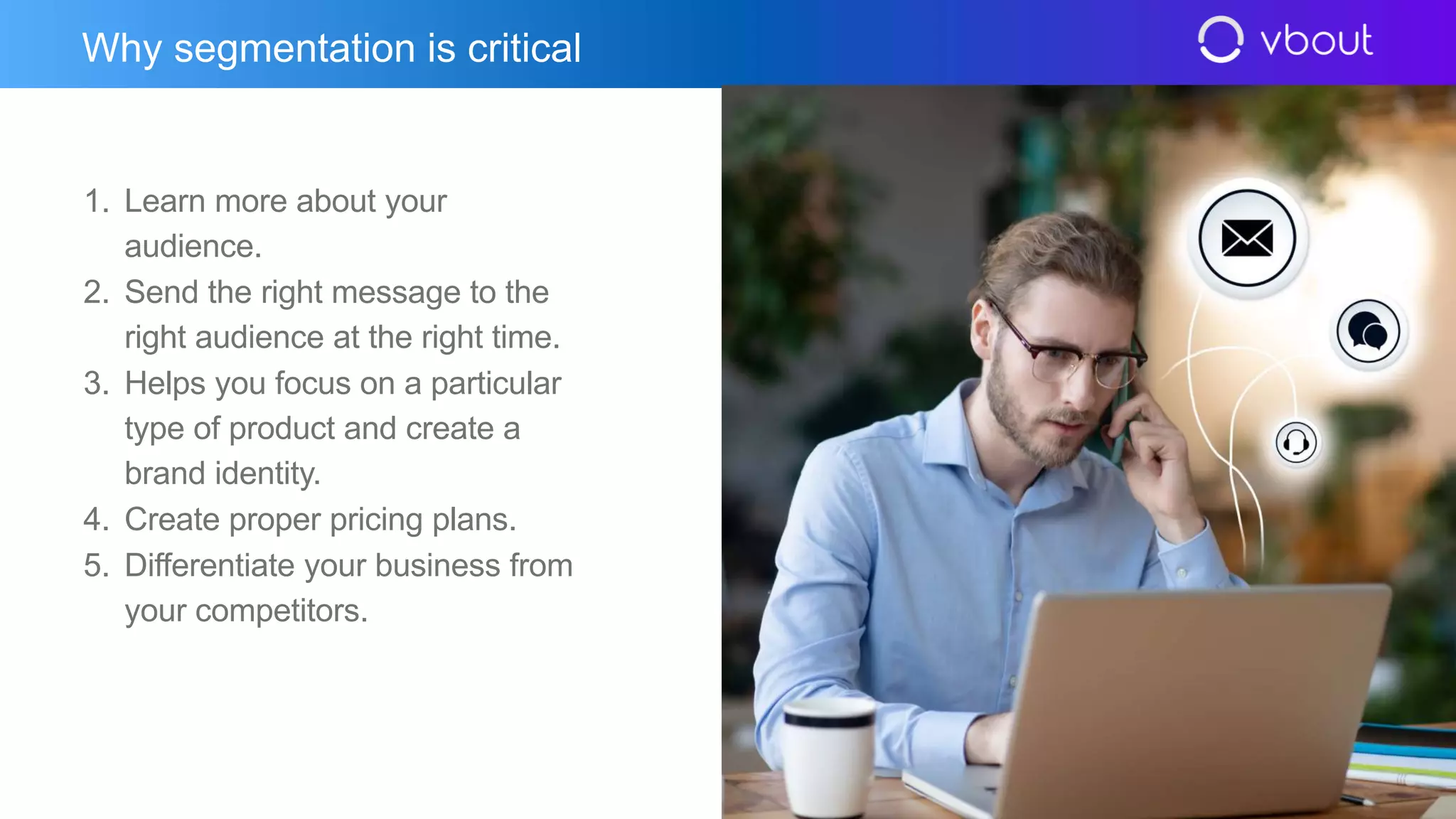
1. Learn more about your
audience.
2. Send the right message to the
right audience at the right time.
3. Helps you focus on a particular
type of product and create a
brand identity.
4. Create proper pricing plans.
5. Differentiate your business from
your competitors.
Why segmentation is critical
Source: SalesCycle
The best practices of
segmentation
March Meetup
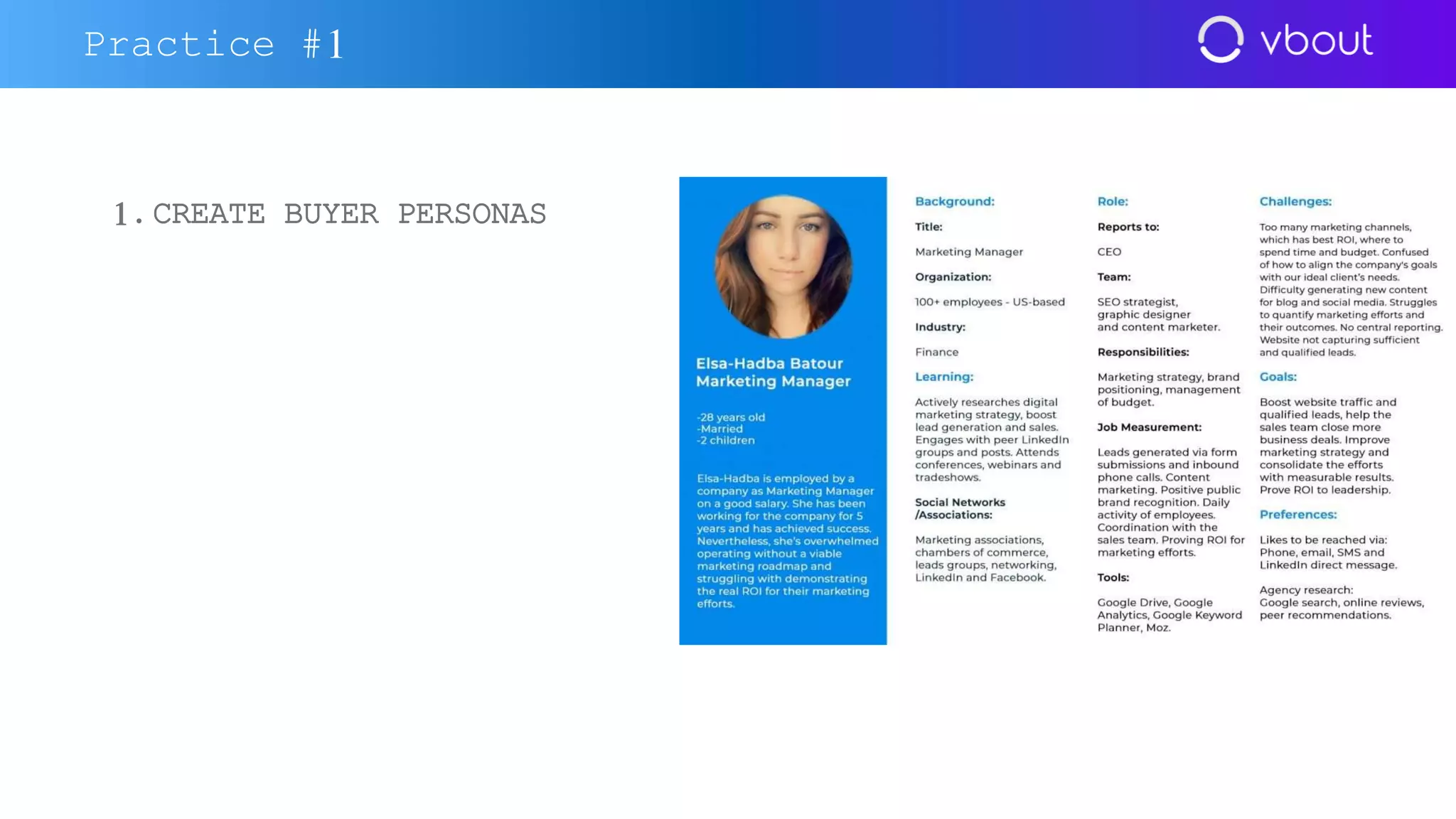
1.CREATE BUYER PERSONAS
Practice #1
2. USE PROPER SEGMENTATION
TECHNIQUES
• Geographic segmentation
• Demographic segmentation
• Psychographic segmentation
• Behavioral segmentation
• Firmographic segmentation
Practice #2
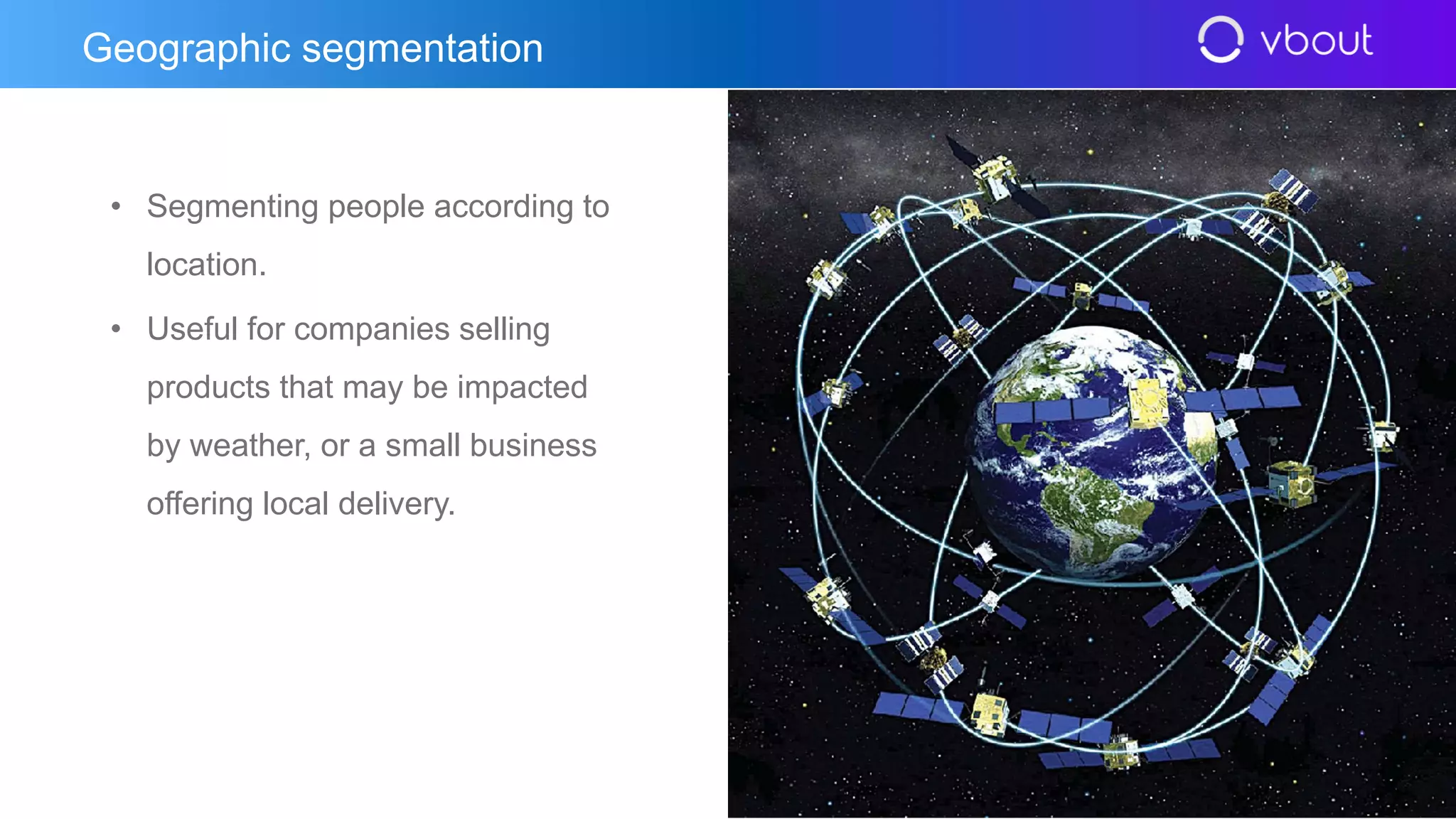
• Segmenting people according to
location.
• Useful for companies selling
products that may be impacted
by weather, or a small business
offering local delivery.
Geographic segmentation
• Segmenting people according to
age, marital status, gender,
nationality, household members,
education and income.
• Helps you create customized
campaigns and advertising plans
with optimized budget and time.
Demographic segmentation
• Segmenting people based on their
personality, lifestyle, social status and
interests.
• Helps you determine motivations that
drive people ‘s decisions.
• Campaigns will be hyper-targeted
according to their historical interests.
Psychographic segmentation
• Segmenting people based on their
engagement with the brand.
• Useful in sending customized
messages to drive conversions and
nurture them throughout the funnel.
• Useful in customer retention.
Behavioral segmentation
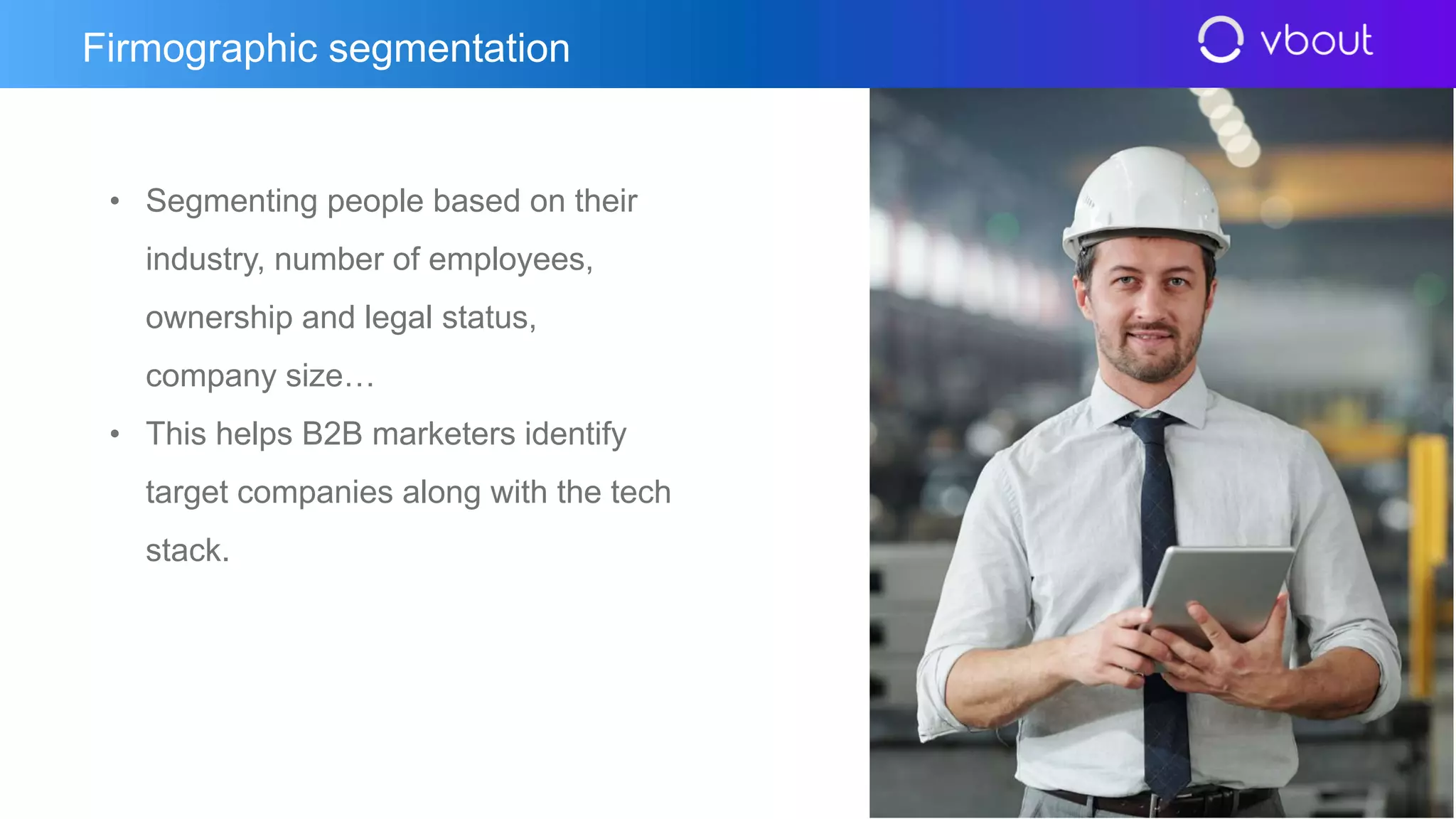
• Segmenting people based on their
industry, number of employees,
ownership and legal status,
company size…
• This helps B2B marketers identify
target companies along with the tech
stack.
Firmographic segmentation
3. CREATE VALUABLE SEGMENTS
• Avoid creating segments that are too
small.
• Use dimensional segmentation.
Practice #3
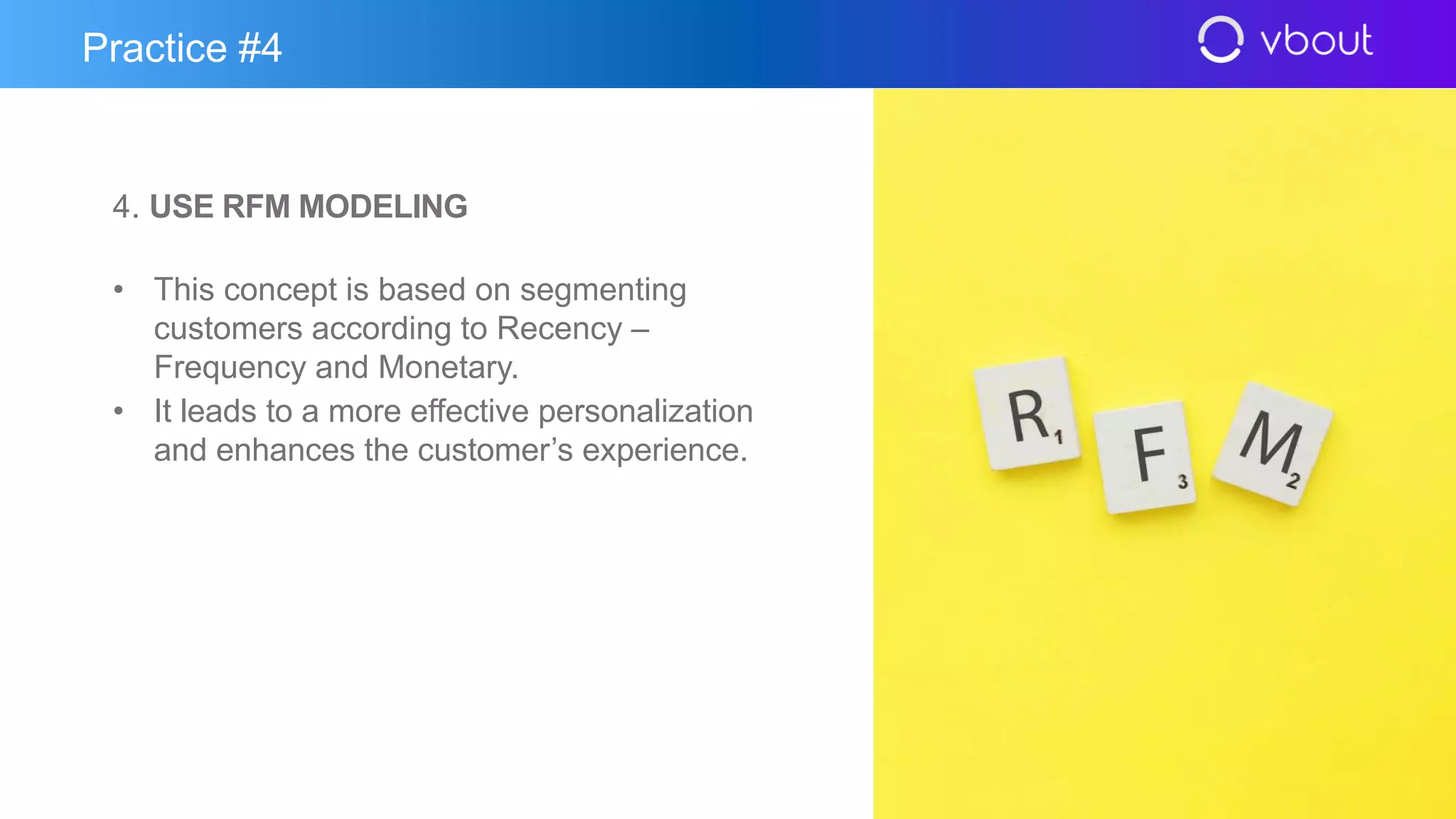
4. USE RFM MODELING
• This concept is based on segmenting
customers according to Recency –
Frequency and Monetary.
• It leads to a more effective personalization
and enhances the customer’s experience.
Practice #4
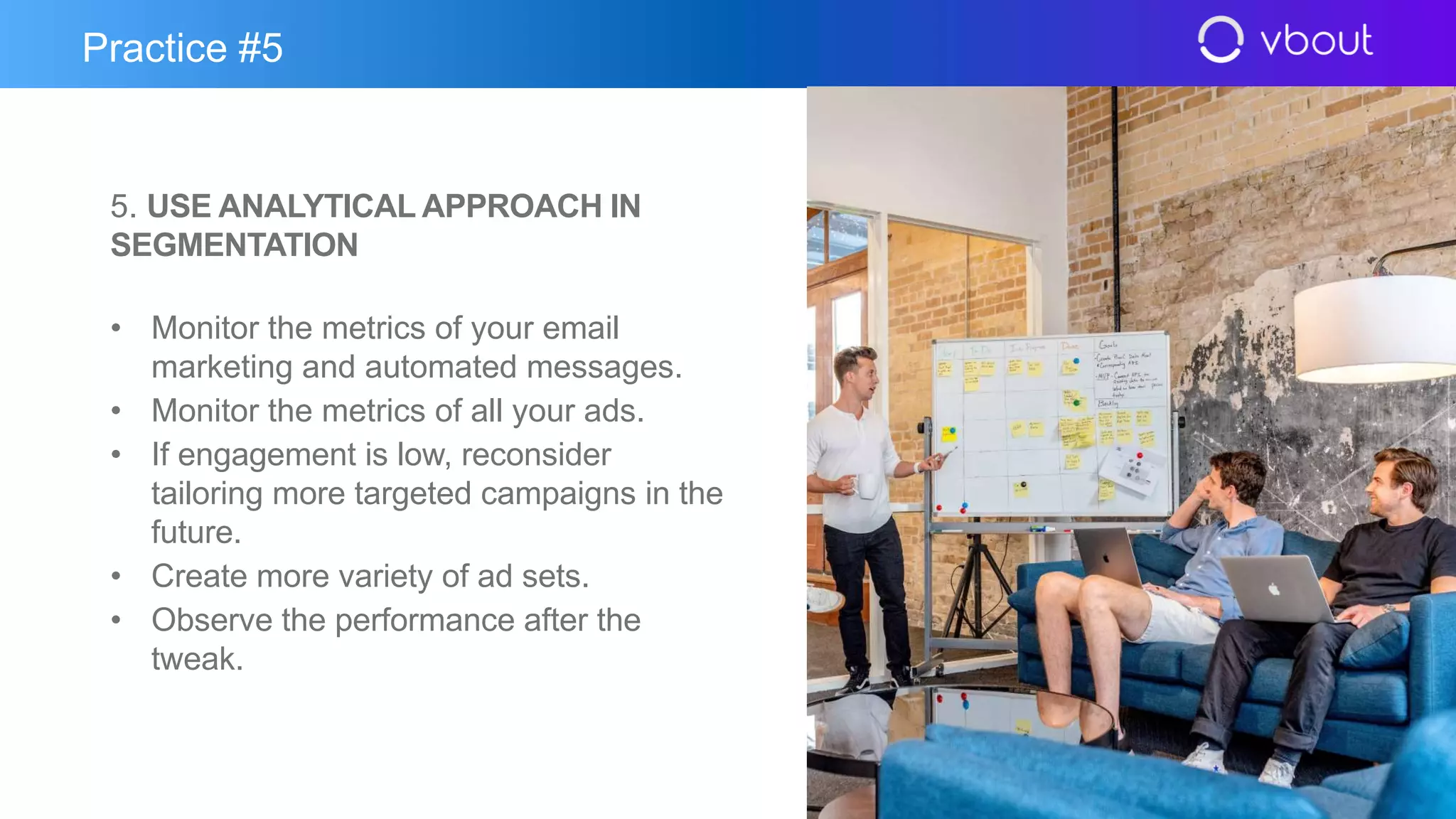
5. USE ANALYTICAL APPROACH IN
SEGMENTATION
• Monitor the metrics of your email
marketing and automated messages.
• Monitor the metrics of all your ads.
• If engagement is low, reconsider
tailoring more targeted campaigns in the
future.
• Create more variety of ad sets.
• Observe the performance after the
tweak.
Practice #5
Ways you can do
segmentation with
VBOUT
March Meetup
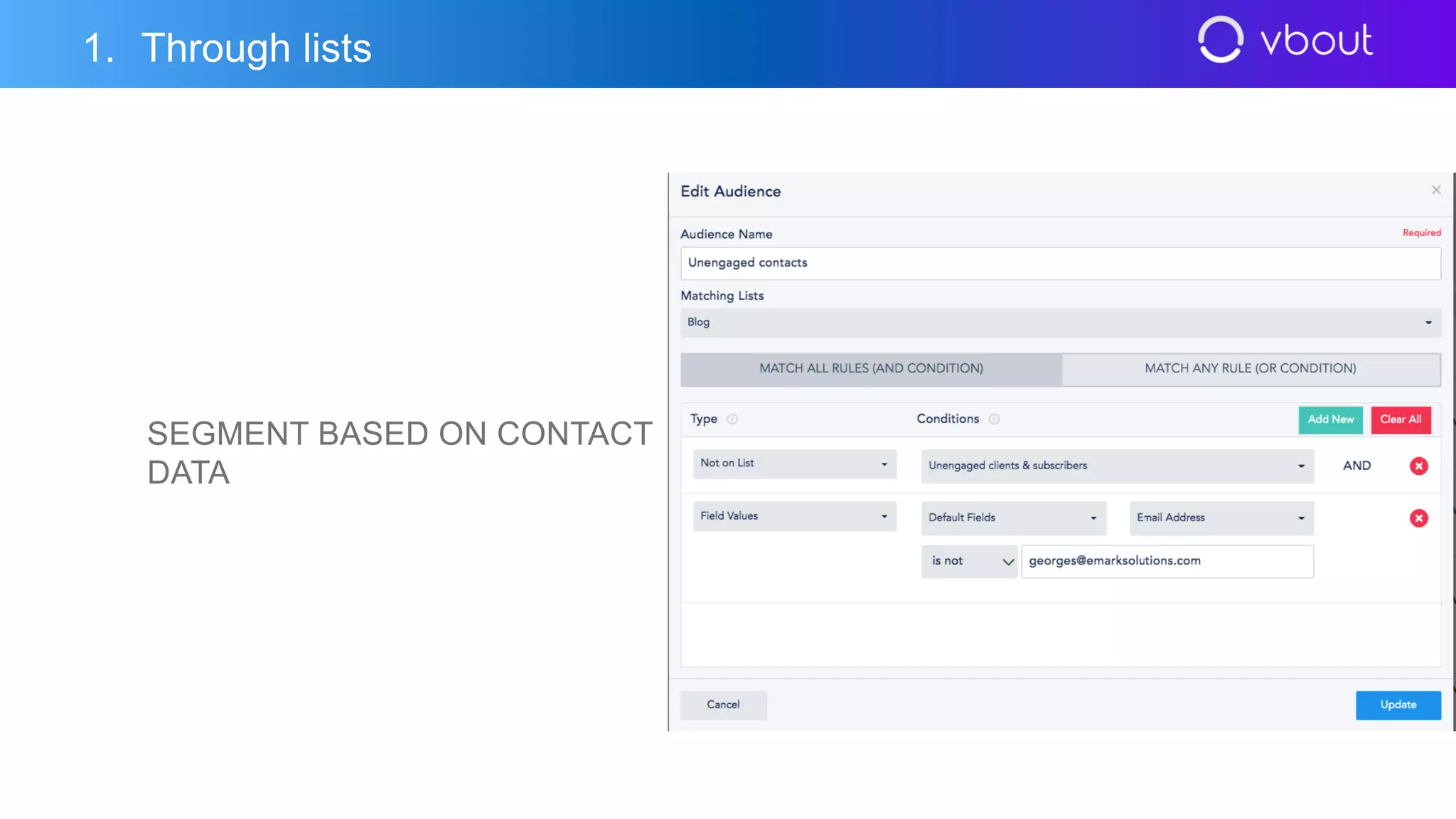
SEGMENT BASED ON CONTACT
DATA
1. Through lists
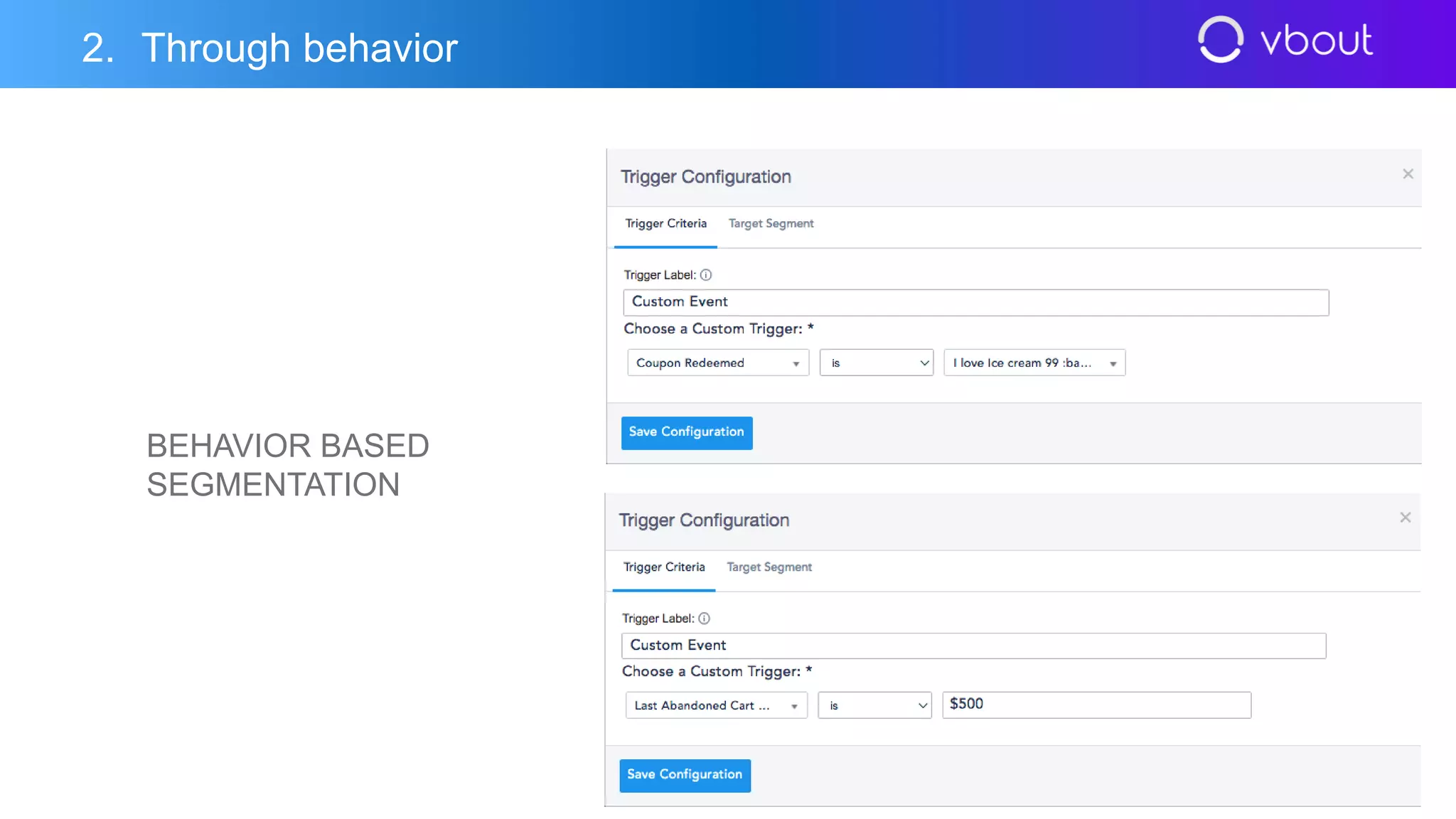
BEHAVIOR BASED
SEGMENTATION
2. Through behavior
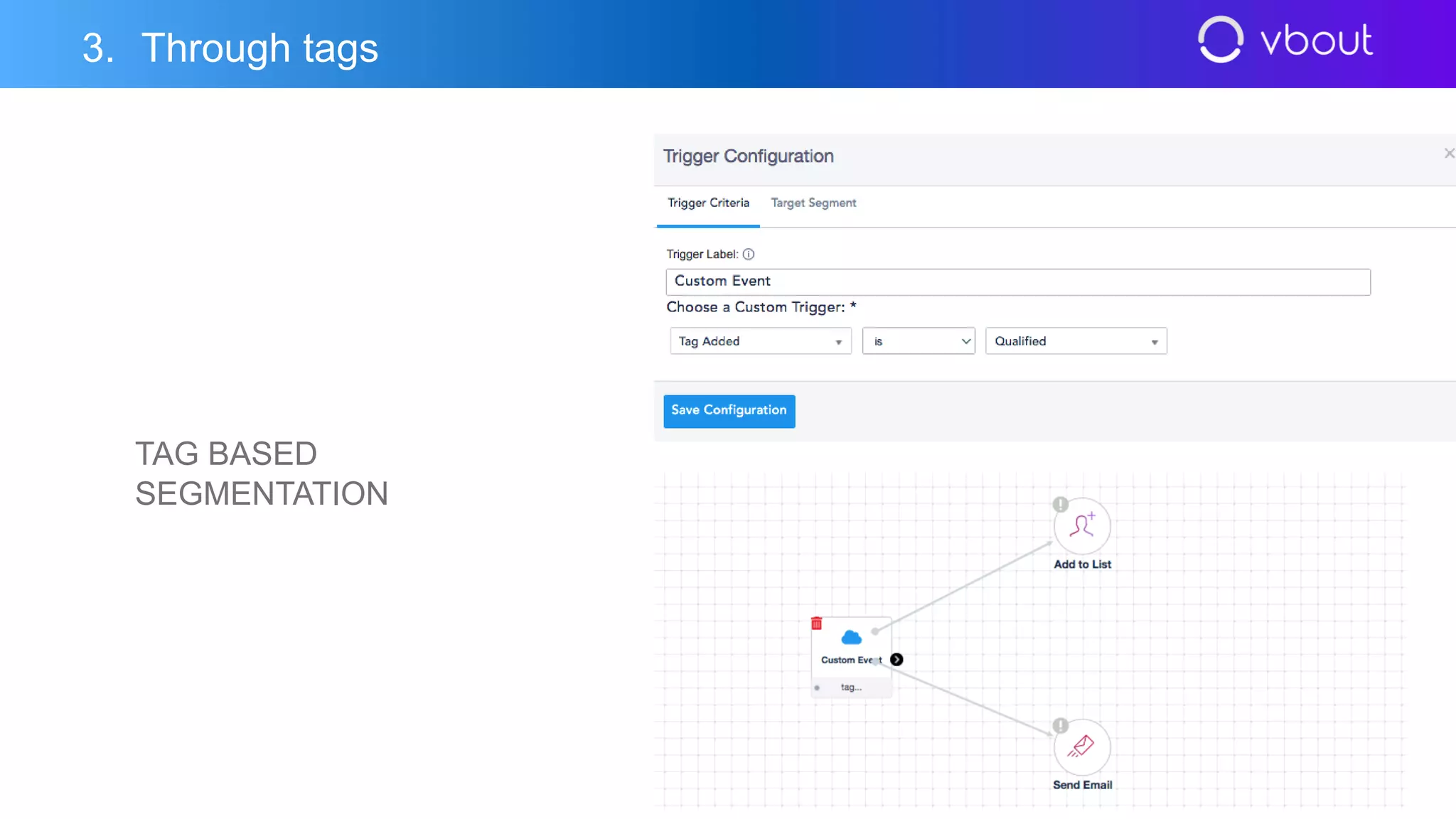
TAG BASED
SEGMENTATION
3. Through tags
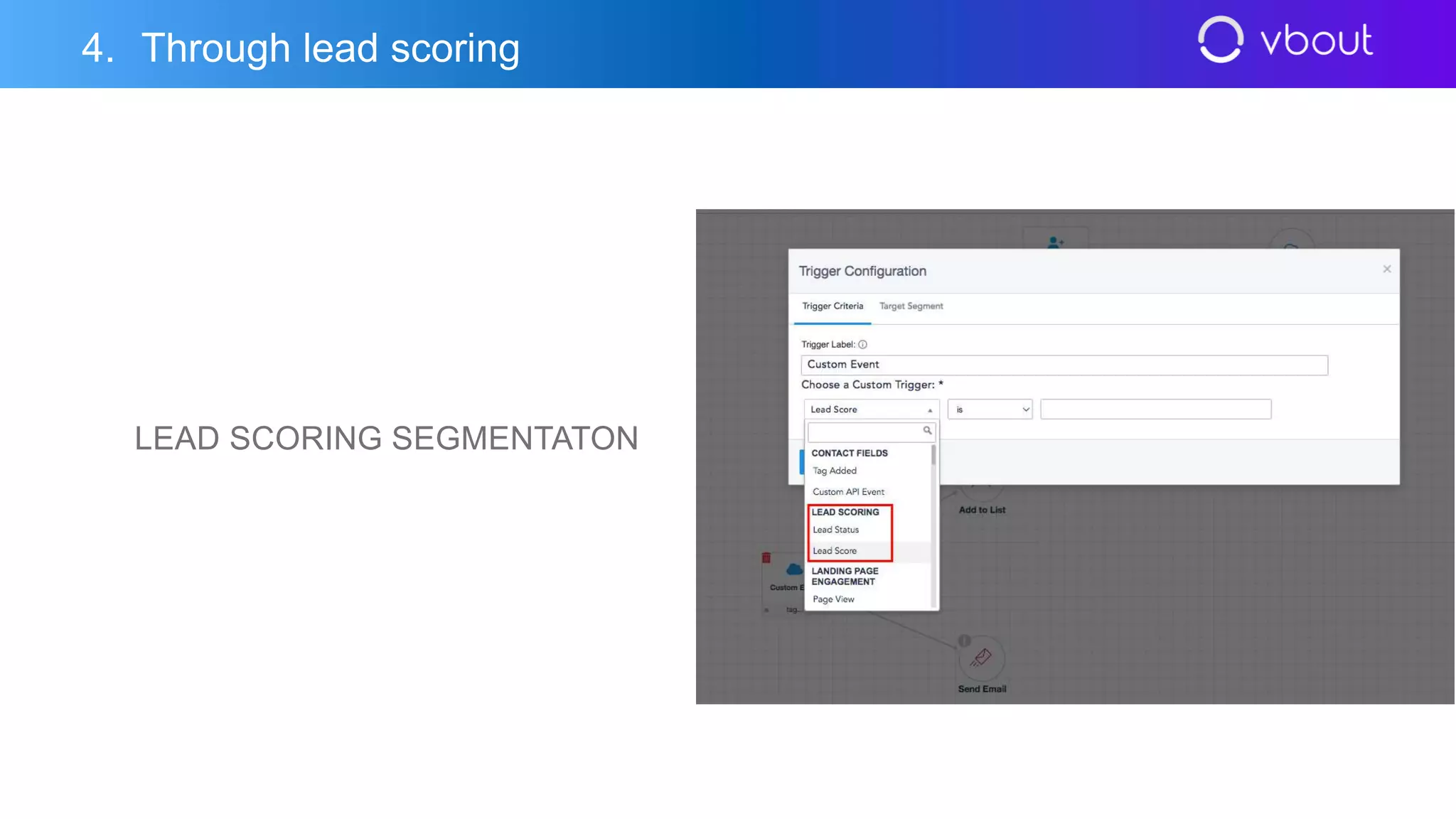
LEAD SCORING SEGMENTATON
4. Through lead scoring
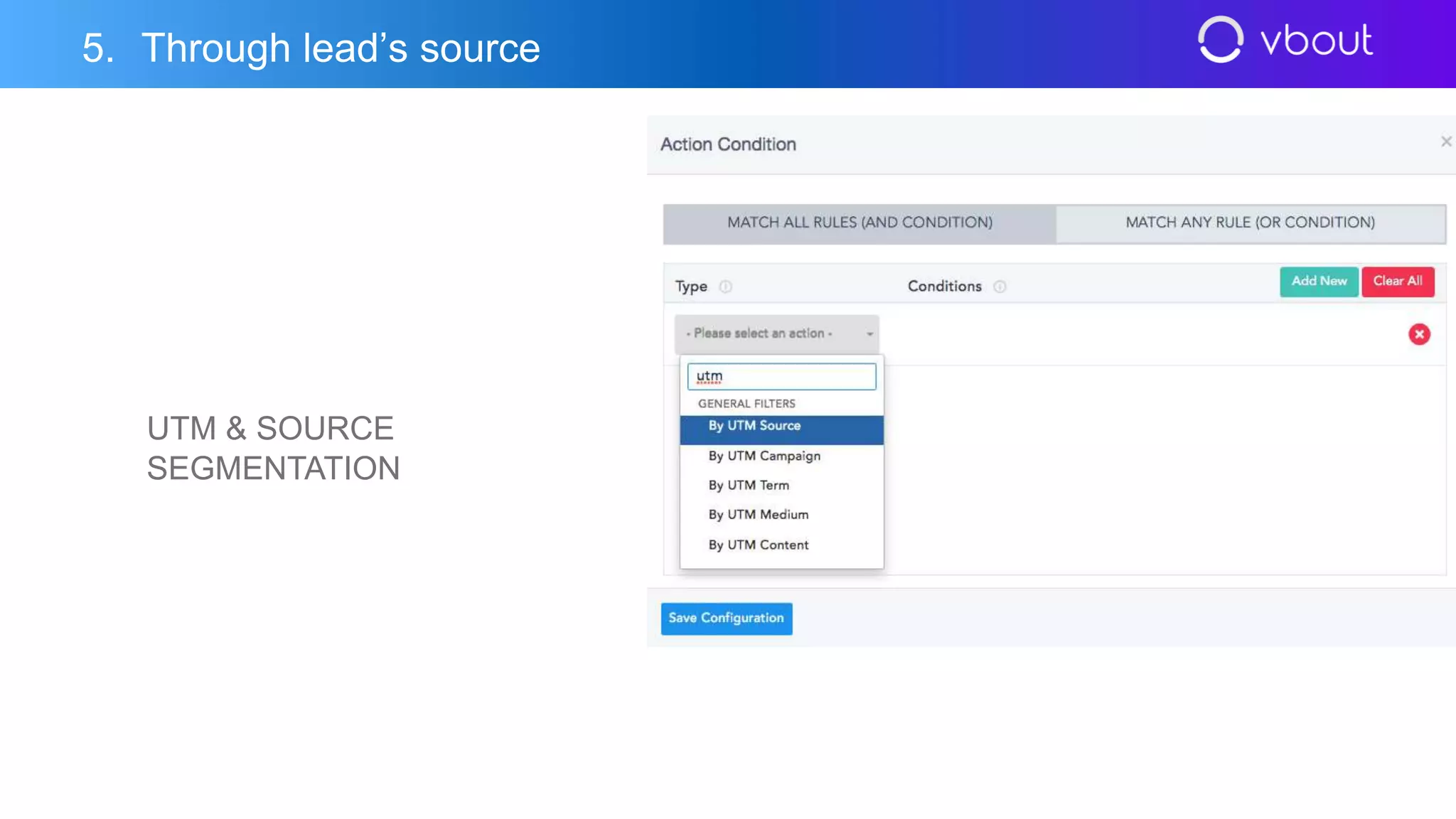
UTM & SOURCE
SEGMENTATION
5. Through lead’s source
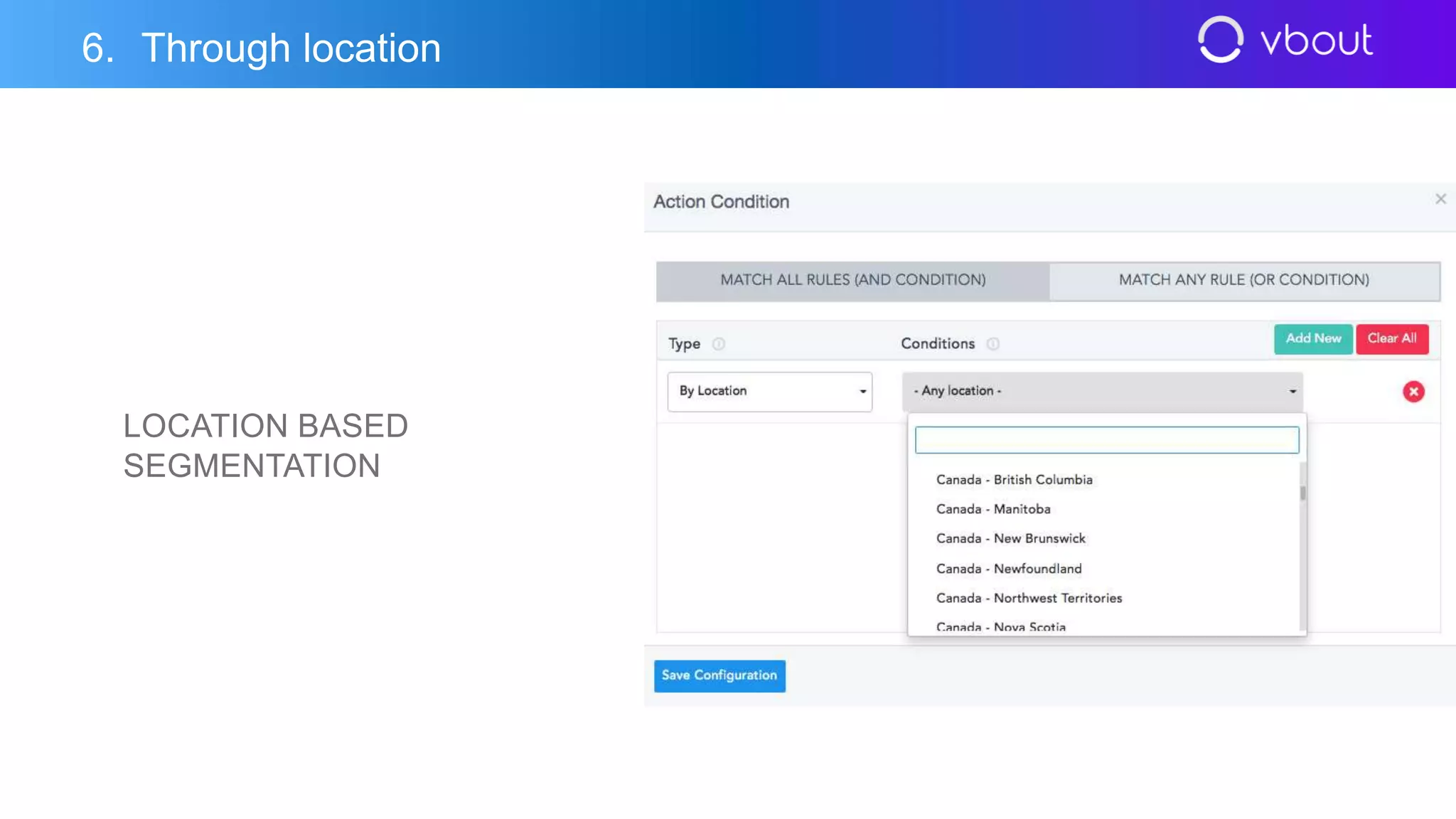
LOCATION BASED
SEGMENTATION
6. Through location
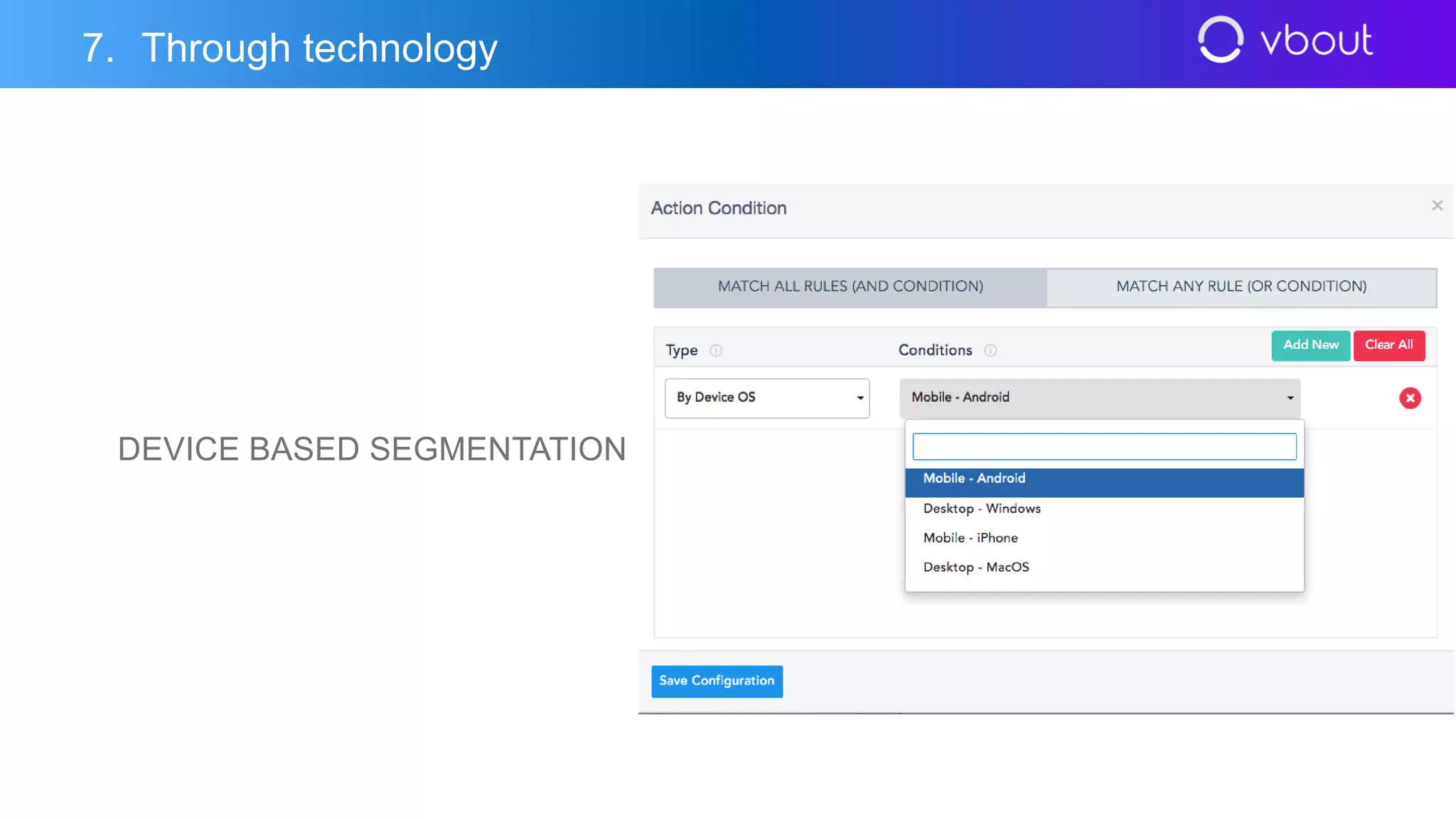
DEVICE BASED SEGMENTATION
7. Through technology
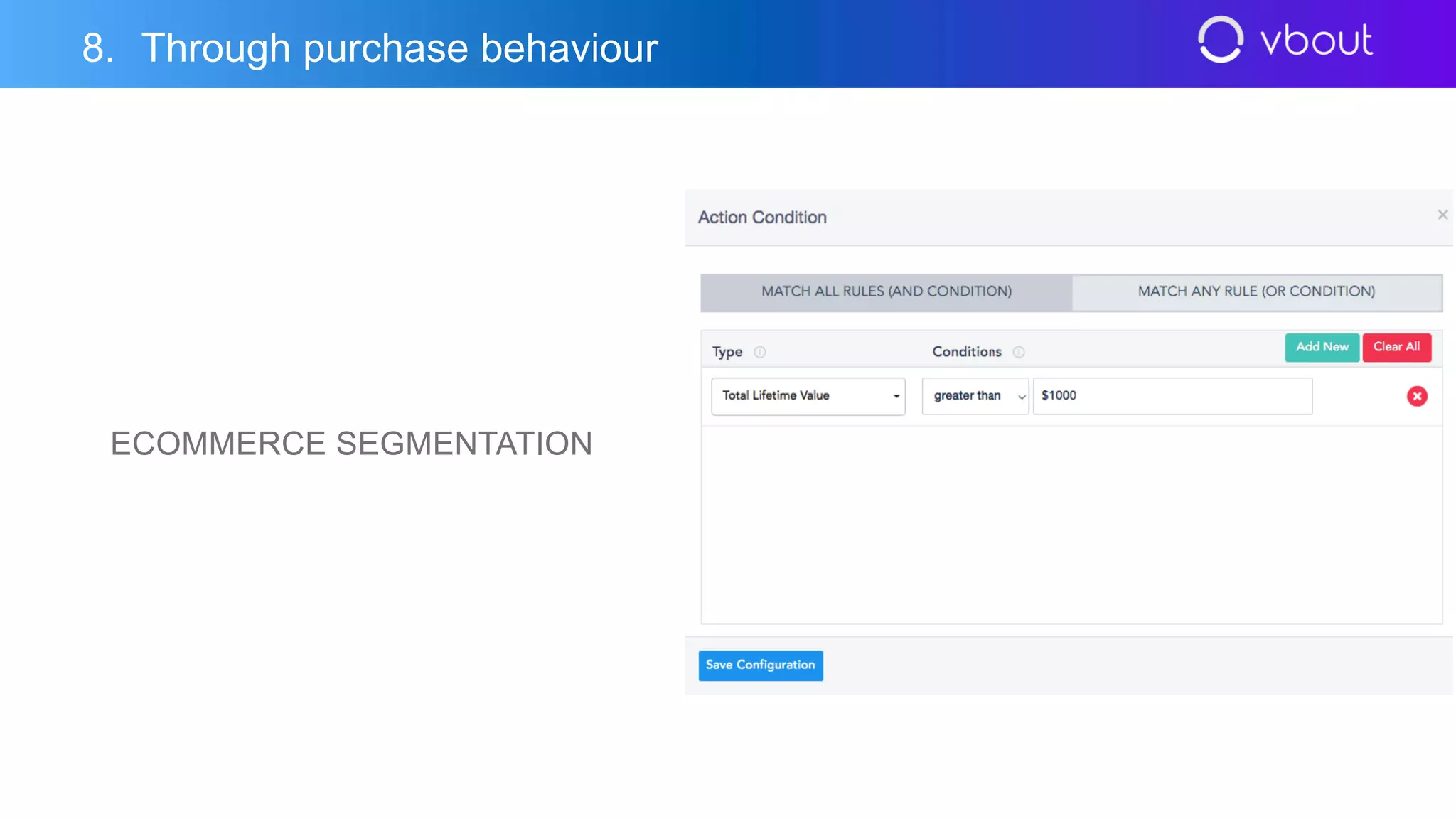
ECOMMERCE SEGMENTATION
8. Through purchase behaviour
BONUS
March Meetup
• Buyer persona tool – link
• Guide to creating a behavioral email
marketing strategy – link
• How to craft winning marketing
funnels – link
• How to build automations to amplify
your funnel – link
Tools And Resources
Link
VBOUT Academy
Link
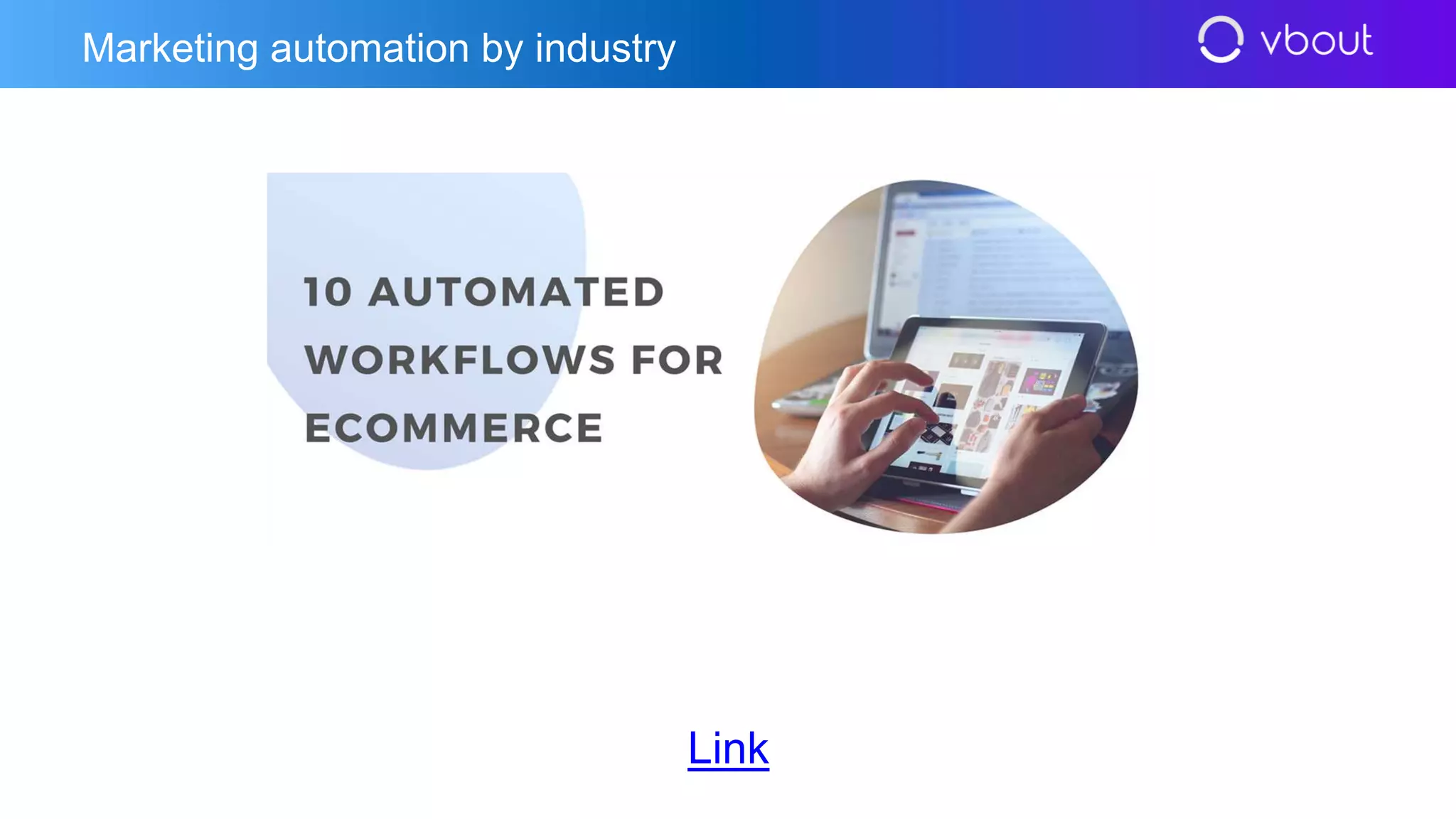
Marketing automation by industry
Link
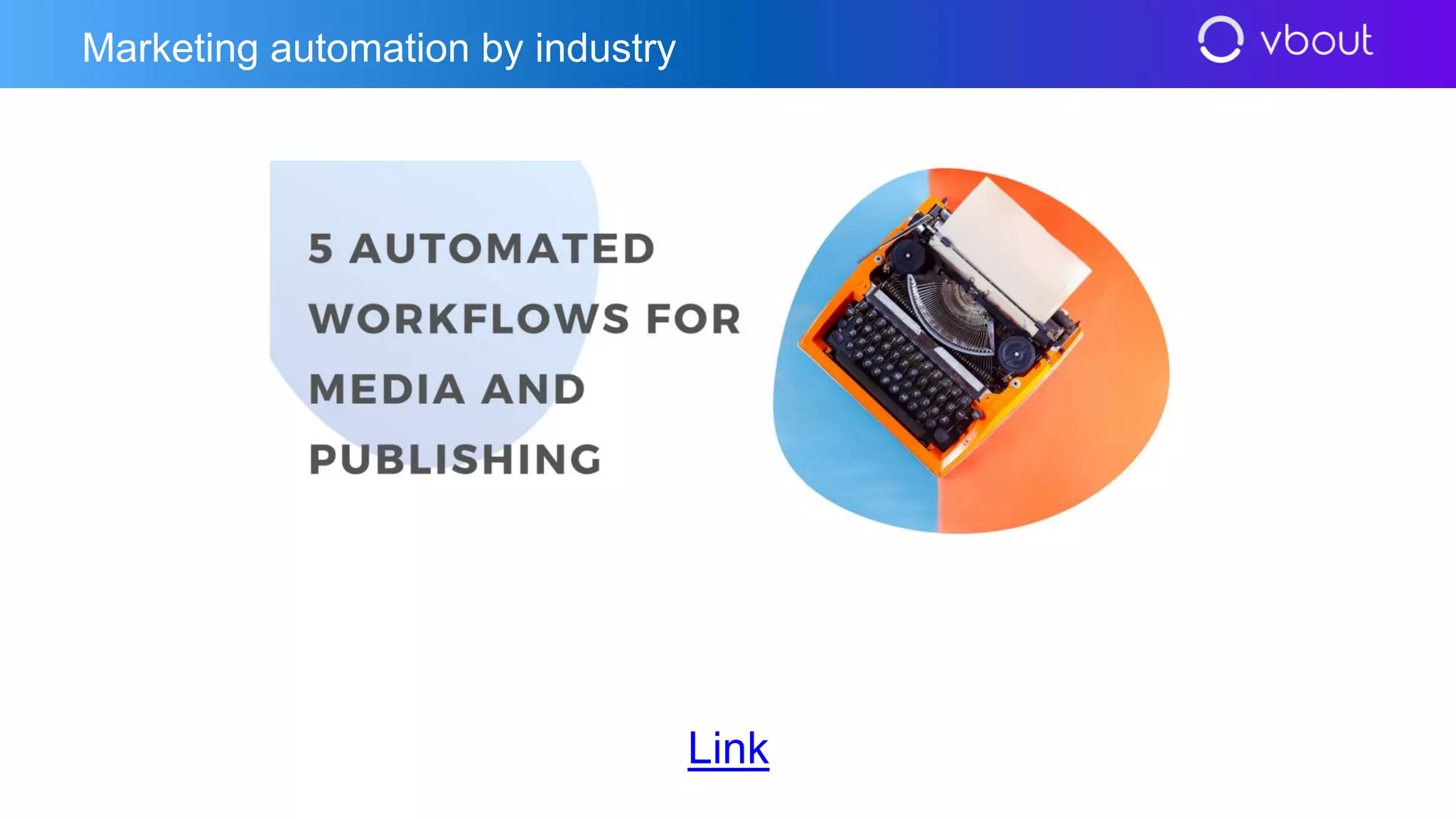
Marketing automation by industry
Link
Marketing automation by industry
Link
Marketing automation by industry
Link
Marketing automation by industry
Link
Marketing automation by industry
Link
Marketing automation by industry
THANK YOU
March Meetup

The Power of Segmentation in Marketing

Editor's Notes

  • #11 1. What is email spam Define spam and why is it called “spam” 2. Reasons for emails hitting spam traps Why emails end up in spam and how to resolve common problems 3. The future of email and spam compliance How the new email trends help email marketers avoid spam and maximize deliverability with hyper-personalization and advanced segmentation 4. Tools and resources to help you stay compliant VBOUT’s materials and other external resources that help you boost deliverability
  • #13 Learn more about your audience 2. Send the right message to the right audience at the right time 3. Help business establish a brand identity and focus on a particular type of products 4. Enables businesses to create proper pricing plans that boost sales while providing customers the value that they are looking for. 5. Differentiate your business from the competition due to more specific and personalized messaging.
  • #16 Customer personas help you identify your ideal target segments. This allows you to tailor personalized campaigns that suit each segment. One size doesn’t fit all.  Your target audience may consist of separate segments that you may not be aware of due to lack of proper target segments’ analysis.
  • #17 Marketers use different types of segmentation according to their goals.
  • #18 Examples are countries, states, regions, provinces, cities, villages, zip codes, etc…)
  • #21 Segmenting people based on what they want and their engagement with the brand (upgrade, downgrade, churn, order completed, browse abandonment, cart abandonment, website visits, link clicked, email open, videos watched, future needs, technology preferences)
  • #22 The key benefits of firmographic segmentation are increasing sales and ROI, new opportunities, improving promotional tactics and understanding current and prospective B2C customers. Examples are industry, number of employees, ownership and legal status, company size, years in business, financial standing and other business-related variables.
  • #23 Avoid creating segments that are too small since they are unquantifiable and lead to distractions. If using only one variable is not enough (relying solely on demographic factors), you may need to combine it with other criteria to obtain a meaningful segment (Geographic + Demographic + Behavioral) -> example; people who live in a specific city whose gender is men - aged between 24 and 35 and who visit pricing page 5 times per day.
  • #24 RFM modeling R- Grouping customers based on recency: Segmenting customers based on their recent interaction with their business.  According to this concept a customer tends to purchase a product again if they have had a recent purchase, or interaction. F- Grouping customers based on frequency: Segmenting customers based on how many times they do business with a company. Similar to recency, frequency is also represented by a numeric value. However, the smaller a number, the lower the frequency of purchase and vice versa. Sending product recommendations based on previous purchases or common behavioral patterns. (i.e: Last abandoned product is X -> send email Y - Last visited product is X -> send email Y - Last ordered product is C M- Grouping customers based on monetary (i.e: Lifetime value; purchase order total): Segmenting customers based on the amount of money they spend with the business. Since this measure is directly related to the monetary value, therefore the numeric value for Monetary represents the amount of money.
  • #25 - Monitor the metrics for all your email marketing and automated messages (open rate, CTR, conversions, bounces, unsubscribes, etc…) - Monitor the metrics of all your ads (CPC, CPA, conversions, impressions, engagement, revenue, CAC, etc…) - If engagement is low due to lack of personalization and customization, reconsider tailoring more targeted campaigns for the future that suit each segment’s needs. - Consider creating more variety of ad sets in case the performance of your ads didn’t go as expected. - Observe the new metrics after the adjustments and monitor the extent to which segmentation has made progress or not.
  • #27 Creating segments based on contact name, email address, field values…
  • #28 Segmenting contacts according to certain actions such as email link clicked, video watched, browse abandoned page, first and last engagement date, cart abandoned page, coupon redeemed, etc…)
  • #29 Creating specific segments based on tags allocated to them and triggering different automations according to these tags.
  • #30 Creating specific segments based on the total earned points that are given to them or their status according to the level of engagement with your brand.
  • #31 It can be source, campaign, term, medium or content. For example, if a lead came from Instagram _> send him an email. Segmenting people according to UTM and building specific automations that suit each referral according to where they came from.
  • #32 Segmenting people and launching customized automations based on where they are located. It also includes specific conditions for ecommerce such as shipping city, state, zipcode, etc…
  • #33 Segmenting people and triggering automations according to the device that they use as well as the type of device.
  • #34 Segmenting people and creating automations based on value such as customer lifetime value, shipping total, etc..