By Bobby Abedi
The Orphan – trailer Analysis
I feel that this film trailer successfully and conventionally follows the typical
structure of film trailers. It starts off slowly, letting us know that this family was
going to adopt a child, called Esther. Then towards the middle of the film trailer we
begin to find out that this child is troubled, and there is something wrong. Then,
the climax appears and we receive a visual montage of the different types of
torment that Esther puts this mother and family through. The structure allows the
audience to know what the general narrative of the film is about, but doesn’t give
too much away which allows the audience to remain intrigued. For example, we
see the other children in the film being used to get to the mother, e.g. when the
little girl gets pushed in front of the car, etc. But we never get to see the outcome,
or what happens to the child. An enigma is set up too; we know something is
wrong with Esther, but what?
Throughout watching the trailer, I believe that we, as the audience, become aware of the genre and sub
genre as the middle part of the trailer kicks in. When we see Esther become violent in the toilet, and
screaming, the action then cuts to a strap reading ‘I think there is something wrong with Esther’. It is
written in black and white, colours associated with purity and evil, common themes in horror. Whilst also
setting up an enigma, this strap, as a direct follow-on from the violent scene in the toilet, forces us to
question the child’s mental state. Upon coming to this conclusion, I thought back to the beginning of
the film trailer, and how we are straight away become aware of the fact that this child has been in an
orphanage. This then made me realise that this was a psychological horror film as one of the main
conventions you see in these types of horror are that they include a troubled, disturbed individual (also
the use of a child). I linked to the fact that Esther must not have had a very good up-bringing, living
without a family in an orphanage. Other codes and conventions that we see throughout the whole of the
film trailer are that the typical settings that we see in psychological horror films are used. For example,
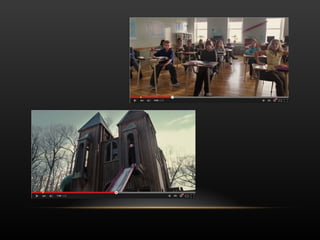
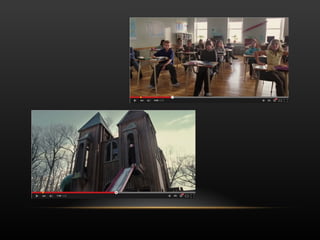
two different types of schools are used, a big house in an isolated setting, hospital and so on. Another
typical convention that we see is the types of characters that are being used. The main victims are,
once again, a female mother figure, other children and a father figure. We also are introduced to a
disturbed individual/child as the antagonist and so on... We also hear the common sounds/ music such
as contrapuntal music that is played towards the end of the film trailer, screams, high pitched sounds
and so on. Also, some general conventions that we see are that there are no deaths shown on screen
and the antagonist appears, at first, and in terms of her physical appearance, to be normal. Through
using all of these conventions, the correct audience will be attracted to the film as they will be able to
notice some of the things that they look out for when watching their preferred sub-genre of horror
Settings/ backgrounds are used throughout this trailer to create realism. The typical
conventions that we see in any psychological horror film are also shown in this film trailer
which will appeal and attract to the correct target audience. For example, schools are a
common convention of a psychological horror film and in this film trailer; we see two
different schools in different locations. This could be because of the fact that the killer
has had a bad childhood and wants to seek revenge on other children/ teenagers, for
example. Also, the main setting is in the family’s home which is the most common setting
for any horror film of any sub genre. This could be because the audience are therefore
able to picture themselves in this situation and would therefore be more thrilling and un-
nerving. We see a hospital, a park and so on, and these types of setting simply create
realism. In one scene in the park, where Esther spots the girl that bullied her about the
way she dressed, we see her follow the girl up to the top of one of the play instruments
where she appears to push her off. A shot is then shown of Esther at the top, looking
powerful and like it was her kingdom, her domain, due to the low angle of the shot. Other
mise-en-scene elements add to the effect. Esther’s dark, old-fashioned costume and the
shape of her hat give her a witch-like appearance that immediately leads us to see her as
evil, sinister and a danger to innocent children.
The Orphan – trailer analysis

The Orphan – trailer analysis

  • 1.
    By Bobby Abedi TheOrphan – trailer Analysis
  • 2.
    I feel thatthis film trailer successfully and conventionally follows the typical structure of film trailers. It starts off slowly, letting us know that this family was going to adopt a child, called Esther. Then towards the middle of the film trailer we begin to find out that this child is troubled, and there is something wrong. Then, the climax appears and we receive a visual montage of the different types of torment that Esther puts this mother and family through. The structure allows the audience to know what the general narrative of the film is about, but doesn’t give too much away which allows the audience to remain intrigued. For example, we see the other children in the film being used to get to the mother, e.g. when the little girl gets pushed in front of the car, etc. But we never get to see the outcome, or what happens to the child. An enigma is set up too; we know something is wrong with Esther, but what?
  • 3.
    Throughout watching thetrailer, I believe that we, as the audience, become aware of the genre and sub genre as the middle part of the trailer kicks in. When we see Esther become violent in the toilet, and screaming, the action then cuts to a strap reading ‘I think there is something wrong with Esther’. It is written in black and white, colours associated with purity and evil, common themes in horror. Whilst also setting up an enigma, this strap, as a direct follow-on from the violent scene in the toilet, forces us to question the child’s mental state. Upon coming to this conclusion, I thought back to the beginning of the film trailer, and how we are straight away become aware of the fact that this child has been in an orphanage. This then made me realise that this was a psychological horror film as one of the main conventions you see in these types of horror are that they include a troubled, disturbed individual (also the use of a child). I linked to the fact that Esther must not have had a very good up-bringing, living without a family in an orphanage. Other codes and conventions that we see throughout the whole of the film trailer are that the typical settings that we see in psychological horror films are used. For example, two different types of schools are used, a big house in an isolated setting, hospital and so on. Another typical convention that we see is the types of characters that are being used. The main victims are, once again, a female mother figure, other children and a father figure. We also are introduced to a disturbed individual/child as the antagonist and so on... We also hear the common sounds/ music such as contrapuntal music that is played towards the end of the film trailer, screams, high pitched sounds and so on. Also, some general conventions that we see are that there are no deaths shown on screen and the antagonist appears, at first, and in terms of her physical appearance, to be normal. Through using all of these conventions, the correct audience will be attracted to the film as they will be able to notice some of the things that they look out for when watching their preferred sub-genre of horror
  • 4.
    Settings/ backgrounds areused throughout this trailer to create realism. The typical conventions that we see in any psychological horror film are also shown in this film trailer which will appeal and attract to the correct target audience. For example, schools are a common convention of a psychological horror film and in this film trailer; we see two different schools in different locations. This could be because of the fact that the killer has had a bad childhood and wants to seek revenge on other children/ teenagers, for example. Also, the main setting is in the family’s home which is the most common setting for any horror film of any sub genre. This could be because the audience are therefore able to picture themselves in this situation and would therefore be more thrilling and un- nerving. We see a hospital, a park and so on, and these types of setting simply create realism. In one scene in the park, where Esther spots the girl that bullied her about the way she dressed, we see her follow the girl up to the top of one of the play instruments where she appears to push her off. A shot is then shown of Esther at the top, looking powerful and like it was her kingdom, her domain, due to the low angle of the shot. Other mise-en-scene elements add to the effect. Esther’s dark, old-fashioned costume and the shape of her hat give her a witch-like appearance that immediately leads us to see her as evil, sinister and a danger to innocent children.