1
The Nuclear Origins of
Systems Engineering
A Historical Overview of the Development of the Discipline of
Systems Engineering and the Role of Nuclear Technology
A Presentation for the
International Council on Systems Engineering (INCOSE) Atlanta Chapter at
Southern Polytechnic State University, Marietta, GA
November 14th, 2013
Terry A. Kuykendall, PhD, CESCO, REM, CEP
Vice President and Director of Engineering
2
How did Nuclear Technology
create Systems Engineering?
Due to the recent release of classified documents, the truth
can now be told!
November 14, 2013
November 14, 2013
3
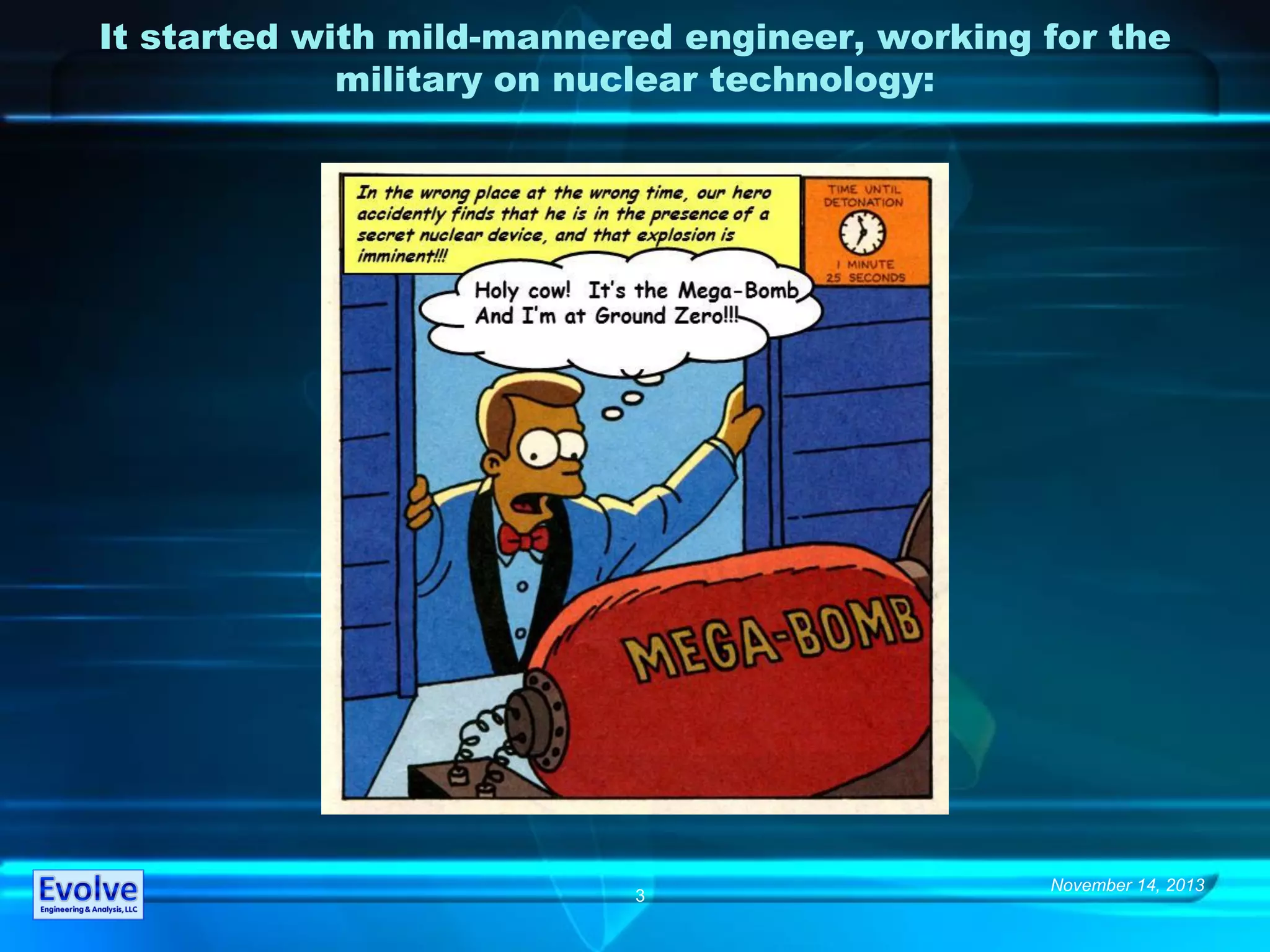
It started with mild-mannered engineer, working for the
military on nuclear technology:
4
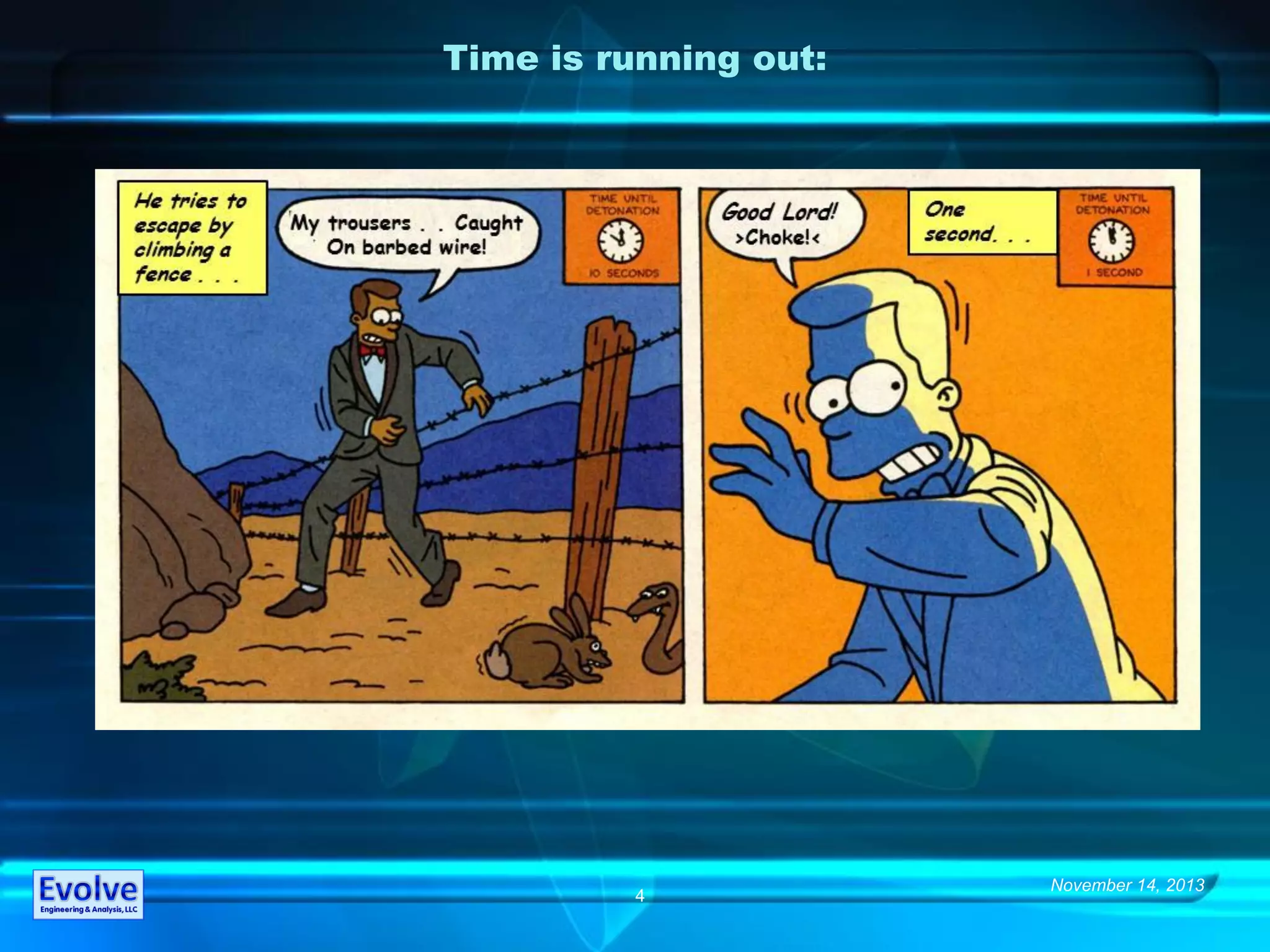
Time is running out:
November 14, 2013
5
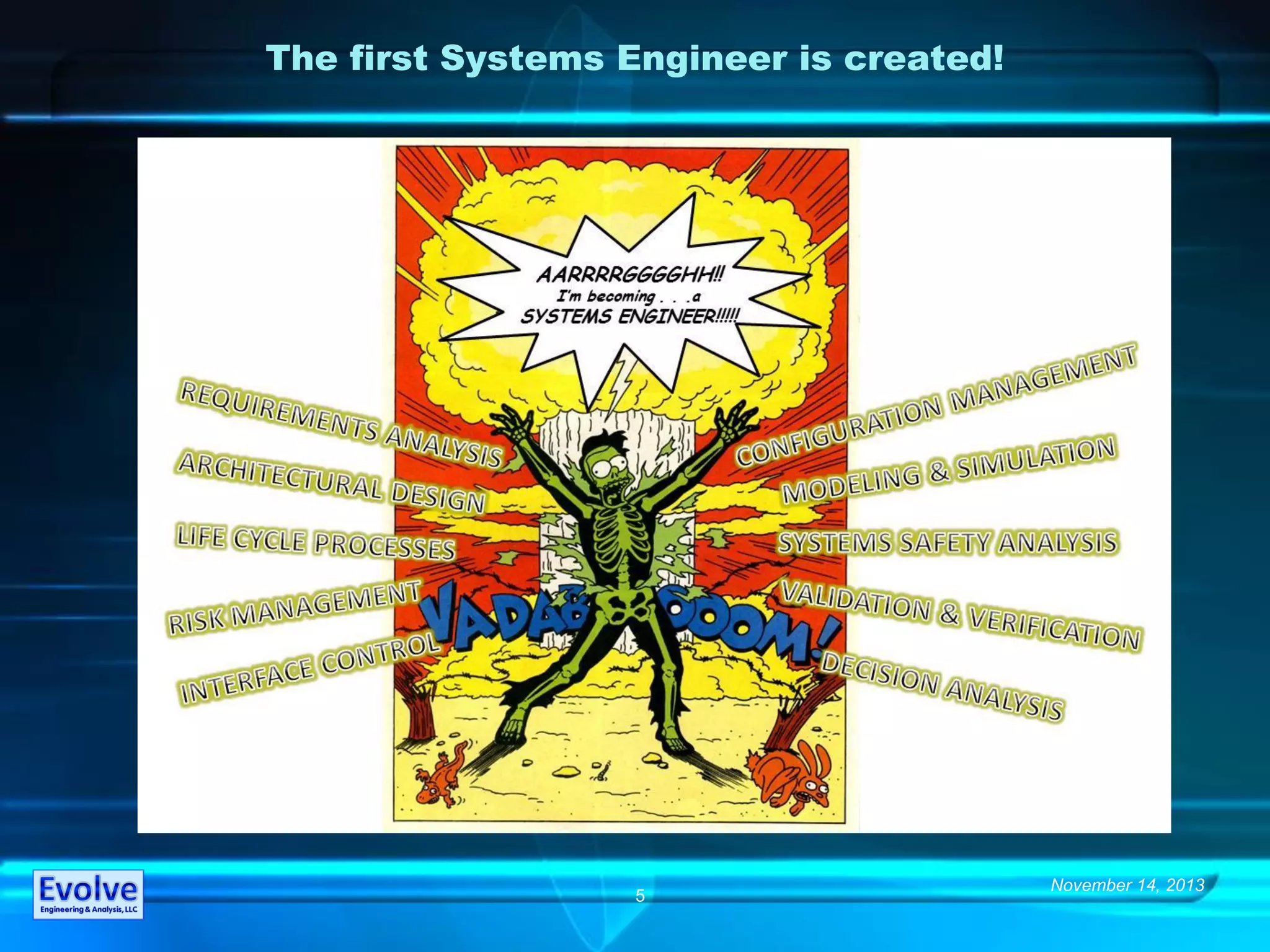
The first Systems Engineer is created!
November 14, 2013
November 14, 2013
6
The “more conventional”
explanation for the origin
of Systems Engineering and
the involvement of
Nuclear Technology
November 14, 2013
7
The Birth of Systems Engineering
• Systems Engineering originated as an approach for complex
engineering analysis; the term systems engineering can
[supposedly] be traced back to Bell Telephone Laboratories
in the 1940s.
• The first large-scale systems engineering application was
necessitated by the extremely complicated integration of
science, theory, engineering, and applied technology that
were brought together to support the Manhattan Project and
the World War II nuclear weapons production program.
• This was a large-scale, distributed (and fragmented)
undertaking that was pressed for implementation under a
highly aggressive schedule and under challenging
conditions.
November 14, 2013
8
The Birth of Systems Engineering
• Implementation required a systematic process for
conducting and evaluating concurrent and parallel
interdependent activities and assessing the
requirements for realizing the ultimate goal (i.e., the
first atomic bomb) as a whole composed discrete
systems.
• At this time of technology development, no real
computer systems were available; all systems
planning, integration and management were
performed as manual functions.
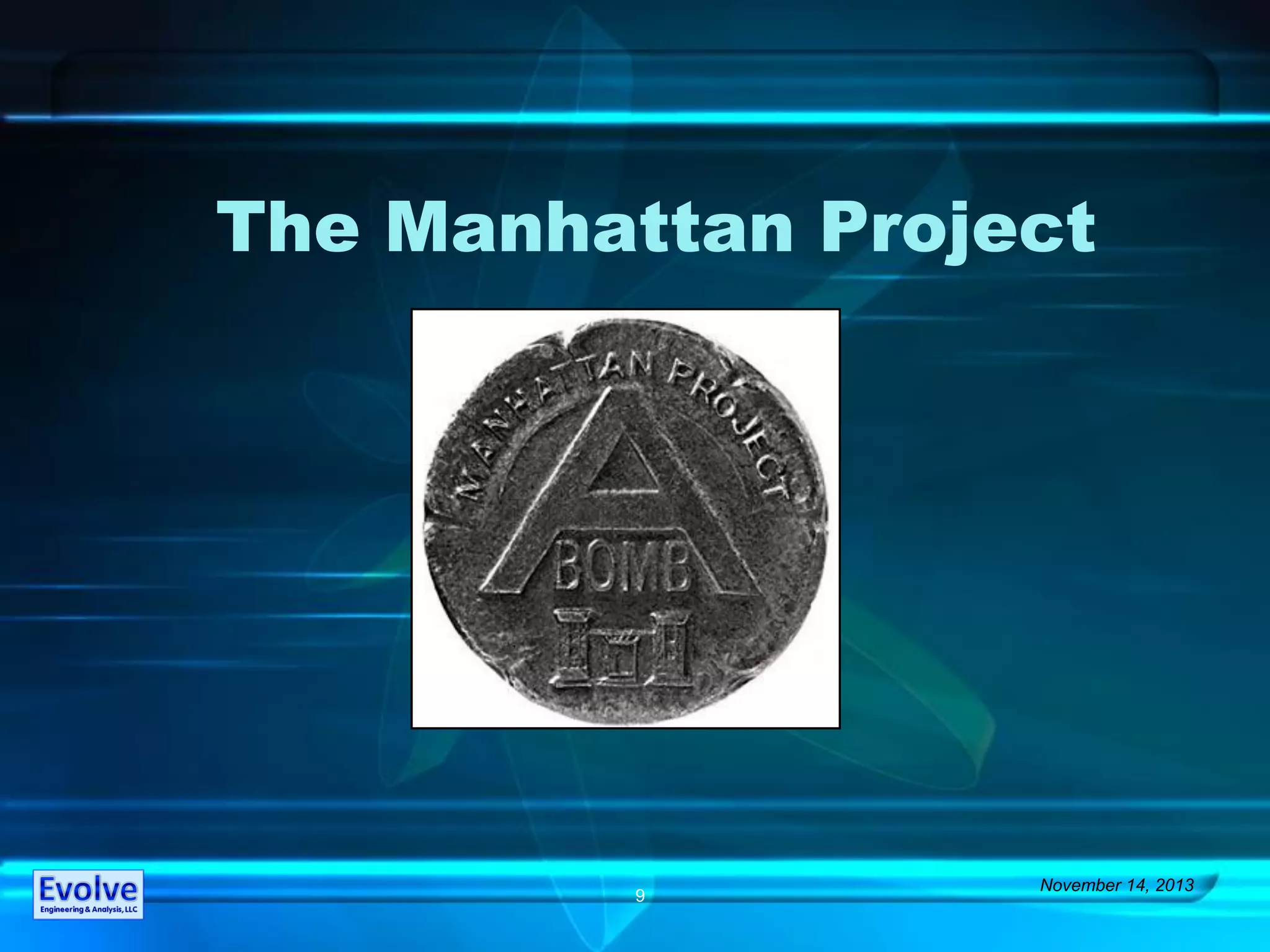
The Manhattan Project
November 14, 2013
9
November 14, 2013
10
The Manhattan Project (1)
• The Manhattan Project began modestly in 1939 with the
original technology concepts, but grew to a national
military-managed program that [at peak] employed more
than 130,000 people.
• The program cost nearly US $2 billion (about $26 billion
in 2013 dollars). Over 90% of the cost was for building
factories and producing the fissionable materials, with
less than 10% for development and production of the
weapons.
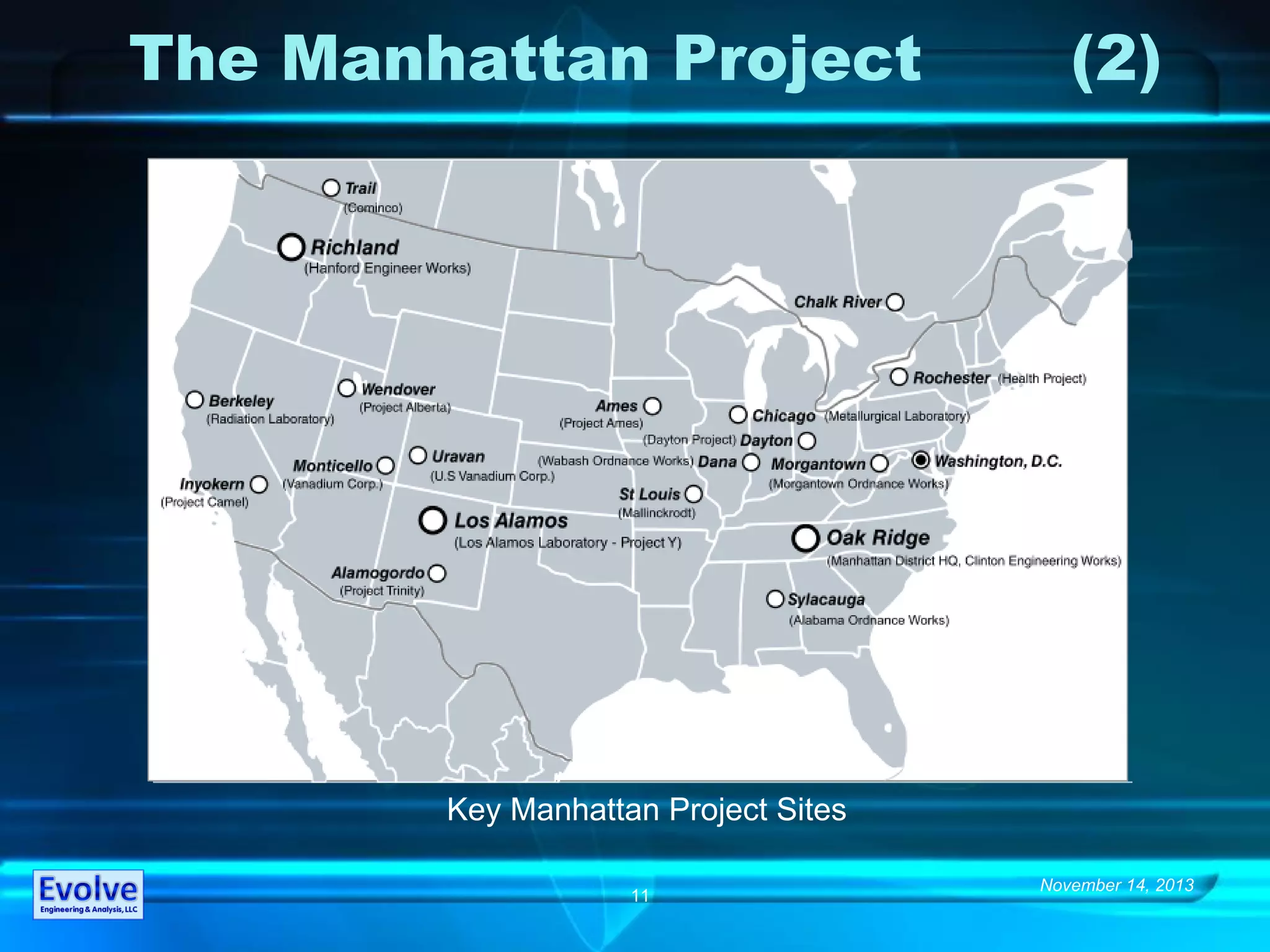
• Research and production took place at more than 30
sites across the United States, the United Kingdom and
Canada.
November 14, 2013
11
The Manhattan Project (2)
Key Manhattan Project Sites
November 14, 2013
12
The Manhattan Project (3)
• The actual weapons production program was approved
by President Franklin Roosevelt on October 9th, 1941.
• The initial Army command for the project was located
and formed in New York and was designated the
Manhattan Engineering District.
• Roosevelt chose the Army to run the project rather than
the Navy, since the Army had the most experience with
management of large-scale construction projects.
• He also agreed to coordinate the effort with that of the
British, and corresponded with Winston Churchill.
November 14, 2013
13
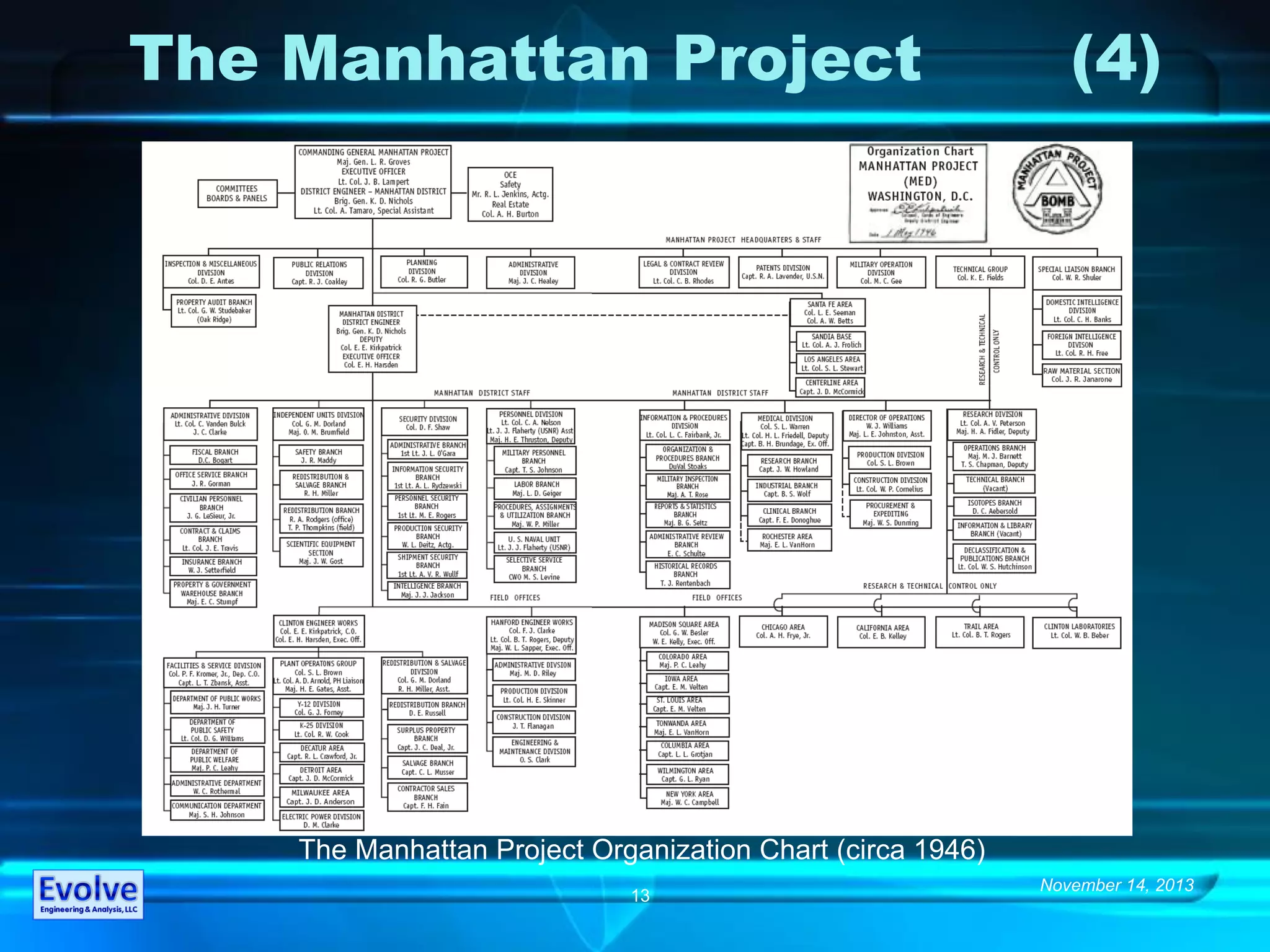
The Manhattan Project (4)
The Manhattan Project Organization Chart (circa 1946)
November 14, 2013
14
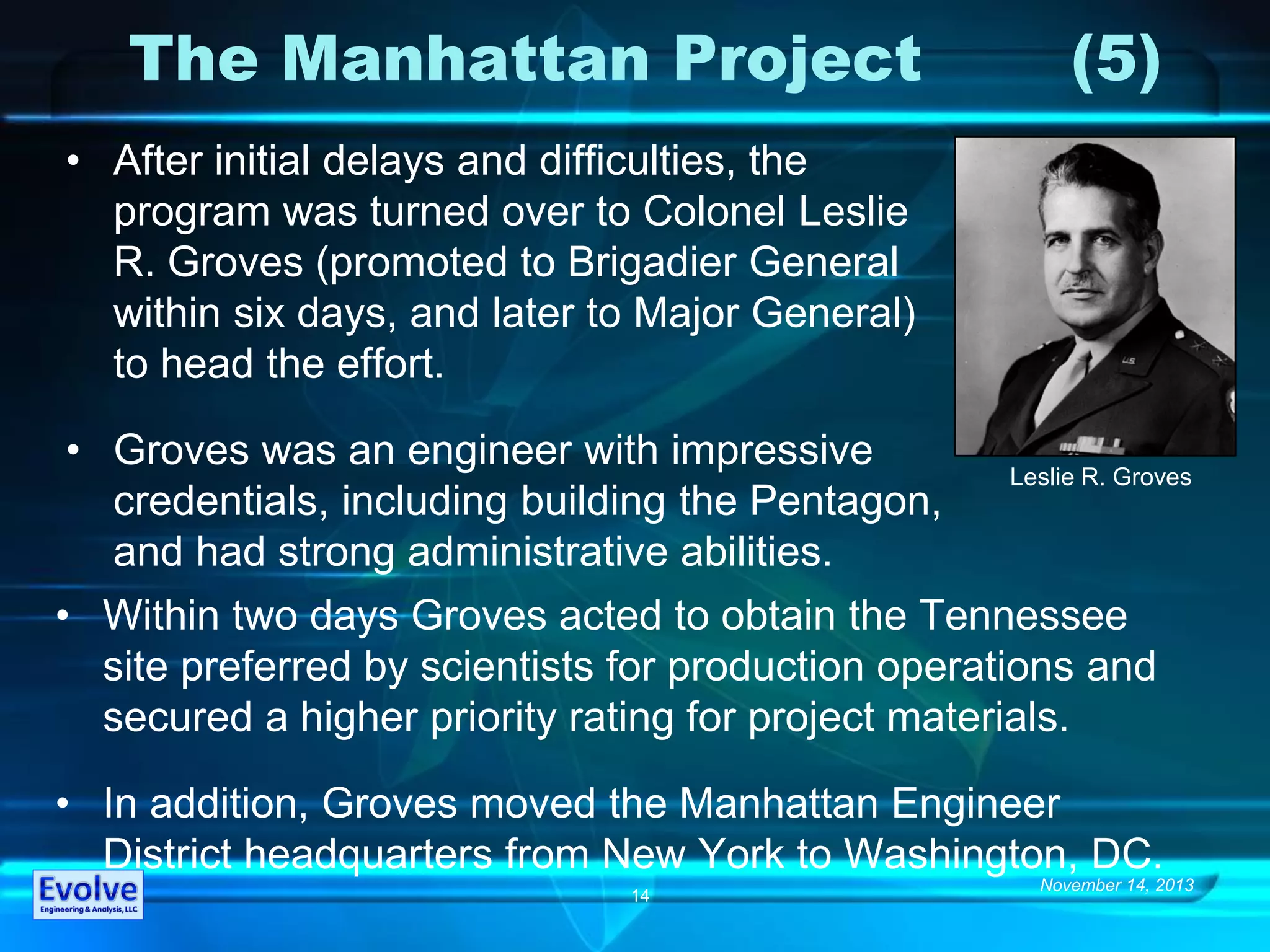
The Manhattan Project (5)
• After initial delays and difficulties, the
program was turned over to Colonel Leslie
R. Groves (promoted to Brigadier General
within six days, and later to Major General)
to head the effort.
• Groves was an engineer with impressive
credentials, including building the Pentagon,
and had strong administrative abilities.
• Within two days Groves acted to obtain the Tennessee
site preferred by scientists for production operations and
secured a higher priority rating for project materials.
• In addition, Groves moved the Manhattan Engineer
District headquarters from New York to Washington, DC.
Leslie R. Groves
November 14, 2013
15
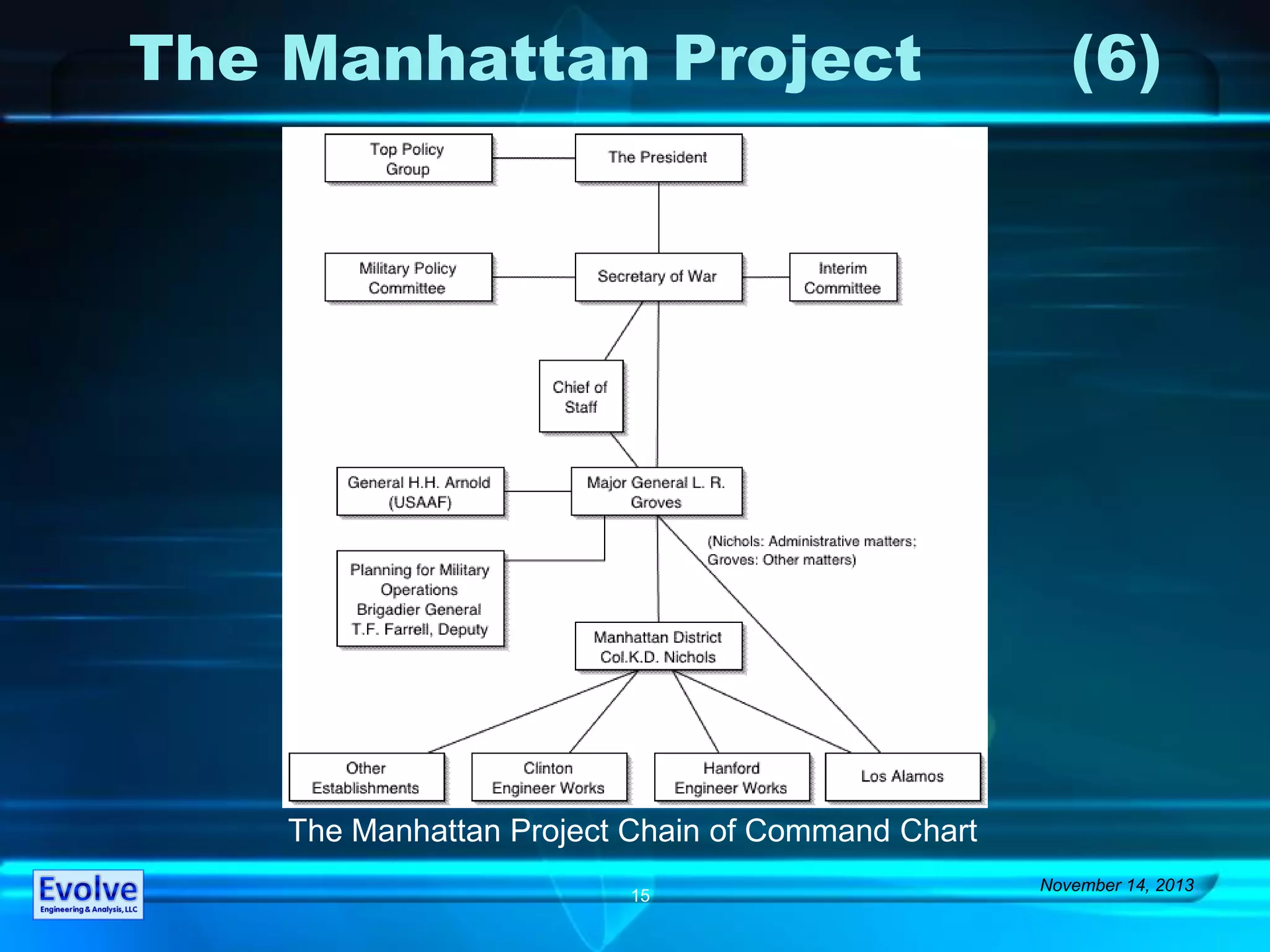
The Manhattan Project (6)
The Manhattan Project Chain of Command Chart
November 14, 2013
16
The Manhattan Project (7)
• The technology aspects (e.g., fissionable
materials research, reactor development,
etc.) of the Manhattan Project were
accomplished by an impressive team of
eminent scientists and scholars from
universities and research institutes.
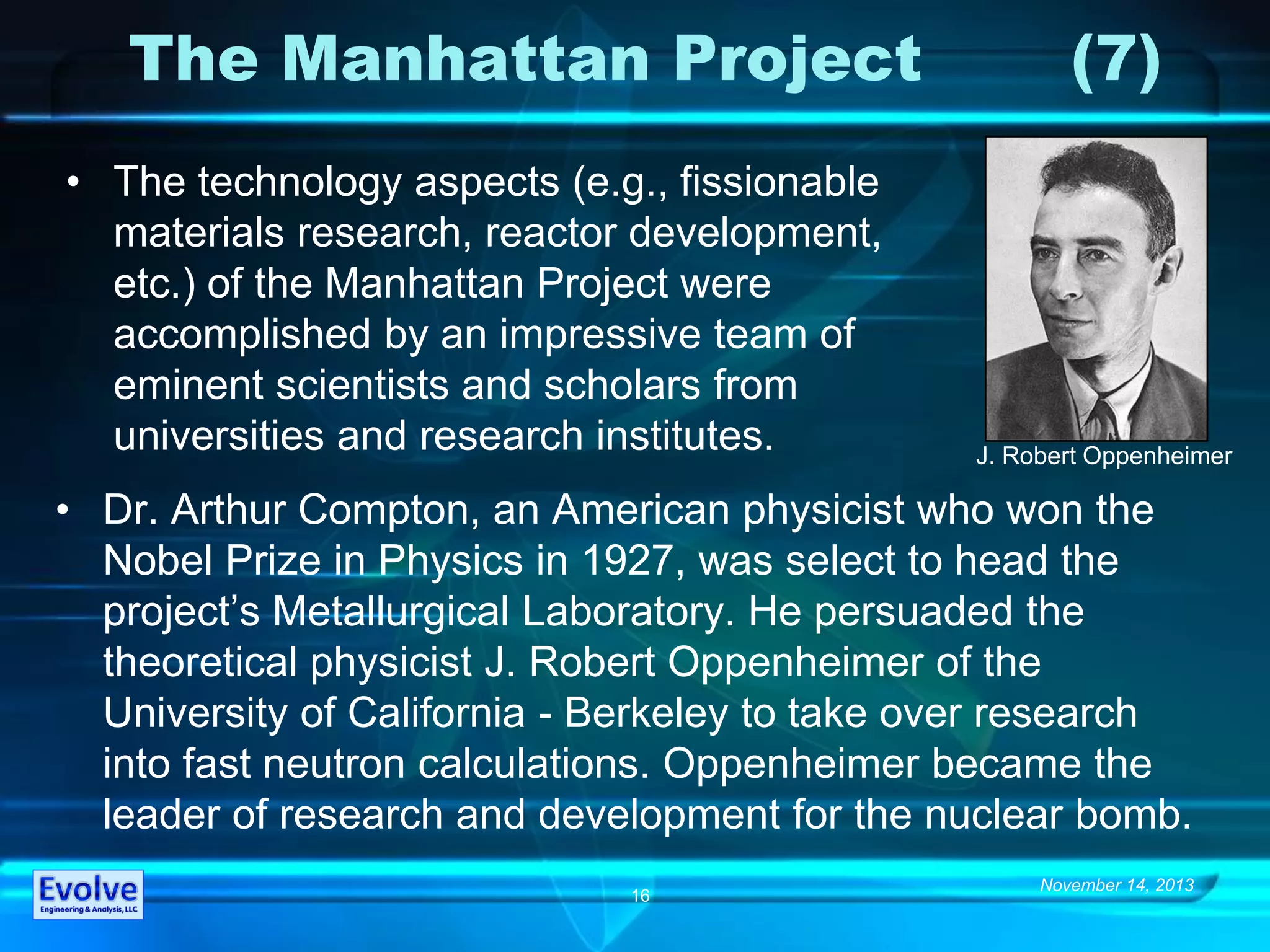
• Dr. Arthur Compton, an American physicist who won the
Nobel Prize in Physics in 1927, was select to head the
project’s Metallurgical Laboratory. He persuaded the
theoretical physicist J. Robert Oppenheimer of the
University of California - Berkeley to take over research
into fast neutron calculations. Oppenheimer became the
leader of research and development for the nuclear bomb.
J. Robert Oppenheimer
November 14, 2013
17
The Manhattan Project (8)
Three sites were selected that performed the most critical
elements of the weapon production processes:
• A site in Oak Ridge, Tennessee, acquired in 1942, served
as operations headquarters and was renamed the Clinton
Engineer Works (CEW) in early 1943.
• A site in Hanford, Washington, that in January 1943 was
established as the Hanford Engineer Works (HEW), and
was codenamed "Site W".
• A site in Los Alamos, New Mexico, acquired on November
25, 1942, and due to secrecy was referred to as "Site Y" or
"the Hill"
November 14, 2013
18
The Manhattan Project (9)
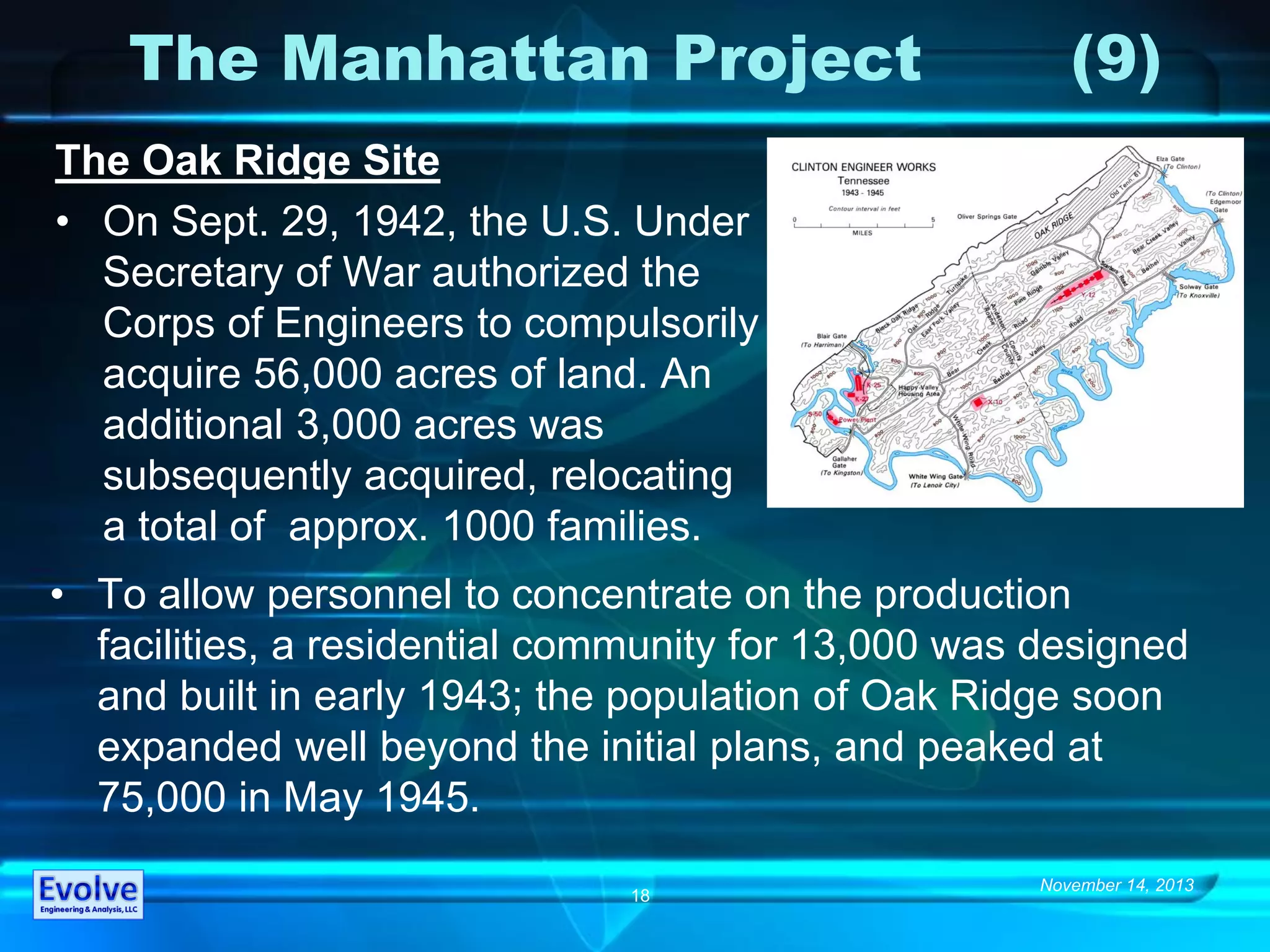
The Oak Ridge Site
• On Sept. 29, 1942, the U.S. Under
Secretary of War authorized the
Corps of Engineers to compulsorily
acquire 56,000 acres of land. An
additional 3,000 acres was
subsequently acquired, relocating
a total of approx. 1000 families.
• To allow personnel to concentrate on the production
facilities, a residential community for 13,000 was designed
and built in early 1943; the population of Oak Ridge soon
expanded well beyond the initial plans, and peaked at
75,000 in May 1945.
November 14, 2013
19
The Manhattan Project (10)
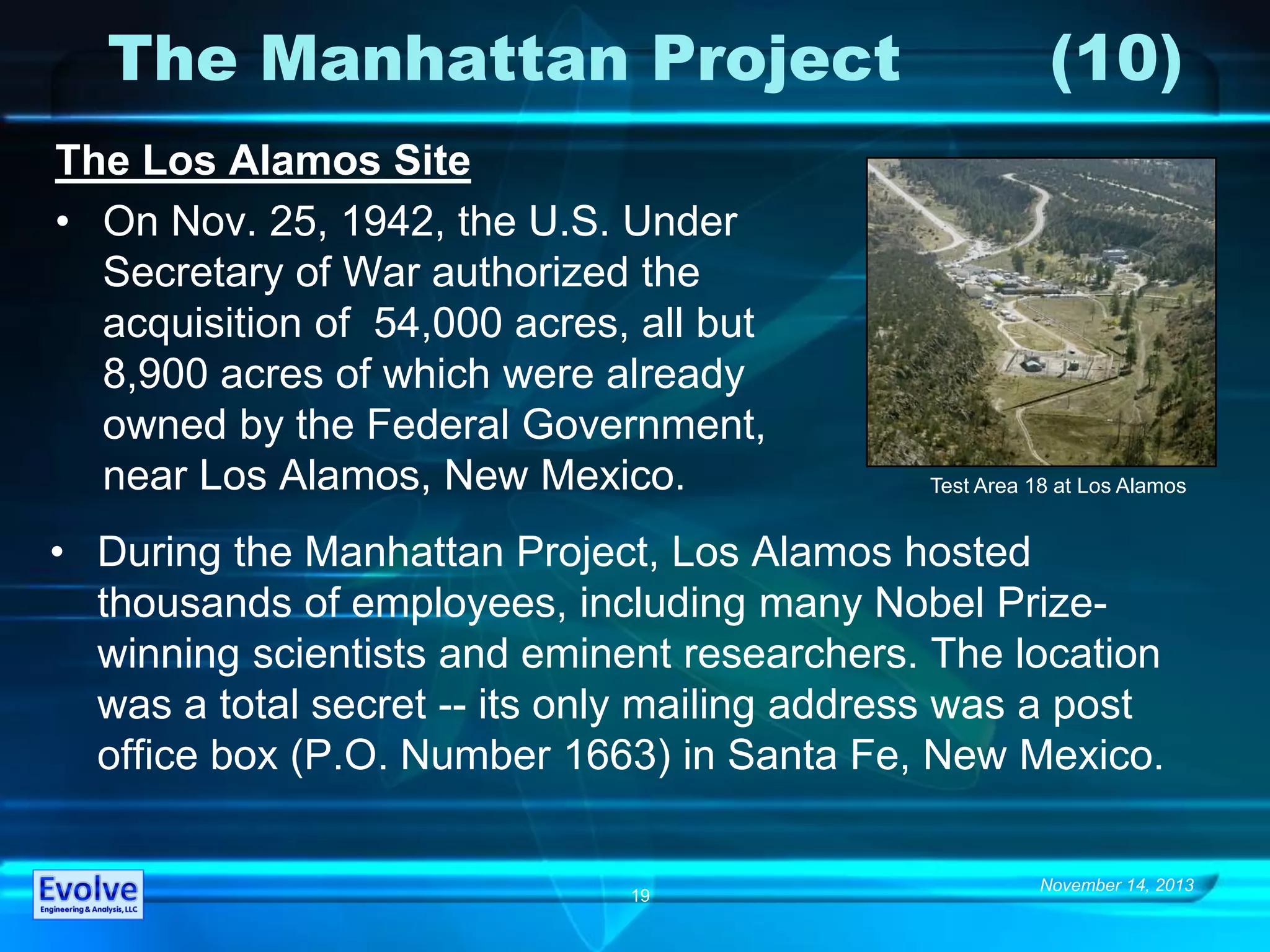
The Los Alamos Site
• On Nov. 25, 1942, the U.S. Under
Secretary of War authorized the
acquisition of 54,000 acres, all but
8,900 acres of which were already
owned by the Federal Government,
near Los Alamos, New Mexico.
• During the Manhattan Project, Los Alamos hosted
thousands of employees, including many Nobel Prize-
winning scientists and eminent researchers. The location
was a total secret -- its only mailing address was a post
office box (P.O. Number 1663) in Santa Fe, New Mexico.
Test Area 18 at Los Alamos
November 14, 2013
20
The Manhattan Project (11)
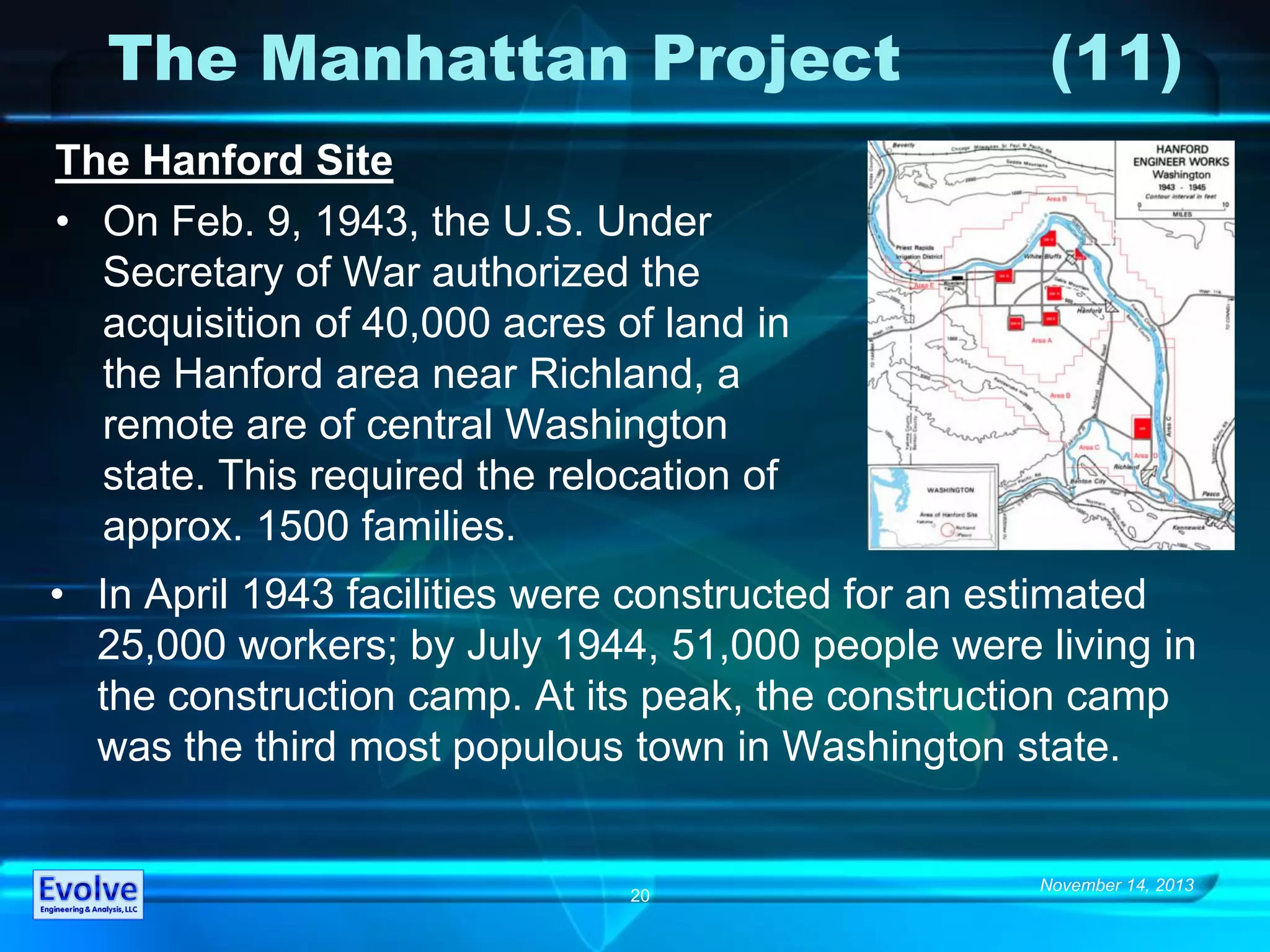
The Hanford Site
• On Feb. 9, 1943, the U.S. Under
Secretary of War authorized the
acquisition of 40,000 acres of land in
the Hanford area near Richland, a
remote are of central Washington
state. This required the relocation of
approx. 1500 families.
• In April 1943 facilities were constructed for an estimated
25,000 workers; by July 1944, 51,000 people were living in
the construction camp. At its peak, the construction camp
was the third most populous town in Washington state.
November 14, 2013
21
The Manhattan Project (12)
• Two types of atomic bombs were developed -- a relatively
simple gun-type design and an implosion-based device.
• The development of sufficient quantities of fissionable
materials was necessary, and required difficult and
complicated physical and chemical processes to separate
and generate the required quantities of the specific
targeted isotopes (i.e., uranium-235, plutonium-239).
• Three methods were employed for uranium enrichment:
electromagnetic, gaseous and thermal.
• Most of this initial work was performed at the Oak Ridge
site in Tennessee.
November 14, 2013
22
The Manhattan Project (13)
• In parallel with the work on uranium was an effort to
produce plutonium. Reactors were constructed at Oak
Ridge and Hanford, Washington, in which uranium was
irradiated and transmuted into plutonium. The plutonium
was then chemically separated from the uranium.
• The gun-type design proved impractical to use with
plutonium, so a more complex implosion-type weapon was
developed in a concerted design and construction effort at
the project's principal research and design laboratory in
Los Alamos, New Mexico.
November 14, 2013
23
The Manhattan Project (14)
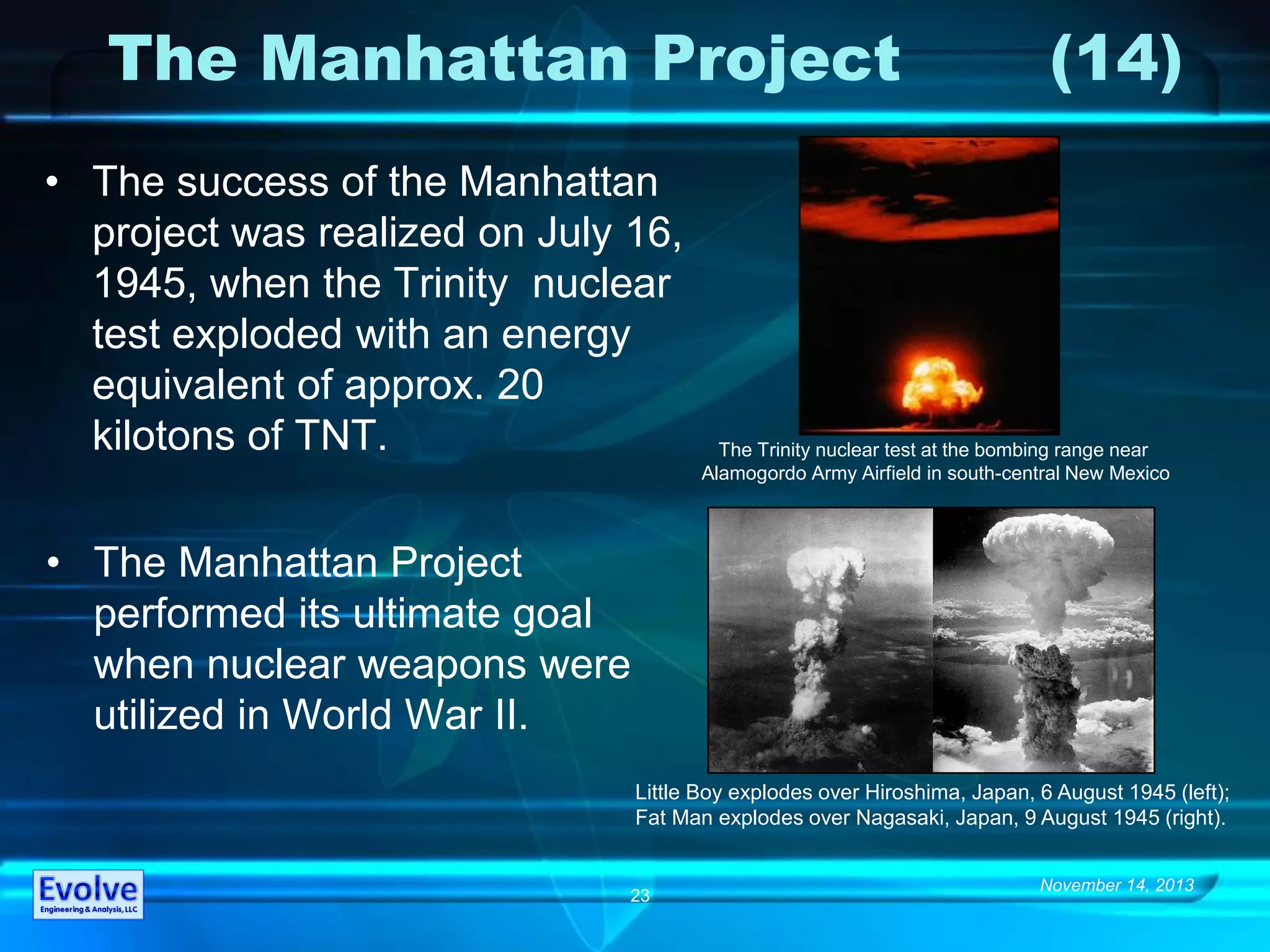
• The success of the Manhattan
project was realized on July 16,
1945, when the Trinity nuclear
test exploded with an energy
equivalent of approx. 20
kilotons of TNT.
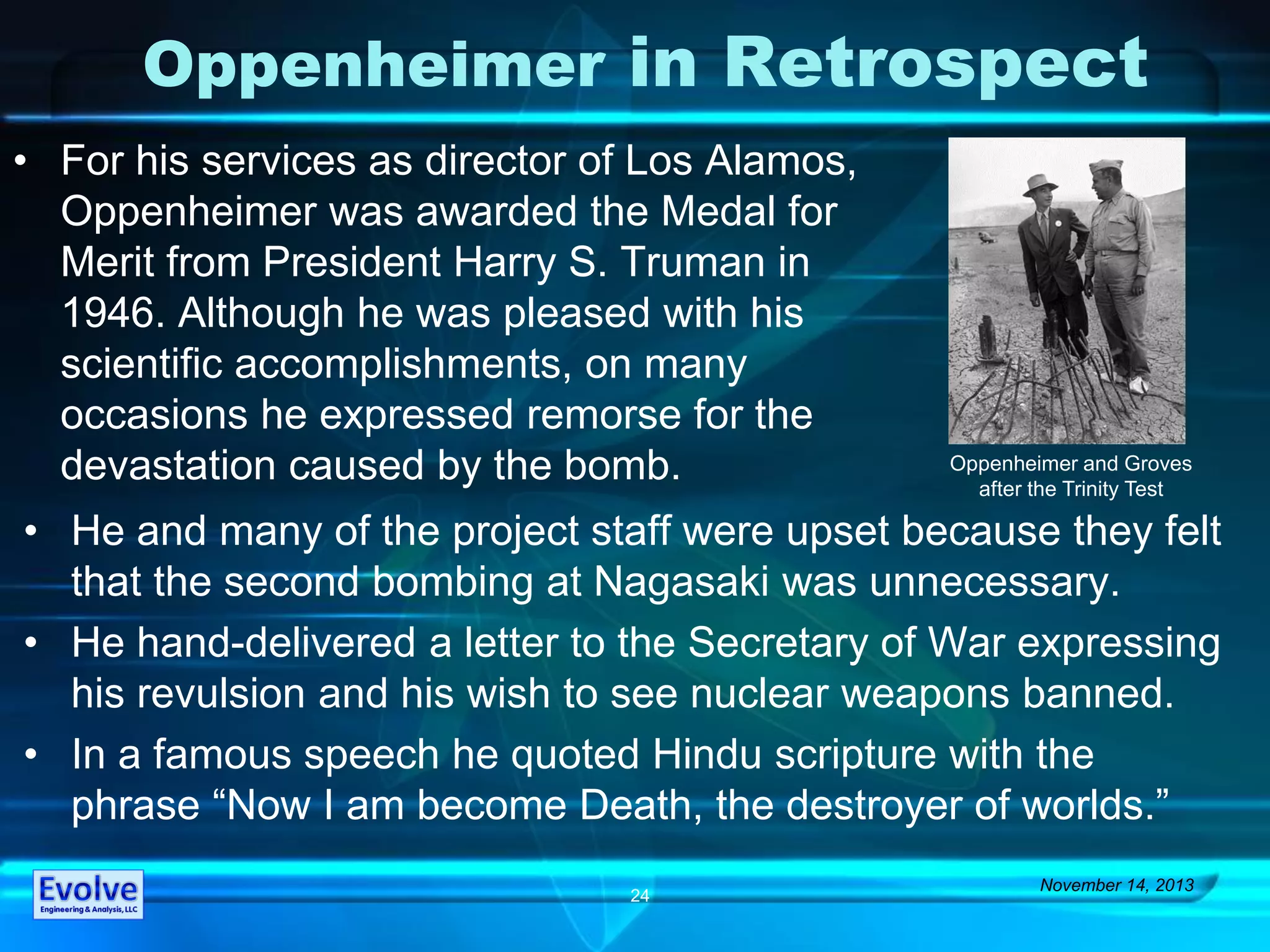
Little Boy explodes over Hiroshima, Japan, 6 August 1945 (left);
Fat Man explodes over Nagasaki, Japan, 9 August 1945 (right).
The Trinity nuclear test at the bombing range near
Alamogordo Army Airfield in south-central New Mexico
• The Manhattan Project
performed its ultimate goal
when nuclear weapons were
utilized in World War II.
Oppenheimer in Retrospect
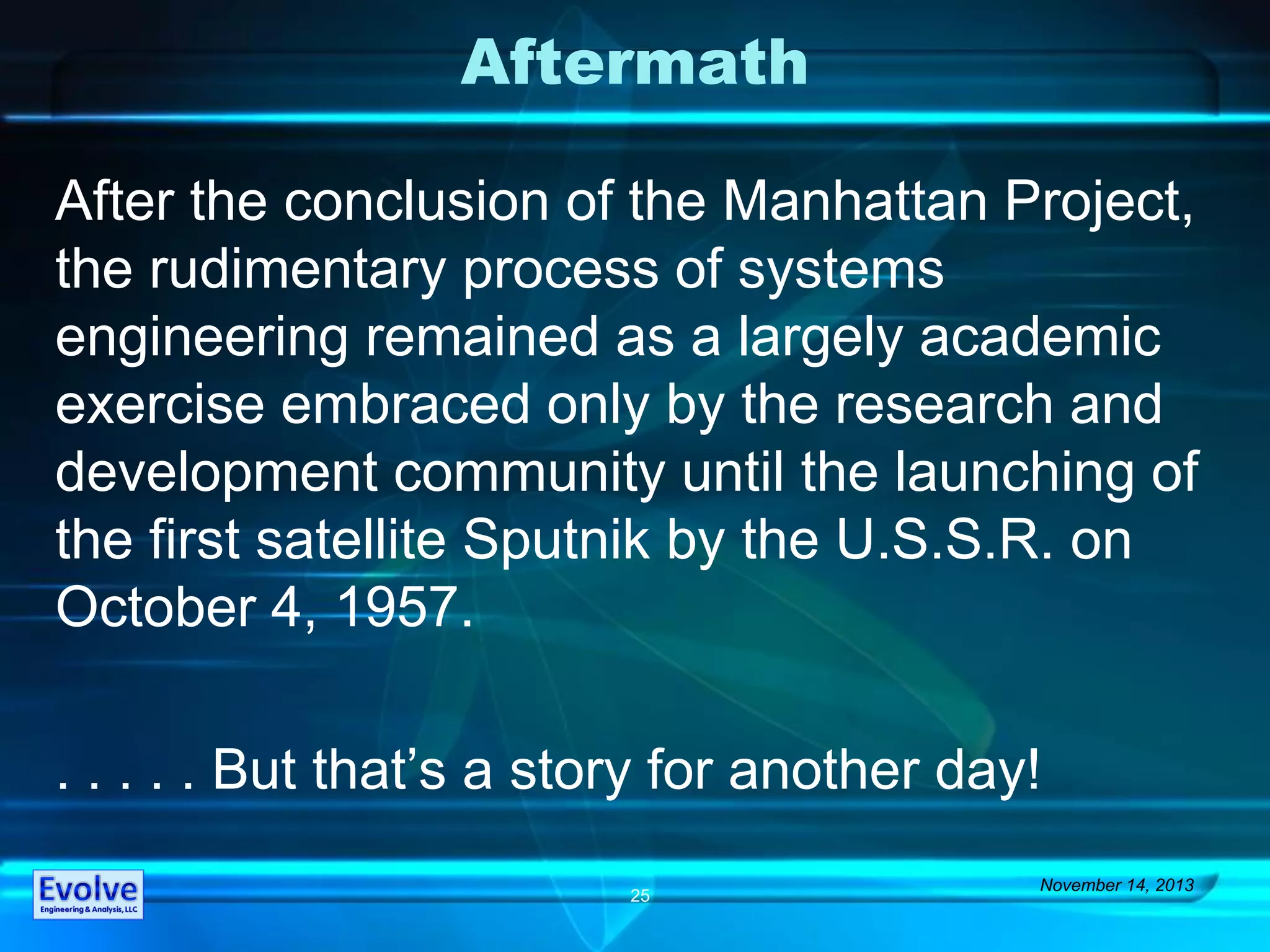
• For his services as director of Los Alamos,
Oppenheimer was awarded the Medal for
Merit from President Harry S. Truman in
1946. Although he was pleased with his
scientific accomplishments, on many
occasions he expressed remorse for the
devastation caused by the bomb.
November 14, 2013
24
• He and many of the project staff were upset because they felt
that the second bombing at Nagasaki was unnecessary.
• He hand-delivered a letter to the Secretary of War expressing
his revulsion and his wish to see nuclear weapons banned.
• In a famous speech he quoted Hindu scripture with the
phrase “Now I am become Death, the destroyer of worlds.”
Oppenheimer and Groves
after the Trinity Test
Aftermath
After the conclusion of the Manhattan Project,
the rudimentary process of systems
engineering remained as a largely academic
exercise embraced only by the research and
development community until the launching of
the first satellite Sputnik by the U.S.S.R. on
October 4, 1957.
. . . . . But that’s a story for another day!
November 14, 2013
25
What Were The
Key Systems Engineering
Issues?
November 14, 2013
26
Systems Engineering Issues (1)
• Coordination of concurrent, ongoing research &
development efforts among national and international
locations.
• Managing the activities and input from military personnel,
engineers and contractors, civilian taskforce, and
researchers (mostly college professors and research
scientists), all with different perspectives of their roles and
differing objectives and directives.
• Development of an architectural framework to manage the
entire operations with real-time oversight of all functions.
November 14, 2013
27
Systems Engineering Issues (2)
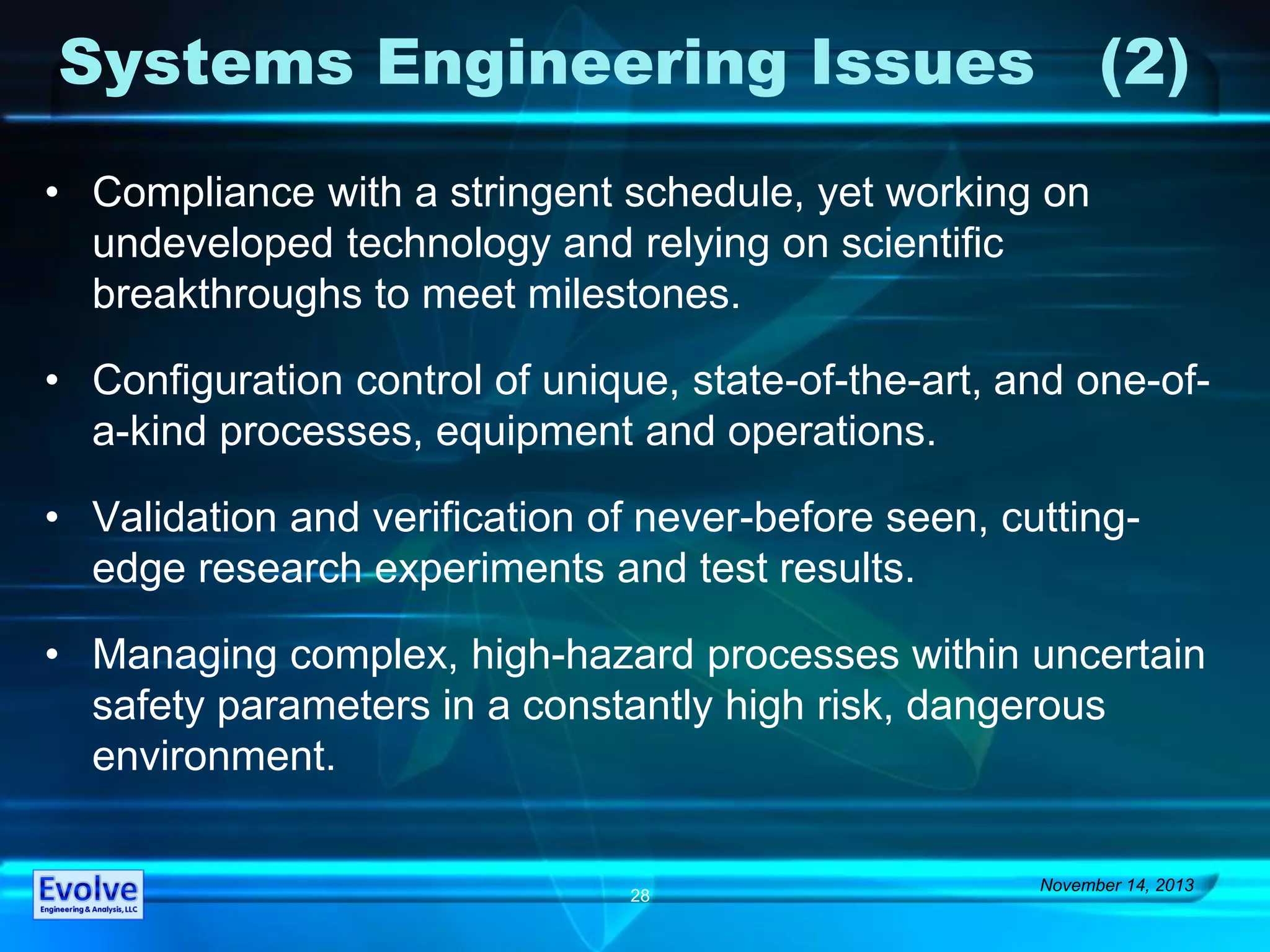
• Compliance with a stringent schedule, yet working on
undeveloped technology and relying on scientific
breakthroughs to meet milestones.
• Configuration control of unique, state-of-the-art, and one-of-
a-kind processes, equipment and operations.
• Validation and verification of never-before seen, cutting-
edge research experiments and test results.
• Managing complex, high-hazard processes within uncertain
safety parameters in a constantly high risk, dangerous
environment.
November 14, 2013
28
Systems Engineering Issues (3)
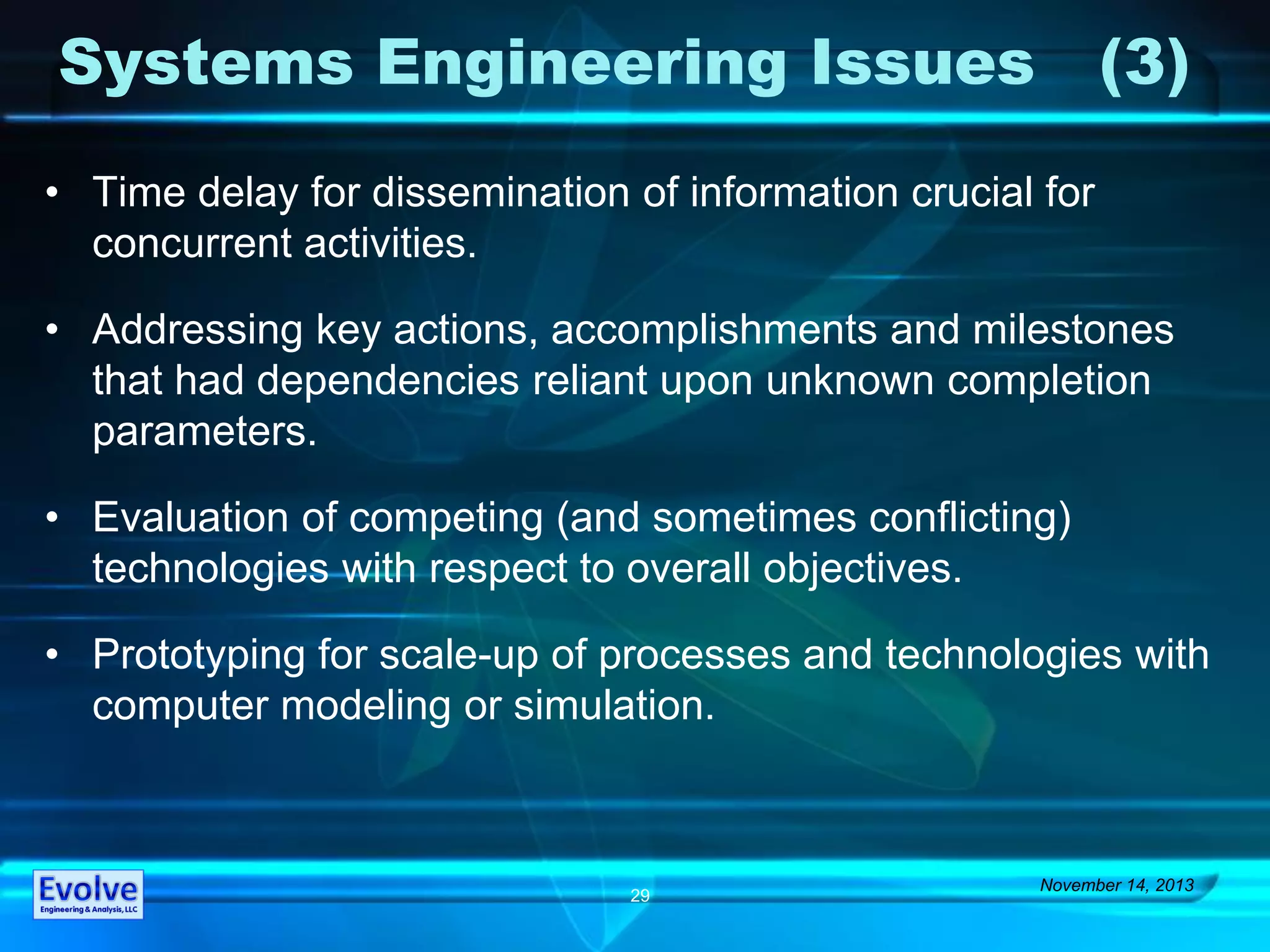
• Time delay for dissemination of information crucial for
concurrent activities.
• Addressing key actions, accomplishments and milestones
that had dependencies reliant upon unknown completion
parameters.
• Evaluation of competing (and sometimes conflicting)
technologies with respect to overall objectives.
• Prototyping for scale-up of processes and technologies with
computer modeling or simulation.
November 14, 2013
29
What Systems Engineering
Practices and Principles
Could Be (or Were) Applied
to the
Manhattan Project?
November 14, 2013
30
What SE Applications Were Possible? (1)
November 14, 2013
31
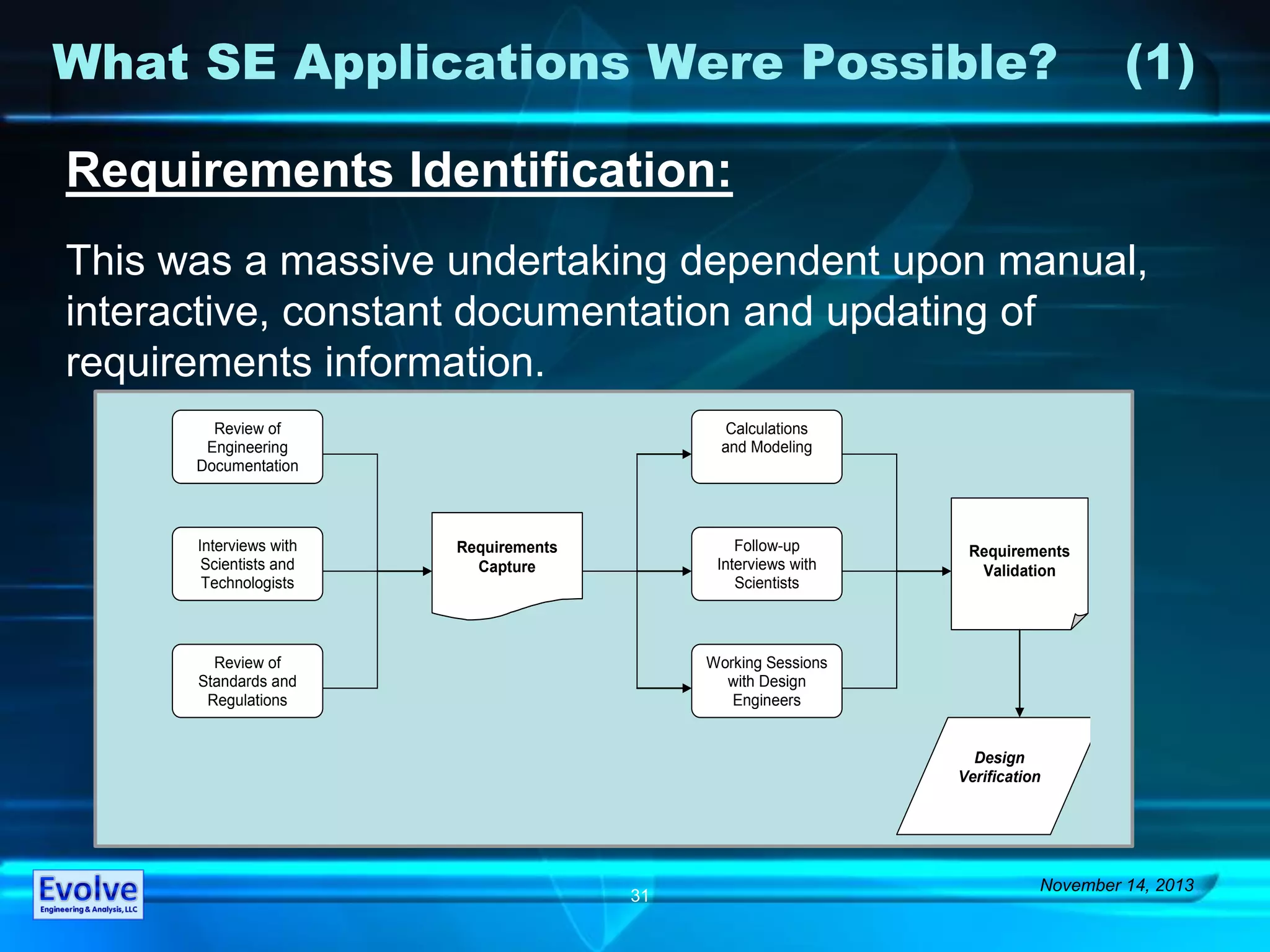
Requirements Identification:
This was a massive undertaking dependent upon manual,
interactive, constant documentation and updating of
requirements information.
Review of
Engineering
Documentation
Interviews with
Scientists and
Technologists
Calculations
and Modeling
Review of
Standards and
Regulations
Requirements
Capture
Follow-up
Interviews with
Scientists
Working Sessions
with Design
Engineers
Requirements
Validation
Design
Verification
What SE Applications Were Possible? (2)
November 14, 2013
32
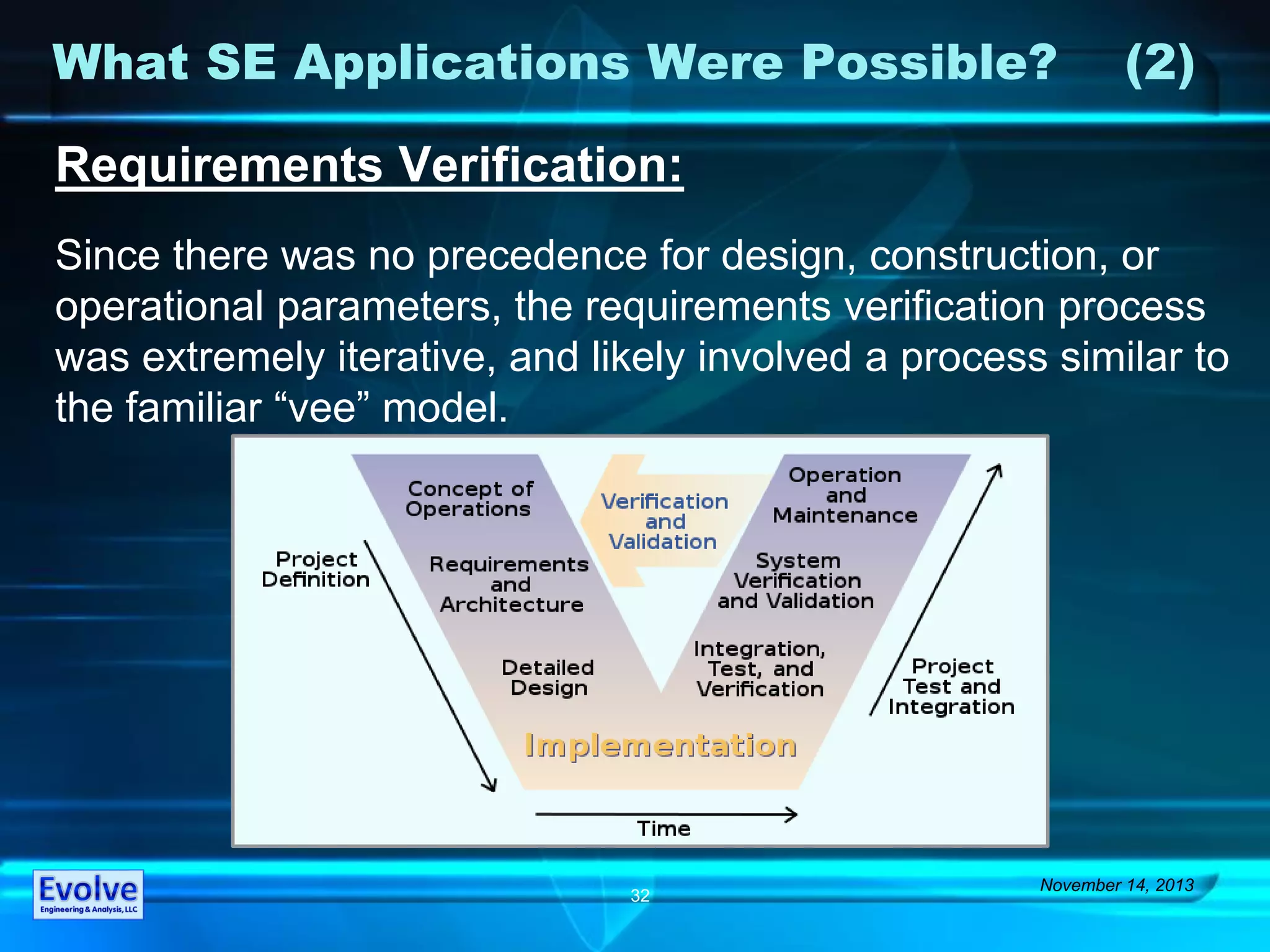
Requirements Verification:
Since there was no precedence for design, construction, or
operational parameters, the requirements verification process
was extremely iterative, and likely involved a process similar to
the familiar “vee” model.
What SE Applications Were Possible? (3)
November 14, 2013
33
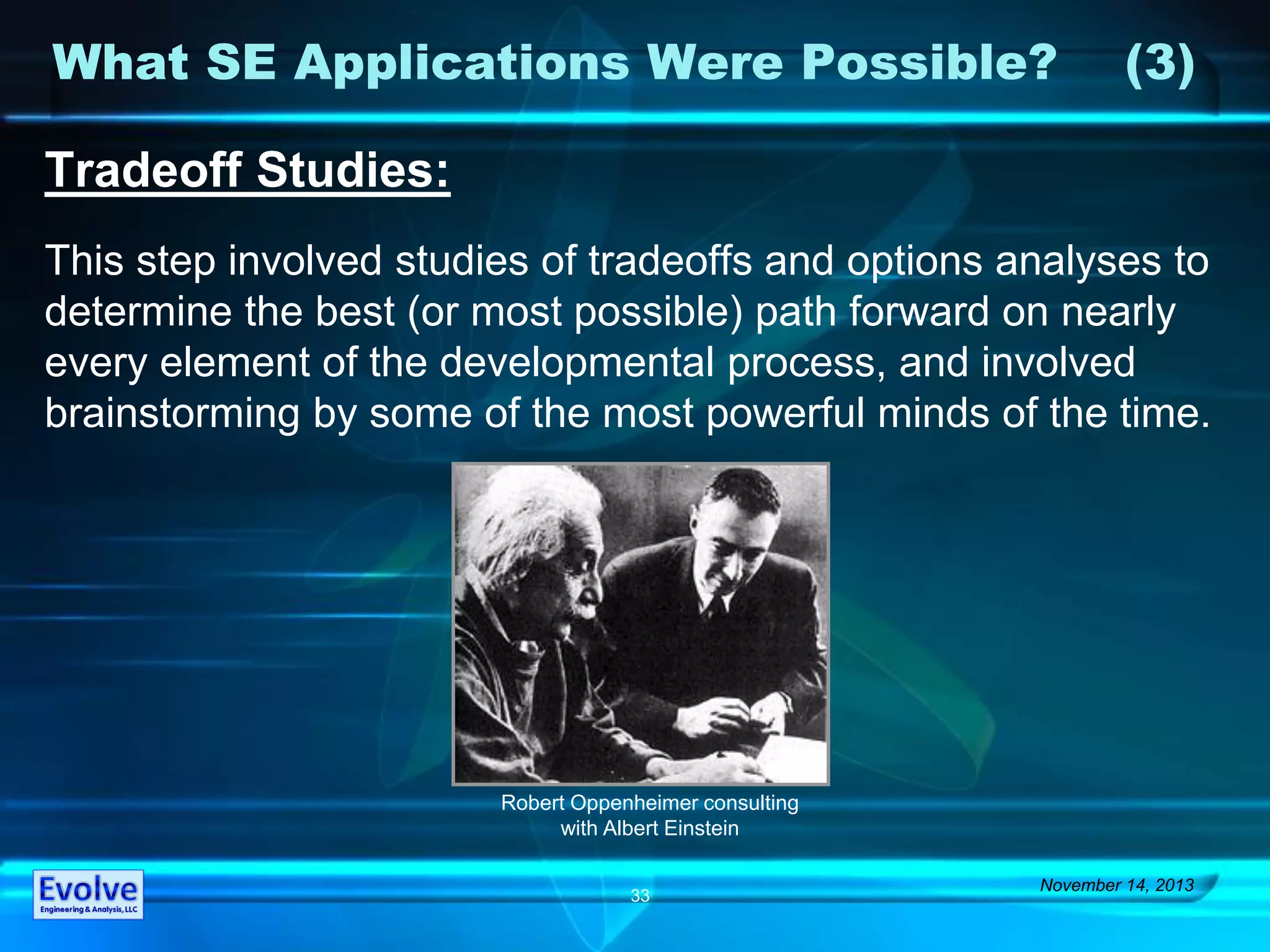
Tradeoff Studies:
This step involved studies of tradeoffs and options analyses to
determine the best (or most possible) path forward on nearly
every element of the developmental process, and involved
brainstorming by some of the most powerful minds of the time.
Robert Oppenheimer consulting
with Albert Einstein
What SE Applications Were Possible? (4)
November 14, 2013
34
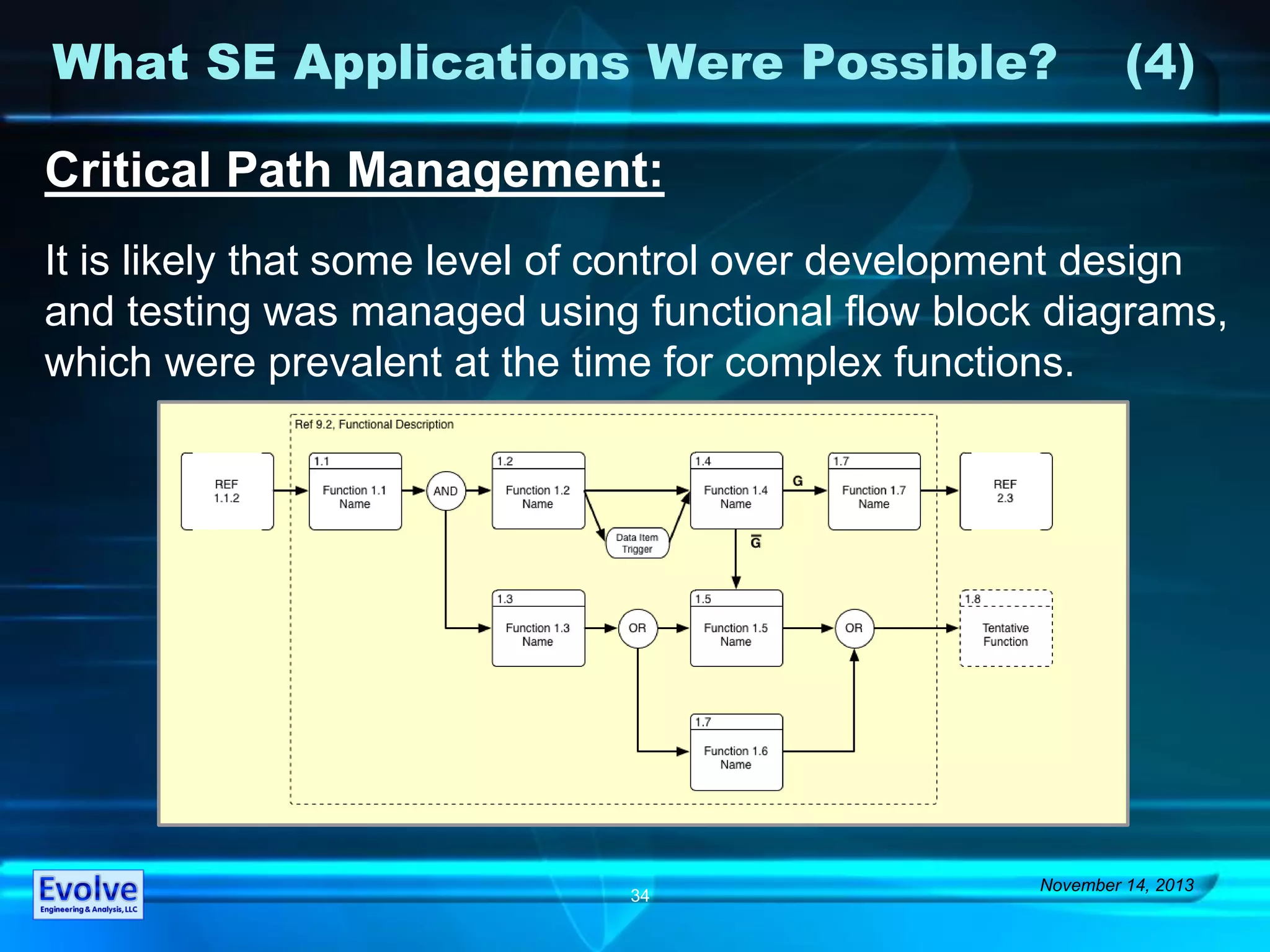
Critical Path Management:
It is likely that some level of control over development design
and testing was managed using functional flow block diagrams,
which were prevalent at the time for complex functions.
What SE Applications Were Possible? (5)
November 14, 2013
35
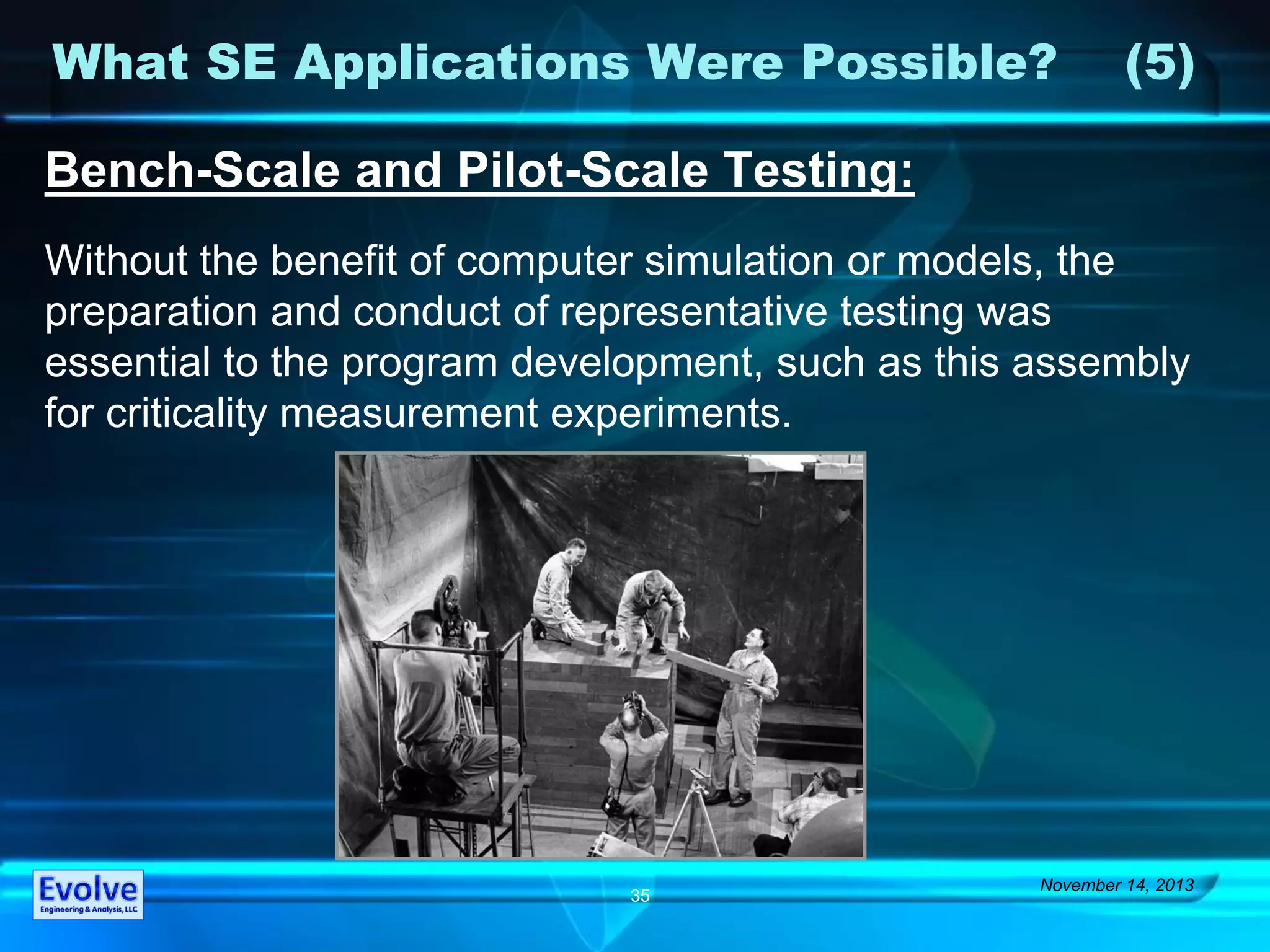
Bench-Scale and Pilot-Scale Testing:
Without the benefit of computer simulation or models, the
preparation and conduct of representative testing was
essential to the program development, such as this assembly
for criticality measurement experiments.
What SE Applications Were Possible? (6)
November 14, 2013
36
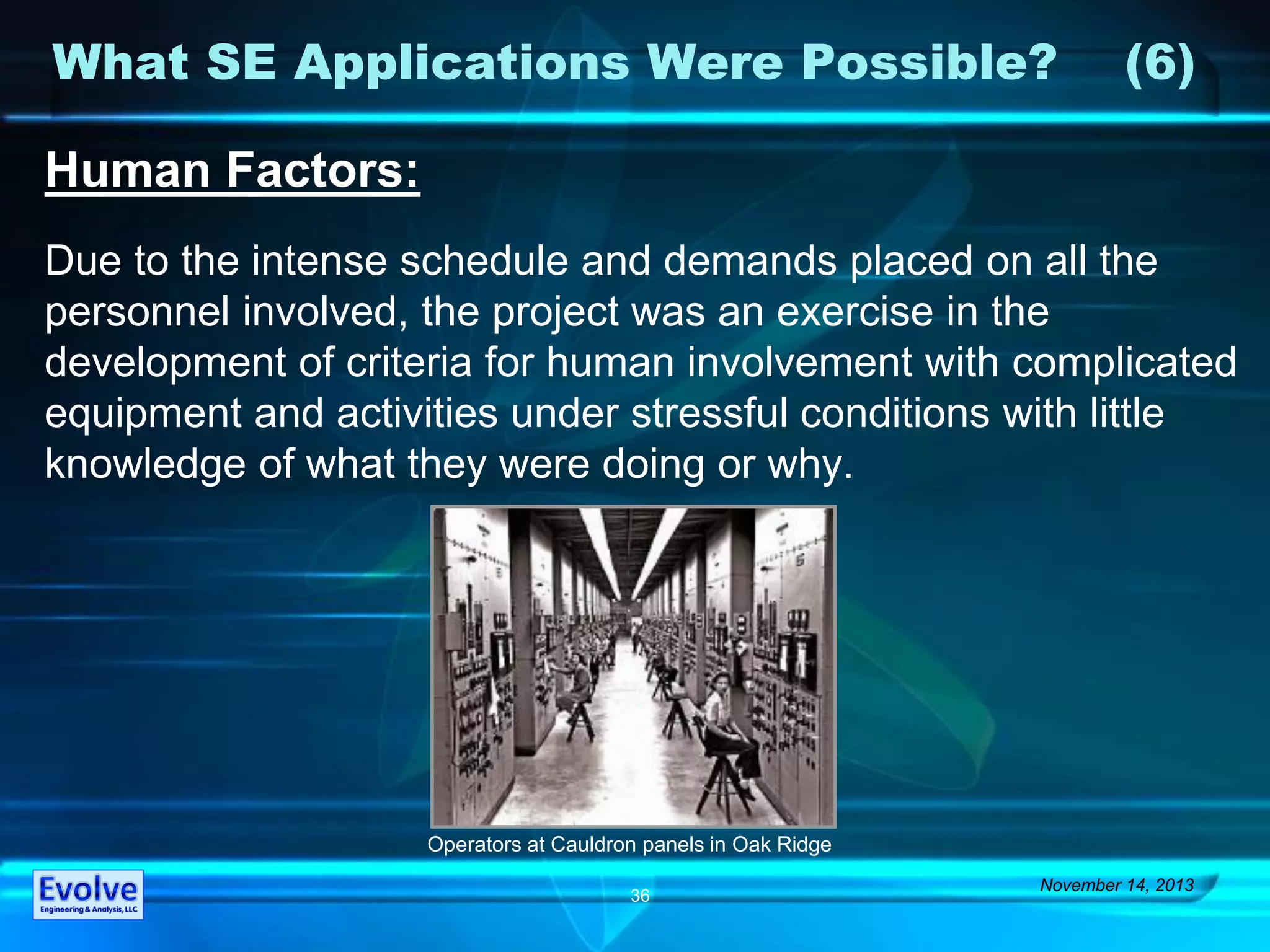
Human Factors:
Due to the intense schedule and demands placed on all the
personnel involved, the project was an exercise in the
development of criteria for human involvement with complicated
equipment and activities under stressful conditions with little
knowledge of what they were doing or why.
Operators at Cauldron panels in Oak Ridge
What SE Applications Were Possible? (7)
November 14, 2013
37
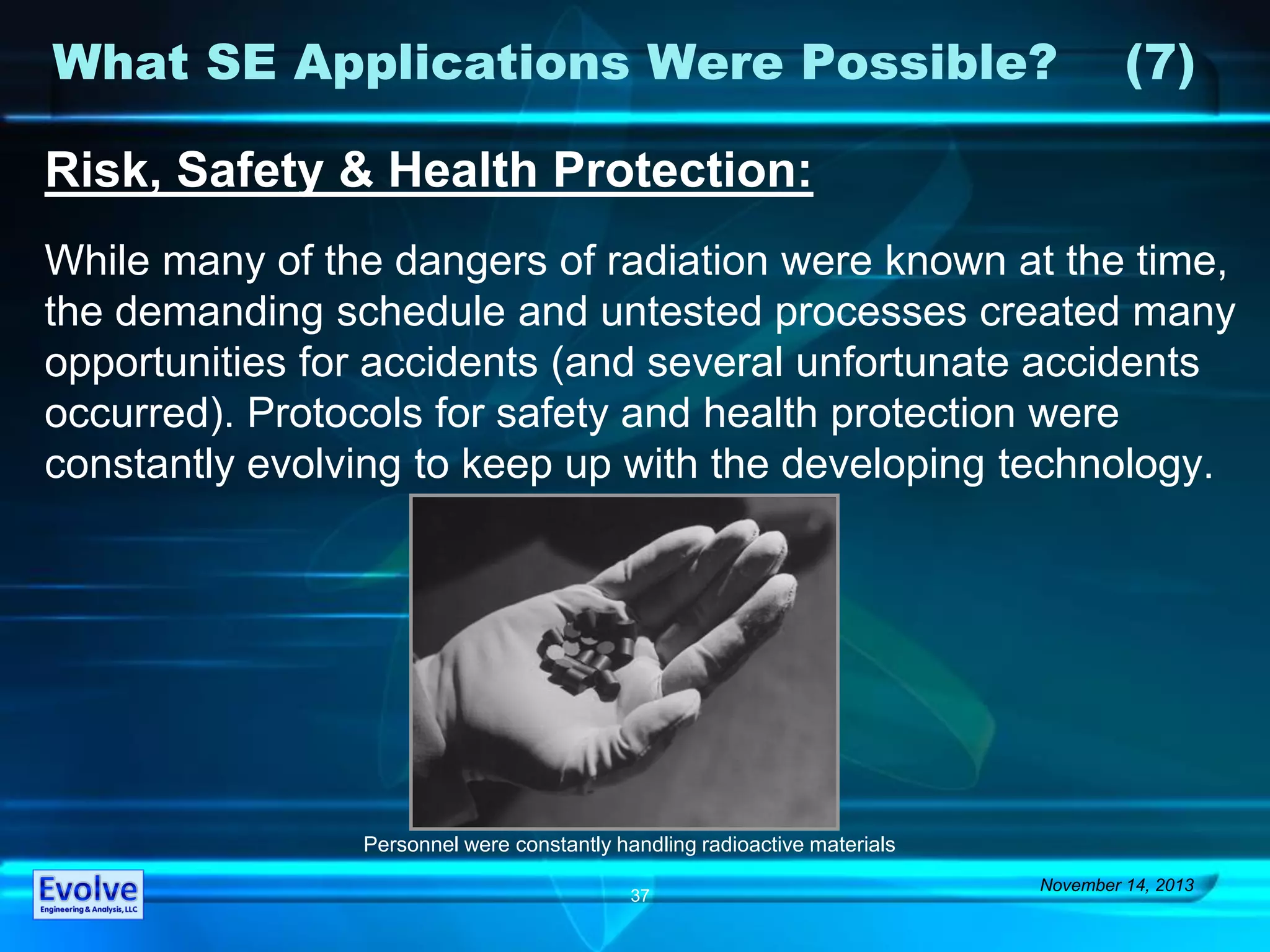
Risk, Safety & Health Protection:
While many of the dangers of radiation were known at the time,
the demanding schedule and untested processes created many
opportunities for accidents (and several unfortunate accidents
occurred). Protocols for safety and health protection were
constantly evolving to keep up with the developing technology.
Personnel were constantly handling radioactive materials
Modern Advances in
Nuclear Technology
and Benefits
from the
Manhattan Project
November 14, 2013
38
Applications of Nuclear Technology (1)
Nuclear Power/Energy:
• Generation of electrical power (used as a source of heat for
high temperature/pressure steam generation) in a [relatively]
non-polluting, environmentally benign manner.
• Virtually limitless supply of energy.
• New reactor designs incorporate passive or inherent safety
features which require no active controls or (human)
operational intervention to avoid accidents. [Note: with the
new reactor designs, the accidents at Three Mile Island
(1979), Chernobyl (1986), and Fukushima (2011) would not
have been possible].
November 14, 2013
39
Applications of Nuclear Technology (2)
Medicine and Medical Treatment:
• One-third of patients in U.S. hospitals receive treatment or
tests involving nuclear/radiological medicine.
• Radioactive materials reduce the need for some invasive
surgeries (e.g., prostate surgery).
• Radioisotopes are used to test drugs as part of the
development and licensing process.
• Radiation is used to sterilize surgical instruments and
medical supplies.
November 14, 2013
40
Applications of Nuclear Technology (3)
Industry:
• Radioisotope gauges help control thickness (e.g., paper and
sheet metal) and fluid levels in industrial processes.
• Radiation is used to toughen plastics and electronic
components.
• Radiography is used to check welds and identify defects in
castings.
• Radioisotopes are used to measure wear and corrosion and
trace fluid flow.
November 14, 2013
41
Applications of Nuclear Technology (4)
Consumer Products:
• Radiation is used to toughen rubber for tires.
• Photocopiers use small amounts of radiation to prevent
paper from sticking together.
• Cosmetics, hair products and contact lens solutions are
examples of products sterilized with radiation.
• Radioisotope gauges help control manufacturing processes
to improve quality control.
November 14, 2013
42
Applications of Nuclear Technology (5)
Scientific Research:
• Radioisotopes are essential to biomedical research on
programs for AIDS, cancer, and Alzheimer’s disease.
• Exploration of deep space would be impossible without
small nuclear powered generators.
• Radionuclides are necessary for genetic research such as
determining the structure of DNA.
• Human, animal and plant physiology measurements use
radioactive tracers.
• Radioisotope (carbon) dating techniques are common
applications for estimating the age of substances/materials.
November 14, 2013
43
Applications of Nuclear Technology (6)
Agriculture:
• Radioisotopes are used to reduce post-harvest losses by
suppressing sprouting.
• Radiation is used to preserve seeds and food products.
• Radioisotopes help researchers as they develop disease-
resistant plants and animals.
• Radioisotopes methods are used in hydrology to study and
predict water supply flow and water migration patterns.
• Radiation techniques in pest control reduce the use of toxic
chemicals.
November 14, 2013
44
Applications of Nuclear Technology (7)
Law Enforcement & Public Safety:
• Radiation is used to scan luggage and in detectors for
explosives.
• Radiological isotopes are utilized in smoke detectors to
detect ionized particles.
• Radiation is utilized to decontaminate mail suspected of
containing biological threats such as anthrax.
November 14, 2013
45
Applications of Nuclear Technology (8)
Environmental Protection:
• Radioisotope techniques are essential to climatology
investigations related to global warming.
• Solid wastes and sewage can be treated with radiological
techniques rather than using hazardous chemicals.
• Radioisotope techniques are used to study the chronology
of contaminated river and lake sediments.
• Radionuclides aid in the investigation of plant and sea
assimilation of greenhouse gases.
November 14, 2013
46
Evolve Engineering
& Analysis, LLC
November 14, 2013
47
Alpharetta, GA
770-888-0898
www.evolve-eng-llc.com
Evolve Engineering & Analysis, LLC
Nuclear Engineering & Safety Consulting
Example projects:
November 14, 2013
48
• Design Concept Development for the Nuclear Research Center (including
package nuclear reactor recommendations) for the planned King Abdullah
City for Atomic and Renewable Energy in Saudi Arabia.
• Nuclear Safety and Engineering Analysis Support for the Salt Waste
Processing Facility for liquid radioactive wastes being constructed at the
Dept. of Energy Savannah River Site.
• Nuclear Safety Analysis Support Site Radwaste Treatment Facility at the
Haiyang Nuclear Power Plant in Shandong Province, China.
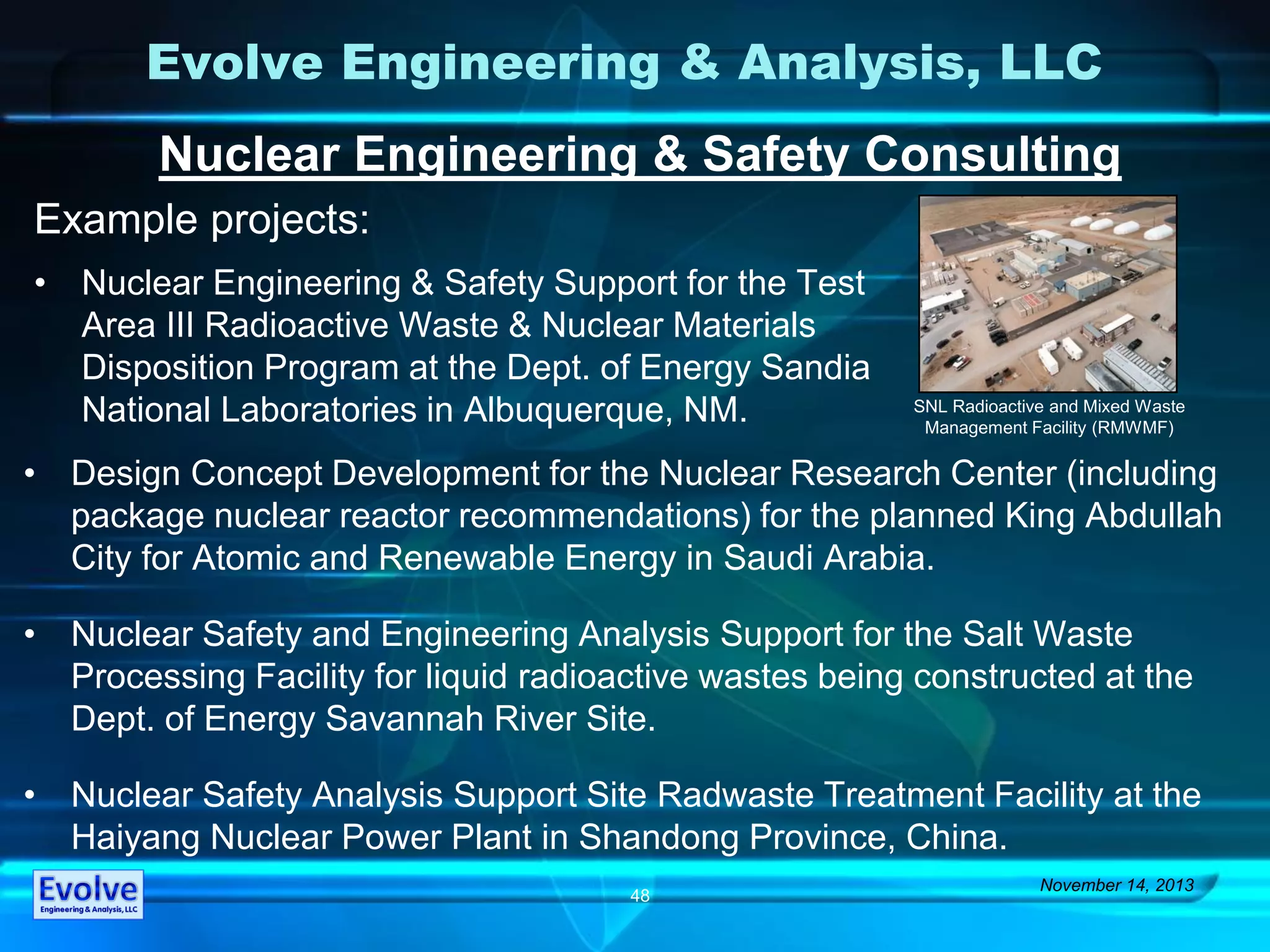
• Nuclear Engineering & Safety Support for the Test
Area III Radioactive Waste & Nuclear Materials
Disposition Program at the Dept. of Energy Sandia
National Laboratories in Albuquerque, NM. SNL Radioactive and Mixed Waste
Management Facility (RMWMF)
Evolve Engineering & Analysis, LLC
Systems Engineering & Integration Consulting
Example projects:
November 14, 2013
49
• Programmatic Overview and Evaluation of the sitewide integrated
Occupational Safety Program for the NASA Goddard Space Flight Center
in Greenbelt, MD.
• Systems Engineering Support Services for the Safety & Mission
Assurance Program at the NASA Johnson Space Center in Houston, TX.
• Systems Engineering Support for the Test and Evaluation Services and
Launch Augmentation Program in support of the U.S. Army Space and
Missile Defense Command in Huntsville, AL.
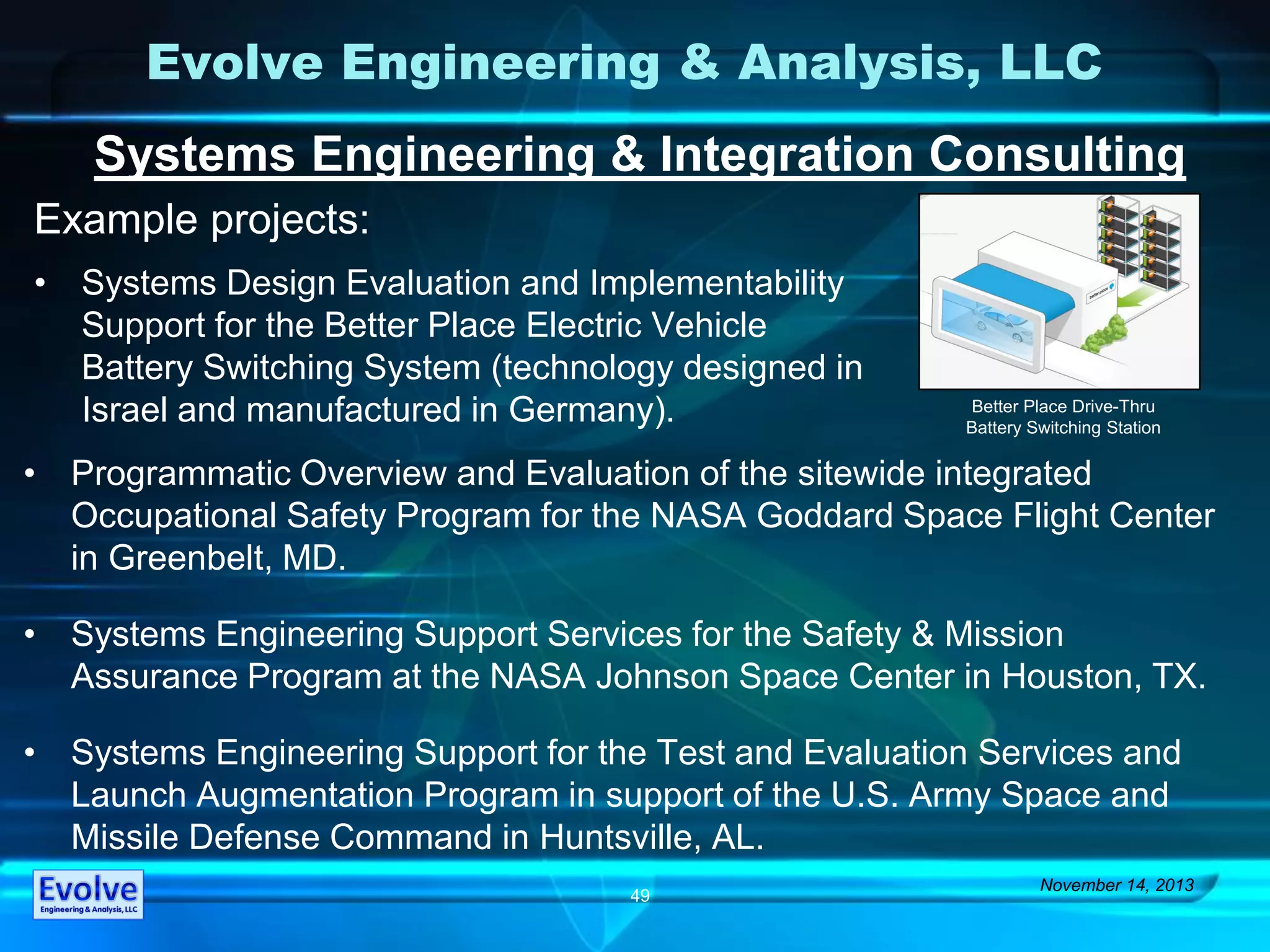
• Systems Design Evaluation and Implementability
Support for the Better Place Electric Vehicle
Battery Switching System (technology designed in
Israel and manufactured in Germany). Better Place Drive-Thru
Battery Switching Station
Evolve Engineering & Analysis, LLC
For Information Contact
Terry A. Kuykendall
Vice President
terry@evolve-eng-llc.com
678-371-0285
Darlene L. Kuykendall
President
darlene@evolve-eng-llc.com
770-298-0997
November 14, 2013
50

The Nuclear Origins of Systems Engineering

  • 1.
    1 The Nuclear Originsof Systems Engineering A Historical Overview of the Development of the Discipline of Systems Engineering and the Role of Nuclear Technology A Presentation for the International Council on Systems Engineering (INCOSE) Atlanta Chapter at Southern Polytechnic State University, Marietta, GA November 14th, 2013 Terry A. Kuykendall, PhD, CESCO, REM, CEP Vice President and Director of Engineering
  • 2.
    2 How did NuclearTechnology create Systems Engineering? Due to the recent release of classified documents, the truth can now be told! November 14, 2013
  • 3.
    November 14, 2013 3 Itstarted with mild-mannered engineer, working for the military on nuclear technology:
  • 4.
    4 Time is runningout: November 14, 2013
  • 5.
    5 The first SystemsEngineer is created! November 14, 2013
  • 6.
    November 14, 2013 6 The“more conventional” explanation for the origin of Systems Engineering and the involvement of Nuclear Technology
  • 7.
    November 14, 2013 7 TheBirth of Systems Engineering • Systems Engineering originated as an approach for complex engineering analysis; the term systems engineering can [supposedly] be traced back to Bell Telephone Laboratories in the 1940s. • The first large-scale systems engineering application was necessitated by the extremely complicated integration of science, theory, engineering, and applied technology that were brought together to support the Manhattan Project and the World War II nuclear weapons production program. • This was a large-scale, distributed (and fragmented) undertaking that was pressed for implementation under a highly aggressive schedule and under challenging conditions.
  • 8.
    November 14, 2013 8 TheBirth of Systems Engineering • Implementation required a systematic process for conducting and evaluating concurrent and parallel interdependent activities and assessing the requirements for realizing the ultimate goal (i.e., the first atomic bomb) as a whole composed discrete systems. • At this time of technology development, no real computer systems were available; all systems planning, integration and management were performed as manual functions.
  • 9.
  • 10.
    November 14, 2013 10 TheManhattan Project (1) • The Manhattan Project began modestly in 1939 with the original technology concepts, but grew to a national military-managed program that [at peak] employed more than 130,000 people. • The program cost nearly US $2 billion (about $26 billion in 2013 dollars). Over 90% of the cost was for building factories and producing the fissionable materials, with less than 10% for development and production of the weapons. • Research and production took place at more than 30 sites across the United States, the United Kingdom and Canada.
  • 11.
    November 14, 2013 11 TheManhattan Project (2) Key Manhattan Project Sites
  • 12.
    November 14, 2013 12 TheManhattan Project (3) • The actual weapons production program was approved by President Franklin Roosevelt on October 9th, 1941. • The initial Army command for the project was located and formed in New York and was designated the Manhattan Engineering District. • Roosevelt chose the Army to run the project rather than the Navy, since the Army had the most experience with management of large-scale construction projects. • He also agreed to coordinate the effort with that of the British, and corresponded with Winston Churchill.
  • 13.
    November 14, 2013 13 TheManhattan Project (4) The Manhattan Project Organization Chart (circa 1946)
  • 14.
    November 14, 2013 14 TheManhattan Project (5) • After initial delays and difficulties, the program was turned over to Colonel Leslie R. Groves (promoted to Brigadier General within six days, and later to Major General) to head the effort. • Groves was an engineer with impressive credentials, including building the Pentagon, and had strong administrative abilities. • Within two days Groves acted to obtain the Tennessee site preferred by scientists for production operations and secured a higher priority rating for project materials. • In addition, Groves moved the Manhattan Engineer District headquarters from New York to Washington, DC. Leslie R. Groves
  • 15.
    November 14, 2013 15 TheManhattan Project (6) The Manhattan Project Chain of Command Chart
  • 16.
    November 14, 2013 16 TheManhattan Project (7) • The technology aspects (e.g., fissionable materials research, reactor development, etc.) of the Manhattan Project were accomplished by an impressive team of eminent scientists and scholars from universities and research institutes. • Dr. Arthur Compton, an American physicist who won the Nobel Prize in Physics in 1927, was select to head the project’s Metallurgical Laboratory. He persuaded the theoretical physicist J. Robert Oppenheimer of the University of California - Berkeley to take over research into fast neutron calculations. Oppenheimer became the leader of research and development for the nuclear bomb. J. Robert Oppenheimer
  • 17.
    November 14, 2013 17 TheManhattan Project (8) Three sites were selected that performed the most critical elements of the weapon production processes: • A site in Oak Ridge, Tennessee, acquired in 1942, served as operations headquarters and was renamed the Clinton Engineer Works (CEW) in early 1943. • A site in Hanford, Washington, that in January 1943 was established as the Hanford Engineer Works (HEW), and was codenamed "Site W". • A site in Los Alamos, New Mexico, acquired on November 25, 1942, and due to secrecy was referred to as "Site Y" or "the Hill"
  • 18.
    November 14, 2013 18 TheManhattan Project (9) The Oak Ridge Site • On Sept. 29, 1942, the U.S. Under Secretary of War authorized the Corps of Engineers to compulsorily acquire 56,000 acres of land. An additional 3,000 acres was subsequently acquired, relocating a total of approx. 1000 families. • To allow personnel to concentrate on the production facilities, a residential community for 13,000 was designed and built in early 1943; the population of Oak Ridge soon expanded well beyond the initial plans, and peaked at 75,000 in May 1945.
  • 19.
    November 14, 2013 19 TheManhattan Project (10) The Los Alamos Site • On Nov. 25, 1942, the U.S. Under Secretary of War authorized the acquisition of 54,000 acres, all but 8,900 acres of which were already owned by the Federal Government, near Los Alamos, New Mexico. • During the Manhattan Project, Los Alamos hosted thousands of employees, including many Nobel Prize- winning scientists and eminent researchers. The location was a total secret -- its only mailing address was a post office box (P.O. Number 1663) in Santa Fe, New Mexico. Test Area 18 at Los Alamos
  • 20.
    November 14, 2013 20 TheManhattan Project (11) The Hanford Site • On Feb. 9, 1943, the U.S. Under Secretary of War authorized the acquisition of 40,000 acres of land in the Hanford area near Richland, a remote are of central Washington state. This required the relocation of approx. 1500 families. • In April 1943 facilities were constructed for an estimated 25,000 workers; by July 1944, 51,000 people were living in the construction camp. At its peak, the construction camp was the third most populous town in Washington state.
  • 21.
    November 14, 2013 21 TheManhattan Project (12) • Two types of atomic bombs were developed -- a relatively simple gun-type design and an implosion-based device. • The development of sufficient quantities of fissionable materials was necessary, and required difficult and complicated physical and chemical processes to separate and generate the required quantities of the specific targeted isotopes (i.e., uranium-235, plutonium-239). • Three methods were employed for uranium enrichment: electromagnetic, gaseous and thermal. • Most of this initial work was performed at the Oak Ridge site in Tennessee.
  • 22.
    November 14, 2013 22 TheManhattan Project (13) • In parallel with the work on uranium was an effort to produce plutonium. Reactors were constructed at Oak Ridge and Hanford, Washington, in which uranium was irradiated and transmuted into plutonium. The plutonium was then chemically separated from the uranium. • The gun-type design proved impractical to use with plutonium, so a more complex implosion-type weapon was developed in a concerted design and construction effort at the project's principal research and design laboratory in Los Alamos, New Mexico.
  • 23.
    November 14, 2013 23 TheManhattan Project (14) • The success of the Manhattan project was realized on July 16, 1945, when the Trinity nuclear test exploded with an energy equivalent of approx. 20 kilotons of TNT. Little Boy explodes over Hiroshima, Japan, 6 August 1945 (left); Fat Man explodes over Nagasaki, Japan, 9 August 1945 (right). The Trinity nuclear test at the bombing range near Alamogordo Army Airfield in south-central New Mexico • The Manhattan Project performed its ultimate goal when nuclear weapons were utilized in World War II.
  • 24.
    Oppenheimer in Retrospect •For his services as director of Los Alamos, Oppenheimer was awarded the Medal for Merit from President Harry S. Truman in 1946. Although he was pleased with his scientific accomplishments, on many occasions he expressed remorse for the devastation caused by the bomb. November 14, 2013 24 • He and many of the project staff were upset because they felt that the second bombing at Nagasaki was unnecessary. • He hand-delivered a letter to the Secretary of War expressing his revulsion and his wish to see nuclear weapons banned. • In a famous speech he quoted Hindu scripture with the phrase “Now I am become Death, the destroyer of worlds.” Oppenheimer and Groves after the Trinity Test
  • 25.
    Aftermath After the conclusionof the Manhattan Project, the rudimentary process of systems engineering remained as a largely academic exercise embraced only by the research and development community until the launching of the first satellite Sputnik by the U.S.S.R. on October 4, 1957. . . . . . But that’s a story for another day! November 14, 2013 25
  • 26.
    What Were The KeySystems Engineering Issues? November 14, 2013 26
  • 27.
    Systems Engineering Issues(1) • Coordination of concurrent, ongoing research & development efforts among national and international locations. • Managing the activities and input from military personnel, engineers and contractors, civilian taskforce, and researchers (mostly college professors and research scientists), all with different perspectives of their roles and differing objectives and directives. • Development of an architectural framework to manage the entire operations with real-time oversight of all functions. November 14, 2013 27
  • 28.
    Systems Engineering Issues(2) • Compliance with a stringent schedule, yet working on undeveloped technology and relying on scientific breakthroughs to meet milestones. • Configuration control of unique, state-of-the-art, and one-of- a-kind processes, equipment and operations. • Validation and verification of never-before seen, cutting- edge research experiments and test results. • Managing complex, high-hazard processes within uncertain safety parameters in a constantly high risk, dangerous environment. November 14, 2013 28
  • 29.
    Systems Engineering Issues(3) • Time delay for dissemination of information crucial for concurrent activities. • Addressing key actions, accomplishments and milestones that had dependencies reliant upon unknown completion parameters. • Evaluation of competing (and sometimes conflicting) technologies with respect to overall objectives. • Prototyping for scale-up of processes and technologies with computer modeling or simulation. November 14, 2013 29
  • 30.
    What Systems Engineering Practicesand Principles Could Be (or Were) Applied to the Manhattan Project? November 14, 2013 30
  • 31.
    What SE ApplicationsWere Possible? (1) November 14, 2013 31 Requirements Identification: This was a massive undertaking dependent upon manual, interactive, constant documentation and updating of requirements information. Review of Engineering Documentation Interviews with Scientists and Technologists Calculations and Modeling Review of Standards and Regulations Requirements Capture Follow-up Interviews with Scientists Working Sessions with Design Engineers Requirements Validation Design Verification
  • 32.
    What SE ApplicationsWere Possible? (2) November 14, 2013 32 Requirements Verification: Since there was no precedence for design, construction, or operational parameters, the requirements verification process was extremely iterative, and likely involved a process similar to the familiar “vee” model.
  • 33.
    What SE ApplicationsWere Possible? (3) November 14, 2013 33 Tradeoff Studies: This step involved studies of tradeoffs and options analyses to determine the best (or most possible) path forward on nearly every element of the developmental process, and involved brainstorming by some of the most powerful minds of the time. Robert Oppenheimer consulting with Albert Einstein
  • 34.
    What SE ApplicationsWere Possible? (4) November 14, 2013 34 Critical Path Management: It is likely that some level of control over development design and testing was managed using functional flow block diagrams, which were prevalent at the time for complex functions.
  • 35.
    What SE ApplicationsWere Possible? (5) November 14, 2013 35 Bench-Scale and Pilot-Scale Testing: Without the benefit of computer simulation or models, the preparation and conduct of representative testing was essential to the program development, such as this assembly for criticality measurement experiments.
  • 36.
    What SE ApplicationsWere Possible? (6) November 14, 2013 36 Human Factors: Due to the intense schedule and demands placed on all the personnel involved, the project was an exercise in the development of criteria for human involvement with complicated equipment and activities under stressful conditions with little knowledge of what they were doing or why. Operators at Cauldron panels in Oak Ridge
  • 37.
    What SE ApplicationsWere Possible? (7) November 14, 2013 37 Risk, Safety & Health Protection: While many of the dangers of radiation were known at the time, the demanding schedule and untested processes created many opportunities for accidents (and several unfortunate accidents occurred). Protocols for safety and health protection were constantly evolving to keep up with the developing technology. Personnel were constantly handling radioactive materials
  • 38.
    Modern Advances in NuclearTechnology and Benefits from the Manhattan Project November 14, 2013 38
  • 39.
    Applications of NuclearTechnology (1) Nuclear Power/Energy: • Generation of electrical power (used as a source of heat for high temperature/pressure steam generation) in a [relatively] non-polluting, environmentally benign manner. • Virtually limitless supply of energy. • New reactor designs incorporate passive or inherent safety features which require no active controls or (human) operational intervention to avoid accidents. [Note: with the new reactor designs, the accidents at Three Mile Island (1979), Chernobyl (1986), and Fukushima (2011) would not have been possible]. November 14, 2013 39
  • 40.
    Applications of NuclearTechnology (2) Medicine and Medical Treatment: • One-third of patients in U.S. hospitals receive treatment or tests involving nuclear/radiological medicine. • Radioactive materials reduce the need for some invasive surgeries (e.g., prostate surgery). • Radioisotopes are used to test drugs as part of the development and licensing process. • Radiation is used to sterilize surgical instruments and medical supplies. November 14, 2013 40
  • 41.
    Applications of NuclearTechnology (3) Industry: • Radioisotope gauges help control thickness (e.g., paper and sheet metal) and fluid levels in industrial processes. • Radiation is used to toughen plastics and electronic components. • Radiography is used to check welds and identify defects in castings. • Radioisotopes are used to measure wear and corrosion and trace fluid flow. November 14, 2013 41
  • 42.
    Applications of NuclearTechnology (4) Consumer Products: • Radiation is used to toughen rubber for tires. • Photocopiers use small amounts of radiation to prevent paper from sticking together. • Cosmetics, hair products and contact lens solutions are examples of products sterilized with radiation. • Radioisotope gauges help control manufacturing processes to improve quality control. November 14, 2013 42
  • 43.
    Applications of NuclearTechnology (5) Scientific Research: • Radioisotopes are essential to biomedical research on programs for AIDS, cancer, and Alzheimer’s disease. • Exploration of deep space would be impossible without small nuclear powered generators. • Radionuclides are necessary for genetic research such as determining the structure of DNA. • Human, animal and plant physiology measurements use radioactive tracers. • Radioisotope (carbon) dating techniques are common applications for estimating the age of substances/materials. November 14, 2013 43
  • 44.
    Applications of NuclearTechnology (6) Agriculture: • Radioisotopes are used to reduce post-harvest losses by suppressing sprouting. • Radiation is used to preserve seeds and food products. • Radioisotopes help researchers as they develop disease- resistant plants and animals. • Radioisotopes methods are used in hydrology to study and predict water supply flow and water migration patterns. • Radiation techniques in pest control reduce the use of toxic chemicals. November 14, 2013 44
  • 45.
    Applications of NuclearTechnology (7) Law Enforcement & Public Safety: • Radiation is used to scan luggage and in detectors for explosives. • Radiological isotopes are utilized in smoke detectors to detect ionized particles. • Radiation is utilized to decontaminate mail suspected of containing biological threats such as anthrax. November 14, 2013 45
  • 46.
    Applications of NuclearTechnology (8) Environmental Protection: • Radioisotope techniques are essential to climatology investigations related to global warming. • Solid wastes and sewage can be treated with radiological techniques rather than using hazardous chemicals. • Radioisotope techniques are used to study the chronology of contaminated river and lake sediments. • Radionuclides aid in the investigation of plant and sea assimilation of greenhouse gases. November 14, 2013 46
  • 47.
    Evolve Engineering & Analysis,LLC November 14, 2013 47 Alpharetta, GA 770-888-0898 www.evolve-eng-llc.com
  • 48.
    Evolve Engineering &Analysis, LLC Nuclear Engineering & Safety Consulting Example projects: November 14, 2013 48 • Design Concept Development for the Nuclear Research Center (including package nuclear reactor recommendations) for the planned King Abdullah City for Atomic and Renewable Energy in Saudi Arabia. • Nuclear Safety and Engineering Analysis Support for the Salt Waste Processing Facility for liquid radioactive wastes being constructed at the Dept. of Energy Savannah River Site. • Nuclear Safety Analysis Support Site Radwaste Treatment Facility at the Haiyang Nuclear Power Plant in Shandong Province, China. • Nuclear Engineering & Safety Support for the Test Area III Radioactive Waste & Nuclear Materials Disposition Program at the Dept. of Energy Sandia National Laboratories in Albuquerque, NM. SNL Radioactive and Mixed Waste Management Facility (RMWMF)
  • 49.
    Evolve Engineering &Analysis, LLC Systems Engineering & Integration Consulting Example projects: November 14, 2013 49 • Programmatic Overview and Evaluation of the sitewide integrated Occupational Safety Program for the NASA Goddard Space Flight Center in Greenbelt, MD. • Systems Engineering Support Services for the Safety & Mission Assurance Program at the NASA Johnson Space Center in Houston, TX. • Systems Engineering Support for the Test and Evaluation Services and Launch Augmentation Program in support of the U.S. Army Space and Missile Defense Command in Huntsville, AL. • Systems Design Evaluation and Implementability Support for the Better Place Electric Vehicle Battery Switching System (technology designed in Israel and manufactured in Germany). Better Place Drive-Thru Battery Switching Station
  • 50.
    Evolve Engineering &Analysis, LLC For Information Contact Terry A. Kuykendall Vice President terry@evolve-eng-llc.com 678-371-0285 Darlene L. Kuykendall President darlene@evolve-eng-llc.com 770-298-0997 November 14, 2013 50