MANHATTAN PROJECT
Development of atom bomb
Presented by
Alvin Saji
EEE
Objectives
 The purpose of this presentation is to inform
you regarding the development of the first
atomic bomb (Manhattan Project).
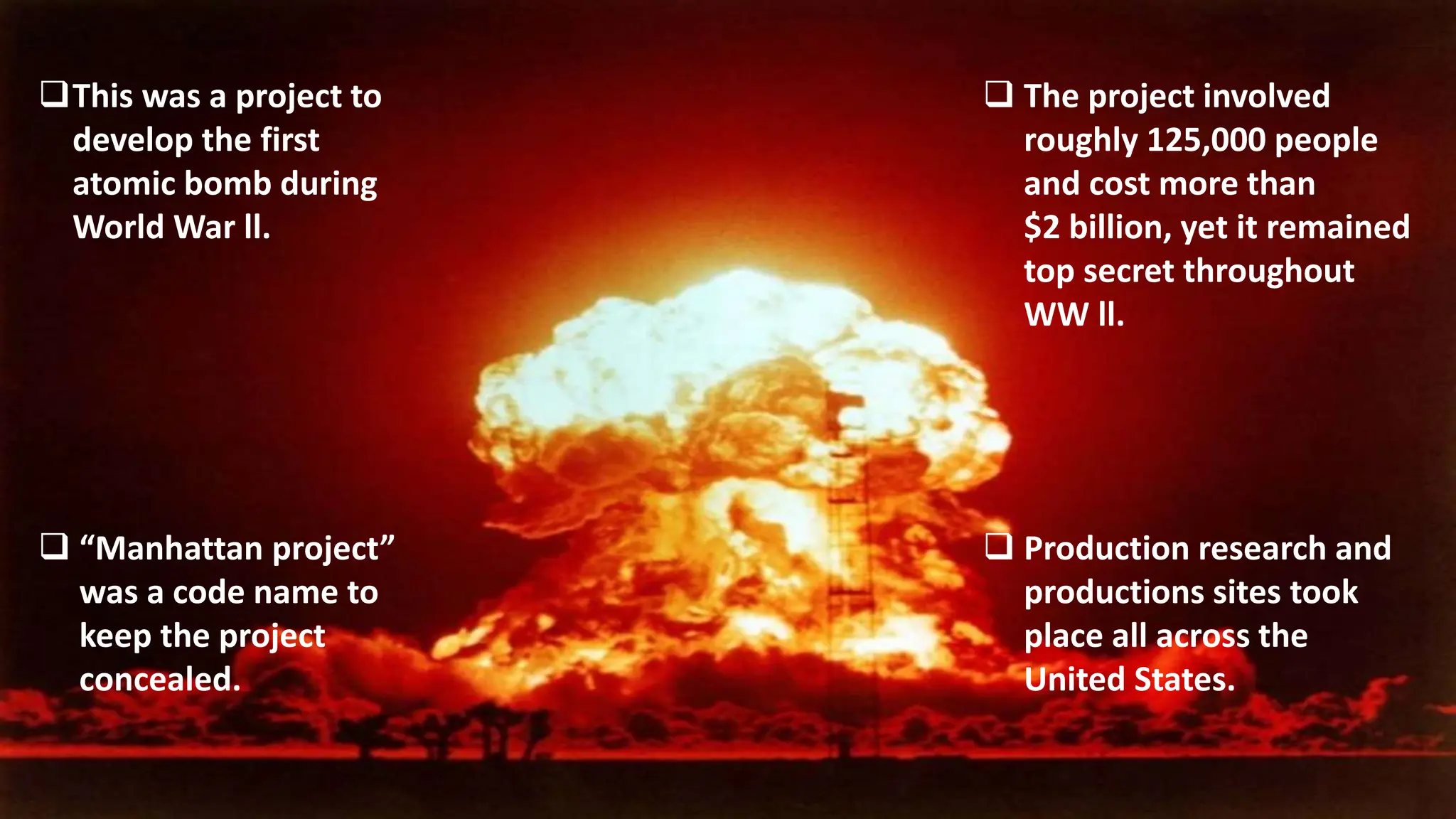
This was a project to
develop the first
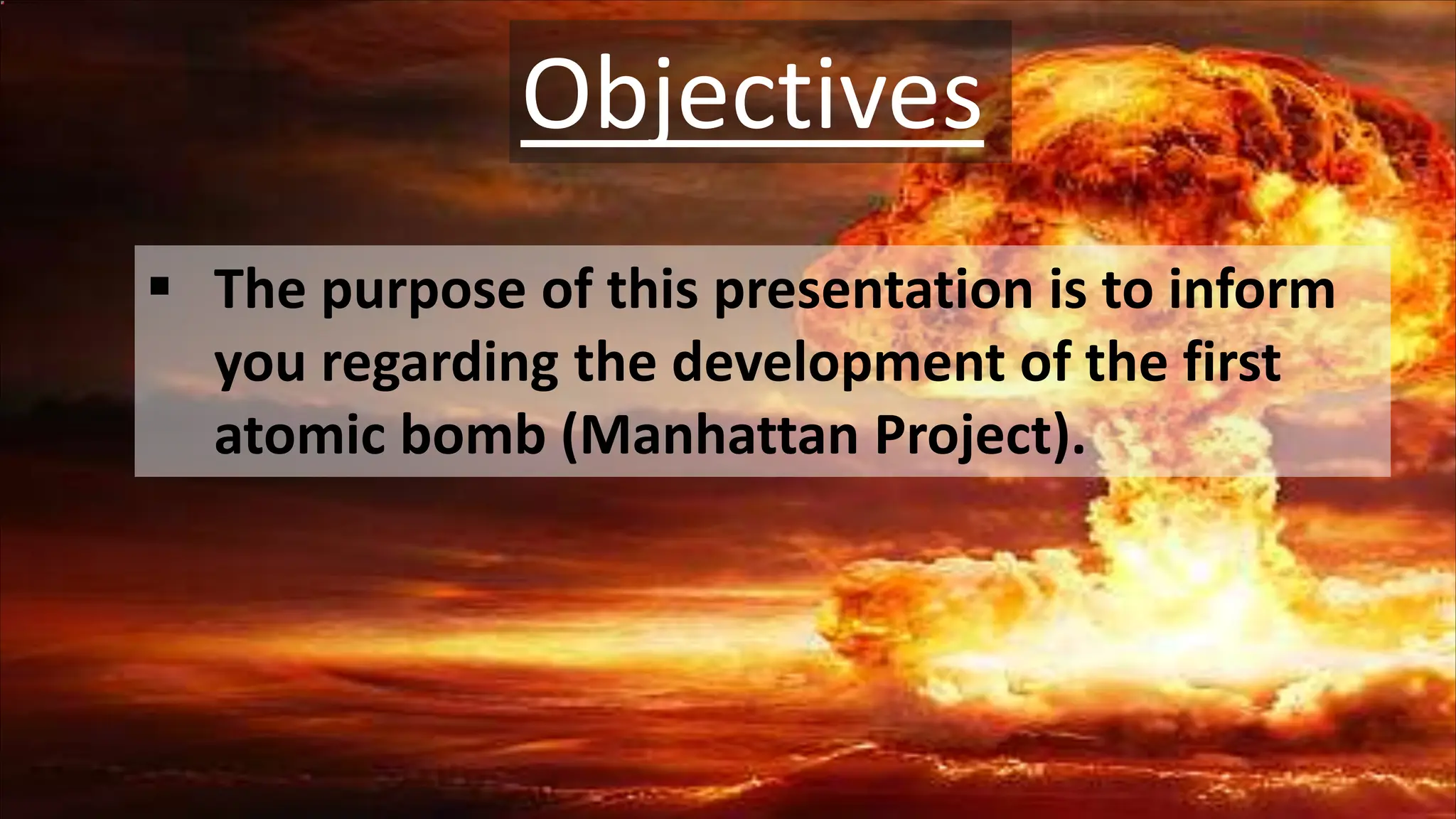
atomic bomb during
World War ll.
 “Manhattan project”
was a code name to
keep the project
concealed.
 The project involved
roughly 125,000 people
and cost more than
$2 billion, yet it remained
top secret throughout
WW ll.
 Production research and
productions sites took
place all across the
United States.
 In 1939, Albert Einstein wrote a
letter to President Franklin
Roosevelt warning that Germany
was secretly trying to develop an
atomic bomb and urged U.S to
do likewise.
 Roosevelt wrote Einstein
back informing him that he
immediately set up a
committee to begin atomic
research.
 He believed the United
States could not take the
risk of waiting and allowing
Hitler to have the power of
developing the first atomic
bomb.
o Research and
production sites of
the Manhattan
Project were located
all across the United
States.
o Laboratories and
manufacturing
facilities were
secretly constructed
just for project.
Main project research locations of the United States
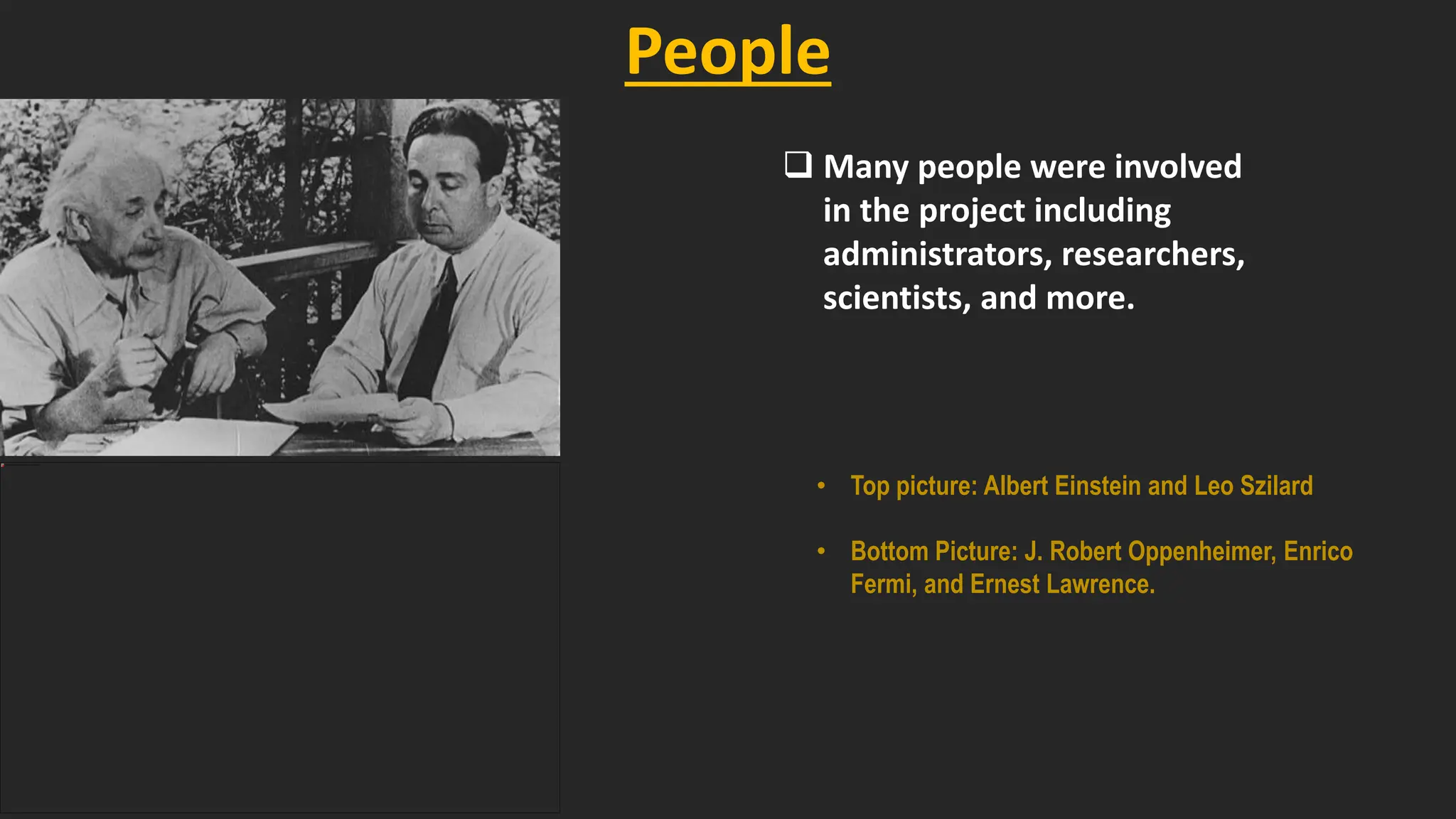
 Many people were involved
in the project including
administrators, researchers,
scientists, and more.
• Top picture: Albert Einstein and Leo Szilard
• Bottom Picture: J. Robert Oppenheimer, Enrico
Fermi, and Ernest Lawrence.
People
 J. Robert Oppenheimer
eagerly joined the project
at Lawrence's Radiation
Laboratory at Berkeley.
 In June 1942 he was
appointed as the
scientific director of the
Project.
 He managed over 3,000
people and is often
referred as the “father” of
the atomic bomb.
J. Robert Oppenheimer
 Born in Italy, Fermi
created a nuclear fission
chain reaction, which
was, critical for creating
the atomic bomb.
 In 1944, he joined the
Manhattan Project
and was the overseer of
the scientists.
Enrico Fermi
Ernest Lawrence
 During WWII, Lawrence
was in charge of the
electromagnetic
separation work at Oak
Ridge which provided
uranium 235 for the
atomic bomb.
 He was known as the
“Atomic Smasher” and
the man who “held the
key” to atomic energy.
 The world's first nuclear explosion
occurred on July 16, 1945, when a
plutonium implosion device was
tested at a site located 210 miles
south of Los Alamos, New Mexico, on
the plains of the Alamogordo
Bombing Range.
 A ball of fire rose rapidly, followed by
a mushroom cloud extending to
40,000 feet.
 The bomb generated an explosive
power equivalent to 25,000 tons of
TNT.
Trinity Test
Colourised video of Trinity test
 The Trinity Test resulted in
great success.
 This was the world’s first
ever atomic explosion.
 After President Harry
Truman received the word,
he knew the atomic bomb
would create a great
advantage in World War II.
Success
Truman in Potsdam, Germany after receiving word that the Trinity Test was a
success.
 It was finally decided to use the atomic bomb in the war and two more
atomic bombs were created by the project.
 The uranium “Little Boy” bomb was dropped on Hiroshima on August 6,
1945.
 ‘The plutonium “Fat Boy” bomb was dropped on Nagasaki on August 9,
1945.
Use of Atomic Bombs in WWII
Dropping the atom bomb “Little Boy” in Hiroshima
(Video clipping from BBC documentary)
CONCLUSION
 President Harry Truman’s decision to drop
the atomic bomb is one of the most
controversial issues in American history.
 The creation of the atomic bomb helped to
bring an end to World War II.
MANHATTAN PROJECT.pptx

MANHATTAN PROJECT.pptx

  • 1.
    MANHATTAN PROJECT Development ofatom bomb Presented by Alvin Saji EEE
  • 2.
    Objectives  The purposeof this presentation is to inform you regarding the development of the first atomic bomb (Manhattan Project).
  • 3.
    This was aproject to develop the first atomic bomb during World War ll.  “Manhattan project” was a code name to keep the project concealed.  The project involved roughly 125,000 people and cost more than $2 billion, yet it remained top secret throughout WW ll.  Production research and productions sites took place all across the United States.
  • 4.
     In 1939,Albert Einstein wrote a letter to President Franklin Roosevelt warning that Germany was secretly trying to develop an atomic bomb and urged U.S to do likewise.
  • 6.
     Roosevelt wroteEinstein back informing him that he immediately set up a committee to begin atomic research.  He believed the United States could not take the risk of waiting and allowing Hitler to have the power of developing the first atomic bomb.
  • 7.
    o Research and productionsites of the Manhattan Project were located all across the United States. o Laboratories and manufacturing facilities were secretly constructed just for project. Main project research locations of the United States
  • 8.
     Many peoplewere involved in the project including administrators, researchers, scientists, and more. • Top picture: Albert Einstein and Leo Szilard • Bottom Picture: J. Robert Oppenheimer, Enrico Fermi, and Ernest Lawrence. People
  • 9.
     J. RobertOppenheimer eagerly joined the project at Lawrence's Radiation Laboratory at Berkeley.  In June 1942 he was appointed as the scientific director of the Project.  He managed over 3,000 people and is often referred as the “father” of the atomic bomb. J. Robert Oppenheimer
  • 11.
     Born inItaly, Fermi created a nuclear fission chain reaction, which was, critical for creating the atomic bomb.  In 1944, he joined the Manhattan Project and was the overseer of the scientists. Enrico Fermi
  • 12.
    Ernest Lawrence  DuringWWII, Lawrence was in charge of the electromagnetic separation work at Oak Ridge which provided uranium 235 for the atomic bomb.  He was known as the “Atomic Smasher” and the man who “held the key” to atomic energy.
  • 13.
     The world'sfirst nuclear explosion occurred on July 16, 1945, when a plutonium implosion device was tested at a site located 210 miles south of Los Alamos, New Mexico, on the plains of the Alamogordo Bombing Range.  A ball of fire rose rapidly, followed by a mushroom cloud extending to 40,000 feet.  The bomb generated an explosive power equivalent to 25,000 tons of TNT. Trinity Test
  • 14.
    Colourised video ofTrinity test
  • 15.
     The TrinityTest resulted in great success.  This was the world’s first ever atomic explosion.  After President Harry Truman received the word, he knew the atomic bomb would create a great advantage in World War II. Success Truman in Potsdam, Germany after receiving word that the Trinity Test was a success.
  • 16.
     It wasfinally decided to use the atomic bomb in the war and two more atomic bombs were created by the project.  The uranium “Little Boy” bomb was dropped on Hiroshima on August 6, 1945.  ‘The plutonium “Fat Boy” bomb was dropped on Nagasaki on August 9, 1945. Use of Atomic Bombs in WWII
  • 17.
    Dropping the atombomb “Little Boy” in Hiroshima (Video clipping from BBC documentary)
  • 19.
    CONCLUSION  President HarryTruman’s decision to drop the atomic bomb is one of the most controversial issues in American history.  The creation of the atomic bomb helped to bring an end to World War II.