Everything on…
the Mongolian Interlude

 By Sebastian Kobler 5T

 Chinese History
Background to the Mongolian
Interlude
 Before we can understand the Mongolian Interlude
 properly, we must first learn a bit about the Song
 Dynasty.

 The Song Dynasty ruled China from 960 to 1279 AD.

 The Song Dynasty eventually fell to the Mongols, led
 by Kublai Khan, in 1279.

 After the Mongols took over, we call this period of
 time the Mongolian Interlude.
Yuan Dynasty
 Kublai Khan ruled the
 Yuan Dynasty of China.

 He soon realised that he
 needed to focus on China,
 rather than Mongolia, so
 China became his main
 base.

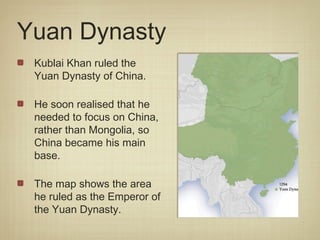
 The map shows the area
 he ruled as the Emperor of
 the Yuan Dynasty.
Life Under the Mongols
 Ethnic Chinese people (called Han) were discriminated
 against by the Mongols.

 Mongols were forbidden from associating with the Han.

 Furthermore, the Han were forbidden to learn Mongolian.

 Also, intermarriage was forbidden.

 Finally, Mongolian rituals and celebrations were retained
 over the Han celebrations and rituals.
Life under the Mongols
 Despite this, Kublai was still
 fascinated by the culture of
 the Han.

 He adopted much of their
 culture into his court.

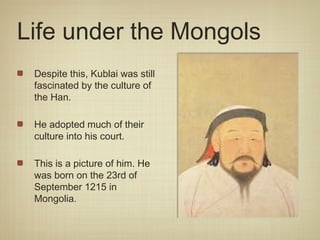
 This is a picture of him. He
 was born on the 23rd of
 September 1215 in
 Mongolia.
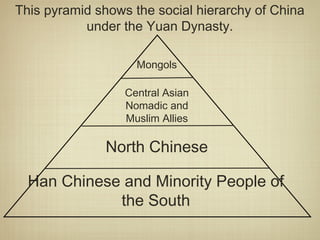
This pyramid shows the social hierarchy of China
           under the Yuan Dynasty.

                    Mongols

                  Central Asian
                  Nomadic and
                  Muslim Allies

               North Chinese

  Han Chinese and Minority People of
             the South
Rights of Women

 Mongolian women could own their own property, had
 control in their household, could move around as they
 wished and some even went to war and hunted.

 The wife of Kublai Khan promoted Buddhism, respected
 Han culture and ensured that the Song imperial family
 were looked after by giving them funds and a palace.
Mongolian Influence on Chinese
Advancement

  The Mongols gave the Han to more advanced
  instruments to use for astronomy.

  They translated 36 volumes on Muslim medicine into
  Chinese.

  The Mongolians also improved the accuracy of maps of
  China.
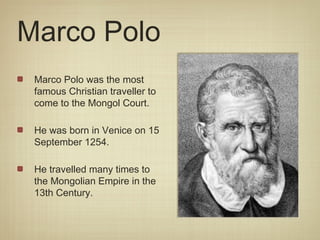
Marco Polo
 Marco Polo was the most
 famous Christian traveller to
 come to the Mongol Court.

 He was born in Venice on 15
 September 1254.

 He travelled many times to
 the Mongolian Empire in the
 13th Century.
For 17 years, he worked as one of Kublai
Khan’s administrators.

He wrote accounts of Kublai Khan’s court
and his empire.

European interest of Asia increased to to his
writing and how he described the place he
visited.

He helped inspire people like Christopher
Columbus to try and find ways of getting to
Asia by ship.
Opinions of the Mongols


 On one hand, the Han scholars viewed the Mongols as
 barbarians and were hostile towards them.

 On the other hand, Han merchants benefited from
 Mongolian rule because the Mongols improved transport
 and expanded the use and supply of paper money.
Fall of the Yuan Dynasty

 The discrimination of Han Chinese by the Mongols
 stirred resentment and rebellion.

 However, the flooding of the Yellow River also
 contributed to the fall of the Yuan Dynasty.

 A number of Han Chinese groups revolted and
 eventually, the Yuan Dynasty came crumbling down, to
 be replaced by the Ming Dynasty.

The Mongolian Interlude

  • 1.
    Everything on… the MongolianInterlude By Sebastian Kobler 5T Chinese History
  • 2.
    Background to theMongolian Interlude Before we can understand the Mongolian Interlude properly, we must first learn a bit about the Song Dynasty. The Song Dynasty ruled China from 960 to 1279 AD. The Song Dynasty eventually fell to the Mongols, led by Kublai Khan, in 1279. After the Mongols took over, we call this period of time the Mongolian Interlude.
  • 3.
    Yuan Dynasty KublaiKhan ruled the Yuan Dynasty of China. He soon realised that he needed to focus on China, rather than Mongolia, so China became his main base. The map shows the area he ruled as the Emperor of the Yuan Dynasty.
  • 4.
    Life Under theMongols Ethnic Chinese people (called Han) were discriminated against by the Mongols. Mongols were forbidden from associating with the Han. Furthermore, the Han were forbidden to learn Mongolian. Also, intermarriage was forbidden. Finally, Mongolian rituals and celebrations were retained over the Han celebrations and rituals.
  • 5.
    Life under theMongols Despite this, Kublai was still fascinated by the culture of the Han. He adopted much of their culture into his court. This is a picture of him. He was born on the 23rd of September 1215 in Mongolia.
  • 6.
    This pyramid showsthe social hierarchy of China under the Yuan Dynasty. Mongols Central Asian Nomadic and Muslim Allies North Chinese Han Chinese and Minority People of the South
  • 7.
    Rights of Women Mongolian women could own their own property, had control in their household, could move around as they wished and some even went to war and hunted. The wife of Kublai Khan promoted Buddhism, respected Han culture and ensured that the Song imperial family were looked after by giving them funds and a palace.
  • 8.
    Mongolian Influence onChinese Advancement The Mongols gave the Han to more advanced instruments to use for astronomy. They translated 36 volumes on Muslim medicine into Chinese. The Mongolians also improved the accuracy of maps of China.
  • 9.
    Marco Polo MarcoPolo was the most famous Christian traveller to come to the Mongol Court. He was born in Venice on 15 September 1254. He travelled many times to the Mongolian Empire in the 13th Century.
  • 10.
    For 17 years,he worked as one of Kublai Khan’s administrators. He wrote accounts of Kublai Khan’s court and his empire. European interest of Asia increased to to his writing and how he described the place he visited. He helped inspire people like Christopher Columbus to try and find ways of getting to Asia by ship.
  • 11.
    Opinions of theMongols On one hand, the Han scholars viewed the Mongols as barbarians and were hostile towards them. On the other hand, Han merchants benefited from Mongolian rule because the Mongols improved transport and expanded the use and supply of paper money.
  • 12.
    Fall of theYuan Dynasty The discrimination of Han Chinese by the Mongols stirred resentment and rebellion. However, the flooding of the Yellow River also contributed to the fall of the Yuan Dynasty. A number of Han Chinese groups revolted and eventually, the Yuan Dynasty came crumbling down, to be replaced by the Ming Dynasty.