Lift System
GROUP 9
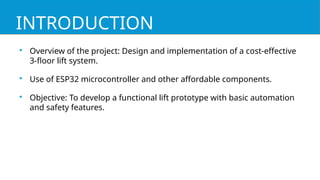
INTRODUCTION

Overview of the project: Design and implementation of a cost-effective
3-floor lift system.

Use of ESP32 microcontroller and other affordable components.

Objective: To develop a functional lift prototype with basic automation
and safety features.
Group Members

Gitau Francis

Dominic Kipkirui

Eric Kisendi

Bencliff Oniala

Shadrack Achola
System Components

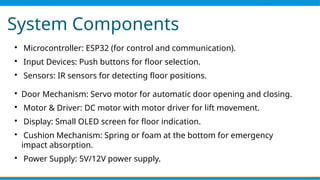
Microcontroller: ESP32 (for control and communication).

Input Devices: Push buttons for floor selection.

Sensors: IR sensors for detecting floor positions.

Door Mechanism: Servo motor for automatic door opening and closing.

Motor & Driver: DC motor with motor driver for lift movement.

Display: Small OLED screen for floor indication.

Cushion Mechanism: Spring or foam at the bottom for emergency
impact absorption.

Power Supply: 5V/12V power supply.
Structural Design

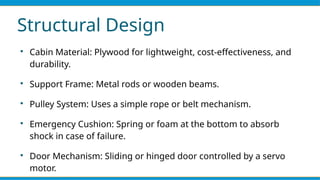
Cabin Material: Plywood for lightweight, cost-effectiveness, and
durability.

Support Frame: Metal rods or wooden beams.

Pulley System: Uses a simple rope or belt mechanism.

Emergency Cushion: Spring or foam at the bottom to absorb
shock in case of failure.

Door Mechanism: Sliding or hinged door controlled by a servo
motor.
Working Principle

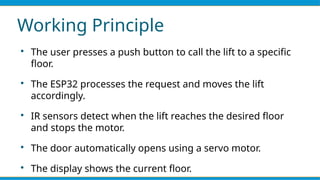
The user presses a push button to call the lift to a specific
floor.

The ESP32 processes the request and moves the lift
accordingly.

IR sensors detect when the lift reaches the desired floor
and stops the motor.

The door automatically opens using a servo motor.

The display shows the current floor.
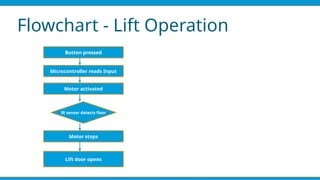
Flowchart - Lift Operation
Button pressed
Motor stops
Microcontroller reads Input
Motor activated
Lift door opens
IR sensor detects floor
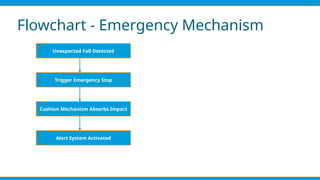
Flowchart - Emergency Mechanism
Unexpected Fall Detected
Trigger Emergency Stop
Cushion Mechanism Absorbs Impact
Alert System Activated
Circuit Diagram

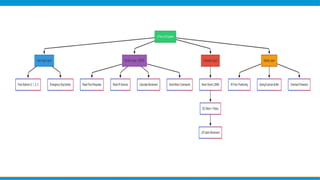
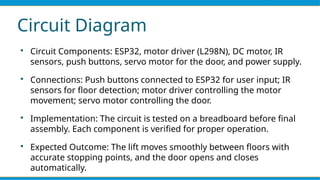
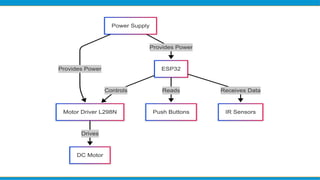
Circuit Components: ESP32, motor driver (L298N), DC motor, IR
sensors, push buttons, servo motor for the door, and power supply.

Connections: Push buttons connected to ESP32 for user input; IR
sensors for floor detection; motor driver controlling the motor
movement; servo motor controlling the door.

Implementation: The circuit is tested on a breadboard before final
assembly. Each component is verified for proper operation.

Expected Outcome: The lift moves smoothly between floors with
accurate stopping points, and the door opens and closes
automatically.
Software Development & Testing

Programming the ESP32: Writing and testing firmware for motor control, sensor
handling, and door operation.

Simulation & Debugging: Using simulation tools to refine control logic.

Testing Steps:

Testing motor responsiveness to button presses.

Verifying IR sensor accuracy in floor detection.

Ensuring the emergency mechanism works as expected.

Checking servo motor functionality for door operation.

Observations: Identifying response times, motor movement efficiency, door
operation timing, and safety features.

The lift system project for students in electrical engineering

  • 1.
  • 2.
    INTRODUCTION  Overview of theproject: Design and implementation of a cost-effective 3-floor lift system.  Use of ESP32 microcontroller and other affordable components.  Objective: To develop a functional lift prototype with basic automation and safety features.
  • 3.
    Group Members  Gitau Francis  DominicKipkirui  Eric Kisendi  Bencliff Oniala  Shadrack Achola
  • 4.
    System Components  Microcontroller: ESP32(for control and communication).  Input Devices: Push buttons for floor selection.  Sensors: IR sensors for detecting floor positions.  Door Mechanism: Servo motor for automatic door opening and closing.  Motor & Driver: DC motor with motor driver for lift movement.  Display: Small OLED screen for floor indication.  Cushion Mechanism: Spring or foam at the bottom for emergency impact absorption.  Power Supply: 5V/12V power supply.
  • 5.
    Structural Design  Cabin Material:Plywood for lightweight, cost-effectiveness, and durability.  Support Frame: Metal rods or wooden beams.  Pulley System: Uses a simple rope or belt mechanism.  Emergency Cushion: Spring or foam at the bottom to absorb shock in case of failure.  Door Mechanism: Sliding or hinged door controlled by a servo motor.
  • 7.
    Working Principle  The userpresses a push button to call the lift to a specific floor.  The ESP32 processes the request and moves the lift accordingly.  IR sensors detect when the lift reaches the desired floor and stops the motor.  The door automatically opens using a servo motor.  The display shows the current floor.
  • 8.
    Flowchart - LiftOperation Button pressed Motor stops Microcontroller reads Input Motor activated Lift door opens IR sensor detects floor
  • 9.
    Flowchart - EmergencyMechanism Unexpected Fall Detected Trigger Emergency Stop Cushion Mechanism Absorbs Impact Alert System Activated
  • 10.
    Circuit Diagram  Circuit Components:ESP32, motor driver (L298N), DC motor, IR sensors, push buttons, servo motor for the door, and power supply.  Connections: Push buttons connected to ESP32 for user input; IR sensors for floor detection; motor driver controlling the motor movement; servo motor controlling the door.  Implementation: The circuit is tested on a breadboard before final assembly. Each component is verified for proper operation.  Expected Outcome: The lift moves smoothly between floors with accurate stopping points, and the door opens and closes automatically.
  • 12.
    Software Development &Testing  Programming the ESP32: Writing and testing firmware for motor control, sensor handling, and door operation.  Simulation & Debugging: Using simulation tools to refine control logic.  Testing Steps:  Testing motor responsiveness to button presses.  Verifying IR sensor accuracy in floor detection.  Ensuring the emergency mechanism works as expected.  Checking servo motor functionality for door operation.  Observations: Identifying response times, motor movement efficiency, door operation timing, and safety features.