The Hydrologic Cycle – Grade 11
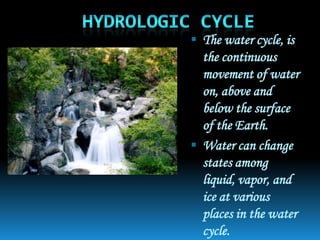
 The water cycle, is
  the continuous
  movement of water
  on, above and
  below the surface
  of the Earth.
 Water can change
  states among
  liquid, vapor, and
  ice at various
  places in the water
  cycle.
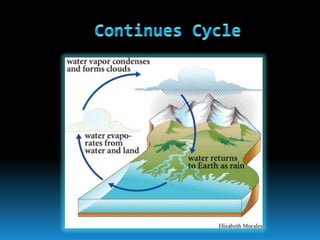
 The water moves from
 river to ocean, or from
 the ocean to the
 atmosphere, by the
 processes of
 evaporation, condensa
 tion, precipitation, inf
 iltration, runoff, and
 subsurface flow.
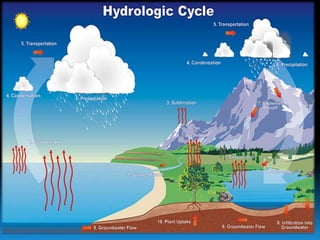
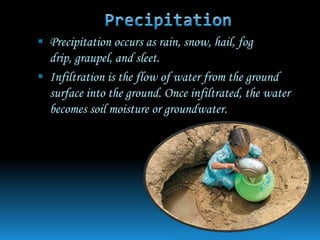
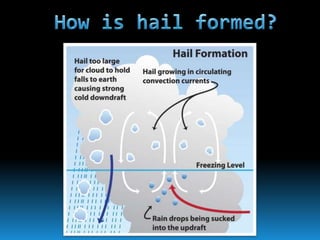
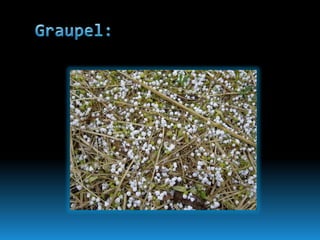
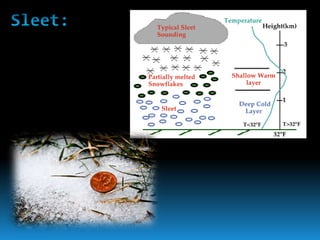
 Precipitation occurs as rain, snow, hail, fog
  drip, graupel, and sleet.
 Infiltration is the flow of water from the ground
  surface into the ground. Once infiltrated, the water
  becomes soil moisture or groundwater.
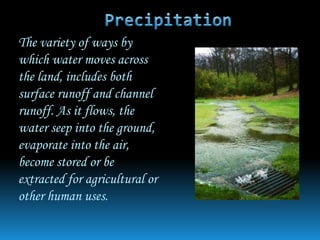
The variety of ways by
which water moves across
the land, includes both
surface runoff and channel
runoff. As it flows, the
water seep into the ground,
evaporate into the air,
become stored or be
extracted for agricultural or
other human uses.
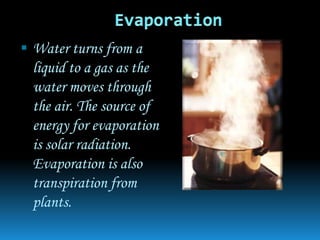
 Water turns from a
 liquid to a gas as the
 water moves through
 the air. The source of
 energy for evaporation
 is solar radiation.
 Evaporation is also
 transpiration from
 plants.
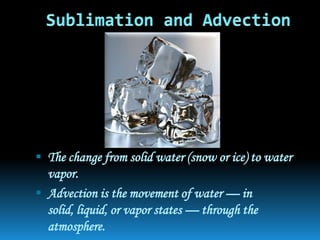
 The change from solid water (snow or ice) to water
  vapor.
 Advection is the movement of water — in
  solid, liquid, or vapor states — through the
  atmosphere.
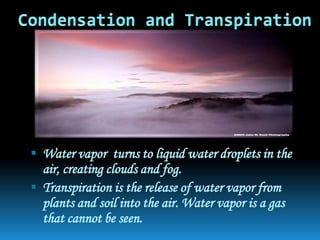
 Water vapor turns to liquid water droplets in the
  air, creating clouds and fog.
 Transpiration is the release of water vapor from
  plants and soil into the air. Water vapor is a gas
  that cannot be seen.
The hydrological cycle

The hydrological cycle

  • 1.
  • 2.
     The watercycle, is the continuous movement of water on, above and below the surface of the Earth.  Water can change states among liquid, vapor, and ice at various places in the water cycle.
  • 4.
     The watermoves from river to ocean, or from the ocean to the atmosphere, by the processes of evaporation, condensa tion, precipitation, inf iltration, runoff, and subsurface flow.
  • 5.
     Precipitation occursas rain, snow, hail, fog drip, graupel, and sleet.  Infiltration is the flow of water from the ground surface into the ground. Once infiltrated, the water becomes soil moisture or groundwater.
  • 12.
    The variety ofways by which water moves across the land, includes both surface runoff and channel runoff. As it flows, the water seep into the ground, evaporate into the air, become stored or be extracted for agricultural or other human uses.
  • 13.
     Water turnsfrom a liquid to a gas as the water moves through the air. The source of energy for evaporation is solar radiation. Evaporation is also transpiration from plants.
  • 14.
     The changefrom solid water (snow or ice) to water vapor.  Advection is the movement of water — in solid, liquid, or vapor states — through the atmosphere.

  • 15.
     Water vaporturns to liquid water droplets in the air, creating clouds and fog.  Transpiration is the release of water vapor from plants and soil into the air. Water vapor is a gas that cannot be seen.