“The Homework Myth” by
Alfie Kohn
A Review that summarizes and offers commentary
Context and Background
 Author is Alfie Kohn
 Popular Author and Lecturer
 Post on my website last May
 Highly Recommended
Chapter 1: Missing out on
their Childhoods
 Points out the relative newness of
homework
 Now commonly accepted
 Creates problems in the home
 Lack of time for children to be
children.
Flickr picture from: http://flickr.com/photos/kellymason/2476877041/sizes/s/
Missing Childhood
 burden on parents
 stress for children
 family conflict
 less time for other activities
 less interest in learning
Chapter 2: Does homework
improve learning?
 1. At best only an association not a causal relationship
 2. Do we really know how much homework kids do? - depends
who you ask and on the individual student
 3. Homework Studies confuse grades and test scores with
learning
 4. homework matters less the longer you look
Improving learning?
 5. positive effects are quite small
 6. In elementary school no benefit
 7. national and international exams cast further doubt
 8. incidental research raises further doubts
Chp 3: Other benefits of
homework
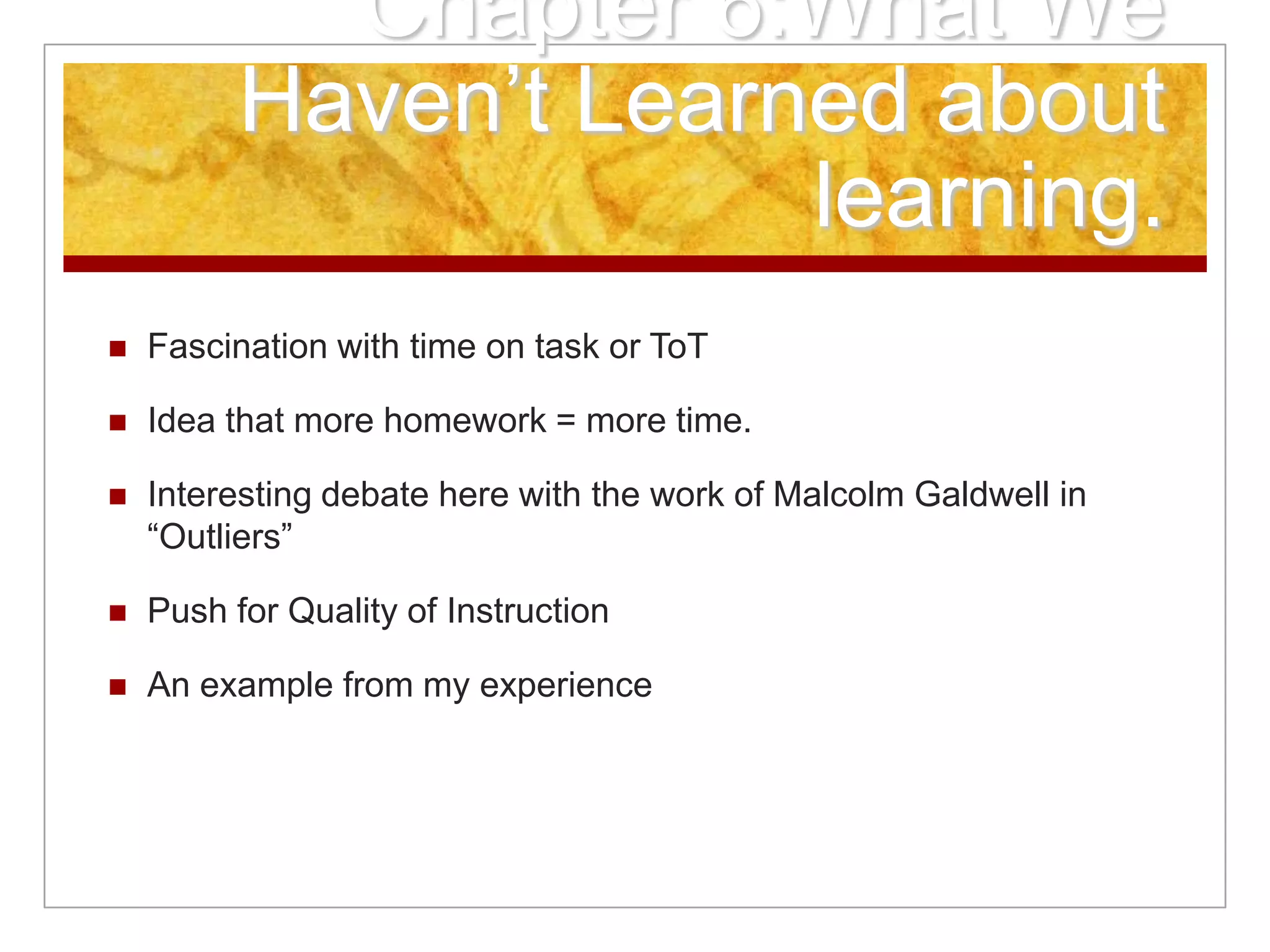
 Does it teach work ethic and build character?
 Responsibility?
 Do we want what it could teach?
Picture from: http://flickr.com/photos/21135206@N05/2099577862/
Chapter 4: Studies
show…or do they?
 Studies that show support are often misquoted.
 Don’t always take their word for it.
 Sloppy writing perpetuates the myth of homework.
 An example pg. 77 – re: Marzano
Chapter 5: The
Questions left unasked.
 We are stuck more on the how to do the homework question than
to the question of why.
 Due to focus on competition and grades etc.
Chapter 6:What We
Haven’t Learned about
learning.
 Fascination with time on task or ToT
 Idea that more homework = more time.
 Interesting debate here with the work of Malcolm Galdwell in
“Outliers”
 Push for Quality of Instruction
 An example from my experience
Chapter 7: The Tougher
Standards Crowd hits
Home
 1983 Nation at Risk
 Presumption that Rigor = Excellence
 Achievement Gap can be caused by homework perhaps.
 Class and homework strategies
Economy and Work
 Concern from employers
 Why do we then send jobs over seas?
 Do Foreign companies in America look for the highest quality of
work.
 Business and education in general – What is the point of an
education.
Chapter 8: Better Get
Used to It
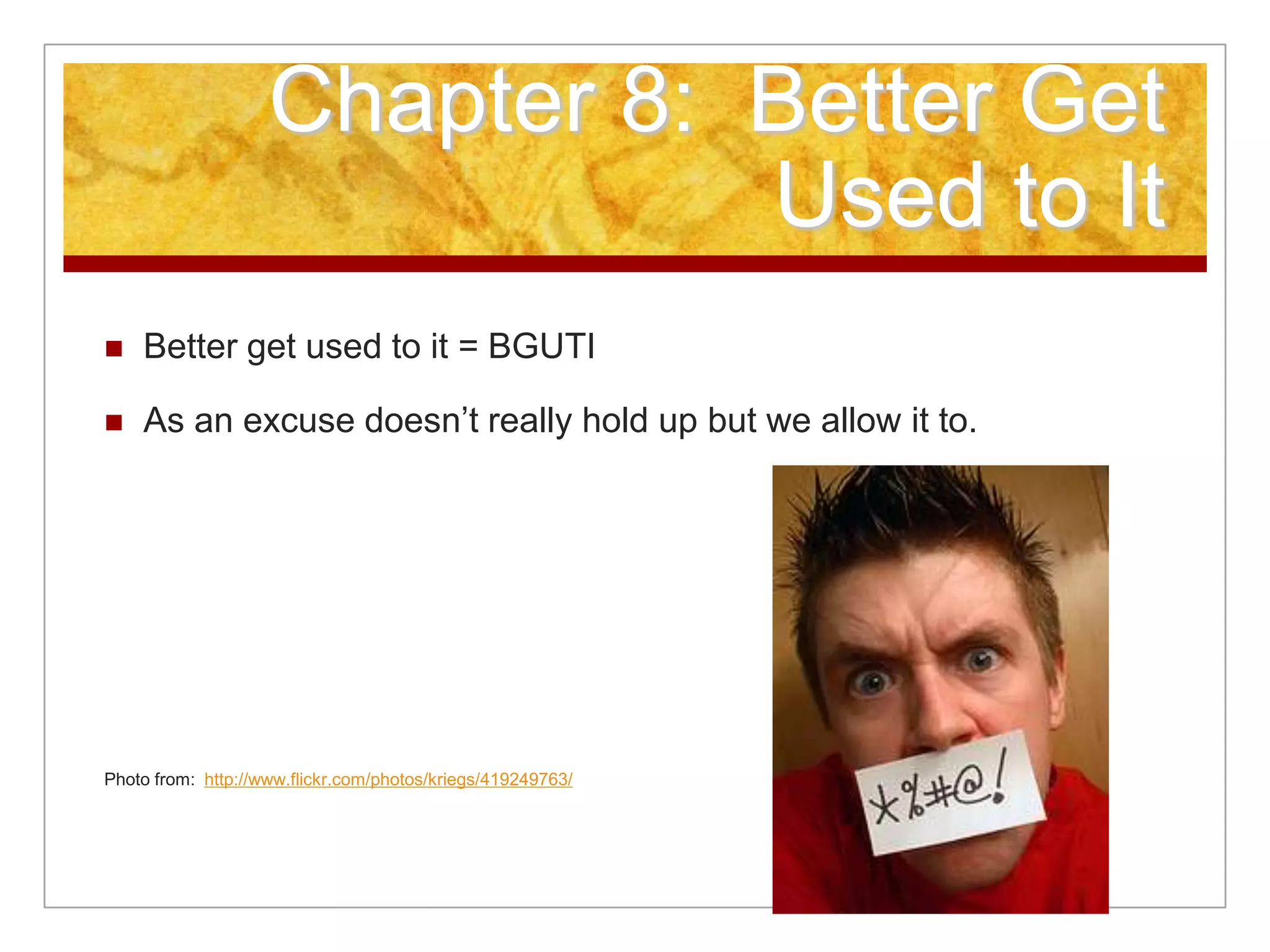
 Better get used to it = BGUTI
 As an excuse doesn’t really hold up but we allow it to.
Photo from: http://www.flickr.com/photos/kriegs/419249763/
Chapter 9: Idle Hands
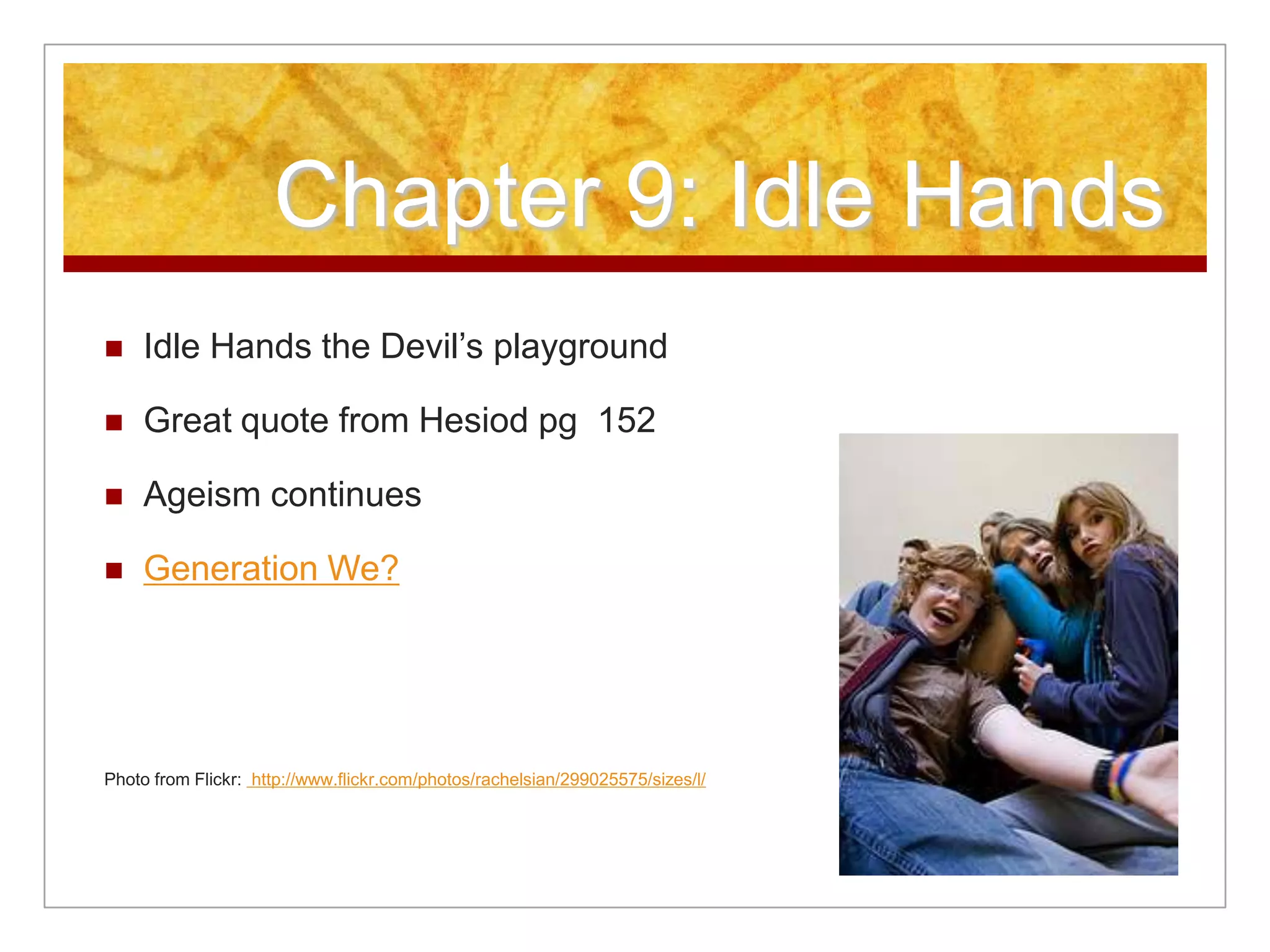
 Idle Hands the Devil’s playground
 Great quote from Hesiod pg 152
 Ageism continues
 Generation We?
Photo from Flickr: http://www.flickr.com/photos/rachelsian/299025575/sizes/l/
Chapter 10: Rethinking
Homework
 Changing the Default
 Quantity
 Quality
 Choice
Chapter 11: Make the
Change
 Have courage and give it a try
 Or just try for a unit and see if homework makes any difference.
 If in high school how about do one section without homework?

The homework-myth-1231004199853293-2

  • 1.
    “The Homework Myth”by Alfie Kohn A Review that summarizes and offers commentary
  • 2.
    Context and Background Author is Alfie Kohn  Popular Author and Lecturer  Post on my website last May  Highly Recommended
  • 3.
    Chapter 1: Missingout on their Childhoods  Points out the relative newness of homework  Now commonly accepted  Creates problems in the home  Lack of time for children to be children. Flickr picture from: http://flickr.com/photos/kellymason/2476877041/sizes/s/
  • 4.
    Missing Childhood  burdenon parents  stress for children  family conflict  less time for other activities  less interest in learning
  • 5.
    Chapter 2: Doeshomework improve learning?  1. At best only an association not a causal relationship  2. Do we really know how much homework kids do? - depends who you ask and on the individual student  3. Homework Studies confuse grades and test scores with learning  4. homework matters less the longer you look
  • 6.
    Improving learning?  5.positive effects are quite small  6. In elementary school no benefit  7. national and international exams cast further doubt  8. incidental research raises further doubts
  • 7.
    Chp 3: Otherbenefits of homework  Does it teach work ethic and build character?  Responsibility?  Do we want what it could teach? Picture from: http://flickr.com/photos/21135206@N05/2099577862/
  • 8.
    Chapter 4: Studies show…ordo they?  Studies that show support are often misquoted.  Don’t always take their word for it.  Sloppy writing perpetuates the myth of homework.  An example pg. 77 – re: Marzano
  • 9.
    Chapter 5: The Questionsleft unasked.  We are stuck more on the how to do the homework question than to the question of why.  Due to focus on competition and grades etc.
  • 10.
    Chapter 6:What We Haven’tLearned about learning.  Fascination with time on task or ToT  Idea that more homework = more time.  Interesting debate here with the work of Malcolm Galdwell in “Outliers”  Push for Quality of Instruction  An example from my experience
  • 11.
    Chapter 7: TheTougher Standards Crowd hits Home  1983 Nation at Risk  Presumption that Rigor = Excellence  Achievement Gap can be caused by homework perhaps.  Class and homework strategies
  • 12.
    Economy and Work Concern from employers  Why do we then send jobs over seas?  Do Foreign companies in America look for the highest quality of work.  Business and education in general – What is the point of an education.
  • 13.
    Chapter 8: BetterGet Used to It  Better get used to it = BGUTI  As an excuse doesn’t really hold up but we allow it to. Photo from: http://www.flickr.com/photos/kriegs/419249763/
  • 14.
    Chapter 9: IdleHands  Idle Hands the Devil’s playground  Great quote from Hesiod pg 152  Ageism continues  Generation We? Photo from Flickr: http://www.flickr.com/photos/rachelsian/299025575/sizes/l/
  • 15.
    Chapter 10: Rethinking Homework Changing the Default  Quantity  Quality  Choice
  • 16.
    Chapter 11: Makethe Change  Have courage and give it a try  Or just try for a unit and see if homework makes any difference.  If in high school how about do one section without homework?