DanetteTrue http://www.danettetrue.com
June 2011
A brief history of the internet.
How we arrived at web 2.0
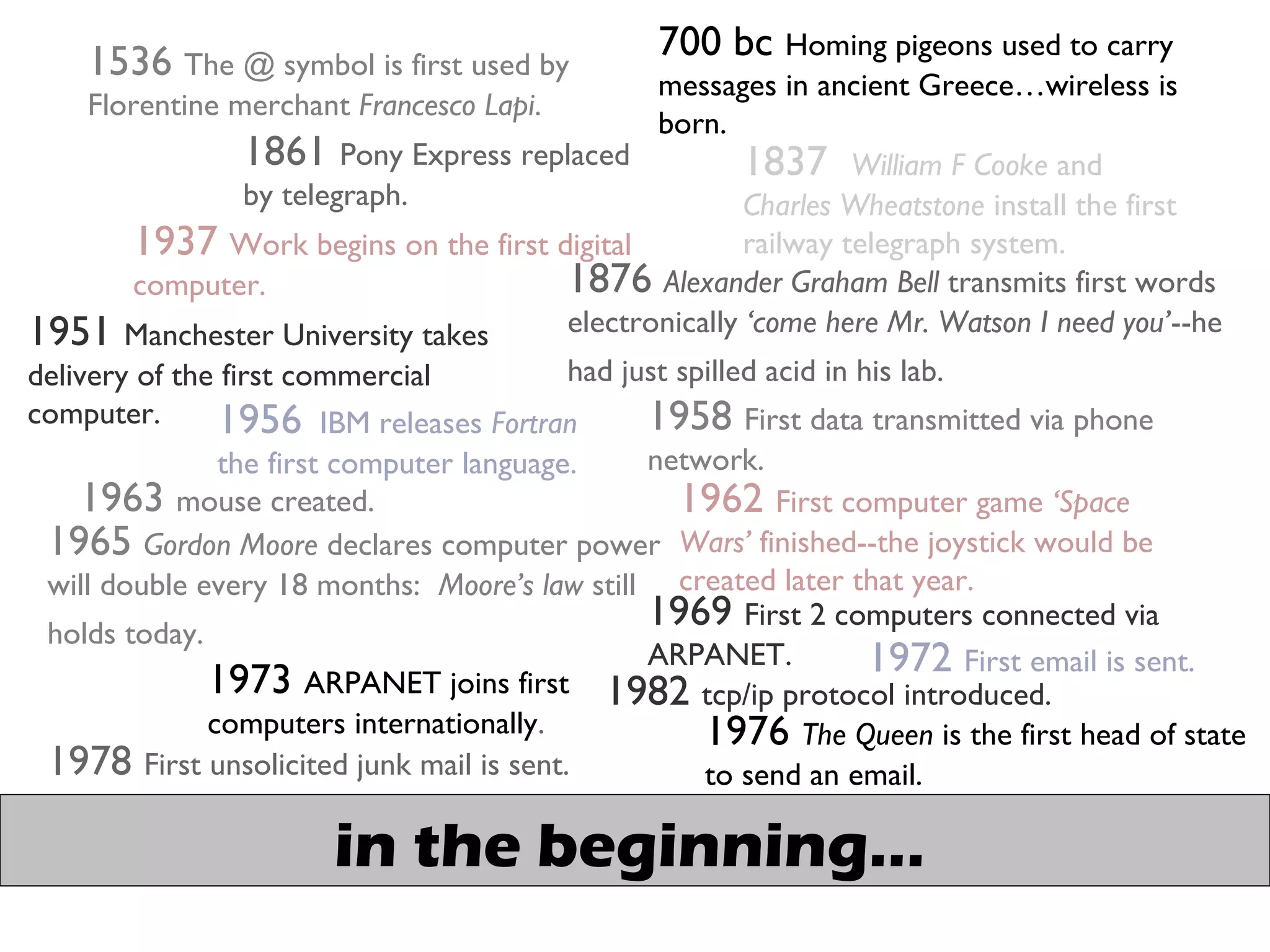
in the beginning…
700 bc Homing pigeons used to carry
messages in ancient Greece…wireless is
born.
1536 The @ symbol is first used by
Florentine merchant Francesco Lapi.
1837 William F Cooke and
Charles Wheatstone install the first
railway telegraph system.
1861 Pony Express replaced
by telegraph.
1937 Work begins on the first digital
computer.
1951 Manchester University takes
delivery of the first commercial
computer. 1956 IBM releases Fortran
the first computer language.
1876 Alexander Graham Bell transmits first words
electronically ‘come here Mr. Watson I need you’--he
had just spilled acid in his lab.
1958 First data transmitted via phone
network.
1962 First computer game ‘Space
Wars’ finished--the joystick would be
created later that year.
1963 mouse created.
1965 Gordon Moore declares computer power
will double every 18 months: Moore’s law still
holds today.
1969 First 2 computers connected via
ARPANET.
1976 The Queen is the first head of state
to send an email.1978 First unsolicited junk mail is sent.
1982 tcp/ip protocol introduced.
1972 First email is sent.
1973 ARPANET joins first
computers internationally.
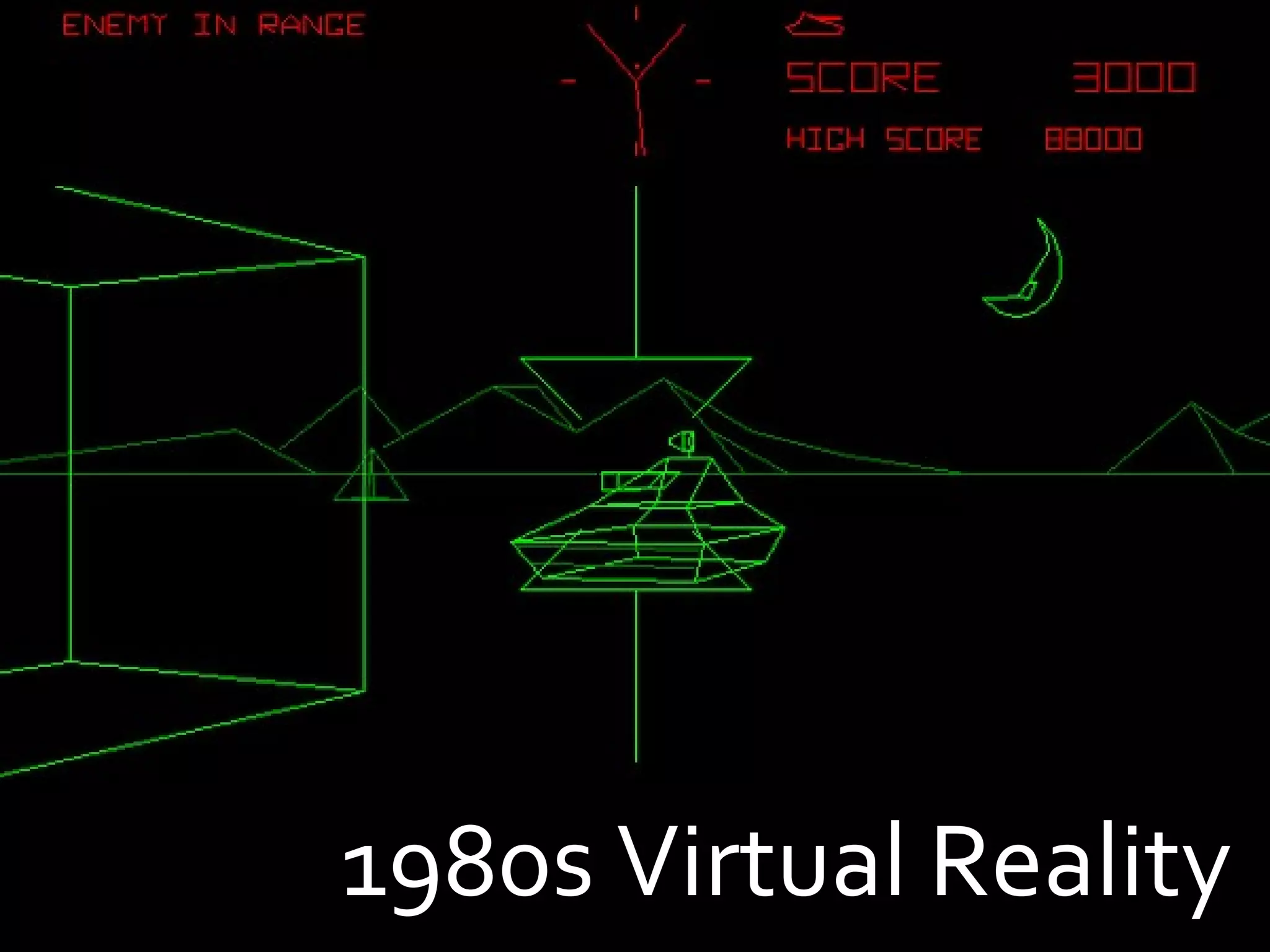
1980s Virtual Reality
“Science Fiction Doesn't Predict the Future,
It Shapes It“
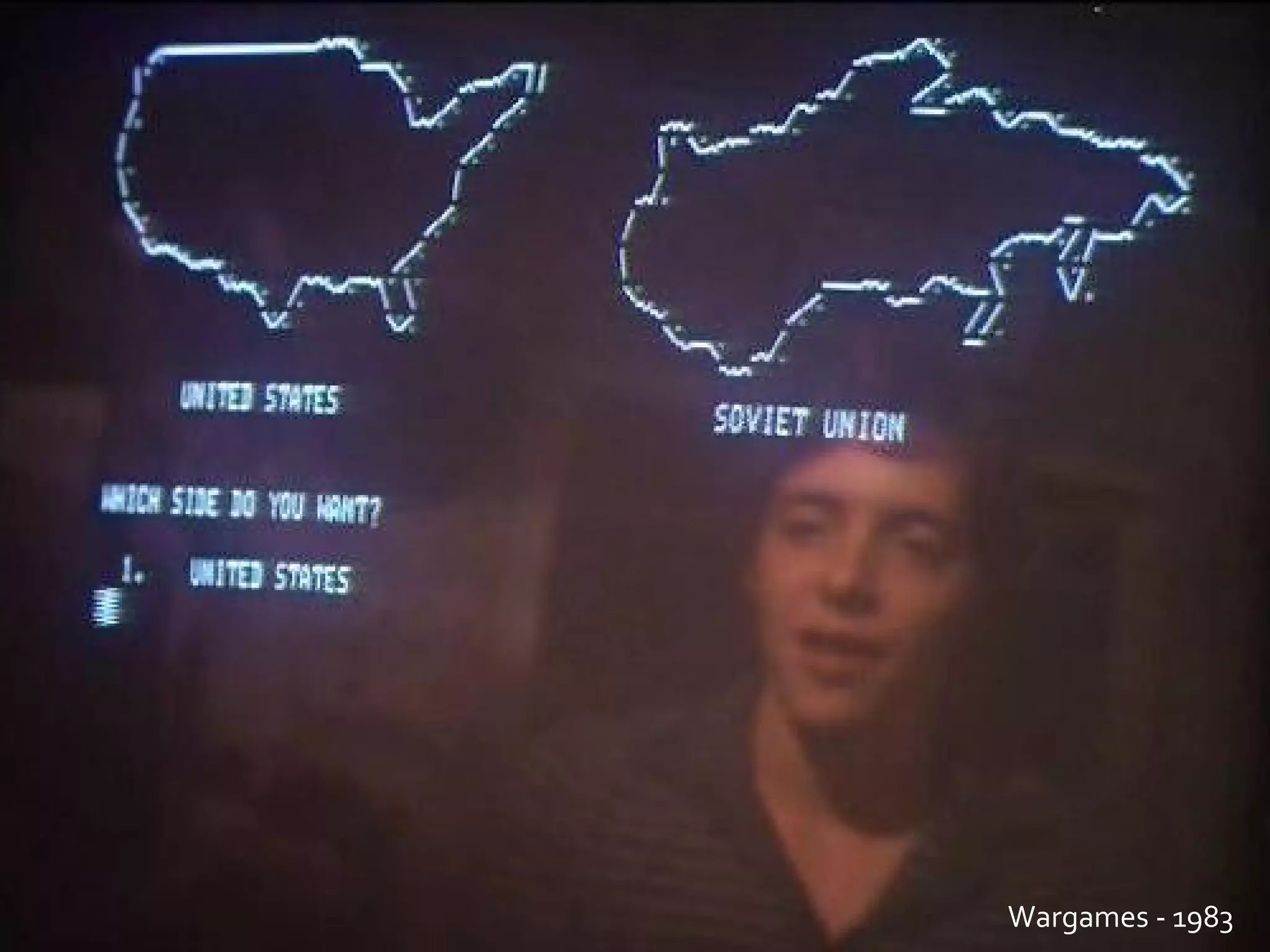
Wargames - 1983
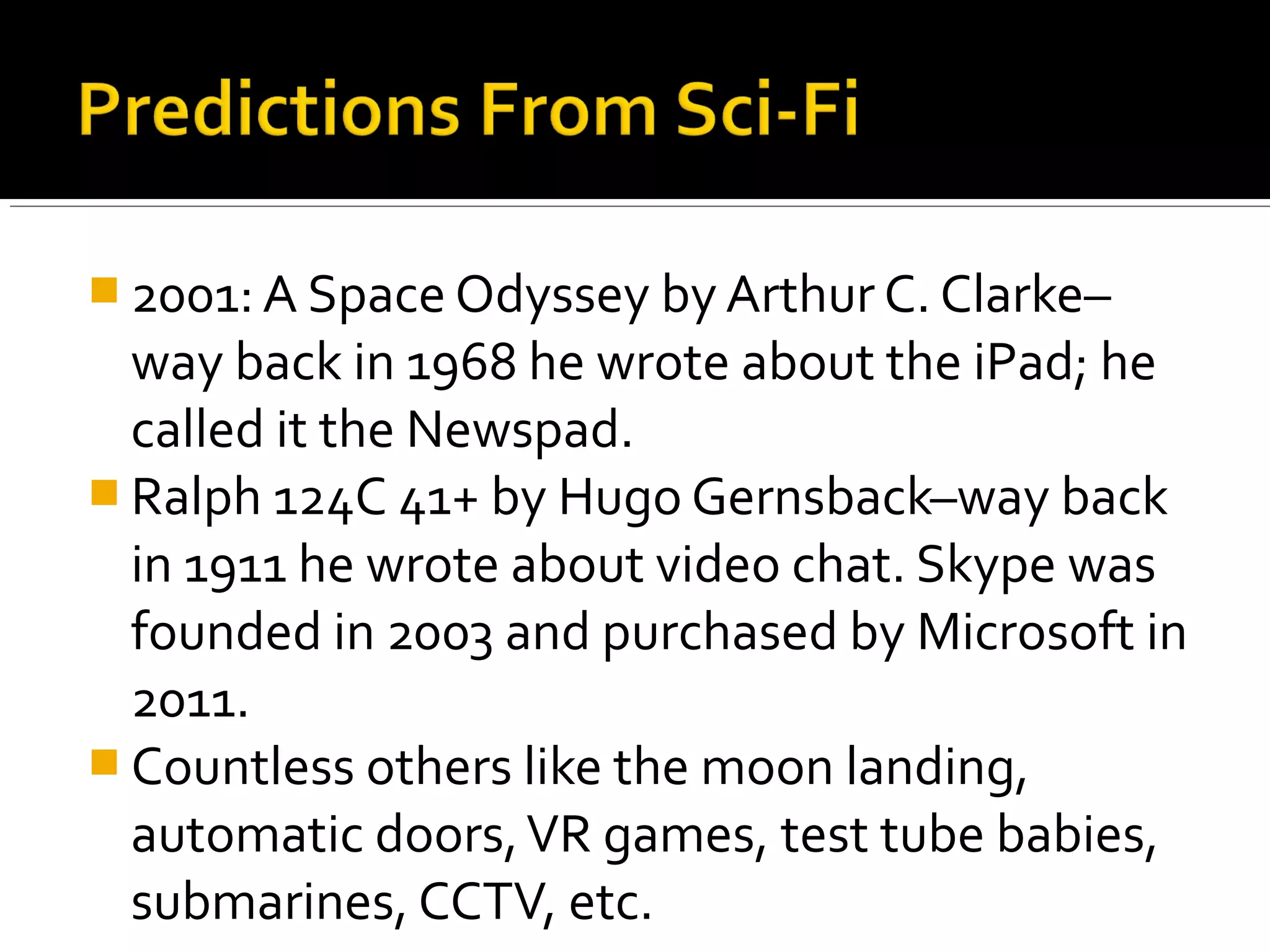
 2001: A Space Odyssey by Arthur C. Clarke–
way back in 1968 he wrote about the iPad; he
called it the Newspad.
 Ralph 124C 41+ by Hugo Gernsback–way back
in 1911 he wrote about video chat. Skype was
founded in 2003 and purchased by Microsoft in
2011.
 Countless others like the moon landing,
automatic doors,VR games, test tube babies,
submarines, CCTV, etc.
mosaic
browser
firefox
browser
bbc
MSN
messenger
wikipedia
skype
xml
asp
rss
ipod
ADSL
facebook
TechnologyApplicationsDate
90 91 92 93 94 95 96 97 98 99 00 01 02 03 04 05 06 07 0889
SitesConcepts
podcast
dialup
usergroups
collaboration
mash ups
driven by education/research sector
driven by individual
driven by business?
social networkingcommunity
dynamic contentstatic content
internet
newsgroups shared content
ajax
napster
MP3
standard
blogging
wiki
w3cquicktime
first macro virus
google
million th domain name registered
internet worm
released
irc chat
perl
www
introduced
ppp
netscapeb
rowser
virtual
bank
2 million
3 million
10 million
apache
aol
hotmail Linkedin
amazon
yahoo
livesearch
safari
browser
flock
browser
flickr
clusty
youtube
AOL
messenger
friends reunited
.net
http
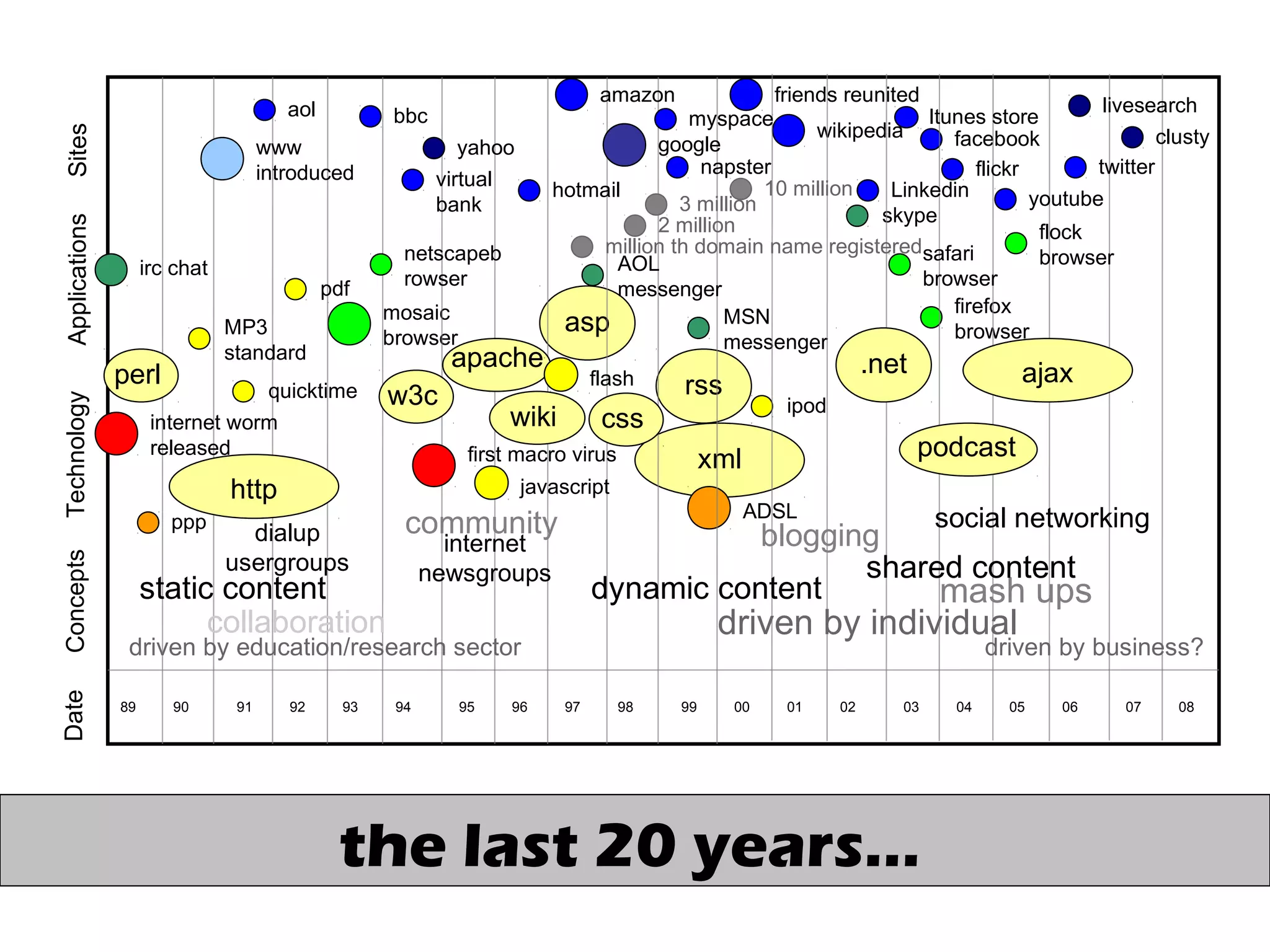
the last 20 years…
Itunes store
css
myspace
twitter
pdf
flash
javascript
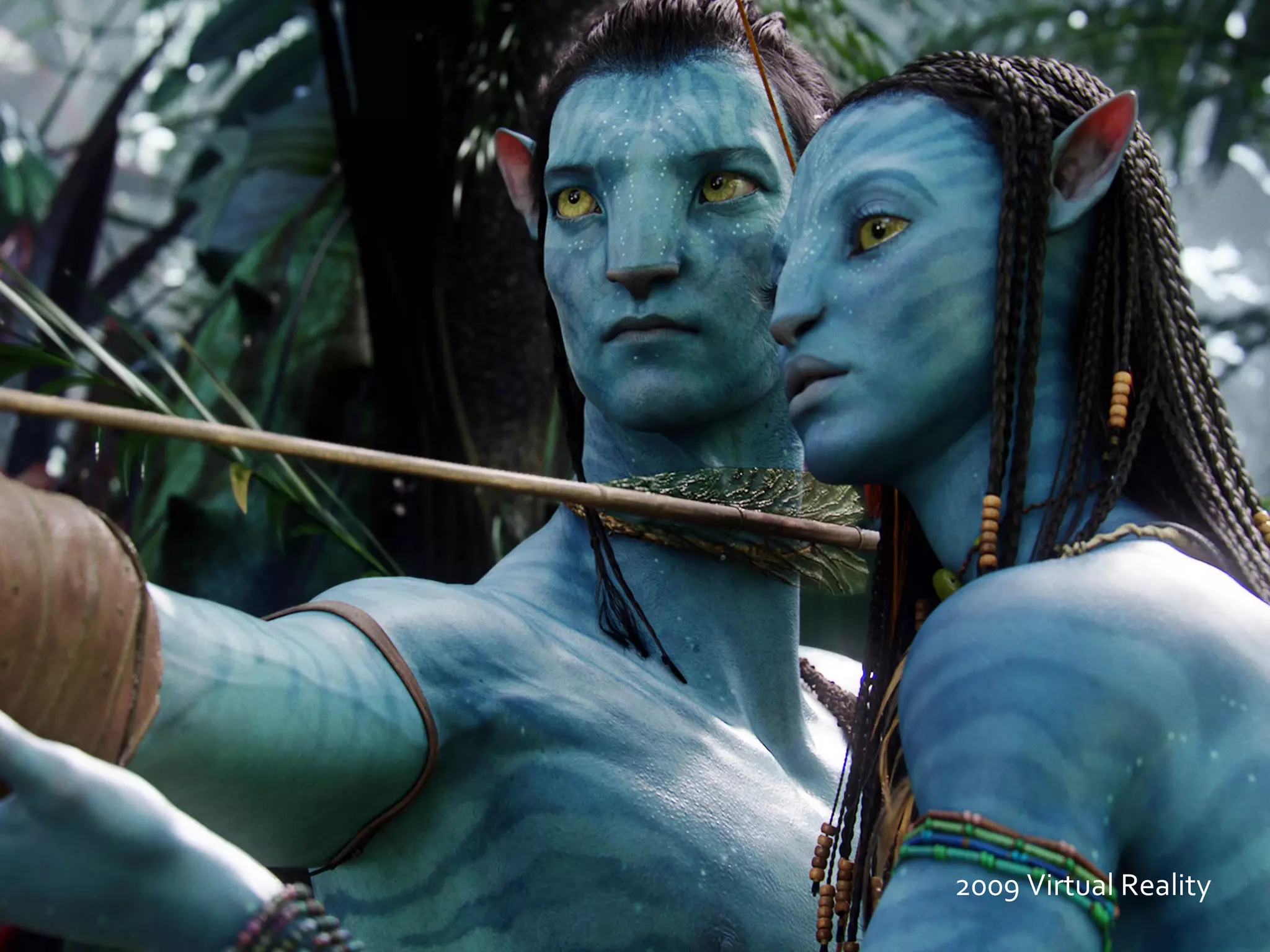
2009 Virtual Reality
current trends…
•Increasing use of open source code and shared data.
•Increasing availability of internet.
through use of mobility devices, phones, pda’s, wifi etc.
•Increasing speed of internet connection.
both at home, in business and via mobile technology.
•Increasing use of off-site storage / data centres.
•Increased popularity of web based applications/services
•Increased use of video services / streamed video.
•Increase in popularity of virtualization.
especially for providing virtual ad, dns, dhcp servers etc
•Increasingly technology/internet aware customers,
users and employees.
•Increase numbers of internet users, social networks,
websites and user generated content.
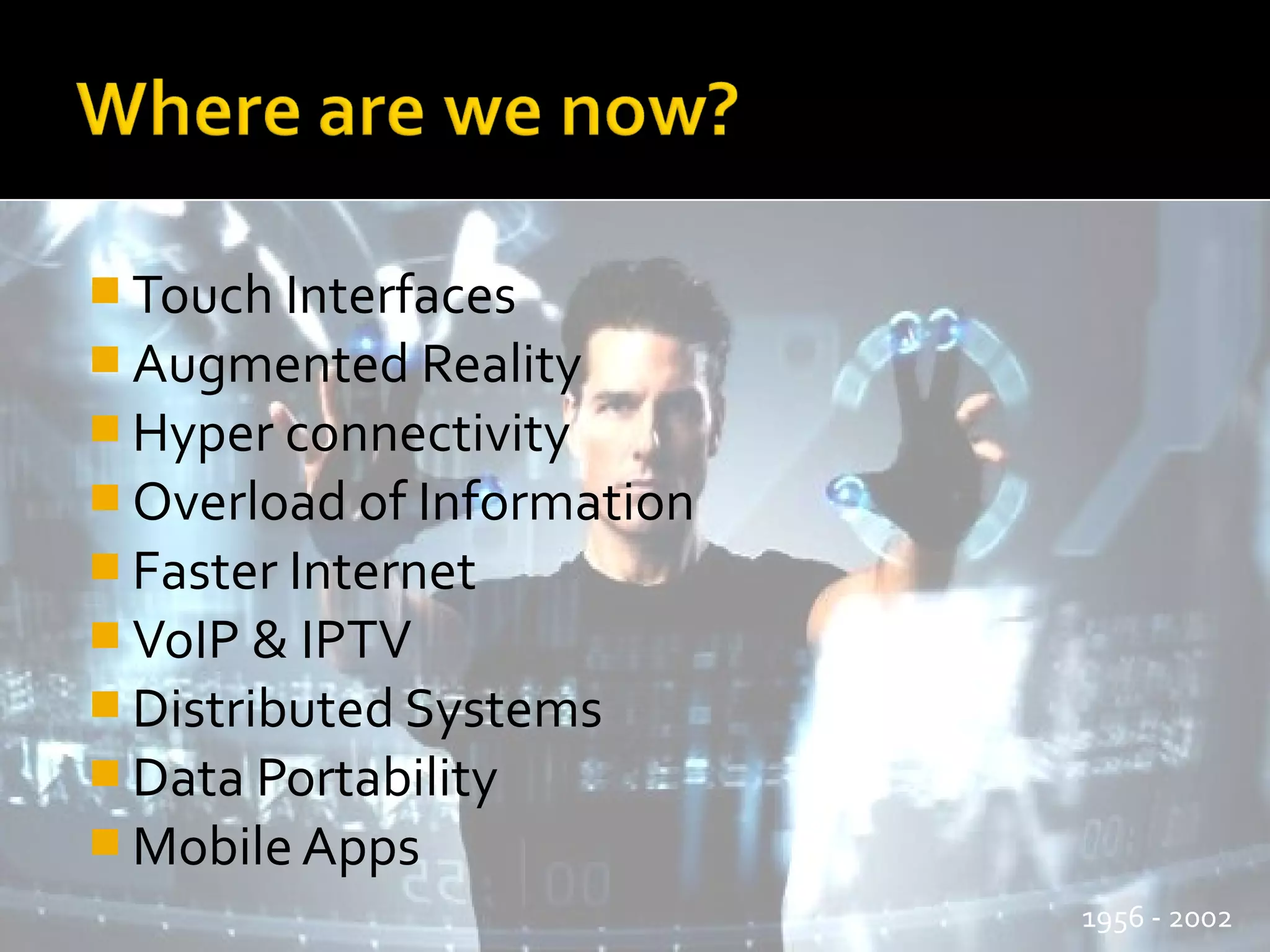
 Touch Interfaces
 Augmented Reality
 Hyper connectivity
 Overload of Information
 Faster Internet
 VoIP & IPTV
 Distributed Systems
 Data Portability
 Mobile Apps
1956 - 2002
 More Integration
 Smarter Smart Homes
 IPV6 – Everything will have an IP address
 Hyper realistic gaming
 More immersive entertainment
 More social networks/collaboration spaces
 More cloud platforms
 New input/control methods ala Minority
Report
predictions on future direction…
•Data portability
Merging data within various social networks and on-off line apps so that you
don’t have to duplicate and synchronize your data across applications or
services.
•Integration of pay per click web apps & internet services
The ability to edit photos from your corporate flickr account with an online
version of Photoshop (paid for per user per month), and put the images straight
into a campaign marketing tool to send to your Google mailing list, tracking your
newsletter in real time (on a pay click basis).
•Predictive search engines
The ability of search engines to predict what information you will look for next
based on the searches that you are currently performing or content of watched
news feeds.
•Authoritative tagging levels for user generated content
The ability of peer groups and industry experts to rate content of blogs and user
provided content to give some degree of data credibility.
go make your own history!
Catch me online atTwitter @danettetrue
Questions?
<image sources>
all of the images in this presentation came from flickr
• cover : http://www.flickr.com/photos/dannyman/323698320/
• superhighway : http://www.flickr.com/photos/brandejackson/2236226854/
<Edited by>
danette true www.danettetrue.wordpress.com
<content sources>
much of the content of this presentation came from online communities and shared content
http://www.anderbergfamily.net/ant/history
http://en.wikipedia.org
.

The History of the Future--Internet

  • 1.
  • 2.
    A brief historyof the internet. How we arrived at web 2.0
  • 3.
    in the beginning… 700bc Homing pigeons used to carry messages in ancient Greece…wireless is born. 1536 The @ symbol is first used by Florentine merchant Francesco Lapi. 1837 William F Cooke and Charles Wheatstone install the first railway telegraph system. 1861 Pony Express replaced by telegraph. 1937 Work begins on the first digital computer. 1951 Manchester University takes delivery of the first commercial computer. 1956 IBM releases Fortran the first computer language. 1876 Alexander Graham Bell transmits first words electronically ‘come here Mr. Watson I need you’--he had just spilled acid in his lab. 1958 First data transmitted via phone network. 1962 First computer game ‘Space Wars’ finished--the joystick would be created later that year. 1963 mouse created. 1965 Gordon Moore declares computer power will double every 18 months: Moore’s law still holds today. 1969 First 2 computers connected via ARPANET. 1976 The Queen is the first head of state to send an email.1978 First unsolicited junk mail is sent. 1982 tcp/ip protocol introduced. 1972 First email is sent. 1973 ARPANET joins first computers internationally.
  • 4.
  • 5.
    “Science Fiction Doesn'tPredict the Future, It Shapes It“
  • 6.
  • 7.
     2001: ASpace Odyssey by Arthur C. Clarke– way back in 1968 he wrote about the iPad; he called it the Newspad.  Ralph 124C 41+ by Hugo Gernsback–way back in 1911 he wrote about video chat. Skype was founded in 2003 and purchased by Microsoft in 2011.  Countless others like the moon landing, automatic doors,VR games, test tube babies, submarines, CCTV, etc.
  • 8.
    mosaic browser firefox browser bbc MSN messenger wikipedia skype xml asp rss ipod ADSL facebook TechnologyApplicationsDate 90 91 9293 94 95 96 97 98 99 00 01 02 03 04 05 06 07 0889 SitesConcepts podcast dialup usergroups collaboration mash ups driven by education/research sector driven by individual driven by business? social networkingcommunity dynamic contentstatic content internet newsgroups shared content ajax napster MP3 standard blogging wiki w3cquicktime first macro virus google million th domain name registered internet worm released irc chat perl www introduced ppp netscapeb rowser virtual bank 2 million 3 million 10 million apache aol hotmail Linkedin amazon yahoo livesearch safari browser flock browser flickr clusty youtube AOL messenger friends reunited .net http the last 20 years… Itunes store css myspace twitter pdf flash javascript
  • 9.
  • 10.
    current trends… •Increasing useof open source code and shared data. •Increasing availability of internet. through use of mobility devices, phones, pda’s, wifi etc. •Increasing speed of internet connection. both at home, in business and via mobile technology. •Increasing use of off-site storage / data centres. •Increased popularity of web based applications/services •Increased use of video services / streamed video. •Increase in popularity of virtualization. especially for providing virtual ad, dns, dhcp servers etc •Increasingly technology/internet aware customers, users and employees. •Increase numbers of internet users, social networks, websites and user generated content.
  • 11.
     Touch Interfaces Augmented Reality  Hyper connectivity  Overload of Information  Faster Internet  VoIP & IPTV  Distributed Systems  Data Portability  Mobile Apps 1956 - 2002
  • 12.
     More Integration Smarter Smart Homes  IPV6 – Everything will have an IP address  Hyper realistic gaming  More immersive entertainment  More social networks/collaboration spaces  More cloud platforms  New input/control methods ala Minority Report
  • 13.
    predictions on futuredirection… •Data portability Merging data within various social networks and on-off line apps so that you don’t have to duplicate and synchronize your data across applications or services. •Integration of pay per click web apps & internet services The ability to edit photos from your corporate flickr account with an online version of Photoshop (paid for per user per month), and put the images straight into a campaign marketing tool to send to your Google mailing list, tracking your newsletter in real time (on a pay click basis). •Predictive search engines The ability of search engines to predict what information you will look for next based on the searches that you are currently performing or content of watched news feeds. •Authoritative tagging levels for user generated content The ability of peer groups and industry experts to rate content of blogs and user provided content to give some degree of data credibility.
  • 14.
    go make yourown history!
  • 15.
    Catch me onlineatTwitter @danettetrue Questions?
  • 16.
    <image sources> all ofthe images in this presentation came from flickr • cover : http://www.flickr.com/photos/dannyman/323698320/ • superhighway : http://www.flickr.com/photos/brandejackson/2236226854/ <Edited by> danette true www.danettetrue.wordpress.com <content sources> much of the content of this presentation came from online communities and shared content http://www.anderbergfamily.net/ant/history http://en.wikipedia.org .