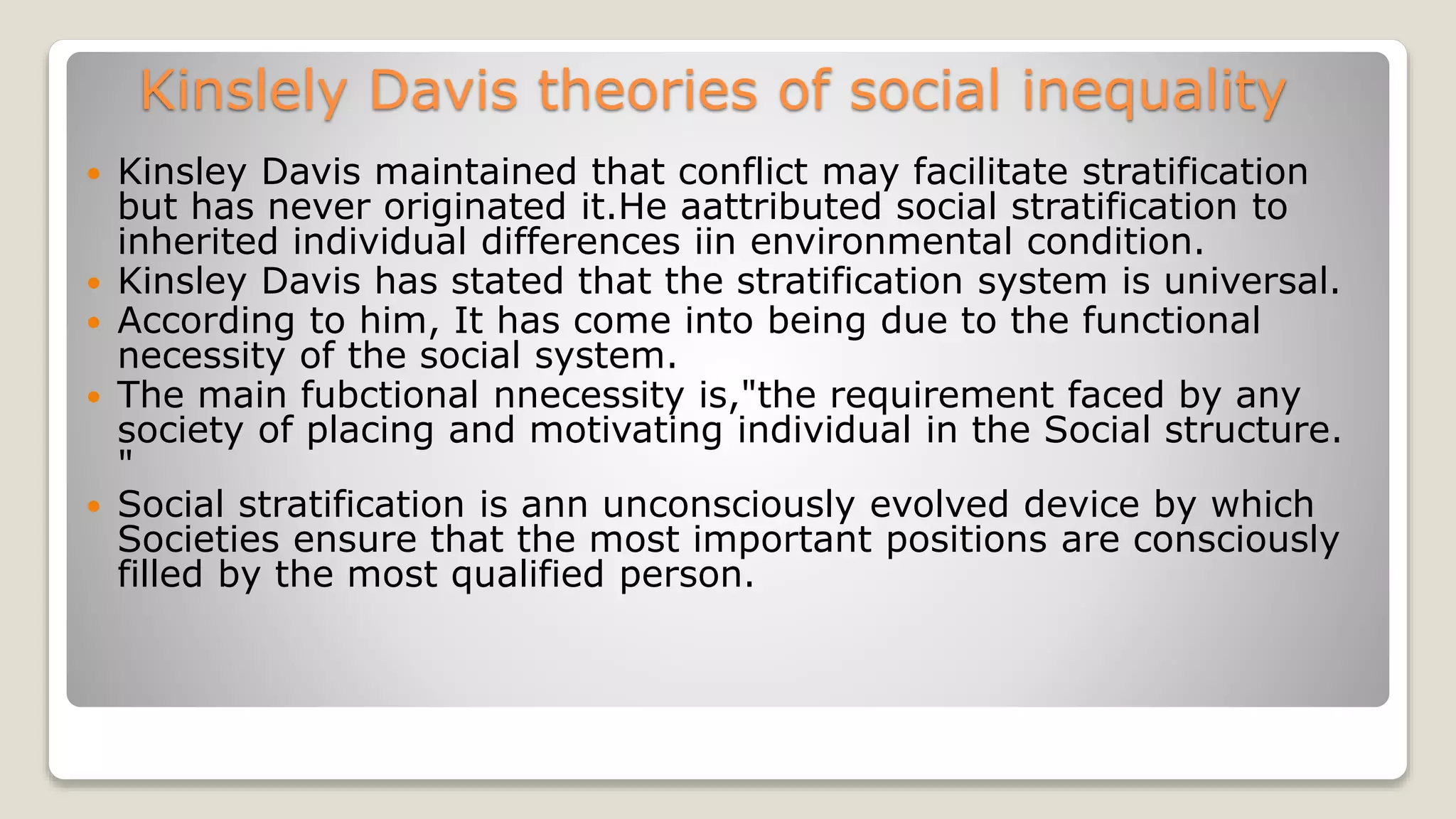
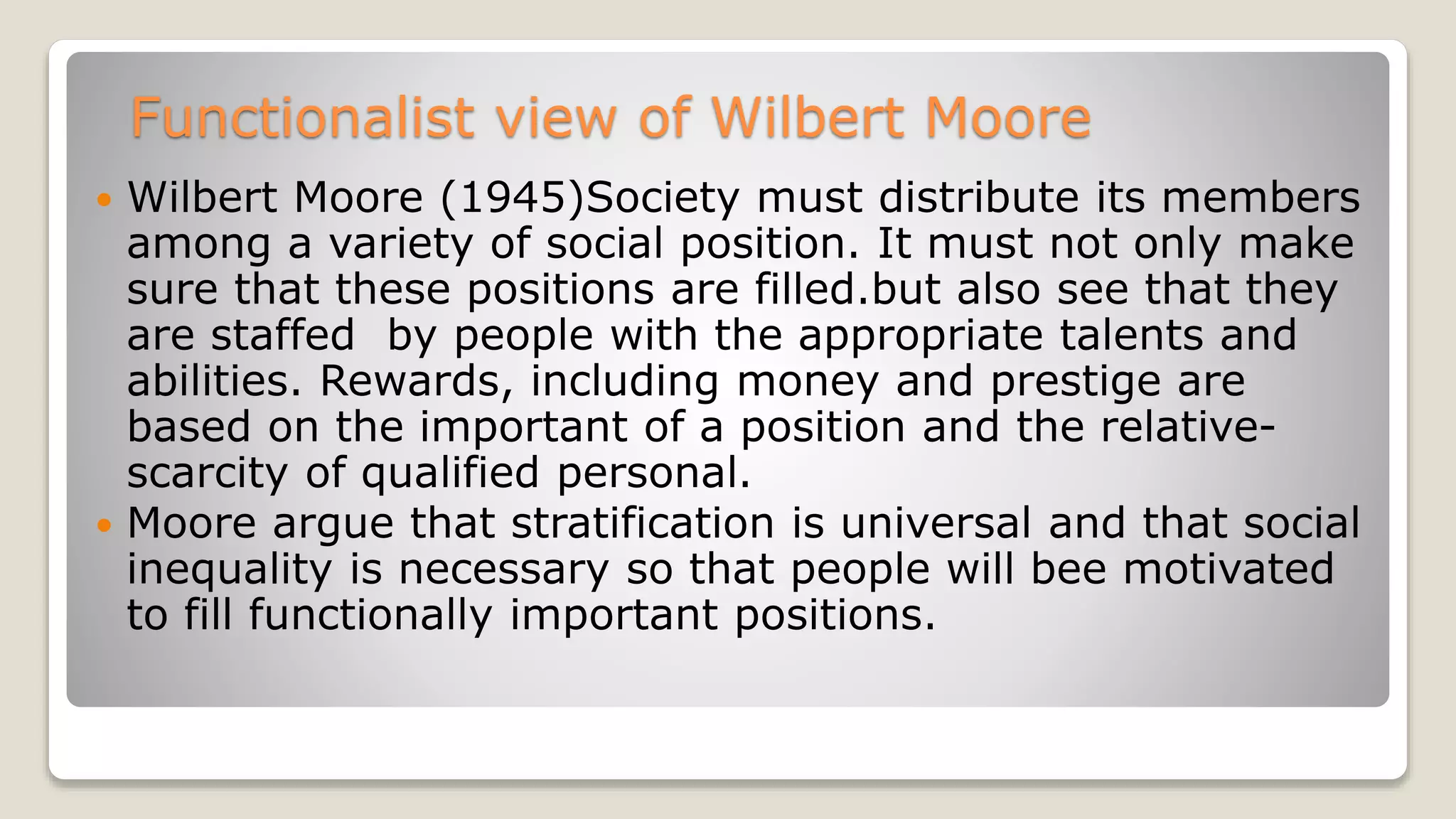
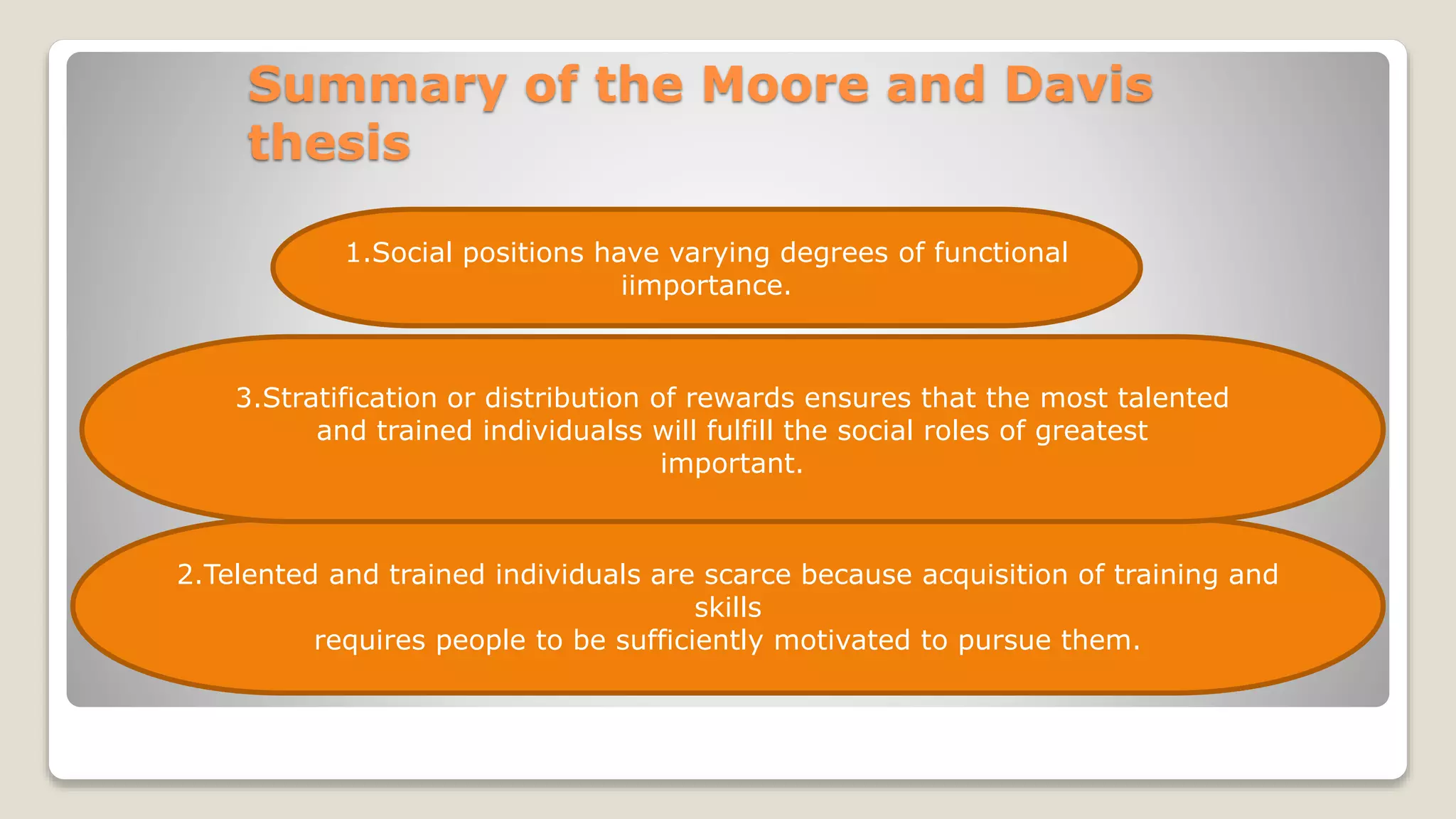
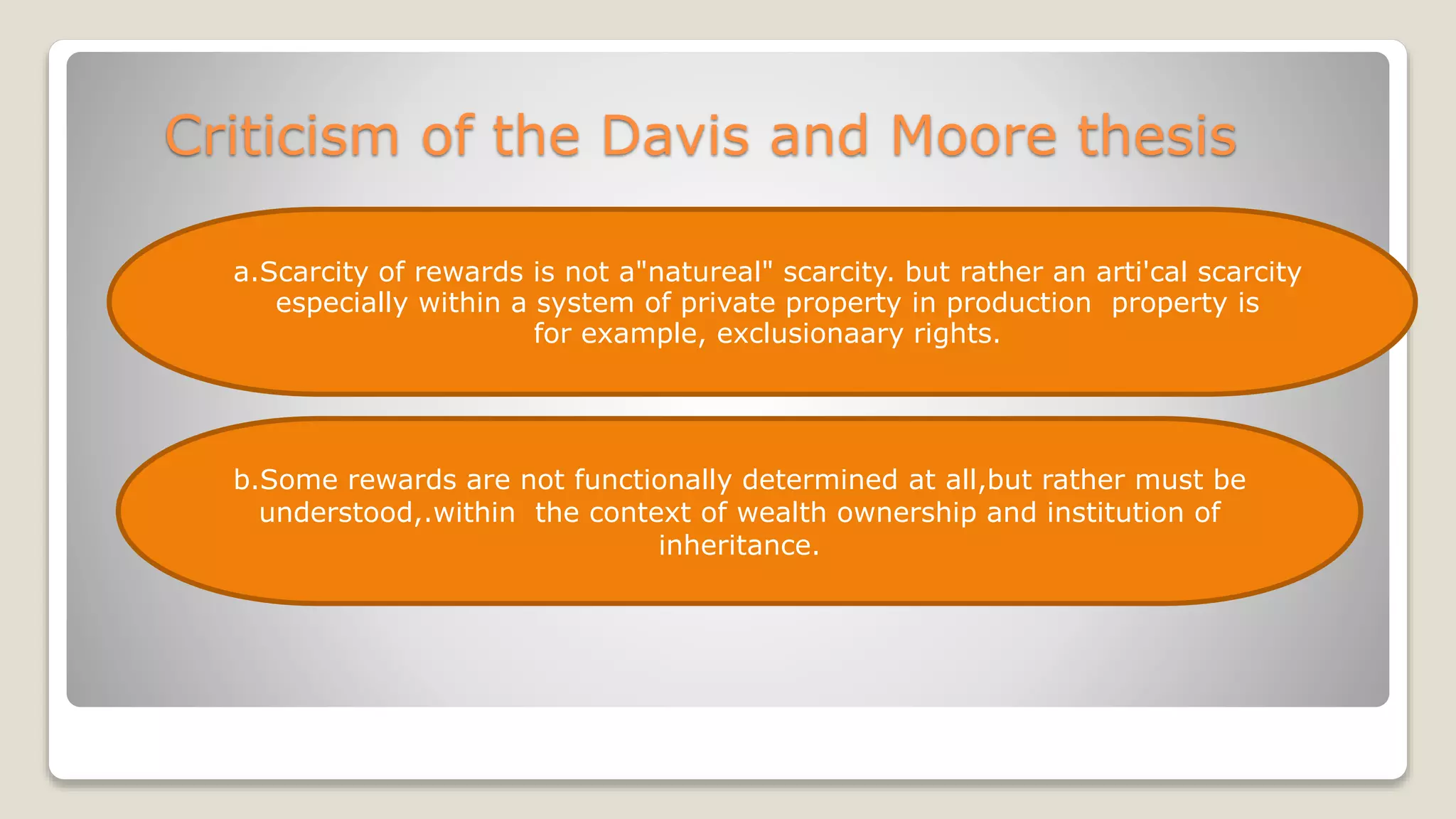
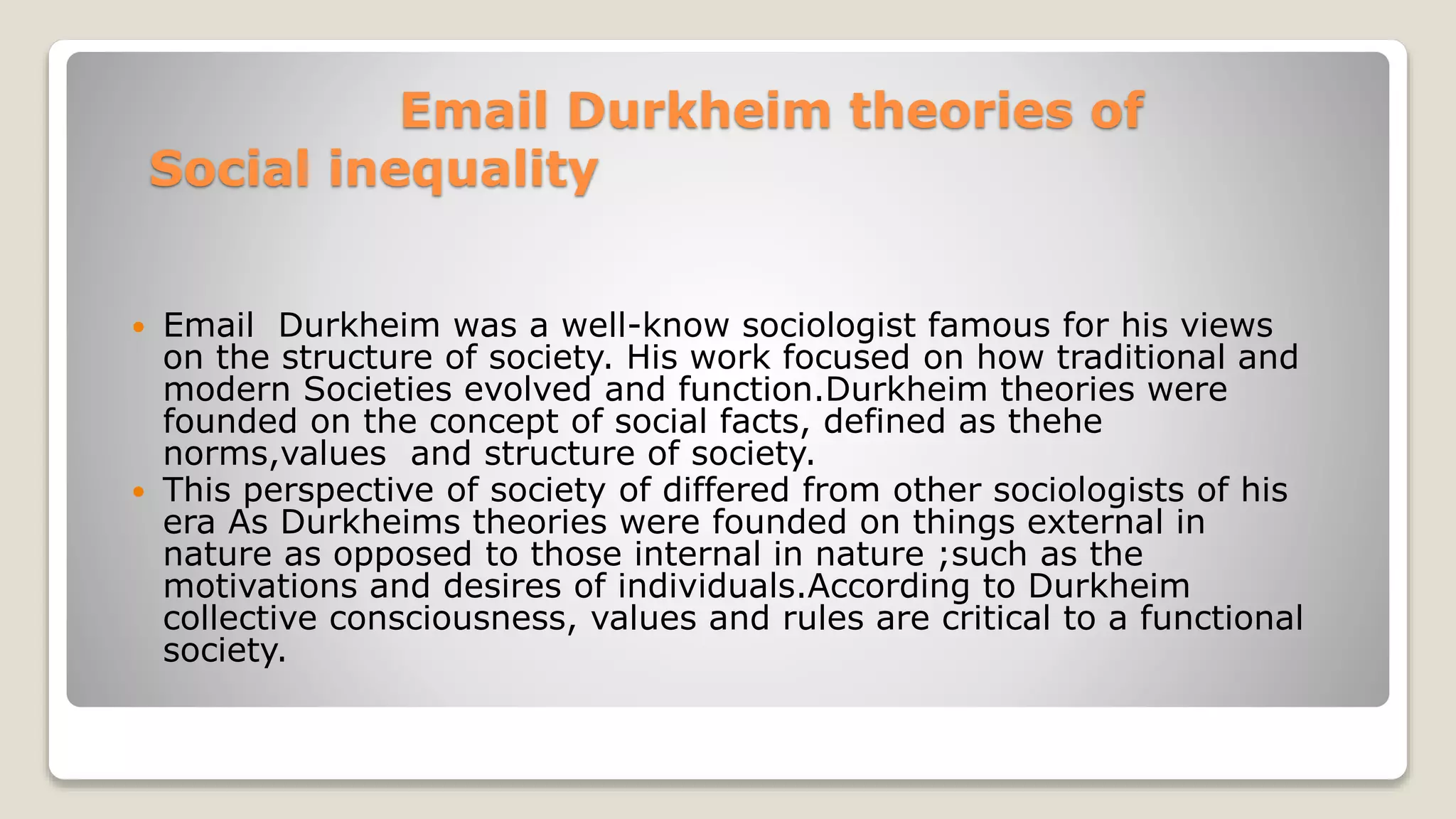
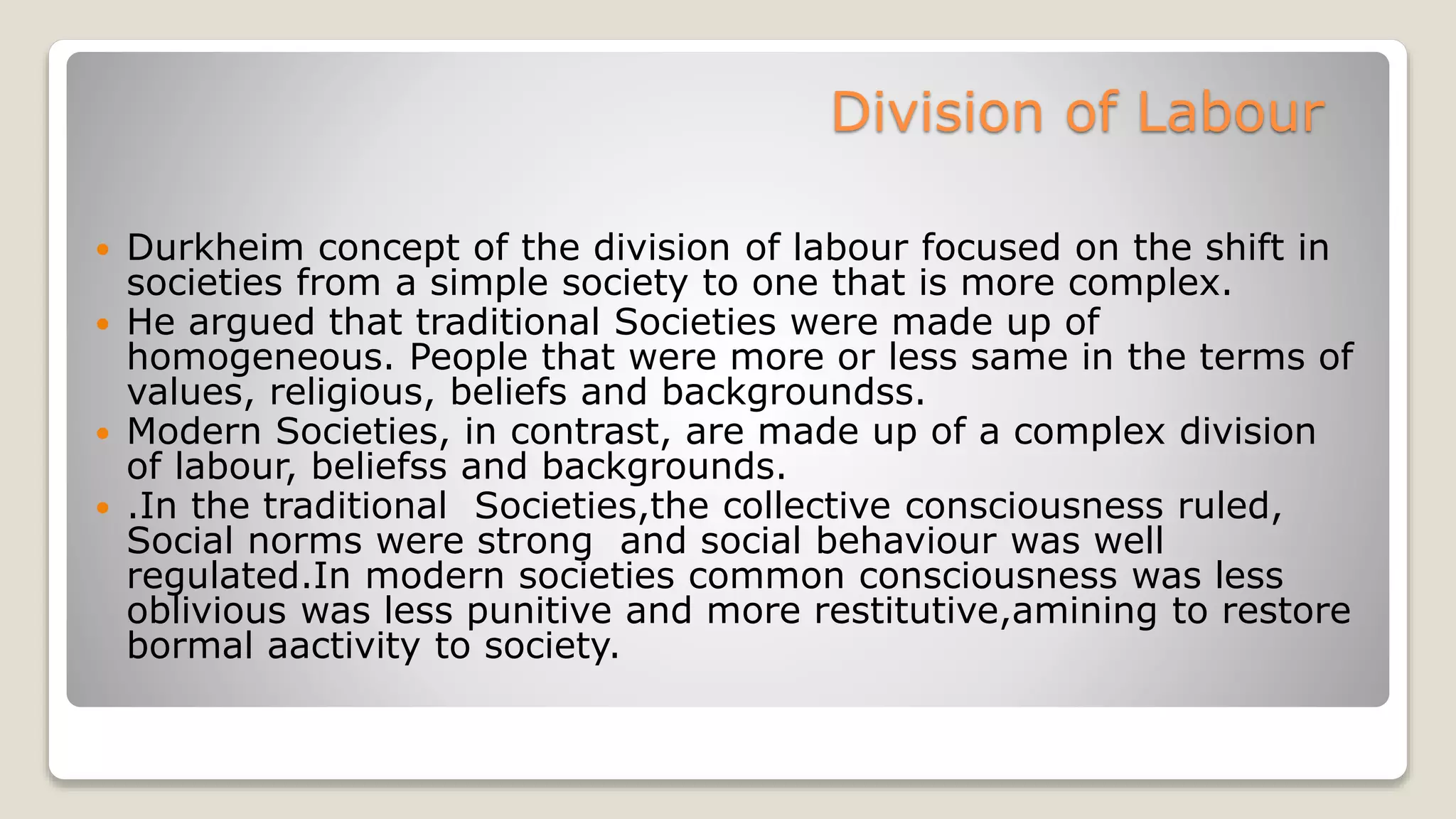
This presentation summarizes functionalist theories of social inequality according to Durkheim, Davis, and Moore. It introduces Durkheim's view of society as comprised of social facts that maintain order and equilibrium. His concepts of mechanical and organic solidarity and the division of labor are explained in relation to the evolution of societies from simple to complex. Davis and Moore's functionalist perspectives are outlined, arguing that social stratification universally motivates individuals to fill important social roles. The presentation critiques the Davis-Moore thesis, questioning whether scarcity of rewards is truly natural rather than artificially imposed.






![Email Durkheim
Email Durkheim [1858-1917] was most iimportant
French Sociologist of the 19th Century. He was an erudite
Scholar, aa deep thinker; a progressive educationalist;an
effective Writer. Durkheim was born in a jewish family at
Epinal in the eastern. French on 15 th April 1885.](https://image.slidesharecdn.com/02-181121062537/75/The-Functionalist-theories-Durkheim-kinsley-Davis-Willbert-Moore-11-2048.jpg)