Minerals
 Are the ingredients of rocks.
 Naturally formed, generally
inorganic, crystalline, solid and
has a definite chemical
composition building blocks of
rocks
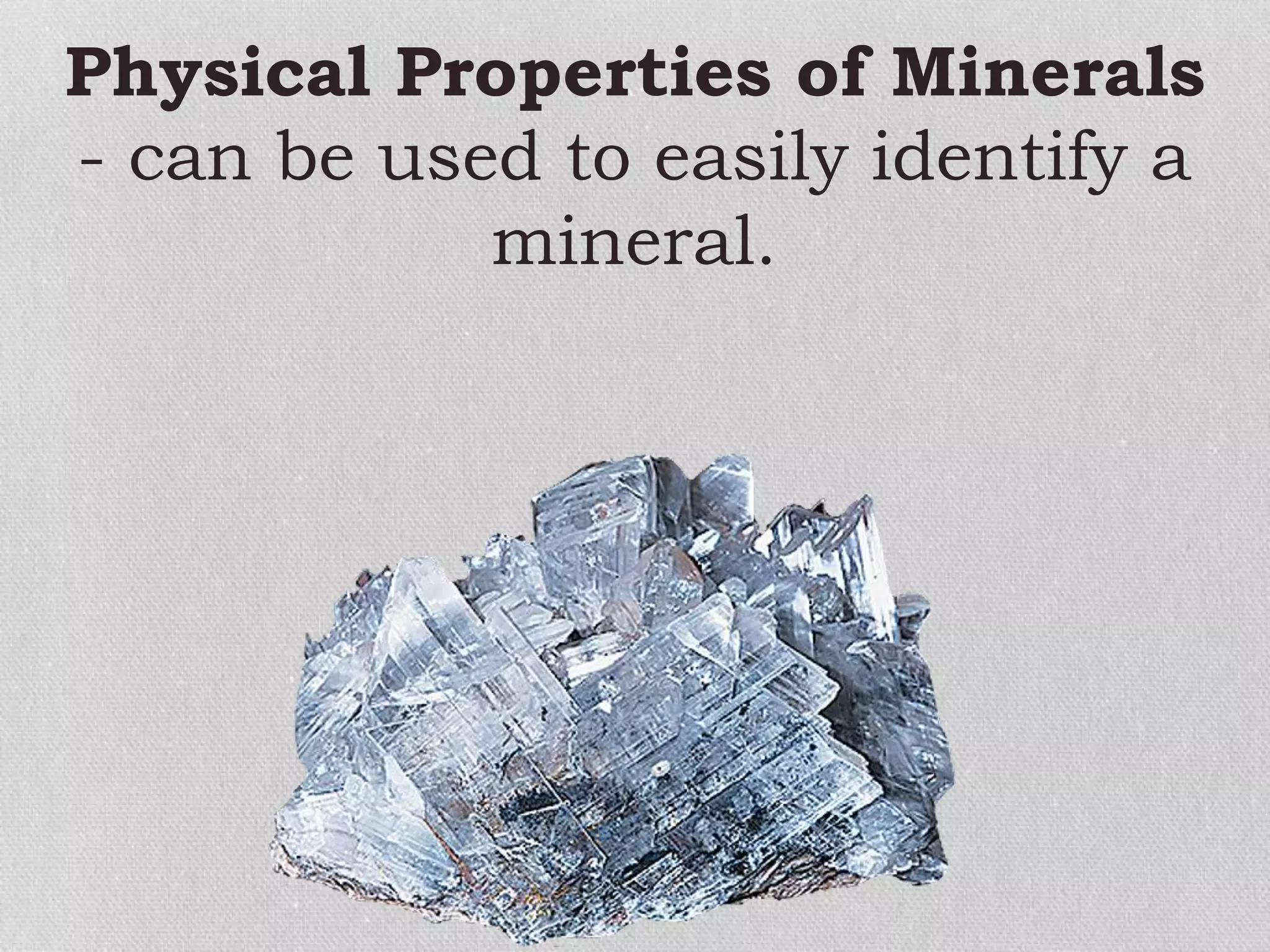
Physical Properties of Minerals
- can be used to easily identify a
mineral.
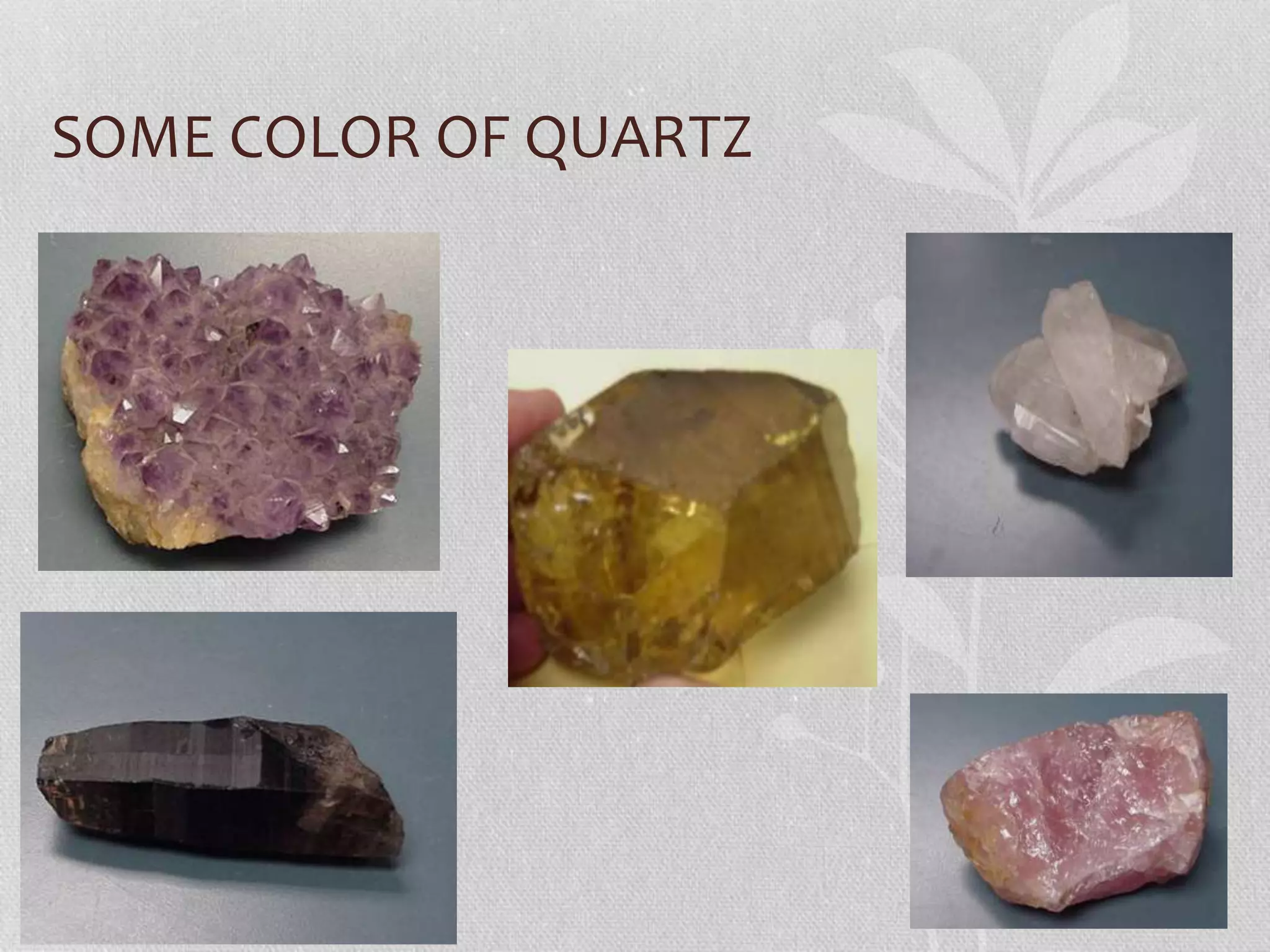
COLOR
 Minerals can be many different
colors or the same color.
 Usually the property used to
identify minerals easily. It is
the result of the way minerals
absorb light.
SOME COLOR OF QUARTZ
HARDNESS
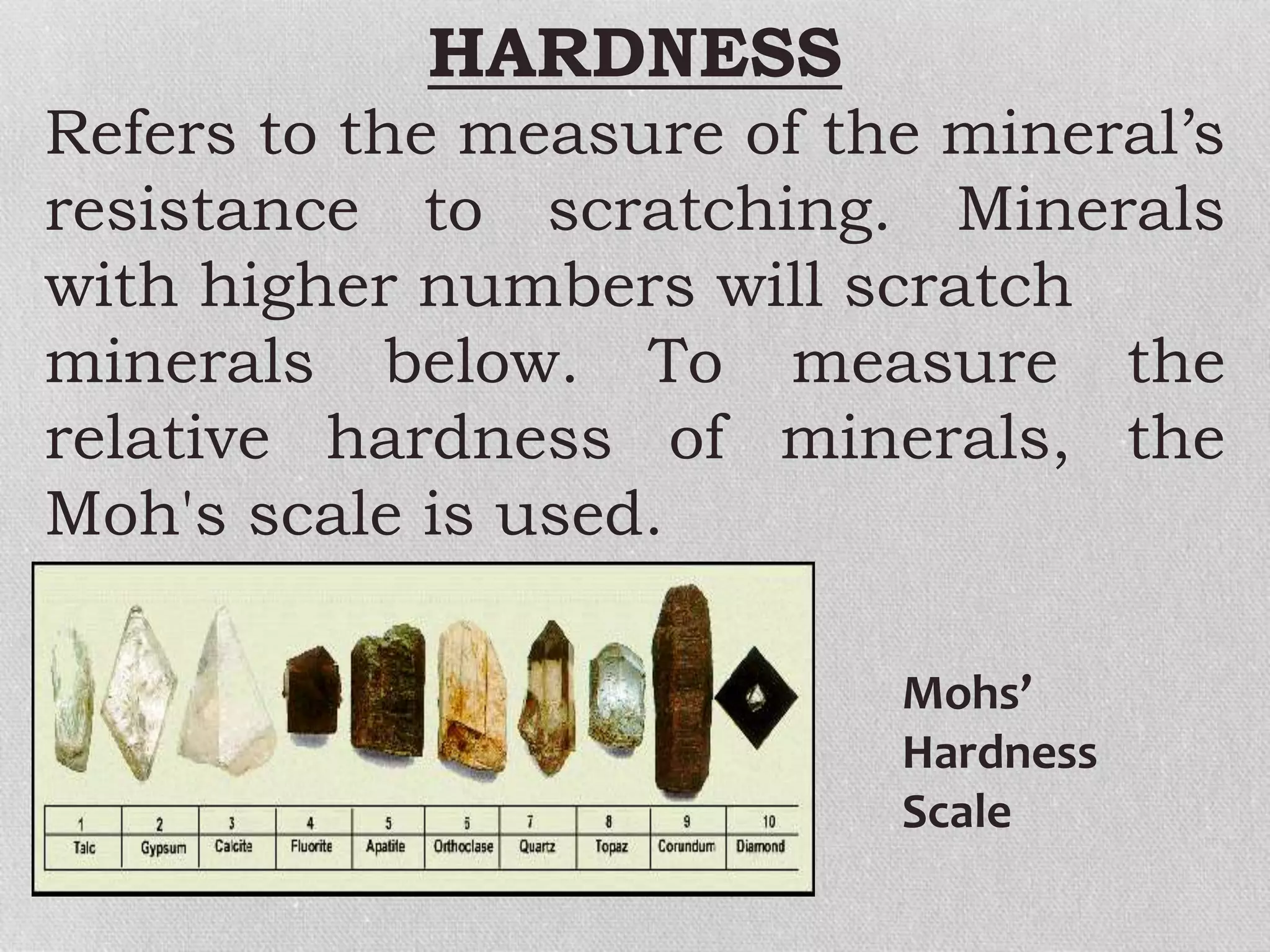
Refers to the measure of the mineral’s
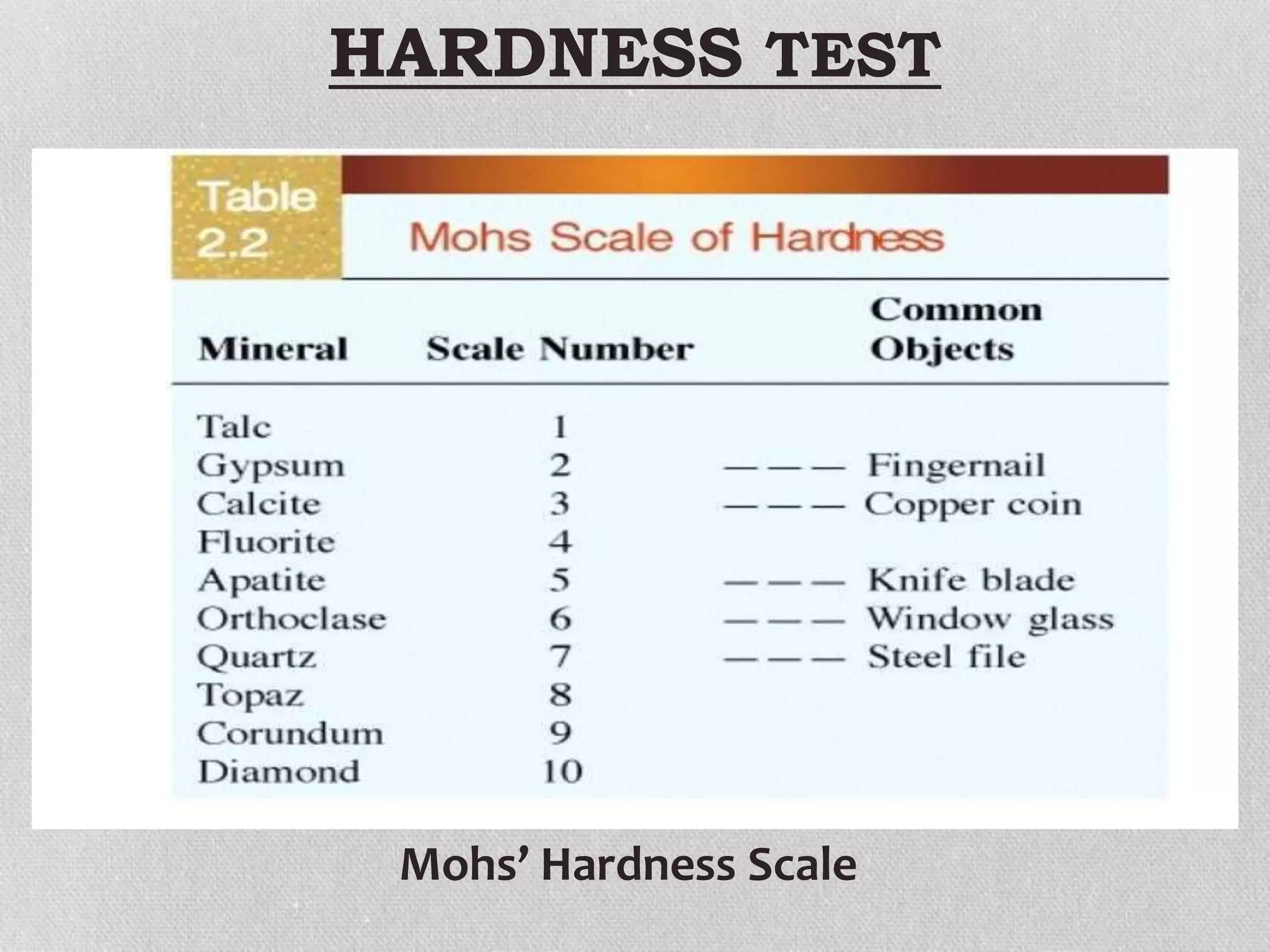
resistance to scratching. Minerals
with higher numbers will scratch
minerals below. To measure the
relative hardness of minerals, the
Moh's scale is used.
Mohs’
Hardness
Scale
HARDNESS TEST
Mohs’ Hardness Scale
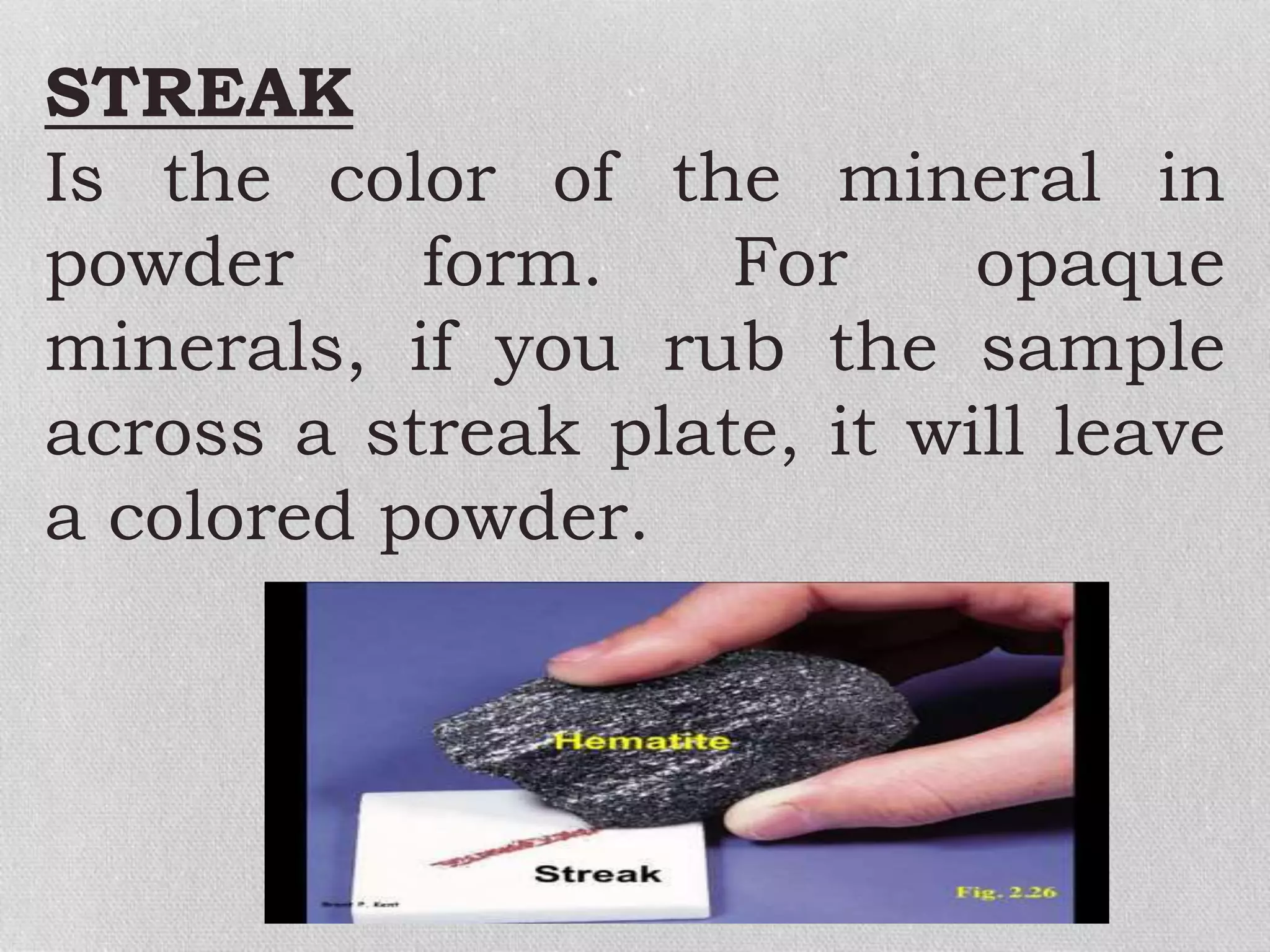
STREAK
Is the color of the mineral in
powder form. For opaque
minerals, if you rub the sample
across a streak plate, it will leave
a colored powder.
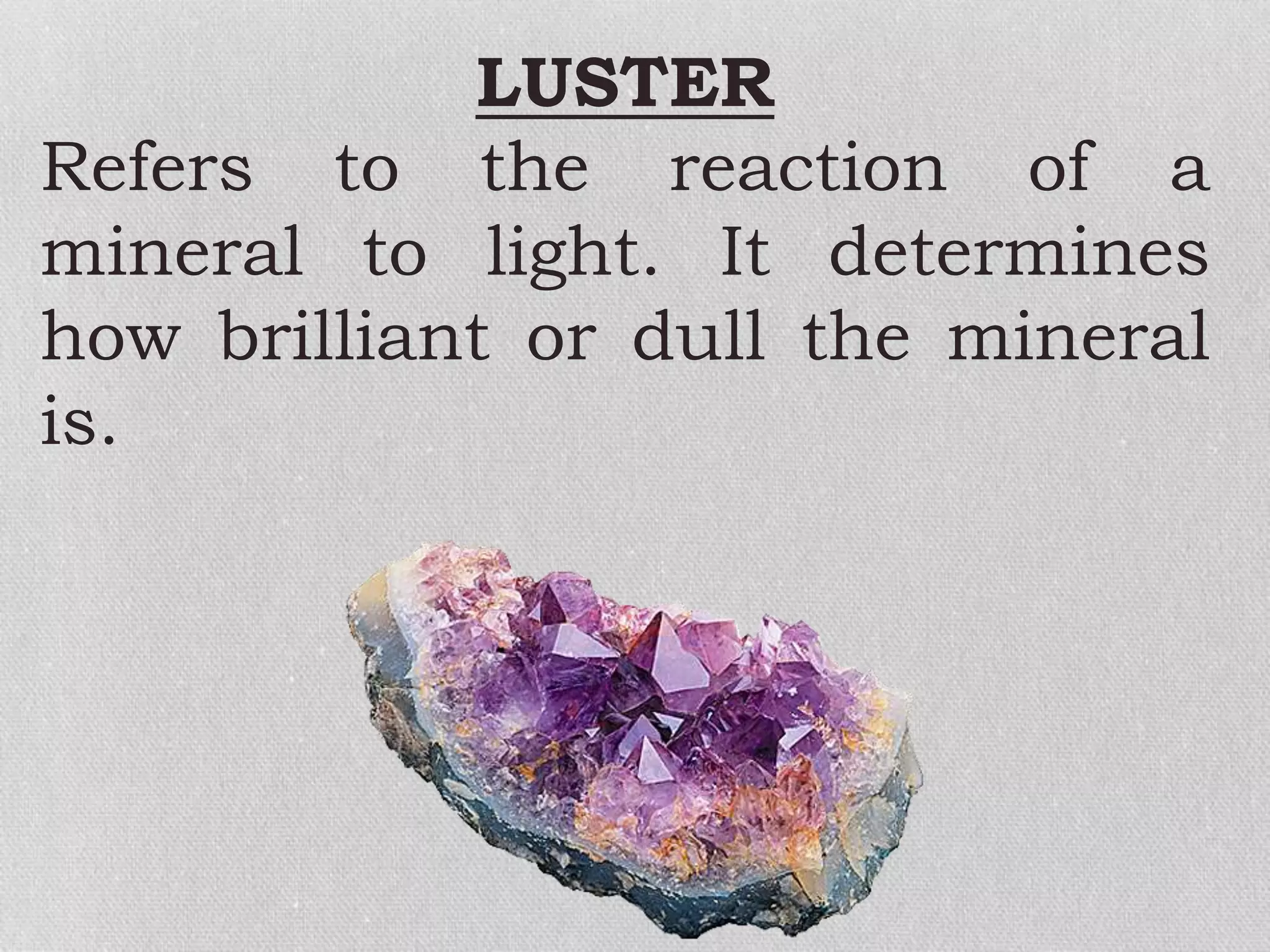
LUSTER
Refers to the reaction of a
mineral to light. It determines
how brilliant or dull the mineral
is.
Categories: Metallic or Non-Metallic
Metallic
Luster of metal – shines like a
hard metal
Non-Metallic
minerals are SHINY because they
are transparent or semi-
transparent
Cleavage and Fractures
 Used to describe how minerals
break into pieces.
 Some minerals split along flat
surfaces (called cleavage
planes) when struck hard--this
is called mineral cleavage.
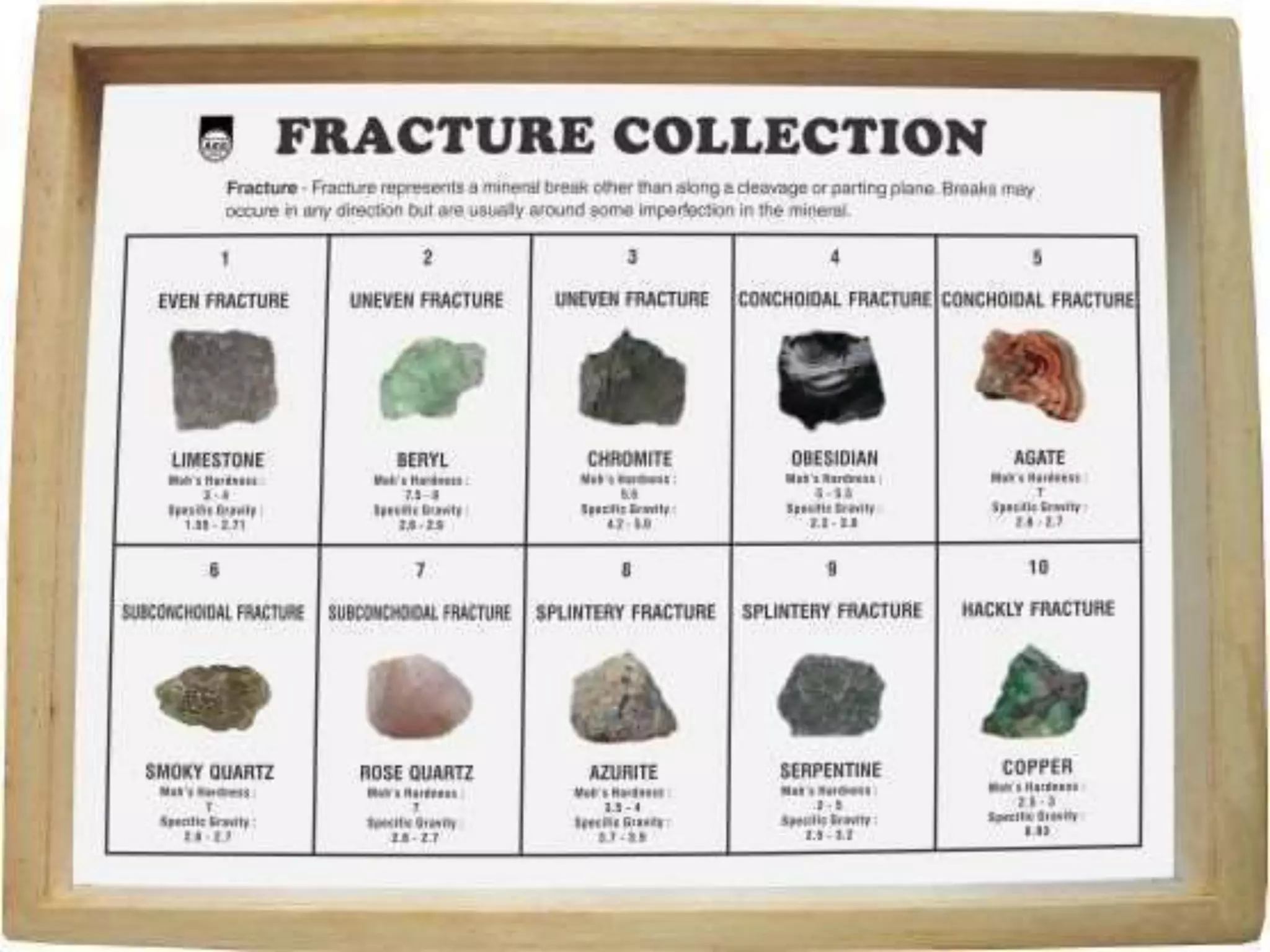
 Other minerals break unevenly
along rough or curved
surfaces--this is called fracture
Crystalline structure
 Crystal lattice, tells how a
mineral’s crystals are
arranged. A hand lens is a
necessary tool in checking for
crystalline structure.
Crystal Solid
 Form regular repeating three
dimensional crystal lattice
Amorphous Solid
 Forms aggregates that have
particular order or
arrangement
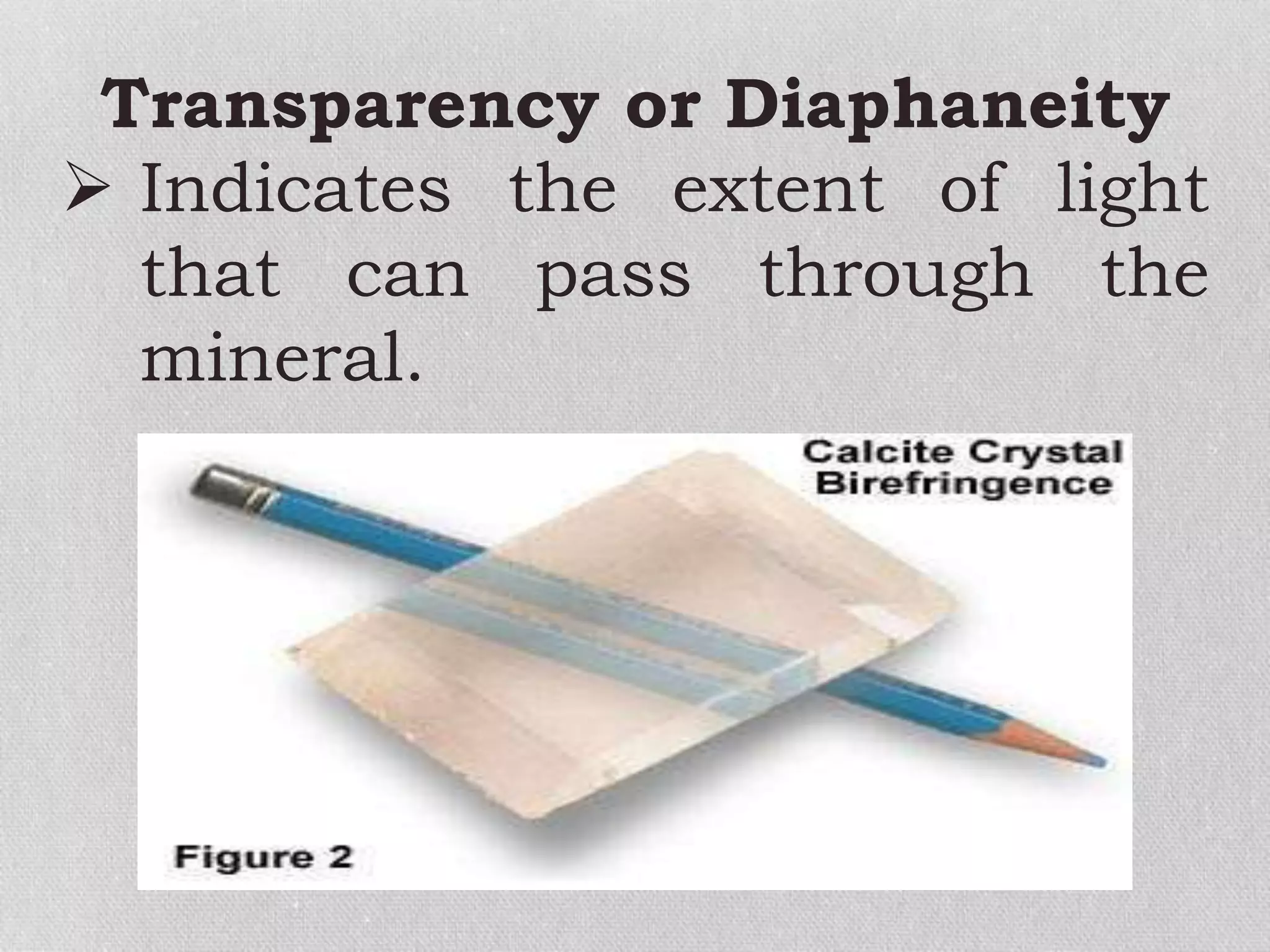
Transparency or Diaphaneity
 Indicates the extent of light
that can pass through the
mineral.
Magnetism
 Indicates the ability of a
mineral to attract or repel
other minerals.
Tenacity
 Level of resistance or reaction
of minerals to stress such as
crushing, bending, breaking,
or tearing.
Odor
a distinct smell of a mineral that is
usually released from a chemical
reaction when subjected to water,
heat, air or friction.
Specific Gravity
is a measure of the density of a
mineral. Determines how heavy the
mineral is by its weight to water.
CHEMICAL PROPERTIES OF
MINERALS
Another way of identifying and
classifying minerals is according to
their chemical composition. This
classification was first used in 1848
by James Dwight Dana (1813-
1895).
CHEMICAL
PROPERTIES OF
MINERALS
Silicate Class
 Largest and most abundant
group containing Si and O with
some Al, Mg, Fe, and Ca. (Ex.
feldspar, quartz, pyroxene, mica,
garnet, olivine and amphibole.
Carbonate Class
 Mostly found deposited in marine
environments.
Sulphate Class
 Forms in areas with high
evaporation rates and where salty
waters slowly evaporate.
(Ex. anhydrite, celestine, barite,
gypsum)
Halide class
Contains natural salts includes
fluorite, halite, sylvite and salt
ammoniac components. Usually
form in lakes, and salt ammoniac
components.
Oxide class
Is a diverse class. In science, these
minerals are important as that carry
histories of changes in Earth's
magnetic field. They are formed as
precipitates close to Earth's surface
or as oxidation products of minerals
during the process of weathering.
Sulphide class
Has important metals such as
copper, lead and silver which are
considered economically significant.
Phosphate class
Contains minerals with phosphorus.
Considered as important biological
mineral found in teeth and bones in
many animals.
Native element class - contains
metals and
intermetallic elements, semimetals
nonmetals
or natural alloys and constituents of
a few rare
meteorites.
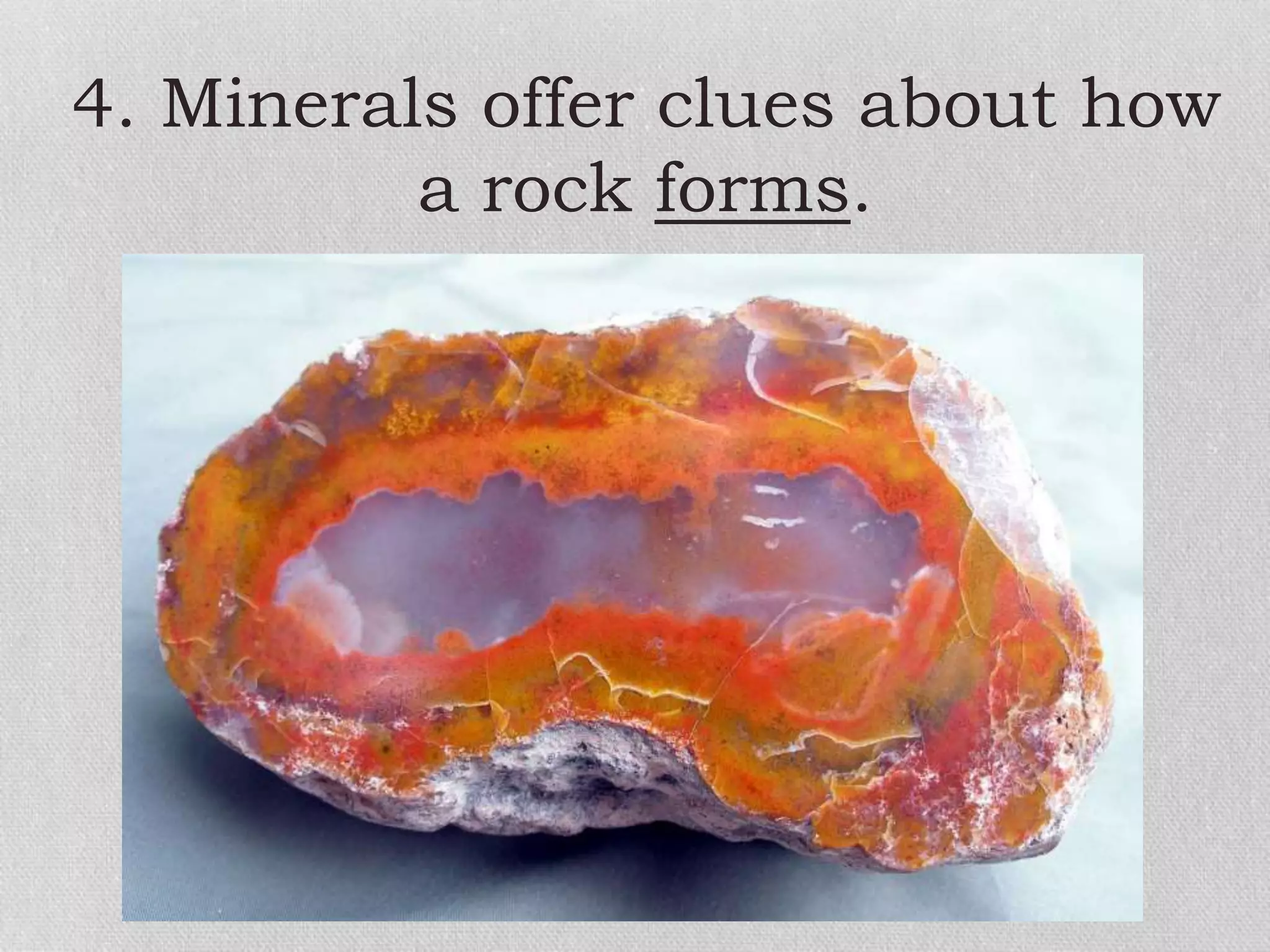
4. Minerals offer clues about how
a rock forms.
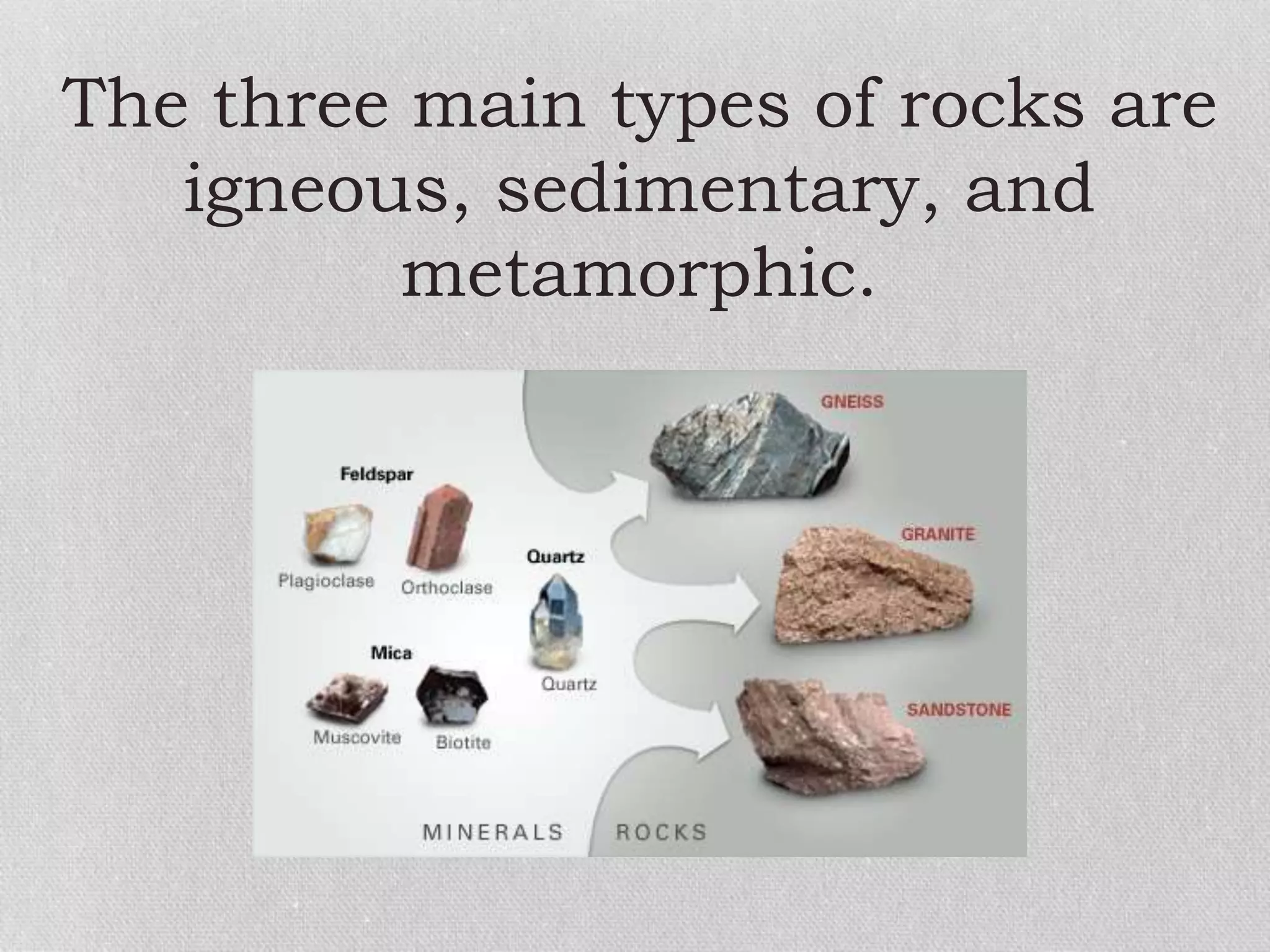
The three main types of rocks are
igneous, sedimentary, and
metamorphic.
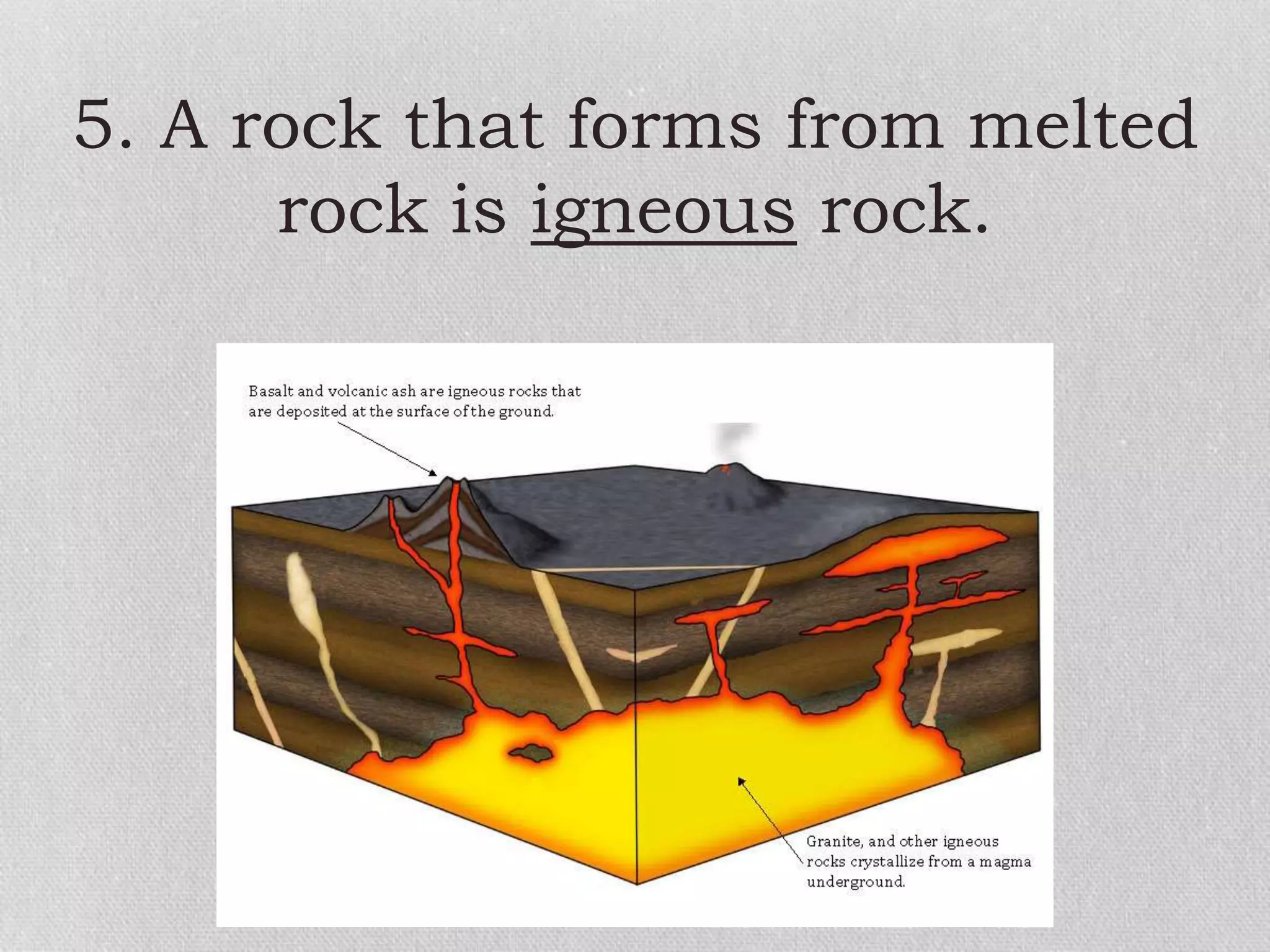
5. A rock that forms from melted
rock is igneous rock.
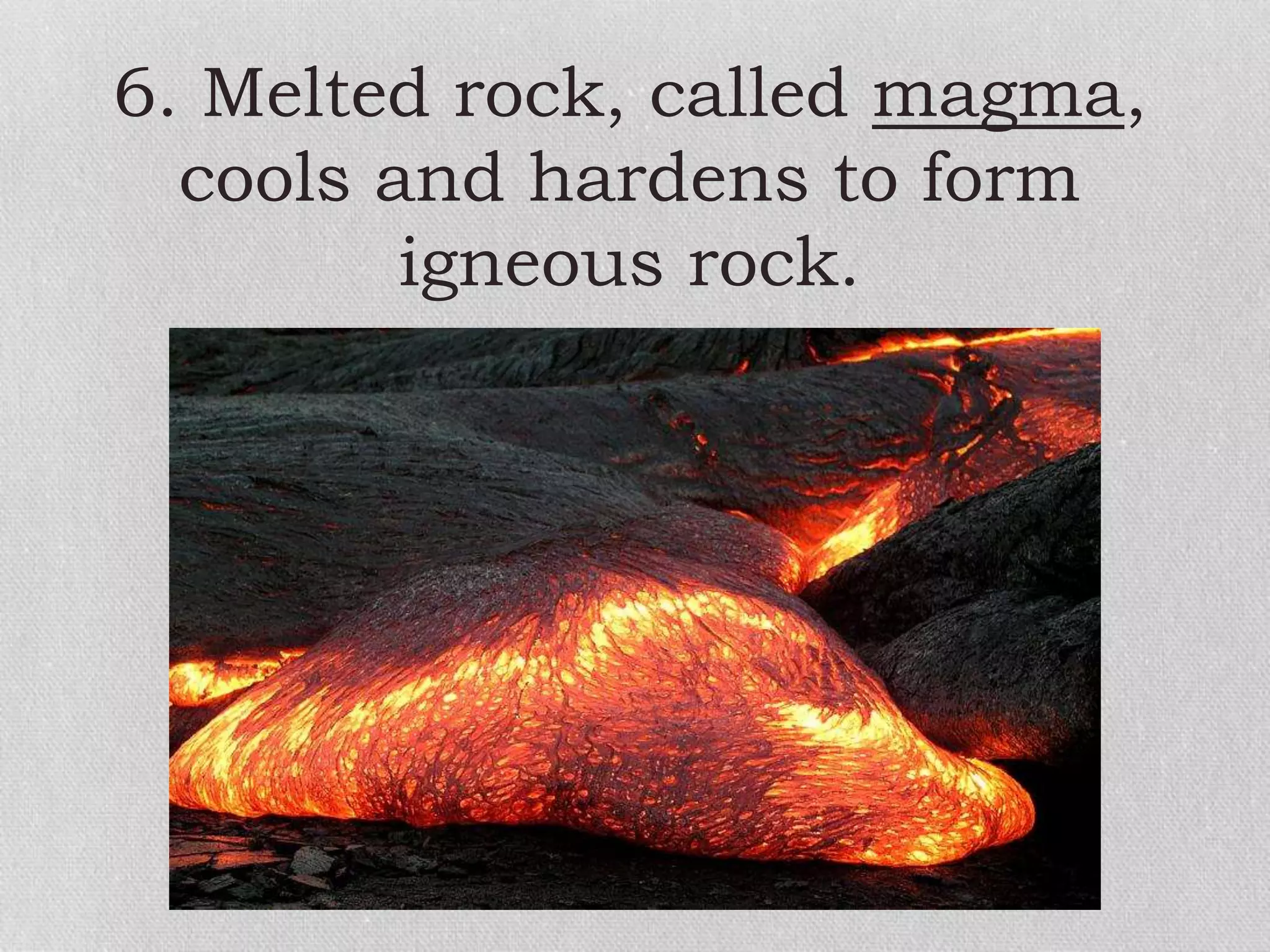
6. Melted rock, called magma,
cools and hardens to form
igneous rock.
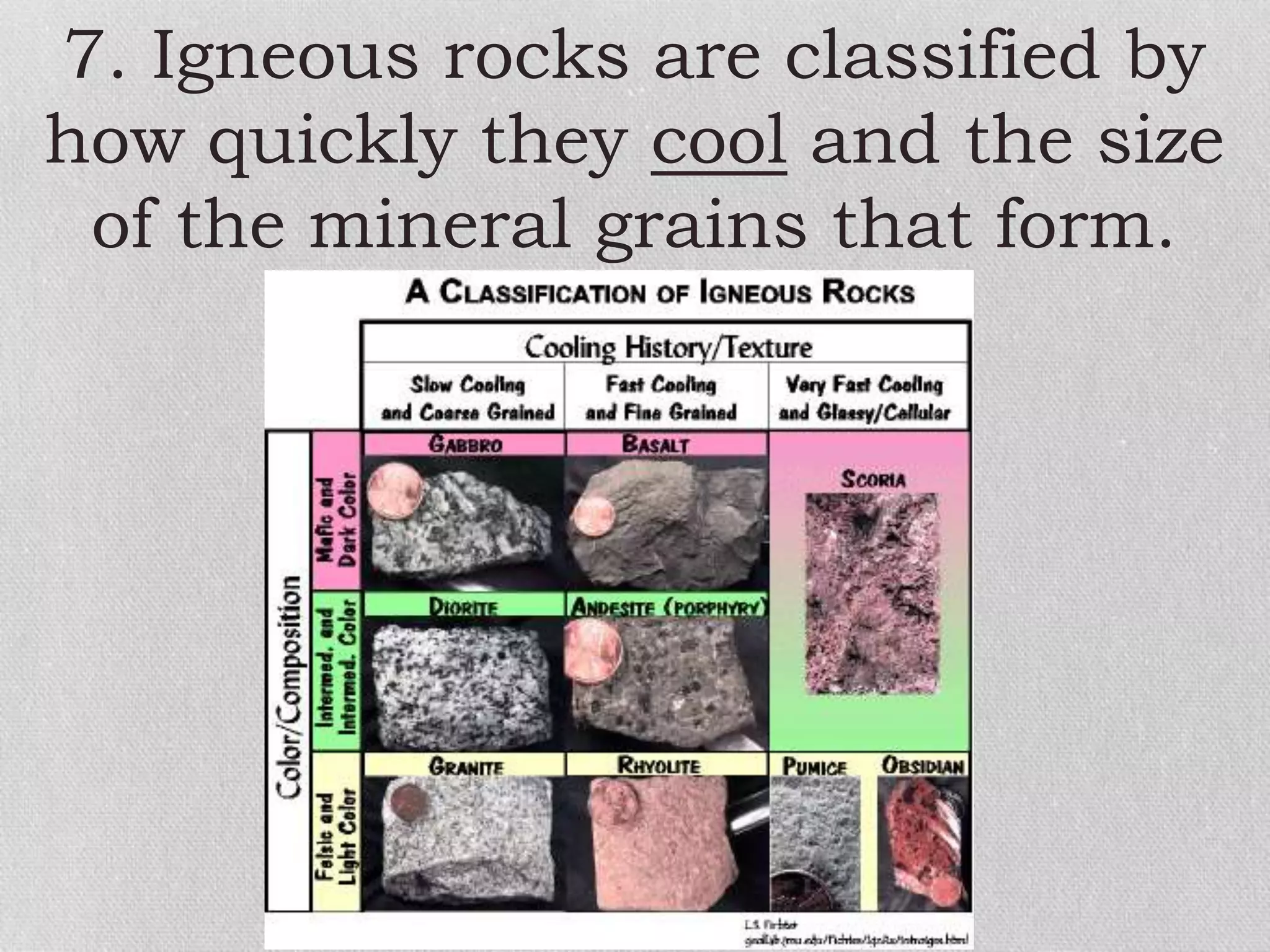
7. Igneous rocks are classified by
how quickly they cool and the size
of the mineral grains that form.
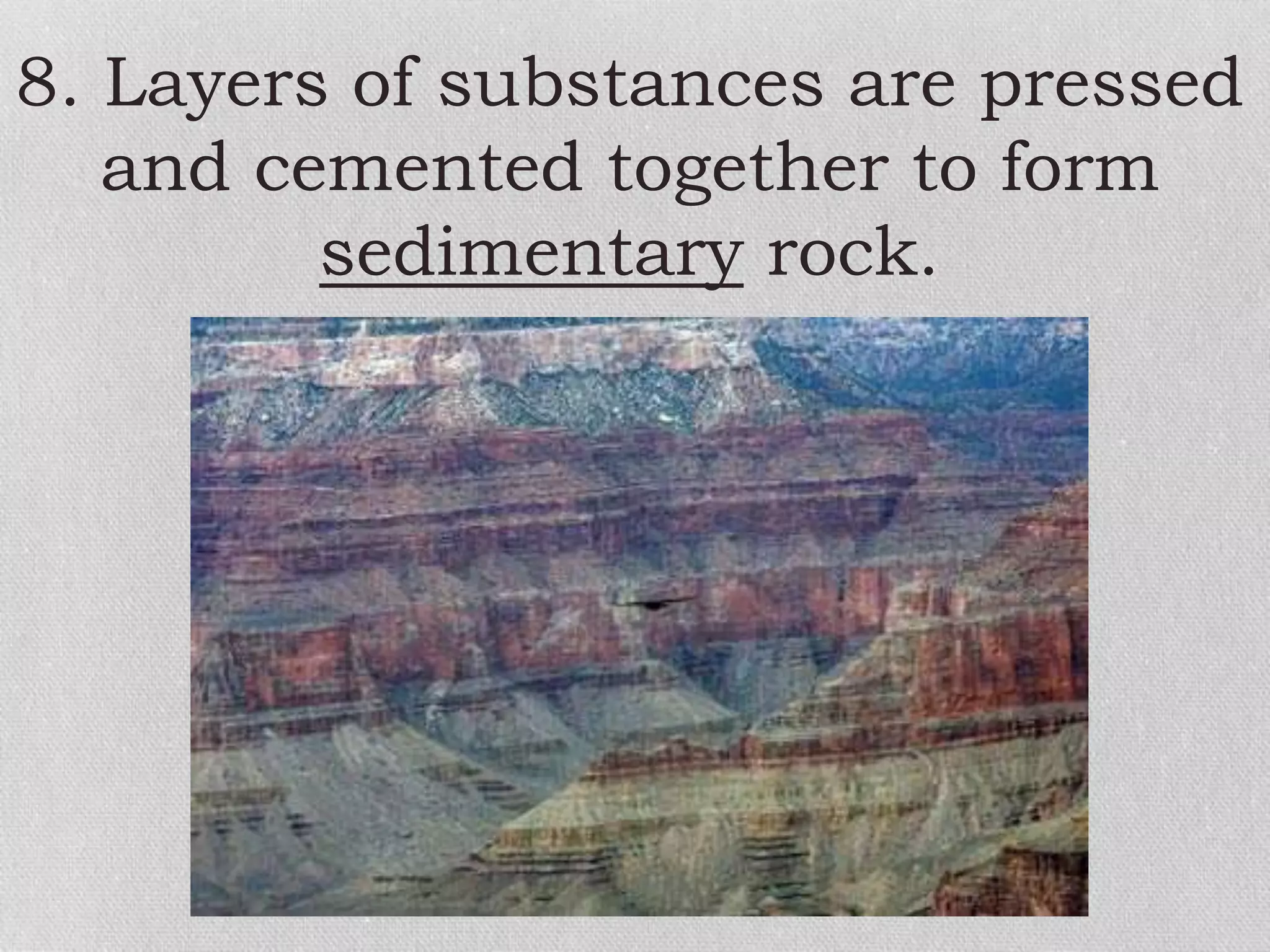
8. Layers of substances are pressed
and cemented together to form
sedimentary rock.
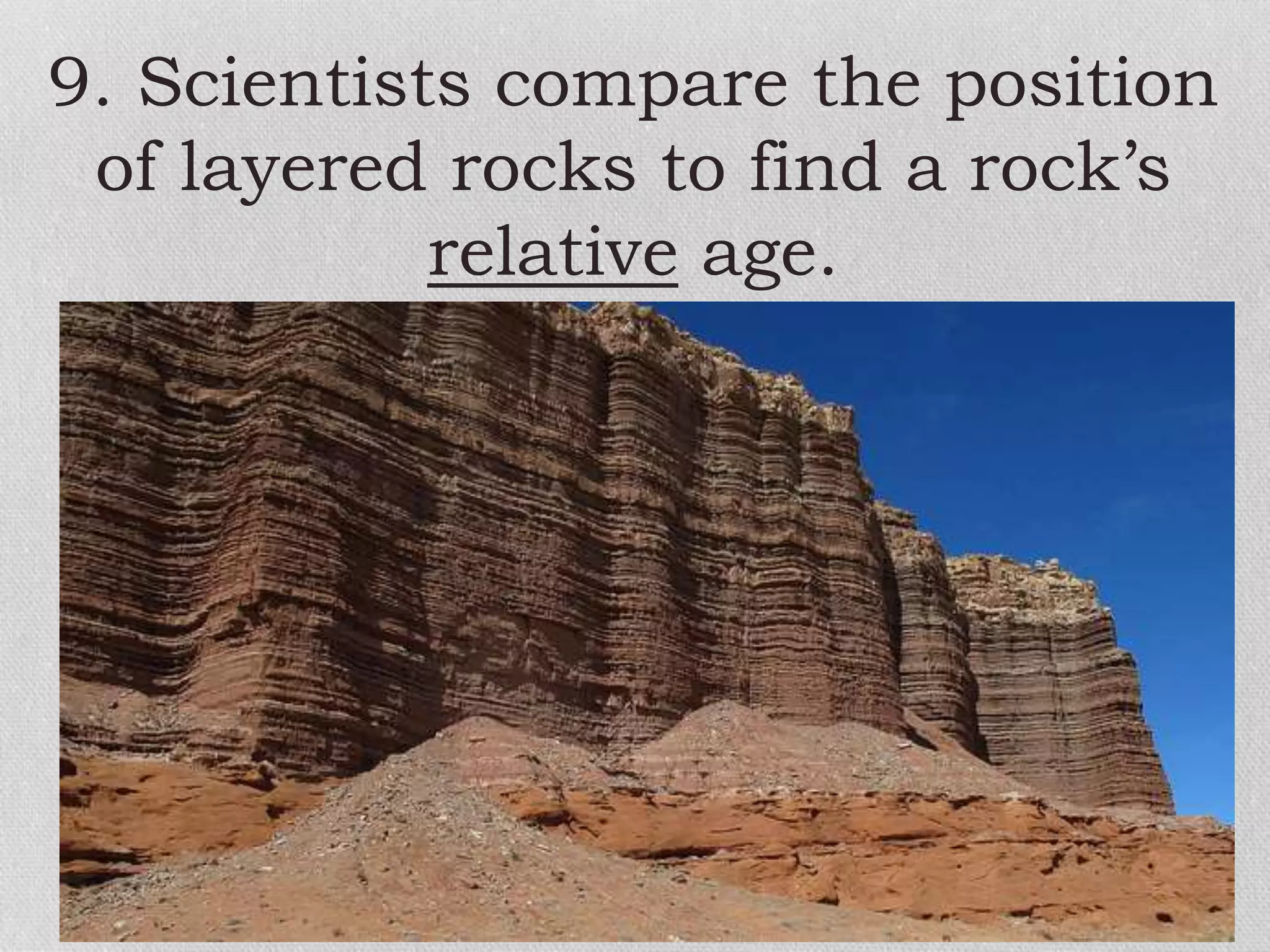
9. Scientists compare the position
of layered rocks to find a rock’s
relative age.
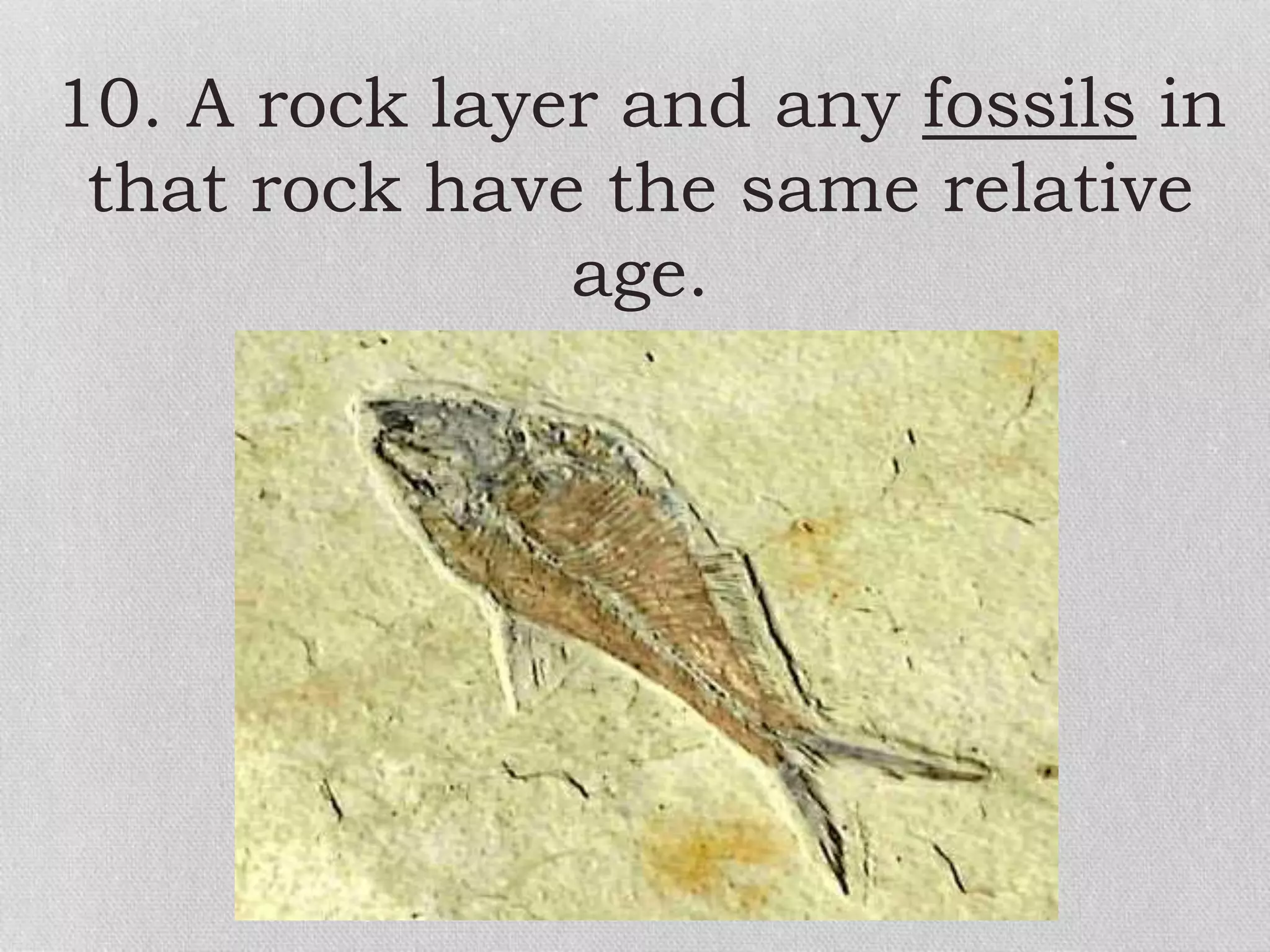
10. A rock layer and any fossils in
that rock have the same relative
age.
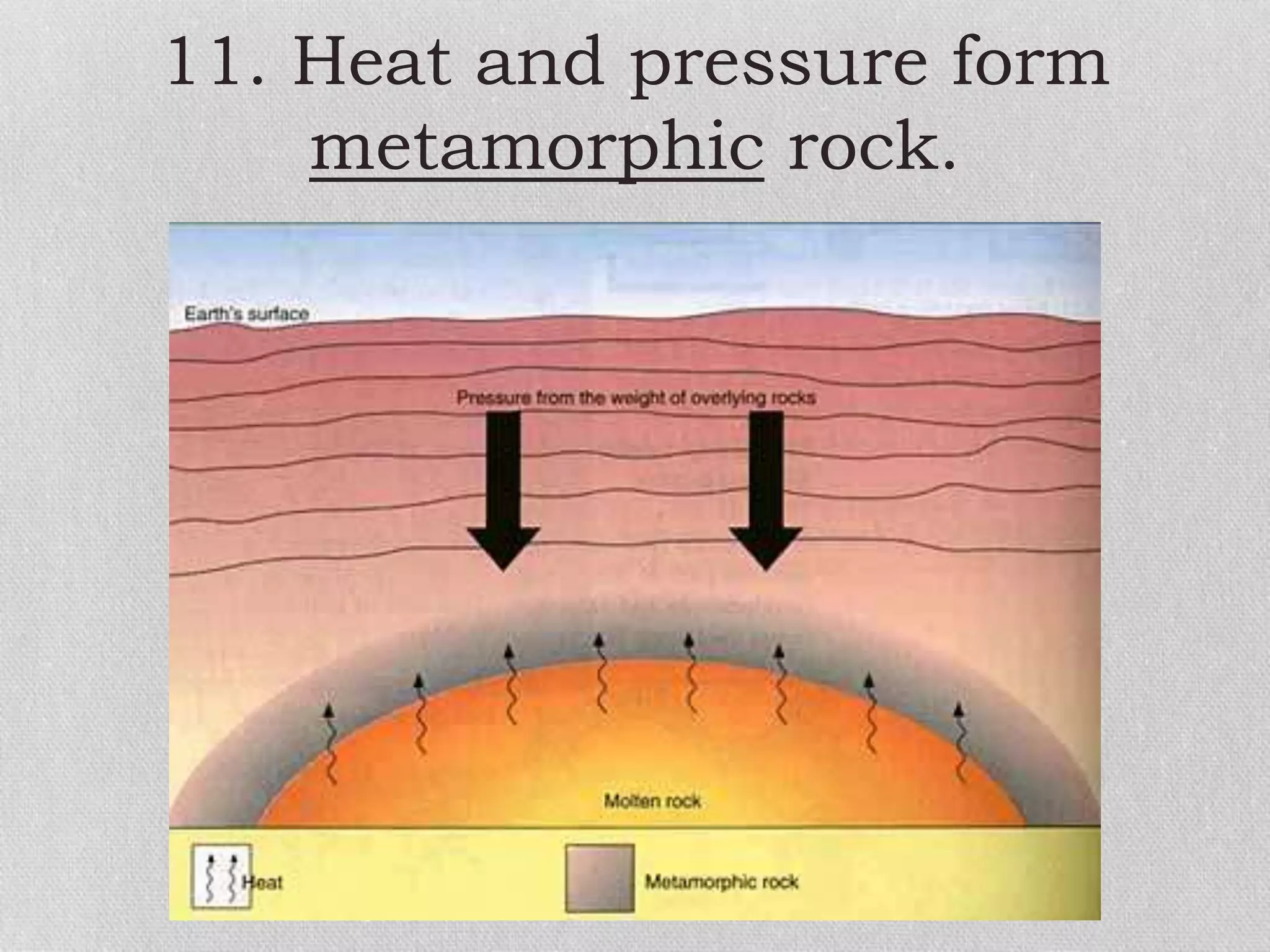
11. Heat and pressure form
metamorphic rock.
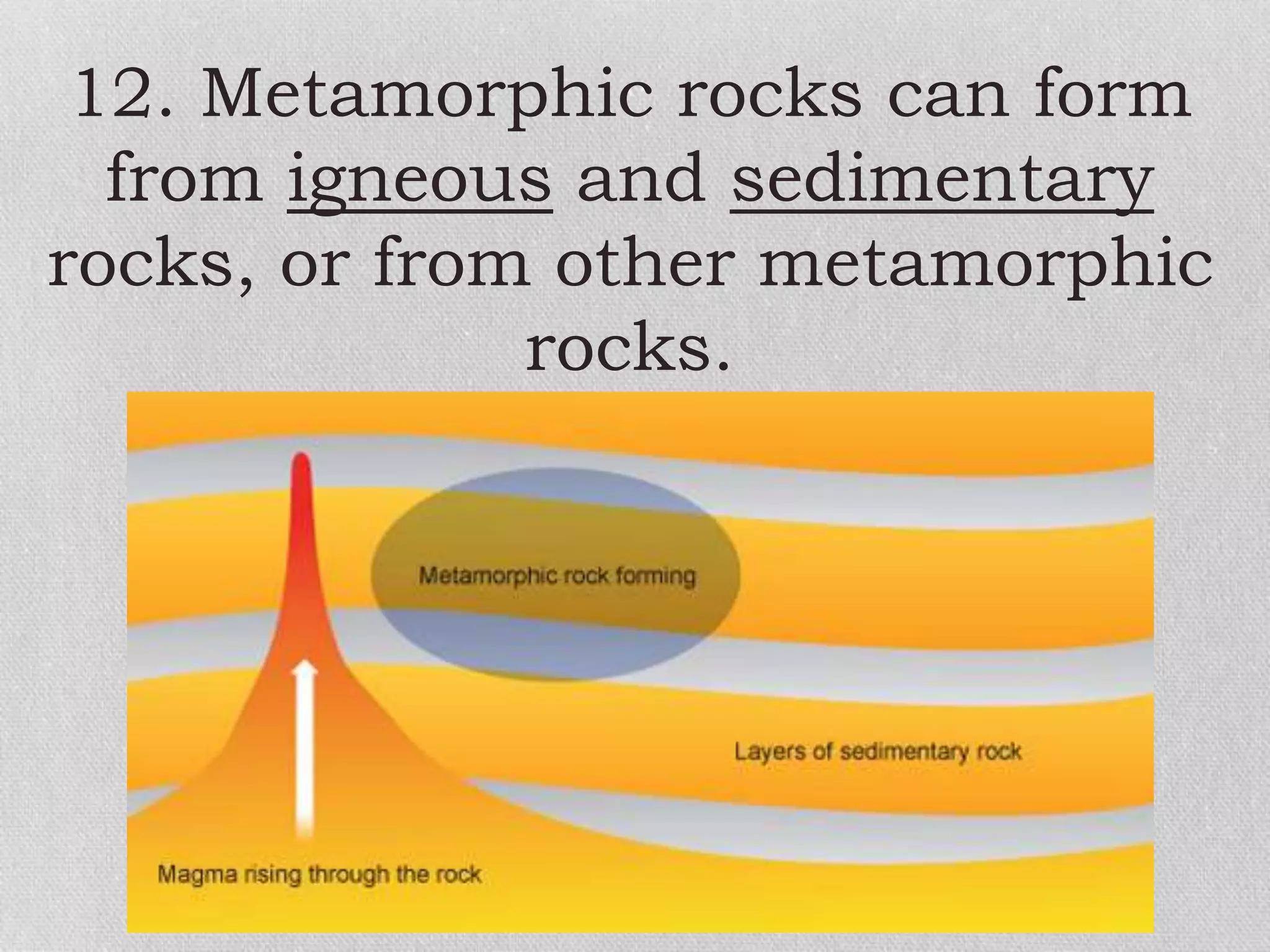
12. Metamorphic rocks can form
from igneous and sedimentary
rocks, or from other metamorphic
rocks.
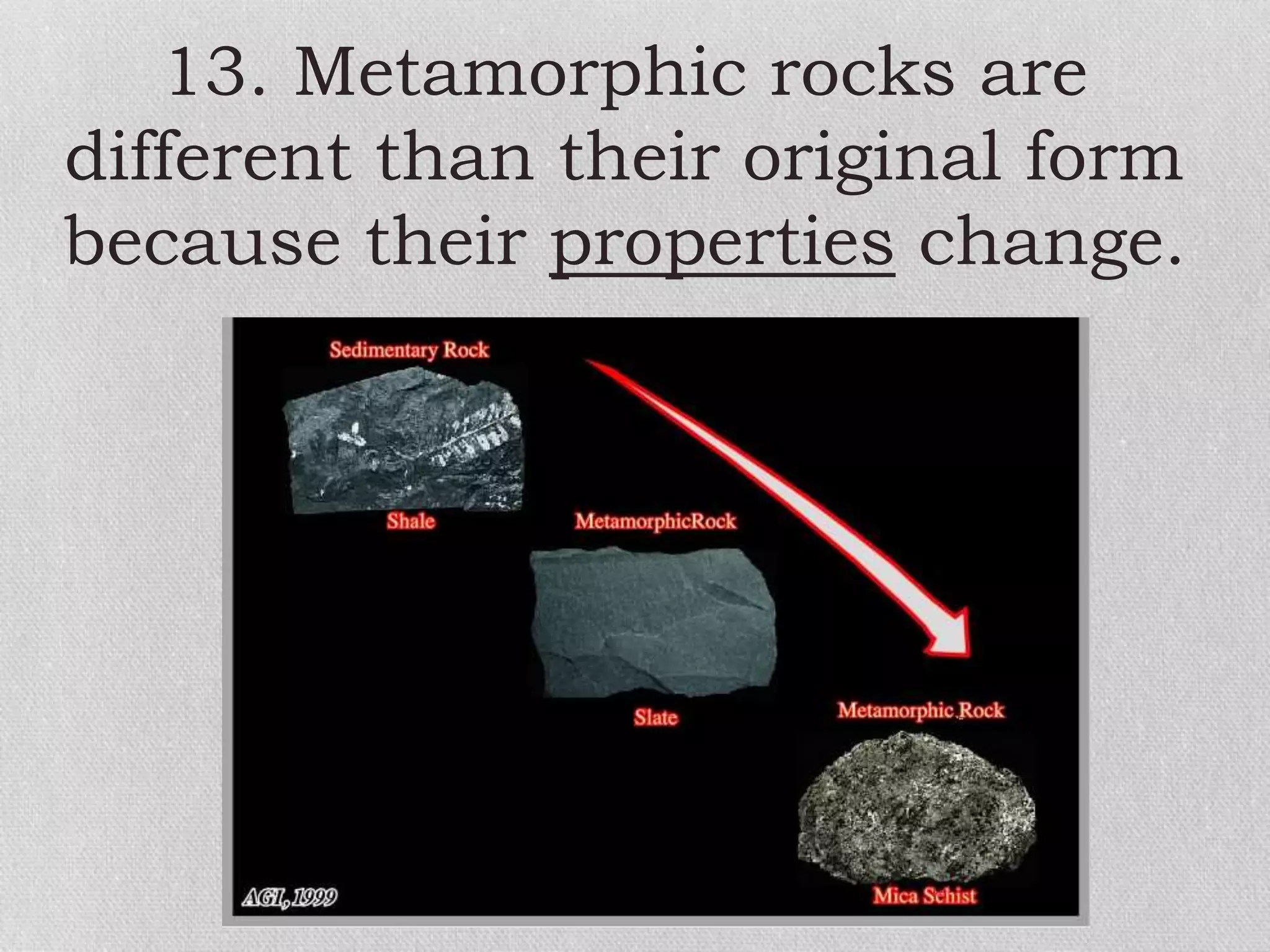
13. Metamorphic rocks are
different than their original form
because their properties change.
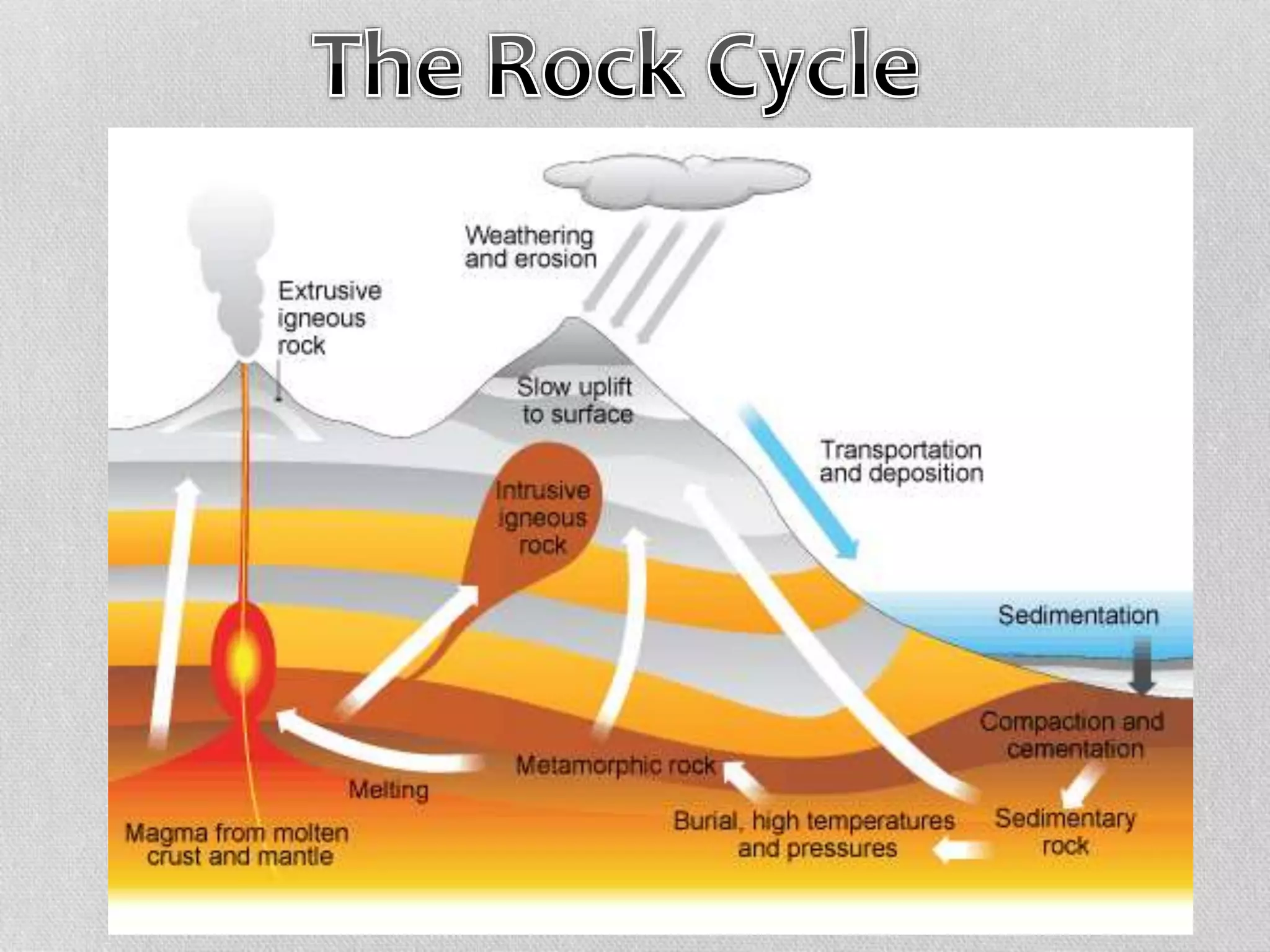
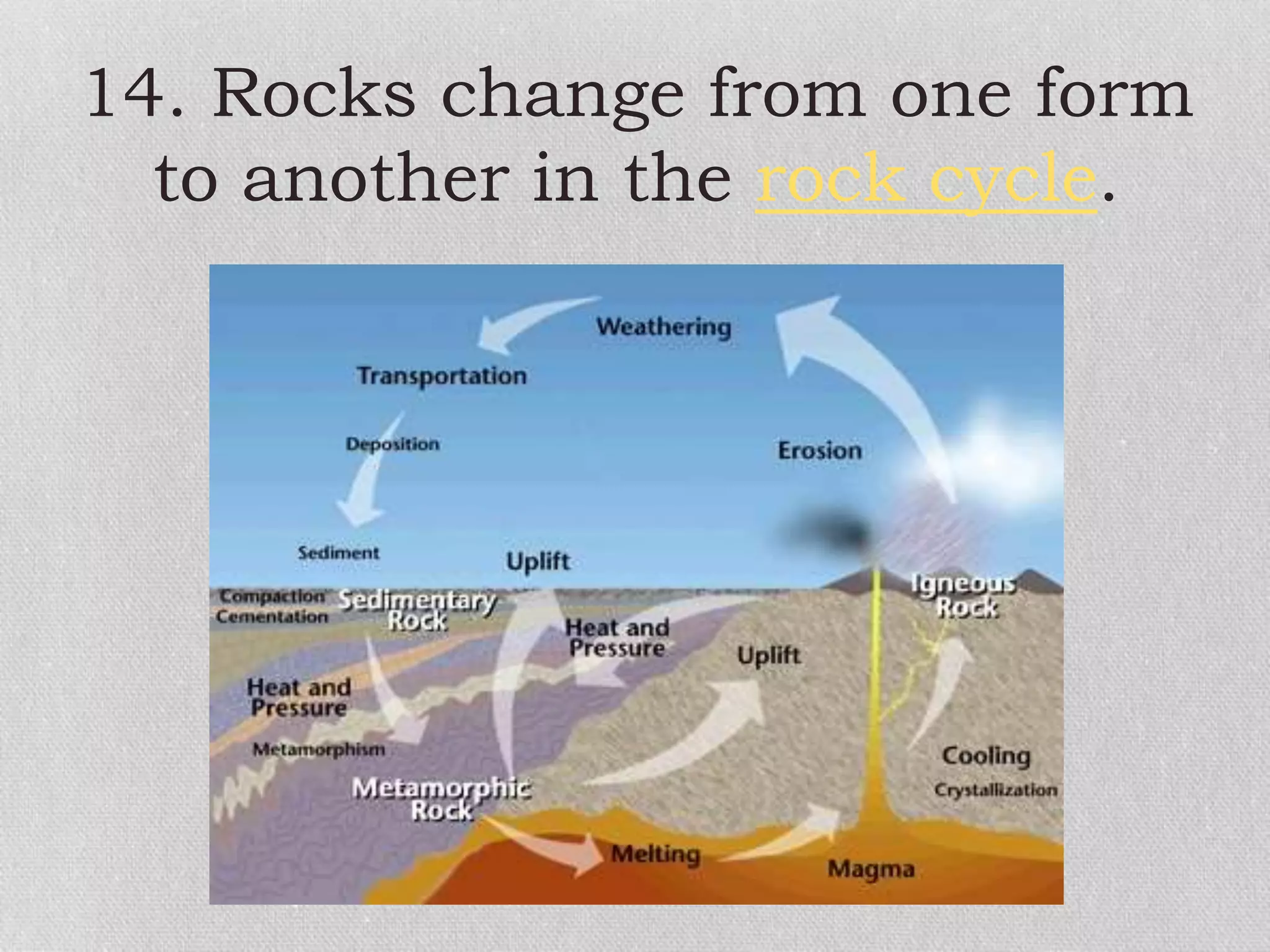
14. Rocks change from one form
to another in the rock cycle.
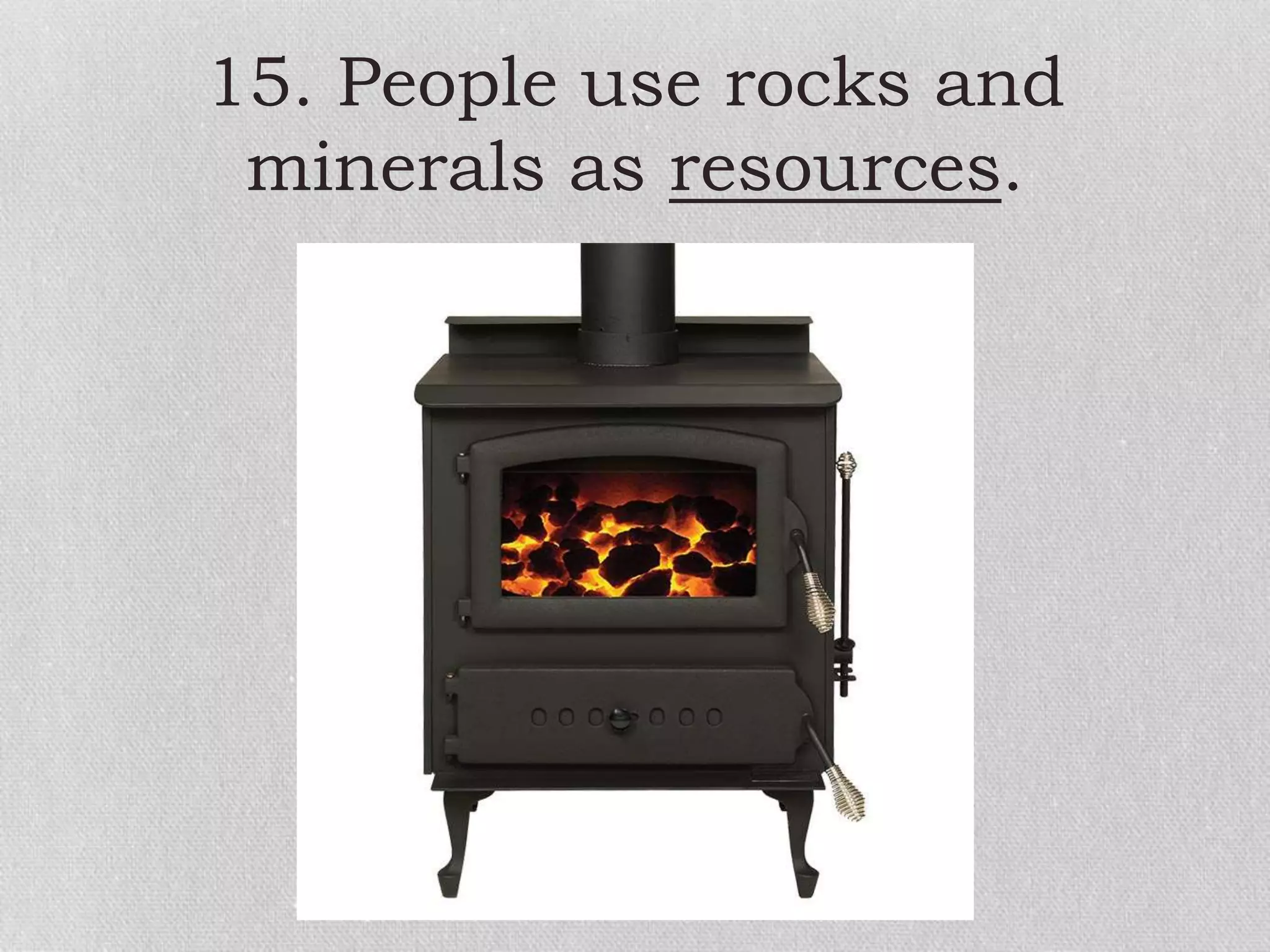
15. People use rocks and
minerals as resources.
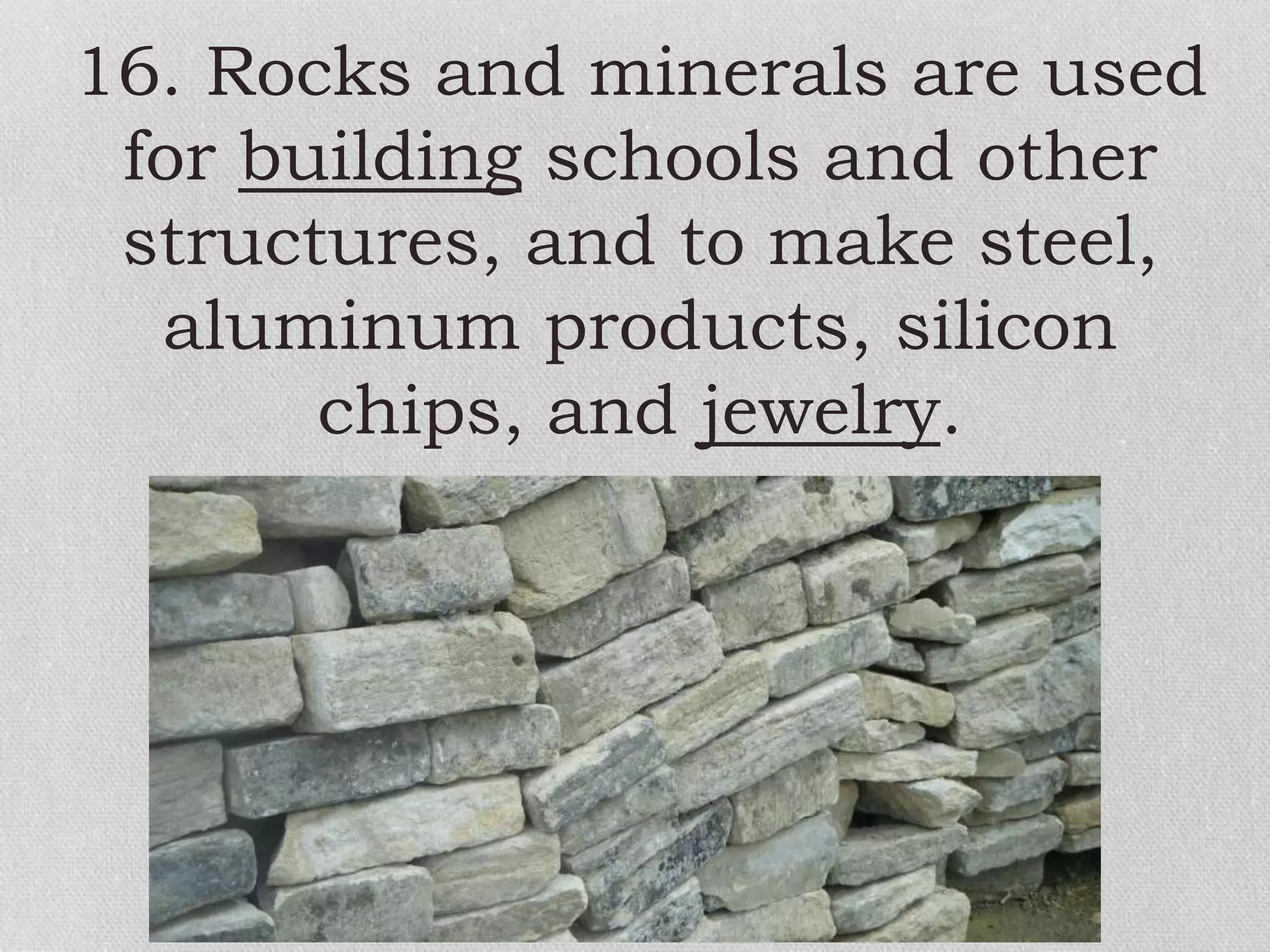
16. Rocks and minerals are used
for building schools and other
structures, and to make steel,
aluminum products, silicon
chips, and jewelry.
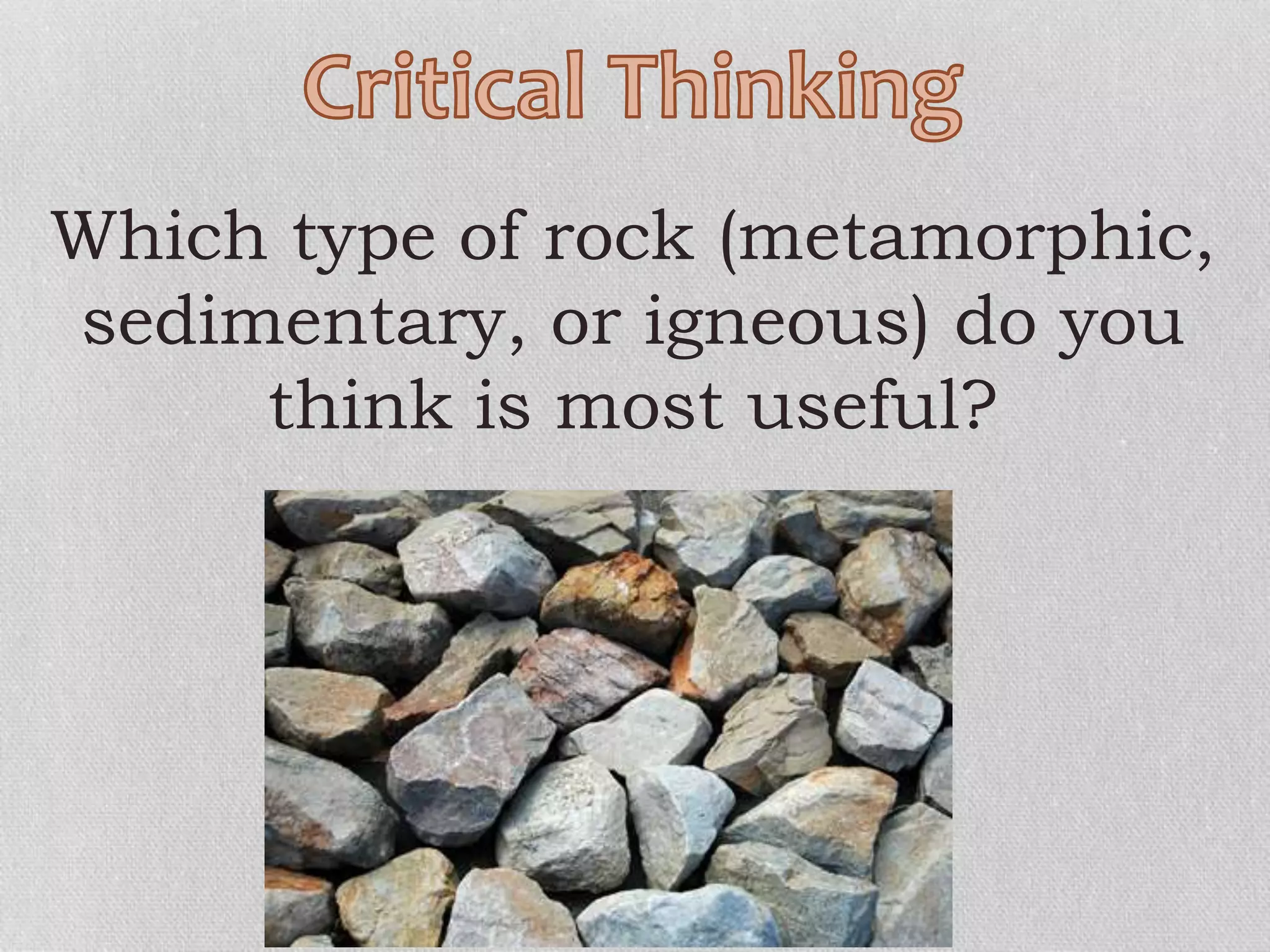
Which type of rock (metamorphic,
sedimentary, or igneous) do you
think is most useful?
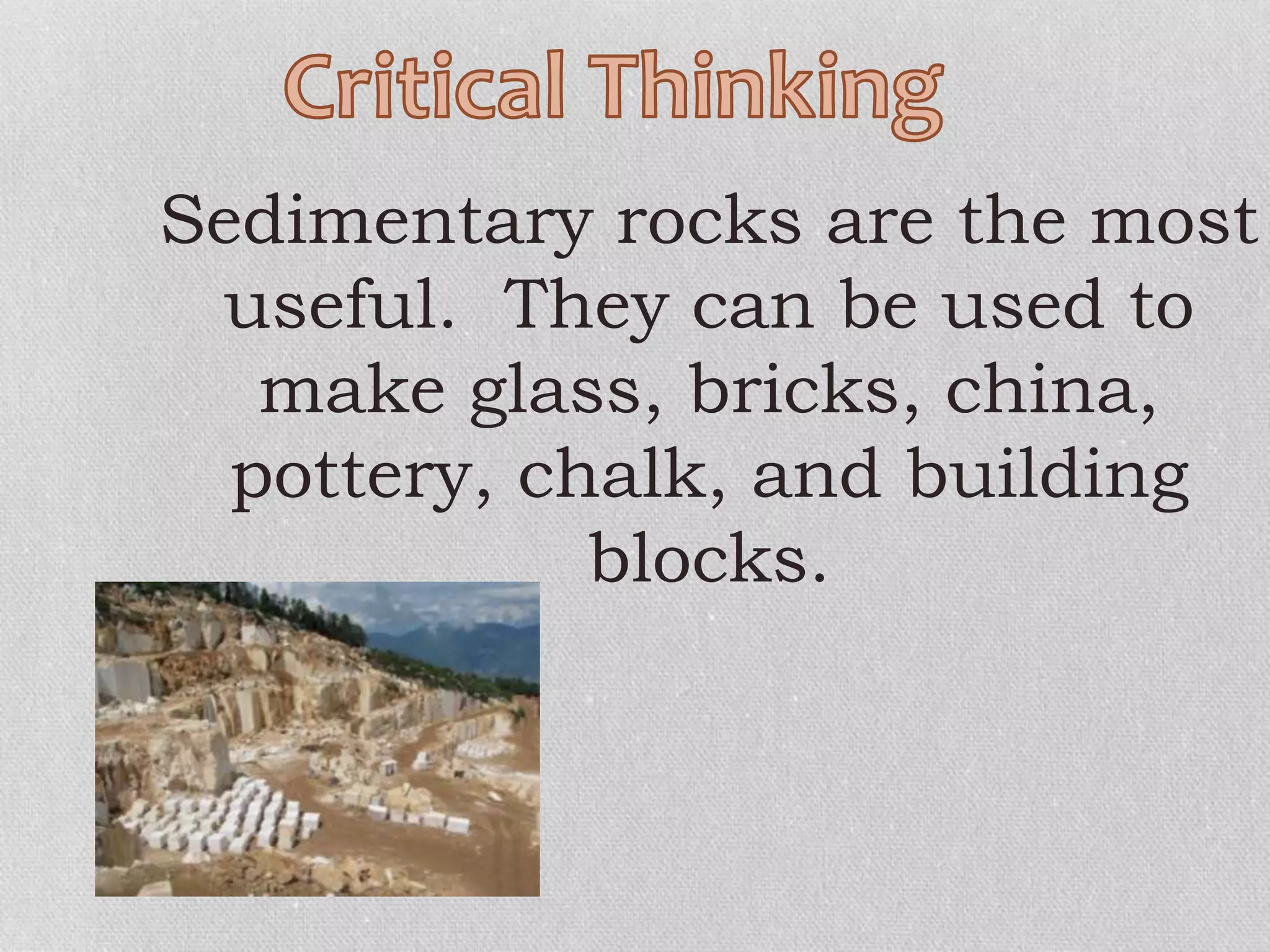
Sedimentary rocks are the most
useful. They can be used to
make glass, bricks, china,
pottery, chalk, and building
blocks.

Lesson 1 Outline.pptx

  • 2.
    Minerals  Are theingredients of rocks.  Naturally formed, generally inorganic, crystalline, solid and has a definite chemical composition building blocks of rocks
  • 3.
    Physical Properties ofMinerals - can be used to easily identify a mineral.
  • 4.
    COLOR  Minerals canbe many different colors or the same color.  Usually the property used to identify minerals easily. It is the result of the way minerals absorb light.
  • 5.
  • 6.
    HARDNESS Refers to themeasure of the mineral’s resistance to scratching. Minerals with higher numbers will scratch minerals below. To measure the relative hardness of minerals, the Moh's scale is used. Mohs’ Hardness Scale
  • 7.
  • 8.
    STREAK Is the colorof the mineral in powder form. For opaque minerals, if you rub the sample across a streak plate, it will leave a colored powder.
  • 9.
    LUSTER Refers to thereaction of a mineral to light. It determines how brilliant or dull the mineral is.
  • 10.
    Categories: Metallic orNon-Metallic Metallic Luster of metal – shines like a hard metal Non-Metallic minerals are SHINY because they are transparent or semi- transparent
  • 11.
    Cleavage and Fractures Used to describe how minerals break into pieces.  Some minerals split along flat surfaces (called cleavage planes) when struck hard--this is called mineral cleavage.  Other minerals break unevenly along rough or curved surfaces--this is called fracture
  • 13.
    Crystalline structure  Crystallattice, tells how a mineral’s crystals are arranged. A hand lens is a necessary tool in checking for crystalline structure.
  • 14.
    Crystal Solid  Formregular repeating three dimensional crystal lattice Amorphous Solid  Forms aggregates that have particular order or arrangement
  • 15.
    Transparency or Diaphaneity Indicates the extent of light that can pass through the mineral.
  • 16.
    Magnetism  Indicates theability of a mineral to attract or repel other minerals. Tenacity  Level of resistance or reaction of minerals to stress such as crushing, bending, breaking, or tearing.
  • 17.
    Odor a distinct smellof a mineral that is usually released from a chemical reaction when subjected to water, heat, air or friction. Specific Gravity is a measure of the density of a mineral. Determines how heavy the mineral is by its weight to water.
  • 18.
    CHEMICAL PROPERTIES OF MINERALS Anotherway of identifying and classifying minerals is according to their chemical composition. This classification was first used in 1848 by James Dwight Dana (1813- 1895).
  • 19.
  • 20.
    Silicate Class  Largestand most abundant group containing Si and O with some Al, Mg, Fe, and Ca. (Ex. feldspar, quartz, pyroxene, mica, garnet, olivine and amphibole.
  • 21.
    Carbonate Class  Mostlyfound deposited in marine environments. Sulphate Class  Forms in areas with high evaporation rates and where salty waters slowly evaporate. (Ex. anhydrite, celestine, barite, gypsum)
  • 22.
    Halide class Contains naturalsalts includes fluorite, halite, sylvite and salt ammoniac components. Usually form in lakes, and salt ammoniac components.
  • 23.
    Oxide class Is adiverse class. In science, these minerals are important as that carry histories of changes in Earth's magnetic field. They are formed as precipitates close to Earth's surface or as oxidation products of minerals during the process of weathering.
  • 24.
    Sulphide class Has importantmetals such as copper, lead and silver which are considered economically significant. Phosphate class Contains minerals with phosphorus. Considered as important biological mineral found in teeth and bones in many animals.
  • 25.
    Native element class- contains metals and intermetallic elements, semimetals nonmetals or natural alloys and constituents of a few rare meteorites.
  • 26.
    4. Minerals offerclues about how a rock forms.
  • 27.
    The three maintypes of rocks are igneous, sedimentary, and metamorphic.
  • 28.
    5. A rockthat forms from melted rock is igneous rock.
  • 29.
    6. Melted rock,called magma, cools and hardens to form igneous rock.
  • 30.
    7. Igneous rocksare classified by how quickly they cool and the size of the mineral grains that form.
  • 31.
    8. Layers ofsubstances are pressed and cemented together to form sedimentary rock.
  • 32.
    9. Scientists comparethe position of layered rocks to find a rock’s relative age.
  • 33.
    10. A rocklayer and any fossils in that rock have the same relative age.
  • 34.
    11. Heat andpressure form metamorphic rock.
  • 35.
    12. Metamorphic rockscan form from igneous and sedimentary rocks, or from other metamorphic rocks.
  • 36.
    13. Metamorphic rocksare different than their original form because their properties change.
  • 37.
    14. Rocks changefrom one form to another in the rock cycle.
  • 39.
    15. People userocks and minerals as resources.
  • 40.
    16. Rocks andminerals are used for building schools and other structures, and to make steel, aluminum products, silicon chips, and jewelry.
  • 41.
    Which type ofrock (metamorphic, sedimentary, or igneous) do you think is most useful?
  • 42.
    Sedimentary rocks arethe most useful. They can be used to make glass, bricks, china, pottery, chalk, and building blocks.