The digitalization of Estonia
For Taiwan Legislative Yuan
by Estonian Office
Julia Vassiljeva
April 21, 2017
Content
1.The birth of digital Estonia
2.The goals
3.The solutions
4.The results
The key drivers
• 1991- regaining independence
• Few resources
• Small country
• Desire to move forward
• Not being afraid to take a risk “When you want to succeed as bad as you want
to breathe, then you'll be successful.”
Eric Thomas
“Small country cannot
think small”
Kersti Kaljulaid, the President of Estonia
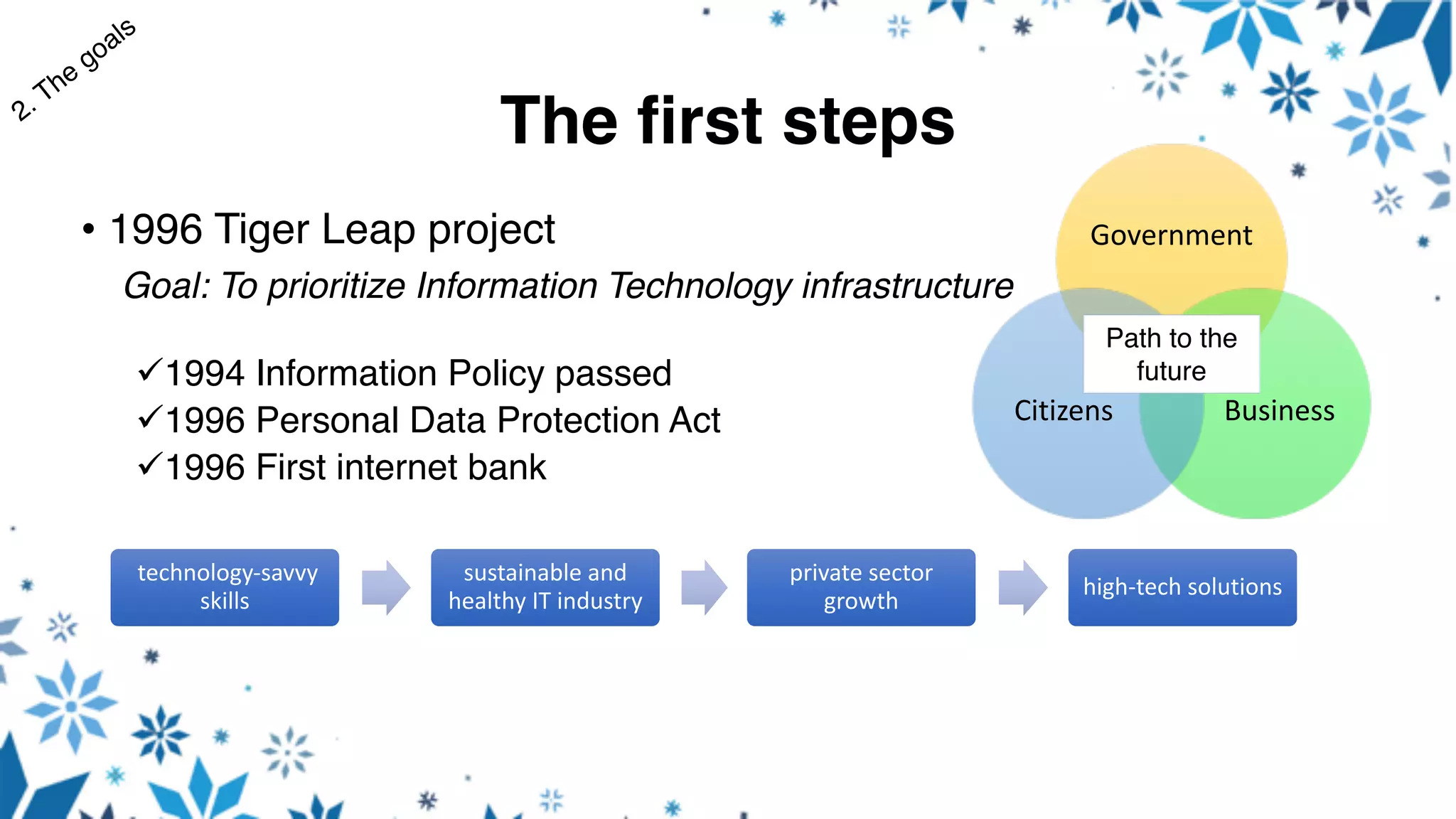
The first steps
• 1996 Tiger Leap project
Goal: To prioritize Information Technology infrastructure
ü1994 Information Policy passed
ü1996 Personal Data Protection Act
ü1996 First internet bank
technology-savvy	
skills
sustainable	and	
healthy	IT	industry
private	sector	
growth
high-tech	solutions
Government
BusinessCitizens
Path to the
future
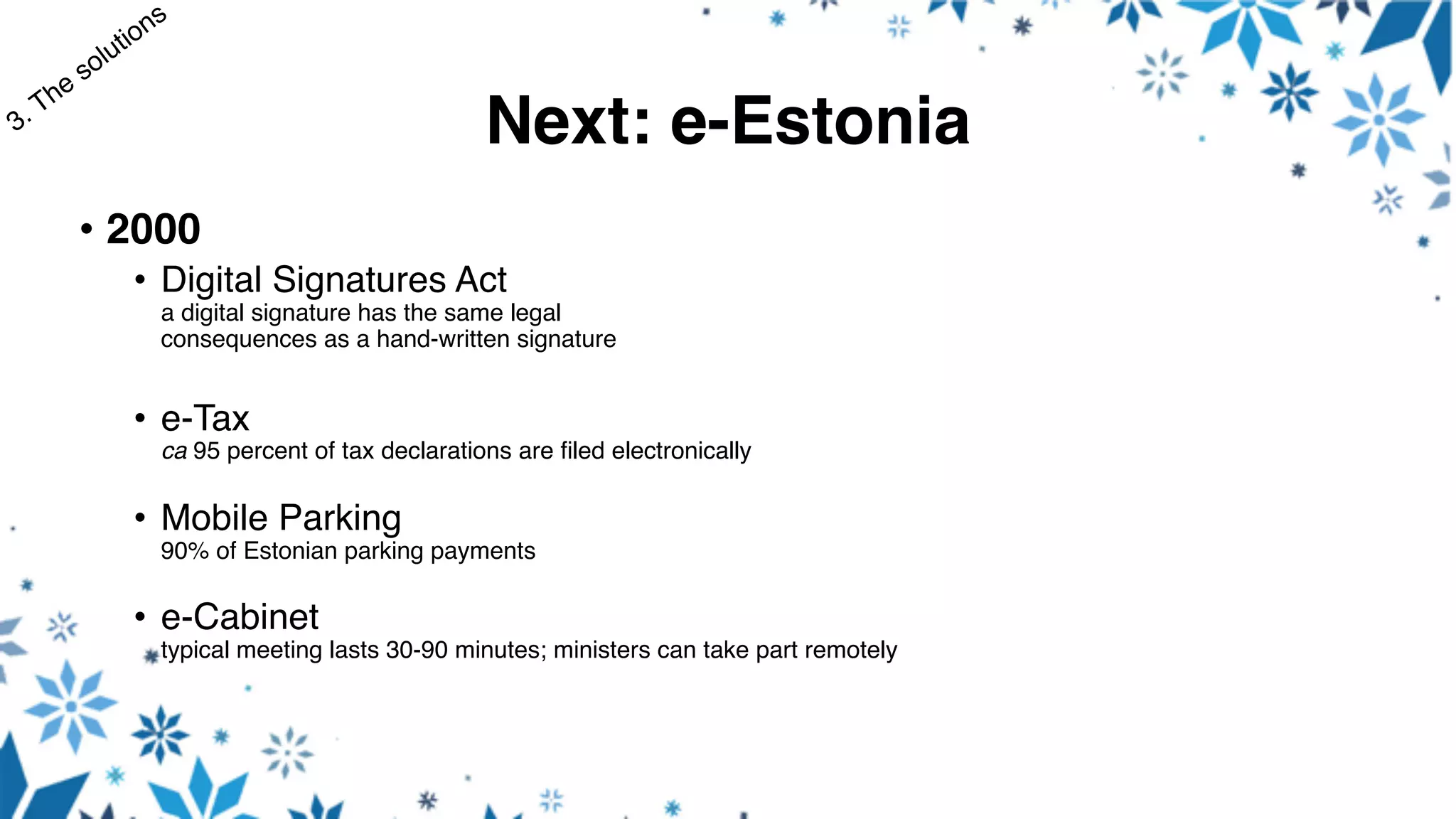
Next: e-Estonia
• 2000
• Digital Signatures Act
a digital signature has the same legal
consequences as a hand-written signature
• e-Tax
ca 95 percent of tax declarations are filed electronically
• Mobile Parking
90% of Estonian parking payments
• e-Cabinet
typical meeting lasts 30-90 minutes; ministers can take part remotely
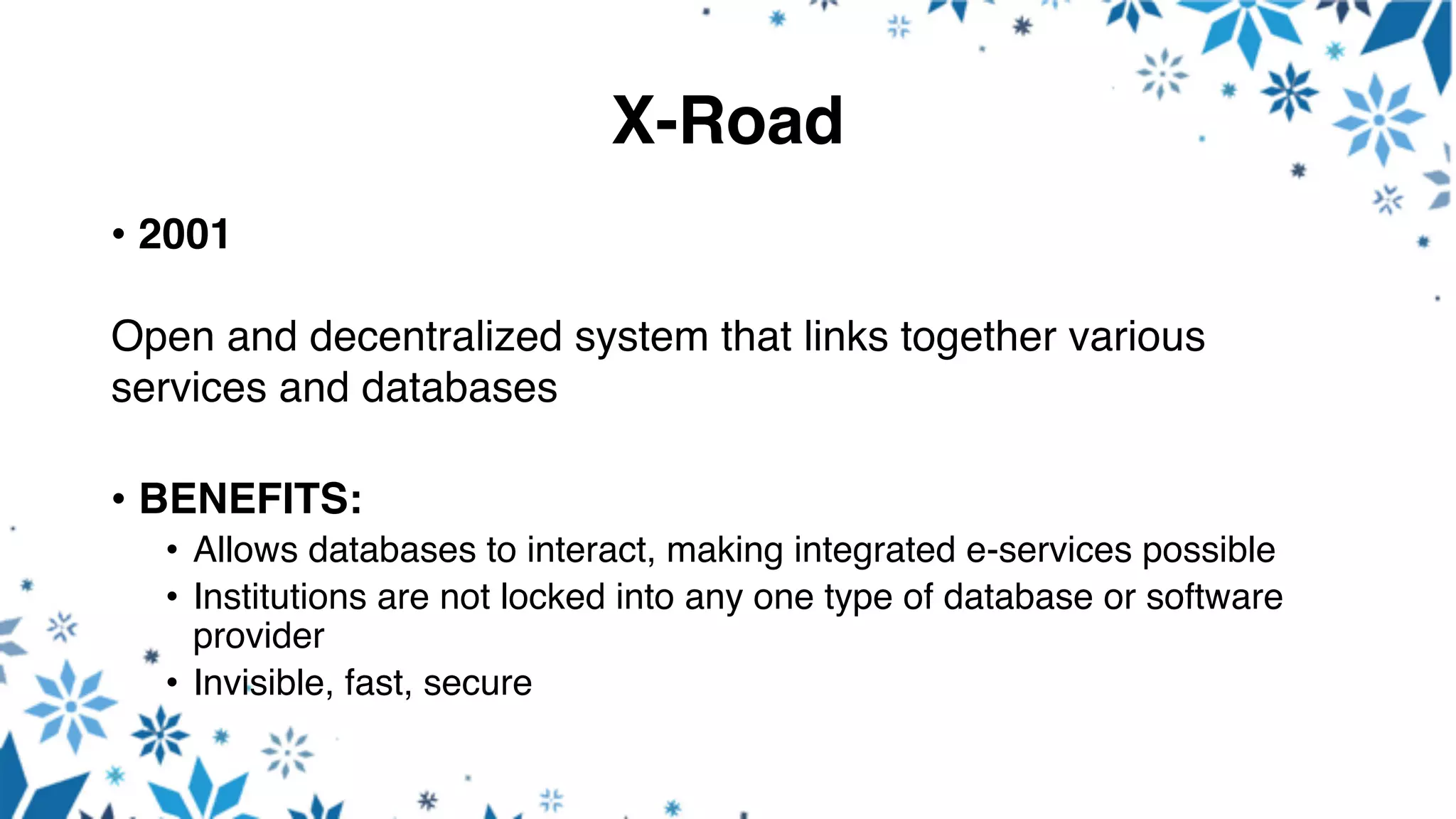
X-Road
• 2001
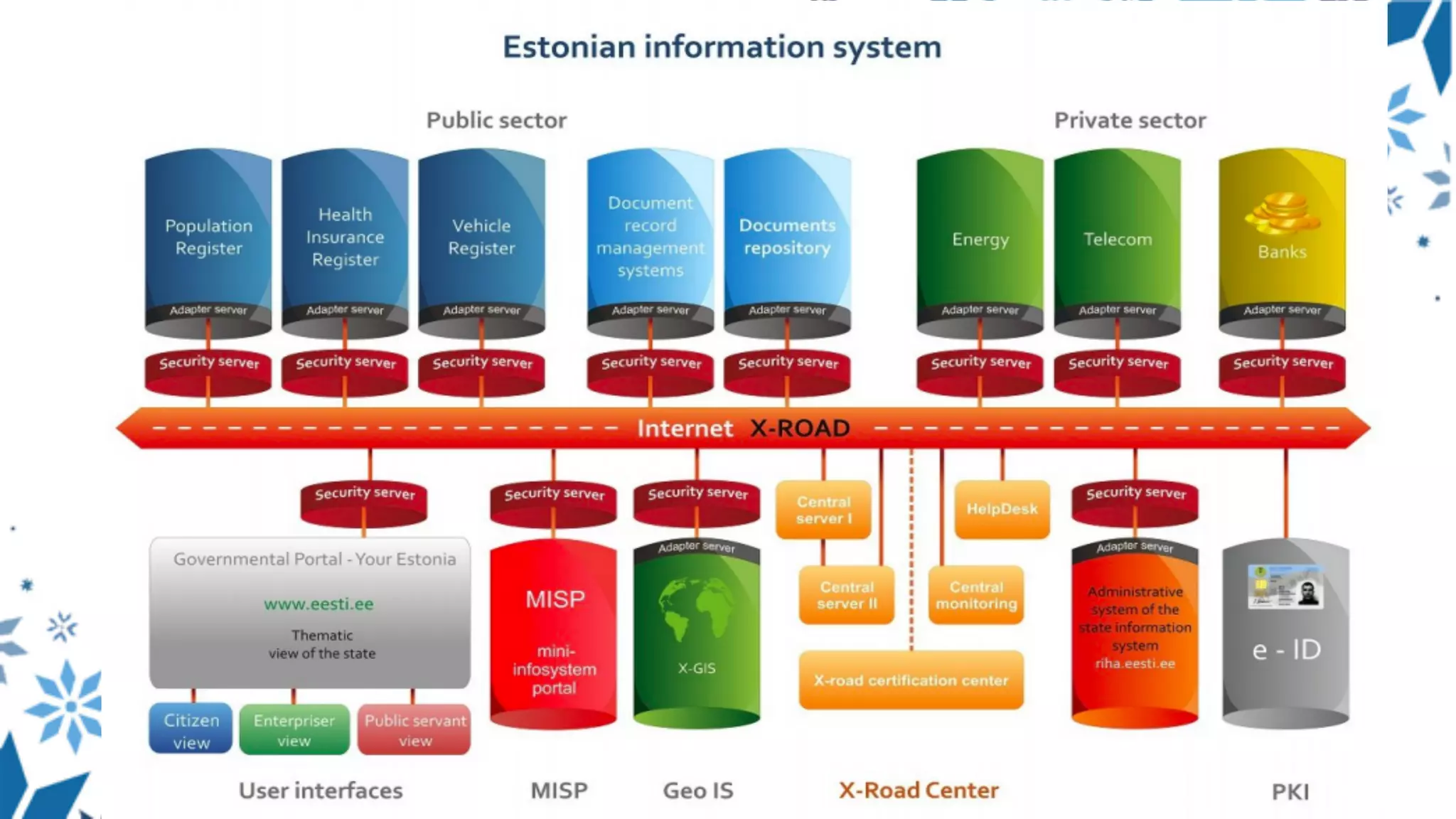
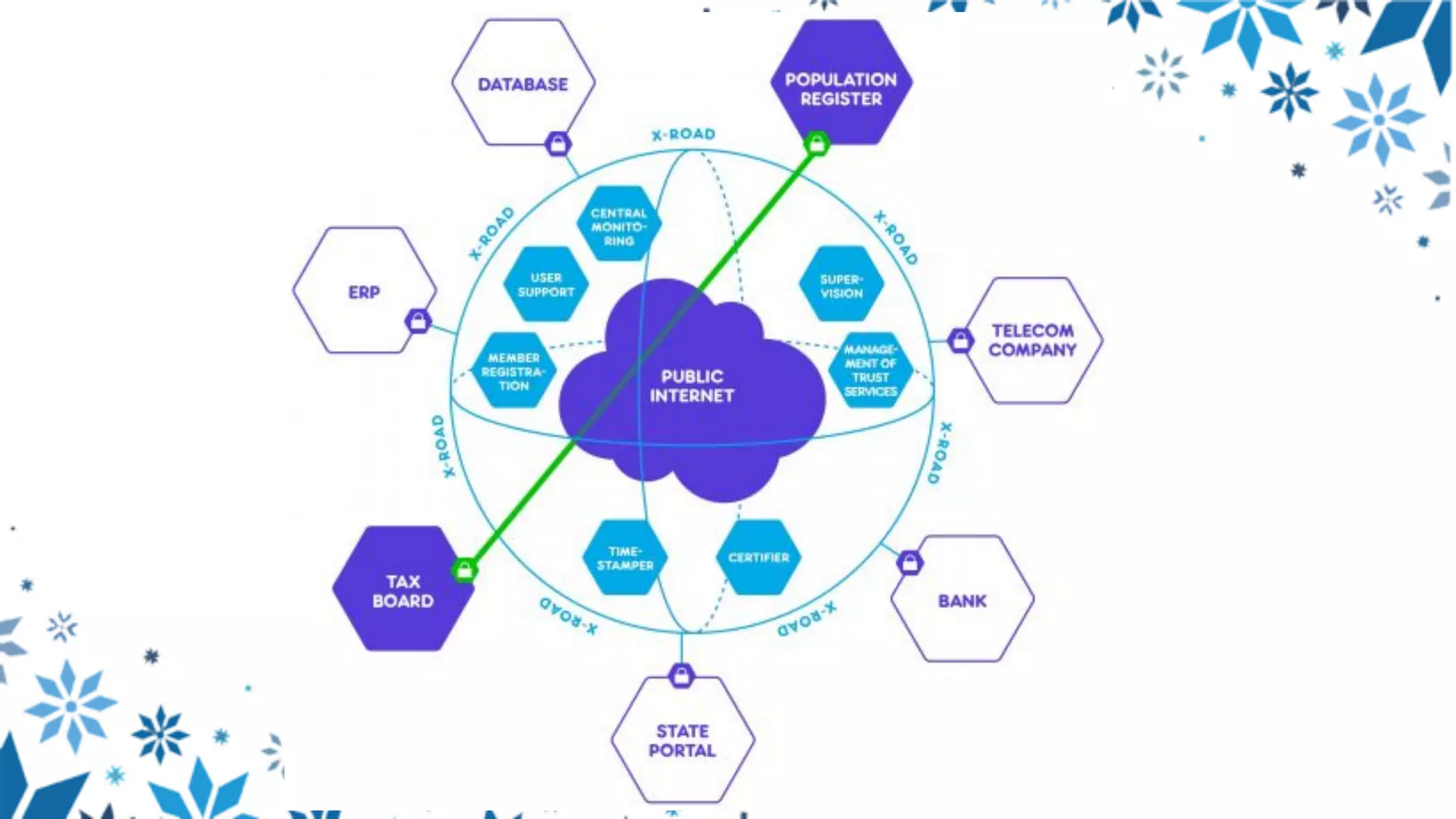
Open and decentralized system that links together various
services and databases
• BENEFITS:
• Allows databases to interact, making integrated e-services possible
• Institutions are not locked into any one type of database or software
provider
• Invisible, fast, secure
The beginning of ID-card
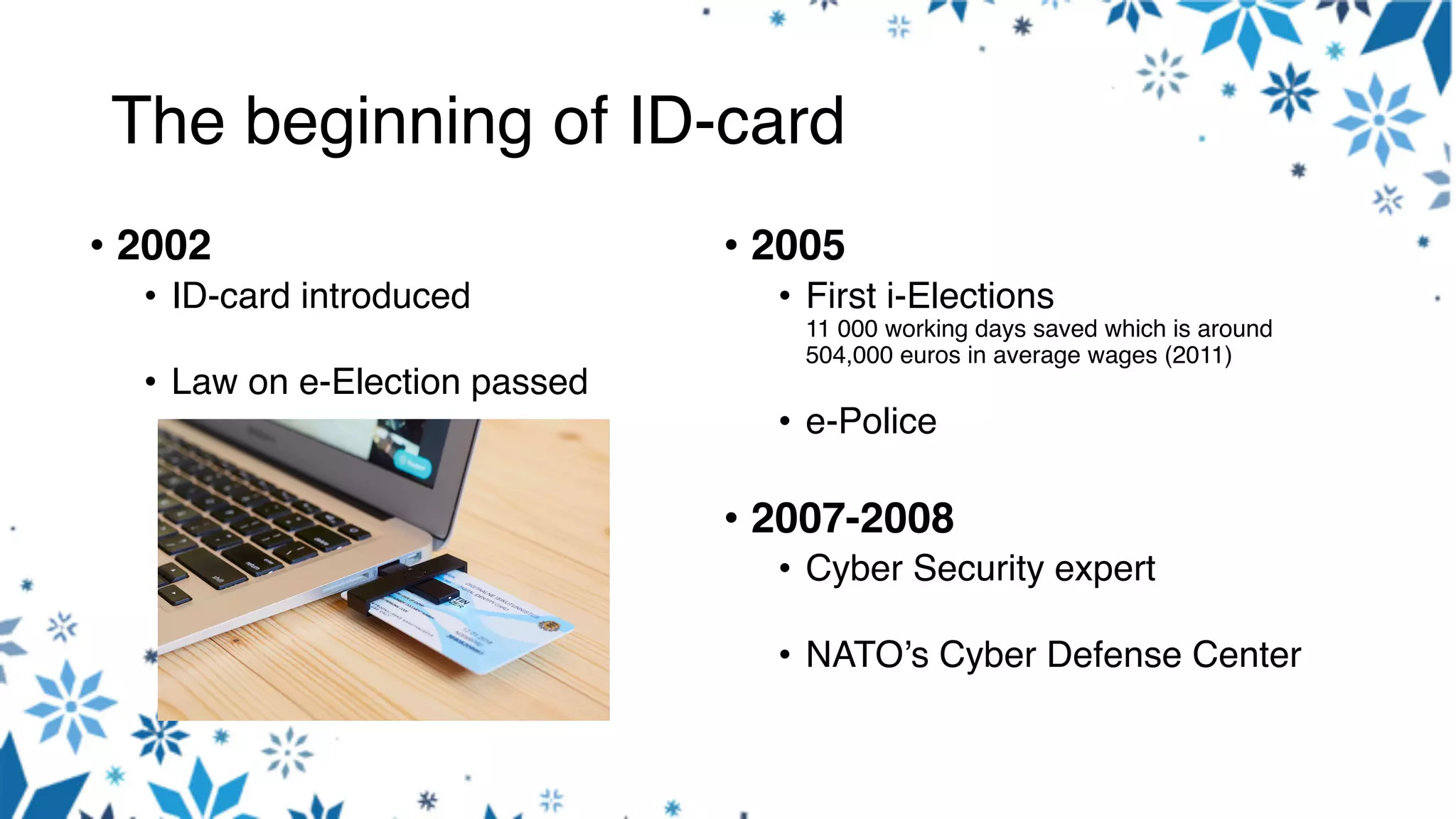
• 2002
• ID-card introduced
• Law on e-Election passed
• 2005
• First i-Elections
11 000 working days saved which is around
504,000 euros in average wages (2011)
• e-Police
• 2007-2008
• Cyber Security expert
• NATO’s Cyber Defense Center
Other e-services
• 2007
• e-Business register
registering a company in no more than 18 minutes
• 2008
• e-Health system
increased efficiency in the health care system, more patient friendly
• 2010
• e-Prescription
centralized,	paperless	system	for	issuing	and	handling	medical	prescriptions.
Once you go digital,
you never go back
ID-card: one card to rule them all
• Using the 2048-bit public key encryption, it is used as definitive proof
of ID in an electronic environment.
• Examples of how the ID Card is regularly used in Estonia:
• As a national ID card for legal travel within the EU for Estonian citizens
• As the national health insurance card
• As proof of identification when logging into bank accounts from a home computer
• As a pre-paid public transport ticket
• For digital signatures
• For i-voting
• For accessing government databases to check one’s medical records, file taxes, etc.
• For picking up e-Prescriptions
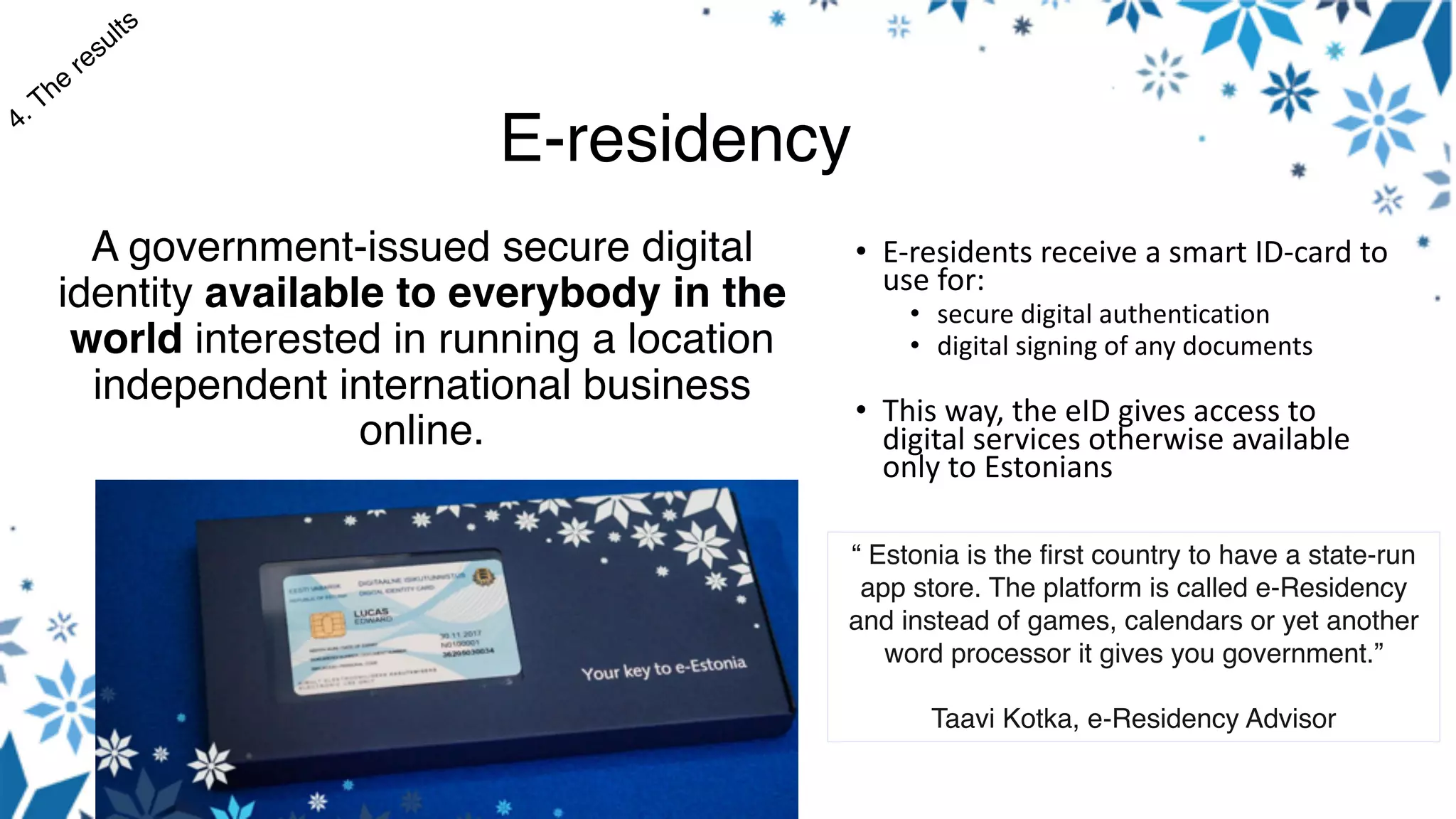
E-residency
A government-issued secure digital
identity available to everybody in the
world interested in running a location
independent international business
online.
“ Estonia is the first country to have a state-run
app store. The platform is called e-Residency
and instead of games, calendars or yet another
word processor it gives you government.”
Taavi Kotka, e-Residency Advisor
• E-residents	receive	a	smart	ID-card	to	
use	for:
• secure	digital	authentication
• digital	signing	of	any	documents
• This	way,	the	eID gives	access	to	
digital	services otherwise	available	
only	to	Estonians
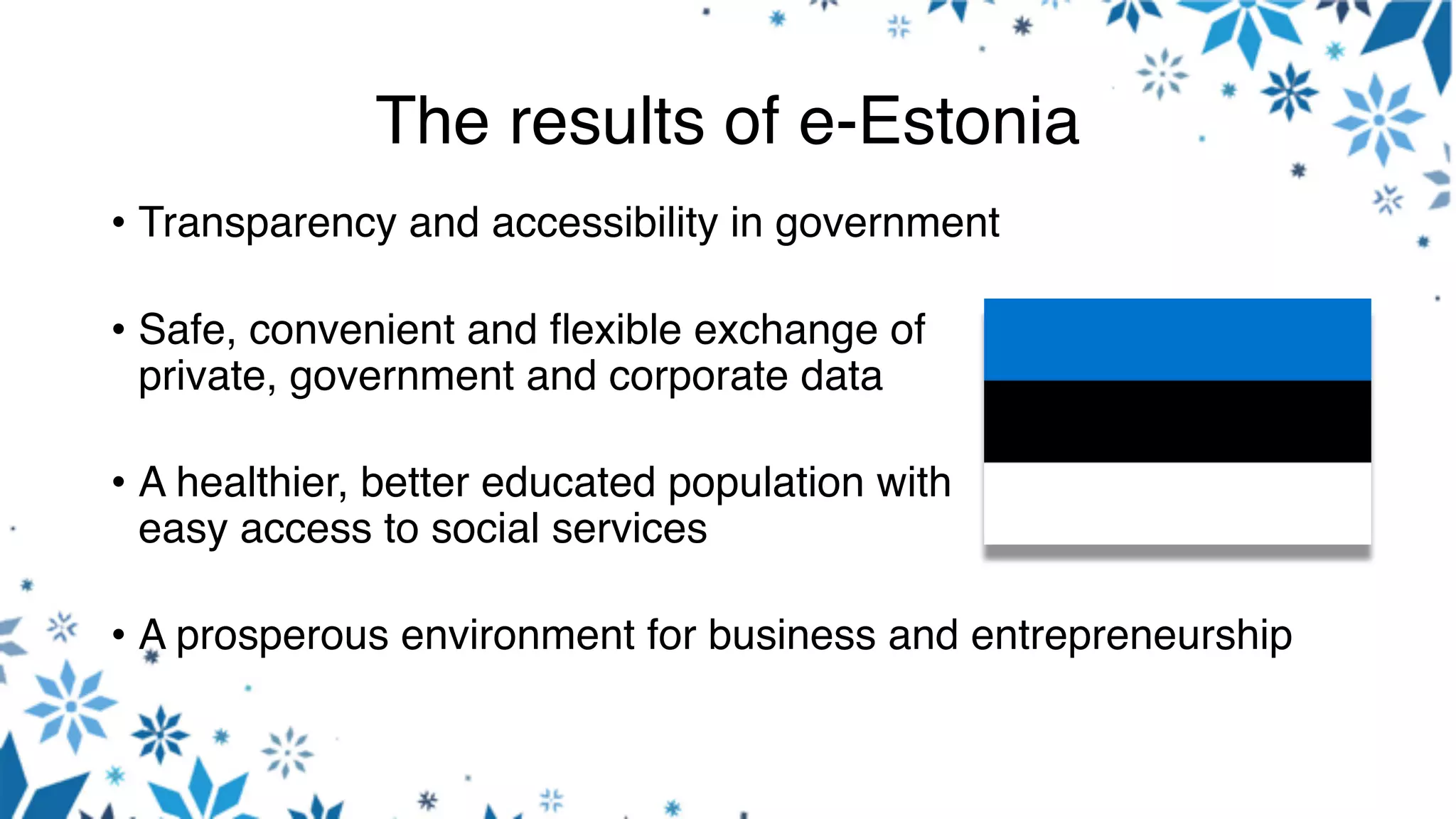
The results of e-Estonia
• Transparency and accessibility in government
• Safe, convenient and flexible exchange of
private, government and corporate data
• A healthier, better educated population with
easy access to social services
• A prosperous environment for business and entrepreneurship
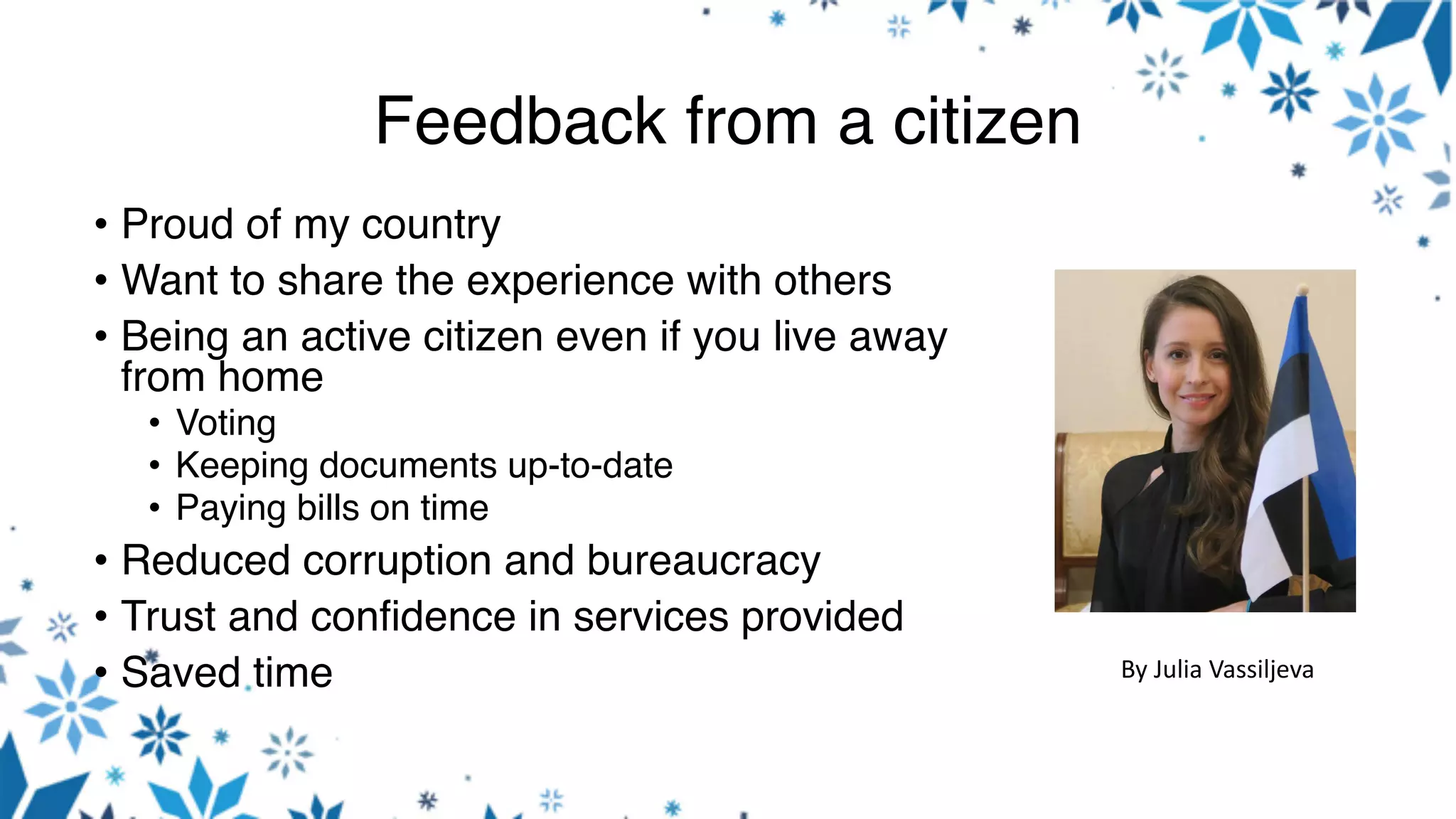
Feedback from a citizen
• Proud of my country
• Want to share the experience with others
• Being an active citizen even if you live away
from home
• Voting
• Keeping documents up-to-date
• Paying bills on time
• Reduced corruption and bureaucracy
• Trust and confidence in services provided
• Saved time By	Julia	Vassiljeva
Thank you! Aitäh!
Contact
Ms. Julia Vassiljeva
estonia@ebataiwan.org
European Business Association
in Taiwan
+886 928 451 403
Sources:
www.e-estonia.com
www.eas.ee

The digitalization of Estonia

  • 1.
    The digitalization ofEstonia For Taiwan Legislative Yuan by Estonian Office Julia Vassiljeva April 21, 2017
  • 2.
    Content 1.The birth ofdigital Estonia 2.The goals 3.The solutions 4.The results
  • 3.
    The key drivers •1991- regaining independence • Few resources • Small country • Desire to move forward • Not being afraid to take a risk “When you want to succeed as bad as you want to breathe, then you'll be successful.” Eric Thomas “Small country cannot think small” Kersti Kaljulaid, the President of Estonia
  • 4.
    The first steps •1996 Tiger Leap project Goal: To prioritize Information Technology infrastructure ü1994 Information Policy passed ü1996 Personal Data Protection Act ü1996 First internet bank technology-savvy skills sustainable and healthy IT industry private sector growth high-tech solutions Government BusinessCitizens Path to the future
  • 5.
    Next: e-Estonia • 2000 •Digital Signatures Act a digital signature has the same legal consequences as a hand-written signature • e-Tax ca 95 percent of tax declarations are filed electronically • Mobile Parking 90% of Estonian parking payments • e-Cabinet typical meeting lasts 30-90 minutes; ministers can take part remotely
  • 6.
    X-Road • 2001 Open anddecentralized system that links together various services and databases • BENEFITS: • Allows databases to interact, making integrated e-services possible • Institutions are not locked into any one type of database or software provider • Invisible, fast, secure
  • 9.
    The beginning ofID-card • 2002 • ID-card introduced • Law on e-Election passed • 2005 • First i-Elections 11 000 working days saved which is around 504,000 euros in average wages (2011) • e-Police • 2007-2008 • Cyber Security expert • NATO’s Cyber Defense Center
  • 10.
    Other e-services • 2007 •e-Business register registering a company in no more than 18 minutes • 2008 • e-Health system increased efficiency in the health care system, more patient friendly • 2010 • e-Prescription centralized, paperless system for issuing and handling medical prescriptions. Once you go digital, you never go back
  • 11.
    ID-card: one cardto rule them all • Using the 2048-bit public key encryption, it is used as definitive proof of ID in an electronic environment. • Examples of how the ID Card is regularly used in Estonia: • As a national ID card for legal travel within the EU for Estonian citizens • As the national health insurance card • As proof of identification when logging into bank accounts from a home computer • As a pre-paid public transport ticket • For digital signatures • For i-voting • For accessing government databases to check one’s medical records, file taxes, etc. • For picking up e-Prescriptions
  • 12.
    E-residency A government-issued securedigital identity available to everybody in the world interested in running a location independent international business online. “ Estonia is the first country to have a state-run app store. The platform is called e-Residency and instead of games, calendars or yet another word processor it gives you government.” Taavi Kotka, e-Residency Advisor • E-residents receive a smart ID-card to use for: • secure digital authentication • digital signing of any documents • This way, the eID gives access to digital services otherwise available only to Estonians
  • 13.
    The results ofe-Estonia • Transparency and accessibility in government • Safe, convenient and flexible exchange of private, government and corporate data • A healthier, better educated population with easy access to social services • A prosperous environment for business and entrepreneurship
  • 14.
    Feedback from acitizen • Proud of my country • Want to share the experience with others • Being an active citizen even if you live away from home • Voting • Keeping documents up-to-date • Paying bills on time • Reduced corruption and bureaucracy • Trust and confidence in services provided • Saved time By Julia Vassiljeva
  • 15.
    Thank you! Aitäh! Contact Ms.Julia Vassiljeva estonia@ebataiwan.org European Business Association in Taiwan +886 928 451 403 Sources: www.e-estonia.com www.eas.ee