The Critically Ill
Transplant Candidate
Prof. Amany Sholkamy
(2)MSc., MD
Cairo University
Agenda:
• Evidence of transplant benefit.
• How to measure futility of Tx.
• Timing for Tx
• Contraindications to Tx.
• Management.
• Unanswered questions.
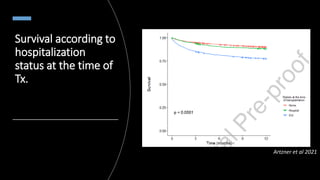
Survival according to
hospitalization
status at the time of
Tx.
Artzner et al 2021
Who Is The
Critically Ill
Potential Recipient?
A patient from the ICU?
A patient with higher MELD?
A patient with certain type(s) or number
of OF?
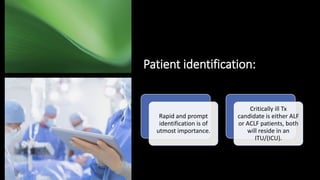
Patient identification:
Rapid and prompt
identification is of
utmost importance.
Critically ill Tx
candidate is either ALF
or ACLF patients, both
will reside in an
ITU/(ICU).
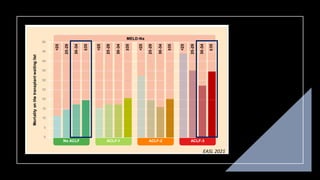
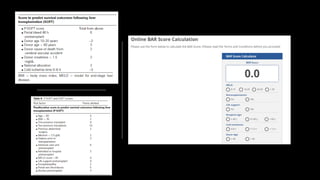
MELD score
• It is the current prognostic model
accepted worldwide.
• MELD scores (MELD, MELD-Na,
MELD 3) are the universal score of
assessing Tx futility/survival.
• However, MELD do not perform
well in the critically ill.
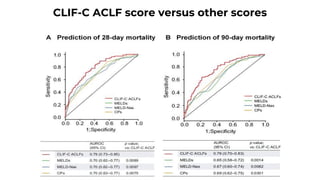
CLIF-C ACLF score versus other scores
EASL 2021
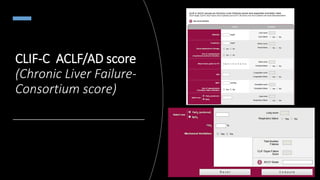
CLIF-C ACLF/AD score
(Chronic Liver Failure-
Consortium score)
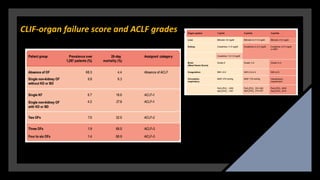
CLIF-organ failure score and ACLF grades
What is the chance
of post Tx survival
of ACLF patients?
Is it worth .. !???
Specially in LDLT
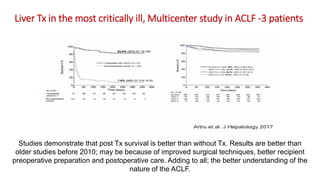
Liver Tx in the most critically ill, Multicenter study in ACLF -3 patients
Studies demonstrate that post Tx survival is better than without Tx. Results are better than
older studies before 2010; may be because of improved surgical techniques, better recipient
preoperative preparation and postoperative care. Adding to all; the better understanding of the
nature of the ACLF.
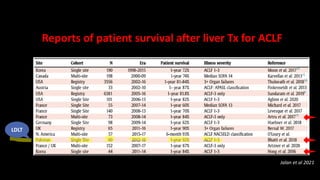
Reports of patient survival after liver Tx for ACLF
Jalan et al 2021
LDLT
Conditions
making Tx futile
Contraindications
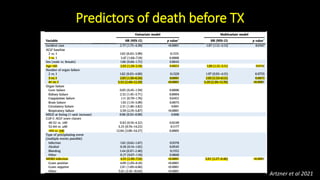
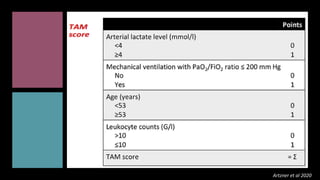
Predictors of death before TX
Artzner et al 2021
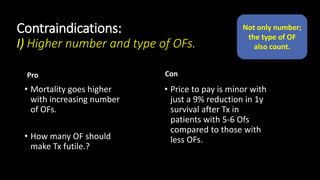
Contraindications:
I) Higher number and type of OFs.
Pro
• Mortality goes higher
with increasing number
of OFs.
• How many OF should
make Tx futile.?
Con
• Price to pay is minor with
just a 9% reduction in 1y
survival after Tx in
patients with 5-6 Ofs
compared to those with
less OFs.
Not only number;
the type of OF
also count.
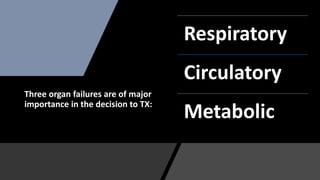
Three organ failures are of major
importance in the decision to TX:
Respiratory
Circulatory
Metabolic
Artzner et al 2020
Contraindications:
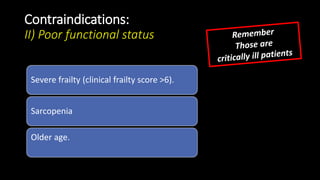
II) Poor functional status
Severe frailty (clinical frailty score >6).
Sarcopenia
Older age.
Contraindications:
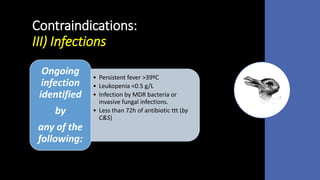
III) Infections
• Persistent fever >39ºC
• Leukopenia <0.5 g/L
• Infection by MDR bacteria or
invasive fungal infections.
• Less than 72h of antibiotic ttt (by
C&S)
Ongoing
infection
identified
by
any of the
following:
Timing for decision & Tx
Timing of transplantation
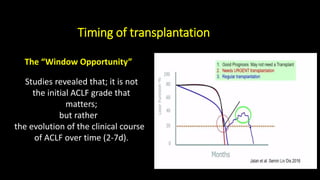
The “Window Opportunity”
Studies revealed that; it is not
the initial ACLF grade that
matters;
but rather
the evolution of the clinical course
of ACLF over time (2-7d).
This dynamic process and rapid
patient evolution makes DDLT more
practical and logic than LDLT
LDLT vs DDLT
Management
Dynamic process
Coagulopathy
• ACLF patients differ than cCLD in that they tend to be more
on the hypocoagulable side.
• INR should not be relied on anymore.
• Trends are now in the direction of using VET in diagnosis
and follow up of Tx candidates pre/intra-operative.
Fluids
Balanced crystalloids are
the most beneficial and
acceptable type of fluid.
Be conservative
Circulation
Keep BP around 60-65mmHg
Noradrenaline is the mostly
used vasopressor.
Terlipressin and Vasopressin Are
still elegant and acceptable
perioperative Vasopressors.
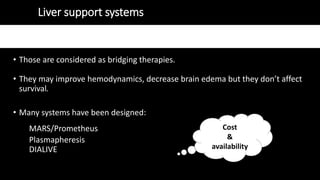
Liver support systems
• Those are considered as bridging therapies.
• They may improve hemodynamics, decrease brain edema but they don’t affect
survival.
• Many systems have been designed:
MARS/Prometheus
Plasmapheresis
DIALIVE
Cost
&
availability
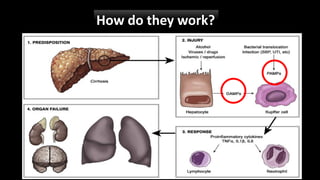
How do they work?
Other bridging options
• Auxiliary partial LT.
• G-CSF:
Potential treatment effectiveness may be related to the improvement of neutrophil
function.
• Cell Tx and regenerative medicine:
Hepatocyte/stem cell may act as bridging therapy or may have an anti-inflammatory
effect.
Unanswered
questions
??????
Future Needs
Scores: Which one is more relevant or accurate. Which
of which???
Intention to treat or “intention to transplant”
Defining acceptable criteria of donors for critically ill
potential recipient.
Registries even for the non transplanted patients.
Highlights
Wrap up
Conclusion
• Liver Tx for critically ill patients can improve survival.
• One year survival for ACLF -3 pts is up to 81% in several
series.
• Prompt identification, referral and screening for Tx is
important.
• CLIF-C ACLF/AD scores should be used in conjunction with
MELD score.
• The evolution of the patient clinical condition and timing to
Tx is crucial.
• The decision is done by a multidisciplinary team.
Thank You

The critically ill transplant candidate 2022

  • 1.
    The Critically Ill TransplantCandidate Prof. Amany Sholkamy (2)MSc., MD Cairo University
  • 2.
    Agenda: • Evidence oftransplant benefit. • How to measure futility of Tx. • Timing for Tx • Contraindications to Tx. • Management. • Unanswered questions.
  • 3.
    Survival according to hospitalization statusat the time of Tx. Artzner et al 2021
  • 4.
    Who Is The CriticallyIll Potential Recipient? A patient from the ICU? A patient with higher MELD? A patient with certain type(s) or number of OF?
  • 5.
    Patient identification: Rapid andprompt identification is of utmost importance. Critically ill Tx candidate is either ALF or ACLF patients, both will reside in an ITU/(ICU).
  • 6.
    MELD score • Itis the current prognostic model accepted worldwide. • MELD scores (MELD, MELD-Na, MELD 3) are the universal score of assessing Tx futility/survival. • However, MELD do not perform well in the critically ill.
  • 7.
    CLIF-C ACLF scoreversus other scores
  • 8.
  • 10.
    CLIF-C ACLF/AD score (ChronicLiver Failure- Consortium score)
  • 11.
    CLIF-organ failure scoreand ACLF grades
  • 12.
    What is thechance of post Tx survival of ACLF patients? Is it worth .. !??? Specially in LDLT
  • 13.
    Liver Tx inthe most critically ill, Multicenter study in ACLF -3 patients Studies demonstrate that post Tx survival is better than without Tx. Results are better than older studies before 2010; may be because of improved surgical techniques, better recipient preoperative preparation and postoperative care. Adding to all; the better understanding of the nature of the ACLF.
  • 14.
    Reports of patientsurvival after liver Tx for ACLF Jalan et al 2021 LDLT
  • 15.
  • 16.
    Predictors of deathbefore TX Artzner et al 2021
  • 17.
    Contraindications: I) Higher numberand type of OFs. Pro • Mortality goes higher with increasing number of OFs. • How many OF should make Tx futile.? Con • Price to pay is minor with just a 9% reduction in 1y survival after Tx in patients with 5-6 Ofs compared to those with less OFs. Not only number; the type of OF also count.
  • 18.
    Three organ failuresare of major importance in the decision to TX: Respiratory Circulatory Metabolic
  • 19.
  • 20.
    Contraindications: II) Poor functionalstatus Severe frailty (clinical frailty score >6). Sarcopenia Older age.
  • 21.
    Contraindications: III) Infections • Persistentfever >39ºC • Leukopenia <0.5 g/L • Infection by MDR bacteria or invasive fungal infections. • Less than 72h of antibiotic ttt (by C&S) Ongoing infection identified by any of the following:
  • 22.
  • 23.
    Timing of transplantation The“Window Opportunity” Studies revealed that; it is not the initial ACLF grade that matters; but rather the evolution of the clinical course of ACLF over time (2-7d).
  • 24.
    This dynamic processand rapid patient evolution makes DDLT more practical and logic than LDLT LDLT vs DDLT
  • 25.
  • 26.
    Coagulopathy • ACLF patientsdiffer than cCLD in that they tend to be more on the hypocoagulable side. • INR should not be relied on anymore. • Trends are now in the direction of using VET in diagnosis and follow up of Tx candidates pre/intra-operative.
  • 27.
    Fluids Balanced crystalloids are themost beneficial and acceptable type of fluid. Be conservative
  • 28.
    Circulation Keep BP around60-65mmHg Noradrenaline is the mostly used vasopressor. Terlipressin and Vasopressin Are still elegant and acceptable perioperative Vasopressors.

  • 29.
    Liver support systems •Those are considered as bridging therapies. • They may improve hemodynamics, decrease brain edema but they don’t affect survival. • Many systems have been designed: MARS/Prometheus Plasmapheresis DIALIVE Cost & availability
  • 30.
  • 31.
    Other bridging options •Auxiliary partial LT. • G-CSF: Potential treatment effectiveness may be related to the improvement of neutrophil function. • Cell Tx and regenerative medicine: Hepatocyte/stem cell may act as bridging therapy or may have an anti-inflammatory effect.
  • 32.
  • 33.
    Future Needs Scores: Whichone is more relevant or accurate. Which of which??? Intention to treat or “intention to transplant” Defining acceptable criteria of donors for critically ill potential recipient. Registries even for the non transplanted patients.
  • 34.
  • 35.
    Conclusion • Liver Txfor critically ill patients can improve survival. • One year survival for ACLF -3 pts is up to 81% in several series. • Prompt identification, referral and screening for Tx is important. • CLIF-C ACLF/AD scores should be used in conjunction with MELD score. • The evolution of the patient clinical condition and timing to Tx is crucial. • The decision is done by a multidisciplinary team.
  • 36.