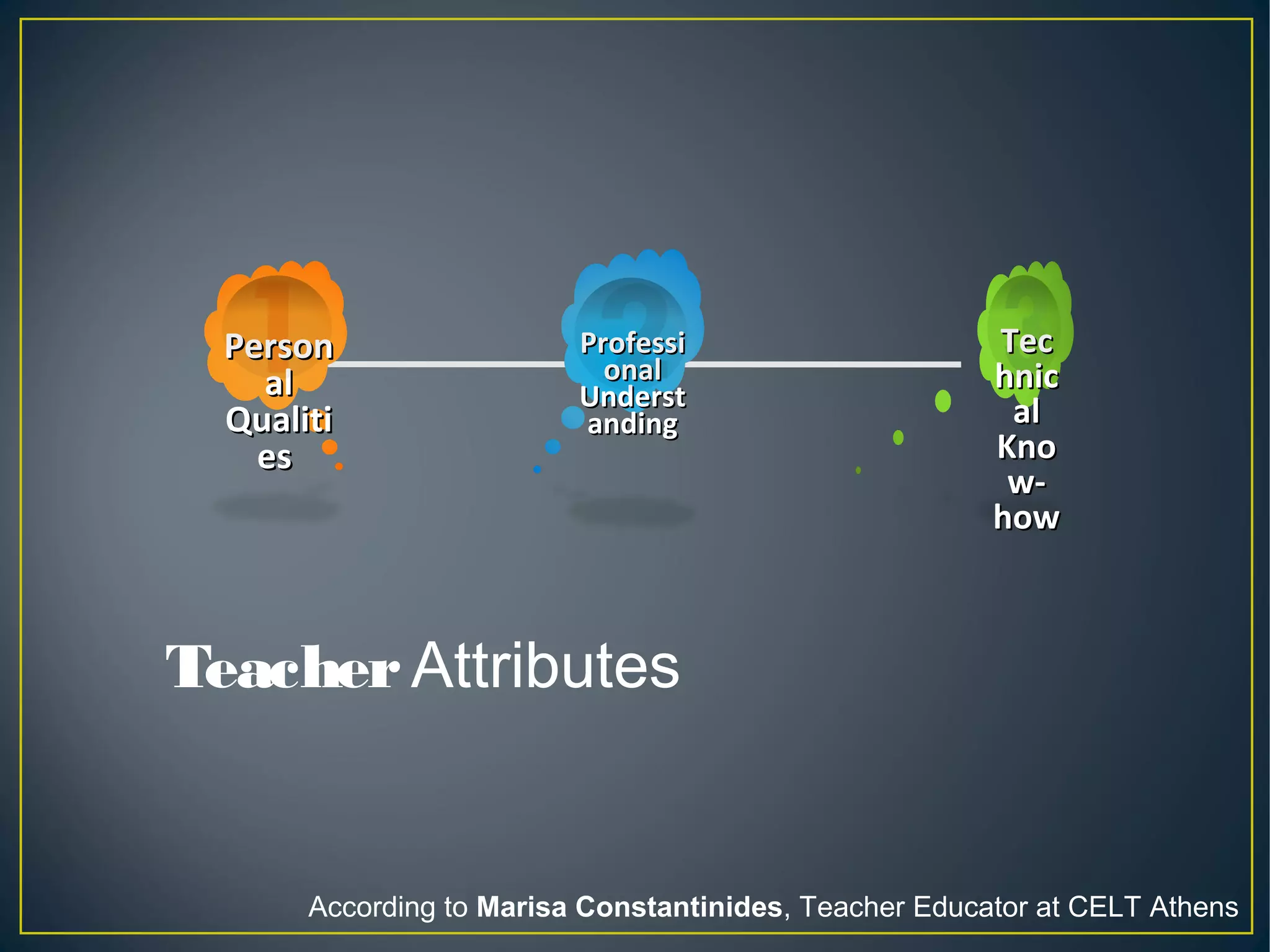
Teacher Attributes
PersonPerson
alal
QualitiQualiti
eses
ProfessiProfessi
onalonal
UnderstUnderst
andinganding
TecTec
hnichnic
alal
KnoKno
w-w-
howhow
According to Marisa Constantinides, Teacher Educator at CELT Athens
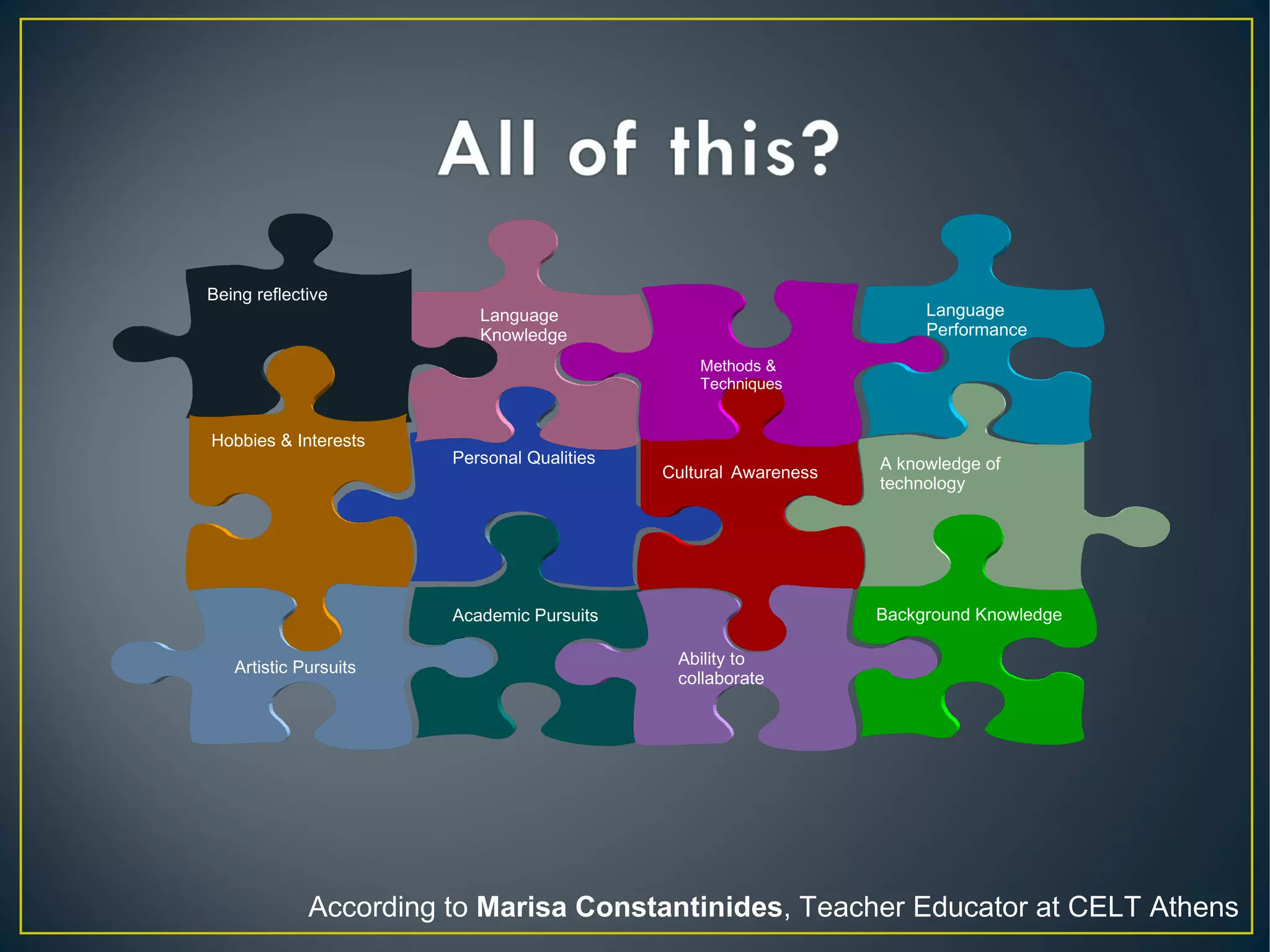
Personal Qualities A knowledge of
technology
Background Knowledge
Cultural Awareness
Academic Pursuits
Methods &
Techniques
Language
Knowledge
Being reflective
Hobbies & Interests
Language
Performance
Artistic Pursuits Ability to
collaborate
According to Marisa Constantinides, Teacher Educator at CELT Athens
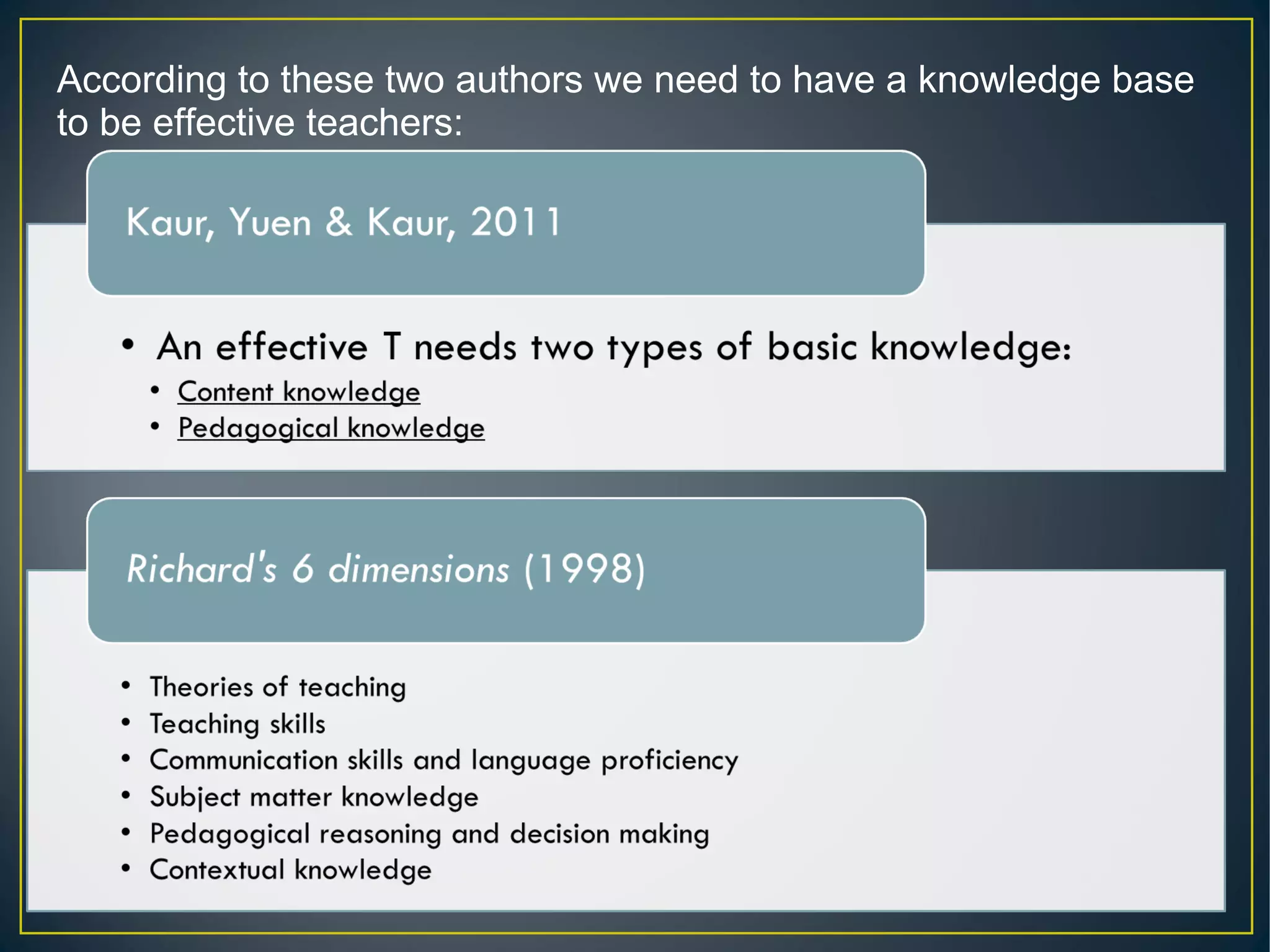
According to these two authors we need to have a knowledge base
to be effective teachers:
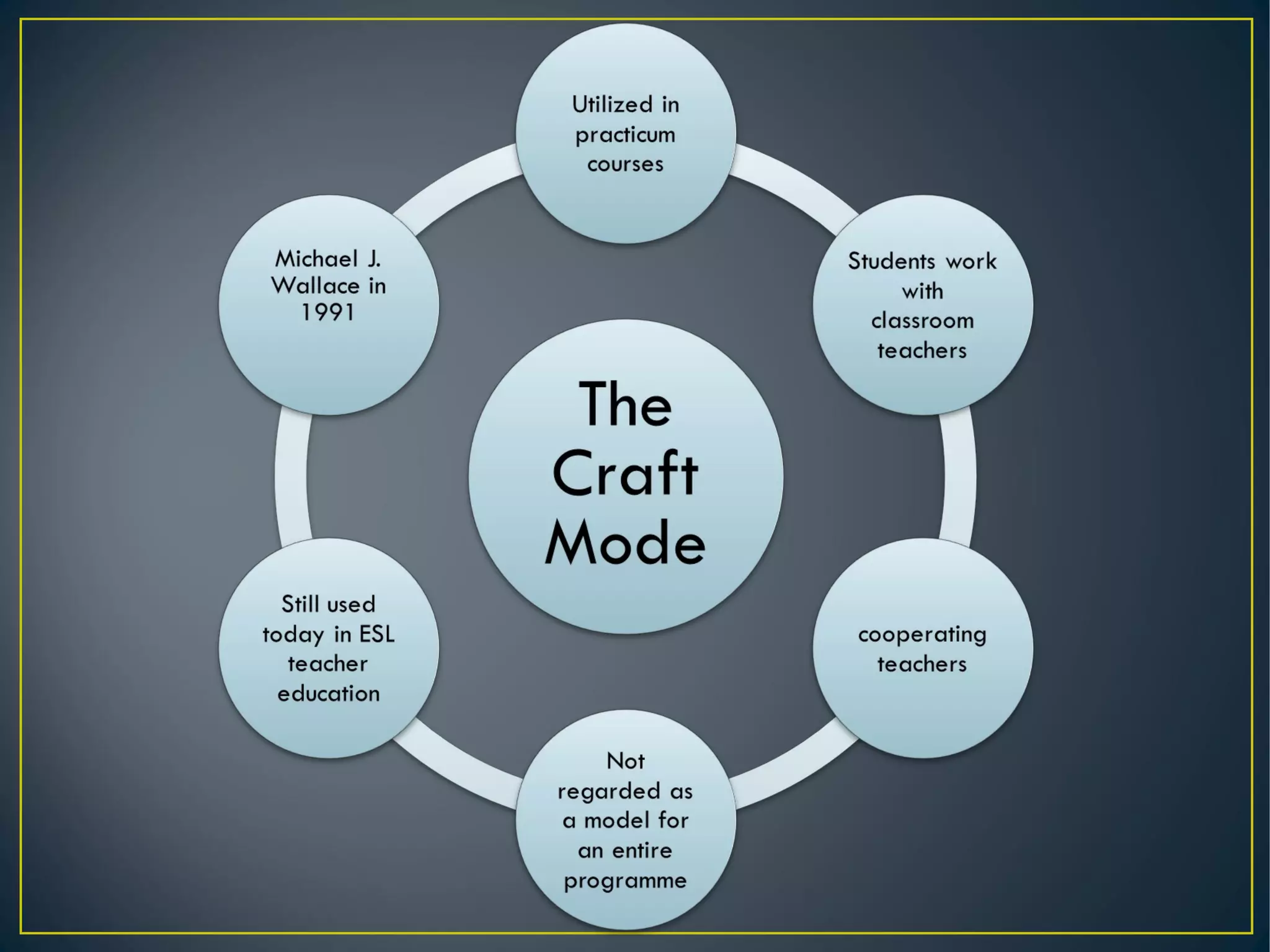
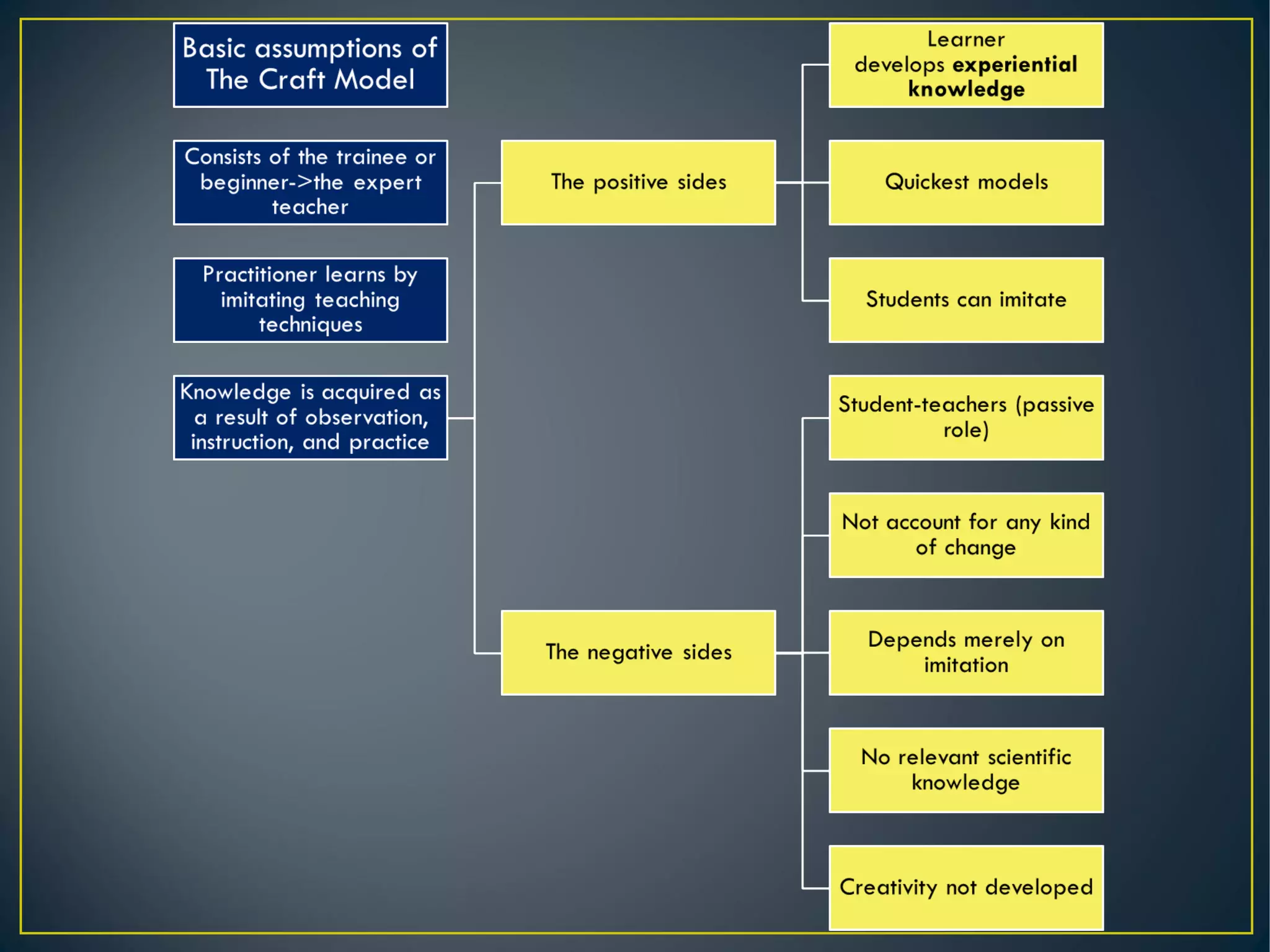
The Craft
Model
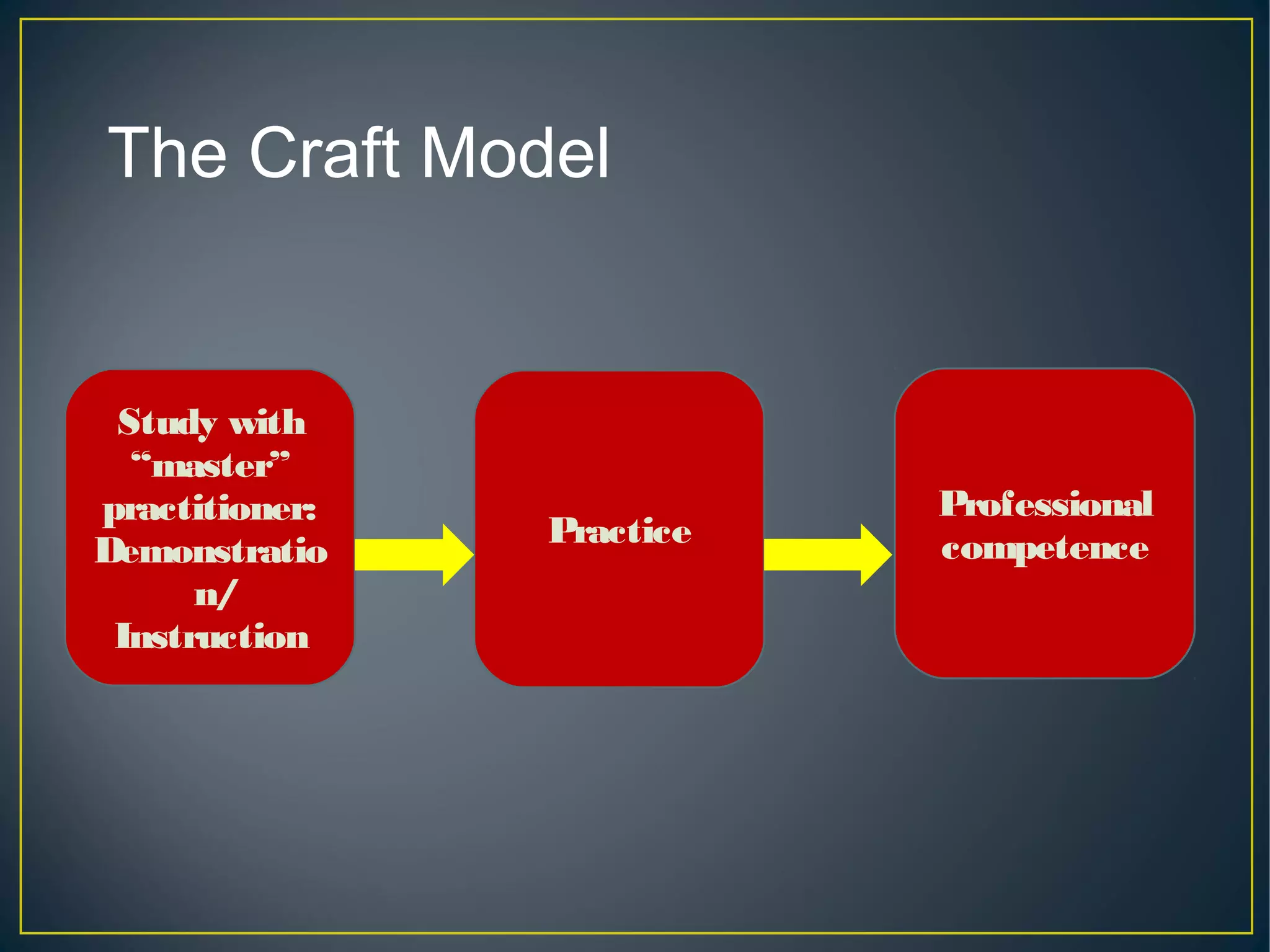
The Craft Model
Study with
“master”
practitioner:
Demonstratio
n/
Instruction
Practice
Professional
competence
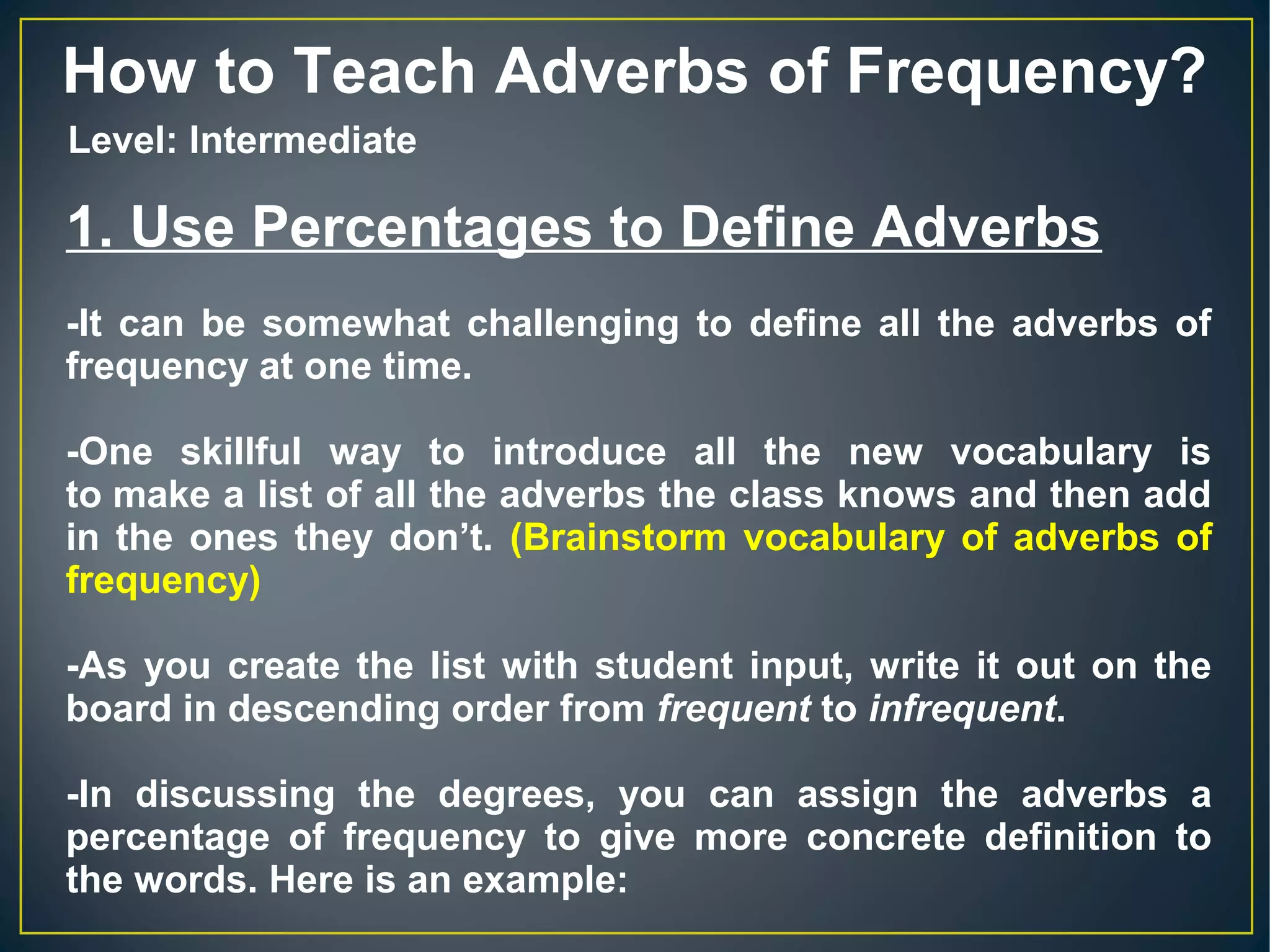
How to Teach Adverbs of Frequency?
1. Use Percentages to Define Adverbs
-It can be somewhat challenging to define all the adverbs of
frequency at one time.
-One skillful way to introduce all the new vocabulary is
to make a list of all the adverbs the class knows and then add
in the ones they don’t. (Brainstorm vocabulary of adverbs of
frequency)
-As you create the list with student input, write it out on the
board in descending order from frequent to infrequent.
-In discussing the degrees, you can assign the adverbs a
percentage of frequency to give more concrete definition to
the words. Here is an example:
Level: Intermediate
Always, regularly
90 to 100% of the
time (every day or 
several days a week)Usually
Often 70 to 80 % of the
time (one or two days 
a week)Frequently
Sometimes 50% of the time (twice 
a month)Occasionally
Rarely 20-40% of the
time (three times a 
year)Hardly ever
Never
0 to 10% of the
time (once a year, if at 
all)-With this introduction, you can then determine the difference
between words like often and frequently,
or sometimes and occasionally.
-This is a good time to introduce how frequently you do
something.
E.g. Teacher: I rarely visit my mom.
I usually walk my dog.
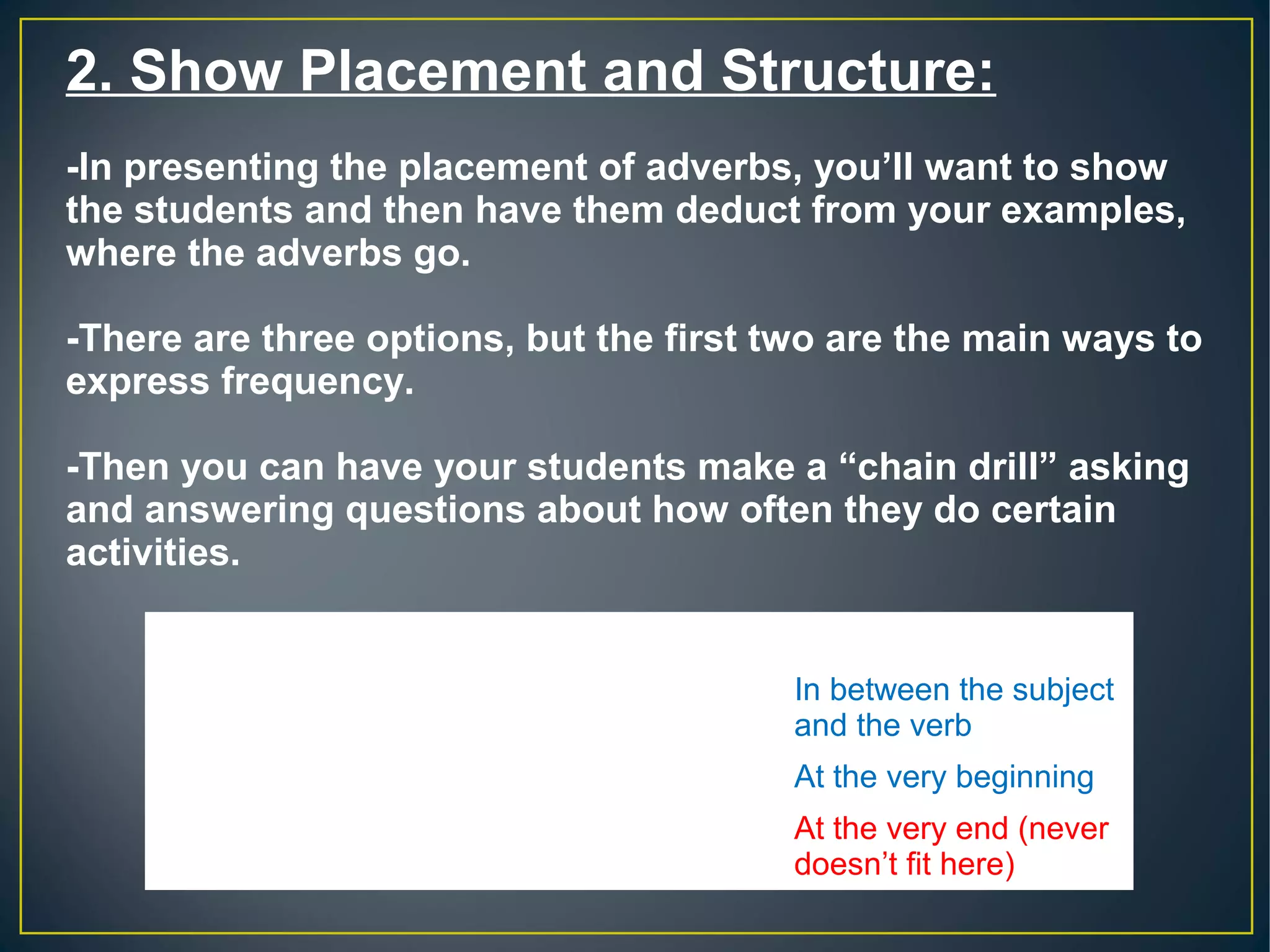
2. Show Placement and Structure:
-In presenting the placement of adverbs, you’ll want to show
the students and then have them deduct from your examples,
where the adverbs go.
-There are three options, but the first two are the main ways to
express frequency.
-Then you can have your students make a “chain drill” asking
and answering questions about how often they do certain
activities.
Q: How often do you go to the movies?
A:
I occasionally go to the movies.
In between the subject 
and the verb
Sometimes I go to the movies. At the very beginning
I go to the movies rarely.
At the very end (never 
doesn’t fit here)
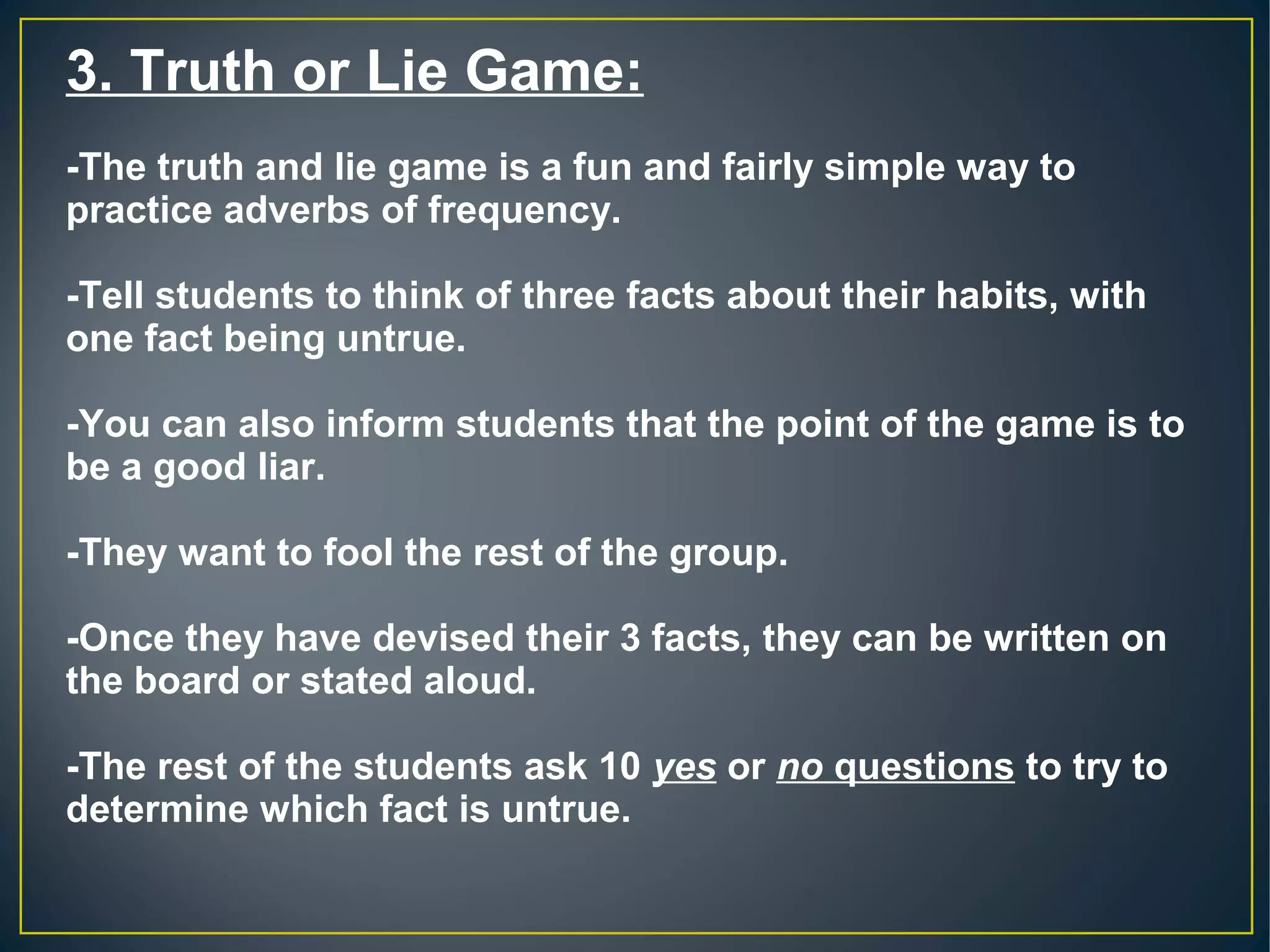
3. Truth or Lie Game:
-The truth and lie game is a fun and fairly simple way to
practice adverbs of frequency.
-Tell students to think of three facts about their habits, with
one fact being untrue.
-You can also inform students that the point of the game is to
be a good liar.
-They want to fool the rest of the group.
-Once they have devised their 3 facts, they can be written on
the board or stated aloud.
-The rest of the students ask 10 yes or no questions to try to
determine which fact is untrue.
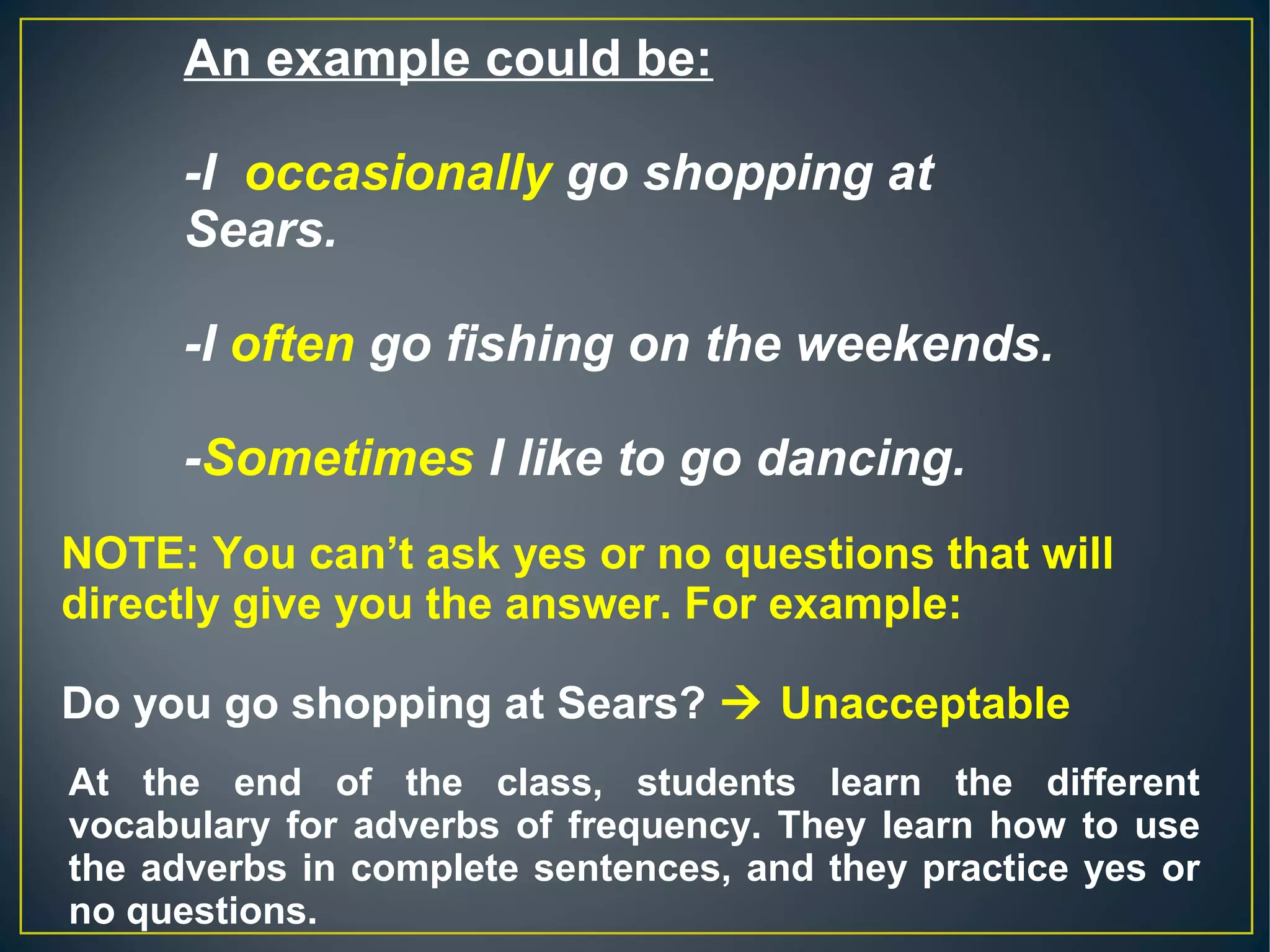
An example could be:
-I  occasionally go shopping at 
Sears.
-I often go fishing on the weekends.
-Sometimes I like to go dancing.
NOTE: You can’t ask yes or no questions that will
directly give you the answer. For example:
Do you go shopping at Sears?  Unacceptable
At the end of the class, students learn the different
vocabulary for adverbs of frequency. They learn how to use
the adverbs in complete sentences, and they practice yes or
no questions.
. 
 
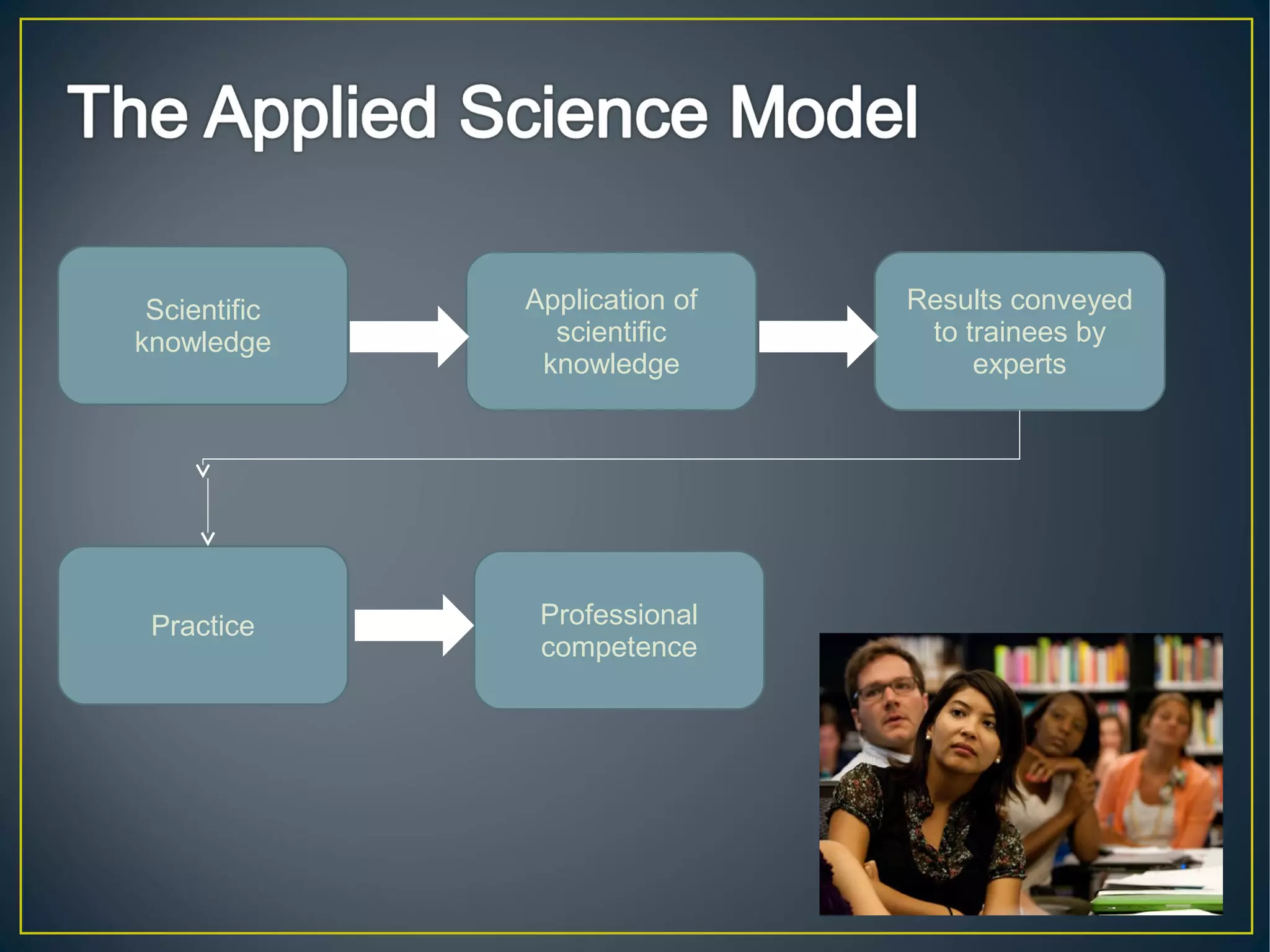
Scientific
knowledge
Application of
scientific
knowledge
Results conveyed
to trainees by
experts
Practice Professional
competence
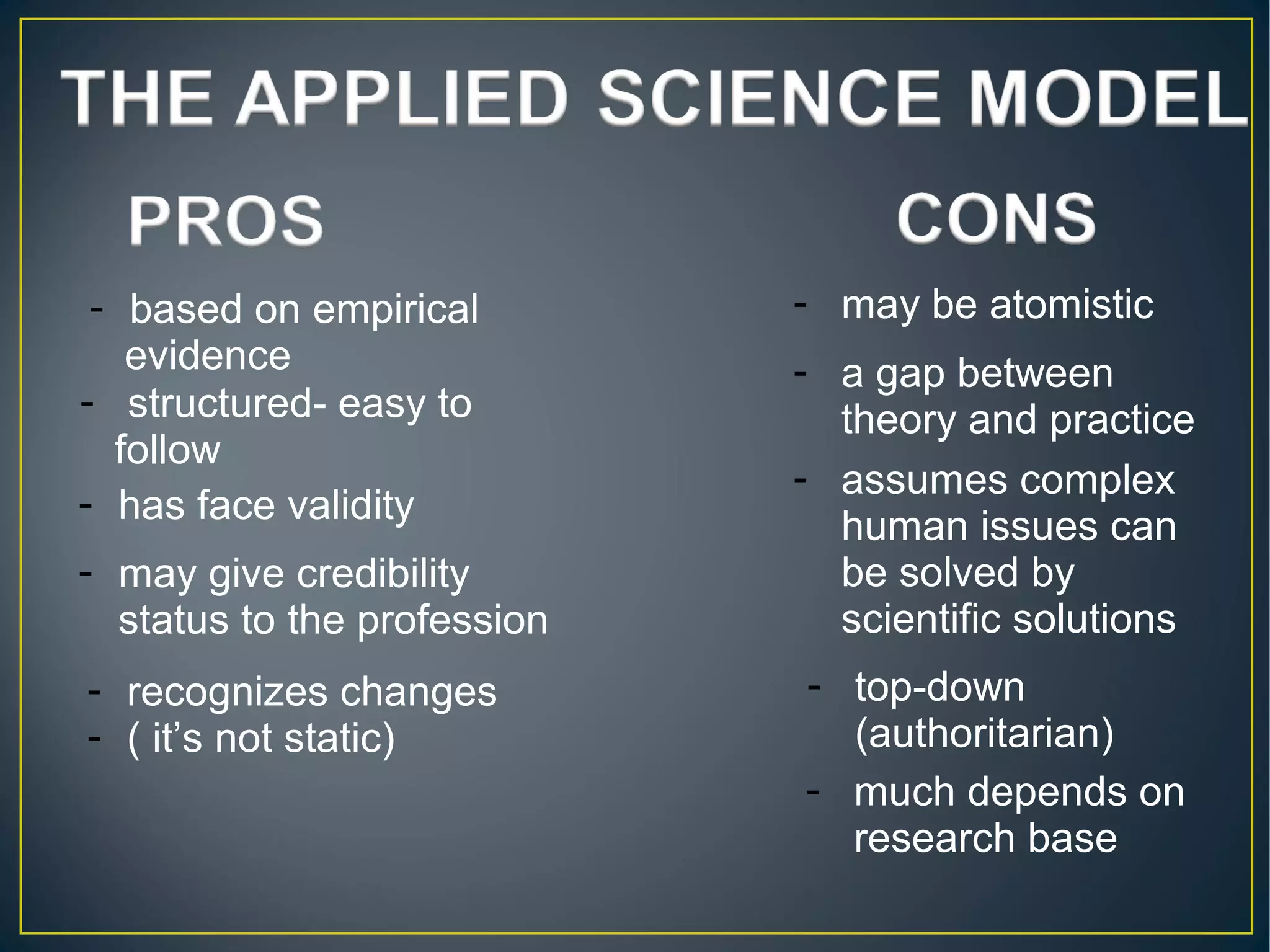
- much depends on
research base
- structured- easy to
follow
- has face validity
- may give credibility
status to the profession
- recognizes changes
- ( it’s not static)
- based on empirical
evidence - a gap between
theory and practice
- may be atomistic
- assumes complex
human issues can
be solved by
scientific solutions
- top-down
(authoritarian)
REFERENCES
Constantinides, Marisa. Professional development-The Teacher I'd like to be.
http://www.slideshare.net/MarisaConstantinides/professional-development-the-
teacher-id-like-to-be
Fandiño, Yamith. Knowledge Base And EFL Teacher Education Programs: A
Colombian Perspective. 2013.
http://aprendeenlinea.udea.edu.co/revistas/index.php/ikala/article/viewFile/1256
4/13252
Kojima, Hideo, Kojima, Yuko. Course Design for EFL Teacher Education. 2006.
http://repository.ul.hirosaki-
u.ac.jp/dspace/bitstream/10129/545/1/AN00211590_95_103.pdf
Wright, Natalya. How do teachers learn. http://www.slideshare.net/enrite/how-do-
teachers-learn
http://tanvirdhaka.blogspot.mx/2011/01/models-of-teacher-education.html
http://www.teachingenglish.org.uk/blogs/dario-banegas/theory-practice-language-
teacher-education-part-3

the craft model and applied science model,teacher professional development

  • 5.
  • 6.
    Personal Qualities Aknowledge of technology Background Knowledge Cultural Awareness Academic Pursuits Methods & Techniques Language Knowledge Being reflective Hobbies & Interests Language Performance Artistic Pursuits Ability to collaborate According to Marisa Constantinides, Teacher Educator at CELT Athens
  • 9.
    According to thesetwo authors we need to have a knowledge base to be effective teachers:
  • 12.
  • 14.
    The Craft Model Studywith “master” practitioner: Demonstratio n/ Instruction Practice Professional competence
  • 15.
    How to TeachAdverbs of Frequency? 1. Use Percentages to Define Adverbs -It can be somewhat challenging to define all the adverbs of frequency at one time. -One skillful way to introduce all the new vocabulary is to make a list of all the adverbs the class knows and then add in the ones they don’t. (Brainstorm vocabulary of adverbs of frequency) -As you create the list with student input, write it out on the board in descending order from frequent to infrequent. -In discussing the degrees, you can assign the adverbs a percentage of frequency to give more concrete definition to the words. Here is an example: Level: Intermediate
  • 16.
    Always, regularly 90 to100% of the time (every day or  several days a week)Usually Often 70 to 80 % of the time (one or two days  a week)Frequently Sometimes 50% of the time (twice  a month)Occasionally Rarely 20-40% of the time (three times a  year)Hardly ever Never 0 to 10% of the time (once a year, if at  all)-With this introduction, you can then determine the difference between words like often and frequently, or sometimes and occasionally. -This is a good time to introduce how frequently you do something. E.g. Teacher: I rarely visit my mom. I usually walk my dog.
  • 17.
    2. Show Placementand Structure: -In presenting the placement of adverbs, you’ll want to show the students and then have them deduct from your examples, where the adverbs go. -There are three options, but the first two are the main ways to express frequency. -Then you can have your students make a “chain drill” asking and answering questions about how often they do certain activities. Q: How often do you go to the movies? A: I occasionally go to the movies. In between the subject  and the verb Sometimes I go to the movies. At the very beginning I go to the movies rarely. At the very end (never  doesn’t fit here)
  • 18.
    3. Truth orLie Game: -The truth and lie game is a fun and fairly simple way to practice adverbs of frequency. -Tell students to think of three facts about their habits, with one fact being untrue. -You can also inform students that the point of the game is to be a good liar. -They want to fool the rest of the group. -Once they have devised their 3 facts, they can be written on the board or stated aloud. -The rest of the students ask 10 yes or no questions to try to determine which fact is untrue.
  • 19.
    An example couldbe: -I  occasionally go shopping at  Sears. -I often go fishing on the weekends. -Sometimes I like to go dancing. NOTE: You can’t ask yes or no questions that will directly give you the answer. For example: Do you go shopping at Sears?  Unacceptable At the end of the class, students learn the different vocabulary for adverbs of frequency. They learn how to use the adverbs in complete sentences, and they practice yes or no questions.
  • 21.
  • 22.
    Scientific knowledge Application of scientific knowledge Results conveyed totrainees by experts Practice Professional competence
  • 23.
    - much dependson research base - structured- easy to follow - has face validity - may give credibility status to the profession - recognizes changes - ( it’s not static) - based on empirical evidence - a gap between theory and practice - may be atomistic - assumes complex human issues can be solved by scientific solutions - top-down (authoritarian)
  • 25.
    REFERENCES Constantinides, Marisa. Professionaldevelopment-The Teacher I'd like to be. http://www.slideshare.net/MarisaConstantinides/professional-development-the- teacher-id-like-to-be Fandiño, Yamith. Knowledge Base And EFL Teacher Education Programs: A Colombian Perspective. 2013. http://aprendeenlinea.udea.edu.co/revistas/index.php/ikala/article/viewFile/1256 4/13252 Kojima, Hideo, Kojima, Yuko. Course Design for EFL Teacher Education. 2006. http://repository.ul.hirosaki- u.ac.jp/dspace/bitstream/10129/545/1/AN00211590_95_103.pdf Wright, Natalya. How do teachers learn. http://www.slideshare.net/enrite/how-do- teachers-learn http://tanvirdhaka.blogspot.mx/2011/01/models-of-teacher-education.html http://www.teachingenglish.org.uk/blogs/dario-banegas/theory-practice-language- teacher-education-part-3