DISCUSSION QUESTIONS
1) What is the largest education management
organization in the US?
2) What is the only industry that has a larger
segment of the American marketplace than
education?
3) Explain what the "nag factor" is?
4) Explain the 4 types of of parents.
5) What is meant by "opportunity in devastation?"
6) How do corporations use "undercover
marketing?"
CHILDREN AS TARGETS
CLIP: CONSUMING KIDS
•ADVERTISING DIRECTED AT CHILDREN: $15 BILLION ANNUALLY
•1983: CORPORATIONS SPENT $100 MILLION ON TV
ADVERTISING TO KIDS
•TODAY: 150 TIMES THAT AMOUNT ON VARIOUS MEDIUMS
•80% OF ALL GLOBAL BRANDS DEPLOY A TWEEN MARKETING
STRATEGY
•1997: 12-19 YEAR OLDS SPENT $63 BILLION OF THEIR OWN
MONEY
•2001: 12-19 YEAR OLDS SPENT $155 BILLION OF THEIR OWN
MONEY
•2000: 12 & UNDER INFLUENCED $500 BILLION OF THEIR
PARENT’S PURCHASES
COMMERCIALISM ON TELEVISION
•AVERAGE AMERICAN CHILD EXPOSED TO 40,000 TV
COMMERCIALS/YEAR, OVER 100/DAY
•UNDER AGE 8 UNABLE TO CRITICALLY COMPREHEND TV
ADVERTISING MESSAGES
•PRONE TO ACCEPT MESSAGES AS TRUTHFUL, ACCURATE, &
UNBIASED
COMMERCIALISM ON INTERNET
•UNDER AGE 5: 80% USE INTERNET AT LEAST ONCE/WEEK
COMMERCIALISM IN SCHOOLS
•AMERICAN BEVERAGE ASSOCIATION ESTIMATES 2/3 OF SCHOOLS
NATIONWIDE HAVE EXCLUSIVE POURING RIGHTS CONTRACTS WITH
SODA COMPANIES
•27% OF ADS ON CHANNEL ONE ARE FOR JUNK FOOD
•10% FOR MILITARY RECRUITMENT
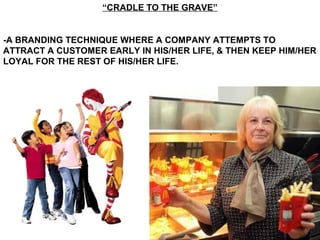
“CRADLE TO THE GRAVE”
-A BRANDING TECHNIQUE WHERE A COMPANY ATTEMPTS TO
ATTRACT A CUSTOMER EARLY IN HIS/HER LIFE, & THEN KEEP HIM/HER
LOYAL FOR THE REST OF HIS/HER LIFE.
CORPORATIONS PREY ON CHILDRENS’ FEELINGS
“Advertising at its best is making people feel that without their product
you're a loser. Kids are very sensitive to that. If you tell them to buy
something, they are resistant. But if you tell them they'll be a dork if they
don't, you've got their attention.”
- Nancy Shalek, former president of Grey Advertising
-53% of Americans say that buying certain products makes them feel
better about themselves.
-32% of Americans admit feeling pressure to buy certain products, such
as clothes, shoes and CDs because their friends have them.
-62% of 12 & 13 year olds say that buying certain products makes them
feel better about themselves.
- 54% of 12 & 13 year olds admit to feeling outside pressure to buy
products.
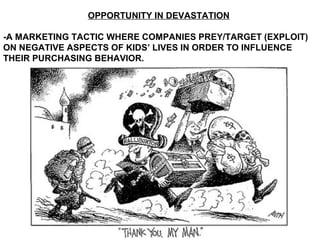
OPPORTUNITY IN DEVASTATION
-A MARKETING TACTIC WHERE COMPANIES PREY/TARGET (EXPLOIT)
ON NEGATIVE ASPECTS OF KIDS’ LIVES IN ORDER TO INFLUENCE
THEIR PURCHASING BEHAVIOR.
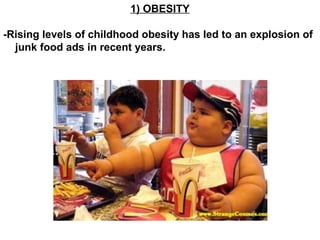
1) OBESITY
-Rising levels of childhood obesity has led to an explosion of
junk food ads in recent years.
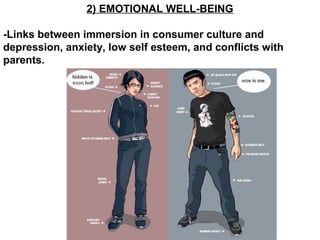
2) EMOTIONAL WELL-BEING
-Links between immersion in consumer culture and
depression, anxiety, low self esteem, and conflicts with
parents.
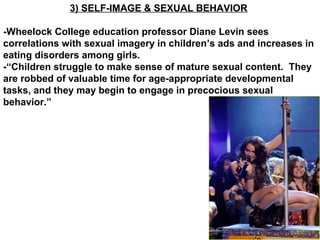
3) SELF-IMAGE & SEXUAL BEHAVIOR
-Wheelock College education professor Diane Levin sees
correlations with sexual imagery in children’s ads and increases in
eating disorders among girls.
-“Children struggle to make sense of mature sexual content. They
are robbed of valuable time for age-appropriate developmental
tasks, and they may begin to engage in precocious sexual
behavior.”
4) FINANCIAL SELF-CONTROL
-National surveys reveal that kids are leaving high school without
a basic understanding of issues relating to savings and credit
card debt.
-No surprise, then, that over the past decade, credit card debt
among 18-24 year olds more than doubled.
THE NAG FACTOR
“PESTER POWER”
________________________________________________
“THE DEGREE TO WHICH PARENTS’ PURCHASING DECISIONS
ARE BASED ON BEING NAGGED BY THEIR CHILDREN.”
•KIDS NAG THEIR PARENTS IN 2 WAYS:
1) WITH PERSISTENCE (I WANT)
2) WITH IMPORTANCE (I NEED)
•12-17 YEAR OLDS WHO ASK THEIR PARENTS FOR PRODUCTS
THEY’VE SEEN ADVERTISED WILL ASK 9 TIMES UNTIL PARENTS
GIVE IN
CLIP 11: BASIC TRAINING
CORPORATE AMERICA IS NOT ALL TO BLAME FOR YOUTH
CONSUMERISM.
SO ARE PARENTS.
• LARGEST GROUP OF PARENTS
• AFFLUENT & UPSCALE BUT UNRESPONSIVE TO A
CHILD’S WHINING
• WANT A GOOD REASON TO BUY SOMETHING FOR THEIR
CHILD
BARE NECESSITIES
KIDS PALS’
•YOUNGER PARENTS
•BUY PRODUCTS AS MUCH FOR THEMSELVES AS THEIR
KIDS
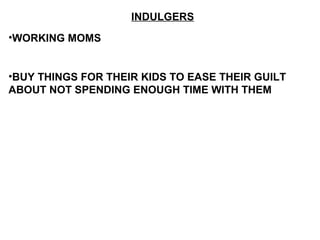
INDULGERS
•WORKING MOMS
•BUY THINGS FOR THEIR KIDS TO EASE THEIR GUILT
ABOUT NOT SPENDING ENOUGH TIME WITH THEM
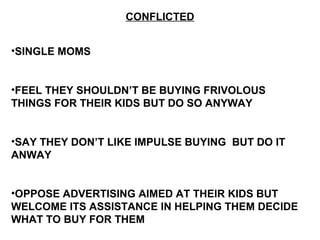
CONFLICTED
•SINGLE MOMS
•FEEL THEY SHOULDN’T BE BUYING FRIVOLOUS
THINGS FOR THEIR KIDS BUT DO SO ANYWAY
•SAY THEY DON’T LIKE IMPULSE BUYING BUT DO IT
ANWAY
•OPPOSE ADVERTISING AIMED AT THEIR KIDS BUT
WELCOME ITS ASSISTANCE IN HELPING THEM DECIDE
WHAT TO BUY FOR THEM

The corporation chapter 5

  • 1.
    DISCUSSION QUESTIONS 1) Whatis the largest education management organization in the US? 2) What is the only industry that has a larger segment of the American marketplace than education? 3) Explain what the "nag factor" is? 4) Explain the 4 types of of parents. 5) What is meant by "opportunity in devastation?" 6) How do corporations use "undercover marketing?"
  • 2.
  • 3.
    •ADVERTISING DIRECTED ATCHILDREN: $15 BILLION ANNUALLY •1983: CORPORATIONS SPENT $100 MILLION ON TV ADVERTISING TO KIDS •TODAY: 150 TIMES THAT AMOUNT ON VARIOUS MEDIUMS •80% OF ALL GLOBAL BRANDS DEPLOY A TWEEN MARKETING STRATEGY •1997: 12-19 YEAR OLDS SPENT $63 BILLION OF THEIR OWN MONEY •2001: 12-19 YEAR OLDS SPENT $155 BILLION OF THEIR OWN MONEY •2000: 12 & UNDER INFLUENCED $500 BILLION OF THEIR PARENT’S PURCHASES
  • 4.
    COMMERCIALISM ON TELEVISION •AVERAGEAMERICAN CHILD EXPOSED TO 40,000 TV COMMERCIALS/YEAR, OVER 100/DAY •UNDER AGE 8 UNABLE TO CRITICALLY COMPREHEND TV ADVERTISING MESSAGES •PRONE TO ACCEPT MESSAGES AS TRUTHFUL, ACCURATE, & UNBIASED COMMERCIALISM ON INTERNET •UNDER AGE 5: 80% USE INTERNET AT LEAST ONCE/WEEK COMMERCIALISM IN SCHOOLS •AMERICAN BEVERAGE ASSOCIATION ESTIMATES 2/3 OF SCHOOLS NATIONWIDE HAVE EXCLUSIVE POURING RIGHTS CONTRACTS WITH SODA COMPANIES •27% OF ADS ON CHANNEL ONE ARE FOR JUNK FOOD •10% FOR MILITARY RECRUITMENT
  • 5.
    “CRADLE TO THEGRAVE” -A BRANDING TECHNIQUE WHERE A COMPANY ATTEMPTS TO ATTRACT A CUSTOMER EARLY IN HIS/HER LIFE, & THEN KEEP HIM/HER LOYAL FOR THE REST OF HIS/HER LIFE.
  • 6.
    CORPORATIONS PREY ONCHILDRENS’ FEELINGS
  • 7.
    “Advertising at itsbest is making people feel that without their product you're a loser. Kids are very sensitive to that. If you tell them to buy something, they are resistant. But if you tell them they'll be a dork if they don't, you've got their attention.” - Nancy Shalek, former president of Grey Advertising -53% of Americans say that buying certain products makes them feel better about themselves. -32% of Americans admit feeling pressure to buy certain products, such as clothes, shoes and CDs because their friends have them. -62% of 12 & 13 year olds say that buying certain products makes them feel better about themselves. - 54% of 12 & 13 year olds admit to feeling outside pressure to buy products.
  • 8.
    OPPORTUNITY IN DEVASTATION -AMARKETING TACTIC WHERE COMPANIES PREY/TARGET (EXPLOIT) ON NEGATIVE ASPECTS OF KIDS’ LIVES IN ORDER TO INFLUENCE THEIR PURCHASING BEHAVIOR.
  • 9.
    1) OBESITY -Rising levelsof childhood obesity has led to an explosion of junk food ads in recent years.
  • 10.
    2) EMOTIONAL WELL-BEING -Linksbetween immersion in consumer culture and depression, anxiety, low self esteem, and conflicts with parents.
  • 11.
    3) SELF-IMAGE &SEXUAL BEHAVIOR -Wheelock College education professor Diane Levin sees correlations with sexual imagery in children’s ads and increases in eating disorders among girls. -“Children struggle to make sense of mature sexual content. They are robbed of valuable time for age-appropriate developmental tasks, and they may begin to engage in precocious sexual behavior.”
  • 14.
    4) FINANCIAL SELF-CONTROL -Nationalsurveys reveal that kids are leaving high school without a basic understanding of issues relating to savings and credit card debt. -No surprise, then, that over the past decade, credit card debt among 18-24 year olds more than doubled.
  • 15.
    THE NAG FACTOR “PESTERPOWER” ________________________________________________ “THE DEGREE TO WHICH PARENTS’ PURCHASING DECISIONS ARE BASED ON BEING NAGGED BY THEIR CHILDREN.” •KIDS NAG THEIR PARENTS IN 2 WAYS: 1) WITH PERSISTENCE (I WANT) 2) WITH IMPORTANCE (I NEED) •12-17 YEAR OLDS WHO ASK THEIR PARENTS FOR PRODUCTS THEY’VE SEEN ADVERTISED WILL ASK 9 TIMES UNTIL PARENTS GIVE IN
  • 16.
  • 17.
    CORPORATE AMERICA ISNOT ALL TO BLAME FOR YOUTH CONSUMERISM. SO ARE PARENTS.
  • 18.
    • LARGEST GROUPOF PARENTS • AFFLUENT & UPSCALE BUT UNRESPONSIVE TO A CHILD’S WHINING • WANT A GOOD REASON TO BUY SOMETHING FOR THEIR CHILD BARE NECESSITIES
  • 19.
    KIDS PALS’ •YOUNGER PARENTS •BUYPRODUCTS AS MUCH FOR THEMSELVES AS THEIR KIDS
  • 20.
    INDULGERS •WORKING MOMS •BUY THINGSFOR THEIR KIDS TO EASE THEIR GUILT ABOUT NOT SPENDING ENOUGH TIME WITH THEM
  • 21.
    CONFLICTED •SINGLE MOMS •FEEL THEYSHOULDN’T BE BUYING FRIVOLOUS THINGS FOR THEIR KIDS BUT DO SO ANYWAY •SAY THEY DON’T LIKE IMPULSE BUYING BUT DO IT ANWAY •OPPOSE ADVERTISING AIMED AT THEIR KIDS BUT WELCOME ITS ASSISTANCE IN HELPING THEM DECIDE WHAT TO BUY FOR THEM