The Circulatory
System: A Vital
Network
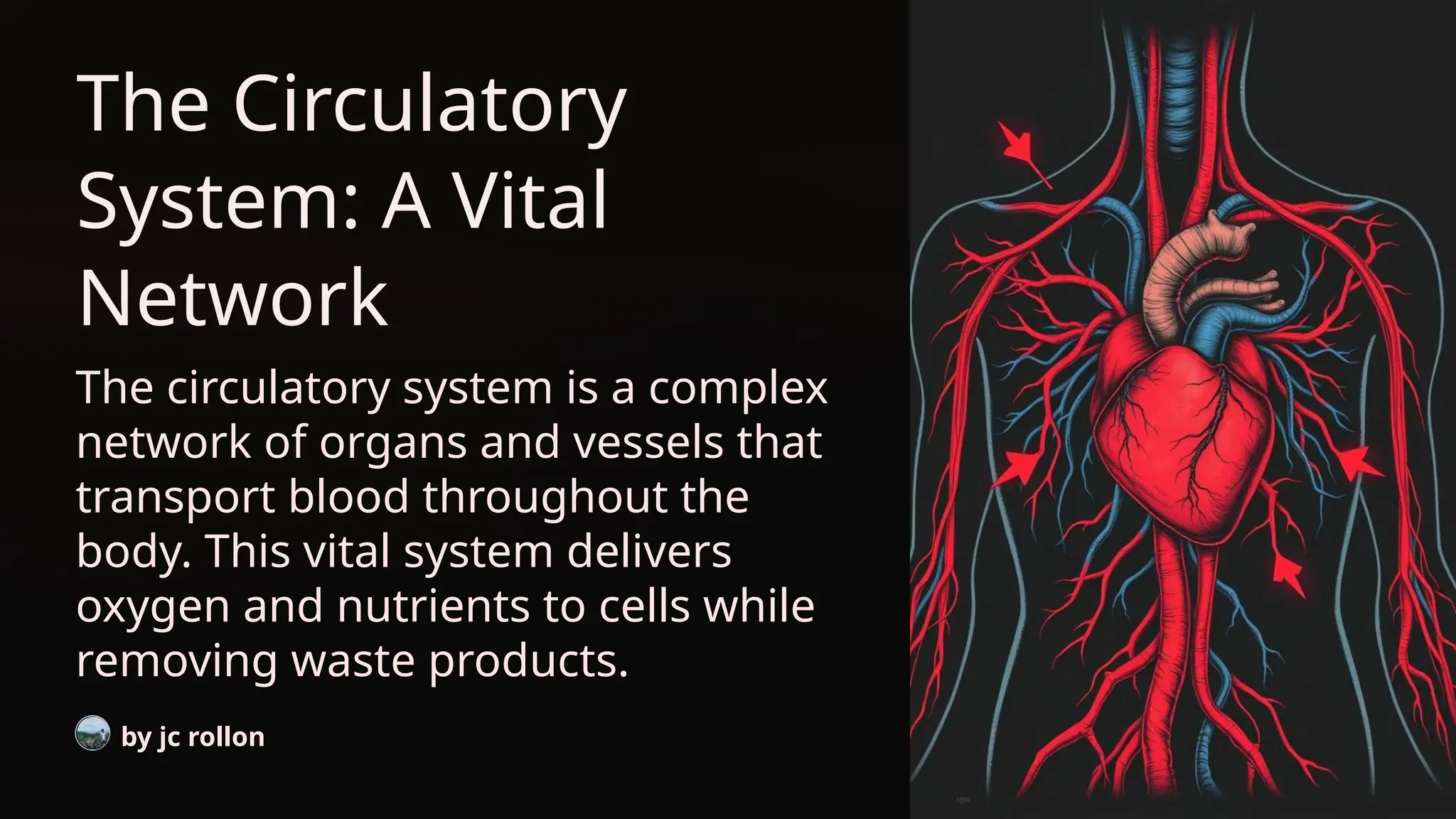
The circulatory system is a complex
network of organs and vessels that
transport blood throughout the
body. This vital system delivers
oxygen and nutrients to cells while
removing waste products.
by jc rollon
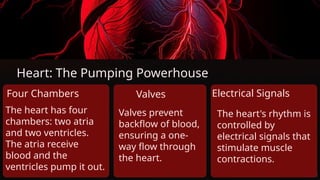
Heart: The Pumping Powerhouse
Four Chambers
The heart has four
chambers: two atria
and two ventricles.
The atria receive
blood and the
ventricles pump it out.
Valves
Valves prevent
backflow of blood,
ensuring a one-
way flow through
the heart.
Electrical Signals
The heart's rhythm is
controlled by
electrical signals that
stimulate muscle
contractions.
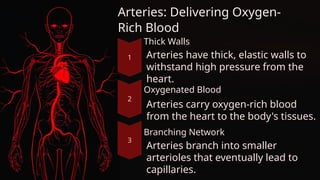
Arteries: Delivering Oxygen-
Rich Blood
Thick Walls
Arteries have thick, elastic walls to
withstand high pressure from the
heart.
Oxygenated Blood
Arteries carry oxygen-rich blood
from the heart to the body's tissues.
Branching Network
Arteries branch into smaller
arterioles that eventually lead to
capillaries.
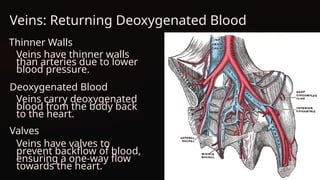
Veins: Returning Deoxygenated Blood
Thinner Walls
Veins have thinner walls
than arteries due to lower
blood pressure.
Deoxygenated Blood
Veins carry deoxygenated
blood from the body back
to the heart.
Valves
Veins have valves to
prevent backflow of blood,
ensuring a one-way flow
towards the heart.
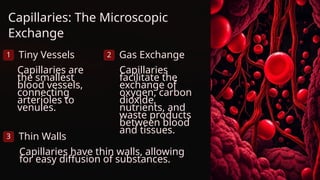
Capillaries: The Microscopic
Exchange
1 Tiny Vessels
Capillaries are
the smallest
blood vessels,
connecting
arterioles to
venules.
2 Gas Exchange
Capillaries
facilitate the
exchange of
oxygen, carbon
dioxide,
nutrients, and
waste products
between blood
and tissues.
3 Thin Walls
Capillaries have thin walls, allowing
for easy diffusion of substances.
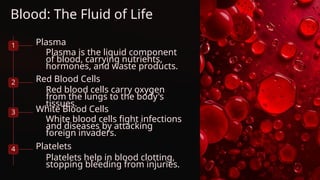
Blood: The Fluid of Life
1 Plasma
Plasma is the liquid component
of blood, carrying nutrients,
hormones, and waste products.
2 Red Blood Cells
3 White Blood Cells
White blood cells fight infections
and diseases by attacking
foreign invaders.
4 Platelets
Red blood cells carry oxygen
from the lungs to the body's
tissues.
Platelets help in blood clotting,
stopping bleeding from injuries.
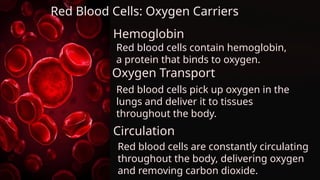
Red Blood Cells: Oxygen Carriers
Hemoglobin
Oxygen Transport
Circulation
Red blood cells are constantly circulating
throughout the body, delivering oxygen
and removing carbon dioxide.
Red blood cells contain hemoglobin,
a protein that binds to oxygen.
Red blood cells pick up oxygen in the
lungs and deliver it to tissues
throughout the body.
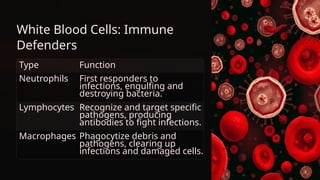
White Blood Cells: Immune
Defenders
Type Function
Neutrophils First responders to
infections, engulfing and
destroying bacteria.
Lymphocytes Recognize and target specific
pathogens, producing
antibodies to fight infections.
Macrophages Phagocytize debris and
pathogens, clearing up
infections and damaged cells.
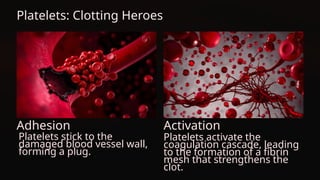
Platelets: Clotting Heroes
Adhesion Activation
Platelets activate the
coagulation cascade, leading
to the formation of a fibrin
mesh that strengthens the
clot.
Platelets stick to the
damaged blood vessel wall,
forming a plug.
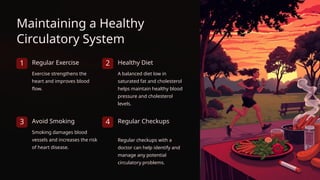
Maintaining a Healthy
Circulatory System
1 Regular Exercise
Exercise strengthens the
heart and improves blood
flow.
2 Healthy Diet
A balanced diet low in
saturated fat and cholesterol
helps maintain healthy blood
pressure and cholesterol
levels.
3 Avoid Smoking
Smoking damages blood
vessels and increases the risk
of heart disease.
4 Regular Checkups
Regular checkups with a
doctor can help identify and
manage any potential
circulatory problems.

The-Circulatory-System-A-Vital-Network.pptx

  • 1.
    The Circulatory System: AVital Network The circulatory system is a complex network of organs and vessels that transport blood throughout the body. This vital system delivers oxygen and nutrients to cells while removing waste products. by jc rollon
  • 2.
    Heart: The PumpingPowerhouse Four Chambers The heart has four chambers: two atria and two ventricles. The atria receive blood and the ventricles pump it out. Valves Valves prevent backflow of blood, ensuring a one- way flow through the heart. Electrical Signals The heart's rhythm is controlled by electrical signals that stimulate muscle contractions.
  • 3.
    Arteries: Delivering Oxygen- RichBlood Thick Walls Arteries have thick, elastic walls to withstand high pressure from the heart. Oxygenated Blood Arteries carry oxygen-rich blood from the heart to the body's tissues. Branching Network Arteries branch into smaller arterioles that eventually lead to capillaries.
  • 4.
    Veins: Returning DeoxygenatedBlood Thinner Walls Veins have thinner walls than arteries due to lower blood pressure. Deoxygenated Blood Veins carry deoxygenated blood from the body back to the heart. Valves Veins have valves to prevent backflow of blood, ensuring a one-way flow towards the heart.
  • 5.
    Capillaries: The Microscopic Exchange 1Tiny Vessels Capillaries are the smallest blood vessels, connecting arterioles to venules. 2 Gas Exchange Capillaries facilitate the exchange of oxygen, carbon dioxide, nutrients, and waste products between blood and tissues. 3 Thin Walls Capillaries have thin walls, allowing for easy diffusion of substances.
  • 6.
    Blood: The Fluidof Life 1 Plasma Plasma is the liquid component of blood, carrying nutrients, hormones, and waste products. 2 Red Blood Cells 3 White Blood Cells White blood cells fight infections and diseases by attacking foreign invaders. 4 Platelets Red blood cells carry oxygen from the lungs to the body's tissues. Platelets help in blood clotting, stopping bleeding from injuries.
  • 7.
    Red Blood Cells:Oxygen Carriers Hemoglobin Oxygen Transport Circulation Red blood cells are constantly circulating throughout the body, delivering oxygen and removing carbon dioxide. Red blood cells contain hemoglobin, a protein that binds to oxygen. Red blood cells pick up oxygen in the lungs and deliver it to tissues throughout the body.
  • 8.
    White Blood Cells:Immune Defenders Type Function Neutrophils First responders to infections, engulfing and destroying bacteria. Lymphocytes Recognize and target specific pathogens, producing antibodies to fight infections. Macrophages Phagocytize debris and pathogens, clearing up infections and damaged cells.
  • 9.
    Platelets: Clotting Heroes AdhesionActivation Platelets activate the coagulation cascade, leading to the formation of a fibrin mesh that strengthens the clot. Platelets stick to the damaged blood vessel wall, forming a plug.
  • 10.
    Maintaining a Healthy CirculatorySystem 1 Regular Exercise Exercise strengthens the heart and improves blood flow. 2 Healthy Diet A balanced diet low in saturated fat and cholesterol helps maintain healthy blood pressure and cholesterol levels. 3 Avoid Smoking Smoking damages blood vessels and increases the risk of heart disease. 4 Regular Checkups Regular checkups with a doctor can help identify and manage any potential circulatory problems.