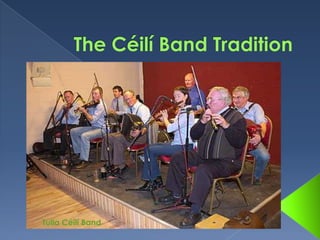
The Céilí Band TraditionTullaCéilí Band
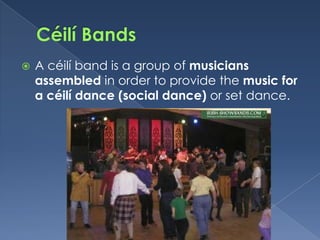
Céilí BandsA céilí band is a group of musicians assembled in order to provide the music for a céilí dance (social dance) or set dance.
Céilí BandsThe 1897 Gaelic League FéileSamhaincéilí in Bloomsbury Hall in London is thought to have been the first formal céilí with a band. This landmark began the development of group-playingin pursuit of the louder volume required to fill larger venues.The 1950s/60s was the golden age for the céilí band. The bands attracted such crowds of dancers as to fill the largest halls in Ireland, City Hall in Cork and the Mansion House in Dublin were packed to capacity on a weekly basis.
Instruments used in Céilí BandsInstruments typically used include the fiddle, flute, button accordion, concertina, piano, bass and snare drum with woodblock and banjo.Other instruments used more occasionally include the double bass, uilleann pipes (Tulla Band), piccolo (McCuskers) and saxophone (Gallowglass).The bodhrán and guitar are generally not used as they are not loud enough for packed dance halls
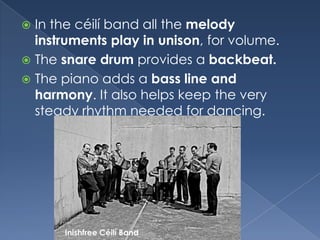
In the céilí band all the melody instruments play in unison, for volume.The snare drum provides a backbeat.The piano adds a bass line and harmony. It also helps keep the very steady rhythm needed for dancing.InishfreeCéilí Band
Céilí Bands todayDespite not replicating the level of popularity enjoyed by céilí bands in the 1950s/60s, céilí bands remain busy. ComhaltasCeolteoiríÉireann have ensured this.Competitions, such as the FleadhCheoil and festivals, such as Temple Bar Tradfest, help promote céilí bands.Many céilí bands have long histories and rivalries with each other. These include the Kilfenoracéilí band, the Tullacéilí band and the Táincéilí band.

The céilí band tradition

  • 1.
    The Céilí BandTraditionTullaCéilí Band
  • 2.
    Céilí BandsA céilíband is a group of musicians assembled in order to provide the music for a céilí dance (social dance) or set dance.
  • 3.
    Céilí BandsThe 1897Gaelic League FéileSamhaincéilí in Bloomsbury Hall in London is thought to have been the first formal céilí with a band. This landmark began the development of group-playingin pursuit of the louder volume required to fill larger venues.The 1950s/60s was the golden age for the céilí band. The bands attracted such crowds of dancers as to fill the largest halls in Ireland, City Hall in Cork and the Mansion House in Dublin were packed to capacity on a weekly basis.
  • 4.
    Instruments used inCéilí BandsInstruments typically used include the fiddle, flute, button accordion, concertina, piano, bass and snare drum with woodblock and banjo.Other instruments used more occasionally include the double bass, uilleann pipes (Tulla Band), piccolo (McCuskers) and saxophone (Gallowglass).The bodhrán and guitar are generally not used as they are not loud enough for packed dance halls
  • 5.
    In the céilíband all the melody instruments play in unison, for volume.The snare drum provides a backbeat.The piano adds a bass line and harmony. It also helps keep the very steady rhythm needed for dancing.InishfreeCéilí Band
  • 6.
    Céilí Bands todayDespitenot replicating the level of popularity enjoyed by céilí bands in the 1950s/60s, céilí bands remain busy. ComhaltasCeolteoiríÉireann have ensured this.Competitions, such as the FleadhCheoil and festivals, such as Temple Bar Tradfest, help promote céilí bands.Many céilí bands have long histories and rivalries with each other. These include the Kilfenoracéilí band, the Tullacéilí band and the Táincéilí band.