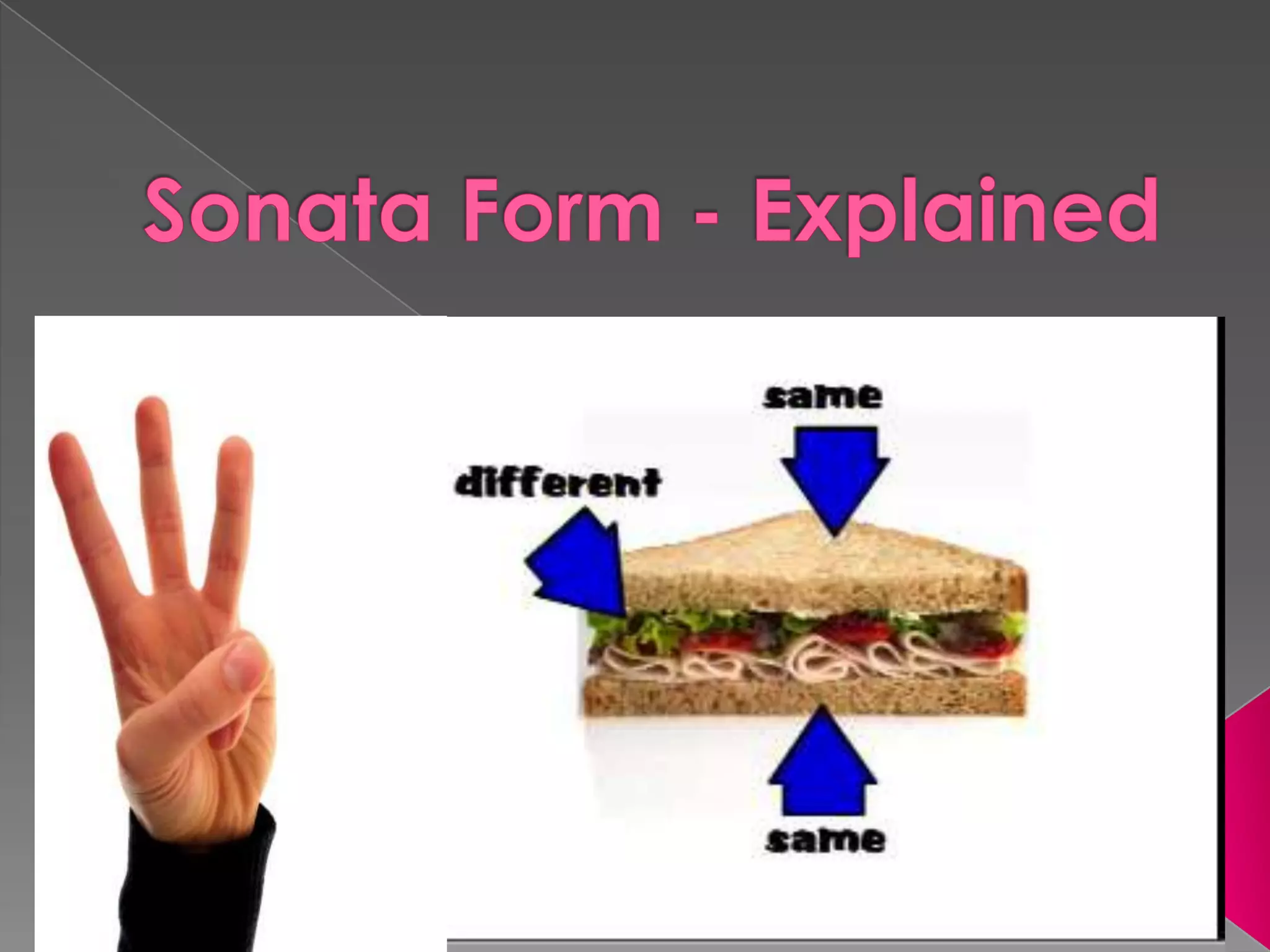
Sonata Form - Explained
Sonata FormTchaikovsky’s Romeo and Juliet Fantasy Overture is written in sonata formSonata form is a type of structure, based on the relationship between keys, that became popular in the Classical PeriodRomantic composers, such as Tchaikovsky, adapted classical sonata form in their compositionsSonata form can also be described as Ternary form (ABA) as it has three main sections: Exposition, Development and RecapitulationSonata form can also be extended to include an introduction and coda
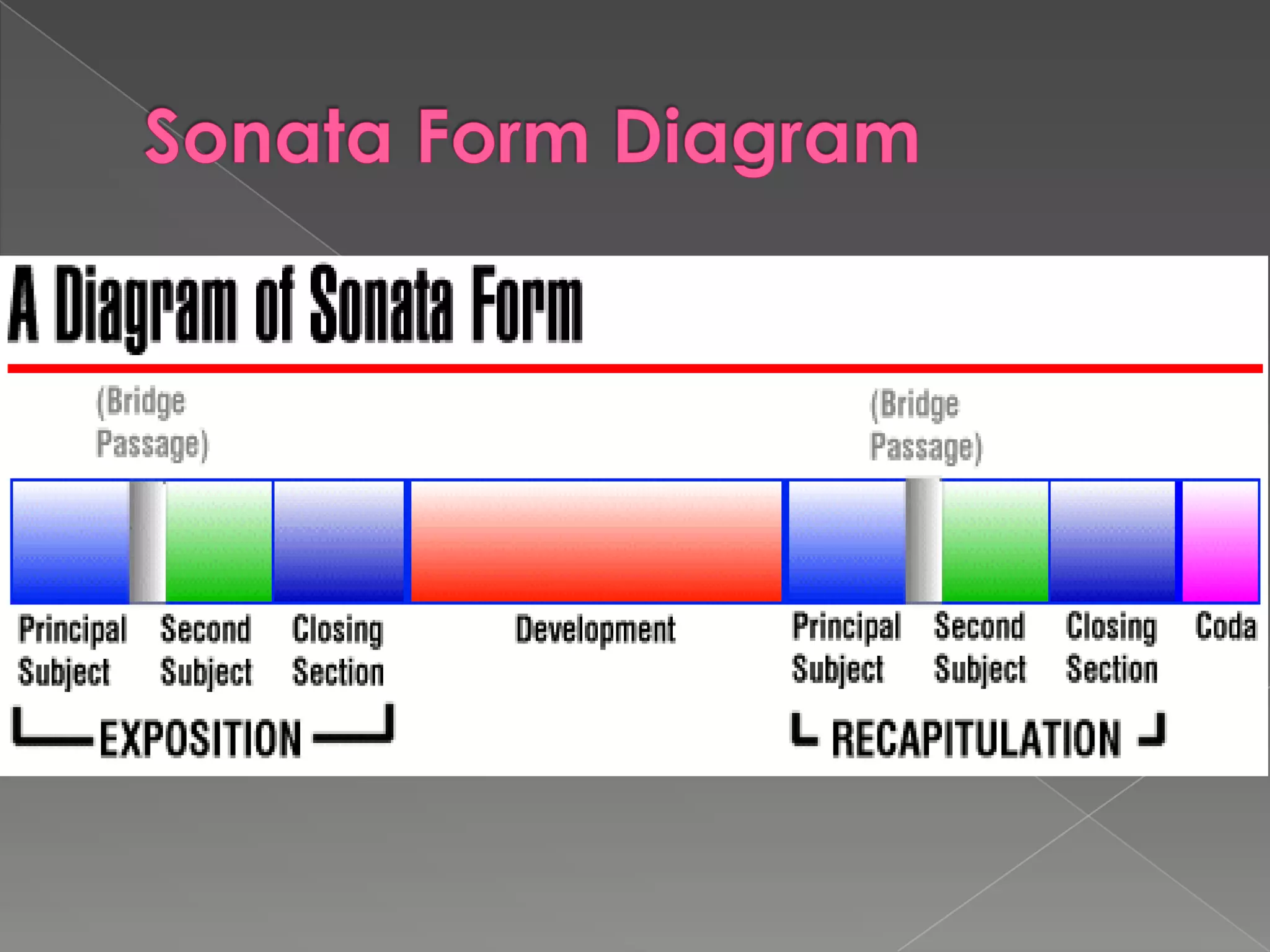
Sonata Form Diagram
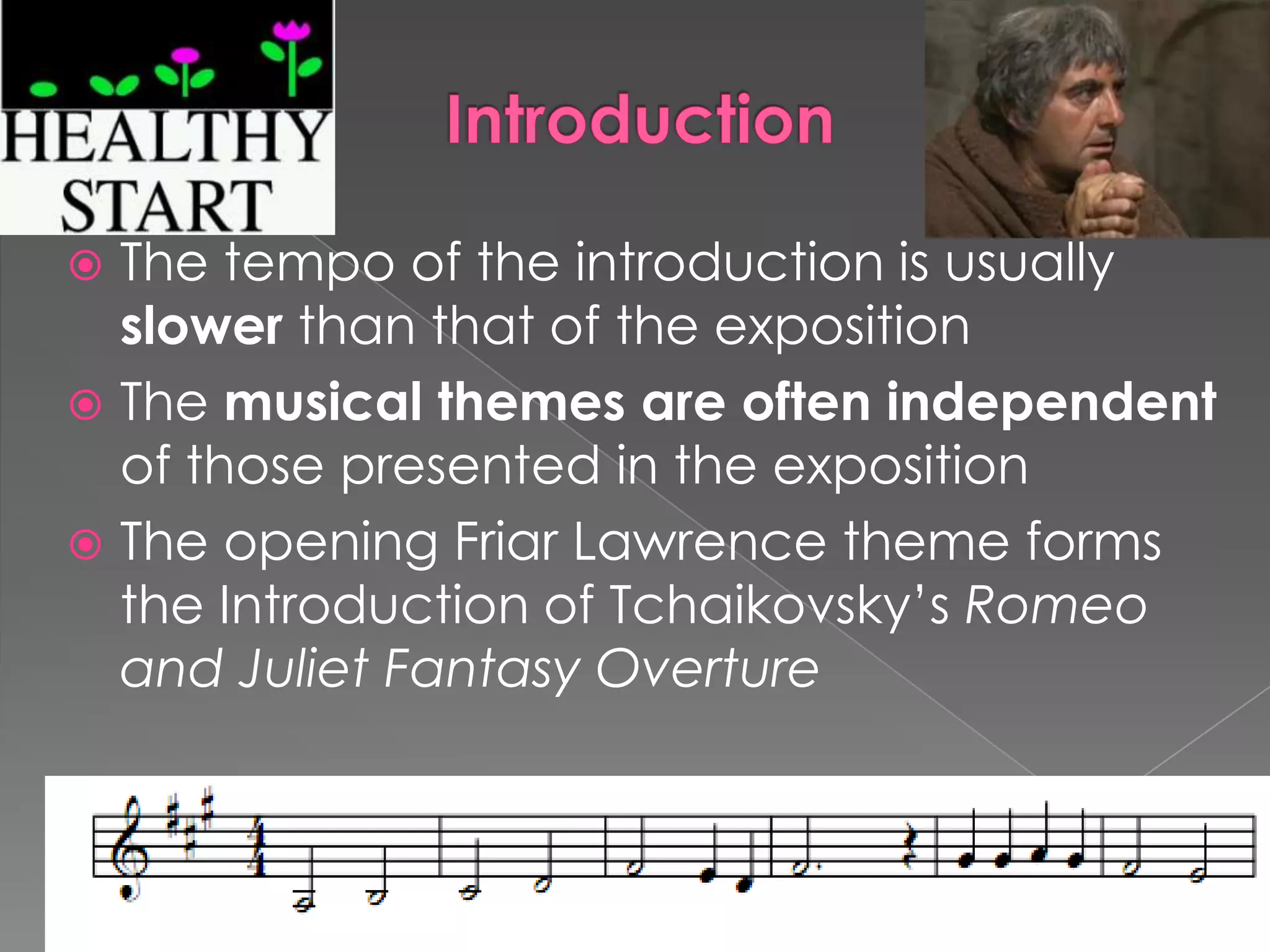
IntroductionThe tempo of the introduction is usually slower than that of the expositionThe musical themes are often independent of those presented in the expositionThe opening Friar Lawrence theme forms the Introduction of Tchaikovsky’s Romeo and Juliet Fantasy Overture
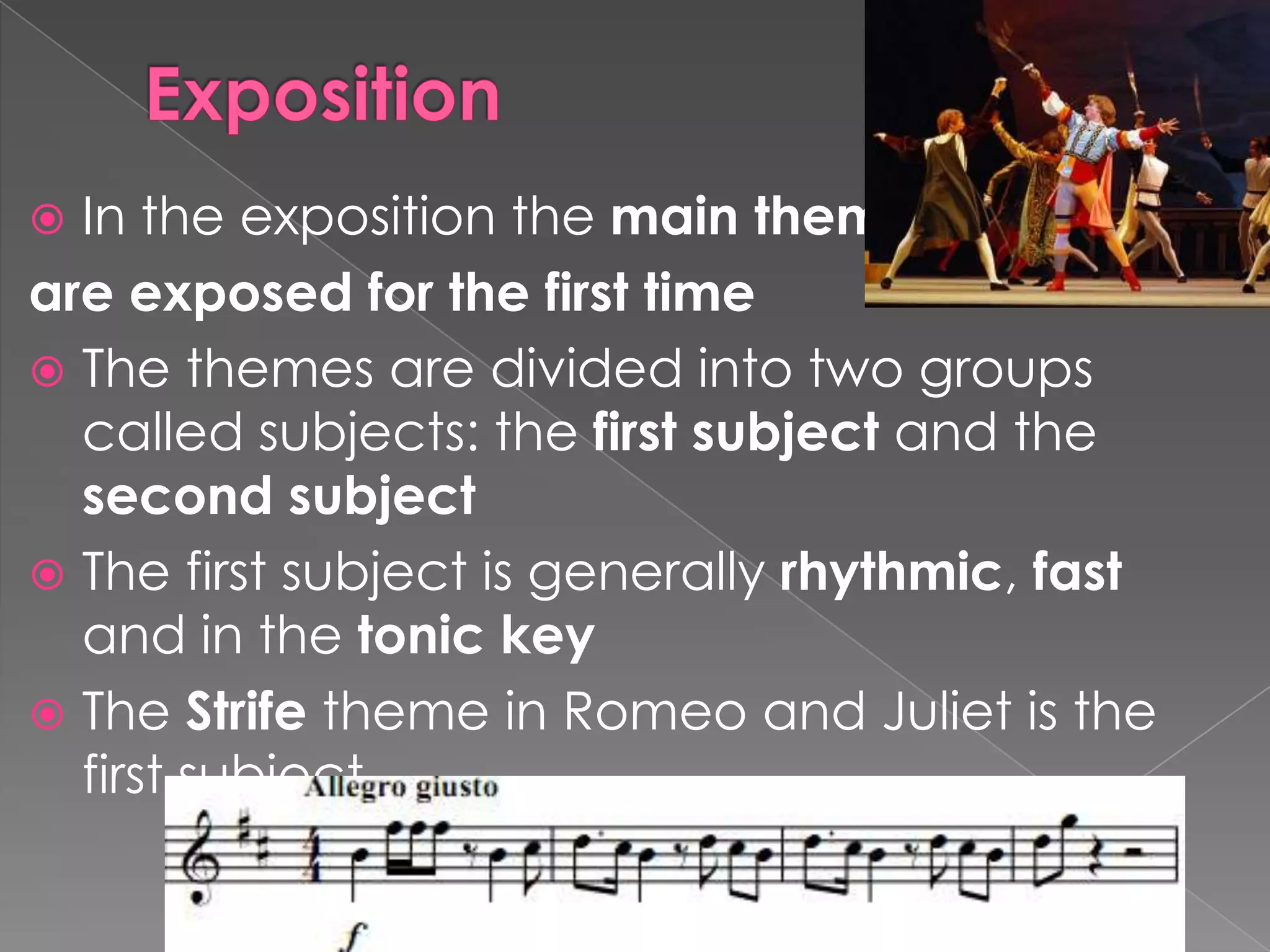
ExpositionIn the exposition the main themes are exposed for the first timeThe themes are divided into two groups called subjects: the first subject and the second subjectThe first subject is generally rhythmic, fast and in the tonic keyThe Strife theme in Romeo and Juliet is the first subject
Exposition (contd.)After the first subject there is a transition period before the music moves to the second subjectDuring this transition period the music changes keyThe second subject is usually much more lyrical and beautiful than the first. It is in a related key (either the dominant or relative minor)Tchaikovsky’s second subject is unusual as it doesn’t modulate to the relative major but instead to a key a semitone lowerThe second subject in the Romeo and Juliet Fantasy Overture has two parts
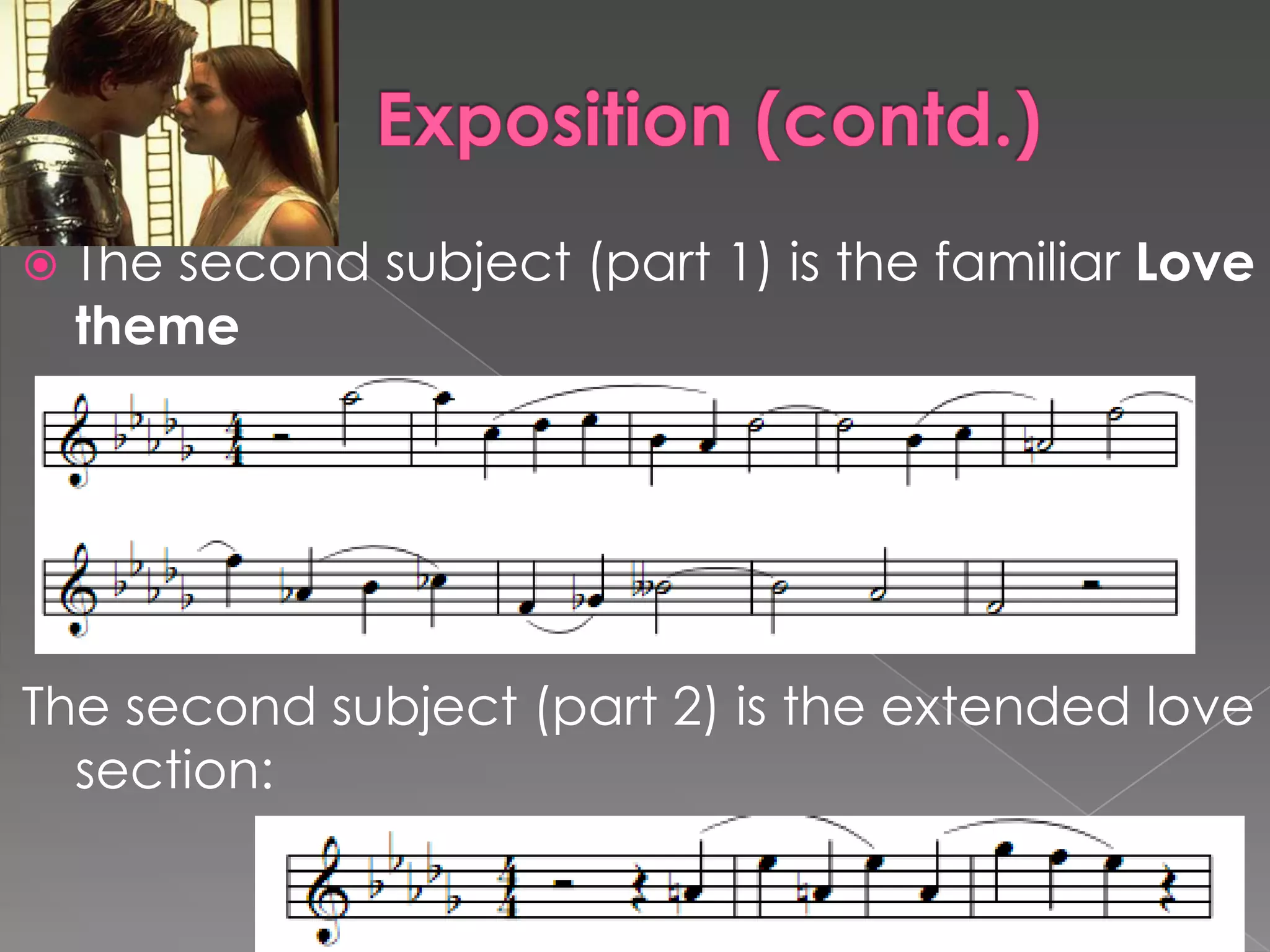
Exposition (contd.)The second subject (part 1) is the familiar Love themeThe second subject (part 2) is the extended love section:
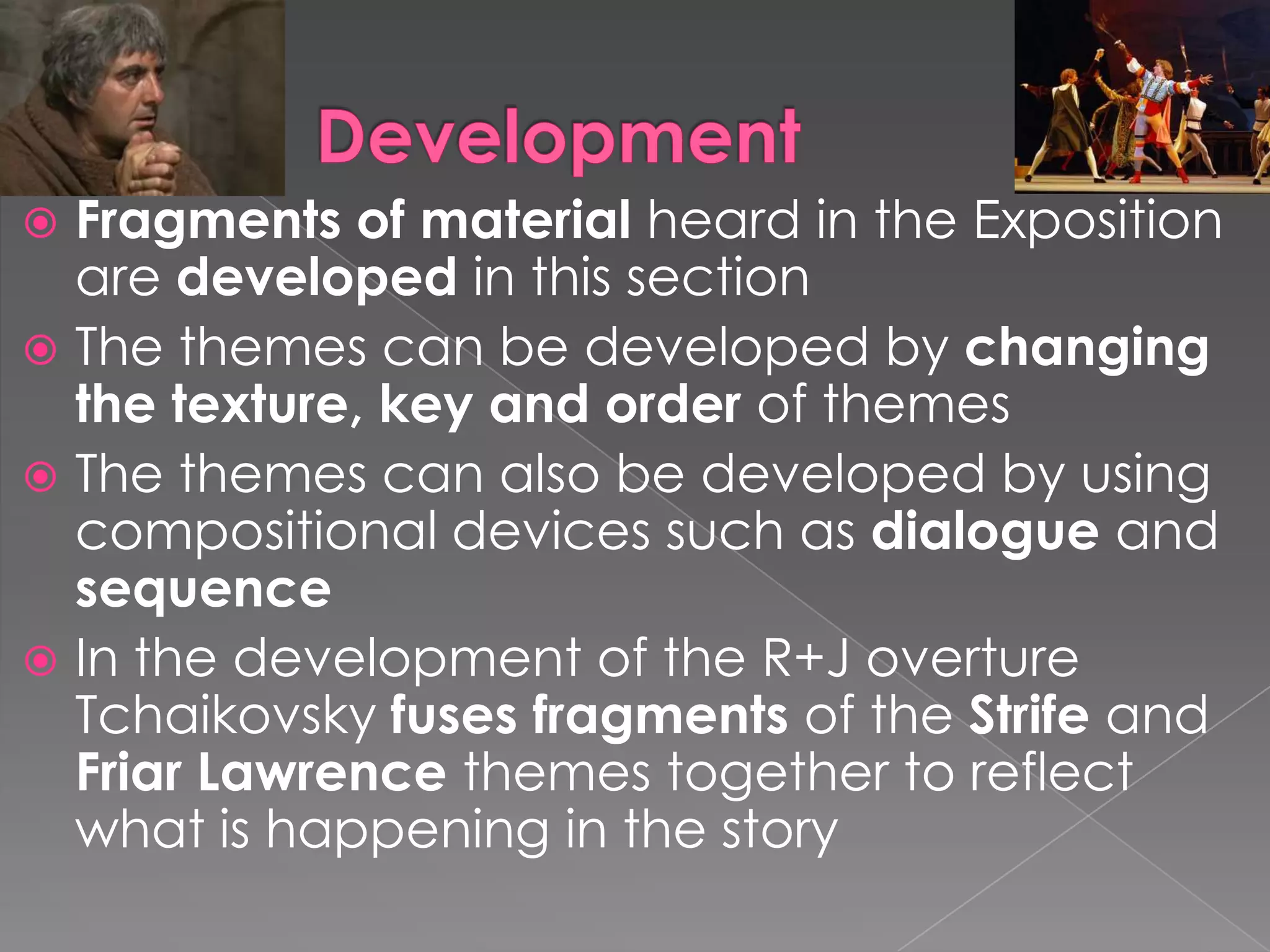
DevelopmentFragments of material heard in the Exposition are developed in this sectionThe themes can be developed by changing the texture, key and order of themes The themes can also be developed by using compositional devices such as dialogue and sequenceIn the development of the R+J overture Tchaikovsky fuses fragments of the Strife and Friar Lawrence themes together to reflect what is happening in the story
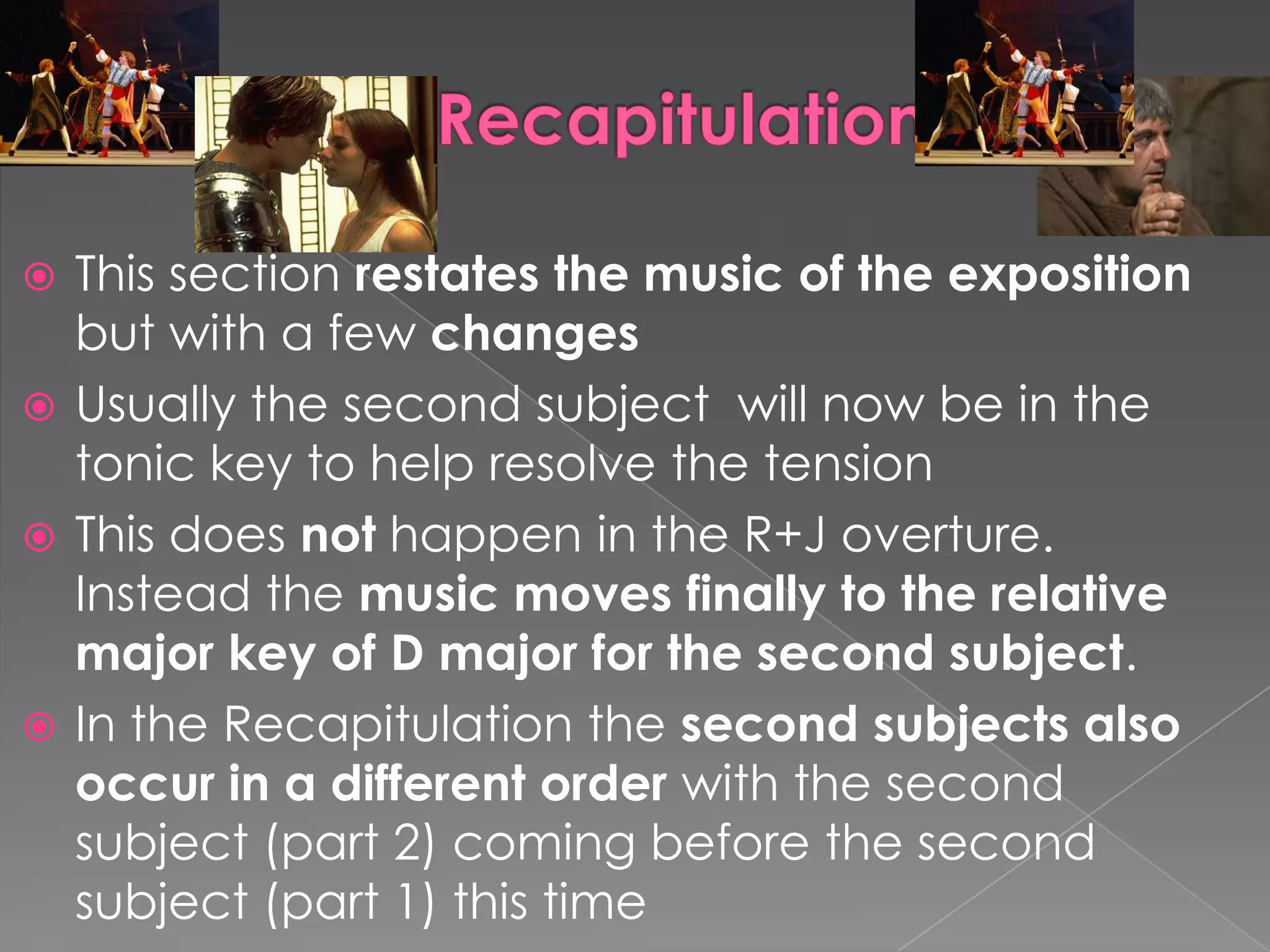
RecapitulationThis section restates the music of the exposition but with a few changesUsually the second subject  will now be in the tonic key to help resolve the tensionThis does not happen in the R+J overture. Instead the music moves finally to the relative major key of D major for the second subject.In the Recapitulation the second subjects also occur in a different order with the second subject (part 2) coming before the second subject (part 1) this time
CodaA Coda is often added in the tonic key after the recapitulation to complete the movementIn R+J the coda establishes the mood of a funeralThough the exact themes cannot be heard, an altered love theme is heard at the start to represent the lovers’ deathsA chorale tune not unlike the Friar Lawrence theme is also heard in this section

Sonata form

  • 1.
    Sonata Form -Explained
  • 2.
    Sonata FormTchaikovsky’s Romeoand Juliet Fantasy Overture is written in sonata formSonata form is a type of structure, based on the relationship between keys, that became popular in the Classical PeriodRomantic composers, such as Tchaikovsky, adapted classical sonata form in their compositionsSonata form can also be described as Ternary form (ABA) as it has three main sections: Exposition, Development and RecapitulationSonata form can also be extended to include an introduction and coda
  • 3.
  • 4.
    IntroductionThe tempo ofthe introduction is usually slower than that of the expositionThe musical themes are often independent of those presented in the expositionThe opening Friar Lawrence theme forms the Introduction of Tchaikovsky’s Romeo and Juliet Fantasy Overture
  • 5.
    ExpositionIn the expositionthe main themes are exposed for the first timeThe themes are divided into two groups called subjects: the first subject and the second subjectThe first subject is generally rhythmic, fast and in the tonic keyThe Strife theme in Romeo and Juliet is the first subject
  • 6.
    Exposition (contd.)After thefirst subject there is a transition period before the music moves to the second subjectDuring this transition period the music changes keyThe second subject is usually much more lyrical and beautiful than the first. It is in a related key (either the dominant or relative minor)Tchaikovsky’s second subject is unusual as it doesn’t modulate to the relative major but instead to a key a semitone lowerThe second subject in the Romeo and Juliet Fantasy Overture has two parts
  • 7.
    Exposition (contd.)The secondsubject (part 1) is the familiar Love themeThe second subject (part 2) is the extended love section:
  • 8.
    DevelopmentFragments of materialheard in the Exposition are developed in this sectionThe themes can be developed by changing the texture, key and order of themes The themes can also be developed by using compositional devices such as dialogue and sequenceIn the development of the R+J overture Tchaikovsky fuses fragments of the Strife and Friar Lawrence themes together to reflect what is happening in the story
  • 9.
    RecapitulationThis section restatesthe music of the exposition but with a few changesUsually the second subject will now be in the tonic key to help resolve the tensionThis does not happen in the R+J overture. Instead the music moves finally to the relative major key of D major for the second subject.In the Recapitulation the second subjects also occur in a different order with the second subject (part 2) coming before the second subject (part 1) this time
  • 10.
    CodaA Coda isoften added in the tonic key after the recapitulation to complete the movementIn R+J the coda establishes the mood of a funeralThough the exact themes cannot be heard, an altered love theme is heard at the start to represent the lovers’ deathsA chorale tune not unlike the Friar Lawrence theme is also heard in this section