The business case for personal preparedness Why employee preparedness is important to your bottom line
Carol Dunn 2Resilience City of Bellevue Emergency Preparedness Division Previous American Red Cross: Serving King & Kitsap Counties Program Manager Community Disaster Education Ernst & Young, London International Privatization, former Soviet Union Change Management Business Process Re-engineering Financial Modeling, Feasibility Studies MSc Management Boston University, London
Today With Today’s Competition, every person is essential Increasing Resiliency through adopting Company Wide Best Practices Steps you can take to grow resiliency within your organization
Large or small, you are your people Competition: Essential or gone Knowledge Technical skills Training Relationships
Planning for Disasters is Good Business Risks of being caught by surprise: 43% small businesses never reopen. Of those that do reopen, only 29 % are still operating two years later  Benefits to Risk Reduction Activities $1 mitigation $4 saving to society Long term reduction of risks can lower insurance Reduced Loss of Capital
Business Suffers when employees can’t work Productivity Project Timelines Sales Client Care Relationships Internal Services: Payroll
Disasters are inevitable….


Disasters are inevitable….
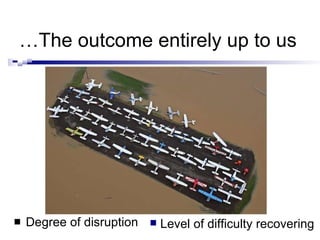
…The outcome entirely up to us Degree of disruption Level of difficulty recovering
Degree of Disruption Ability to get to work Transportation disruptions Dangerous conditions Structural damage-work or home Care Giving Obligations Ability to Access Information Potential Data Loss Ability to Communicate
Difficulty Recovering Individuals have risk of long term difficulties: Self or loved one in mortal danger Feeling no where to turn for help, no one offered Forced Relocation Loss of economic security Up to 43% population after large disaster
Possible Long Term Effects Depression Absenteeism Reduced performance Long Term Health Effects
Avoid long term trauma by reduce the likelihood of employees being traumatized Risks Identified and Reduced Adequate coping resources Access to critical needs Plan for caring for core support network  A job to go back to
Adopt business process best practices Leadership Communication and Data Internal Services Human Resource Management
Leadership Clarity Provide guidance on expectations: What functions need to continue, how will it be done if the office can’t be used;  who will do what if key individuals can’t make it to work, or if access to supplies or data are blocked. Provide information on post-disaster steps to take to re-establish communication and access help An expectation that individuals will have plans and have taken steps to be ready for disruptions
Employment Policies Flexibility-Increase ways people can work: Cross Functional Teams  Locations Different branches/offices Home Office Suites/Virtual Offices Hours: Flexibility
Communication and Data Increase ways to access Data: VPN, Shared Servers, Off site data storage Increased ways employees can communicate Phone, cell phone, email, text/messaging, internet, website, teleconferencing, Employee Networks, Automated Emergency Check In, Emergency Hot Line
Internal services Payroll-Move away from issuing checks Electronic Debit Cards Employee Tracking Give Employees a way to contact you if main number is disrupted  Phone lists, company credit card activity, log-ins Have a plan for Needs Response
Human Resource Management Orientation:  Establish expectation of personal preparedness with tools to help. Explain policies and resources during disruptions Relocation Support:  Provide hazard information with relocation support Welcome gift: Disaster Supplies Kit
Employee Support and Development Employee Health Plans:  Build Emotional Resilience Pre Disaster access to counseling and support Train Coping Skills Encourage Post Disaster Counseling Special Funds: Disaster Fund Employee Networks: Discussion Sites, CERT Groups, Care Networks, Resource Sharing Training and Education: Include Disaster Response Skills, Emergency Preparedness, First Aid, CPR
Service Delivery Integrating risk reduction into service delivery adds value for customers/clients Convey expectations to suppliers that they must demonstrate  their plan to handle disruptions
Strategic Planning Mindfully Move Ahead Hazard Assessment always included with planning: don’t locate in dangerous areas without a safe structure—don’t assume! No new systems that don’t have built in redundancy and protections
After a Disruption Provide a safe harbor-family, animals Be a source of information: what to expect, what resources are available Emphasize that you are an active part of the communities recovery Encourage people to talk: provide support about what to emotions everyone can expect Remember that the experience continues after the media focus Be flexible—get people back and working, but don’t expect them to act as if the event never happened, don’t count time away
Making it happen Start by finding business activities that are ‘almost there’ Introduce the concepts based on the business benefits, best practice examples  Find ways to make things easy
Now, go do it! Questions, Brainstorming help Carol Dunn [email_address]   @caroldn

The Business Case to Prepare

  • 1.
    The business casefor personal preparedness Why employee preparedness is important to your bottom line
  • 2.
    Carol Dunn 2ResilienceCity of Bellevue Emergency Preparedness Division Previous American Red Cross: Serving King & Kitsap Counties Program Manager Community Disaster Education Ernst & Young, London International Privatization, former Soviet Union Change Management Business Process Re-engineering Financial Modeling, Feasibility Studies MSc Management Boston University, London
  • 3.
    Today With Today’sCompetition, every person is essential Increasing Resiliency through adopting Company Wide Best Practices Steps you can take to grow resiliency within your organization
  • 4.
    Large or small,you are your people Competition: Essential or gone Knowledge Technical skills Training Relationships
  • 5.
    Planning for Disastersis Good Business Risks of being caught by surprise: 43% small businesses never reopen. Of those that do reopen, only 29 % are still operating two years later Benefits to Risk Reduction Activities $1 mitigation $4 saving to society Long term reduction of risks can lower insurance Reduced Loss of Capital
  • 6.
    Business Suffers whenemployees can’t work Productivity Project Timelines Sales Client Care Relationships Internal Services: Payroll
  • 7.
  • 8.
  • 9.
  • 10.
  • 11.
  • 12.
    …The outcome entirelyup to us Degree of disruption Level of difficulty recovering
  • 13.
    Degree of DisruptionAbility to get to work Transportation disruptions Dangerous conditions Structural damage-work or home Care Giving Obligations Ability to Access Information Potential Data Loss Ability to Communicate
  • 14.
    Difficulty Recovering Individualshave risk of long term difficulties: Self or loved one in mortal danger Feeling no where to turn for help, no one offered Forced Relocation Loss of economic security Up to 43% population after large disaster
  • 15.
    Possible Long TermEffects Depression Absenteeism Reduced performance Long Term Health Effects
  • 16.
    Avoid long termtrauma by reduce the likelihood of employees being traumatized Risks Identified and Reduced Adequate coping resources Access to critical needs Plan for caring for core support network A job to go back to
  • 17.
    Adopt business processbest practices Leadership Communication and Data Internal Services Human Resource Management
  • 18.
    Leadership Clarity Provideguidance on expectations: What functions need to continue, how will it be done if the office can’t be used; who will do what if key individuals can’t make it to work, or if access to supplies or data are blocked. Provide information on post-disaster steps to take to re-establish communication and access help An expectation that individuals will have plans and have taken steps to be ready for disruptions
  • 19.
    Employment Policies Flexibility-Increaseways people can work: Cross Functional Teams Locations Different branches/offices Home Office Suites/Virtual Offices Hours: Flexibility
  • 20.
    Communication and DataIncrease ways to access Data: VPN, Shared Servers, Off site data storage Increased ways employees can communicate Phone, cell phone, email, text/messaging, internet, website, teleconferencing, Employee Networks, Automated Emergency Check In, Emergency Hot Line
  • 21.
    Internal services Payroll-Moveaway from issuing checks Electronic Debit Cards Employee Tracking Give Employees a way to contact you if main number is disrupted Phone lists, company credit card activity, log-ins Have a plan for Needs Response
  • 22.
    Human Resource ManagementOrientation: Establish expectation of personal preparedness with tools to help. Explain policies and resources during disruptions Relocation Support: Provide hazard information with relocation support Welcome gift: Disaster Supplies Kit
  • 23.
    Employee Support andDevelopment Employee Health Plans: Build Emotional Resilience Pre Disaster access to counseling and support Train Coping Skills Encourage Post Disaster Counseling Special Funds: Disaster Fund Employee Networks: Discussion Sites, CERT Groups, Care Networks, Resource Sharing Training and Education: Include Disaster Response Skills, Emergency Preparedness, First Aid, CPR
  • 24.
    Service Delivery Integratingrisk reduction into service delivery adds value for customers/clients Convey expectations to suppliers that they must demonstrate their plan to handle disruptions
  • 25.
    Strategic Planning MindfullyMove Ahead Hazard Assessment always included with planning: don’t locate in dangerous areas without a safe structure—don’t assume! No new systems that don’t have built in redundancy and protections
  • 26.
    After a DisruptionProvide a safe harbor-family, animals Be a source of information: what to expect, what resources are available Emphasize that you are an active part of the communities recovery Encourage people to talk: provide support about what to emotions everyone can expect Remember that the experience continues after the media focus Be flexible—get people back and working, but don’t expect them to act as if the event never happened, don’t count time away
  • 27.
    Making it happenStart by finding business activities that are ‘almost there’ Introduce the concepts based on the business benefits, best practice examples Find ways to make things easy
  • 28.
    Now, go doit! Questions, Brainstorming help Carol Dunn [email_address] @caroldn