Gospel Reading
Juan 1:1-5
THE BIBLE AS A BOOK
Introduction
A. Other names of the Bible
 Scripture
 Old and New Testament
THE BIBLE AS A BOOK
Introduction
B. The Bible is a special book
1. Most translated – 310
languages; NT 695
languages; portions into 902
languages; some parts can
be read in 1,907 languages.
THE BIBLE AS A BOOK
Introduction
B. The Bible is a special book
2. Most studied – 10,000
books/articles written each
year on Scriptures
 due to richness in meaning
 its meaning is applied to new
situations in life.
THE BIBLE AS A BOOK
Introduction
B. The Bible is a special book
3. Most venerated – candles
and incense in Masses
 carried in processions
 changed the lives of people
and nations
 has produced Saints and
changed the course of history
THE BIBLE AS A BOOK
I. The Bible as the “Book of Books”
A. The word “Bible”
 Latin: “Biblia” (“Book” - singular)
 Greek: “Biblia” (“Books” - plural)
 one book composed of many
books or different writings
 The Bible is the Word of God
that comes from words of men
entrusted to the Church for the
salvation of all.
THE BIBLE AS A BOOK
I. The Bible as the “Book of Books”
B. “Library”
 a collection of books or writings
 The Roman Catholic Canon based
on the Septuagint has 73 books
divided this way:
Old Testament: 46 books
New Testament: 27 books
 These were written by many authors
who belong to a time and culture
different from our own.
 It was written from 1,000 B.C. to 125
A.D.
THE BIBLE AS A BOOK
I. The Bible as the “Book of Books”
C. Forms and Styles
1) Narrative – different stories
and history
 feeding the 5,000 by Jesus; Acts of
the Apostles; story of Joseph;
David and Goliath
 historical books: Genesis, Exodus,
Joshua, Judges, Samuel, and
Kings
THE BIBLE AS A BOOK
I. The Bible as the “Book of Books”
C. Forms and Styles
2) Poetic – Book of Proverbs in
the OT
 Jesus’ sayings: “No prophet….”;
“Healthy people do not need….”
THE BIBLE AS A BOOK
I. The Bible as the “Book of Books”
C. Forms and Styles
3) Prayers – Psalms in the OT
are all prayers
 the Our Father or Lord’s Prayer
 Canticles of Zechariah and of the
Blessed Mother
THE BIBLE AS A BOOK
I. The Bible as the “Book of Books”
C. Forms and Styles
4) Laws and regulations –
Leviticus and Deuteronomy in
the OT
 commandments of love of
neighbor and of God
THE BIBLE AS A BOOK
II. The Bible as Scripture
1. The word Scripture
 the Scripture; Sacred Scriptures;
Holy writ
 Latin “scriptura”: writing or
something written
THE BIBLE AS A BOOK
II. The Bible as Scripture
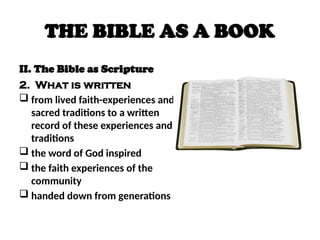
2. What is written
 from lived faith-experiences and
sacred traditions to a written
record of these experiences and
traditions
 the word of God inspired
 the faith experiences of the
community
 handed down from generations
THE BIBLE AS A BOOK
II. The Bible as Scripture
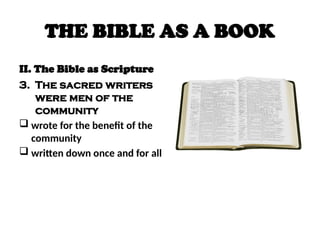
3. The sacred writers
were men of the
community
 wrote for the benefit of the
community
 written down once and for all
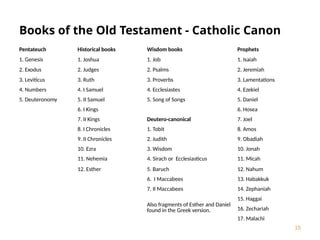
Books of the Old Testament - Catholic Canon
Pentateuch Historical books Wisdom books Prophets
1. Genesis 1. Joshua 1. Job 1. Isaiah
2. Exodus 2. Judges 2. Psalms 2. Jeremiah
3. Leviticus 3. Ruth 3. Proverbs 3. Lamentations
4. Numbers 4. I Samuel 4. Ecclesiastes 4. Ezekiel
5. Deuteronomy 5. II Samuel 5. Song of Songs 5. Daniel
6. I Kings 6. Hosea
7. II Kings Deutero-canonical 7. Joel
8. I Chronicles 1. Tobit 8. Amos
9. II Chronicles 2. Judith 9. Obadiah
10. Ezra 3. Wisdom 10. Jonah
11. Nehemia 4. Sirach or Ecclesiasticus 11. Micah
12. Esther 5. Baruch 12. Nahum
6. I Maccabees 13. Habakkuk
7. II Maccabees 14. Zephaniah
Also fragments of Esther and Daniel
found in the Greek version.
15. Haggai
16. Zechariah
17. Malachi
15
How do we know the Catholic Bible?
 It has an IMPRIMATUR and NIHIL OBSTAT
signed by the official censor of the Roman
Catholic Church.
 Imprimatur (“to be printed out or published”)
is an official license to print or publish a book,
pamphlet, etc., especially a license issued by a
censor of the Roman Catholic Church.
 Nihil obstat (“nothing against”) is permission
to publish a book, granted by an official
censor who, upon examining it, has certified
that it contains nothing contrary to faith or
morals.
16
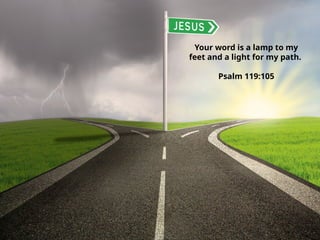
Your word is a lamp to my
feet and a light for my path.
Psalm 119:105

THE BIBLE AS A BOOK.pptx. BASIC BIBLE SEMINAR

  • 1.
  • 2.
    THE BIBLE ASA BOOK Introduction A. Other names of the Bible  Scripture  Old and New Testament
  • 3.
    THE BIBLE ASA BOOK Introduction B. The Bible is a special book 1. Most translated – 310 languages; NT 695 languages; portions into 902 languages; some parts can be read in 1,907 languages.
  • 4.
    THE BIBLE ASA BOOK Introduction B. The Bible is a special book 2. Most studied – 10,000 books/articles written each year on Scriptures  due to richness in meaning  its meaning is applied to new situations in life.
  • 5.
    THE BIBLE ASA BOOK Introduction B. The Bible is a special book 3. Most venerated – candles and incense in Masses  carried in processions  changed the lives of people and nations  has produced Saints and changed the course of history
  • 6.
    THE BIBLE ASA BOOK I. The Bible as the “Book of Books” A. The word “Bible”  Latin: “Biblia” (“Book” - singular)  Greek: “Biblia” (“Books” - plural)  one book composed of many books or different writings  The Bible is the Word of God that comes from words of men entrusted to the Church for the salvation of all.
  • 7.
    THE BIBLE ASA BOOK I. The Bible as the “Book of Books” B. “Library”  a collection of books or writings  The Roman Catholic Canon based on the Septuagint has 73 books divided this way: Old Testament: 46 books New Testament: 27 books  These were written by many authors who belong to a time and culture different from our own.  It was written from 1,000 B.C. to 125 A.D.
  • 8.
    THE BIBLE ASA BOOK I. The Bible as the “Book of Books” C. Forms and Styles 1) Narrative – different stories and history  feeding the 5,000 by Jesus; Acts of the Apostles; story of Joseph; David and Goliath  historical books: Genesis, Exodus, Joshua, Judges, Samuel, and Kings
  • 9.
    THE BIBLE ASA BOOK I. The Bible as the “Book of Books” C. Forms and Styles 2) Poetic – Book of Proverbs in the OT  Jesus’ sayings: “No prophet….”; “Healthy people do not need….”
  • 10.
    THE BIBLE ASA BOOK I. The Bible as the “Book of Books” C. Forms and Styles 3) Prayers – Psalms in the OT are all prayers  the Our Father or Lord’s Prayer  Canticles of Zechariah and of the Blessed Mother
  • 11.
    THE BIBLE ASA BOOK I. The Bible as the “Book of Books” C. Forms and Styles 4) Laws and regulations – Leviticus and Deuteronomy in the OT  commandments of love of neighbor and of God
  • 12.
    THE BIBLE ASA BOOK II. The Bible as Scripture 1. The word Scripture  the Scripture; Sacred Scriptures; Holy writ  Latin “scriptura”: writing or something written
  • 13.
    THE BIBLE ASA BOOK II. The Bible as Scripture 2. What is written  from lived faith-experiences and sacred traditions to a written record of these experiences and traditions  the word of God inspired  the faith experiences of the community  handed down from generations
  • 14.
    THE BIBLE ASA BOOK II. The Bible as Scripture 3. The sacred writers were men of the community  wrote for the benefit of the community  written down once and for all
  • 15.
    Books of theOld Testament - Catholic Canon Pentateuch Historical books Wisdom books Prophets 1. Genesis 1. Joshua 1. Job 1. Isaiah 2. Exodus 2. Judges 2. Psalms 2. Jeremiah 3. Leviticus 3. Ruth 3. Proverbs 3. Lamentations 4. Numbers 4. I Samuel 4. Ecclesiastes 4. Ezekiel 5. Deuteronomy 5. II Samuel 5. Song of Songs 5. Daniel 6. I Kings 6. Hosea 7. II Kings Deutero-canonical 7. Joel 8. I Chronicles 1. Tobit 8. Amos 9. II Chronicles 2. Judith 9. Obadiah 10. Ezra 3. Wisdom 10. Jonah 11. Nehemia 4. Sirach or Ecclesiasticus 11. Micah 12. Esther 5. Baruch 12. Nahum 6. I Maccabees 13. Habakkuk 7. II Maccabees 14. Zephaniah Also fragments of Esther and Daniel found in the Greek version. 15. Haggai 16. Zechariah 17. Malachi 15
  • 16.
    How do weknow the Catholic Bible?  It has an IMPRIMATUR and NIHIL OBSTAT signed by the official censor of the Roman Catholic Church.  Imprimatur (“to be printed out or published”) is an official license to print or publish a book, pamphlet, etc., especially a license issued by a censor of the Roman Catholic Church.  Nihil obstat (“nothing against”) is permission to publish a book, granted by an official censor who, upon examining it, has certified that it contains nothing contrary to faith or morals. 16 Your word is a lamp to my feet and a light for my path. Psalm 119:105