The Arrival of the Bee Box
The Arrival By The Bee Box
            Of
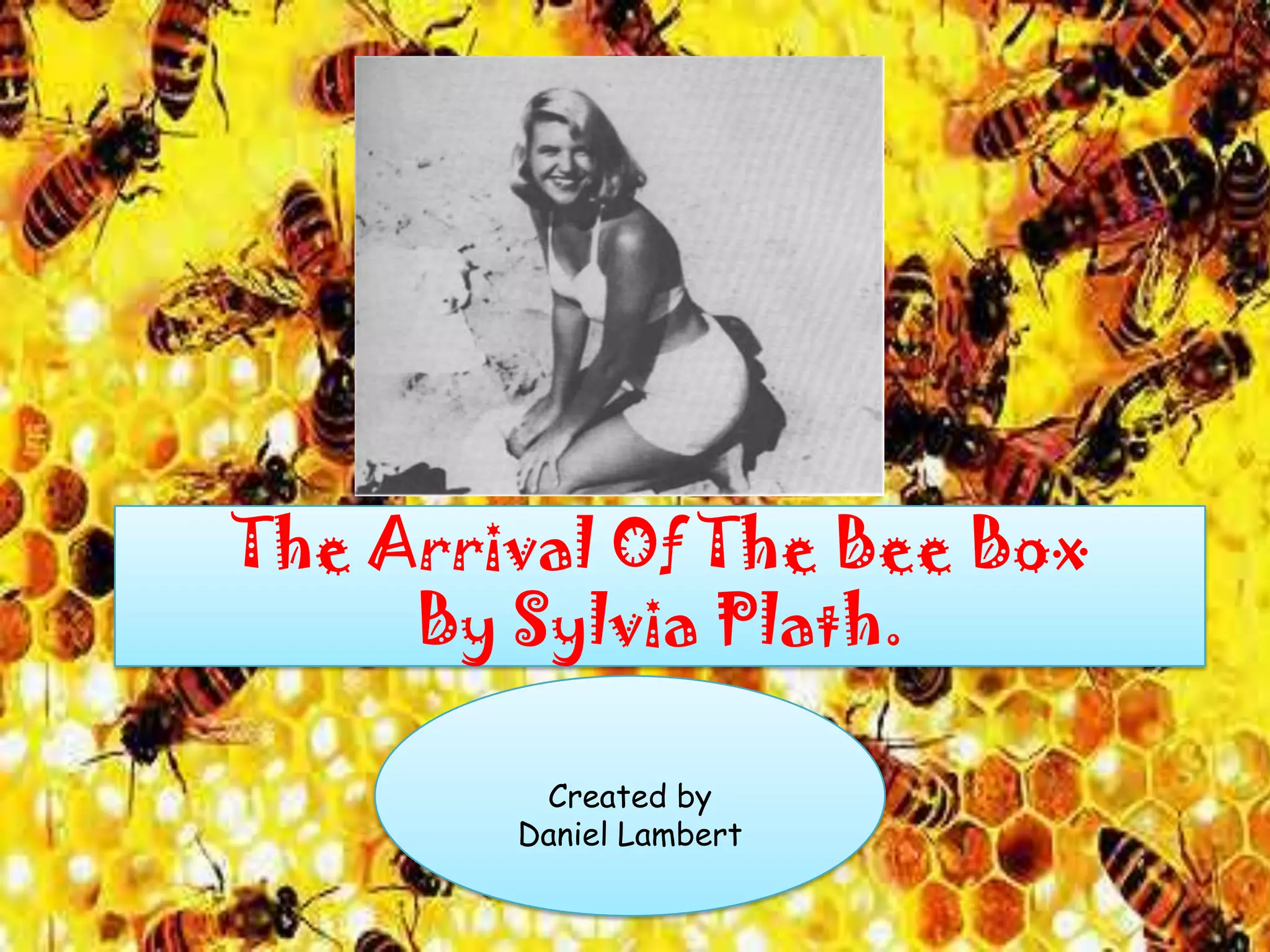
     By Sylvia Plath.
        Sylvia Plath

          Created by
         Daniel Lambert
In this poem, Sylvia Plath
                                                              expresses a desire to be in
                                                             control. She feels she has to
                                                                 deal with a dangerous
                                                              situation. At first she is not
                                                              in control. She panics. She
                                                               has a debate with herself
                                                             and then she makes a calm
            In the fifth stanza she sidesteps                           decision.                      On one level, Plath is simply
           the problem: ‘I am not a Caesar’.                                                                recalling a personal
          She means she is not all-powerful.                                                             incident. The story of the
           She also means that she doesn’t                                                             poem concerns a task with a
             have to understand the bees’                                                               bee box. In the first stanza
          ‘unintelligible syllables’, which she                                                         she states that it looks like
           would have to if she were Caesar                                                               ‘square’, like a midget’s
              listening to a ‘Roman mob’.                                                                 coffin, heavy and noisy.


                                                                                                                       In the second
 In the fourth stanza, the buzzing
  noise puts her off releasing the                                                                                  stanza, the bee box
bees. She fears their bee language                                                                                   both frightens and
   and now regards them as an                                                                                        attracts Plath. She
   aggressive Roman mob. She                                                                                        stares in at the bees
    describes their language as
      ‘unintelligible syllables’.
                                                                                                                    through a little wire
                                                                                                                             grid.


                                  In the third stanza, she regards                      ‘such a din in it’. The
                                    the bees as angry slaves that
                                      seek release and revenge:                        word ‘coffin’ suggests
                                        ‘Black on black, angrily                          death. The overall
                                   clambering’. Through the wire                       description of the bee-
                                     grid she sees darkness. She
                                      imagines the bees are like                          box is strange and
                                     army divisions of blackness                             disturbing.
                                    that she associates with ‘the
                                      swarmy feeling of African
                                                hands’.
Sometimes there is a tone of
    In this poem Sylvia Plath                  horror:
   expresses a desire to be in     ‘the swarmy feeling of African
             control:                          hands…
‘Tomorrow I will be sweet God’.        Black on black, angrily
                                            clambering’.


                         Themes

Sometimes the tone is empty and    Sometimes the tone appears to
    shows a lack of concern:       be pleased, calm and decisive:
     ‘They can be sent back.      ‘Tomorrow I will be sweet God, I
 They can die, I need feed them          will set them free.
            nothing’                 The box is only temporary’.
In the first stanza, Plath simply states a fact with the
image of the 'clean wood box'. Then she uses a simile
   in which she compares the box to a square chair:
                    'square as a chair'.


   Plath uses three comparisons in stanzas three, four
    and five. She calls the bees black slaves, a Roman
                    mob and maniacs.
 [If you wish to, you can refer to these comparisons as
        analogies. Analogies are parallel images.


         There are three dramatic images of fear:
         ‘The box is locked, it is dangerous…
         Black on black, angrily clambering...
         It is the noise that appals me most of all’.
The arrival of the bee box

The arrival of the bee box

  • 1.
    The Arrival ofthe Bee Box The Arrival By The Bee Box Of By Sylvia Plath. Sylvia Plath Created by Daniel Lambert
  • 2.
    In this poem,Sylvia Plath expresses a desire to be in control. She feels she has to deal with a dangerous situation. At first she is not in control. She panics. She has a debate with herself and then she makes a calm In the fifth stanza she sidesteps decision. On one level, Plath is simply the problem: ‘I am not a Caesar’. recalling a personal She means she is not all-powerful. incident. The story of the She also means that she doesn’t poem concerns a task with a have to understand the bees’ bee box. In the first stanza ‘unintelligible syllables’, which she she states that it looks like would have to if she were Caesar ‘square’, like a midget’s listening to a ‘Roman mob’. coffin, heavy and noisy. In the second In the fourth stanza, the buzzing noise puts her off releasing the stanza, the bee box bees. She fears their bee language both frightens and and now regards them as an attracts Plath. She aggressive Roman mob. She stares in at the bees describes their language as ‘unintelligible syllables’. through a little wire grid. In the third stanza, she regards ‘such a din in it’. The the bees as angry slaves that seek release and revenge: word ‘coffin’ suggests ‘Black on black, angrily death. The overall clambering’. Through the wire description of the bee- grid she sees darkness. She imagines the bees are like box is strange and army divisions of blackness disturbing. that she associates with ‘the swarmy feeling of African hands’.
  • 3.
    Sometimes there isa tone of In this poem Sylvia Plath horror: expresses a desire to be in ‘the swarmy feeling of African control: hands… ‘Tomorrow I will be sweet God’. Black on black, angrily clambering’. Themes Sometimes the tone is empty and Sometimes the tone appears to shows a lack of concern: be pleased, calm and decisive: ‘They can be sent back. ‘Tomorrow I will be sweet God, I They can die, I need feed them will set them free. nothing’ The box is only temporary’.
  • 4.
    In the firststanza, Plath simply states a fact with the image of the 'clean wood box'. Then she uses a simile in which she compares the box to a square chair: 'square as a chair'. Plath uses three comparisons in stanzas three, four and five. She calls the bees black slaves, a Roman mob and maniacs. [If you wish to, you can refer to these comparisons as analogies. Analogies are parallel images. There are three dramatic images of fear: ‘The box is locked, it is dangerous… Black on black, angrily clambering... It is the noise that appals me most of all’.