That Thing Lara Croft
ThemeThe documentaries theme is computer games
Narrative StructureIt has a single strand narrative and is closedType of documentaryThe type of documentary is mixedCamera WorkA tracking shot is used but is speed rampedA handheld camera is also used to create the sense that the audience is in the gameThe types of camera work depends upon the type of documentary, which may vary through the documentarySome documentaries use handheld camera work as it is more realisticCamera is often static – on a tripodEstablishing shots used to situate the documentaryClose ups and medium close ups are used
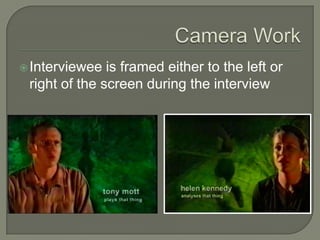
Camera WorkInterviewee is framed either to the left or right of the screen during the interview
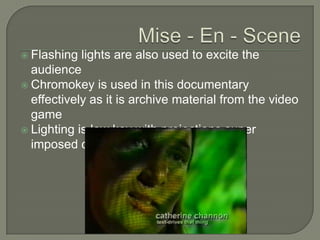
Mise - En - SceneFlashing lights are also used to excite the audienceChromokey is used in this documentary effectively as it is archive material from the video gameLighting is low key with projections super imposed on interviewee 's face
VoiceoverVoiceover often occurs when an interviewee is speaking and the interviewee takes over the voiceover during their interviewHold the narrative together, makes sense of the images on screenOften a male voiceWell spoken voiceover with no accent, calm and clear delivery of voiceStandard English is used
SoundDigetic - person being interviewedwhen tone changes the music changes for example when they talk about sex appealNo digetic music - game sounds, which are up beat and energetic
EditingCutaways are used to show the game and anchor the information givenDepth of field is also used to focus on the intervieweeCan effect the reality of the situation allowing the audience to see an event in a different wayVisuals or chromokey are often used during interviews to show what the interviewee is talking aboutCut is most commonly used as it doesn’t distract the viewer from the story line
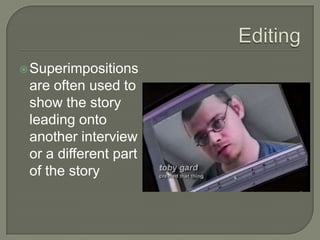
EditingSuperimpositions are often used to show the story leading onto another interview or a different part of the story
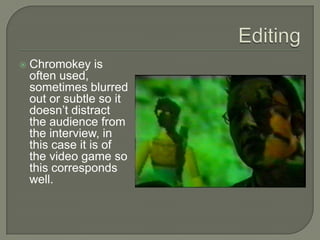
EditingChromokey is often used, sometimes blurred out or subtle so it doesn’t distract the audience from the interview, in this case it is of the video game so this corresponds well.
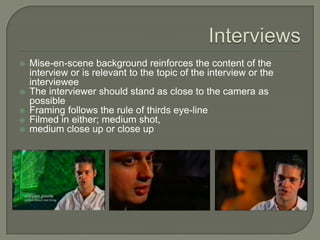
InterviewsMise-en-scene background reinforces the content of the interview or is relevant to the topic of the interview or the intervieweeThe interviewer should stand as close to the camera as possibleFraming follows the rule of thirds eye-lineFilmed in either; medium shot, medium close up or close up
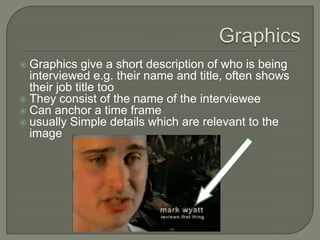
GraphicsGraphics give a short description of who is being interviewed e.g. their name and title, often shows their job title tooThey consist of the name of the intervieweeCan anchor a time frameusually Simple details which are relevant to the image
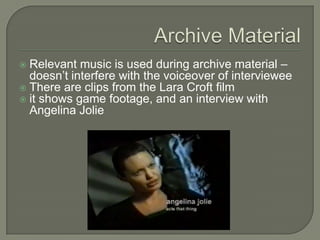
Archive MaterialRelevant music is used during archive material – doesn’t interfere with the voiceover of intervieweeThere are clips from the Lara Croft filmit shows game footage, and an interview with Angelina Jolie
That Thing Lara Croft

That Thing Lara Croft

  • 1.
  • 2.
  • 3.
    Narrative StructureIt hasa single strand narrative and is closedType of documentaryThe type of documentary is mixedCamera WorkA tracking shot is used but is speed rampedA handheld camera is also used to create the sense that the audience is in the gameThe types of camera work depends upon the type of documentary, which may vary through the documentarySome documentaries use handheld camera work as it is more realisticCamera is often static – on a tripodEstablishing shots used to situate the documentaryClose ups and medium close ups are used
  • 4.
    Camera WorkInterviewee isframed either to the left or right of the screen during the interview
  • 5.
    Mise - En- SceneFlashing lights are also used to excite the audienceChromokey is used in this documentary effectively as it is archive material from the video gameLighting is low key with projections super imposed on interviewee 's face
  • 6.
    VoiceoverVoiceover often occurswhen an interviewee is speaking and the interviewee takes over the voiceover during their interviewHold the narrative together, makes sense of the images on screenOften a male voiceWell spoken voiceover with no accent, calm and clear delivery of voiceStandard English is used
  • 7.
    SoundDigetic - personbeing interviewedwhen tone changes the music changes for example when they talk about sex appealNo digetic music - game sounds, which are up beat and energetic
  • 8.
    EditingCutaways are usedto show the game and anchor the information givenDepth of field is also used to focus on the intervieweeCan effect the reality of the situation allowing the audience to see an event in a different wayVisuals or chromokey are often used during interviews to show what the interviewee is talking aboutCut is most commonly used as it doesn’t distract the viewer from the story line
  • 9.
    EditingSuperimpositions are oftenused to show the story leading onto another interview or a different part of the story
  • 10.
    EditingChromokey is oftenused, sometimes blurred out or subtle so it doesn’t distract the audience from the interview, in this case it is of the video game so this corresponds well.
  • 11.
    InterviewsMise-en-scene background reinforcesthe content of the interview or is relevant to the topic of the interview or the intervieweeThe interviewer should stand as close to the camera as possibleFraming follows the rule of thirds eye-lineFilmed in either; medium shot, medium close up or close up
  • 12.
    GraphicsGraphics give ashort description of who is being interviewed e.g. their name and title, often shows their job title tooThey consist of the name of the intervieweeCan anchor a time frameusually Simple details which are relevant to the image
  • 13.
    Archive MaterialRelevant musicis used during archive material – doesn’t interfere with the voiceover of intervieweeThere are clips from the Lara Croft filmit shows game footage, and an interview with Angelina Jolie