Textile electrical
Interconnections
Wearable Devices
Example
Importance of Electrical
Interconnections in Textiles
 Electrical interconnections are crucial for the
functionality of wearable components.
 Efficiency of cabling affects the overall
performance of smart textiles.
 Key factors include comfort, reliability, resistance
to repetitive stresses, washing, and daily
activities.
Integration Methods
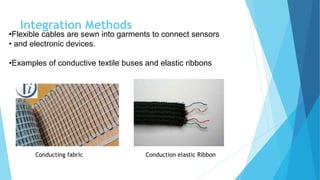
•Flexible cables are sewn into garments to connect sensors
• and electronic devices.
•Examples of conductive textile buses and elastic ribbons
Conducting fabric Conduction elastic Ribbon
Fabric-Level Electrical Interconnections
 Conductive yarns can be either partially fixed on the fabric's surface or
embedded within the fabric structure.
Weaving/Knitting with Conductive Yarns
 Conductive yarns replace non-conductive fibers during the textile
manufacturing process at specific locations
 Example: Integrated interconnection using two elastic conductive yarns
made by twisting stainless steel yarn around an elastic core (Lycra) and
covering it with polyester yarn.
Embroidering Conductive Thread
 Conductive threads are embroidered onto finished fabrics
at a later manufacturing stage.
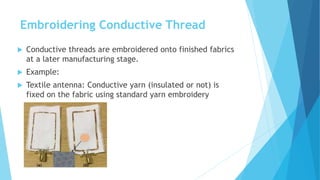
 Example:
 Textile antenna: Conductive yarn (insulated or not) is
fixed on the fabric using standard yarn embroidery

Textile electrical Interconnections.pptx

  • 1.
  • 2.
  • 3.
    Importance of Electrical Interconnectionsin Textiles  Electrical interconnections are crucial for the functionality of wearable components.  Efficiency of cabling affects the overall performance of smart textiles.  Key factors include comfort, reliability, resistance to repetitive stresses, washing, and daily activities.
  • 4.
    Integration Methods •Flexible cablesare sewn into garments to connect sensors • and electronic devices. •Examples of conductive textile buses and elastic ribbons Conducting fabric Conduction elastic Ribbon
  • 5.
    Fabric-Level Electrical Interconnections Conductive yarns can be either partially fixed on the fabric's surface or embedded within the fabric structure. Weaving/Knitting with Conductive Yarns  Conductive yarns replace non-conductive fibers during the textile manufacturing process at specific locations  Example: Integrated interconnection using two elastic conductive yarns made by twisting stainless steel yarn around an elastic core (Lycra) and covering it with polyester yarn.
  • 6.
    Embroidering Conductive Thread Conductive threads are embroidered onto finished fabrics at a later manufacturing stage.  Example:  Textile antenna: Conductive yarn (insulated or not) is fixed on the fabric using standard yarn embroidery