Test-Taking Tips
AP English Language and
Composition Exam
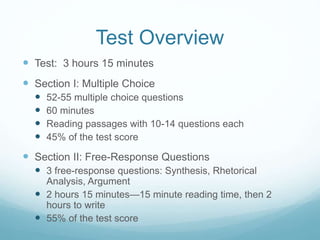
Test Overview
 Test: 3 hours 15 minutes
 Section I: Multiple Choice
 52-55 multiple choice questions
 60 minutes
 Reading passages with 10-14 questions each
 45% of the test score
 Section II: Free-Response Questions
 3 free-response questions: Synthesis, Rhetorical
Analysis, Argument
 2 hours 15 minutes—15 minute reading time, then 2
hours to write
 55% of the test score
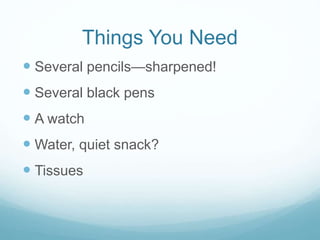
Things You Need
 Several pencils—sharpened!
 Several black pens
 A watch
 Water, quiet snack?
 Tissues
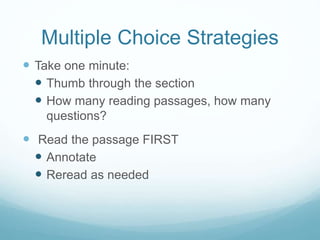
Multiple Choice Strategies
 Take one minute:
 Thumb through the section
 How many reading passages, how many
questions?
 Read the passage FIRST
 Annotate
 Reread as needed
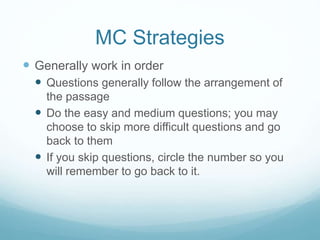
MC Strategies
 Generally work in order
 Questions generally follow the arrangement of
the passage
 Do the easy and medium questions; you may
choose to skip more difficult questions and go
back to them
 If you skip questions, circle the number so you
will remember to go back to it.
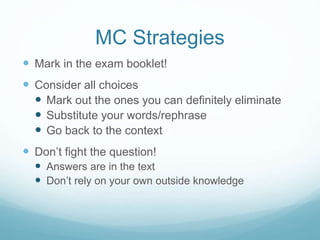
MC Strategies
 Mark in the exam booklet!
 Consider all choices
 Mark out the ones you can definitely eliminate
 Substitute your words/rephrase
 Go back to the context
 Don’t fight the question!
 Answers are in the text
 Don’t rely on your own outside knowledge
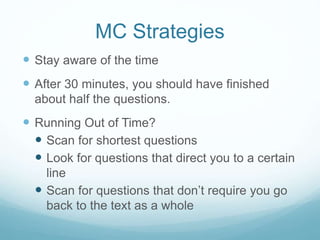
MC Strategies
 Stay aware of the time
 After 30 minutes, you should have finished
about half the questions.
 Running Out of Time?
 Scan for shortest questions
 Look for questions that direct you to a certain
line
 Scan for questions that don’t require you go
back to the text as a whole
How to Prepare for MC
 Know the types of questions—review the stems
 Practice passages—make up your own
questions using the stems
 Preparation Books—5 Steps, Barron’s,
Princeton Review
 SHMOOP!
Essays: General Tips
 Understand the prompt—what is it asking you
to do?
 Develop a clear, strong thesis that answers the
prompt.
 Develop strong evidence for body paragraphs
 Plan! Have a clear outline to follow so that you
can concentrate on writing well.
Essay Strategies
 You will have 15 minutes at the beginning of
the free-response section to read. Use it
wisely!
 Read ALL THREE PROMPTS (Annotate)
 Deconstruct the Synthesis Prompt
 Read/Annotate each of the texts for the
synthesis prompt
 Decide how to address the synthesis prompt
Synthesis Essay
 3-6 minutes: decide what evidence you will use
 8-10 minutes: plan support
 20 minutes: write the essay
 3-4 minutes: check to make sure you have
included the required # of sources and cited
them!
 3 minutes: proofread
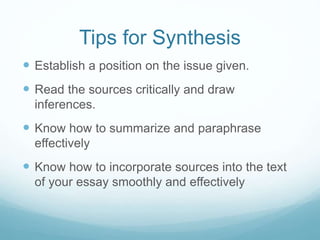
Tips for Synthesis
 Establish a position on the issue given.
 Read the sources critically and draw
inferences.
 Know how to summarize and paraphrase
effectively
 Know how to incorporate sources into the text
of your essay smoothly and effectively
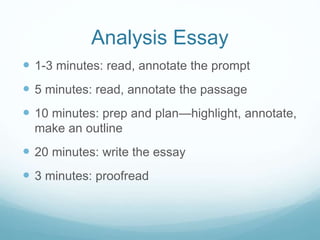
Analysis Essay
 1-3 minutes: read, annotate the prompt
 5 minutes: read, annotate the passage
 10 minutes: prep and plan—highlight, annotate,
make an outline
 20 minutes: write the essay
 3 minutes: proofread
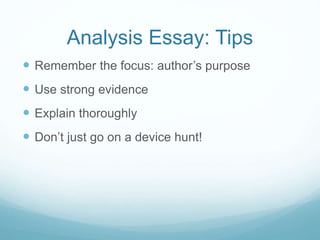
Analysis Essay: Tips
 Remember the focus: author’s purpose
 Use strong evidence
 Explain thoroughly
 Don’t just go on a device hunt!
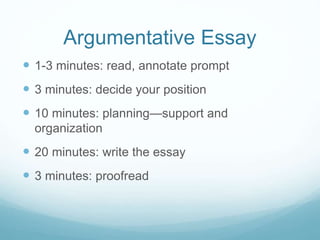
Argumentative Essay
 1-3 minutes: read, annotate prompt
 3 minutes: decide your position
 10 minutes: planning—support and
organization
 20 minutes: write the essay
 3 minutes: proofread
Argumentative Essay Tips
 Be sure you know what the prompt is asking!
 Choose a position; don’t try to play both sides.
 Come up with a variety of types of evidence and
reasons.
 Draw from history, personal or observed
experience, law, statistics, anecdotes, etc.
 Address the counterargument!

Test Taking Tips for the AP English Language Exam

  • 1.
    Test-Taking Tips AP EnglishLanguage and Composition Exam
  • 2.
    Test Overview  Test:3 hours 15 minutes  Section I: Multiple Choice  52-55 multiple choice questions  60 minutes  Reading passages with 10-14 questions each  45% of the test score  Section II: Free-Response Questions  3 free-response questions: Synthesis, Rhetorical Analysis, Argument  2 hours 15 minutes—15 minute reading time, then 2 hours to write  55% of the test score
  • 3.
    Things You Need Several pencils—sharpened!  Several black pens  A watch  Water, quiet snack?  Tissues
  • 4.
    Multiple Choice Strategies Take one minute:  Thumb through the section  How many reading passages, how many questions?  Read the passage FIRST  Annotate  Reread as needed
  • 5.
    MC Strategies  Generallywork in order  Questions generally follow the arrangement of the passage  Do the easy and medium questions; you may choose to skip more difficult questions and go back to them  If you skip questions, circle the number so you will remember to go back to it.
  • 6.
    MC Strategies  Markin the exam booklet!  Consider all choices  Mark out the ones you can definitely eliminate  Substitute your words/rephrase  Go back to the context  Don’t fight the question!  Answers are in the text  Don’t rely on your own outside knowledge
  • 7.
    MC Strategies  Stayaware of the time  After 30 minutes, you should have finished about half the questions.  Running Out of Time?  Scan for shortest questions  Look for questions that direct you to a certain line  Scan for questions that don’t require you go back to the text as a whole
  • 8.
    How to Preparefor MC  Know the types of questions—review the stems  Practice passages—make up your own questions using the stems  Preparation Books—5 Steps, Barron’s, Princeton Review  SHMOOP!
  • 9.
    Essays: General Tips Understand the prompt—what is it asking you to do?  Develop a clear, strong thesis that answers the prompt.  Develop strong evidence for body paragraphs  Plan! Have a clear outline to follow so that you can concentrate on writing well.
  • 10.
    Essay Strategies  Youwill have 15 minutes at the beginning of the free-response section to read. Use it wisely!  Read ALL THREE PROMPTS (Annotate)  Deconstruct the Synthesis Prompt  Read/Annotate each of the texts for the synthesis prompt  Decide how to address the synthesis prompt
  • 11.
    Synthesis Essay  3-6minutes: decide what evidence you will use  8-10 minutes: plan support  20 minutes: write the essay  3-4 minutes: check to make sure you have included the required # of sources and cited them!  3 minutes: proofread
  • 12.
    Tips for Synthesis Establish a position on the issue given.  Read the sources critically and draw inferences.  Know how to summarize and paraphrase effectively  Know how to incorporate sources into the text of your essay smoothly and effectively
  • 13.
    Analysis Essay  1-3minutes: read, annotate the prompt  5 minutes: read, annotate the passage  10 minutes: prep and plan—highlight, annotate, make an outline  20 minutes: write the essay  3 minutes: proofread
  • 14.
    Analysis Essay: Tips Remember the focus: author’s purpose  Use strong evidence  Explain thoroughly  Don’t just go on a device hunt!
  • 15.
    Argumentative Essay  1-3minutes: read, annotate prompt  3 minutes: decide your position  10 minutes: planning—support and organization  20 minutes: write the essay  3 minutes: proofread
  • 16.
    Argumentative Essay Tips Be sure you know what the prompt is asking!  Choose a position; don’t try to play both sides.  Come up with a variety of types of evidence and reasons.  Draw from history, personal or observed experience, law, statistics, anecdotes, etc.  Address the counterargument!