Test Automation – Tools and Frameworks

Wipro confidential © Copyright 2007 Wipro Ltd

1
Topics Covered
 Test
 Test
 Test
 Test
 Test
 Test
 Test

Automation
Automation
Automation
Automation
Automation
Automation
Automation

Introduction
– Learning Opportunities
Practice - Overview
– An understanding
Framework
Framework Types
Strategy Guideline

2
Test Automation: Introduction
 Automation: Facts







Manual scripts needed
Ideal for regression testing
Benefits come from discipline in analysis and planning
Causes significant schedule impact at introduction
Require more programming and design skills from testers
Require continuous maintenance

 Automation: Myths






High immediate ROI from automation
One tool that fits perfectly
Need to substitute skilled manual testers
Preclude manual testing
100% Automation of all existing manual tests

3
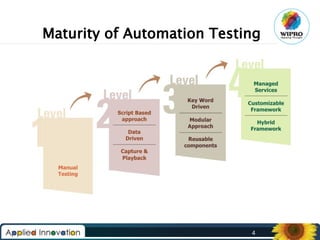
Maturity of Automation Testing

4
Test Automation Tools – Market Trends

Wipro confidential © Copyright 2007 Wipro Ltd

5
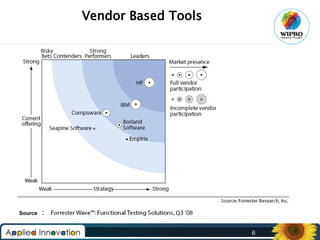
Vendor Based Tools

Source

:
6
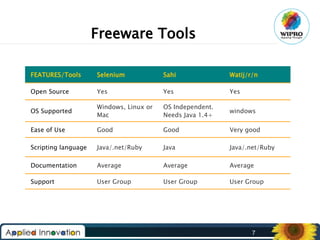
Freeware Tools
FEATURES/Tools

Selenium

Sahi

Watij/r/n

Open Source

Yes

Yes

Yes

OS Supported

Windows, Linux or
Mac

OS Independent.
Needs Java 1.4+

windows

Ease of Use

Good

Good

Very good

Scripting language

Java/.net/Ruby

Java

Java/.net/Ruby

Documentation

Average

Average

Average

Support

User Group

User Group

User Group

7
Building a Test Automation Framework

Wipro confidential © Copyright 2007 Wipro Ltd

8
Basics for a successful framework
 Environment independent
 Modularized scripts/test data to increase robustness
 Reusable generic functions and applications specific
functions libraries.
 Defined folder structure
 Scripting guidelines and review checklists
 Error handling and recovery techniques
 Defined maintenance process
 Collection and analysis of the metrics

9
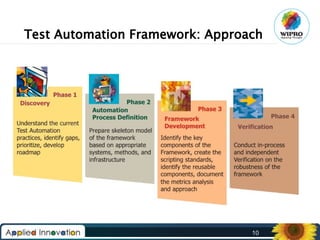
Test Automation Framework: Approach

10
Automation Test Strategy Guidelines
 In order to make the most of our test strategy, we need to make
it reusable and manageable. To that end, there are some
essential guiding principles we should follow when developing
our overall test strategy:
 Test automation is a fulltime effort, not a sideline.
 The test design and the test framework are totally separate
entities.
 The test framework should be application-independent.
 The test framework must be easy to expand, maintain, and
perpetuate.
 The test strategy/design vocabulary should be framework
independent.
 The test strategy/design should remove most testers from
the complexities of the test framework.
11
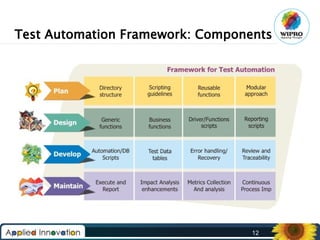
Test Automation Framework: Components

12
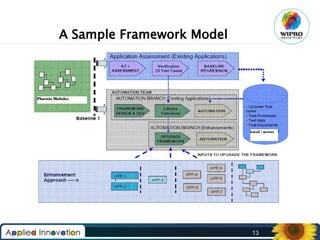
A Sample Framework Model

13
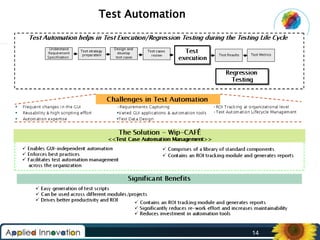
Test Automation

14
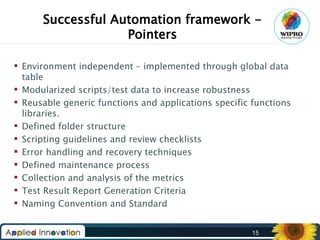
Successful Automation framework Pointers
 Environment independent – implemented through global data
table
 Modularized scripts/test data to increase robustness
 Reusable generic functions and applications specific functions
libraries.
 Defined folder structure
 Scripting guidelines and review checklists
 Error handling and recovery techniques
 Defined maintenance process
 Collection and analysis of the metrics
 Test Result Report Generation Criteria
 Naming Convention and Standard
15
Automation Framework Types
 Test automation framework is a set of assumptions,
concepts, and practices that provide support for
Automated Software Testing.
 Basic Test automation frameworks specifically are
following:
 Test Script Modularity
 Test Library Architecture
 keyword-Driven/Table-Driven Testing
 Data-Driven Testing
 Hybrid Test Automation.
16
Test Script Modularity Framework
 The test script modularity framework requires the
creation of small, independent scripts that represent
 Modules
 Sections
 Functions

17
Test Library Architecture Framework
 The Test Library Architecture framework is very similar to
the test script modularity framework and offers the same
advantages, but it divides the application-under-test into
two part
 Procedures
 Functions
 These library function from the library files are then called
directly to the test case script.

18
Keyword-Driven Testing Framework

 Keyword-driven tests look very similar to manual test cases. In a
keyword-driven test, the functionality of the application-undertest is documented in a table as well as in step-by-step
instructions for each test.
 In Keyword driven testing user input data entered by Keyboard to
execute the number of test.

19
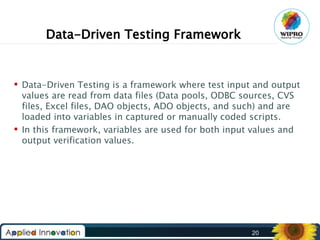
Data-Driven Testing Framework

 Data-Driven Testing is a framework where test input and output
values are read from data files (Data pools, ODBC sources, CVS
files, Excel files, DAO objects, ADO objects, and such) and are
loaded into variables in captured or manually coded scripts.
 In this framework, variables are used for both input values and
output verification values.

20
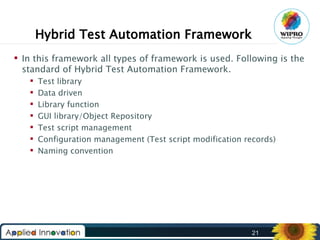
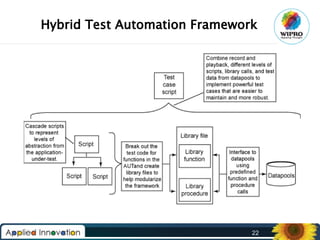
Hybrid Test Automation Framework
 In this framework all types of framework is used. Following is the
standard of Hybrid Test Automation Framework.








Test library
Data driven
Library function
GUI library/Object Repository
Test script management
Configuration management (Test script modification records)
Naming convention

21
Hybrid Test Automation Framework

22
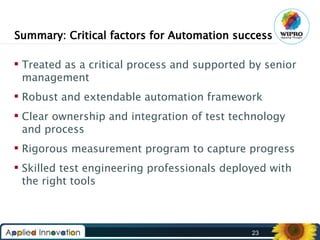
Summary: Critical factors for Automation success
 Treated as a critical process and supported by senior
management
 Robust and extendable automation framework
 Clear ownership and integration of test technology
and process
 Rigorous measurement program to capture progress
 Skilled test engineering professionals deployed with
the right tools

23
Automation Testing Risks
 Frequent changes in the Application and Regression
test suite.
 Major technology changes impacting the scripts
 Absence of process/implementation/continuous
improvement.
 Resource knowledge on applications
 Lack of Knowledge of Automation Programming
 Implementation of the Framework

24
Question?

25
Thank You

URL: www.wipro.com/testing
Contact us at: testing.services@wipro.com
26

Test automation wipro

  • 1.
    Test Automation –Tools and Frameworks Wipro confidential © Copyright 2007 Wipro Ltd 1
  • 2.
    Topics Covered  Test Test  Test  Test  Test  Test  Test Automation Automation Automation Automation Automation Automation Automation Introduction – Learning Opportunities Practice - Overview – An understanding Framework Framework Types Strategy Guideline 2
  • 3.
    Test Automation: Introduction Automation: Facts       Manual scripts needed Ideal for regression testing Benefits come from discipline in analysis and planning Causes significant schedule impact at introduction Require more programming and design skills from testers Require continuous maintenance  Automation: Myths      High immediate ROI from automation One tool that fits perfectly Need to substitute skilled manual testers Preclude manual testing 100% Automation of all existing manual tests 3
  • 4.
  • 5.
    Test Automation Tools– Market Trends Wipro confidential © Copyright 2007 Wipro Ltd 5
  • 6.
  • 7.
    Freeware Tools FEATURES/Tools Selenium Sahi Watij/r/n Open Source Yes Yes Yes OSSupported Windows, Linux or Mac OS Independent. Needs Java 1.4+ windows Ease of Use Good Good Very good Scripting language Java/.net/Ruby Java Java/.net/Ruby Documentation Average Average Average Support User Group User Group User Group 7
  • 8.
    Building a TestAutomation Framework Wipro confidential © Copyright 2007 Wipro Ltd 8
  • 9.
    Basics for asuccessful framework  Environment independent  Modularized scripts/test data to increase robustness  Reusable generic functions and applications specific functions libraries.  Defined folder structure  Scripting guidelines and review checklists  Error handling and recovery techniques  Defined maintenance process  Collection and analysis of the metrics 9
  • 10.
  • 11.
    Automation Test StrategyGuidelines  In order to make the most of our test strategy, we need to make it reusable and manageable. To that end, there are some essential guiding principles we should follow when developing our overall test strategy:  Test automation is a fulltime effort, not a sideline.  The test design and the test framework are totally separate entities.  The test framework should be application-independent.  The test framework must be easy to expand, maintain, and perpetuate.  The test strategy/design vocabulary should be framework independent.  The test strategy/design should remove most testers from the complexities of the test framework. 11
  • 12.
  • 13.
  • 14.
  • 15.
    Successful Automation frameworkPointers  Environment independent – implemented through global data table  Modularized scripts/test data to increase robustness  Reusable generic functions and applications specific functions libraries.  Defined folder structure  Scripting guidelines and review checklists  Error handling and recovery techniques  Defined maintenance process  Collection and analysis of the metrics  Test Result Report Generation Criteria  Naming Convention and Standard 15
  • 16.
    Automation Framework Types Test automation framework is a set of assumptions, concepts, and practices that provide support for Automated Software Testing.  Basic Test automation frameworks specifically are following:  Test Script Modularity  Test Library Architecture  keyword-Driven/Table-Driven Testing  Data-Driven Testing  Hybrid Test Automation. 16
  • 17.
    Test Script ModularityFramework  The test script modularity framework requires the creation of small, independent scripts that represent  Modules  Sections  Functions 17
  • 18.
    Test Library ArchitectureFramework  The Test Library Architecture framework is very similar to the test script modularity framework and offers the same advantages, but it divides the application-under-test into two part  Procedures  Functions  These library function from the library files are then called directly to the test case script. 18
  • 19.
    Keyword-Driven Testing Framework Keyword-driven tests look very similar to manual test cases. In a keyword-driven test, the functionality of the application-undertest is documented in a table as well as in step-by-step instructions for each test.  In Keyword driven testing user input data entered by Keyboard to execute the number of test. 19
  • 20.
    Data-Driven Testing Framework Data-Driven Testing is a framework where test input and output values are read from data files (Data pools, ODBC sources, CVS files, Excel files, DAO objects, ADO objects, and such) and are loaded into variables in captured or manually coded scripts.  In this framework, variables are used for both input values and output verification values. 20
  • 21.
    Hybrid Test AutomationFramework  In this framework all types of framework is used. Following is the standard of Hybrid Test Automation Framework.        Test library Data driven Library function GUI library/Object Repository Test script management Configuration management (Test script modification records) Naming convention 21
  • 22.
  • 23.
    Summary: Critical factorsfor Automation success  Treated as a critical process and supported by senior management  Robust and extendable automation framework  Clear ownership and integration of test technology and process  Rigorous measurement program to capture progress  Skilled test engineering professionals deployed with the right tools 23
  • 24.
    Automation Testing Risks Frequent changes in the Application and Regression test suite.  Major technology changes impacting the scripts  Absence of process/implementation/continuous improvement.  Resource knowledge on applications  Lack of Knowledge of Automation Programming  Implementation of the Framework 24
  • 25.
  • 26.
    Thank You URL: www.wipro.com/testing Contactus at: testing.services@wipro.com 26