Present  Tenses
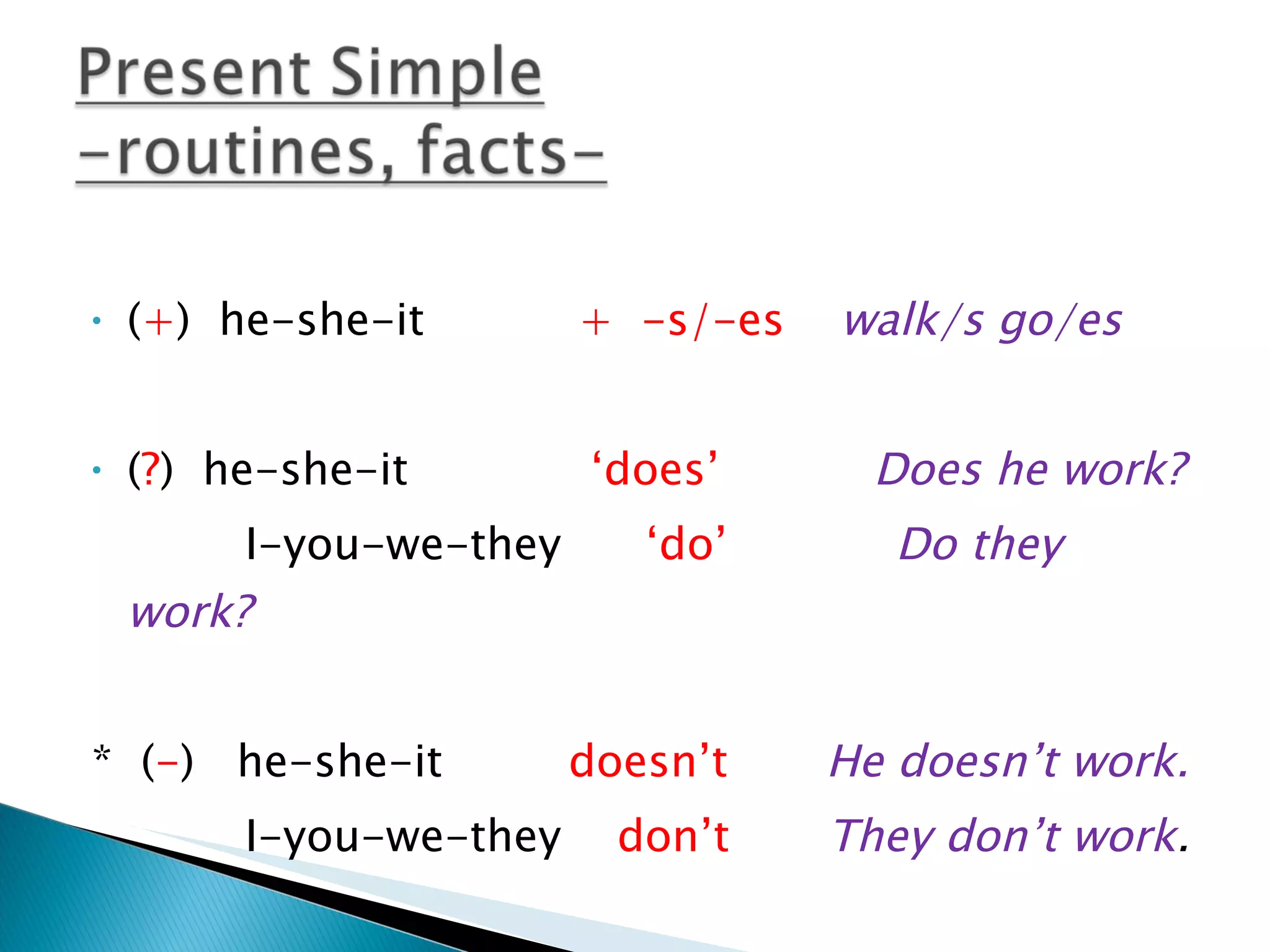
( + )  he-she-it  +  -s/-es  walk/s go/es ( ? )  he-she-it  ‘does’  Does he work? I-you-we-they  ‘do’  Do they work? *  ( - )  he-she-it  doesn’t   He doesn’t work. I-you-we-they  don’t   They don’t work .
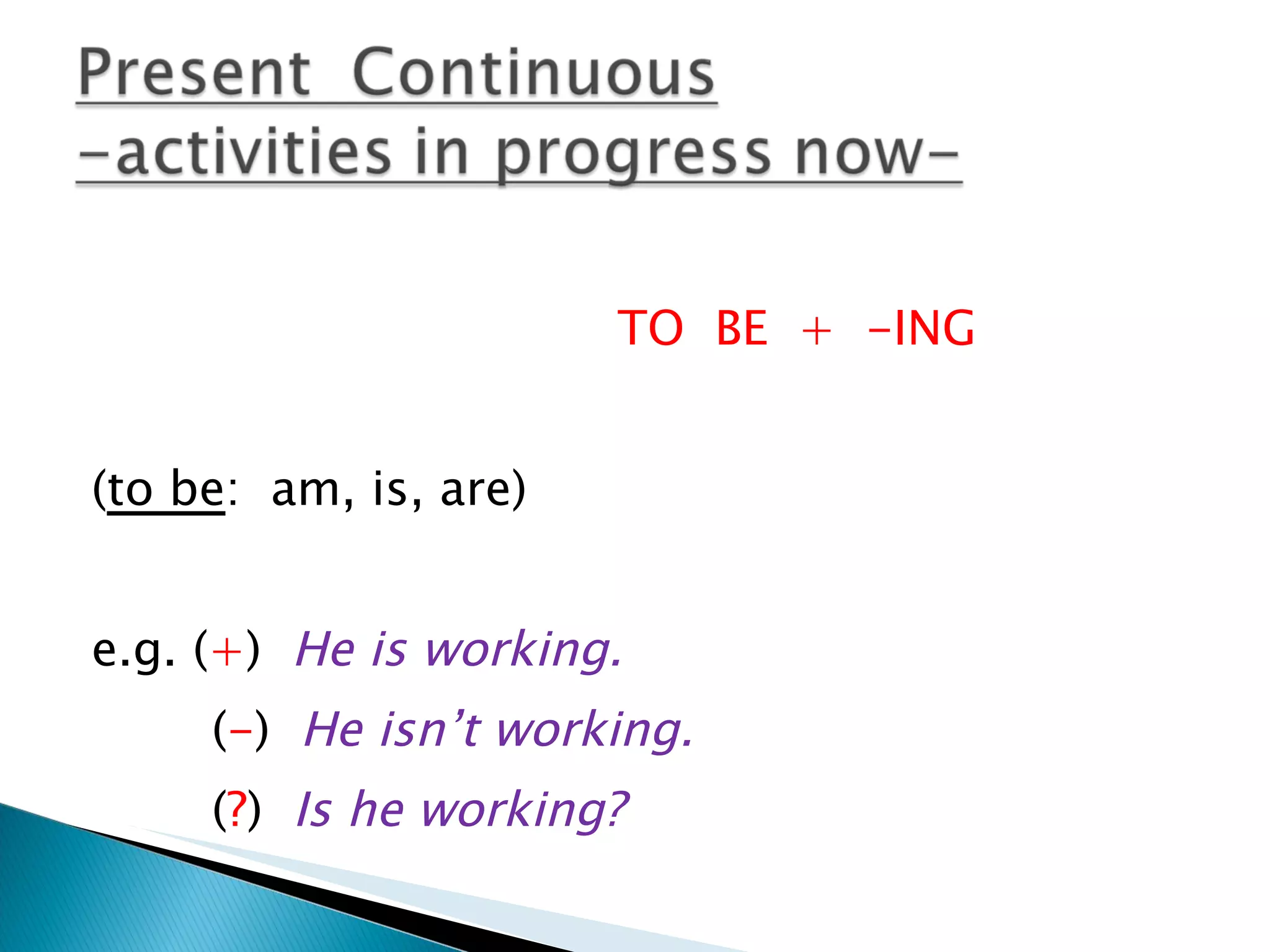
TO  BE  +  -ING ( to be :  am, is, are) e.g. ( + )  He is working. ( - )  He isn’t working. ( ? )  Is he working?
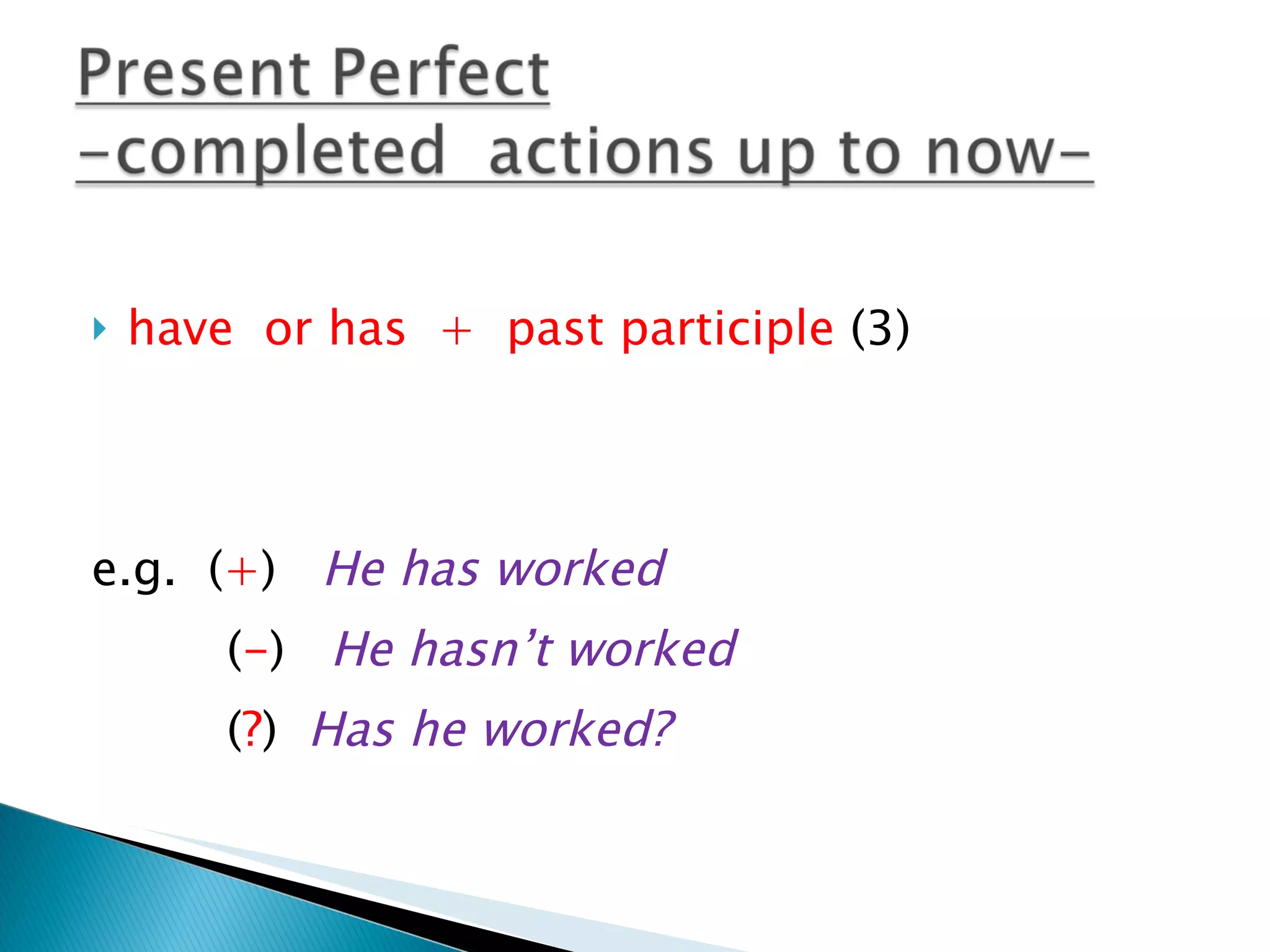
have  or has  +  past participle  (3) e.g.  ( + )  He has worked ( - )  He hasn’t worked ( ? )  Has he worked?
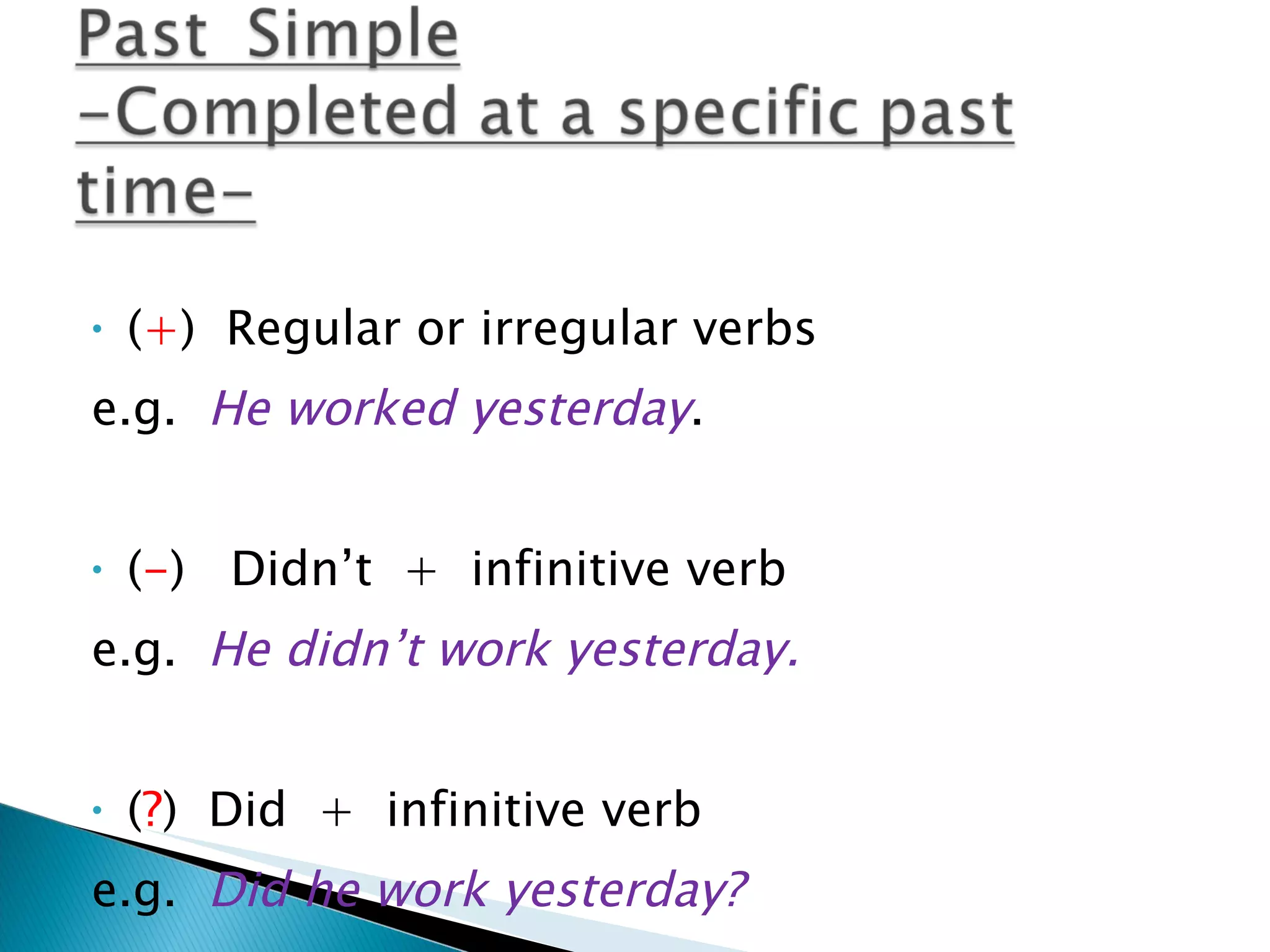
( + )  Regular or irregular verbs e.g.  He worked yesterday . ( - )  Didn’t  +  infinitive verb  e.g.  He didn’t work yesterday. ( ? )  Did  +  infinitive verb e.g.  Did he work yesterday?
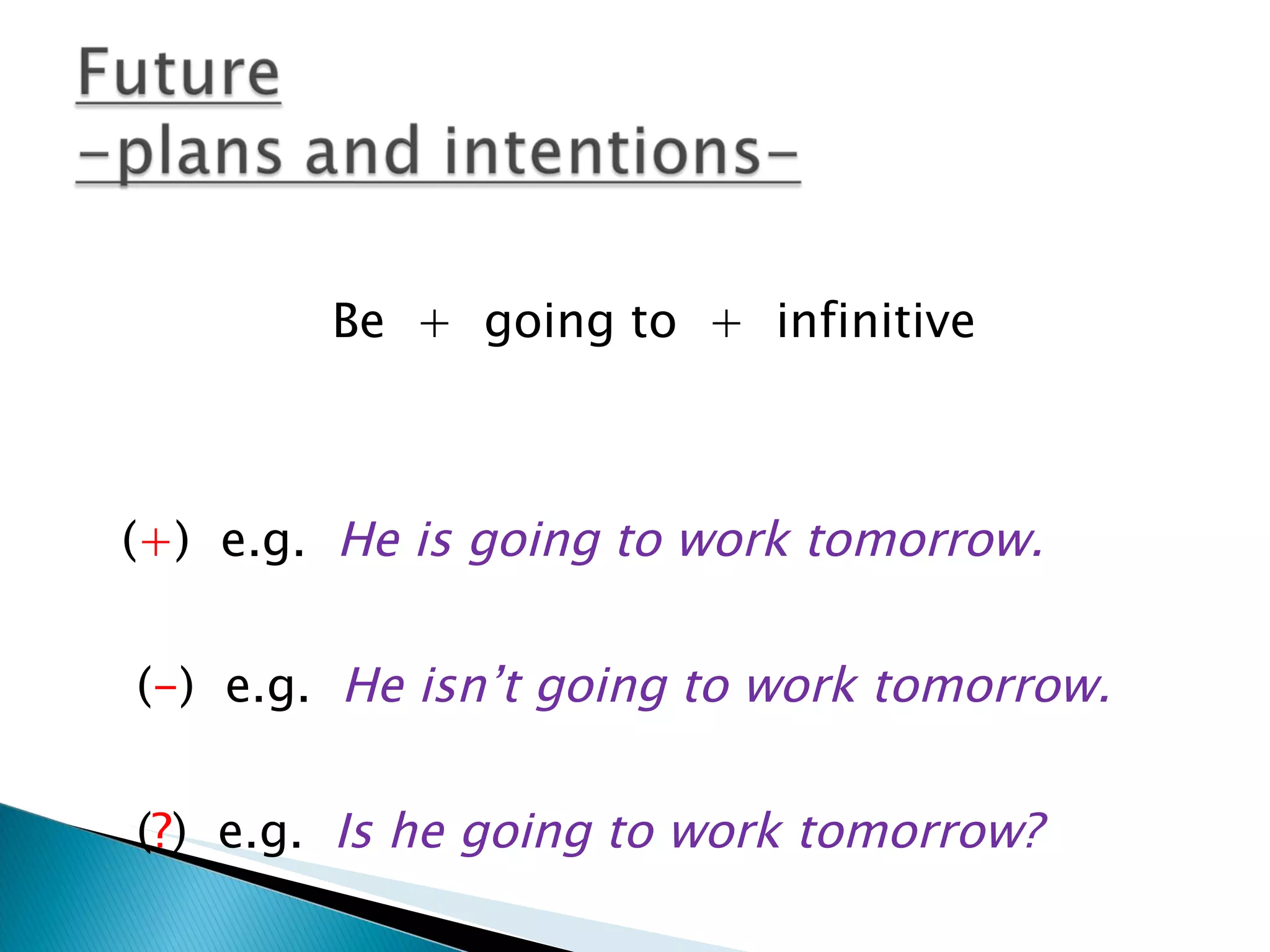
Be  +  going to  +  infinitive ( + )  e.g.  He is going to work tomorrow. ( - )  e.g.  He isn’t going to work tomorrow.  ( ? )  e.g.  Is he going to work tomorrow?
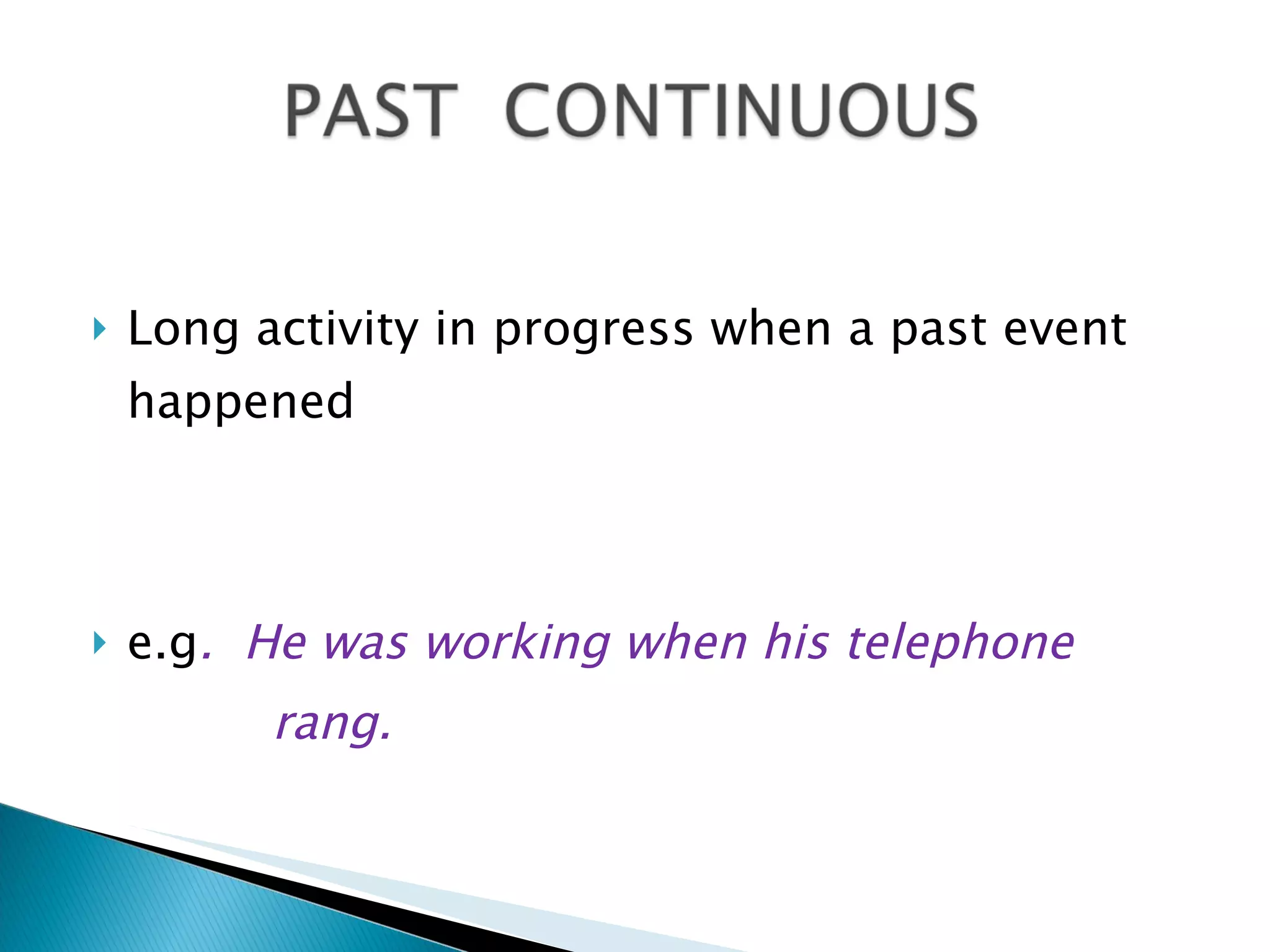
Long activity in progress when a past event happened e.g .  He was working when his telephone  rang.

Tenses and auxiliary verbs

  • 1.
  • 2.
    ( + ) he-she-it + -s/-es walk/s go/es ( ? ) he-she-it ‘does’ Does he work? I-you-we-they ‘do’ Do they work? * ( - ) he-she-it doesn’t He doesn’t work. I-you-we-they don’t They don’t work .
  • 3.
    TO BE + -ING ( to be : am, is, are) e.g. ( + ) He is working. ( - ) He isn’t working. ( ? ) Is he working?
  • 4.
    have orhas + past participle (3) e.g. ( + ) He has worked ( - ) He hasn’t worked ( ? ) Has he worked?
  • 5.
    ( + ) Regular or irregular verbs e.g. He worked yesterday . ( - ) Didn’t + infinitive verb e.g. He didn’t work yesterday. ( ? ) Did + infinitive verb e.g. Did he work yesterday?
  • 6.
    Be + going to + infinitive ( + ) e.g. He is going to work tomorrow. ( - ) e.g. He isn’t going to work tomorrow. ( ? ) e.g. Is he going to work tomorrow?
  • 7.
    Long activity inprogress when a past event happened e.g . He was working when his telephone rang.