WELCOME
Heat And Temperature
Heat is a flow of energy
due to temperature
differences
Temperature Depends
on Particle Movement!
• All matter is made up of atoms
that are moving…even solid
objects have atoms that are
vibrating.
• The motion from the atoms
gives the object energy.
The Kinetic Theory of Matter
• All of the particles that make up matter
are constantly in motion
• Solid= vibrating atoms
• Liquid= flowing atoms
• Gas= move freely
• Plasma=
move incredibly
fast and freely
Temperature
•The Measure of
the average
kinetic energy of
all the particles
in the object
•The atoms mass
and speed
determine the
temperature of
the object
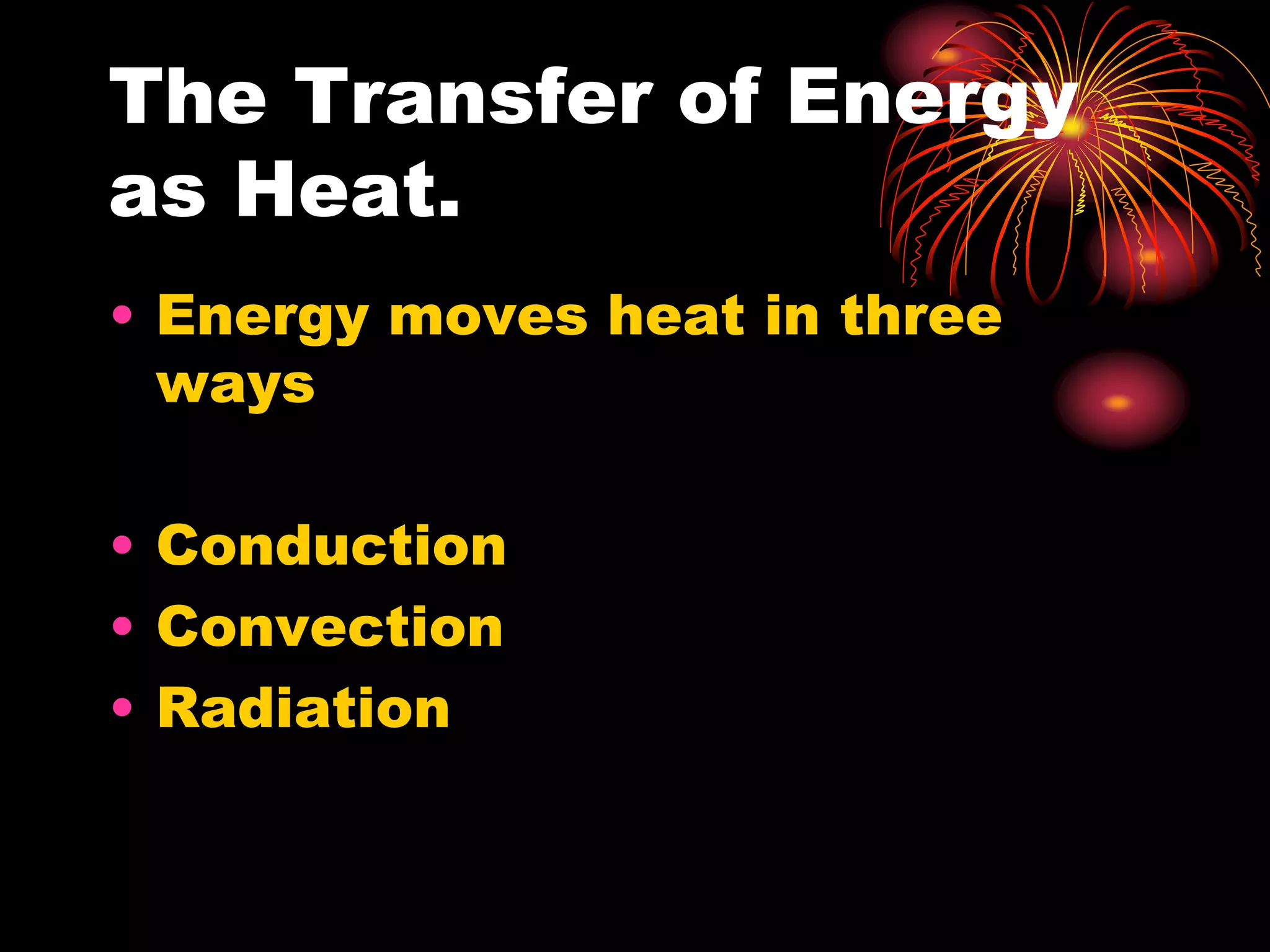
Temperature
• Temperature is
measured in units
called degrees
(oC,F,K)
• Fahrenheit: Water
freezes 32oF and
boils at 212oF
• Celsius: Water
freezes at 0oC and
boils at 100oC
How does a
Thermometer Work?
• The thermometer can measure
temperature because the
substance of the liquid inside
always expands (increases) or
contracts (decreases) by a
certain amount due to a change
in temperature.
Thermal
Expansion
• All gases, liquids,
and most solids
expand when their
temperature
increases.
• This is why bridges
are built with short
segments with small
breaks to allow for
expansion
Joints such as
this one are
used in
bridges to
accommodate
thermal
expansion.
(Reproduced by
permission of
JLM Visuals)
Energy Flows from Warmer
to Cooler Objects
• Heat: the flow of energy from an
object at a higher temperature
to an object at a lower
temperature.
• Thermal Energy: total random
kinetic energy of particles in an
object.
Measuring Heat
• Heat is measured by the units of
calorie and joule (J).
• calorie: The amount of energy
needed to raise the temperature
of 1 gram of water by 1oC
• 1 calorie= 4.18 J
Some substances change
temperature more easily
than others.
• Specific Heat:
the amount of
energy required
to raise the
temperature of 1
gram of a
substance by
1oC
chesapeake.towson.edu
The Transfer of Energy
as Heat.
• Energy moves heat in three
ways
• Conduction
• Convection
• Radiation
Conduction
• The process that moves energy from one
object to another when they are touching
physically.
• Conductors: materials that transfer energy
easily.
• Insulators: materials that do not transfer
energy easily.
• Examples: hot cup of cocoa transfers heat
energy to cold hands
Convection
• The process
that transfers
energy by the
movement of
large numbers of
particles in the
same direction
within a liquid or
gas.
• Cycle in Nature
• Boiling water
and heating a
room
www.physics.arizona.edu
Convection
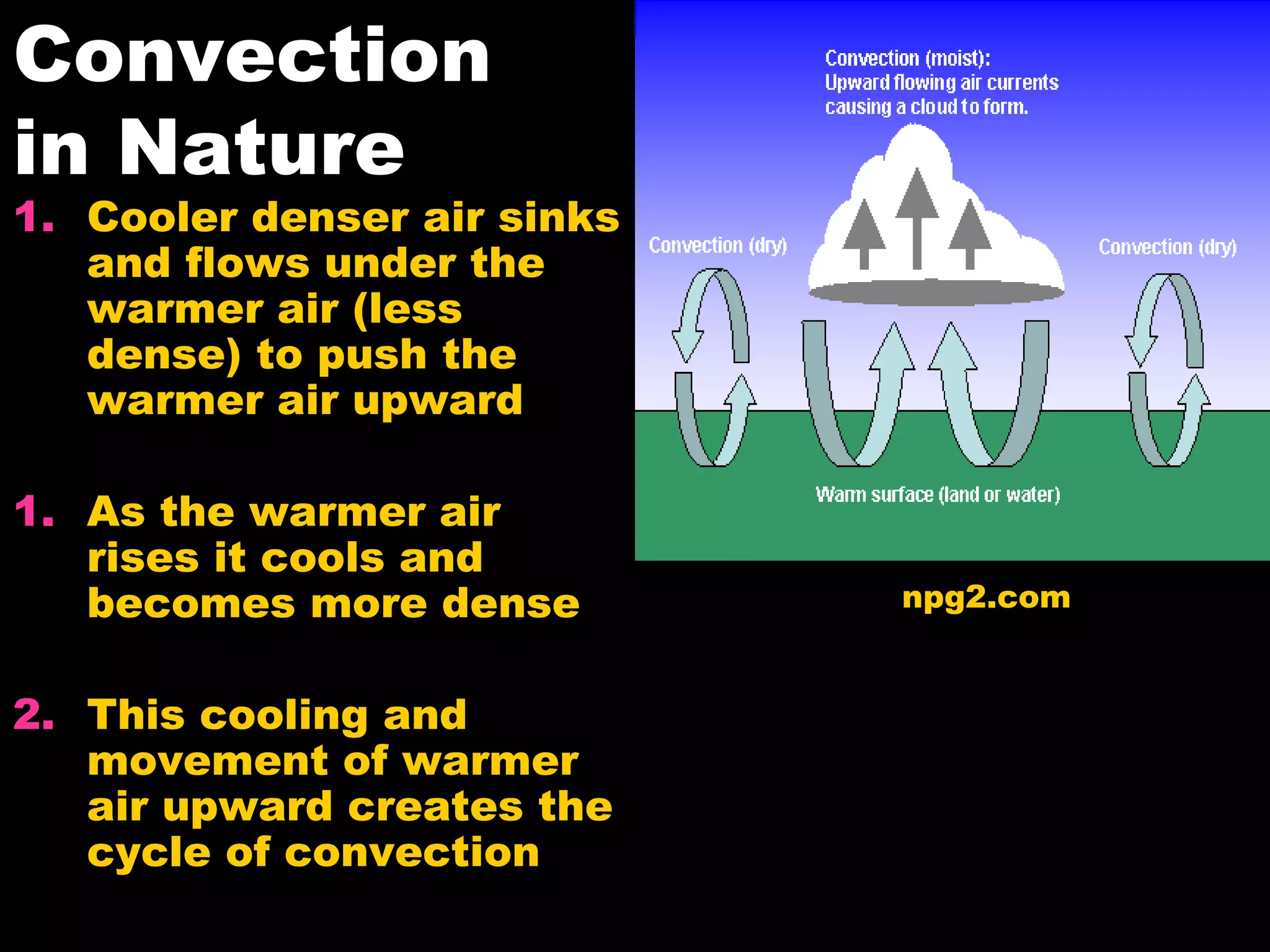
in Nature
1. Cooler denser air sinks
and flows under the
warmer air (less
dense) to push the
warmer air upward
1. As the warmer air
rises it cools and
becomes more dense
2. This cooling and
movement of warmer
air upward creates the
cycle of convection
npg2.com
Radiation
• The energy
that travels by
electromagnetic
waves (visible
light,
microwaves,
and infrared
light)
• Radiation from
the sun strikes
the atoms in
your body and
transfers
energy www.chemheritage.org
THANK YOU
Siddaraju.N
First .B.Ed
J S S Institution of education
sakaleshpura

Temperature and heat1

  • 1.
  • 2.
    Heat And Temperature Heatis a flow of energy due to temperature differences
  • 3.
    Temperature Depends on ParticleMovement! • All matter is made up of atoms that are moving…even solid objects have atoms that are vibrating. • The motion from the atoms gives the object energy.
  • 4.
    The Kinetic Theoryof Matter • All of the particles that make up matter are constantly in motion • Solid= vibrating atoms • Liquid= flowing atoms • Gas= move freely • Plasma= move incredibly fast and freely
  • 5.
    Temperature •The Measure of theaverage kinetic energy of all the particles in the object •The atoms mass and speed determine the temperature of the object
  • 6.
    Temperature • Temperature is measuredin units called degrees (oC,F,K) • Fahrenheit: Water freezes 32oF and boils at 212oF • Celsius: Water freezes at 0oC and boils at 100oC
  • 7.
    How does a ThermometerWork? • The thermometer can measure temperature because the substance of the liquid inside always expands (increases) or contracts (decreases) by a certain amount due to a change in temperature.
  • 8.
    Thermal Expansion • All gases,liquids, and most solids expand when their temperature increases. • This is why bridges are built with short segments with small breaks to allow for expansion Joints such as this one are used in bridges to accommodate thermal expansion. (Reproduced by permission of JLM Visuals)
  • 9.
    Energy Flows fromWarmer to Cooler Objects • Heat: the flow of energy from an object at a higher temperature to an object at a lower temperature. • Thermal Energy: total random kinetic energy of particles in an object.
  • 10.
    Measuring Heat • Heatis measured by the units of calorie and joule (J). • calorie: The amount of energy needed to raise the temperature of 1 gram of water by 1oC • 1 calorie= 4.18 J
  • 11.
    Some substances change temperaturemore easily than others. • Specific Heat: the amount of energy required to raise the temperature of 1 gram of a substance by 1oC chesapeake.towson.edu
  • 12.
    The Transfer ofEnergy as Heat. • Energy moves heat in three ways • Conduction • Convection • Radiation
  • 13.
    Conduction • The processthat moves energy from one object to another when they are touching physically. • Conductors: materials that transfer energy easily. • Insulators: materials that do not transfer energy easily. • Examples: hot cup of cocoa transfers heat energy to cold hands
  • 14.
    Convection • The process thattransfers energy by the movement of large numbers of particles in the same direction within a liquid or gas. • Cycle in Nature • Boiling water and heating a room www.physics.arizona.edu
  • 15.
    Convection in Nature 1. Coolerdenser air sinks and flows under the warmer air (less dense) to push the warmer air upward 1. As the warmer air rises it cools and becomes more dense 2. This cooling and movement of warmer air upward creates the cycle of convection npg2.com
  • 16.
    Radiation • The energy thattravels by electromagnetic waves (visible light, microwaves, and infrared light) • Radiation from the sun strikes the atoms in your body and transfers energy www.chemheritage.org
  • 17.
    THANK YOU Siddaraju.N First .B.Ed JS S Institution of education sakaleshpura