


PATHFINDER GLOBAL SCHOOL, 
PATAUDI 
By: Mr. Divyashu Sharma 
School Counsellor 
pgscounsellor@gmail.com
Workshop at a Glance 
 Introduction 
 Temper Tantrums 
 Causes of Temper Tantrums 
 Handling Temper Tantrums 
 Shyness/ Dependency 
 Causes of Shyness/ Dependency 
 Handling Shyness/ Dependency 
 Parents talk 
 Do say and Don’t say 
 Tips to handle
Introduction 
 Personality is a dynamic organisation of any 
individual. 
 Consist of lot of aspects, overall constitutes a 
behaviour. 
 Behaviour is sum of beliefs, attitude, values etc. 
 Behaviour characteristics start developing from child 
hood. 
 Parents face lots of problem while dealing with their 
child. 
 Here discussing two opposite attitudes: Temper 
Tantrums v/s Shyness/ Dependency.
TEMPER TANTRUMS 
 Angry outbursts…. Rolling on the 
ground, screaming, kicking, throwing 
objects, hitting. 
 Common in children between 18 
months to 3 years or may prolong.
CAUSES 
 Child is denied what he demands. 
 Poor role models. 
 Gaining attention. 
 If taken something what is wanted. 
 Stopping to do the thing s/he is interested 
in. 
 Fatigue, hunger, thirst or loss of sleep. 
 Inconsistent parents behaviour. 
 Satisfying demand. 
 To do something s/he is forced.
HANDLING TEMPER TANTRUMS 
 Distract attention to an interesting object. 
 In public, handle the situation as you would but if alone 
without being conscious of others observing. 
 Keep calmand appear balanced even if you are upset. 
 Ignore the child and continue doing your work 
 Be firm on your decisions. 
 If the child become destructive hold , hold him firmly till he 
becomes calm. 
 Do not argue, shout, hit or reason with the child. 
 Avoid giving negative or positive attention to tantrums.
HANDLING TEMPER TANTRUMS cont… 
 Show affection and make the child understand when 
the child calms down. 
 Welcome the child with open arms after tantrums 
stops. 
 Show lack of interest and indifference to tantrums. 
 Avoid situations that give rise to tantrums. 
 Do not say “NO” to the child unless its absolutely 
necessary. Give him / her other options s/he can try.
SHYNESS/ DEPENDENCY 
 Feel anxious on their own. 
 They need emotional support and 
closeness of an adult. 
 Holding clothes, thumb sucking, nail 
biting, demanding approval for every 
event. 
 Not comfortable with company of 
others. 
 Faces trouble forming relationship.
CAUSES 
 Less chances to meet people or 
less interact with them. 
 Insecurity / lack of confidence. 
 Overprotection. 
 Criticizing / criticism of - child in 
front of others.
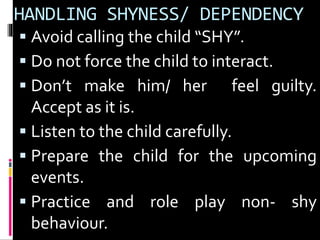
HANDLING SHYNESS/ DEPENDENCY 
 Avoid calling the child “SHY”. 
 Do not force the child to interact. 
 Don’t make him/ her feel guilty. 
Accept as it is. 
 Listen to the child carefully. 
 Prepare the child for the upcoming 
events. 
 Practice and role play non- shy 
behaviour.
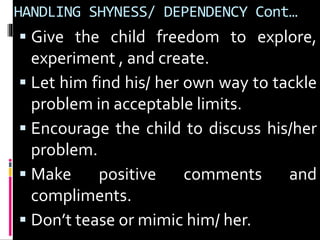
HANDLING SHYNESS/ DEPENDENCY Cont… 
 Give the child freedom to explore, 
experiment , and create. 
 Let him find his/ her own way to tackle 
problem in acceptable limits. 
 Encourage the child to discuss his/her 
problem. 
 Make positive comments and 
compliments. 
 Don’t tease or mimic him/ her.
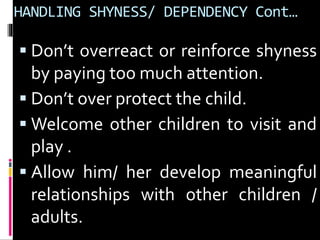
HANDLING SHYNESS/ DEPENDENCY Cont… 
 Don’t overreact or reinforce shyness 
by paying too much attention. 
 Don’t over protect the child. 
Welcome other children to visit and 
play . 
 Allow him/ her develop meaningful 
relationships with other children / 
adults.
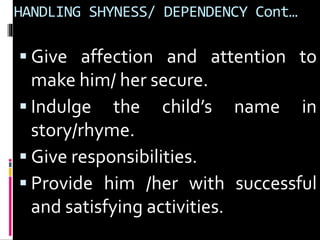
HANDLING SHYNESS/ DEPENDENCY Cont… 
 Give affection and attention to 
make him/ her secure. 
 Indulge the child’s name in 
story/rhyme. 
 Give responsibilities. 
 Provide him /her with successful 
and satisfying activities.
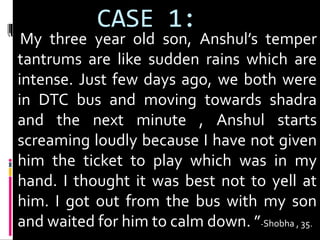
CASE 1: 
“ My three year old son, Anshul’s temper 
tantrums are like sudden rains which are 
intense. Just few days ago, we both were 
in DTC bus and moving towards shadra 
and the next minute , Anshul starts 
screaming loudly because I have not given 
him the ticket to play which was in my 
hand. I thought it was best not to yell at 
him. I got out from the bus with my son 
and waited for him to calm down. ”-Shobha , 35.
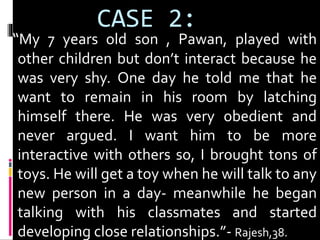
CASE 2: 
“My 7 years old son , Pawan, played with 
other children but don’t interact because he 
was very shy. One day he told me that he 
want to remain in his room by latching 
himself there. He was very obedient and 
never argued. I want him to be more 
interactive with others so, I brought tons of 
toys. He will get a toy when he will talk to any 
new person in a day- meanwhile he began 
talking with his classmates and started 
developing close relationships.”- Rajesh,38.
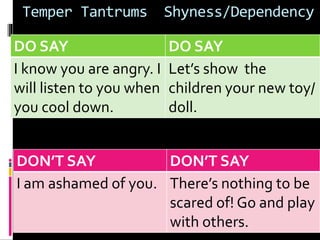
Temper Tantrums Shyness/Dependency 
DO SAY DO SAY 
I know you are angry. I 
will listen to you when 
you cool down. 
Let’s show the 
children your new toy/ 
doll. 
DON’T SAY DON’T SAY 
I am ashamed of you. There’s nothing to be 
scared of! Go and play 
with others.
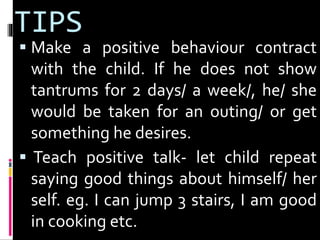
TIPS 
 Make a positive behaviour contract 
with the child. If he does not show 
tantrums for 2 days/ a week/, he/ she 
would be taken for an outing/ or get 
something he desires. 
 Teach positive talk- let child repeat 
saying good things about himself/ her 
self. eg. I can jump 3 stairs, I am good 
in cooking etc.
Temper tantrums vs shyness

Temper tantrums vs shyness

  • 1.
    PATHFINDER GLOBAL SCHOOL, PATAUDI By: Mr. Divyashu Sharma School Counsellor pgscounsellor@gmail.com
  • 2.
    Workshop at aGlance  Introduction  Temper Tantrums  Causes of Temper Tantrums  Handling Temper Tantrums  Shyness/ Dependency  Causes of Shyness/ Dependency  Handling Shyness/ Dependency  Parents talk  Do say and Don’t say  Tips to handle
  • 3.
    Introduction  Personalityis a dynamic organisation of any individual.  Consist of lot of aspects, overall constitutes a behaviour.  Behaviour is sum of beliefs, attitude, values etc.  Behaviour characteristics start developing from child hood.  Parents face lots of problem while dealing with their child.  Here discussing two opposite attitudes: Temper Tantrums v/s Shyness/ Dependency.
  • 4.
    TEMPER TANTRUMS Angry outbursts…. Rolling on the ground, screaming, kicking, throwing objects, hitting.  Common in children between 18 months to 3 years or may prolong.
  • 5.
    CAUSES  Childis denied what he demands.  Poor role models.  Gaining attention.  If taken something what is wanted.  Stopping to do the thing s/he is interested in.  Fatigue, hunger, thirst or loss of sleep.  Inconsistent parents behaviour.  Satisfying demand.  To do something s/he is forced.
  • 6.
    HANDLING TEMPER TANTRUMS  Distract attention to an interesting object.  In public, handle the situation as you would but if alone without being conscious of others observing.  Keep calmand appear balanced even if you are upset.  Ignore the child and continue doing your work  Be firm on your decisions.  If the child become destructive hold , hold him firmly till he becomes calm.  Do not argue, shout, hit or reason with the child.  Avoid giving negative or positive attention to tantrums.
  • 7.
    HANDLING TEMPER TANTRUMScont…  Show affection and make the child understand when the child calms down.  Welcome the child with open arms after tantrums stops.  Show lack of interest and indifference to tantrums.  Avoid situations that give rise to tantrums.  Do not say “NO” to the child unless its absolutely necessary. Give him / her other options s/he can try.
  • 8.
    SHYNESS/ DEPENDENCY Feel anxious on their own.  They need emotional support and closeness of an adult.  Holding clothes, thumb sucking, nail biting, demanding approval for every event.  Not comfortable with company of others.  Faces trouble forming relationship.
  • 9.
    CAUSES  Lesschances to meet people or less interact with them.  Insecurity / lack of confidence.  Overprotection.  Criticizing / criticism of - child in front of others.
  • 10.
    HANDLING SHYNESS/ DEPENDENCY  Avoid calling the child “SHY”.  Do not force the child to interact.  Don’t make him/ her feel guilty. Accept as it is.  Listen to the child carefully.  Prepare the child for the upcoming events.  Practice and role play non- shy behaviour.
  • 11.
    HANDLING SHYNESS/ DEPENDENCYCont…  Give the child freedom to explore, experiment , and create.  Let him find his/ her own way to tackle problem in acceptable limits.  Encourage the child to discuss his/her problem.  Make positive comments and compliments.  Don’t tease or mimic him/ her.
  • 12.
    HANDLING SHYNESS/ DEPENDENCYCont…  Don’t overreact or reinforce shyness by paying too much attention.  Don’t over protect the child. Welcome other children to visit and play .  Allow him/ her develop meaningful relationships with other children / adults.
  • 13.
    HANDLING SHYNESS/ DEPENDENCYCont…  Give affection and attention to make him/ her secure.  Indulge the child’s name in story/rhyme.  Give responsibilities.  Provide him /her with successful and satisfying activities.
  • 14.
    CASE 1: “My three year old son, Anshul’s temper tantrums are like sudden rains which are intense. Just few days ago, we both were in DTC bus and moving towards shadra and the next minute , Anshul starts screaming loudly because I have not given him the ticket to play which was in my hand. I thought it was best not to yell at him. I got out from the bus with my son and waited for him to calm down. ”-Shobha , 35.
  • 15.
    CASE 2: “My7 years old son , Pawan, played with other children but don’t interact because he was very shy. One day he told me that he want to remain in his room by latching himself there. He was very obedient and never argued. I want him to be more interactive with others so, I brought tons of toys. He will get a toy when he will talk to any new person in a day- meanwhile he began talking with his classmates and started developing close relationships.”- Rajesh,38.
  • 16.
    Temper Tantrums Shyness/Dependency DO SAY DO SAY I know you are angry. I will listen to you when you cool down. Let’s show the children your new toy/ doll. DON’T SAY DON’T SAY I am ashamed of you. There’s nothing to be scared of! Go and play with others.
  • 17.
    TIPS  Makea positive behaviour contract with the child. If he does not show tantrums for 2 days/ a week/, he/ she would be taken for an outing/ or get something he desires.  Teach positive talk- let child repeat saying good things about himself/ her self. eg. I can jump 3 stairs, I am good in cooking etc.