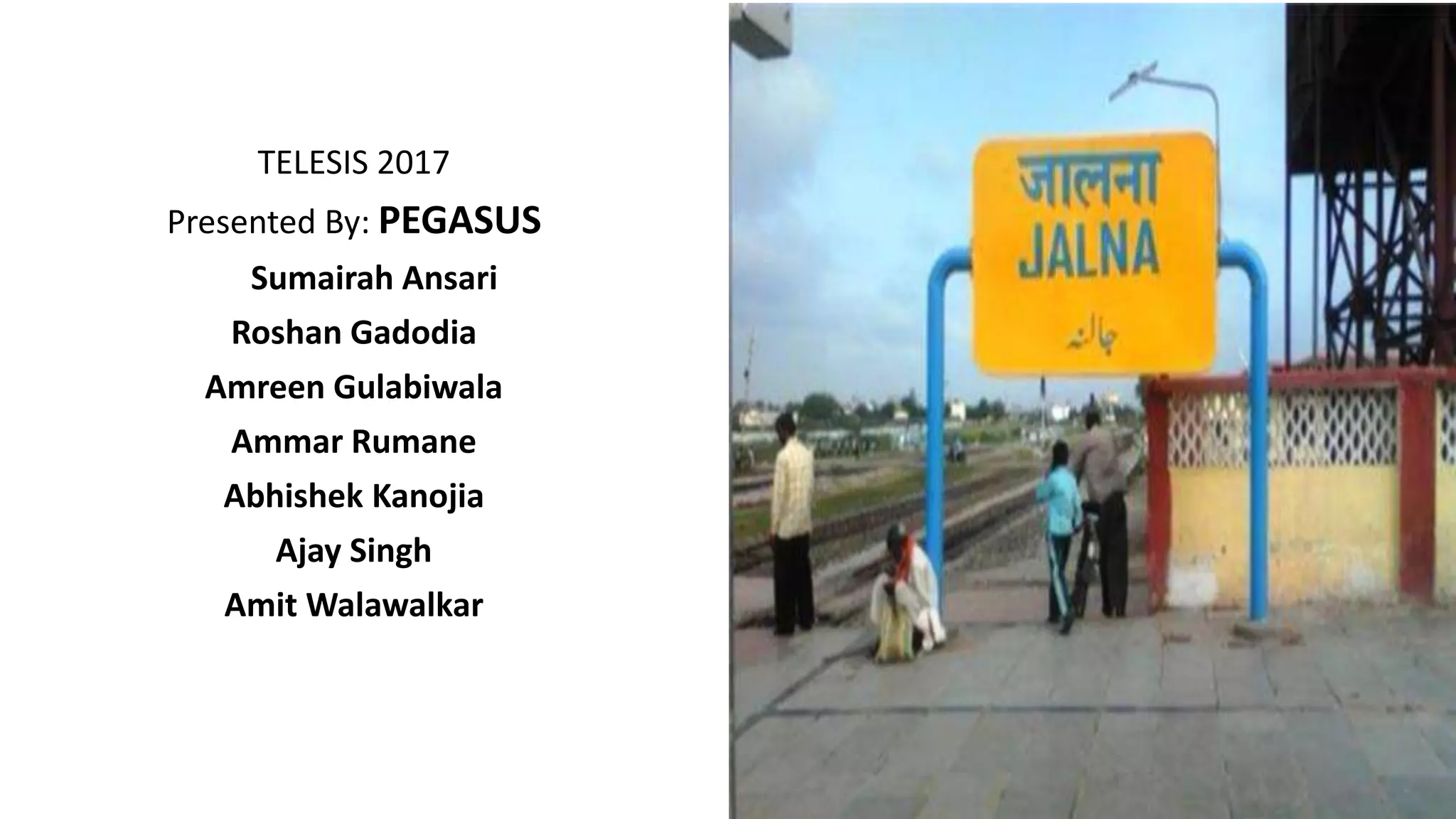
TELESIS 2017
Presented By: PEGASUS
Sumairah Ansari
Roshan Gadodia
Amreen Gulabiwala
Ammar Rumane
Abhishek Kanojia
Ajay Singh
Amit Walawalkar
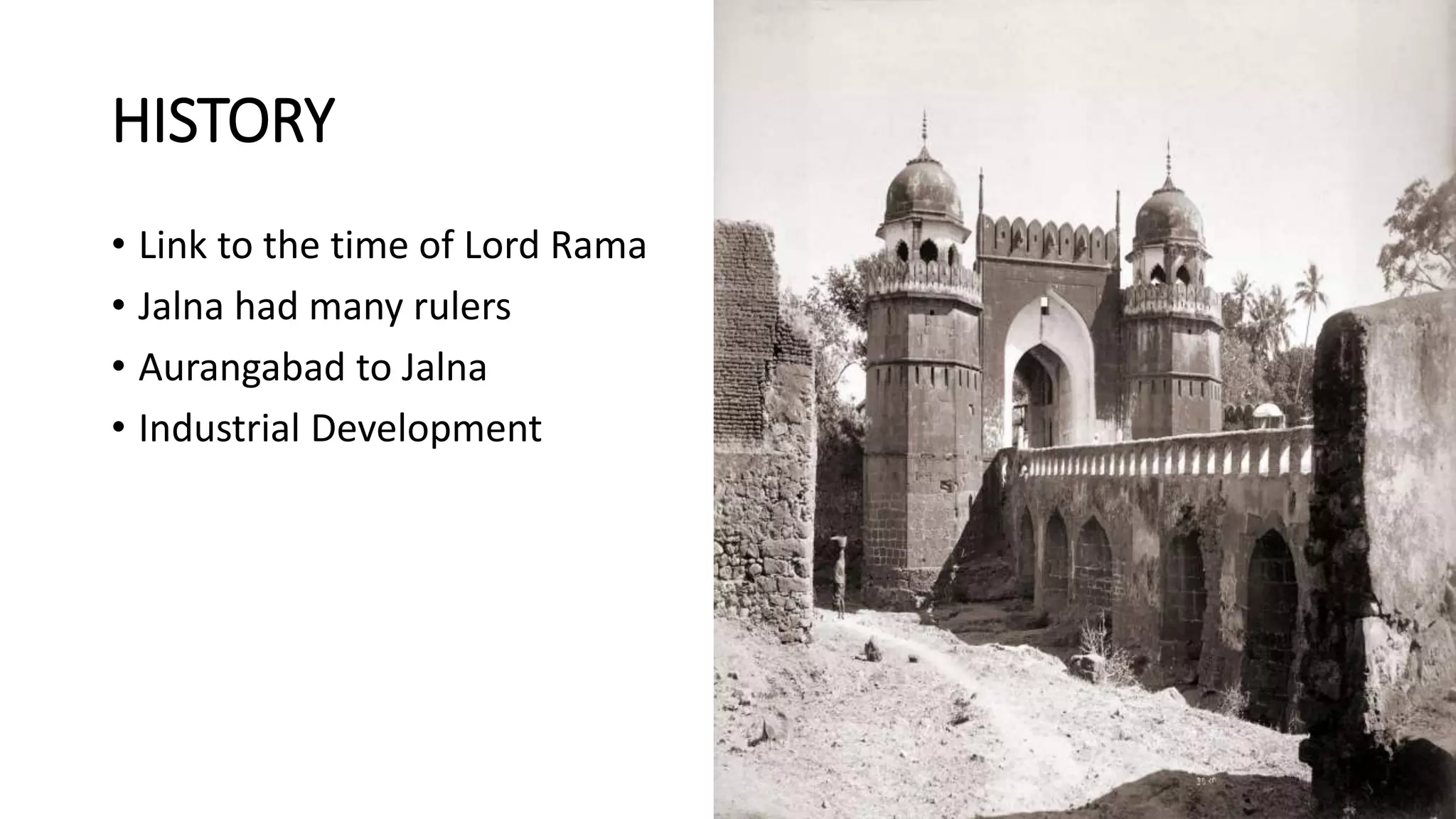
HISTORY
• Link to the time of Lord Rama
• Jalna had many rulers
• Aurangabad to Jalna
• Industrial Development
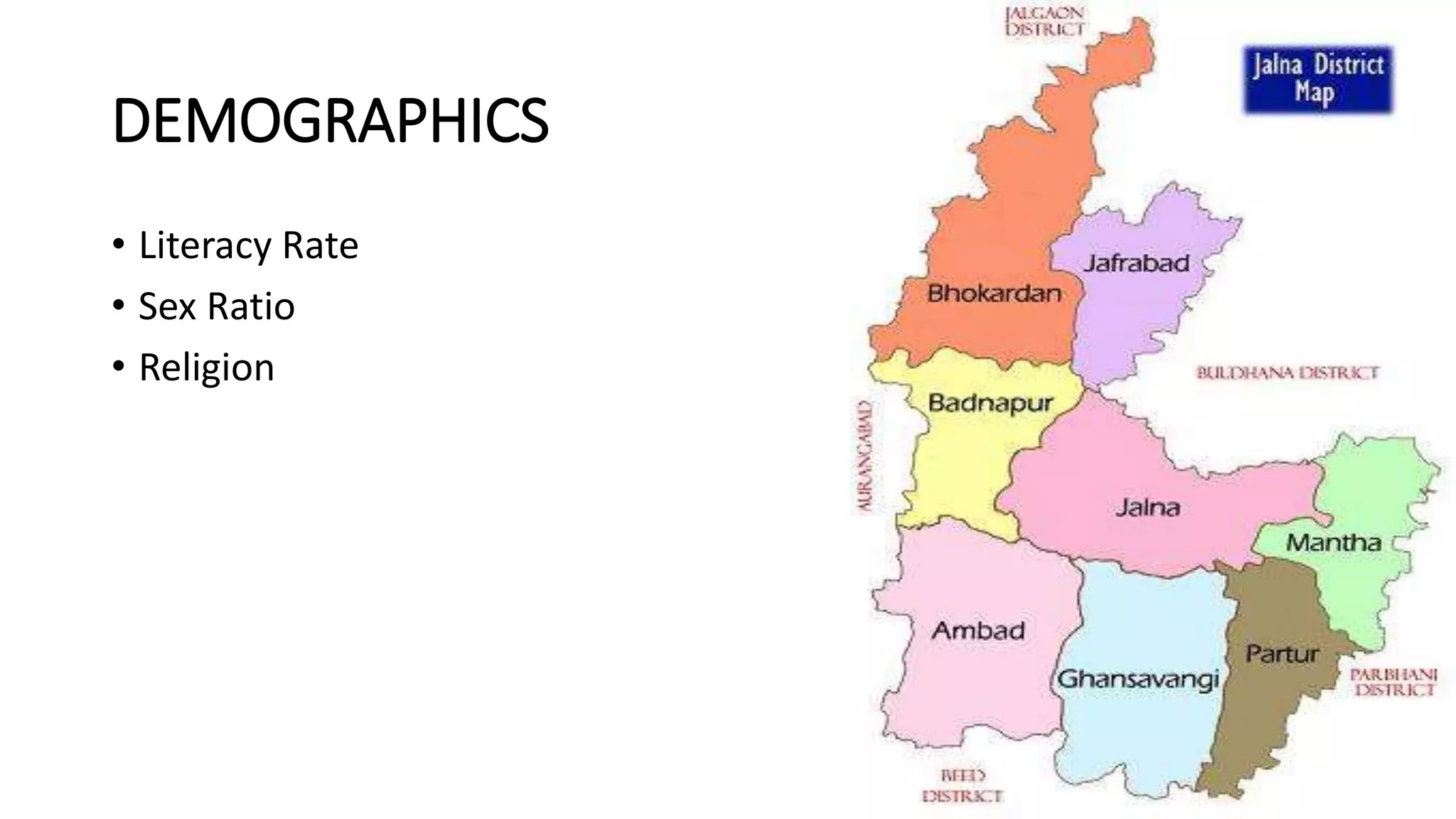
DEMOGRAPHICS
• Literacy Rate
• Sex Ratio
• Religion
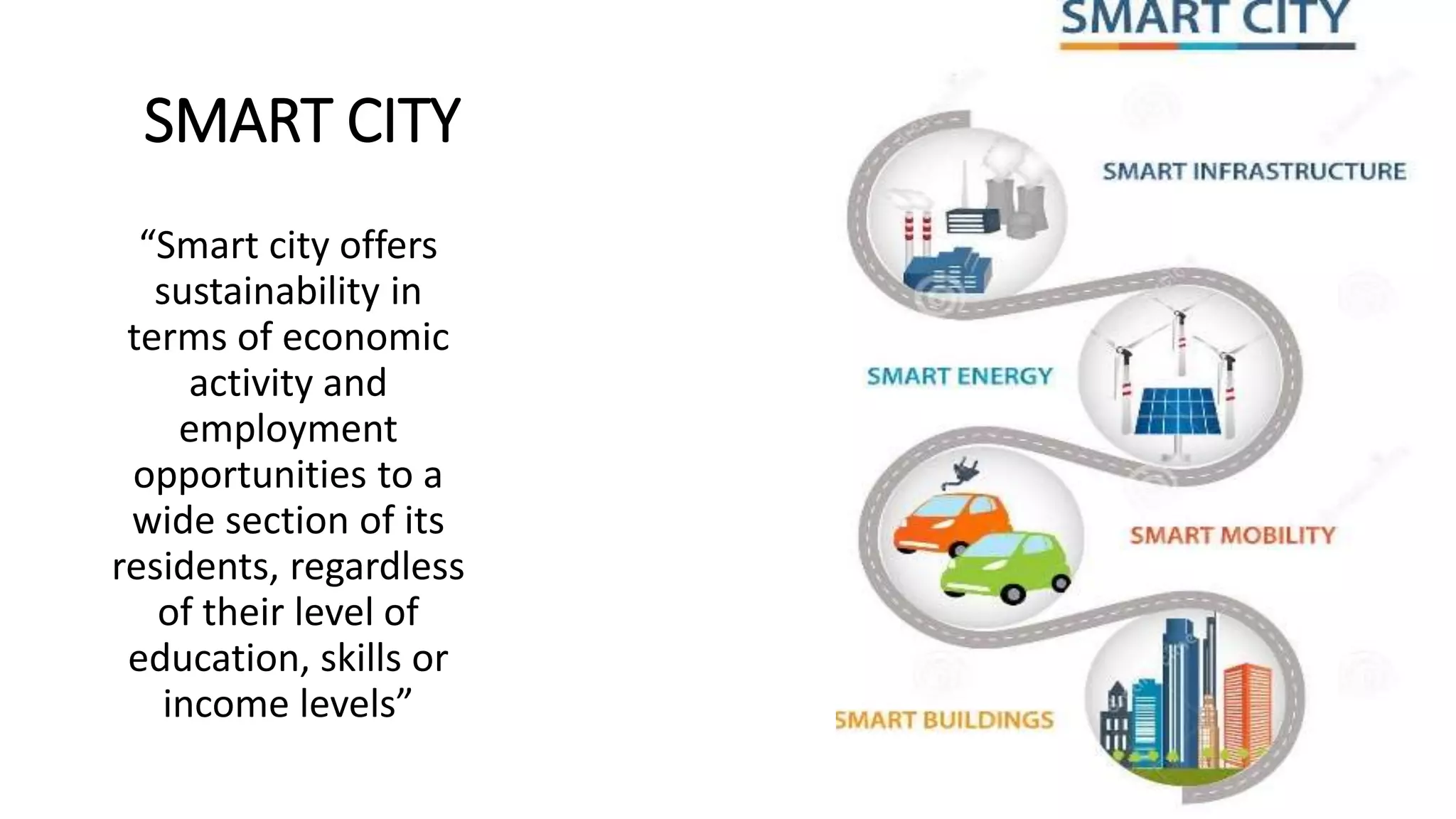
SMART CITY
“Smart city offers
sustainability in
terms of economic
activity and
employment
opportunities to a
wide section of its
residents, regardless
of their level of
education, skills or
income levels”
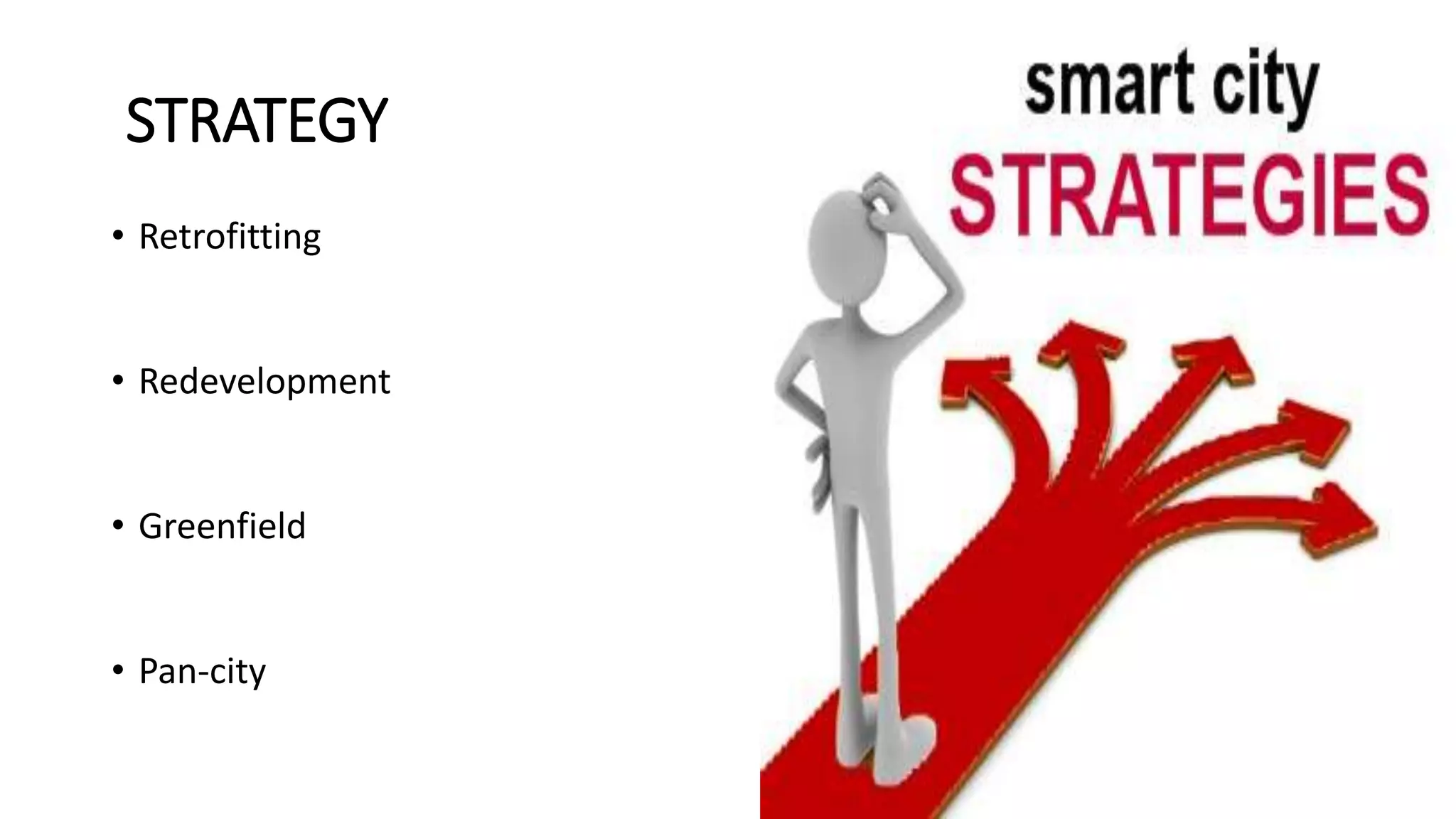
STRATEGY
• Retrofitting
• Redevelopment
• Greenfield
• Pan-city
WHY JALNA SHOULD BE CONSIDERED?
• High connectivity
• Education centre
• Commercial centre
• Industries steel manufacturing
• cotton ginning and biggest seed producer
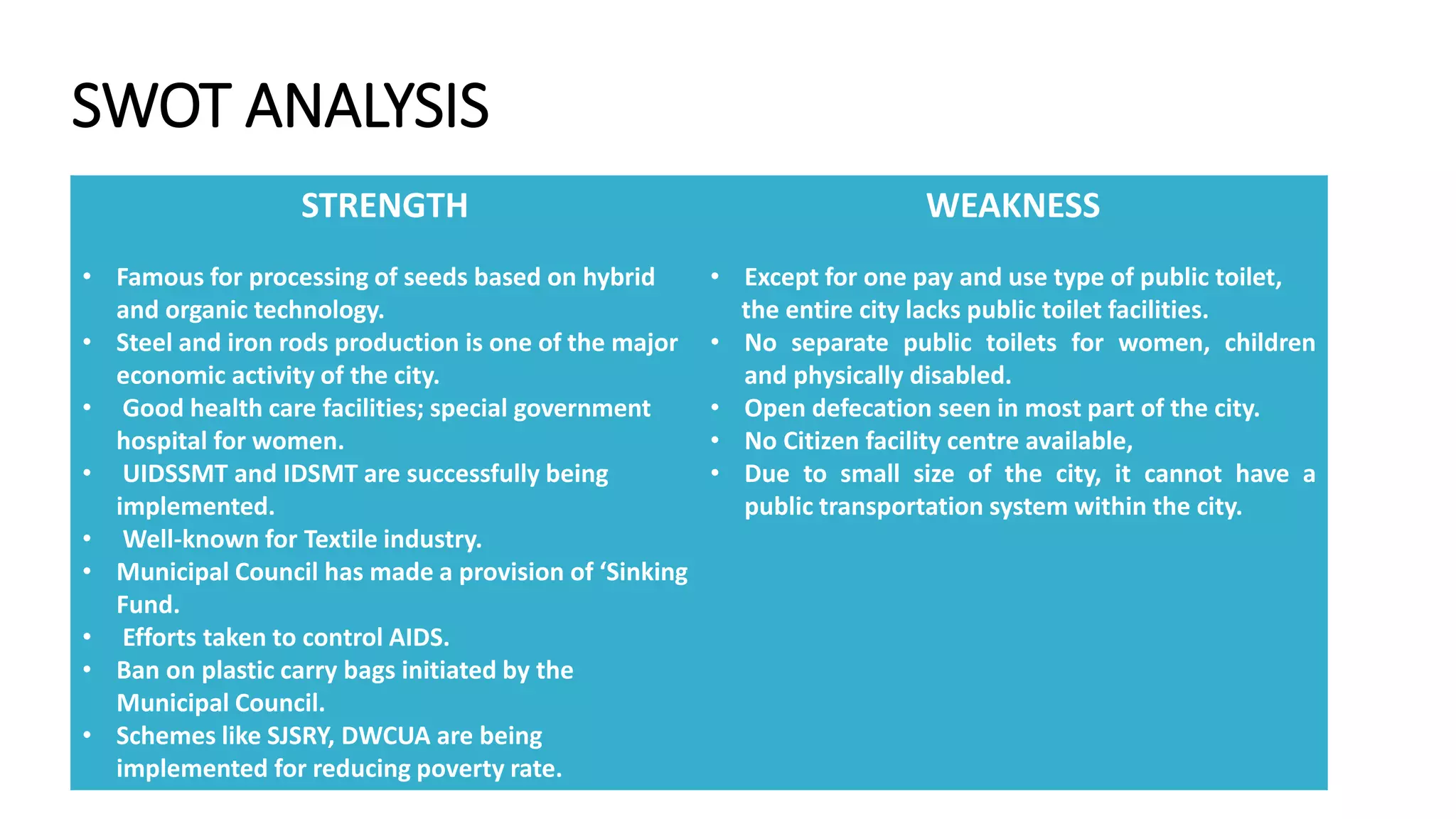
SWOT ANALYSIS
STRENGTH
• Famous for processing of seeds based on hybrid
and organic technology.
• Steel and iron rods production is one of the major
economic activity of the city.
• Good health care facilities; special government
hospital for women.
• UIDSSMT and IDSMT are successfully being
implemented.
• Well-known for Textile industry.
• Municipal Council has made a provision of ‘Sinking
Fund.
• Efforts taken to control AIDS.
• Ban on plastic carry bags initiated by the
Municipal Council.
• Schemes like SJSRY, DWCUA are being
implemented for reducing poverty rate.
WEAKNESS
• Except for one pay and use type of public toilet,
the entire city lacks public toilet facilities.
• No separate public toilets for women, children
and physically disabled.
• Open defecation seen in most part of the city.
• No Citizen facility centre available,
• Due to small size of the city, it cannot have a
public transportation system within the city.
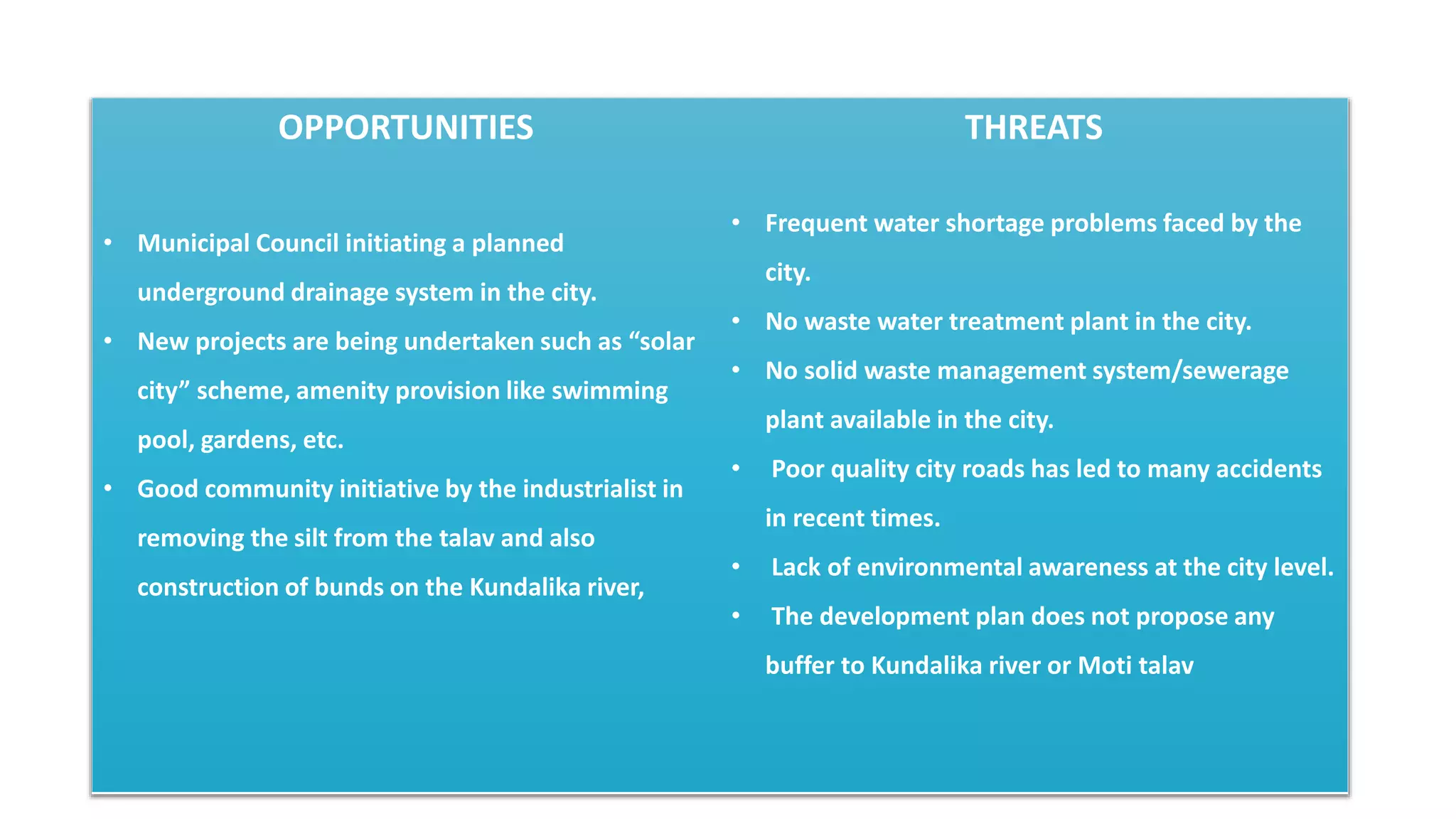
OPPORTUNITIES
• Municipal Council initiating a planned
underground drainage system in the city.
• New projects are being undertaken such as “solar
city” scheme, amenity provision like swimming
pool, gardens, etc.
• Good community initiative by the industrialist in
removing the silt from the talav and also
construction of bunds on the Kundalika river,
THREATS
• Frequent water shortage problems faced by the
city.
• No waste water treatment plant in the city.
• No solid waste management system/sewerage
plant available in the city.
• Poor quality city roads has led to many accidents
in recent times.
• Lack of environmental awareness at the city level.
• The development plan does not propose any
buffer to Kundalika river or Moti talav
PROPOSAL
1. Assured electricity supply,
2. Smart metering; Energy efficient street lighting
3. Adequate water supply
4. Waste water recycling, storm water reuse, rain water harvesting
5. Sanitation including solid waste management
6. Robust IT connectivity and digitalization
7. Encroachment-free public areas
8. Intelligent traffic management Smart parking Non-vehicle streets/zones
9. Encouragement to non-motorised transport (e.g. walking and cycling)
10. Pedestrian friendly pathways
11. Innovative use of open spaces
12. Ensuring safety of citizens, especially children, women and elderly
THANK YOU!!

Telisis jalna ppt

  • 1.
    TELESIS 2017 Presented By:PEGASUS Sumairah Ansari Roshan Gadodia Amreen Gulabiwala Ammar Rumane Abhishek Kanojia Ajay Singh Amit Walawalkar
  • 2.
    HISTORY • Link tothe time of Lord Rama • Jalna had many rulers • Aurangabad to Jalna • Industrial Development
  • 3.
    DEMOGRAPHICS • Literacy Rate •Sex Ratio • Religion
  • 4.
    SMART CITY “Smart cityoffers sustainability in terms of economic activity and employment opportunities to a wide section of its residents, regardless of their level of education, skills or income levels”
  • 5.
  • 6.
    WHY JALNA SHOULDBE CONSIDERED? • High connectivity • Education centre • Commercial centre • Industries steel manufacturing • cotton ginning and biggest seed producer
  • 7.
    SWOT ANALYSIS STRENGTH • Famousfor processing of seeds based on hybrid and organic technology. • Steel and iron rods production is one of the major economic activity of the city. • Good health care facilities; special government hospital for women. • UIDSSMT and IDSMT are successfully being implemented. • Well-known for Textile industry. • Municipal Council has made a provision of ‘Sinking Fund. • Efforts taken to control AIDS. • Ban on plastic carry bags initiated by the Municipal Council. • Schemes like SJSRY, DWCUA are being implemented for reducing poverty rate. WEAKNESS • Except for one pay and use type of public toilet, the entire city lacks public toilet facilities. • No separate public toilets for women, children and physically disabled. • Open defecation seen in most part of the city. • No Citizen facility centre available, • Due to small size of the city, it cannot have a public transportation system within the city.
  • 8.
    OPPORTUNITIES • Municipal Councilinitiating a planned underground drainage system in the city. • New projects are being undertaken such as “solar city” scheme, amenity provision like swimming pool, gardens, etc. • Good community initiative by the industrialist in removing the silt from the talav and also construction of bunds on the Kundalika river, THREATS • Frequent water shortage problems faced by the city. • No waste water treatment plant in the city. • No solid waste management system/sewerage plant available in the city. • Poor quality city roads has led to many accidents in recent times. • Lack of environmental awareness at the city level. • The development plan does not propose any buffer to Kundalika river or Moti talav
  • 9.
    PROPOSAL 1. Assured electricitysupply, 2. Smart metering; Energy efficient street lighting 3. Adequate water supply 4. Waste water recycling, storm water reuse, rain water harvesting 5. Sanitation including solid waste management 6. Robust IT connectivity and digitalization 7. Encroachment-free public areas 8. Intelligent traffic management Smart parking Non-vehicle streets/zones 9. Encouragement to non-motorised transport (e.g. walking and cycling) 10. Pedestrian friendly pathways 11. Innovative use of open spaces 12. Ensuring safety of citizens, especially children, women and elderly
  • 10.