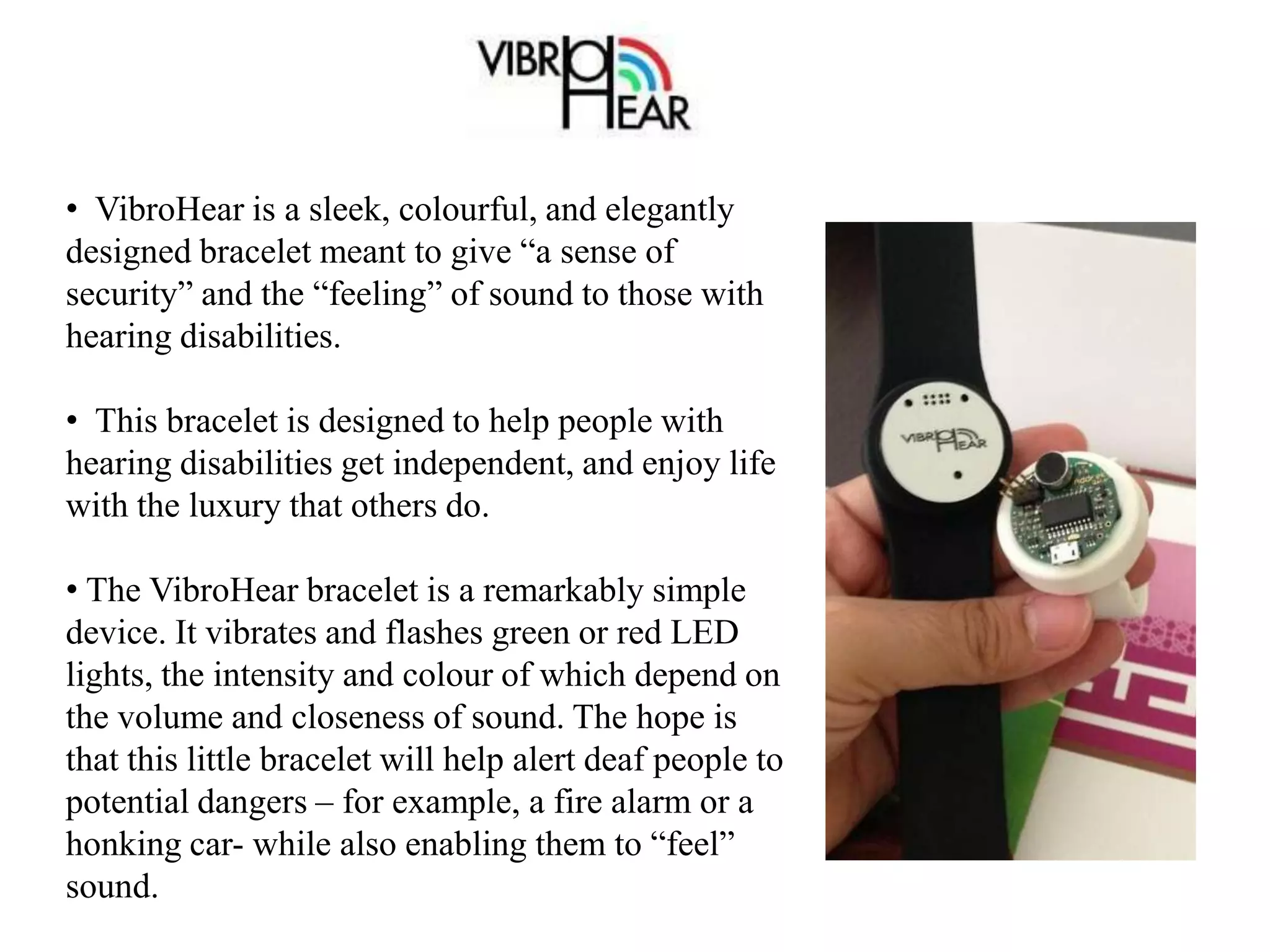
• VibroHear is a sleek, colourful, and elegantly
designed bracelet meant to give “a sense of
security” and the “feeling” of sound to those with
hearing disabilities.
• This bracelet is designed to help people with
hearing disabilities get independent, and enjoy life
with the luxury that others do.
• The VibroHear bracelet is a remarkably simple
device. It vibrates and flashes green or red LED
lights, the intensity and colour of which depend on
the volume and closeness of sound. The hope is
that this little bracelet will help alert deaf people to
potential dangers – for example, a fire alarm or a
honking car- while also enabling them to “feel”
sound.
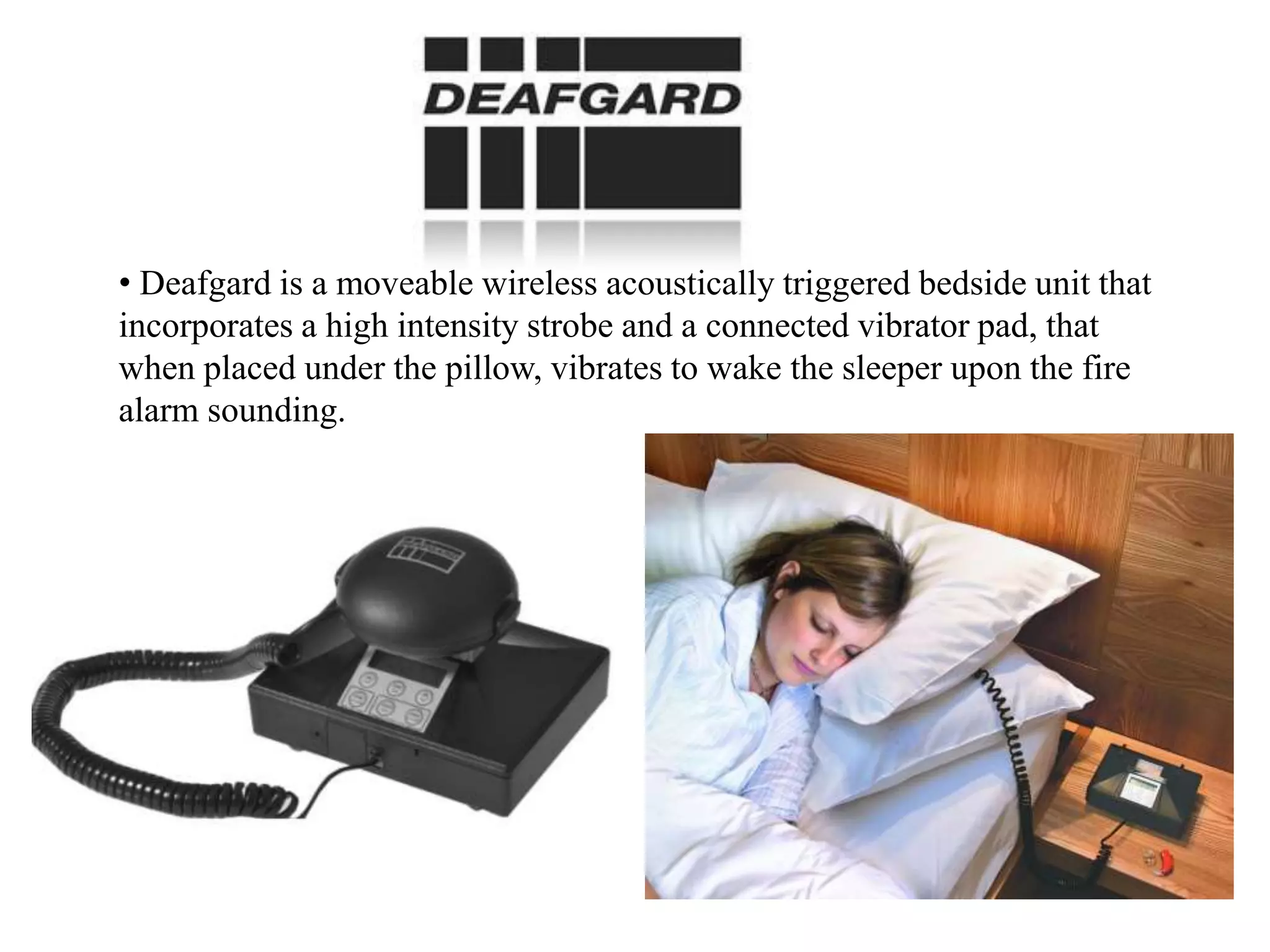
• Deafgard is a moveable wireless acoustically triggered bedside unit that
incorporates a high intensity strobe and a connected vibrator pad, that
when placed under the pillow, vibrates to wake the sleeper upon the fire
alarm sounding.
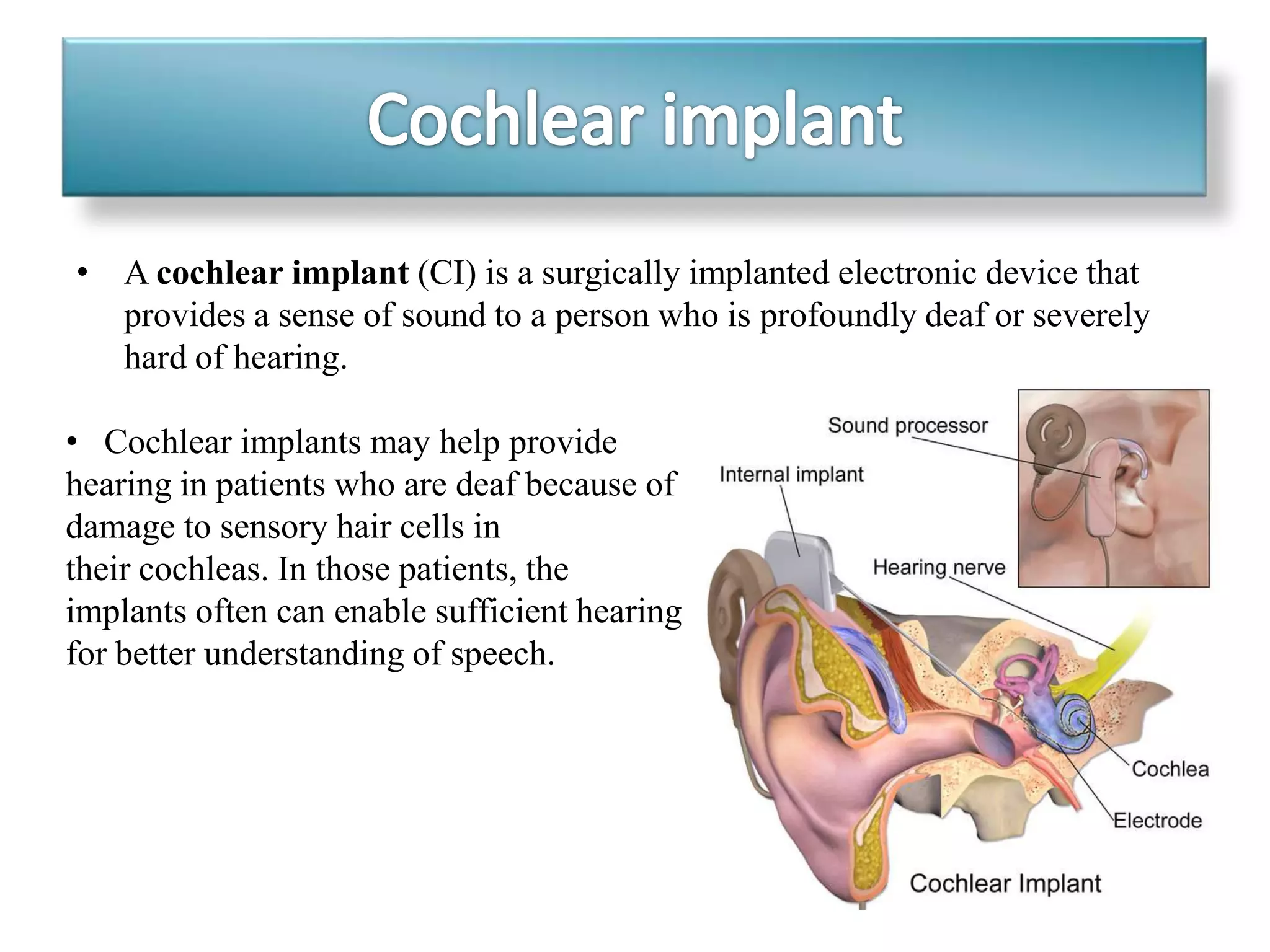
• A cochlear implant (CI) is a surgically implanted electronic device that
provides a sense of sound to a person who is profoundly deaf or severely
hard of hearing.
• Cochlear implants may help provide
hearing in patients who are deaf because of
damage to sensory hair cells in
their cochleas. In those patients, the
implants often can enable sufficient hearing
for better understanding of speech.
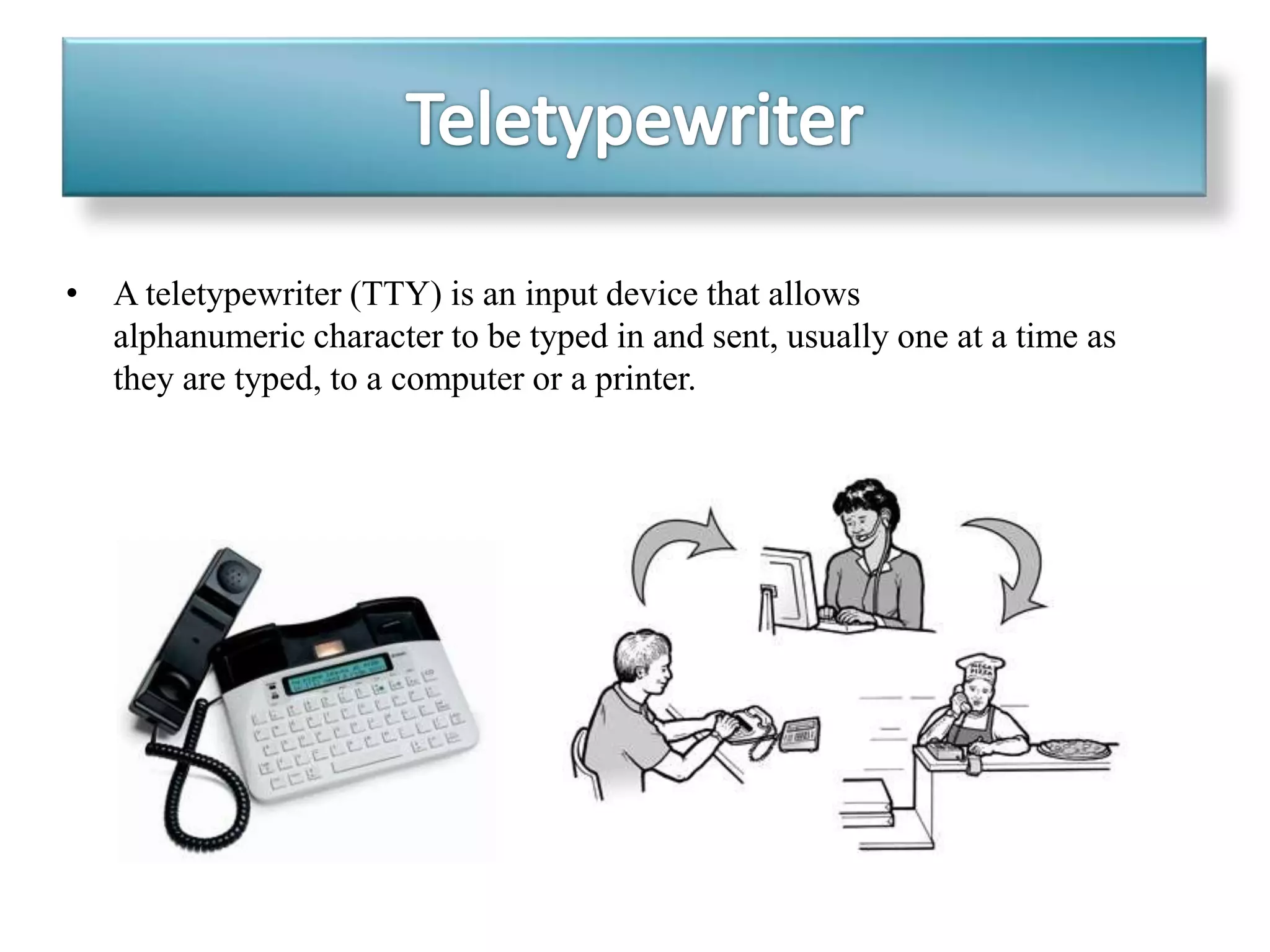
• A teletypewriter (TTY) is an input device that allows
alphanumeric character to be typed in and sent, usually one at a time as
they are typed, to a computer or a printer.
• The MobileASL project aims to allow people with hearing impairments
to use their cell phones by implementing a standard video capturing
technology that increases the image quality of face and hand gestures, but
reduce the data rate substantially. The device also uses motion detection to
identify if the user is making signs or not, to extend the battery life of the
phone during video use.
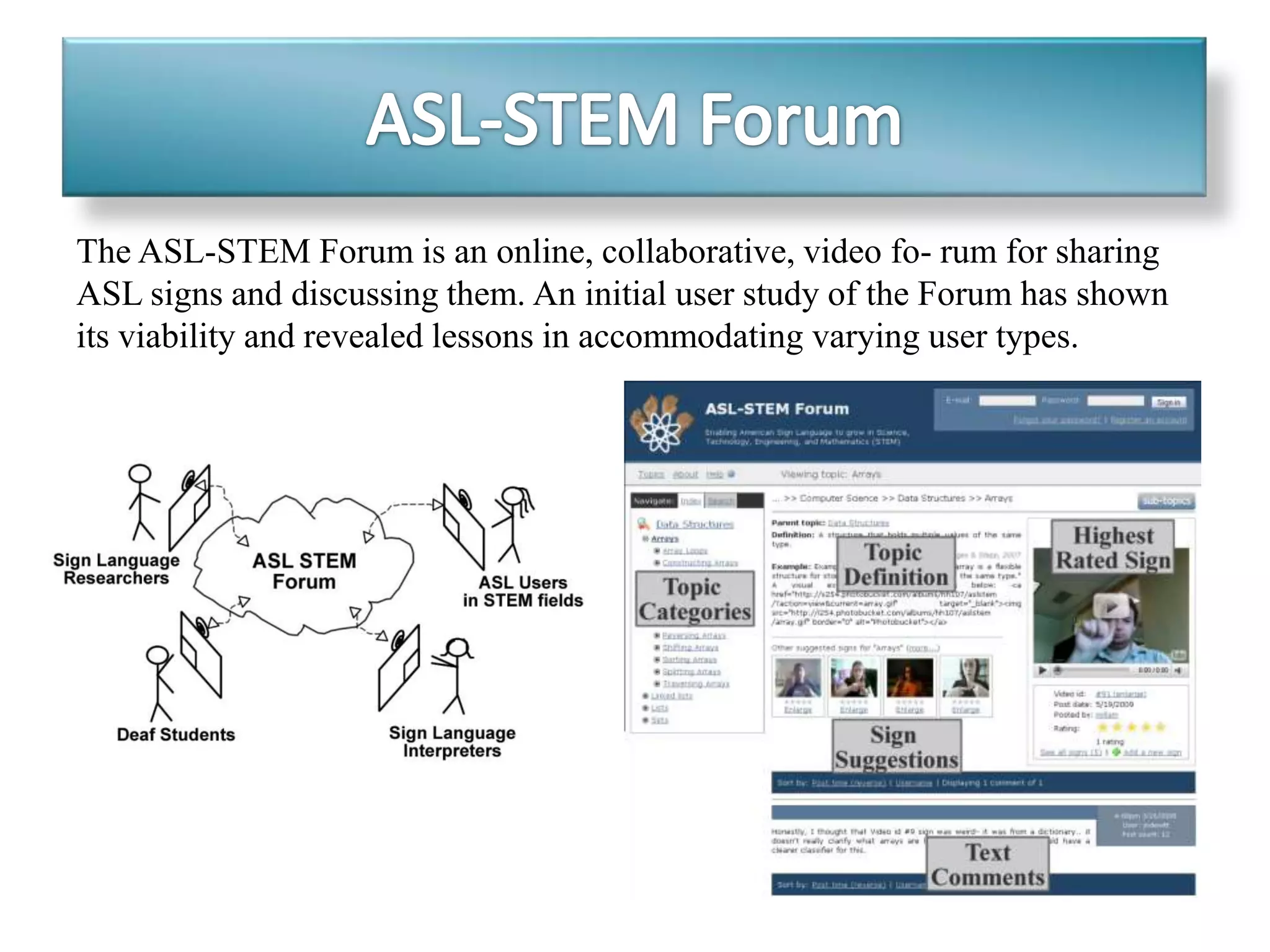
The ASL-STEM Forum is an online, collaborative, video fo- rum for sharing
ASL signs and discussing them. An initial user study of the Forum has shown
its viability and revealed lessons in accommodating varying user types.

Technologies for Deaf People

  • 2.
    • VibroHear isa sleek, colourful, and elegantly designed bracelet meant to give “a sense of security” and the “feeling” of sound to those with hearing disabilities. • This bracelet is designed to help people with hearing disabilities get independent, and enjoy life with the luxury that others do. • The VibroHear bracelet is a remarkably simple device. It vibrates and flashes green or red LED lights, the intensity and colour of which depend on the volume and closeness of sound. The hope is that this little bracelet will help alert deaf people to potential dangers – for example, a fire alarm or a honking car- while also enabling them to “feel” sound.
  • 3.
    • Deafgard isa moveable wireless acoustically triggered bedside unit that incorporates a high intensity strobe and a connected vibrator pad, that when placed under the pillow, vibrates to wake the sleeper upon the fire alarm sounding.
  • 4.
    • A cochlearimplant (CI) is a surgically implanted electronic device that provides a sense of sound to a person who is profoundly deaf or severely hard of hearing. • Cochlear implants may help provide hearing in patients who are deaf because of damage to sensory hair cells in their cochleas. In those patients, the implants often can enable sufficient hearing for better understanding of speech.
  • 5.
    • A teletypewriter(TTY) is an input device that allows alphanumeric character to be typed in and sent, usually one at a time as they are typed, to a computer or a printer.
  • 6.
    • The MobileASLproject aims to allow people with hearing impairments to use their cell phones by implementing a standard video capturing technology that increases the image quality of face and hand gestures, but reduce the data rate substantially. The device also uses motion detection to identify if the user is making signs or not, to extend the battery life of the phone during video use.
  • 7.
    The ASL-STEM Forumis an online, collaborative, video fo- rum for sharing ASL signs and discussing them. An initial user study of the Forum has shown its viability and revealed lessons in accommodating varying user types.