How Does My Hearing Aid Work?
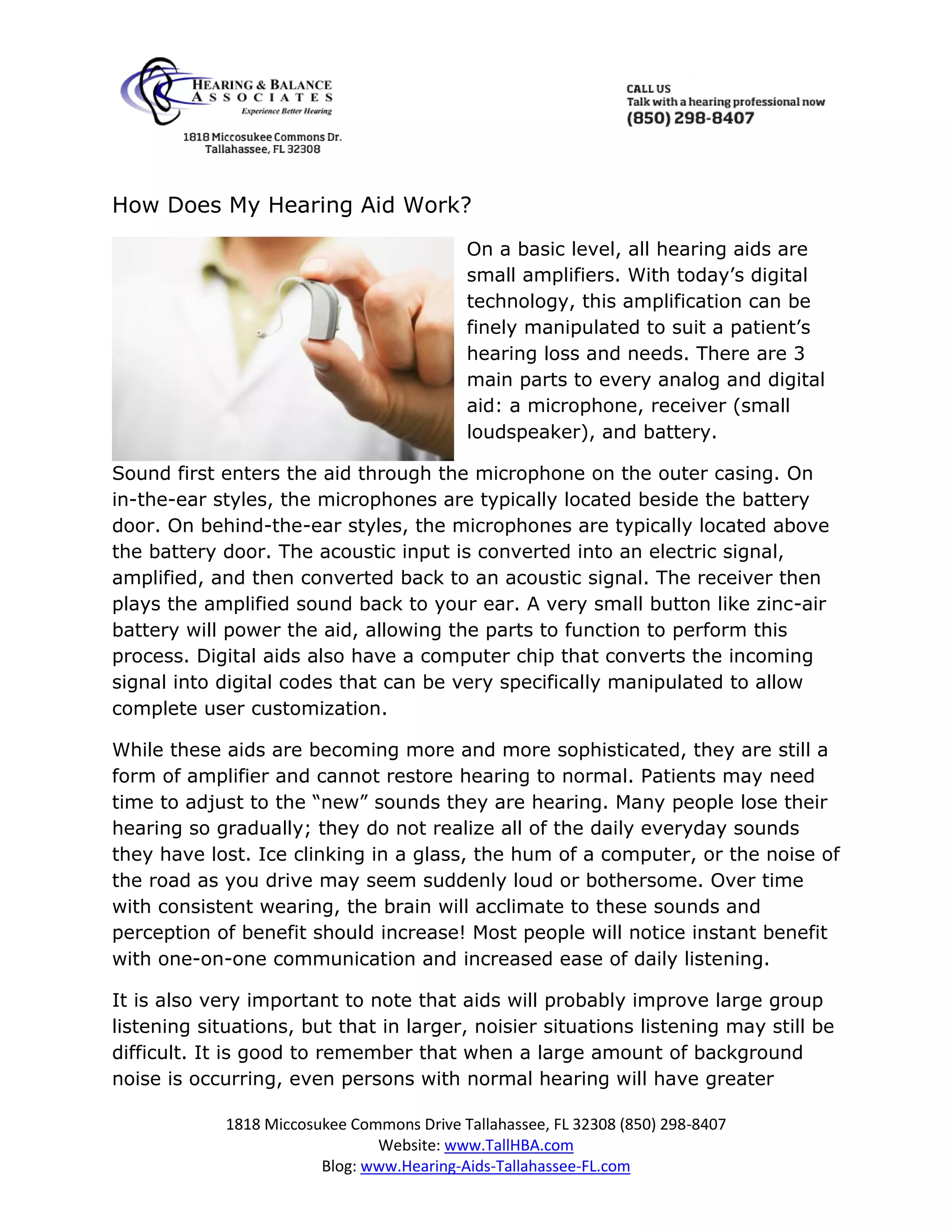
                                            On a basic level, all hearing aids are
                                            small amplifiers. With today’s digital
                                            technology, this amplification can be
                                            finely manipulated to suit a patient’s
                                            hearing loss and needs. There are 3
                                            main parts to every analog and digital
                                            aid: a microphone, receiver (small
                                            loudspeaker), and battery.

Sound first enters the aid through the microphone on the outer casing. On
in-the-ear styles, the microphones are typically located beside the battery
door. On behind-the-ear styles, the microphones are typically located above
the battery door. The acoustic input is converted into an electric signal,
amplified, and then converted back to an acoustic signal. The receiver then
plays the amplified sound back to your ear. A very small button like zinc-air
battery will power the aid, allowing the parts to function to perform this
process. Digital aids also have a computer chip that converts the incoming
signal into digital codes that can be very specifically manipulated to allow
complete user customization.

While these aids are becoming more and more sophisticated, they are still a
form of amplifier and cannot restore hearing to normal. Patients may need
time to adjust to the “new” sounds they are hearing. Many people lose their
hearing so gradually; they do not realize all of the daily everyday sounds
they have lost. Ice clinking in a glass, the hum of a computer, or the noise of
the road as you drive may seem suddenly loud or bothersome. Over time
with consistent wearing, the brain will acclimate to these sounds and
perception of benefit should increase! Most people will notice instant benefit
with one-on-one communication and increased ease of daily listening.

It is also very important to note that aids will probably improve large group
listening situations, but that in larger, noisier situations listening may still be
difficult. It is good to remember that when a large amount of background
noise is occurring, even persons with normal hearing will have greater

             1818 Miccosukee Commons Drive Tallahassee, FL 32308 (850) 298-8407
                                Website: www.TallHBA.com
                         Blog: www.Hearing-Aids-Tallahassee-FL.com
difficulty communicating. Modern digital aids do help to reduce the
amplification of background noise, but cannot remove them entirely. Digital
hearing instruments understand what is speech-like and noise-like, but
cannot determine definitely the difference in speech and noise. Noise tends
to be more steady, static, and unchanging (e.g., a fan running). Speech
tends to be more varied and changing over time. More static sounds will be
recognized as noise and amplification will be reduced for those sounds.
However, when you are at an event where many people are talking in the
background, the aid may not be able to pick up the difference in speech and
noise and will reduce the background much less. When this occurs, other
adjustments may be necessary to improve your listening experience. Speak
with your hearing healthcare professional about how your hearing aids can
help you!


           1818 Miccosukee Commons Drive Tallahassee, FL 32308 (850) 298-8407
                              Website: www.TallHBA.com
                       Blog: www.Hearing-Aids-Tallahassee-FL.com

How Does My Hearing Aid Work

  • 1.
    How Does MyHearing Aid Work? On a basic level, all hearing aids are small amplifiers. With today’s digital technology, this amplification can be finely manipulated to suit a patient’s hearing loss and needs. There are 3 main parts to every analog and digital aid: a microphone, receiver (small loudspeaker), and battery. Sound first enters the aid through the microphone on the outer casing. On in-the-ear styles, the microphones are typically located beside the battery door. On behind-the-ear styles, the microphones are typically located above the battery door. The acoustic input is converted into an electric signal, amplified, and then converted back to an acoustic signal. The receiver then plays the amplified sound back to your ear. A very small button like zinc-air battery will power the aid, allowing the parts to function to perform this process. Digital aids also have a computer chip that converts the incoming signal into digital codes that can be very specifically manipulated to allow complete user customization. While these aids are becoming more and more sophisticated, they are still a form of amplifier and cannot restore hearing to normal. Patients may need time to adjust to the “new” sounds they are hearing. Many people lose their hearing so gradually; they do not realize all of the daily everyday sounds they have lost. Ice clinking in a glass, the hum of a computer, or the noise of the road as you drive may seem suddenly loud or bothersome. Over time with consistent wearing, the brain will acclimate to these sounds and perception of benefit should increase! Most people will notice instant benefit with one-on-one communication and increased ease of daily listening. It is also very important to note that aids will probably improve large group listening situations, but that in larger, noisier situations listening may still be difficult. It is good to remember that when a large amount of background noise is occurring, even persons with normal hearing will have greater 1818 Miccosukee Commons Drive Tallahassee, FL 32308 (850) 298-8407 Website: www.TallHBA.com Blog: www.Hearing-Aids-Tallahassee-FL.com
  • 2.
    difficulty communicating. Moderndigital aids do help to reduce the amplification of background noise, but cannot remove them entirely. Digital hearing instruments understand what is speech-like and noise-like, but cannot determine definitely the difference in speech and noise. Noise tends to be more steady, static, and unchanging (e.g., a fan running). Speech tends to be more varied and changing over time. More static sounds will be recognized as noise and amplification will be reduced for those sounds. However, when you are at an event where many people are talking in the background, the aid may not be able to pick up the difference in speech and noise and will reduce the background much less. When this occurs, other adjustments may be necessary to improve your listening experience. Speak with your hearing healthcare professional about how your hearing aids can help you! 1818 Miccosukee Commons Drive Tallahassee, FL 32308 (850) 298-8407 Website: www.TallHBA.com Blog: www.Hearing-Aids-Tallahassee-FL.com