Technological
Change
INTRODUCTION
 Technological change (TC) is a term that is used to
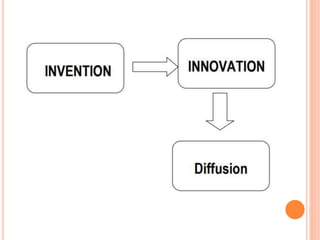
describe the overall process of invention, innovation
and diffusion of technology or processes.
 The term is synonymous with technological
development, technological achievement, and
technological progress. In essence TC is the
invention of a technology (or a process), the
continuous process of improving a technology (in
which it often becomes cheaper) and its diffusion
throughout industry or society. In short,
technological change is based on both better and
more technology.
TECHNOLOGICAL CHANGE AS A SOCIAL
PROCESS
 Underpinning the idea of technological change as a
social process is general agreement on the
importance of social context and communication.
According to this model, technological change is
seen as a social process involving producers and
adopters and others (such as government) who are
profoundly affected by cultural setting, political
institutions and marketing strategies.
 In free market economies, the maximization of
profits is a powerful driver of technological change.
 Generally, only those technologies are developed
and reach the market that promise to maximize
profits for the owners of incoming producing capital.
Any technologies that fail to meet this criterion even
though they may satisfy very important societal
needs, are not developed. Therefore, technological
change is a social process strongly biased by the
financial interests of capital.
 There are currently no well established democratic
processes, such as voting on the social or
environmental desirability of a new technology prior
to development and marketing, that would allow
average citizens to direct the course of
technological change
ELEMENTS OF DIFFUSION
 Emphasis has been on four key elements of the
technological change process: (1) an innovative
technology (2) communicated through certain
channels (3) to members of a social system (4) who
adopt it over a period of time. These elements are
derived from Everett M. Rogers Diffusion of
innovations theory using a communications-type
approach.
TECHNOLOGICAL TRANSITIONS
 Technological innovations have occurred throughout
history and rapidly increased over the modern age. New
technologies are developed and co-exist with the old
before supplanting them. Transport offers several
examples; from sailing to steam ships to automobiles
replacing horse-based transportation.
 Technological transitions (TT) describe how these
technological innovations occur and are incorporated
into society. Alongside the technological developments
TT considers wider societal changes such as ―user
practices, regulation, industrial networks (supply,
production, distribution), infrastructure, and symbolic
meaning or culture‖.
 For a technology to have use, it must be linked to
social structures human agency and organisations
to fulfil a specific need. Hughes refers to the
seamless web‘ where physical artefacts,
organisations, scientific communities, and social
practices combine.
 A technological system includes technical and non-
technical aspects, and it a major shift in the socio-
technical configurations (involving at least one new
technology) is when a technological transition
occurs.
TYPES OF TECHNOLOGICAL CHANGE
 Anticipated Change
These are changes that are planned ahead of time
and occur as intended
 Emergent Change
These are the changes that arise spontaneously from
local innovation and not originally anticipated or
intended.
 Opportunity-based Change
These are the changes that are not anticipated ahead
of time but are introduced purposefully and
intentionally during the change process in response
to an unexpected opportunity, event, or breakdown.
Technological Change in Organizations.pptx

Technological Change in Organizations.pptx

  • 1.
  • 2.
    INTRODUCTION  Technological change(TC) is a term that is used to describe the overall process of invention, innovation and diffusion of technology or processes.  The term is synonymous with technological development, technological achievement, and technological progress. In essence TC is the invention of a technology (or a process), the continuous process of improving a technology (in which it often becomes cheaper) and its diffusion throughout industry or society. In short, technological change is based on both better and more technology.
  • 4.
    TECHNOLOGICAL CHANGE ASA SOCIAL PROCESS  Underpinning the idea of technological change as a social process is general agreement on the importance of social context and communication. According to this model, technological change is seen as a social process involving producers and adopters and others (such as government) who are profoundly affected by cultural setting, political institutions and marketing strategies.  In free market economies, the maximization of profits is a powerful driver of technological change.
  • 5.
     Generally, onlythose technologies are developed and reach the market that promise to maximize profits for the owners of incoming producing capital. Any technologies that fail to meet this criterion even though they may satisfy very important societal needs, are not developed. Therefore, technological change is a social process strongly biased by the financial interests of capital.  There are currently no well established democratic processes, such as voting on the social or environmental desirability of a new technology prior to development and marketing, that would allow average citizens to direct the course of technological change
  • 6.
    ELEMENTS OF DIFFUSION Emphasis has been on four key elements of the technological change process: (1) an innovative technology (2) communicated through certain channels (3) to members of a social system (4) who adopt it over a period of time. These elements are derived from Everett M. Rogers Diffusion of innovations theory using a communications-type approach.
  • 7.
    TECHNOLOGICAL TRANSITIONS  Technologicalinnovations have occurred throughout history and rapidly increased over the modern age. New technologies are developed and co-exist with the old before supplanting them. Transport offers several examples; from sailing to steam ships to automobiles replacing horse-based transportation.  Technological transitions (TT) describe how these technological innovations occur and are incorporated into society. Alongside the technological developments TT considers wider societal changes such as ―user practices, regulation, industrial networks (supply, production, distribution), infrastructure, and symbolic meaning or culture‖.
  • 8.
     For atechnology to have use, it must be linked to social structures human agency and organisations to fulfil a specific need. Hughes refers to the seamless web‘ where physical artefacts, organisations, scientific communities, and social practices combine.  A technological system includes technical and non- technical aspects, and it a major shift in the socio- technical configurations (involving at least one new technology) is when a technological transition occurs.
  • 9.
    TYPES OF TECHNOLOGICALCHANGE  Anticipated Change These are changes that are planned ahead of time and occur as intended  Emergent Change These are the changes that arise spontaneously from local innovation and not originally anticipated or intended.  Opportunity-based Change These are the changes that are not anticipated ahead of time but are introduced purposefully and intentionally during the change process in response to an unexpected opportunity, event, or breakdown.