Teaching and learning
An Inclusive environment
Inclusion
“At a time when prevailing neo-liberal policy aims to position
higher education as an economic venture and students as
customers, discourses of inclusion are vital.
Terms such as access, widening participation, equity, equality
and diversity, and lifelong learning commonly feature in
discourses of inclusion related to higher education. The shifting
meanings and fluid uses of these terms serve as an indication of
the increasing tensions between neo-liberal economic forces
and the role of higher education in modern society”
Widening Participation Conference 2012 - Discourses of Inclusion in Higher Education
What is widening participation
(WP?)
It address systematic occlusion to the right of
education
 REMOVING BARRIERS
WP - inheritance
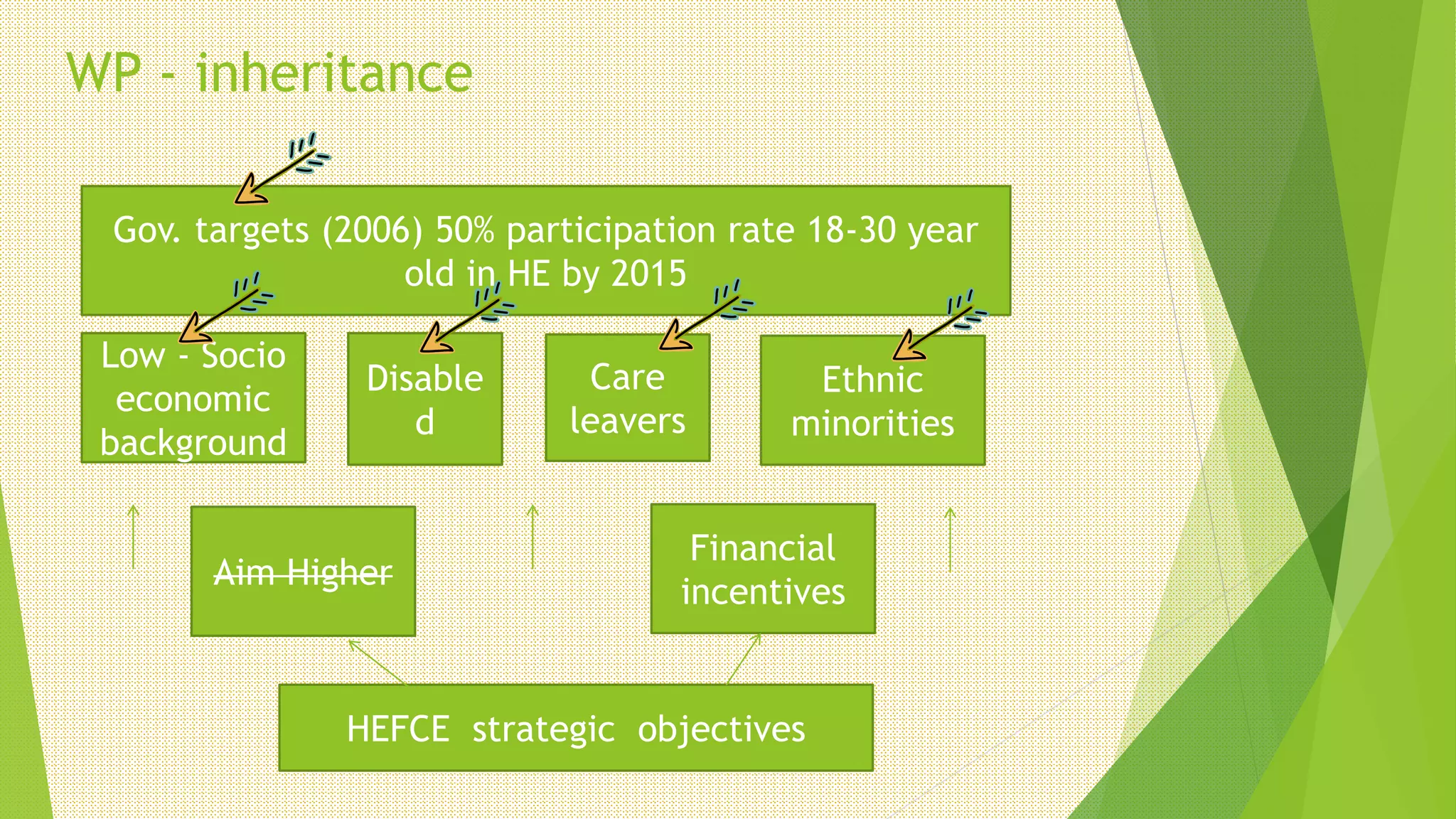
Gov. targets (2006) 50% participation rate 18-30 year
old in HE by 2015
Low - Socio
economic
background
Disable
d
Care
leavers
Ethnic
minorities
HEFCE strategic objectives
Aim Higher
Financial
incentives
Fair access
• The notion of ‘fair access’ has its roots in liberal
concerns to promote access to higher education to
individuals from ‘disadvantaged’ backgrounds who are
deemed to have high levels of potential ability. In
recent years, admissions policies and practice have
become an explicit focus of national policy in the UK,
underpinned by concerns to promote fair access to all
students recognised as having the potential to benefit
from HE.
• Fair Access? Research on admissions to higher education
Challenge-laden
• Major structural/cultural challenge to HEIs,
requiring higher rates of involvement and rates of
achievement to those who have been traditionally
under-represented excluded
• Inclusivity is an institutional response to those
challenges AND
• individual pedagogical decisions
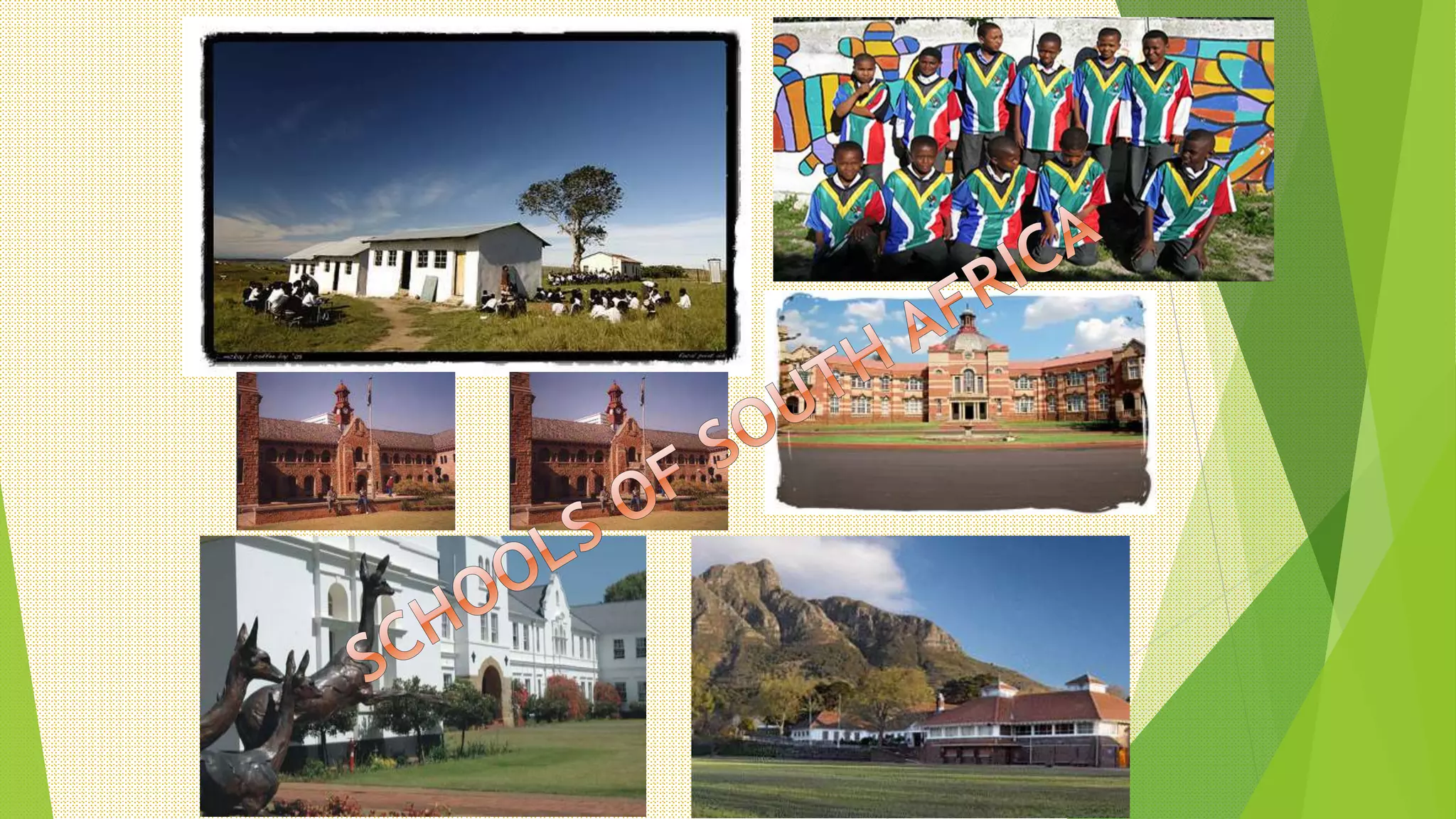
Let us Look At the South African
Context
What inclusive educations means in South
africa
South Africa’s Bill of Rights
All South Africans have the right to a
basic education, including adult basic
education and further education.
According to the Bill of Rights of the
country's Constitution, the state has an
obligation, through reasonable measures,
to progressively make this education
available and accessible.
White Paper 6
 The framework for an inclusive education system is laid out in Education White Paper
6: Special Needs Education: Building an Inclusive Education and Training System
(Department of Education 2001). The scope of this policy is broad as it attempts to
address the diverse needs of all learners who experience barriers to learning. The
policy calls for a significant conceptual shift that is based on the following premises:
 • all children, youth and adults have the potential to learn, given the necessary support
 • the system’s inability to recognise and accommodate the diverse range of learning
needs results in a breakdown of learning.
 The policy asserts that in order to make inclusive education a reality, there needs to be
a conceptual shift regarding the provision of support for learners who experience
barriers to learning.
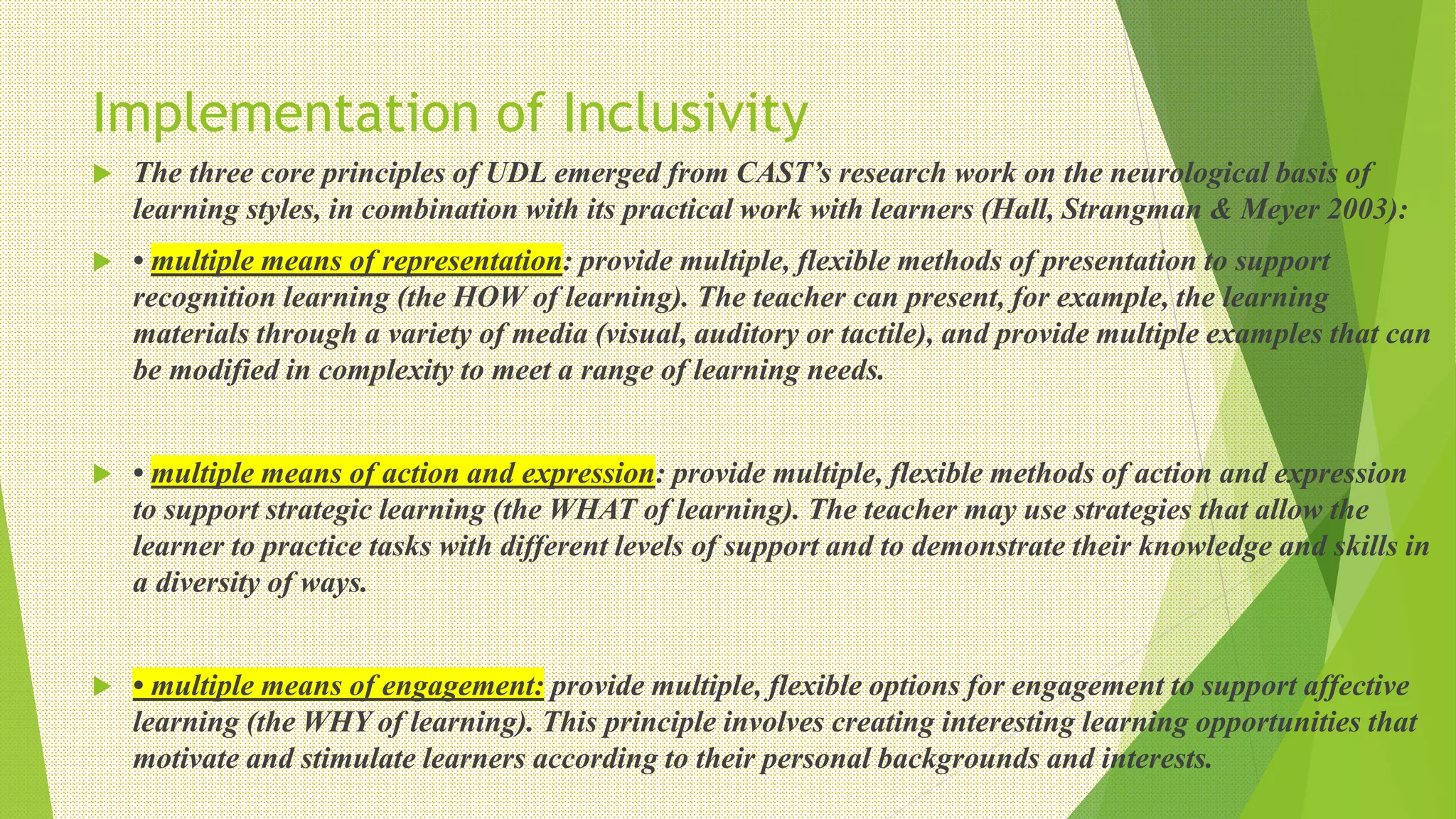
Implementation of Inclusivity
 The three core principles of UDL emerged from CAST’s research work on the neurological basis of
learning styles, in combination with its practical work with learners (Hall, Strangman & Meyer 2003):
 • multiple means of representation: provide multiple, flexible methods of presentation to support
recognition learning (the HOW of learning). The teacher can present, for example, the learning
materials through a variety of media (visual, auditory or tactile), and provide multiple examples that can
be modified in complexity to meet a range of learning needs.
 • multiple means of action and expression: provide multiple, flexible methods of action and expression
to support strategic learning (the WHAT of learning). The teacher may use strategies that allow the
learner to practice tasks with different levels of support and to demonstrate their knowledge and skills in
a diversity of ways.
 • multiple means of engagement: provide multiple, flexible options for engagement to support affective
learning (the WHY of learning). This principle involves creating interesting learning opportunities that
motivate and stimulate learners according to their personal backgrounds and interests.
In Conclusion,
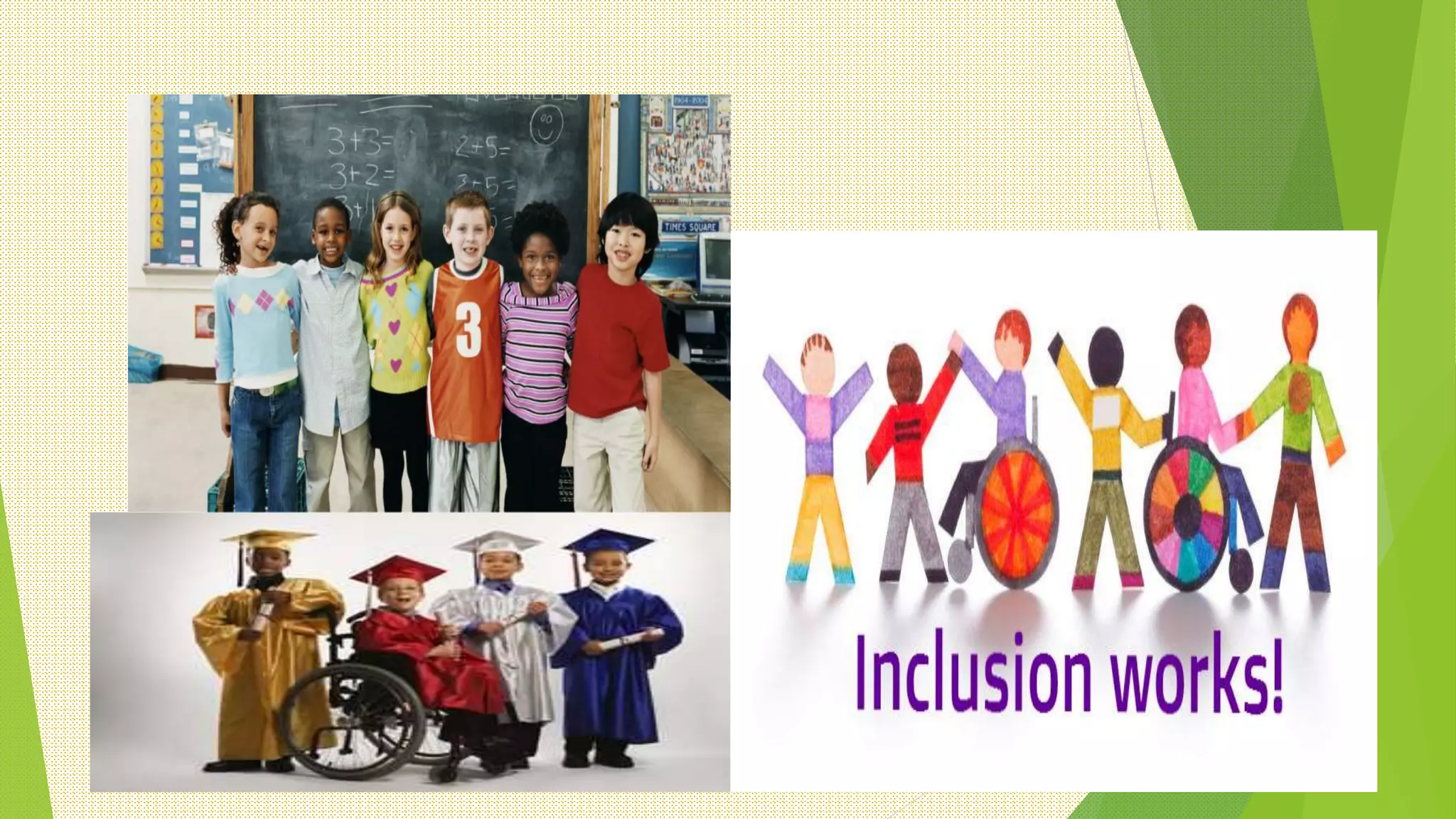
 Children develop a positive understanding of themselves and others.
 When children attend classes that reflect the similarities and differences of people in the real world, they
learn to appreciate diversity. Respect and understanding grow when children of differing abilities and
cultures play and learn together.
 Friendships develop.
 Schools are important places for children to develop friendships and learn social skills. Children with and
without disabilities learn with and from each other in inclusive classes.
 Children learn important academic skills.
 In inclusive classrooms, children with and without disabilities are expected to learn to read, write and do
math. With higher expectations and good instruction children with disabilities learn academic skills.
 All children learn by being together.
 Because the philosophy of inclusive education is aimed at helping all children learn, everyone in the class
benefits. Children learn at their own pace and style within a nurturing learning environment.
 Back to Inclusive Education Home
References:
 https://www.slideshare.net/jamadrid/pedagogy-of-the-oppressed/17-
The_teachers_chooses_and_enforcesher
 https://www.slideshare.net/Sarra_Saffron_Powell/inclusive-
pedagogy?qid=d76a168a-858f-46d1-975e-
cd1c743c520c&v=&b=&from_search=1
 https://www.slideshare.net/leotan76/educational-system-of-south-
africa?qid=9ce825dc-6a11-4f59-aefa-98fba5e2964d&v=&b=&from_search=9

Teaching and learning

  • 1.
    Teaching and learning AnInclusive environment
  • 2.
    Inclusion “At a timewhen prevailing neo-liberal policy aims to position higher education as an economic venture and students as customers, discourses of inclusion are vital. Terms such as access, widening participation, equity, equality and diversity, and lifelong learning commonly feature in discourses of inclusion related to higher education. The shifting meanings and fluid uses of these terms serve as an indication of the increasing tensions between neo-liberal economic forces and the role of higher education in modern society” Widening Participation Conference 2012 - Discourses of Inclusion in Higher Education
  • 3.
    What is wideningparticipation (WP?) It address systematic occlusion to the right of education  REMOVING BARRIERS
  • 4.
    WP - inheritance Gov.targets (2006) 50% participation rate 18-30 year old in HE by 2015 Low - Socio economic background Disable d Care leavers Ethnic minorities HEFCE strategic objectives Aim Higher Financial incentives
  • 5.
    Fair access • Thenotion of ‘fair access’ has its roots in liberal concerns to promote access to higher education to individuals from ‘disadvantaged’ backgrounds who are deemed to have high levels of potential ability. In recent years, admissions policies and practice have become an explicit focus of national policy in the UK, underpinned by concerns to promote fair access to all students recognised as having the potential to benefit from HE. • Fair Access? Research on admissions to higher education
  • 6.
    Challenge-laden • Major structural/culturalchallenge to HEIs, requiring higher rates of involvement and rates of achievement to those who have been traditionally under-represented excluded • Inclusivity is an institutional response to those challenges AND • individual pedagogical decisions
  • 7.
    Let us LookAt the South African Context What inclusive educations means in South africa
  • 9.
    South Africa’s Billof Rights All South Africans have the right to a basic education, including adult basic education and further education. According to the Bill of Rights of the country's Constitution, the state has an obligation, through reasonable measures, to progressively make this education available and accessible.
  • 10.
    White Paper 6 The framework for an inclusive education system is laid out in Education White Paper 6: Special Needs Education: Building an Inclusive Education and Training System (Department of Education 2001). The scope of this policy is broad as it attempts to address the diverse needs of all learners who experience barriers to learning. The policy calls for a significant conceptual shift that is based on the following premises:  • all children, youth and adults have the potential to learn, given the necessary support  • the system’s inability to recognise and accommodate the diverse range of learning needs results in a breakdown of learning.  The policy asserts that in order to make inclusive education a reality, there needs to be a conceptual shift regarding the provision of support for learners who experience barriers to learning.
  • 11.
    Implementation of Inclusivity The three core principles of UDL emerged from CAST’s research work on the neurological basis of learning styles, in combination with its practical work with learners (Hall, Strangman & Meyer 2003):  • multiple means of representation: provide multiple, flexible methods of presentation to support recognition learning (the HOW of learning). The teacher can present, for example, the learning materials through a variety of media (visual, auditory or tactile), and provide multiple examples that can be modified in complexity to meet a range of learning needs.  • multiple means of action and expression: provide multiple, flexible methods of action and expression to support strategic learning (the WHAT of learning). The teacher may use strategies that allow the learner to practice tasks with different levels of support and to demonstrate their knowledge and skills in a diversity of ways.  • multiple means of engagement: provide multiple, flexible options for engagement to support affective learning (the WHY of learning). This principle involves creating interesting learning opportunities that motivate and stimulate learners according to their personal backgrounds and interests.
  • 13.
    In Conclusion,  Childrendevelop a positive understanding of themselves and others.  When children attend classes that reflect the similarities and differences of people in the real world, they learn to appreciate diversity. Respect and understanding grow when children of differing abilities and cultures play and learn together.  Friendships develop.  Schools are important places for children to develop friendships and learn social skills. Children with and without disabilities learn with and from each other in inclusive classes.  Children learn important academic skills.  In inclusive classrooms, children with and without disabilities are expected to learn to read, write and do math. With higher expectations and good instruction children with disabilities learn academic skills.  All children learn by being together.  Because the philosophy of inclusive education is aimed at helping all children learn, everyone in the class benefits. Children learn at their own pace and style within a nurturing learning environment.  Back to Inclusive Education Home
  • 14.