Coastal Tourism in
Tanzania
Presented by:
Ildefons A.Masekesa
TCMP – Coastal Tourism
Coordinator and
Principal Tourism Warden-Marine
Parks and Reserves Tanzania
Tanzania Coastal Management
Partnership (TCMP)
• Joint initiative between Vice President’s
Office through NEMC, United States Agency
for International Development (USAID) and
the Coastal Resources Center/University of
Rhode Island (CRC/URI)
• Initiated to develop and apply a national
coastal management framework i.e to
conserve coastal biodiversity and improve
livelihoods.
• Promoting Sustainable Tourism (coastal
tourism) is one of the TCMP activities.
An overview of Tourism-Tanzania
• Tourism is now the largest industry in the
world – it can bring substantial economic
benefits to Tanzania
• Tourism industry depends on a clean and
healthy environment
• Sustainable tourism can enhance
environmental conservation and provide
tangible benefits to the communities
Overview (cont)
• Travel Industry trends– more demands for
pristine environments, experiences with
nature and lack of pollution and civil society
problems
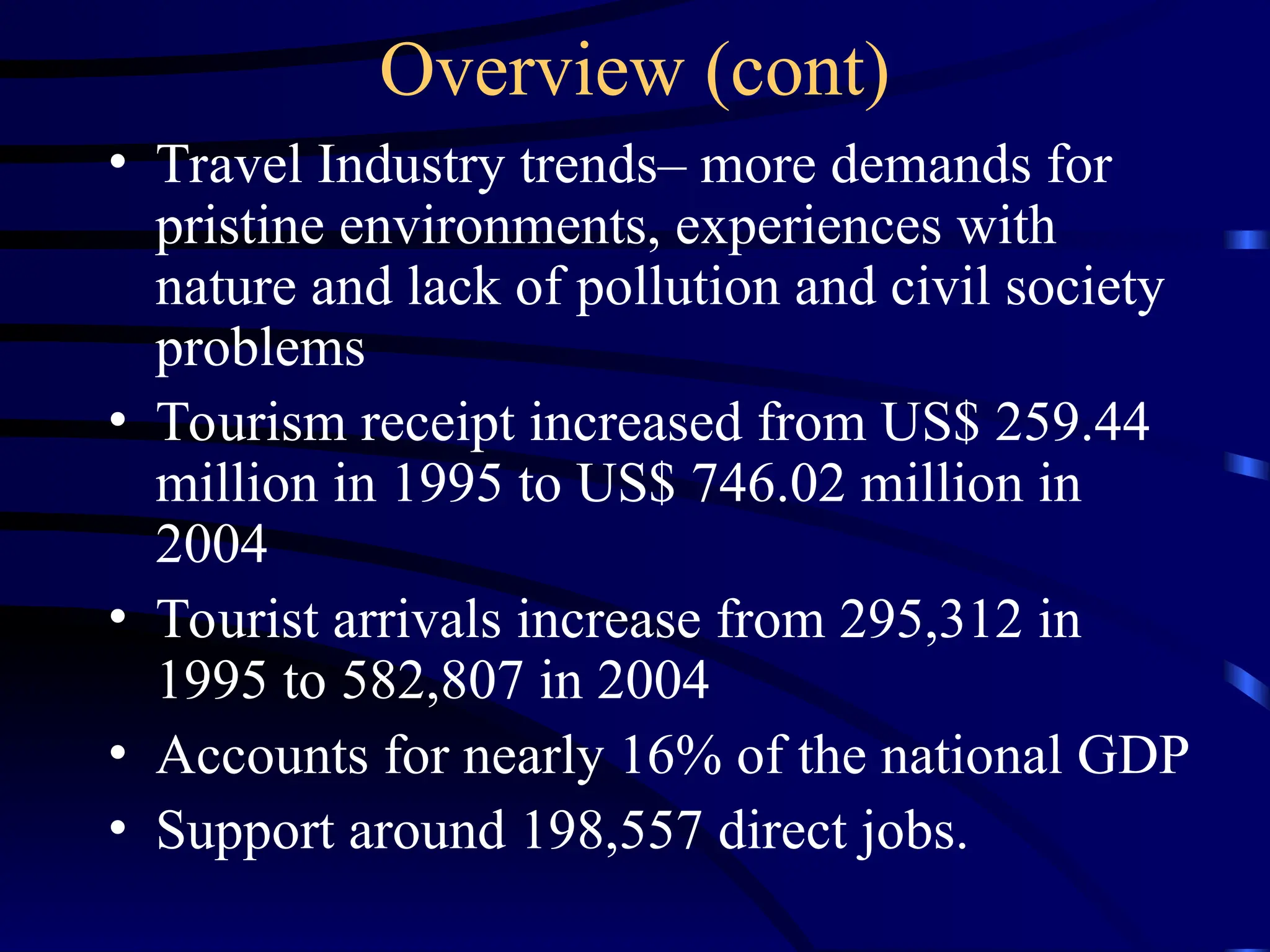
• Tourism receipt increased from US$ 259.44
million in 1995 to US$ 746.02 million in
2004
• Tourist arrivals increase from 295,312 in
1995 to 582,807 in 2004
• Accounts for nearly 16% of the national GDP
• Support around 198,557 direct jobs.
The case for
Coastal Tourism Development in
Tanzania
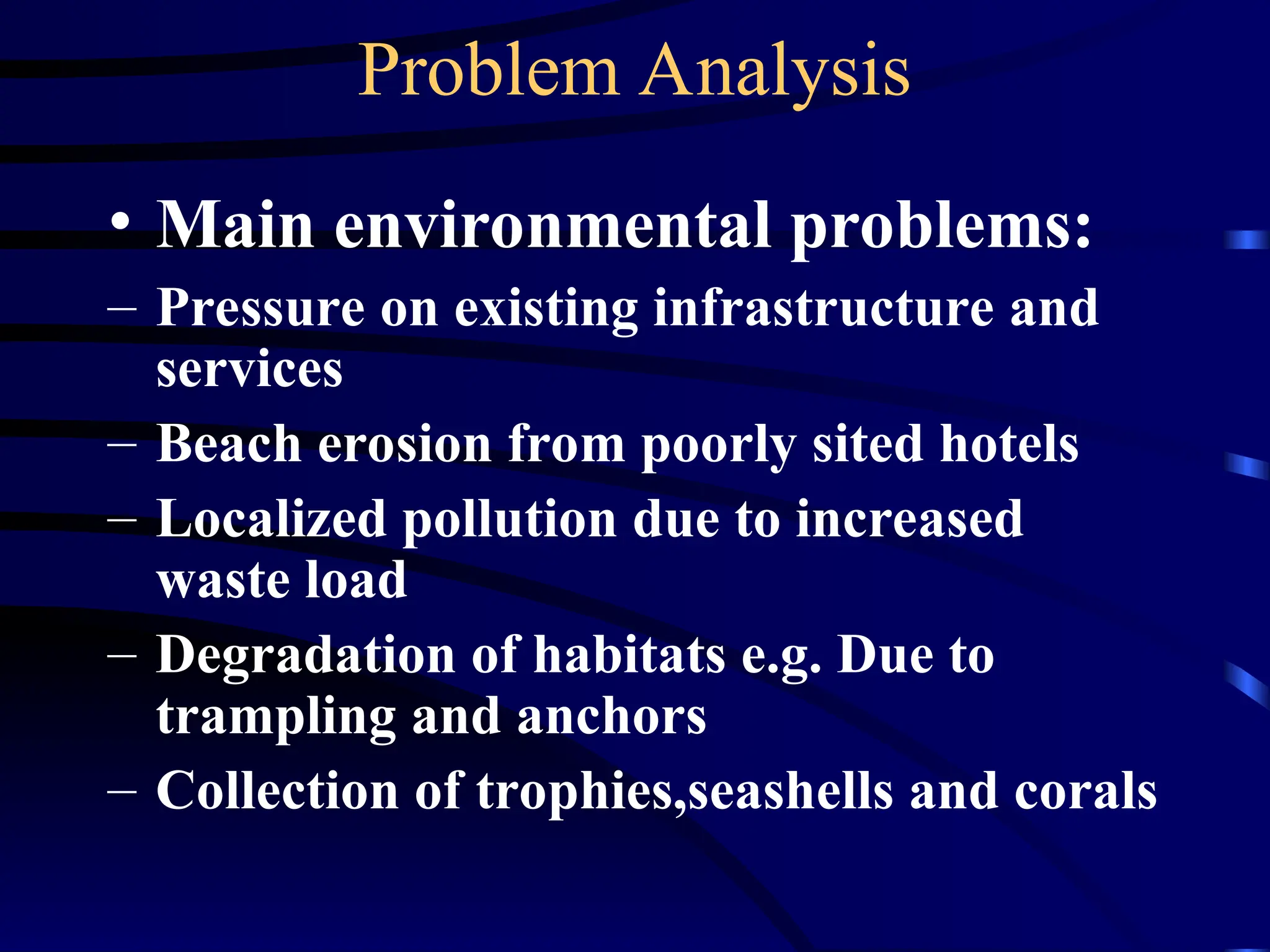
• Tanzania has 1424 km of coastline
• Natural attractions range from the traditional
wildlife to the relatively newly discovered
marine mammals (dolphin, dugong, whales etc.)
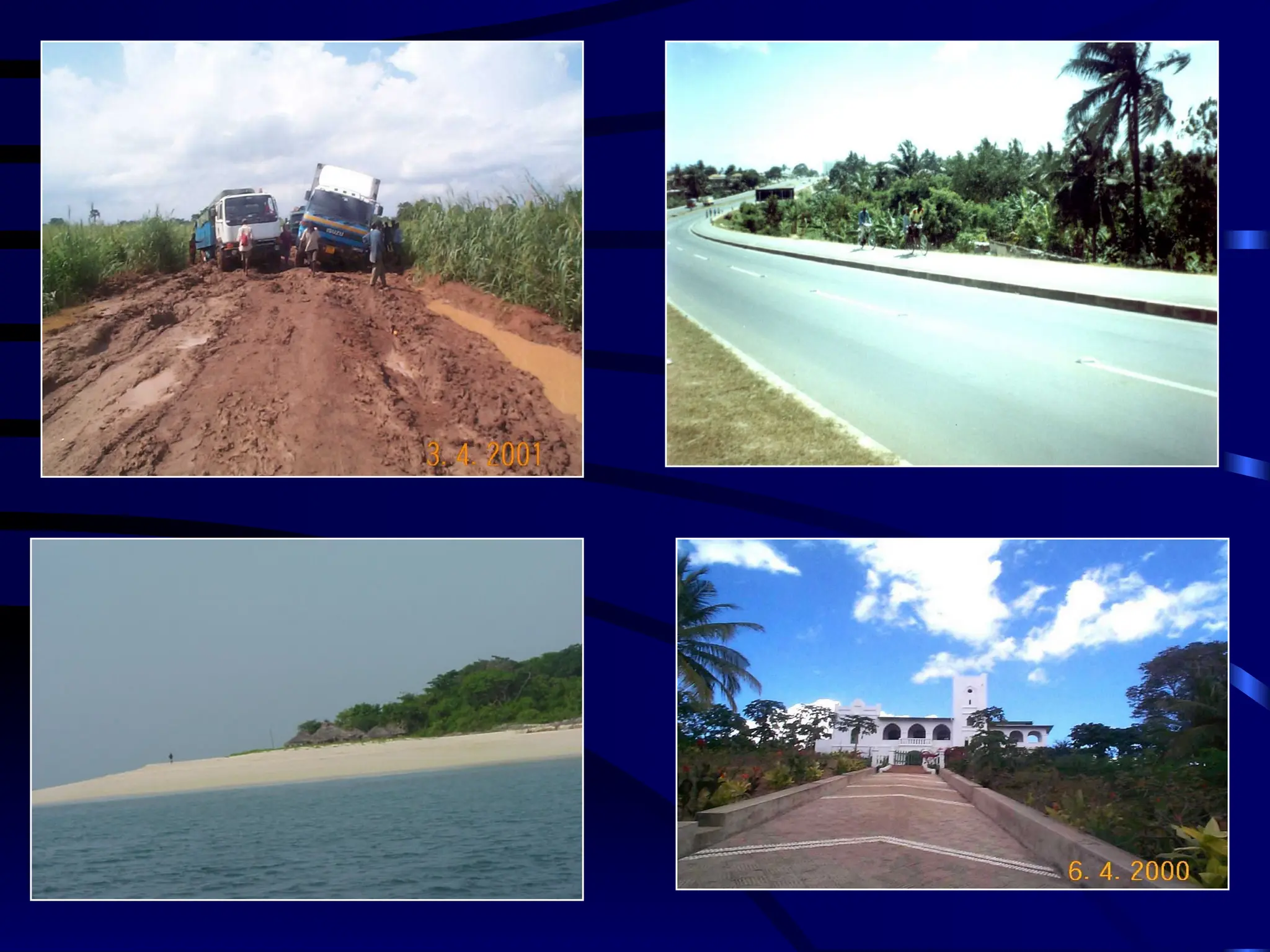
• Cultural attractions
- historical sites
- ruins along the coast
- traditional Swahili life-style
The case for coastal tourism
development (cont)
development (cont)
• National Tourism Policy of 1999 -
Diversification of tourism products
• Integrated Tourism Master Plan- the coast is
the priority zone for tourism development
• National ICM Strategy- coordination of
coastal environment and economic activities
for improving livelihood
• NSGRP (MKUKUTA) – Pro- poor tourism
Coastal districts of Tanzania
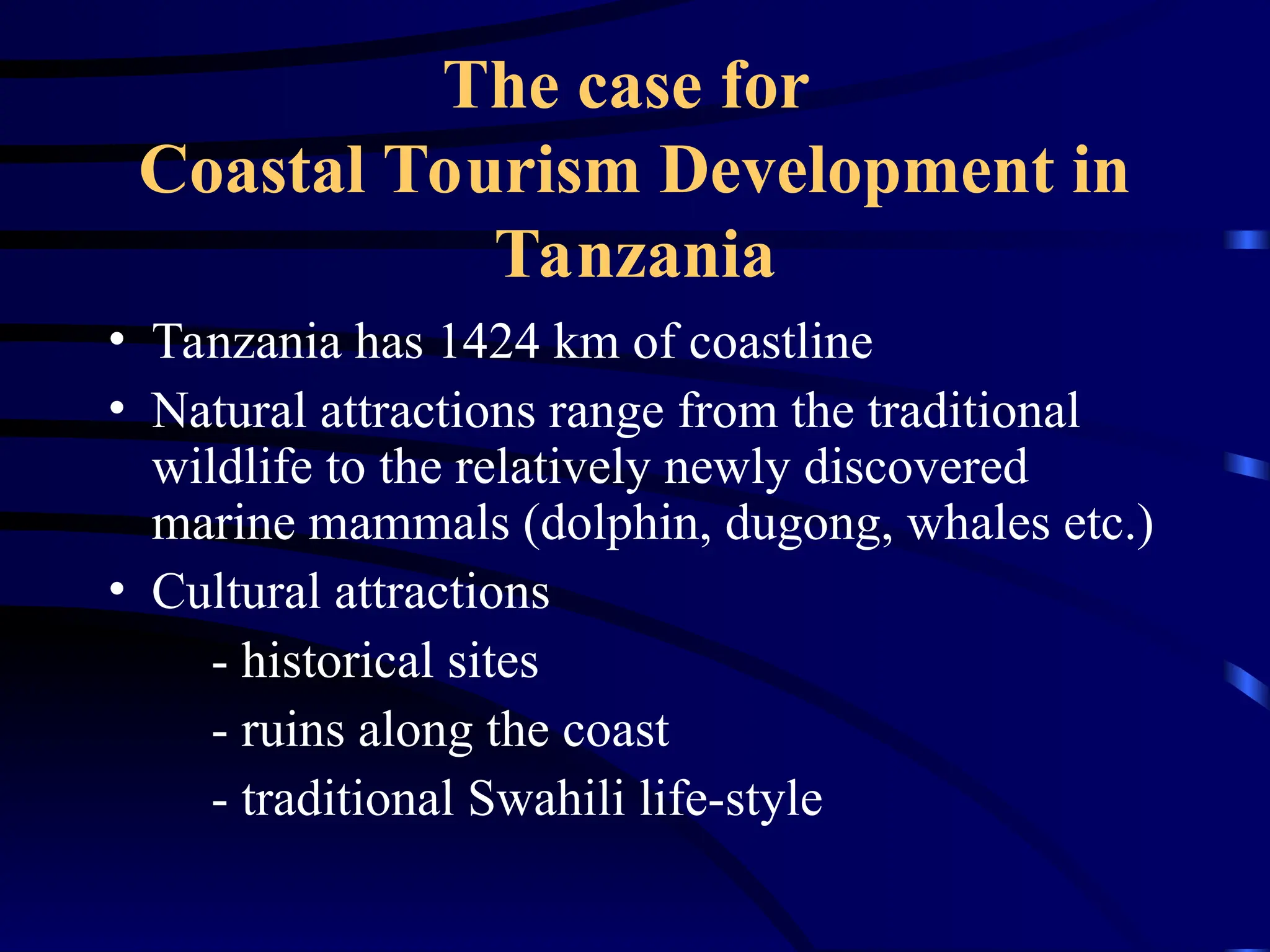
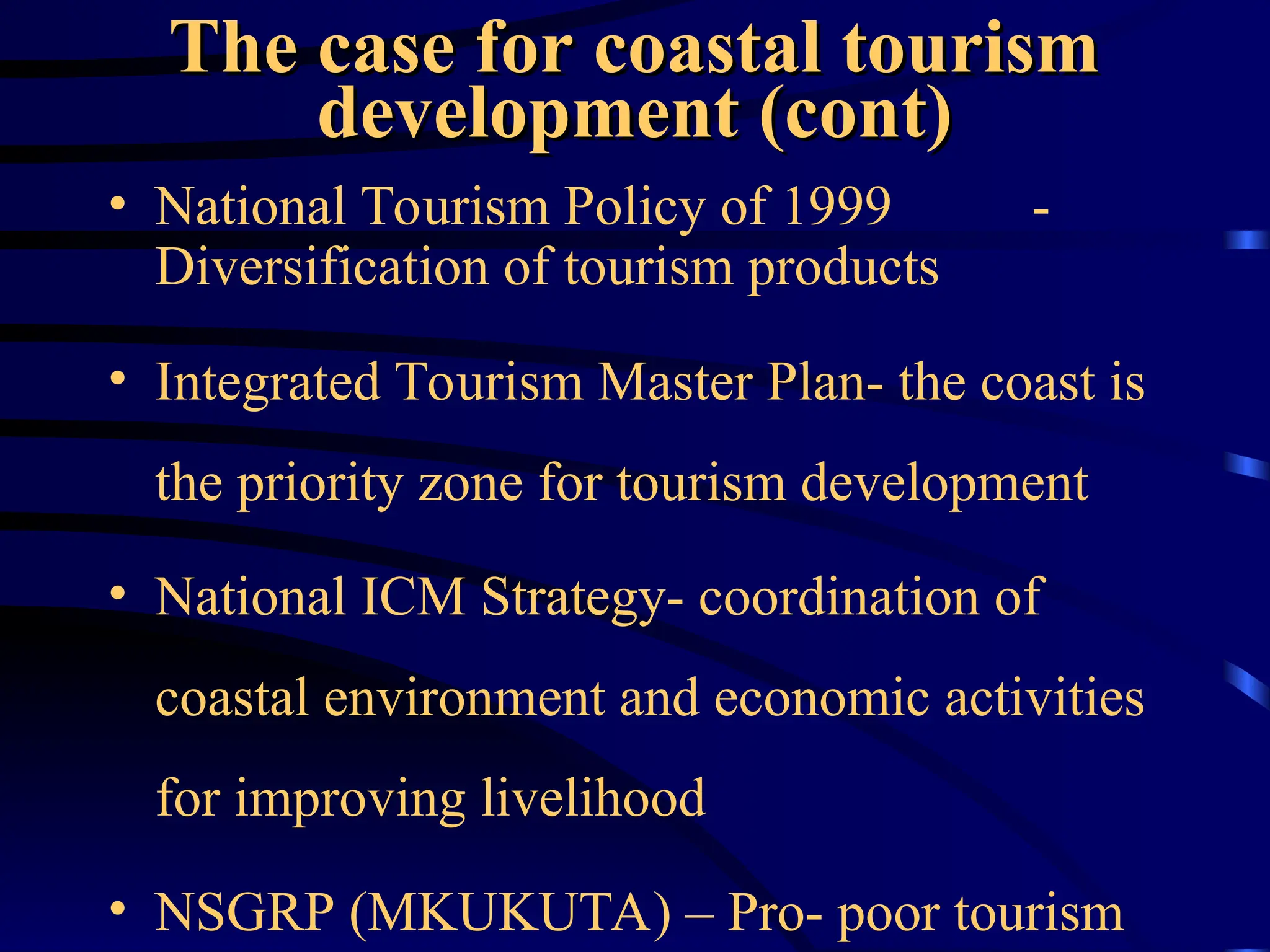
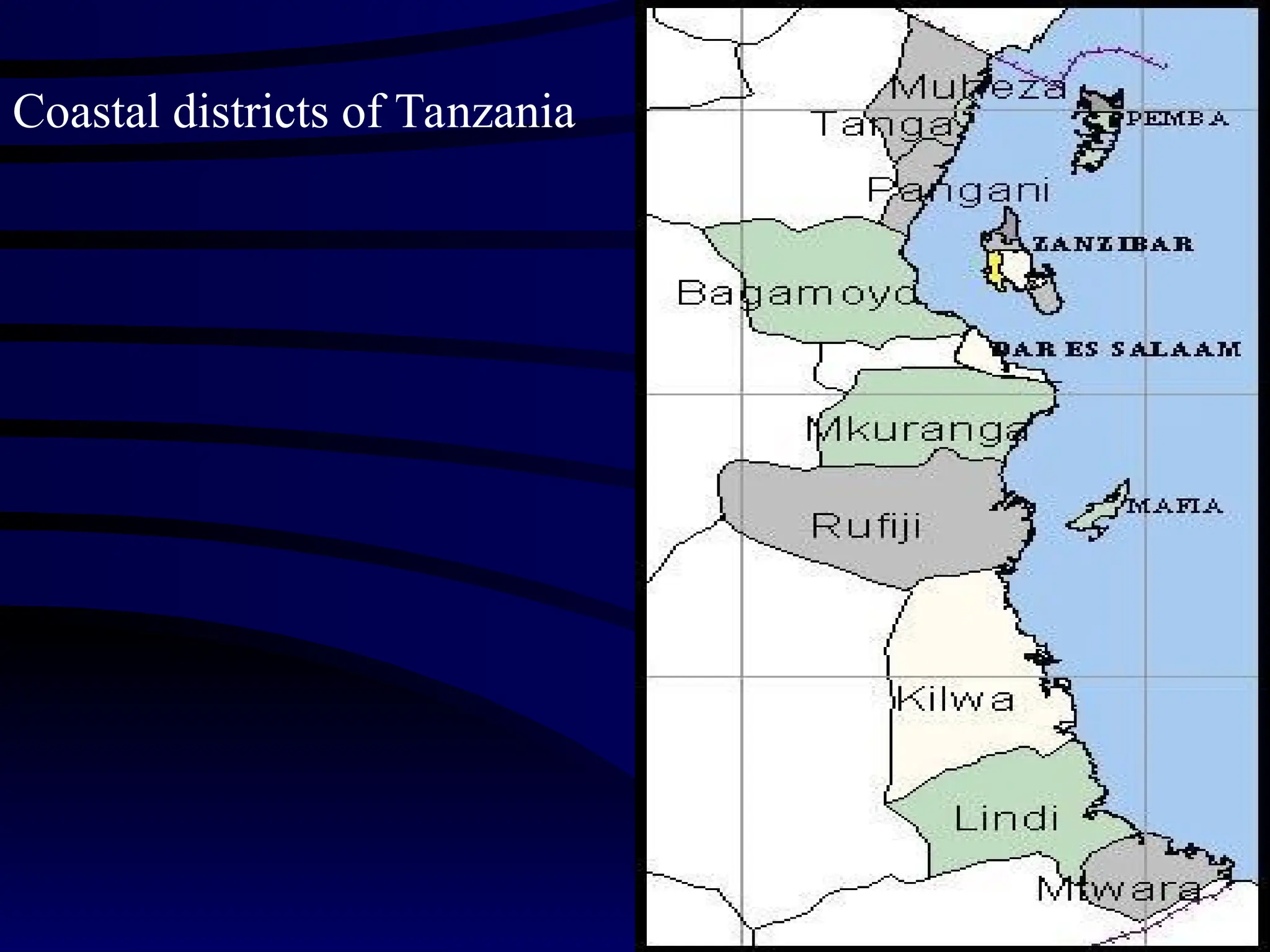
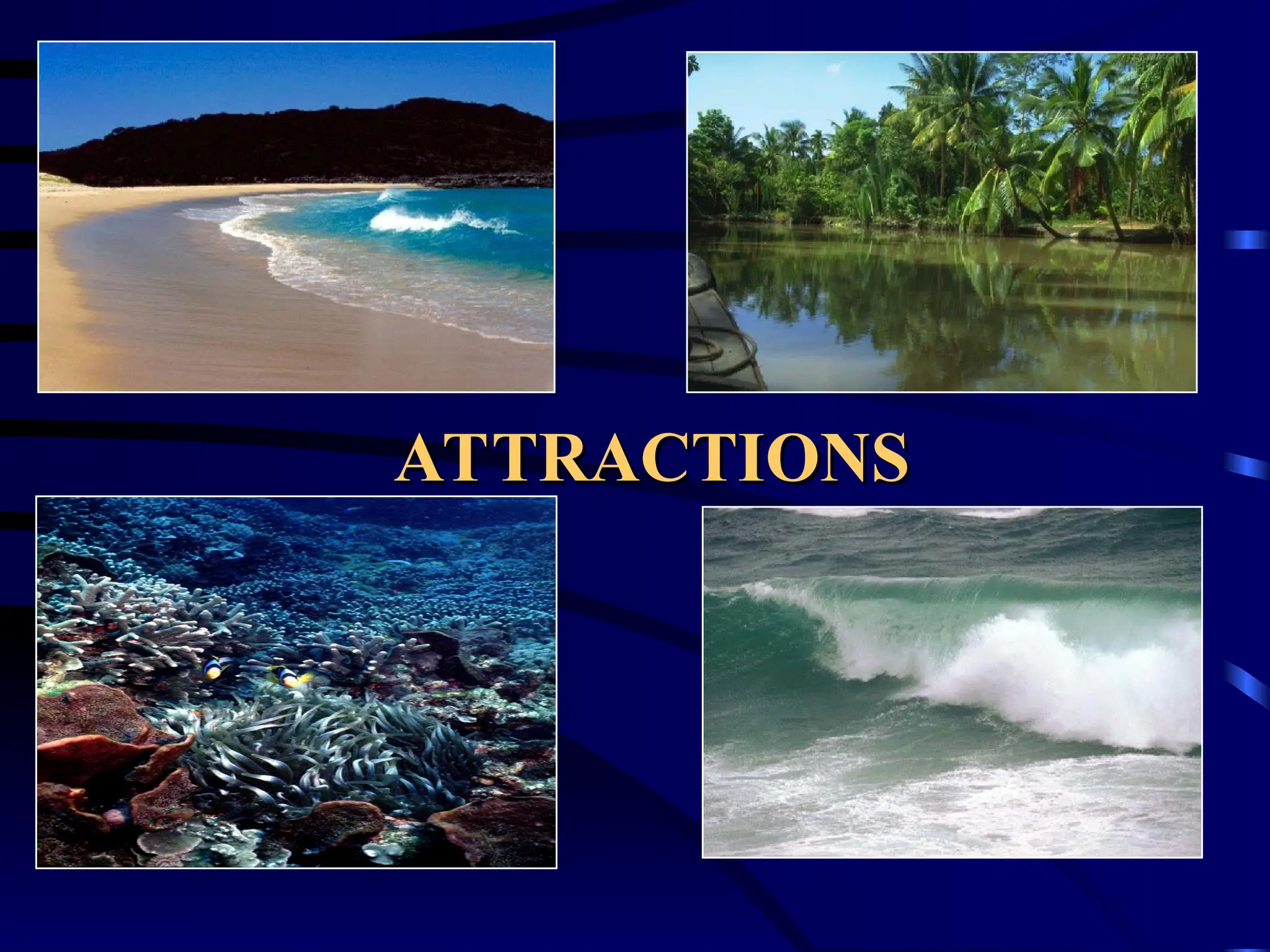
ATTRACTIONS
ATTRACTIONS
Coastal areas with high potential for
coastal tourism
• Pangani- Saadani- Bagamoyo
• Kilwa
• Mafia Island
• Lindi - Mtwara
CULTURAL ATTRACTIONS
Problem Analysis
• Main environmental problems:
– Pressure on existing infrastructure and
services
– Beach erosion from poorly sited hotels
– Localized pollution due to increased
waste load
– Degradation of habitats e.g. Due to
trampling and anchors
– Collection of trophies,seashells and corals
Problem Analysis [cont]
• Social-economic problems:
– Rural coastal communities are still poor,
depend on smallholder farming, small-
scale trade, livestock husbandry etc.
– Low level of participation by local
communities in tourism planning and
management processes
– Unemployment and lack of sufficient
knowledge about tourism business
Problems[cont]
• Development Constraints:
– Inadequate access [International &
Internal flights]
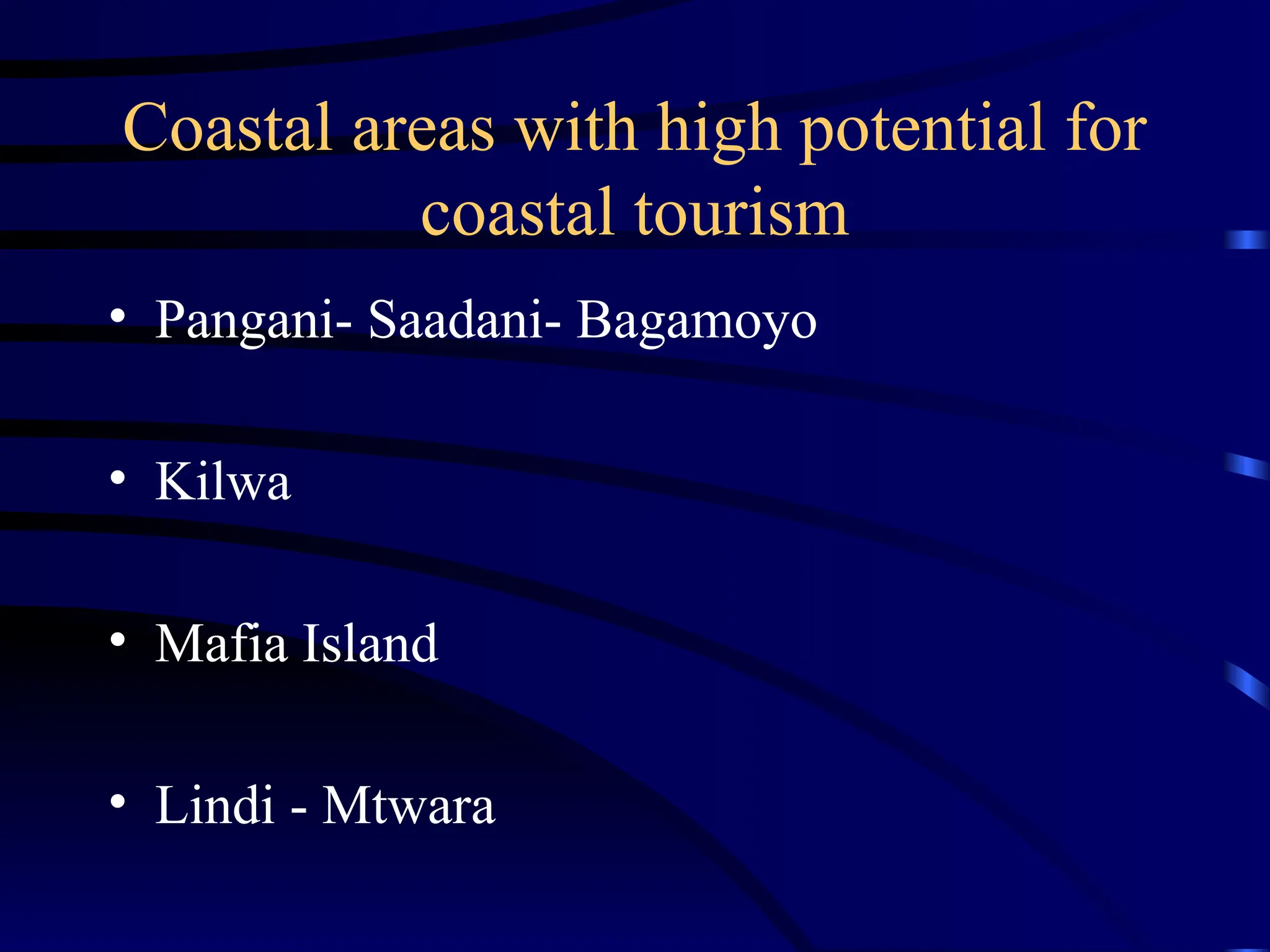
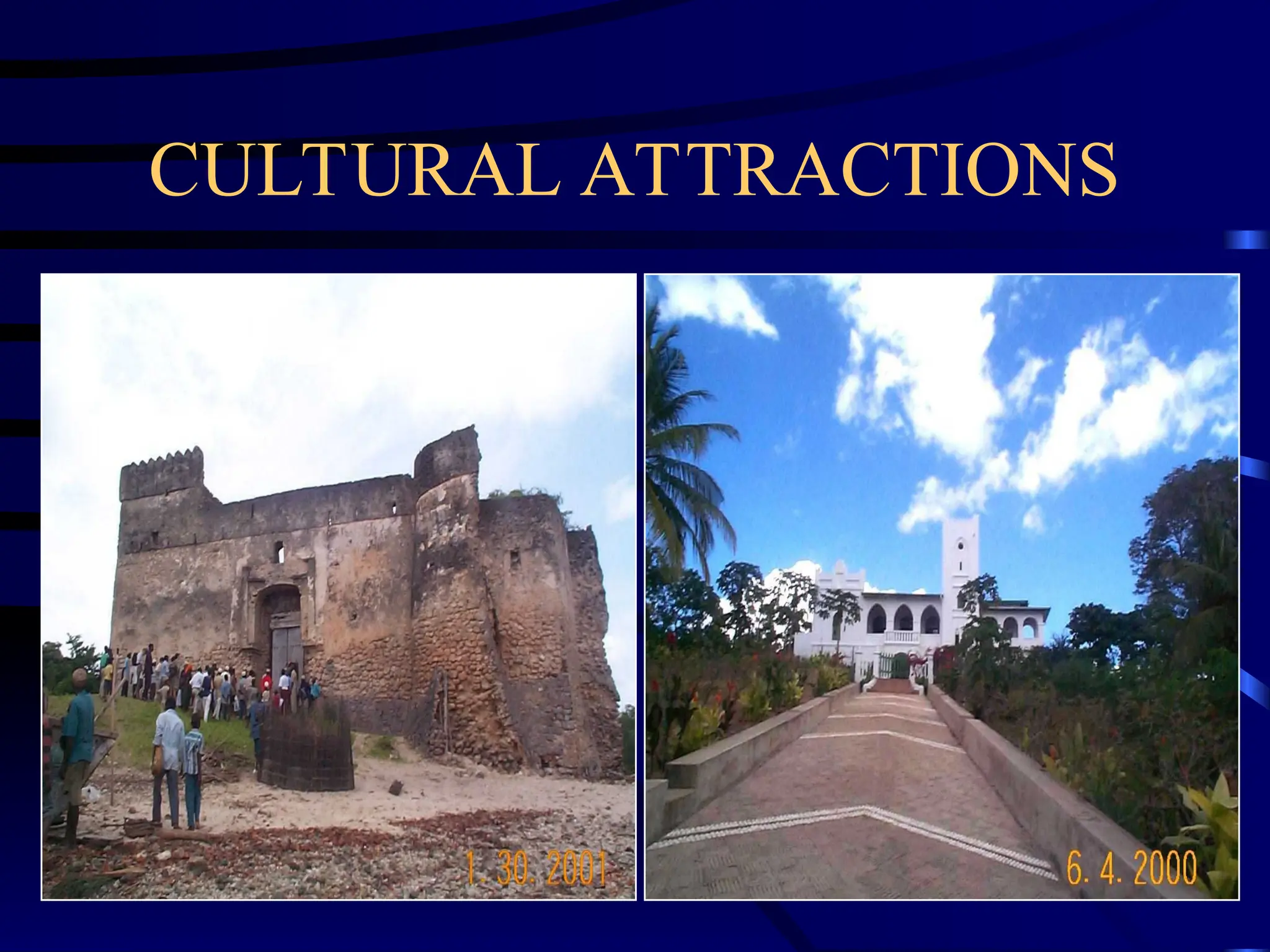
– poor infrastructure esp. roads
– High costs of internal transport
– Poor services standard
– Poor quality tour and safari guides
– Lack of quality accommodation facilities
Efforts to overcome constraints
• Develop Guidelines for Coastal tourism
Development
• Develop a comprehensive tourism
management plan
• Provide technical advice to the Coastal
Tourism investors by using the Guidelines
• Support the CBOs to promote ICM best
practices in Bagamoyo and Pangani
Districts
Efforts (Cont)
• Work with FINCA Tanzania to provide
loans to the Bagamoyo Tour Guides
• Support MPRU for opening of nature trails
and placement of signages on Bongoyo
Island Marine Reserve
• Work with Tourism Division to prepare the
National Tourism Development Programme
The way forward
• Continue providing Technical assistance to
the new and existing initiatives
• Continue to assist potential investors on the
use of the Guidelines for Coastal Tourism
Development
• Continue to work with the Tourism
Division to implement the National
Tourism Policy and Master plan
The future of coastal Tourism
• Depends on cooperation between all
interested stakeholders
• Has the power to build up the well-being of
Tanzanians living along the coast
• Depends upon adherence to the existing
guidelines
THANK YOU!

TCMP.pptkjlkjlkjlkjsdaasddd sdfda asddda

  • 1.
    Coastal Tourism in Tanzania Presentedby: Ildefons A.Masekesa TCMP – Coastal Tourism Coordinator and Principal Tourism Warden-Marine Parks and Reserves Tanzania
  • 2.
    Tanzania Coastal Management Partnership(TCMP) • Joint initiative between Vice President’s Office through NEMC, United States Agency for International Development (USAID) and the Coastal Resources Center/University of Rhode Island (CRC/URI) • Initiated to develop and apply a national coastal management framework i.e to conserve coastal biodiversity and improve livelihoods. • Promoting Sustainable Tourism (coastal tourism) is one of the TCMP activities.
  • 3.
    An overview ofTourism-Tanzania • Tourism is now the largest industry in the world – it can bring substantial economic benefits to Tanzania • Tourism industry depends on a clean and healthy environment • Sustainable tourism can enhance environmental conservation and provide tangible benefits to the communities
  • 4.
    Overview (cont) • TravelIndustry trends– more demands for pristine environments, experiences with nature and lack of pollution and civil society problems • Tourism receipt increased from US$ 259.44 million in 1995 to US$ 746.02 million in 2004 • Tourist arrivals increase from 295,312 in 1995 to 582,807 in 2004 • Accounts for nearly 16% of the national GDP • Support around 198,557 direct jobs.
  • 5.
    The case for CoastalTourism Development in Tanzania • Tanzania has 1424 km of coastline • Natural attractions range from the traditional wildlife to the relatively newly discovered marine mammals (dolphin, dugong, whales etc.) • Cultural attractions - historical sites - ruins along the coast - traditional Swahili life-style
  • 6.
    The case forcoastal tourism The case for coastal tourism development (cont) development (cont) • National Tourism Policy of 1999 - Diversification of tourism products • Integrated Tourism Master Plan- the coast is the priority zone for tourism development • National ICM Strategy- coordination of coastal environment and economic activities for improving livelihood • NSGRP (MKUKUTA) – Pro- poor tourism
  • 7.
  • 8.
  • 9.
    Coastal areas withhigh potential for coastal tourism • Pangani- Saadani- Bagamoyo • Kilwa • Mafia Island • Lindi - Mtwara
  • 10.
  • 11.
    Problem Analysis • Mainenvironmental problems: – Pressure on existing infrastructure and services – Beach erosion from poorly sited hotels – Localized pollution due to increased waste load – Degradation of habitats e.g. Due to trampling and anchors – Collection of trophies,seashells and corals
  • 12.
    Problem Analysis [cont] •Social-economic problems: – Rural coastal communities are still poor, depend on smallholder farming, small- scale trade, livestock husbandry etc. – Low level of participation by local communities in tourism planning and management processes – Unemployment and lack of sufficient knowledge about tourism business
  • 13.
    Problems[cont] • Development Constraints: –Inadequate access [International & Internal flights] – poor infrastructure esp. roads – High costs of internal transport – Poor services standard – Poor quality tour and safari guides – Lack of quality accommodation facilities
  • 15.
    Efforts to overcomeconstraints • Develop Guidelines for Coastal tourism Development • Develop a comprehensive tourism management plan • Provide technical advice to the Coastal Tourism investors by using the Guidelines • Support the CBOs to promote ICM best practices in Bagamoyo and Pangani Districts
  • 16.
    Efforts (Cont) • Workwith FINCA Tanzania to provide loans to the Bagamoyo Tour Guides • Support MPRU for opening of nature trails and placement of signages on Bongoyo Island Marine Reserve • Work with Tourism Division to prepare the National Tourism Development Programme
  • 17.
    The way forward •Continue providing Technical assistance to the new and existing initiatives • Continue to assist potential investors on the use of the Guidelines for Coastal Tourism Development • Continue to work with the Tourism Division to implement the National Tourism Policy and Master plan
  • 18.
    The future ofcoastal Tourism • Depends on cooperation between all interested stakeholders • Has the power to build up the well-being of Tanzanians living along the coast • Depends upon adherence to the existing guidelines
  • 19.